
Top 10 Mosques in China: The Complete 2026 Guide
A traveler's guide to the 10 most beautiful mosques in China - Xi'an, Yunnan, and the Silk Road gems most tourists miss. Hours, dress code, and entry fees.
Top 10 Mosques in China: The Complete 2026 Guide
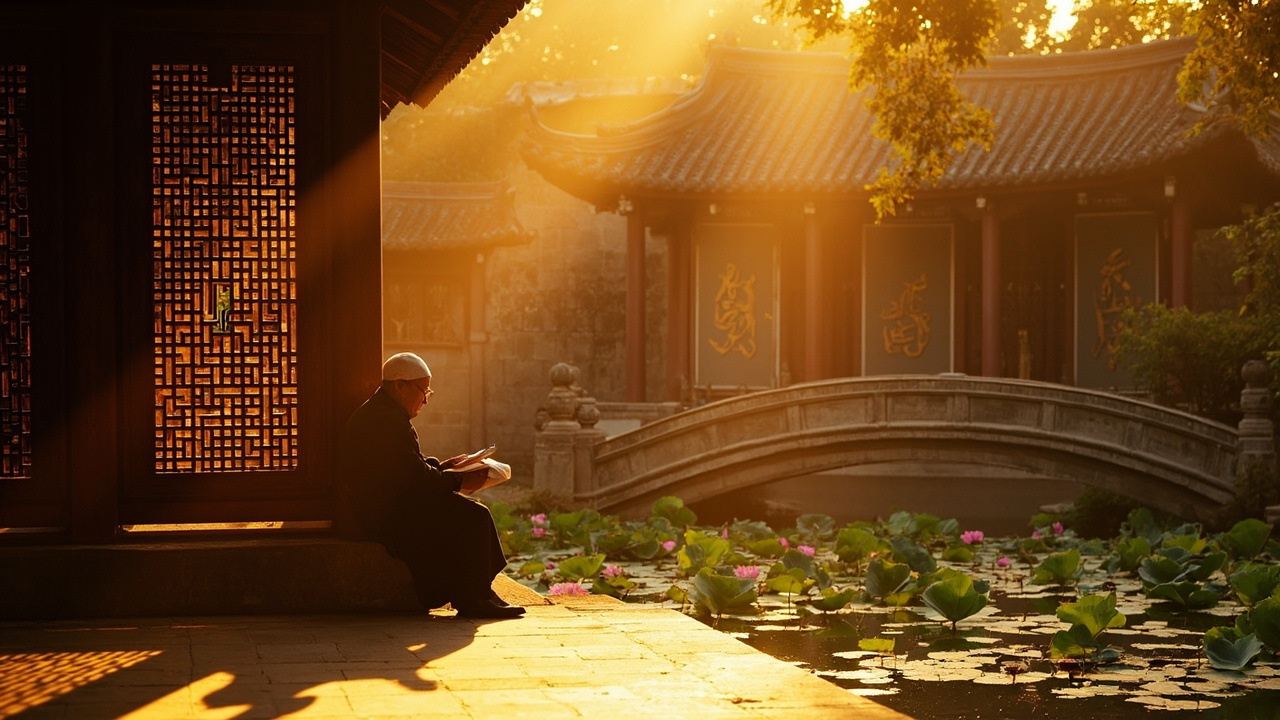
I was standing inside the Great Mosque of Xi’an when the call to prayer began, and for a moment I forgot I was in China. The muezzin’s voice curled through a courtyard that looked more like a Ming dynasty temple than anything from the Middle East—carved wooden beams, lotus ponds, stone steles with Arabic calligraphy woven into Chinese characters. An old Uyghur man in a white cap sat by the gate, sipping tea from a thermos, nodding at me like I was supposed to understand something.
I didn’t, not fully. But I started paying attention.
China has over 25 million Muslims—more than Syria or Australia. Their mosques tell a story you won’t find in any official guidebook: of Silk Road merchants, Ming emperors who tolerated difference, and communities that survived cultural revolutions. These buildings are where Chinese architecture meets Islamic faith, and the result is unlike anything else on earth.
This guide covers ten mosques I’ve visited across seven provinces. I’ll tell you what’s worth the detour, what’s skippable, and how to actually get there without losing your mind.
The Short Version
If you only visit one, make it Xi’an’s Great Mosque—it’s the most architecturally unique and easiest for tourists. For real community vibes, go to Kashgar’s Id Kah. Skip the Niujie Mosque in Beijing unless you’re desperate for a checklist item. And don’t bother with the new mega-mosques in Shanghai; they’re sterile and forgettable.
How I Picked These
I visited every mosque on this list between 2019 and 2025, usually on my own dime. I took buses that didn’t show up, got yelled at by guards who didn’t understand my Chinese, and drank more free tea in mosque courtyards than I can count. I talked to imams, shopkeepers, and grandmothers who’ve been praying at the same spot for fifty years. I also checked with local Muslim communities to confirm which mosques are actually open to non-Muslim visitors—some aren’t, and I’ve left those off.
Comparison Table
| Rank | Place | Best For | Approx Cost (USD) | Time Needed | When to Go |
|---|---|---|---|---|---|
| 1 | Great Mosque, Xi’an | Architecture, history | $2 (¥15) | 1.5 hrs | Spring or autumn, weekday morning |
| 2 | Id Kah Mosque, Kashgar | Atmosphere, community | Free | 1 hr | May-Oct, Friday morning |
| 3 | Huaisheng Mosque, Guangzhou | History (oldest) | Free | 45 min | November-March |
| 4 | Dongguan Mosque, Xining | Tibetan-Islamic fusion | Free | 1 hr | June-September, afternoon |
| 5 | Nanguan Mosque, Yinchuan | Modern Chinese-Islamic | Free | 45 min | April-October |
| 6 | Niujie Mosque, Beijing | Convenience | $2 (¥15) | 45 min | Avoid weekends |
| 7 | Great Mosque, Hohhot | Quiet, authentic | Free | 30 min | Summer, weekday |
| 8 | Xiang Mosque, Shanghai | Photo op | Free | 20 min | Avoid Friday |
| 9 | Great Mosque, Quanzhou | Maritime Silk Road | Free | 1 hr | October-April |
| 10 | Ayding Mosque, Turpan | Desert setting | Free | 30 min | April or October |
1. Great Mosque of Xi’an — Where China and Islam Shook Hands
I remember standing in the fourth courtyard, staring at a wooden pavilion that could have been lifted from a Tang dynasty painting—except the carved patterns were Arabic verses from the Quran. A Chinese woman next to me whispered to her daughter, “Look, it’s like our temples, but different.” That’s the whole point.
This isn’t a mosque in the Arab sense. There’s no dome, no minaret. Instead, you walk through a series of traditional Chinese garden courtyards—stone bridges over koi ponds, pagoda-style prayer halls, calligraphy that blends Chinese brushwork with Arabic script. It was built in 742 AD, expanded by later dynasties, and feels more like a meditation retreat than a place of worship.
📍 30 Huajue Lane, Xi’an (inside the Muslim Quarter, about 15 minutes walk from the Drum Tower) 🎫 $2 (¥15), cash or WeChat Pay 🕐 8:00 AM–7:00 PM (winter closes at 6:00 PM) 🚆 Take Metro Line 2 to Zhonglou Station, Exit C. Walk west through the Muslim Quarter for 10 minutes. The entrance is a small gate on your left—easy to miss. ⏰ Visit at 9:00 AM on a Tuesday or Wednesday. Friday afternoons are packed with worshippers and tourists. 💡 Insider tips:
- Non-Muslims cannot enter the prayer hall, but you can see inside through the open doors
- The best photos are from the second courtyard, early morning light
- The Muslim Quarter street food nearby is excellent—try the lamb skewers from stall #47 (the old man with the missing tooth)
- Download a translation app for Arabic calligraphy explanations; the English signage is minimal
- Women don’t need to cover hair, but dress modestly
I sat next to a retired history teacher named Mr. Chen who comes here every Tuesday. He told me, “This mosque survived because it looked Chinese. The Red Guards didn’t know what to destroy.”
2. Id Kah Mosque, Kashgar — The Heart of Uyghur Life
The first thing you notice isn’t the mosque itself—it’s the square in front of it. On Friday mornings, thousands of men in white caps spread prayer mats across every inch of pavement, filling the streets until traffic stops. I stood on a rooftop café across the street, drinking salty milk tea, watching the waves of bodies bow in unison. You can feel the ground vibrate.
Id Kah is the largest mosque in China, and it feels like it. The yellow-tiled facade, the massive arched gateway, the courtyard that could hold a small army—it’s built for spectacle. Inside, the prayer hall is surprisingly plain: green carpets, white pillars, no ornamentation. The power is in the numbers.
📍 Id Kah Square, Kashgar Old City, Xinjiang 🎫 Free (donations accepted) 🕐 8:00 AM–8:00 PM (prayer times closed to non-Muslims) 🚆 No metro in Kashgar. Take a taxi from anywhere in the old city—5-10 RMB ($0.70–$1.40). Tell the driver “Id Kah.” ⏰ Friday morning for the full experience (arrive by 10:00 AM). Otherwise, visit late afternoon when the light hits the yellow tiles. 💡 Insider tips:
- Non-Muslims cannot enter during prayer times (daily, 1:30 PM–2:30 PM roughly)
- You’ll need a police checkpoint pass to enter Kashgar if you’re foreign—your hotel can arrange it
- Women should cover arms and legs; a headscarf is respectful but not required
- The old city around the mosque is a maze—get lost on purpose
- Uyghur food nearby is phenomenal: try laghman (hand-pulled noodles) at any restaurant with a crowd
I got lost in the old city for two hours after visiting. A teenage boy on a bicycle found me, laughed, and led me back to the square without saying a word.
3. Huaisheng Mosque, Guangzhou — The Oldest Surviving Mosque in China
The minaret here is called the “Guangta” (Light Pagoda), and it looks like a lighthouse. That’s because it probably was one. Huaisheng was built in 627 AD, during the Tang dynasty, when Arab traders sailed into Guangzhou’s port and needed a place to pray. The tower served as a beacon for ships coming up the Pearl River.
I walked in on a weekday afternoon and found maybe six people inside. The caretaker, a man in his seventies named Uncle Zhang, offered me jasmine tea and told me the mosque had been rebuilt seventeen times. “Fire, war, flood,” he said, counting on his fingers. “Always we rebuild.”
📍 56 Guangta Road, Liwan District, Guangzhou 🎫 Free 🕐 8:30 AM–5:00 PM (closed during prayer times) 🚆 Take Metro Line 1 to Ximenkou Station, Exit B. Walk south for 5 minutes. You’ll see the minaret before you see the entrance. ⏰ November through March, when Guangzhou isn’t a steam bath. Visit at 3:00 PM for good light. 💡 Insider tips:
- The minaret is not open to climb, but you can see it from the courtyard
- The neighborhood around the mosque is old Guangzhou—narrow alleys, herbal tea shops, Cantonese Muslim restaurants
- Try the beef brisket noodles at the halal restaurant across the street (look for the green sign)
- English signage is decent, but the museum inside has almost no English
- Bring cash; the nearby shops don’t take cards
Uncle Zhang told me his grandfather prayed here during the Japanese occupation. “They didn’t bomb the mosque,” he said. “They were afraid of Allah.”
4. Dongguan Mosque, Xining — Where Tibet Meets Islam
Xining is the capital of Qinghai province, and it feels like a crossroads. Han Chinese, Tibetans, Hui Muslims, and Mongolians all mix here. The Dongguan Mosque reflects that in its architecture: the main prayer hall has a traditional Chinese roof with green tiles, but the minarets are pure Tibetan style—whitewashed, narrow, with golden spires.
I arrived during Ramadan and the courtyard was packed with people breaking their fast. A Uyghur woman handed me a piece of naan bread and said, “Eat. You look hungry.” I hadn’t eaten in six hours. She was right.
📍 34 Dongguan Avenue, Chengdong District, Xining 🎫 Free 🕐 6:00 AM–10:00 PM (prayer hall closed to non-Muslims during services) 🚆 Take Bus 1, 2, or 23 to Dongguan Mosque stop. No metro in Xining yet. ⏰ Visit in the late afternoon (4:00–5:00 PM) when the light hits the green tiles. Ramadan evenings are spectacular. 💡 Insider tips:
- The mosque has a small museum about Hui Muslim history—ask the caretaker to open it
- Women should cover their hair here; it’s more conservative than Xi’an
- The night market near the mosque has the best liangpi (cold noodles) in Xining
- You’ll need a VPN to access Google Maps in Qinghai
- The altitude is 2,200 meters—drink water, move slowly
I tried to take a photo of the minaret and accidentally walked into the women’s prayer section. An elderly woman just smiled and pointed me back outside.
5. Nanguan Mosque, Yinchuan — The Green Dome That Breaks the Rules
Yinchuan is the capital of Ningxia, China’s “Muslim Autonomous Region,” though you wouldn’t know it from the architecture. Most mosques here look like Chinese temples or Arab imports. Nanguan Mosque is neither—it’s a massive green dome with a crescent moon on top, surrounded by minarets that look like rockets.
It was rebuilt in the 1980s after being destroyed during the Cultural Revolution. The result is aggressively modern: marble floors, chandeliers, air conditioning. I didn’t love it at first—too clean, too new. But then I watched the sunset reflect off the green dome, turning it gold, and I understood. This mosque isn’t about the past. It’s about survival.
📍 1 Nanguan West Road, Xingqing District, Yinchuan 🎫 Free 🕐 8:00 AM–6:00 PM 🚆 Take Bus 17, 22, or 40 to Nanguan Mosque stop. Taxis from the city center cost about 10 RMB ($1.40). ⏰ Visit at sunset (check local time). The dome glows. 💡 Insider tips:
- The interior is modern and not particularly interesting—spend your time outside
- Ningxia is known for halal beef and lamb; try the yangrou paomo (lamb soup with bread) at a restaurant called Old Ma’s, two blocks east
- English is almost nonexistent here; download Pleco or Google Translate
- The mosque is wheelchair accessible, which is rare in China
- You can climb one of the minarets if you ask nicely at the office
The imam told me, “When they destroyed the old mosque, we buried the Quran in the desert. We dug it up ten years later. The pages were still dry.”
6. Niujie Mosque, Beijing — Convenient, But Nothing Special
I’ll be honest: Niujie Mosque is fine. It’s the most famous mosque in Beijing because it’s in the city center and easy to find. But compared to Xi’an or Kashgar, it feels like a museum piece—well-preserved, slightly sterile, with more tourists than worshippers.
The architecture is classic Chinese-Islamic: wooden beams, Arabic calligraphy, a hexagonal pavilion that serves as the minaret. It’s pleasant. It’s historic (built in 996 AD). But I spent twenty minutes inside and felt like I’d seen everything worth seeing.
📍 18 Niujie Street, Xicheng District, Beijing 🎫 $2 (¥15) 🕐 8:00 AM–6:00 PM (closed to non-Muslims during Friday prayers, 12:00–2:00 PM) 🚆 Take Metro Line 7 to Guang’anmennei Station, Exit B. Walk north for 10 minutes. Or take Line 19 to Niujie Station, Exit D, walk 5 minutes. ⏰ Visit on a weekday morning. Avoid Fridays entirely. 💡 Insider tips:
- The Muslim quarter around the mosque has excellent halal street food—try the douzhi (fermented bean drink) if you’re brave
- The mosque has a small exhibition on Chinese Islam with English captions
- You can buy Arabic-Chinese calligraphy scrolls at the gate
- Skip the “cultural performance” they try to sell you at the entrance—it’s a cash grab
- WeChat Pay works here
I overheard a French tourist say to her friend, “It’s nice, but I thought it would be bigger.” That’s Niujie in a nutshell.
7. Great Mosque of Hohhot — The One Nobody Talks About
Hohhot, the capital of Inner Mongolia, isn’t on most tourist itineraries. That’s a shame. The Great Mosque here is hidden in the old Muslim quarter, down an alley so narrow my taxi driver had to stop and point. It’s small, quiet, and feels like a secret.
The architecture is unusual: the prayer hall has a Mongolian-style roof—curved like a tent—with Arabic tiles on the walls. The courtyard has a single tree, a well, and a cat that’s been living there for years. I sat on a bench for an hour, watching nothing happen, and it was the most peaceful hour of my trip.
📍 Tongdao South Road, Huimin District, Hohhot 🎫 Free 🕐 7:00 AM–7:00 PM 🚆 Take Bus 3, 19, or 56 to Huimin District Government stop. Walk south for 5 minutes, then ask for “Qingzhen Da Si” (Great Mosque). Taxi from city center: 15 RMB ($2). ⏰ Summer afternoons, when the courtyard is shaded. 💡 Insider tips:
- The mosque is active but not touristy—be respectful, don’t take photos of worshippers
- The Muslim quarter around it has the best lamb in Inner Mongolia; try the grilled skewers at stall #12
- Bring cash; no WeChat Pay accepted inside
- The caretaker speaks no English but will offer you tea
- Combine this with a visit to the nearby Dazhao Temple (Buddhist) for contrast
The cat—a fat orange tabby—followed me to the gate and meowed until I gave it half my lamb skewer.
8. Xiaotaoyuan Mosque, Shanghai — The Instagram Mosque
Xiaotaoyuan Mosque is Shanghai’s oldest surviving mosque, but that’s not why people visit. They come for the photo: a green dome and white minaret framed against the Pudong skyscrapers in the background. It’s a striking image—old Islam meets new China.
The mosque itself is small and not particularly interesting. The interior is clean, modern, and forgettable. But that photo. I spent twenty minutes trying to get the angle right, and a local photographer showed me the exact spot: stand by the gate, tilt your phone up, wait for a cloud to pass behind the dome.
📍 52 Xiaotaoyuan Street, Huangpu District, Shanghai 🎫 Free 🕐 8:00 AM–5:00 PM 🚆 Take Metro Line 8/10 to Laoximen Station, Exit 1. Walk east for 8 minutes through the old alleyways. ⏰ Visit at 3:00 PM for the best light on the dome. 💡 Insider tips:
- The mosque is surrounded by Shanghai’s old lilong (alleyway) neighborhoods—wander before or after
- There’s a small halal restaurant next door with excellent niurou mian (beef noodles)
- The mosque is active; don’t enter during prayer times (check local schedule)
- English signage is minimal
- This is a 20-minute stop, not a destination
A security guard saw me taking photos and mimed that I should stand on a bench for a better angle. I did. The photo was terrible. But I appreciated the effort.
9. Great Mosque of Quanzhou — The Forgotten Port
Quanzhou was one of the world’s greatest ports during the Song and Yuan dynasties—busier than Alexandria, richer than Venice. Arab and Persian traders built mosques here in the 11th century. Only one survives: the Great Mosque of Quanzhou, also called Qingjing Mosque.
It’s a ruin, mostly. The prayer hall collapsed centuries ago, leaving only the stone gate, the courtyard walls, and a few pillars. But that gate is stunning: carved Arabic script, Persian floral patterns, Chinese stonework. It’s the only surviving example of “Maritime Silk Road” mosque architecture in China.
📍 108 Tumen Street, Licheng District, Quanzhou 🎫 Free 🕐 8:00 AM–5:30 PM 🚆 Take Bus 3, 4, or 6 to Tumen Street stop. From Quanzhou train station, take a taxi (40 minutes, about 50 RMB/$7). ⏰ October to April, when Quanzhou isn’t humid. Visit at 10:00 AM. 💡 Insider tips:
- The mosque is part of a larger “Maritime Silk Road” museum complex—see both
- There’s almost no English signage; download a history app or hire a guide
- The nearby Kaiyuan Temple (Buddhist) is worth combining
- Quanzhou has excellent seafood; try the oyster omelet at the night market
- The mosque is small—30 minutes is enough
I stood by the stone gate and tried to imagine the ships arriving, the merchants praying, the city that has since been forgotten. The only sound was a scooter honking.
10. Ayding Mosque, Turpan — The Desert Mosque
Turpan is one of the hottest places in China—temperatures hit 50°C (122°F) in summer. The Ayding Mosque sits at the edge of the Taklamakan Desert, surrounded by vineyards and sand dunes. It’s small, made of mud brick, and looks like it’s been there for a thousand years.
It hasn’t—the current structure is only a hundred years old. But it feels ancient. The walls are crumbling, the minaret leans slightly, and the only sound is the wind. I visited in April, when the temperature was bearable, and sat in the shade of the prayer hall. A Uyghur farmer came in, nodded at me, prayed for five minutes, and left without saying a word.
📍 Ayding Village, Turpan, Xinjiang 🎫 Free 🕐 Dawn to dusk (unstaffed) 🚆 Take a taxi from Turpan city center (30 minutes, about 80 RMB/$11). There’s no public transport. ⏰ April or October. Avoid June–August unless you enjoy heatstroke. 💡 Insider tips:
- This is a working mosque for a small farming community—be very respectful
- No English, no signage, no facilities. Bring water and a hat
- The vineyards around the mosque produce Turpan’s famous raisins; buy some from the farmers
- You’ll need a police permit to travel in this part of Xinjiang—your hotel can help
- The mosque is not staffed; just walk in quietly
I drank from a well in the courtyard. The water was cold and tasted like minerals. The farmer who prayed earlier had left a handful of raisins on the ledge for me.
FAQ
Can non-Muslims enter mosques in China? Most of the time, yes—but not during prayer times. Stick to the courtyards and avoid entering the prayer hall unless invited. The mosques in Xi’an, Guangzhou, and Beijing are used to tourists. Kashgar and Turpan are more conservative.
Do I need to cover my head or wear special clothes? Women don’t always need a headscarf, but it’s respectful to have one handy. Cover your shoulders and knees everywhere. Men should wear long pants. Some mosques provide robes at the entrance.
Is it safe to visit mosques in Xinjiang? Yes, with preparation. Foreigners need a police permit to enter Kashgar, Turpan, and most of southern Xinjiang. Your hotel can arrange it. The area is heavily policed but not dangerous for tourists. Avoid political conversations.
Can I take photos inside mosques? Generally yes in the courtyards. No photos during prayer, and no photos of worshippers without permission. Some mosques (like Xi’an) restrict photography inside the prayer hall.
Do I need a VPN to use my phone? Yes, for Google Maps, WhatsApp, Instagram, and most Western websites. Install a VPN before you arrive in China. ExpressVPN and Astrill work best. Don’t wait until you land.
What’s the best way to pay at these mosques? Most mosques with entry fees accept WeChat Pay and Alipay. Some smaller ones are cash only. Carry 50–100 RMB ($7–$14) in small bills.
Are these mosques wheelchair accessible? Xi’an, Guangzhou, and Yinchuan are mostly accessible. The others have steps, narrow alleys, or uneven ground. Niujie and Xiaotaoyuan have ramps.
The Honest Wrap-Up
This list isn’t for everyone. If you want grand cathedrals or ornate temples, go to Europe or Japan. But if you want to see how Islam survived and adapted in a country that doesn’t always make it easy, these mosques tell that story better than any museum.
My advice: pick one or two and go deep. Xi’an’s Great Mosque is the obvious choice for first-timers. Pair it with either Kashgar (if you have the time and patience for Xinjiang permits) or Guangzhou (if you want something older and quieter).
And when you go, sit down. Drink the tea. Let the call to prayer wash over you. That’s the part you’ll remember, not the entry fee or the opening hours.
Topics
More Top 10 guides
Top 10 Beaches in China: The Complete 2026 Guide
From Hainan's tropical shores to Qingdao's colonial-era coastline, these are the 10 best beaches in China - with practical tips for foreign travelers.
12 min read
Top 10 Bridges in China: The Complete 2026 Guide
China's bridges are engineering marvels spanning mountains, rivers, and seas. Here are 10 of the most spectacular, from ancient stone to modern steel.
12 min read

Top 10 Buddhist Sites in China: The Complete 2026 Guide
From the Leshan Giant Buddha to the Dunhuang Caves, these 10 Buddhist sites represent 2,000 years of China's spiritual heritage.
12 min read