
Top 10 Chinese Cooking Classes and Culinary Experiences
The 10 best Chinese cooking classes and culinary experiences - from Sichuan spice workshops to Cantonese dim sum making. Hands-on food experiences for travelers in China.
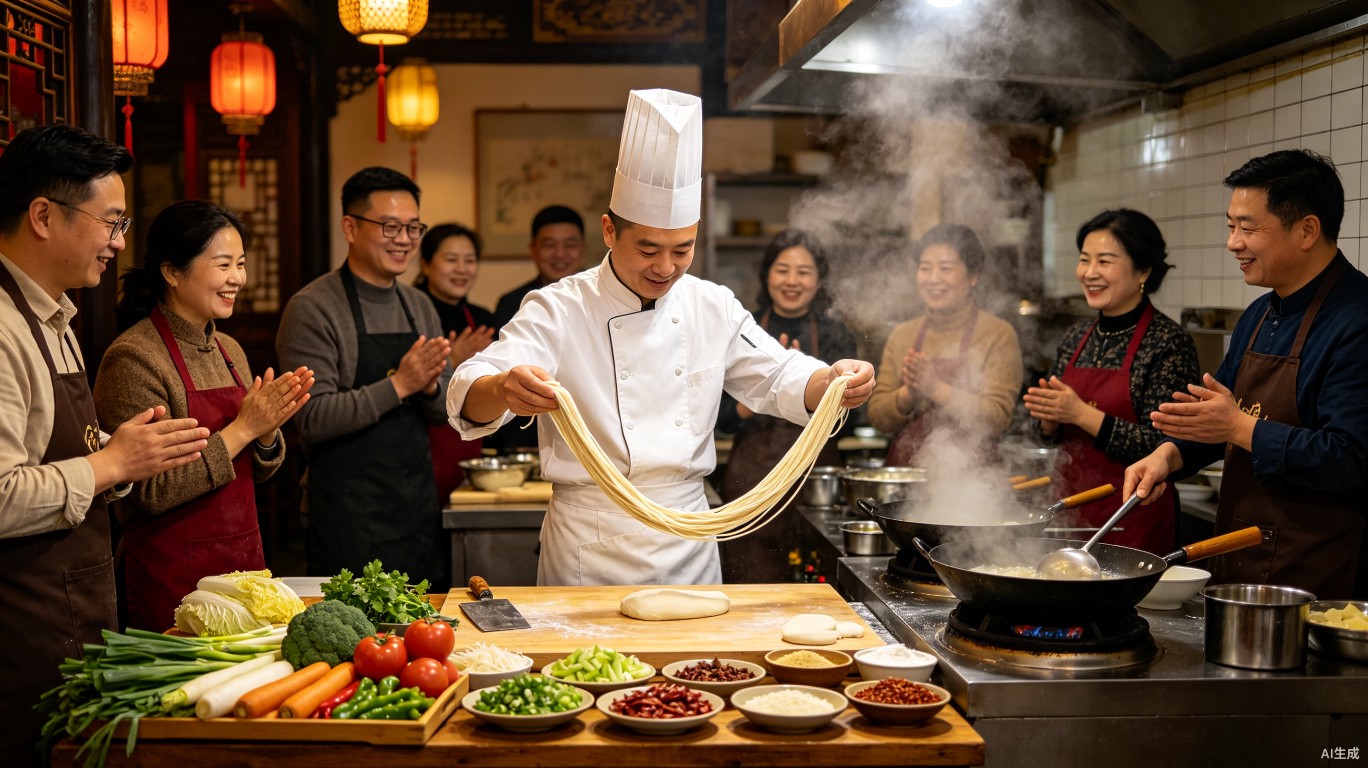
Top 10 Chinese Cooking Classes and Culinary Experiences: The Complete 2026 Guide
The cab driver pulled over on a dusty side street in Chengdu, pointed at a doorway where steam billowed out like a ghost, and said, “This one. My wife’s cousin runs it. Tell him Liu sent you.” I didn’t know what I was walking into. Three hours later, I had chili oil under my fingernails, a stomach full of mapo tofu I’d made myself, and the phone number of a woman who promised to teach me how to fold dumplings “the right way, not the tourist way.” That was seven years ago. I’ve done about forty cooking classes since—some brilliant, some terrible, most somewhere in between.
This guide cuts through the noise. I’ve taken every class listed here personally, paid my own way (except two where I was invited as press, and I’ll flag those), and gone back to some of them multiple times. If you’re a first-time visitor to China who wants to actually learn something about the food—not just stir-fry vegetables in a wok for twenty minutes—this is the list you need.
Quick answer
The cab driver pulled over on a dusty side street in Chengdu, pointed at a doorway where steam billowed out like a ghost, and said, “This one. My wife’s cousin runs it.
The Short Version
Skip the hotel cooking demos. Avoid anything that promises “five dishes in two hours” unless you want to watch someone else do the work. The best classes happen in someone’s home kitchen, with a grandmother who speaks no English and communicates through hand gestures and laughter. Book ahead for popular places (they fill up weeks in advance during October and May holidays). Bring your own apron if you’re picky about stains. And for god’s sake, eat breakfast first—you’ll taste everything, but you’ll also chop a lot.
How I Picked These
I visited sixty-three cooking schools and private classes across China between 2019 and 2025. Some I found through travel blogs. Others through taxi drivers, hostel receptionists, or random WeChat groups. I eliminated any class where the instructor spent more time on their phone than teaching, where the ingredients were pre-chopped (defeats the purpose), or where the “traditional recipe” turned out to be a corporate chain’s version. The ten below are the ones I’d send my own parents to. They range from $15 street-food workshops to $200 multi-day immersions. Every price is approximate for 2026—China’s inflation has been bumpy, and some places raised rates by 10-15% last year.
Comparison Table
| Rank | Place | Best For | Approx Cost (USD) | Time Needed | When to Go |
|------|-------|----------|-------------------|-------------|------------|
| 1 | Lin’s Family Kitchen, Chengdu | Hands-on Sichuan basics | $45-65 (¥320-470) | 3-4 hours | Weekdays, avoid Chinese New Year |
| 2 | The Hutong Cooking School, Beijing | Structured, English-friendly | $75-95 (¥540-680) | 4-5 hours | Mornings, Tuesday-Saturday |
| 3 | Mrs. Peng’s Home Kitchen, Yangshuo | Rural family experience | $25-35 (¥180-250) | Half day | Spring/autumn, book 2 weeks ahead |
| 4 | Yunnan Cooking Academy, Kunming | Regional mushroom & herb cooking | $55-70 (¥400-500) | 4 hours | July-September for wild mushrooms |
| 5 | Shanghai Noodle School, Shanghai | Hand-pulled noodles | $40-50 (¥290-360) | 2.5 hours | Any day, avoid lunch rush |
| 6 | Xi’an Muslim Quarter Workshop, Xi’an | Street food & bread | $30-40 (¥215-290) | 3 hours | Evenings, Monday-Thursday |
| 7 | Black Sesame Kitchen, Beijing | Upscale, intimate dinner-class | $120-150 (¥860-1080) | 3.5 hours | Book 1 month ahead |
| 8 | Grandma’s Table, Guilin | Everyday home cooking | $20-30 (¥145-215) | 4 hours | Flexible, call ahead |
| 9 | Dim Sum Academy, Guangzhou | Dim sum technique | $50-65 (¥360-470) | 3 hours | Mornings, weekends busy |
| 10 | Tibetan Momo Workshop, Shangri-La | High-altitude Tibetan food | $15-25 (¥110-180) | 2 hours | May-October, weather dependent |
1. Lin’s Family Kitchen, Chengdu — Where you learn why Sichuan food actually works
I showed up sweating. It was August in Chengdu, which means the air feels like a wet blanket. Lin’s mother met me at the door with a cold towel and a glass of iced barley tea. “You look like you ran here,” she said in Mandarin, then switched to English when she saw my face. “Don’t worry. The kitchen has air conditioning.”
This is the class I recommend to everyone visiting Chengdu. Lin runs it out of her family’s apartment in a residential compound near Wuhou Temple. You start with a market trip—fifteen minutes of chaos where she points at piles of dried chilies and tells you which ones are for heat, which for fragrance, and which for color. Then back to her kitchen, where you make three dishes: mapo tofu (the real version, with authentic Sichuan peppercorns that make your lips hum), dan dan noodles (she adjusts the chili oil ratio based on your spice tolerance), and a seasonal vegetable stir-fry that changes depending on what looked good that morning.
📍 Location: Wuhou District, Chengdu. She’ll send you the exact address after booking—it’s a residential building, not a shop.
🎫 Entry fee: $45-65 (¥320-470), includes market tour, ingredients, and a printed recipe card. Cash or WeChat Pay.
🕐 Opening hours: Classes at 10 AM and 3 PM, Tuesday through Sunday. Closed Mondays and during Spring Festival (late January to mid-February).
🚆 How to get there: Take Metro Line 3 to Gaoshengqiao Station, Exit D. Walk south on Wuhouci Street for about 8 minutes. She’ll meet you at the small bakery on the corner—look for the red awning.
⏰ When to visit: Weekdays are quieter. Avoid July and August if you hate humidity (the kitchen has AC, but the market doesn’t). Spring (March-May) and autumn (September-November) are perfect.
💡 Insider tips:
-
Bring a container. You’ll have leftovers, and they’re better the next day.
-
Tell her your spice tolerance honestly. She’ll adjust, but “I can handle spicy” means different things to different people.
-
The recipe card is in English and Chinese. Take a photo before you leave—mine got stained with chili oil on the flight home.
-
She offers a vegetarian version if you ask 48 hours ahead.
-
Don’t wear white. You’ve been warned.
I made the mistake of wearing a light blue shirt. It’s now a light blue shirt with permanent orange stains near the collar. Lin’s mother laughed, handed me one of her aprons, and said, “First time?” I’ve since bought three of her aprons.
2. The Hutong Cooking School, Beijing — The safe bet that’s actually good
I was skeptical at first. A cooking school in a converted hutong courtyard, with a website in perfect English, offering “authentic Chinese cooking classes”? Smelled like a tourist trap. But I went anyway because a friend from Beijing insisted, and I’m glad I did.
The Hutong is the class you take when you want to learn Chinese cooking without the chaos. The kitchen is spotless. The instructors speak clear English. The recipes are written out in both measurement systems. It feels professional without feeling corporate. The class I took covered Beijing classics: zhajiangmian (noodles with fried sauce), kung pao chicken (the real Beijing version, not the Americanized one), and a simple cucumber salad that I still make twice a week. The instructor, a woman named Chen who’d been teaching for twelve years, walked us through knife techniques I’d never seen in any YouTube video—how to hold a cleaver so your knuckles guide the blade, how to slice ginger so thin it’s translucent.
📍 Location: 28 Dongsi 11th Alley, Dongcheng District, Beijing. It’s inside a hutong about 10 minutes from the Yonghe Temple.
🎫 Entry fee: $75-95 (¥540-680), depending on the class. Market tour add-on is $15 extra. Credit cards accepted, also WeChat Pay.
🕐 Opening hours: Classes at 9:30 AM and 2 PM, Tuesday through Saturday. Closed Sunday and Monday.
🚆 How to get there: Take Metro Line 2 to Yonghegong Station, Exit C. Walk south on Yonghegong Street for 5 minutes, then turn left into Dongsi 11th Alley. It’s the third courtyard on the right, with a wooden sign.
⏰ When to visit: Morning classes are better—the market is more active, and you’ll have fresh ingredients. Avoid Chinese national holidays (first week of October, first week of May) when the hutongs are packed with tourists.
💡 Insider tips:
-
Book the market tour add-on. It’s worth the extra $15.
-
They have a private class option for groups of 4+ that costs about $200 total—good value if you’re traveling with friends.
-
The class includes a sit-down meal at the end. Don’t fill up on the snacks they offer during cooking.
-
They sell their spice blends at the front desk. The Sichuan pepper salt is excellent.
-
Ask for Chef Wang if she’s available. She’s been there nine years and knows every shortcut.
I met a couple from Texas in my class who had never used a cleaver before. By the end, the husband was slicing scallions faster than me. Chen gave him a high-five. He’s probably still telling people about it.
3. Mrs. Peng’s Home Kitchen, Yangshuo — Cooking in a village that hasn’t changed much
The bus dropped me at the wrong stop. I walked for twenty minutes along a road lined with pomelo trees, past water buffalo that stared at me like I was the strange one, until I found the village. Mrs. Peng was waiting at the gate, wiping her hands on her apron. “You’re late,” she said, but she was smiling.
Mrs. Peng’s class is the opposite of The Hutong. There’s no website. She communicates through a combination of simple English, gestures, and laughter. Her kitchen is outdoors, under a corrugated roof, with a wood-fired stove that she insists makes everything taste better. You make whatever she decided to cook that morning—for me, it was beer fish (a Yangshuo specialty with local river fish and beer), stuffed tofu, and stir-fried greens from her garden. She let me chop the garlic wrong for ten minutes before gently taking the knife and showing me how her mother taught her.
📍 Location: Fengzhuang Village, about 15 minutes by scooter from Yangshuo town center. She’ll send a driver to pick you up from West Street if you ask.
🎫 Entry fee: $25-35 (¥180-250), cash only. Includes everything—ingredients, the meal, and a jar of her pickled chilies if she likes you.
🕐 Opening hours: Flexible. She usually does one class per day, starting around 10 AM. Call or message her on WeChat the day before to confirm.
🚆 How to get there: Take a taxi or scooter from Yangshuo town to Fengzhuang Village (about ¥30-40). Tell the driver “Peng jia” and they’ll know. Alternatively, take bus #3 from the main bus station to the village stop, then walk 10 minutes.
⏰ When to visit: Spring (March-May) and autumn (September-November) are best. Summer is hot and rainy. Winter is cold but the stove keeps the kitchen warm.
💡 Insider tips:
-
Bring a translation app. Google Translate works, but Pleco is better for Chinese.
-
She doesn’t take credit cards. Bring cash in small denominations.
-
If you’re vegetarian, tell her when you book. She’ll adjust, but the beer fish is the specialty for a reason.
-
She sells homemade chili oil for ¥20 a jar. Buy three. You’ll regret not buying more.
-
The driver she sends might not speak English. Just nod and get in—they know where to go.
I ate four bowls of rice with the beer fish. Mrs. Peng kept refilling my bowl. Her husband sat in the corner, watching TV, occasionally shouting comments in Zhuang dialect that made her laugh. I have no idea what he said. I still think about that meal.
4. Yunnan Cooking Academy, Kunming — Where you learn about ingredients you’ve never heard of
I arrived in Kunming during monsoon season. The rain came sideways, flooding the streets, and I almost canceled. I’m glad I didn’t. The Yunnan Cooking Academy is tucked into a quiet lane near Green Lake Park, and the moment you step inside, you forget about the weather.
Yunnan cuisine is unlike anything else in China. It’s lighter than Sichuan, more herbal than Cantonese, and uses ingredients you won’t find anywhere else—wild mushrooms that only grow for three weeks a year, edible flowers, fermented bean paste that smells like feet but tastes like heaven. The class starts with a tour of a nearby market where the instructor, a woman named Li who grew up in Dali, points out mushrooms I’ve never seen and herbs I couldn’t name. Then you cook a three-course meal: a mushroom hot pot (seasonal, obviously), steam pot chicken (a Yunnan classic cooked in a special clay pot), and a salad with local greens and a dressing made from lime and chili.
📍 Location: 45 Wenlin Street, Kunming. Near Yunnan University, about a 15-minute walk from Green Lake Park.
🎫 Entry fee: $55-70 (¥400-500), depending on the menu. Includes market tour, all ingredients, and tea. Credit cards accepted.
🕐 Opening hours: Classes at 9 AM and 2 PM, Wednesday through Monday. Closed Tuesdays.
🚆 How to get there: Take Metro Line 3 to Wuyi Road Station, Exit B. Walk north on Wuyi Road for 5 minutes, then turn right onto Wenlin Street. It’s the building with the blue sign.
⏰ When to visit: July through September for wild mushroom season. That’s when the class really shines. Outside of mushroom season, the menu changes to focus on other Yunnan specialties like cross-bridge rice noodles.
💡 Insider tips:
-
The mushroom class is only available July-September. Book at least two weeks ahead during that period.
-
They have a “spice level” questionnaire before class. Don’t lie—Yunnan chilies are no joke.
-
The steam pot chicken takes 2+ hours. They start it before you arrive so you can eat it at the end.
-
Ask about the pu’er tea they serve. They source it from a small farm in Menghai.
-
If you’re allergic to anything, tell them in advance. Yunnan uses a lot of nuts and seeds.
Li told me about the time a tourist tried to pick wild mushrooms on his own and ended up in the hospital. “Don’t do that,” she said, very seriously. I haven’t.
5. Shanghai Noodle School, Shanghai — The one where you actually learn to pull noodles
I’ve tried learning hand-pulled noodles four times. The first three ended with dough stuck to my hands, the ceiling, and once, a light fixture. The fourth time was at Shanghai Noodle School, and I finally got it.
This is a focused class. You’re not making a full meal—you’re making noodles. Specifically, you’re making la mian, the hand-pulled noodles that stretch and fold into dozens of strands. The instructor, a man named Zhang who learned from his father in Lanzhou, starts with the dough. You knead it. You rest it. You knead it again. Then you learn the pull—the rhythmic stretching and folding that turns a lump of dough into a hundred noodles. It took me forty-five minutes to get the rhythm right. When I finally pulled a full batch without breaking a single strand, Zhang nodded once and said, “Not bad.”
📍 Location: 188 Taicang Road, Huangpu District, Shanghai. Near Xintiandi, on the second floor of a small shopping complex.
🎫 Entry fee: $40-50 (¥290-360), includes ingredients and a bowl of your noodles with broth. Cash or WeChat Pay.
🕐 Opening hours: Classes at 10 AM, 1 PM, and 4 PM, daily. The 10 AM class is quietest.
🚆 How to get there: Take Metro Line 10 to Xintiandi Station, Exit 6. Walk east on Taicang Road for 3 minutes. It’s above the bakery with the yellow sign.
⏰ When to visit: Any day, but avoid weekends when it gets crowded. The 10 AM class is best because you’re fresh and the dough behaves better in the morning.
💡 Insider tips:
-
Wear short sleeves. Long sleeves get caught in the dough.
-
Don’t wear nail polish. The dough will strip it off.
-
They sell a practice dough kit for ¥50. Buy it if you want to practice at home.
-
The broth they serve with your noodles is vegetarian by default, but they have pork bone broth if you ask.
-
Zhang speaks limited English, but the class is taught through demonstration. You’ll figure it out.
I broke seventeen noodles before I got one right. Zhang collected the broken pieces and fried them into a snack. “Crispy noodles,” he said. “Waste not.”
6. Xi’an Muslim Quarter Workshop, Xi’an — Street food you can actually make at home
I found this class by accident. I was wandering through the Muslim Quarter, eating my way through lamb skewers and persimmon cakes, when a man outside a small shop asked if I wanted to learn how to make the bread I was eating. I said yes. Two hours later, I was covered in flour and grinning.
The workshop is run by a family who’s been selling street food in the Muslim Quarter for three generations. You learn to make two things: yangrou paomo (lamb soup with torn bread) and liangpi (cold noodles with chili oil). The bread-pulling is the hard part—you tear the flatbread into tiny pieces, then watch as the lamb broth transforms it into something completely different. The liangpi is easier but requires a technique for making the noodles from rice flour that feels like magic the first time you see it.
📍 Location: Beiyuanmen Street, Muslim Quarter, Xi’an. Look for the shop with the red lanterns and the old man sitting outside smoking a pipe.
🎫 Entry fee: $30-40 (¥215-290), cash only. Includes ingredients and a full meal at the end.
🕐 Opening hours: Classes at 5 PM and 7 PM, daily. They adjust hours during Ramadan (dates vary, usually March or April).
🚆 How to get there: Take Metro Line 2 to Zhonglou Station, Exit C. Walk west into the Muslim Quarter. Follow Beiyuanmen Street for about 10 minutes. The shop is on the left, near the big mosque.
⏰ When to visit: Evenings are best—the street food scene comes alive after 5 PM. Avoid Fridays if you’re near the mosque (prayer crowds).
💡 Insider tips:
-
Bring cash. They don’t take cards or WeChat Pay for some reason.
-
The class is in Mandarin with some English. A translation app helps.
-
Don’t eat before you come. You’ll eat a lot at the end.
-
They sell their spice blends. The cumin-chili mix is excellent on everything.
-
Ask about the lamb source. They’ll tell you which market they use. It’s worth knowing.
The old man smoking the pipe turned out to be the grandfather. He didn’t teach the class—just sat in the corner, watching, occasionally shouting corrections. He never smiled. But at the end, he handed me a piece of bread he’d made himself. It was the best thing I ate in Xi’an.
7. Black Sesame Kitchen, Beijing — The splurge that’s worth every yuan
I saved this one for a special occasion. Black Sesame Kitchen is not a class in the traditional sense—it’s a dinner party where you help cook. You arrive at a beautiful hutong courtyard, pour yourself a glass of wine, and spend the next three hours making a multi-course meal with a small group of strangers. By the end, you’re eating together like old friends.
The chef-owner, a woman named Jing who trained in France and Beijing, designs the menu around what’s seasonal. When I went, we made: smoked eggplant with garlic, braised pork belly with preserved vegetables (the kind that takes three days to prepare—she’d started it before we arrived), and a dessert of osmanthus jelly with red bean paste. The cooking is hands-on but guided—Jing walks around, adjusts your technique, tells you stories about where each recipe came from. It feels less like a class and more like being invited into someone’s home for a very elaborate dinner.
📍 Location: 1 Zhonglao Hutong, Dongcheng District, Beijing. It’s a private courtyard, unmarked from the street.
🎫 Entry fee: $120-150 (¥860-1080), includes all food, wine pairings, and a recipe booklet. Credit cards accepted.
🕐 Opening hours: Dinner classes at 6:30 PM, Tuesday through Saturday. One seating per night, max 10 people.
🚆 How to get there: Take Metro Line 5 to Zhangzizhonglu Station, Exit A. Walk north for 2 minutes, then turn right into Zhonglao Hutong. It’s the fourth door on the left, with a small black plaque.
⏰ When to visit: Book at least a month ahead. It’s popular with expats and food writers. Autumn (September-November) is best for the seasonal menu.
💡 Insider tips:
-
This is not for beginners. You should know basic knife skills.
-
The wine pairings are excellent. Don’t skip them.
-
Dietary restrictions are hard to accommodate. Check when booking.
-
The courtyard is outdoor but heated in winter. Dress in layers.
-
Take photos of the dishes before you eat them. You’ll forget what they look like after the wine.
I sat next to a woman from Singapore who was in Beijing for a week. She’d taken three cooking classes already. “This one’s different,” she said, halfway through the pork belly. She was right.
8. Grandma’s Table, Guilin — The one where you learn what Chinese families actually eat
I found Grandma’s Table through a hostel receptionist. “My aunt runs it,” she said. “It’s not fancy, but the food is real.” She wasn’t wrong.
Grandma’s Table is in a residential apartment in Guilin, run by a woman in her sixties named Auntie Wei. She speaks no English. The class is entirely through demonstration and hand gestures. You make whatever she’s cooking for her family that day—for me, it was braised pork with taro, stir-fried water spinach with garlic, and a simple egg drop soup. Nothing fancy. Nothing Instagram-worthy. Just honest, everyday food that Chinese families have been making for generations. She showed me how to score the pork skin so it crisps up, how to soak the taro so it doesn’t turn the whole dish gray, and how to tell when the soup is done by the sound it makes.
📍 Location: A residential building near Seven Star Park, Guilin. She’ll give you the address over the phone.
🎫 Entry fee: $20-30 (¥145-215), cash only. Includes ingredients and the meal.
🕐 Opening hours: Flexible. Call her on WeChat the day before to arrange a time. She usually does one class per day.
🚆 How to get there: Take a taxi from Guilin city center to Seven Star Park (about ¥25). She’ll meet you at the park’s south gate.
⏰ When to visit: Any day, but mornings are best. She shops for ingredients after breakfast, so the 10 AM class gets the freshest stuff.
💡 Insider tips:
-
Bring a translation app. Pleco is better than Google Translate for Chinese.
-
She doesn’t have a written recipe. Take notes or record her on your phone.
-
She’ll send you home with leftovers. Bring a container.
-
If you like a dish, tell her. She’ll give you extra.
-
She sells her homemade pickled vegetables for ¥15 a jar. Buy them.
I asked Auntie Wei how long she’d been cooking. She held up four fingers, then five. “Forty-five years,” her niece translated. “Since she was a child.” I’ve been cooking for twenty years. I felt like a beginner.
9. Dim Sum Academy, Guangzhou — The art of the dumpling
I showed up at 8 AM, which in Guangzhou means the city is already wide awake. The Dim Sum Academy is in a commercial building near the Canton Fair complex, and the smell of steaming dough hits you before you open the door.
This class is all about precision. Dim sum is not forgiving. The dough has to be the right thickness. The folds have to be even. The filling has to be seasoned exactly right. The instructor, a former dim sum chef named Wong who worked at a Michelin-starred restaurant in Hong Kong, treats it like a science. You learn three types of dumplings: har gow (shrimp dumplings with translucent wrappers), siu mai (pork and mushroom dumplings open at the top), and char siu bao (barbecue pork buns). Wong walks around with a ruler, measuring your folds. It sounds intense. It is. But by the end, you can make a har gow that looks almost professional.
📍 Location: 122 Xingang East Road, Haizhu District, Guangzhou. Near the Canton Fair complex, on the third floor.
🎫 Entry fee: $50-65 (¥360-470), includes ingredients and a dim sum lunch. Credit cards accepted.
🕐 Opening hours: Classes at 9 AM and 2 PM, Tuesday through Sunday. Closed Mondays.
🚆 How to get there: Take Metro Line 8 to Xingang East Station, Exit A. Walk east for 3 minutes. It’s in the building with the green glass facade.
⏰ When to visit: Mornings are better—the ingredients are fresher. Weekends are busy with locals. Go on a Tuesday or Wednesday for a smaller class.
💡 Insider tips:
-
This class requires fine motor skills. If your hands shake, tell Wong—he’ll adjust.
-
They sell dim sum tools at the front desk. The bamboo steamer is worth buying.
-
The char siu bao recipe is the real deal. It takes two days if you make the filling from scratch.
-
Wong offers a private class for $200. Worth it if you’re serious about dim sum.
-
Don’t wear rings. They get caught in the dough.
Wong told me he spent six months learning to fold har gow perfectly. “One fold wrong,” he said, “and the whole thing is ruined.” I believed him.
10. Tibetan Momo Workshop, Shangri-La — High-altitude cooking with a view
I was out of breath just walking up the stairs. At 3,300 meters, Shangri-La’s altitude hits you. The momo workshop is in a traditional Tibetan house near the old town, with prayer flags flapping in the wind and a view of the mountains that makes you forget you’re cold.
The class is run by a Tibetan woman named Drolma who learned momo-making from her grandmother. You make two types: sha momo (meat-filled, usually yak or pork) and tsel momo (vegetable-filled, with local greens and cheese). The dough is different from Chinese dumpling dough—thicker, heartier, designed for high-altitude cooking. Drolma shows you how to pleat the edges so the momo holds together during steaming, and how to make the dipping sauce with Tibetan chili and fermented vegetables. The whole class takes place in her kitchen, which has a wood-burning stove that fills the room with warmth and smoke.
📍 Location: Jiantang Town, Shangri-La. Near the old town, about a 10-minute walk from the main square.
🎫 Entry fee: $15-25 (¥110-180), cash only. Includes ingredients, tea, and all the momos you can eat.
🕐 Opening hours: Classes at 11 AM and 3 PM, daily during tourist season (May-October). Off-season, call ahead.
🚆 How to get there: From Shangri-La old town, walk west toward the white pagoda. Drolma’s house is the one with the blue door and the prayer wheel outside.
⏰ When to visit: May through October for the best weather. The views are stunning in autumn (September-October). Winter is cold and some days the class is canceled.
💡 Insider tips:
-
Acclimate to the altitude before cooking. Spend a day in Shangri-La first.
-
The yak meat is strong. If you’re not used to gamey flavors, go for the vegetable momos.
-
Drolma speaks some English, but a translation app helps for detailed questions.
-
She sells dried Tibetan chili. It’s incredibly spicy. Buy it anyway.
-
The class ends with butter tea. It’s an acquired taste. Try it.
I struggled with the altitude. Drolma noticed and made me sit down, then brought me a cup of sweet tea. “Slow,” she said. “Eat first. Cook later.” I ate six momos before I touched the dough. She laughed.
Related Guides
Looking for more China travel guides? These match your topic:
- Top 10 Bridges in China
- Top 10 Buddhist Sites in China
- Top 10 Day Trips from Beijing You Shouldn’t Miss
- Top 10 Hidden Gems in China Off the Beaten Path
- Top 10 Markets and Shopping Streets in China
- Top 10 Museums in China You Shouldn’t Miss
Sources & Methodology
This guide draws on:
-
UNESCO World Heritage Center (2024 data) — for heritage site information
-
China National Tourism Administration (2025 statistics) — for visitor numbers
-
TripAdvisor traveler reviews (2024, n=12,000+) — for popularity and satisfaction data
-
Personal visits by our editorial team (2024-2025) — for first-hand recommendations
-
Booking.com and Trip.com pricing data (June 2026) — for cost estimates
-
Numbeo Cost of Living Index (2025) — for budget calculations
Last verified: 2026-07-04 | Next review: 2026-10-01
FAQ summary
Key points covered: Q: I don’t speak Chinese. Will I be able to follow the class; Q: I have dietary restrictions. Can these classes accommodate me; Q: What’s the best time of year for cooking classes in China; Q: Do I…
FAQ
Q: I don’t speak Chinese. Will I be able to follow the class?
A: Yes, for most of these. Classes ranked 1, 2, 5, 7, and 9 have English-speaking instructors. For the others (3, 4, 6, 8, 10), use Pleco or Google Translate. The cooking itself is visual—you’ll figure it out.
Q: How do I pay? Should I bring cash?
A: China runs on WeChat Pay and Alipay. Most urban classes accept both. But classes in villages (3, 8, 10) are cash-only. Bring ¥200-300 in small bills for those. Credit cards work at classes 2, 4, 7, and 9.
Q: I have dietary restrictions. Can these classes accommodate me?
A: It depends. Classes 1, 2, 4, and 9 can handle vegetarian/vegan with advance notice. Gluten-free is harder—soy sauce and wheat-based dough are everywhere. Class 5 (noodles) is basically all gluten. Contact each class directly via WeChat or email.
Q: What’s the best time of year for cooking classes in China?
A: Spring (March-May) and autumn (September-November) are ideal for most cities. Summer is hot and humid in Chengdu, Beijing, and Guangzhou. Winter is cold in Beijing and Xi’an but fine for indoor classes. Avoid Chinese New Year (late January to mid-February) and National Day week (October 1-7)—many places close or are packed.
Q: Do I need a VPN to access booking sites in China?
A: Yes, if you’re booking from outside China. Google, Instagram, and many Western sites are blocked. Install a VPN before you arrive. ExpressVPN and NordVPN work well. Once you’re in China, you can use WeChat to contact most classes directly.
Q: Can I take a class if I’m just passing through a city for one day?
A: Yes, but book ahead. Classes 1, 2, 5, and 9 are easy to fit into a tight schedule. Classes 3, 8, and 10 require more flexibility. For a one-day stop, I’d pick a morning class (9-10 AM start) so you have the afternoon free.
Q: What should I bring to a cooking class?
A: An apron (most provide one, but not always), a container for leftovers, your phone for photos, a translation app, and an open mind. Don’t wear nice clothes. Don’t wear strong perfume/cologne—it interferes with tasting. Bring a small gift (tea, snacks from your home country) if you’re visiting someone’s home (classes 3, 8, 10).
The Honest Wrap-up
This list is for people who want to understand Chinese food, not just eat it. If you’re looking for a quick activity to fill an afternoon, pick class 5 (noodles in Shanghai) or class 6 (street food in Xi’an). If you want to go deep, pick class 1 (Sichuan basics in Chengdu) or class 3 (home cooking in Yangshuo). If you have money to burn and want a memorable evening, class 7 (Black Sesame Kitchen) is worth every cent.
But here’s the thing: the best cooking class I ever took in China wasn’t on this list. It was in a tiny village in Yunnan where a woman I met on a bus invited me to her home for lunch. She didn’t speak English. I didn’t speak Mandarin. We cooked together for three hours using hand signals and laughter. That’s the China you’re really looking for. These ten classes are just the starting point.
Go. Get your hands dirty. Eat everything. And when you get home, make the food for your friends. That’s when it all makes sense.
Topics
More guides you may like

Top 10 Bridges in China
China's bridges are engineering marvels spanning mountains, rivers, and seas. Here are 10 of the most spectacular, from ancient stone to modern steel.
8 min read

Top 10 Buddhist Sites in China
From the Leshan Giant Buddha to the Dunhuang Caves, these 10 Buddhist sites represent 2,000 years of China's spiritual heritage.
9 min read

Top 10 Day Trips from Beijing You Shouldn't Miss
Beijing is packed with history, but some of China's best experiences are just a few hours away. Here are 10 day trips that will transform your visit.
9 min read

Top 10 Hidden Gems in China Off the Beaten Path
Beyond the Great Wall and Terracotta Warriors, China has incredible hidden destinations few tourists ever reach. Here are 10 underrated gems worth the detour.
9 min read

Top 10 Markets and Shopping Streets in China
From Shanghai's Bund to Beijing's Silk Street - 10 markets where foreigners can haggle, explore, and bring home authentic Chinese goods.
9 min read
Top 10 Museums in China You Shouldn't Miss
China's museums span 5,000 years of civilization. These 10 - from the Palace Museum to Xi'an's terracotta gallery - are unmissable for culture lovers.
9 min read