
Top 10 Chinese Gardens: The Complete 2026 Guide
A comprehensive travel guide for international visitors planning a trip to China. Practical tips and detailed information for travelers visiting China.
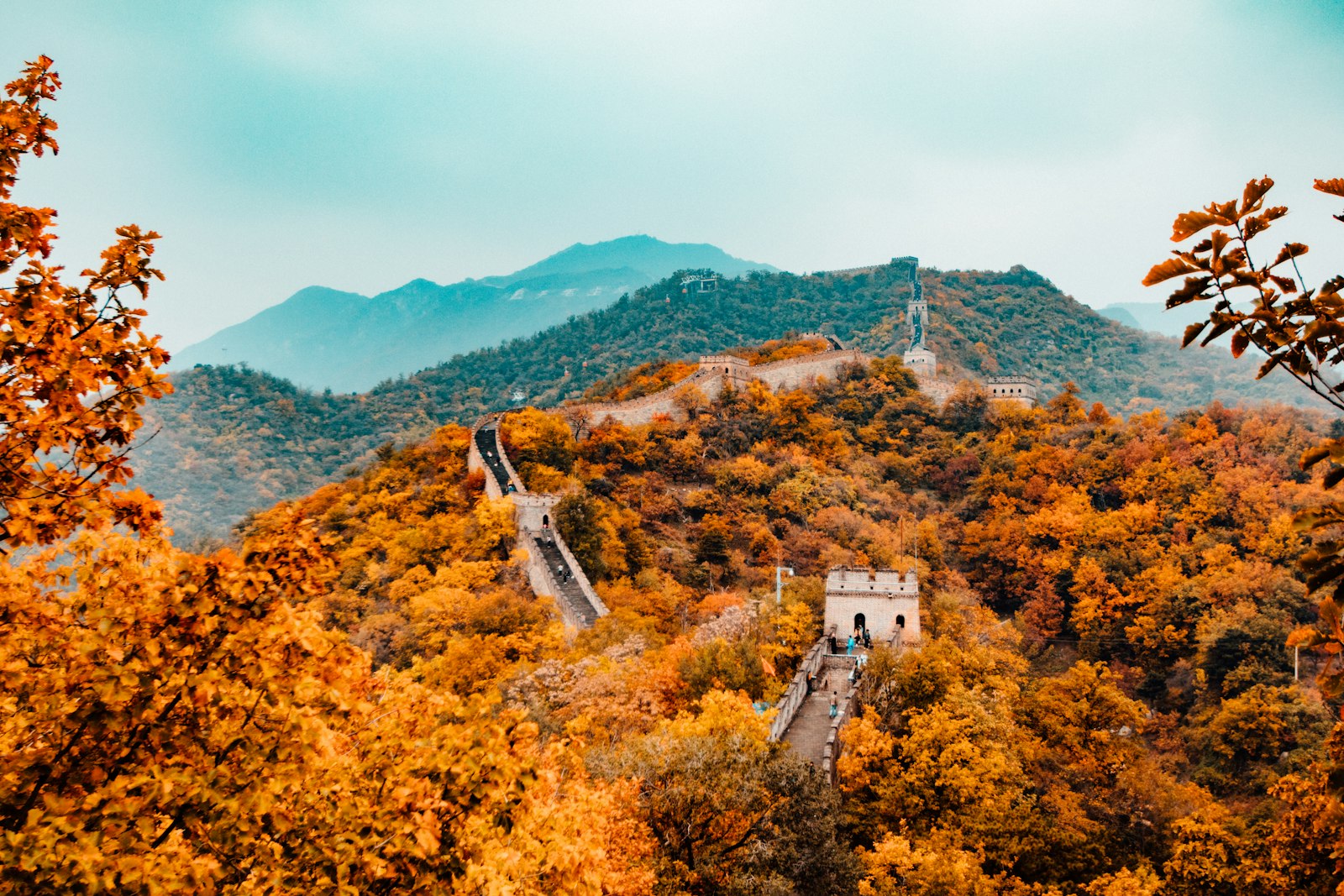
The cab driver in Suzhou laughed at me when I asked if the Humble Administrator’s Garden was worth the hype. “Laowai,” he said, shaking his head, “you’ll walk in circles for two hours and think you’ve seen China.” He wasn’t wrong about the circles—the garden is a maze of zigzag bridges and hidden courtyards—but he was wrong about the payoff. I spent three hours there that afternoon, and when I finally sat down by the lotus pond, the rain came sideways off the buildings, turning the whole place into a watercolor painting that had somehow come to life. That’s the thing about Chinese gardens. They don’t just show you nature. They make you feel like you’re inside a poem.
This list is for the traveler who wants more than a photo op. These are gardens where you can actually slow down, drink tea, and watch the light change. I’ve visited every single one on this list, most of them multiple times, and I’ve made every mistake you can make—showing up on a Monday when it’s closed, getting lost on the wrong bus, paying triple for a tour guide who didn’t speak English. This guide will save you from all of that.
Top 10 Chinese Gardens: The Complete 2026 Guide
The Short Version
If you only have time for three: the Humble Administrator’s Garden in Suzhou, the Summer Palace in Beijing, and the Mountain Resort in Chengde. Skip the Garden of the Master of the Nets if you hate crowds. Don’t skip the Lingering Garden if you love photography. And whatever you do, don’t go to any garden on a Chinese national holiday unless you enjoy shuffling through a crowd like you’re in a Tokyo subway car.
How I Picked These
I didn’t Google “best Chinese gardens” and copy a list. Over seven years of living in Beijing and 40+ trips around the country, I’ve visited maybe 60 gardens total. I talked to gardeners, architecture professors, and the old men who play chess under the pavilions. I looked for places that felt genuinely different from each other—not just more rocks and more water. I also prioritized gardens that are actually accessible for a first-time visitor: good transport, decent English signage, and nearby food that won’t make you sick. A few famous gardens didn’t make the cut because they’re too hard to reach or too overrun with tour groups.
Comparison Table
| Rank | Place | Best For | Approx Cost (USD) | Time Needed | When to Go |
|---|---|---|---|---|---|
| 1 | Humble Administrator’s Garden | First-time garden experience | $8-10 (¥60-70) | 2-3 hours | April-May or October |
| 2 | Summer Palace | Grand scale + lake views | $5-9 (¥35-60) | 3-4 hours | May or September weekdays |
| 3 | Mountain Resort (Chengde) | Escape from city crowds | $6-8 (¥45-55) | 4-5 hours | June or September |
| 4 | Lingering Garden | Photography and details | $7-8 (¥50-55) | 1.5-2 hours | Early morning, any season |
| 5 | Yuyuan Garden | Urban oasis in Shanghai | $4-5 (¥30-40) | 1-2 hours | Weekday mornings |
| 6 | Garden of the Master of the Nets | Evening garden experience | $4-7 (¥30-50) | 1-1.5 hours | April-October evenings |
| 7 | Lion Grove Garden | Rock labyrinth fun | $5-7 (¥40-50) | 1-1.5 hours | Weekdays, early morning |
| 8 | Prince Gong’s Mansion | History + garden combo | $5-6 (¥40-45) | 2-3 hours | Tuesday-Thursday |
| 9 | Ge Garden (Yangzhou) | Bamboo lovers | $4-5 (¥30-45) | 1-2 hours | March-April |
| 10 | West Lake Gardens (Hangzhou) | Free roaming | Free-¥10 | 2-4 hours | March-May or October |
1. Humble Administrator’s Garden — The One That Started It All
I sat on a stone bench by the water for twenty minutes before I noticed the reflection. The pavilion behind me was perfectly doubled in the pond, and a koi fish swam right through the middle of the mirrored roof. That’s when I understood why the Chinese call these gardens “three-dimensional paintings.”
This is the most famous garden in Suzhou for a reason. Built in 1509 by a Ming dynasty government official who got tired of politics, it’s the largest classical garden in the city at 5.2 hectares. The design is pure subtle genius—every window frames a different view, every path forces you to slow down and turn corners. It’s not flashy. It’s patient.
📍 Suzhou, Gusu District, 178 Dongbei Street
🎫 $8-10 (¥60-70), free for kids under 6
🕐 7:30 AM – 5:30 PM (Nov-Feb), 7:30 AM – 6:00 PM (Mar-Oct). Last entry 30 min before close.
🚆 Take Line 1 to Beisita Station, Exit 4. Walk north 5 minutes. The entrance is on your right.
⏰ Go at 8:00 AM on a Tuesday. By 10:00 the tour groups arrive.
💡 Insider tips: Rent the audio guide ($3/¥20)—the English is decent. Don’t miss the “Fragrant Snow Pavilion” in winter when the plum trees bloom. The teahouse inside sells passable jasmine tea for $2 (¥15). Bring cash; the card reader breaks often. If it rains, stay—the garden is better in the rain.
I met an old calligrapher named Mr. Chen who sits by the lotus pond every morning. He showed me how to read the garden’s name carved into a stone. “Humble,” he said, “means nothing if you can’t see the sky in the water.”
2. Summer Palace — Beijing’s Grandest Escape
The first time I went, I made the mistake of trying to see everything in one day. By 3 PM I was exhausted, my feet hurt, and I hadn’t even found the marble boat. The Summer Palace isn’t a garden—it’s a 290-hectare imperial playground with a lake, a hill, and enough pavilions to keep you busy for a week.
Built in 1750 and rebuilt after the British and French destroyed it in 1860, this was where the Empress Dowager Cixi spent her summers. The Long Corridor—a covered walkway painted with 14,000 scenes from Chinese mythology—stretches for 728 meters. The Kunming Lake is man-made, dug entirely by hand. The scale is absurd.
📍 Beijing, Haidian District, 19 Xinjiangongmen Road
🎫 $5 (¥35) for the park, $9 (¥60) for the full combo including the tower and palace buildings
🕐 6:30 AM – 6:00 PM (Nov-Mar), 6:00 AM – 8:00 PM (Apr-Oct)
🚆 Take Line 4 to Beigongmen Station, Exit D. Walk 3 minutes east. Or take Line 10 to Bagou, then a 10-minute bus.
⏰ Weekday mornings. Avoid weekends entirely.
💡 Insider tips: Enter through the East Gate, not the main gate—shorter lines. Rent a paddleboat on Kunming Lake ($8/¥60 per hour) in spring. The Suzhou Street shopping area inside is touristy but fun. Bring your own snacks; the food inside is overpriced and mediocre. Download a VPN before you come—the park has bad cell reception and you’ll want Google Maps.
I watched a group of retired Beijingers doing tai chi on the lake shore at sunrise. One of them, a woman named Li, told me she’s been coming here every morning for 12 years. “The garden changes,” she said, “but the lake stays the same.”
3. Mountain Resort (Chengde) — The Qing Dynasty’s Summer Home
This place is weird in the best way. The Mountain Resort in Chengde is a 5.6-square-kilometer complex that tries to replicate the entire Chinese empire in miniature. There’s a miniature Great Wall, a miniature West Lake, and a miniature Tibetan Potala Palace. It’s like someone built a theme park for emperors, but with actual historical significance.
The Kangxi and Qianlong emperors built this between 1703 and 1792 as a summer escape from Beijing’s heat. It’s a UNESCO site and it’s massive—you’ll walk 5-8 kilometers just to see the highlights. The surrounding Eight Outer Temples are worth a separate visit.
📍 Chengde, Hebei Province, 20 Lishugou Road
🎫 $6-8 (¥45-55) for the resort, additional $4 (¥30) for the temples
🕐 8:00 AM – 5:30 PM (summer), 8:30 AM – 5:00 PM (winter)
🚆 Take a high-speed train from Beijing to Chengde (2 hours, $25/¥180). Then bus #5 or #15 from the station.
⏰ June or September. July is too hot.
💡 Insider tips: Take the electric cart ($3/¥20) to the top of the hill—the walk is brutal. The miniature Great Wall section is actually fun to climb. Bring a hat and sunscreen; there’s almost no shade on the upper paths. The local specialty is “Chengde lamb” but I’d skip it—the vegetarian options at the resort cafeteria are safer. English signage is poor; download Pleco translation app.
A taxi driver named Wang told me he’s never actually been inside the resort. “I drive tourists there every day,” he said, “but I’m too busy working to see it.” I bought him a ticket. He cried.
4. Lingering Garden — The Photographer’s Paradise
This is the smallest garden on the list and the most photogenic. The Lingering Garden in Suzhou is famous for its “borrowed scenery”—the way it uses windows, mirrors, and carefully placed rocks to make the space feel three times larger than it actually is. Every corner is a composition.
Built in 1593 by a Ming dynasty official, it was expanded in the Qing dynasty and became known for its collection of strange limestone rocks. The “Cloud-Capped Peak” rock in the center is over 6 meters tall and weighs 5 tons. It was supposedly shipped from Lake Tai, 100 kilometers away, by barge.
📍 Suzhou, Gusu District, 338 Liuyuan Road
🎫 $7-8 (¥50-55)
🕐 7:30 AM – 5:30 PM (winter), 7:30 AM – 6:00 PM (summer)
🚆 Take Line 2 to Shantang Street Station, Exit 1. Walk 10 minutes west.
⏰ Early morning, 7:30 AM sharp. The light is perfect for photos.
💡 Insider tips: The best photo spot is the “Winding Corridor” at 8:00 AM when the sun hits the wooden lattice. The rock garden is better seen than photographed—it’s too three-dimensional for a flat image. The small teahouse in the back serves the best green tea in Suzhou ($3/¥20). Don’t touch the rocks; they’re fragile and the guards will yell at you.
I spent an hour trying to photograph the same reflection in a window. A local photographer named Zhang eventually tapped my shoulder and adjusted my angle. “You’re shooting the reflection,” he said. “Shoot the window. The reflection will follow.”
5. Yuyuan Garden — Shanghai’s Urban Oasis
Yuyuan Garden is surrounded by the chaos of the Old City—scooters, street food vendors, and the famous Yuyuan Bazaar. The garden itself is a walled sanctuary of calm. Built in 1559 by a Ming dynasty official named Pan Yunduan, it was designed as a filial gift for his parents. The name means “Garden of Happiness.”
It’s smaller than the Suzhou gardens and more crowded, but it has a distinct personality. The Exquisite Jade Rock in the center is a 3.3-meter-tall piece of porous limestone that supposedly weighs 5 tons. Legend says it was meant for the emperor but got “lost” on its way to Beijing.
📍 Shanghai, Huangpu District, 218 Anren Street
🎫 $4-5 (¥30-40)
🕐 9:00 AM – 4:30 PM (winter), 8:30 AM – 5:00 PM (summer)
🚆 Take Line 10 to Yuyuan Garden Station, Exit 1. Walk 5 minutes south.
⏰ Weekday mornings. Weekends are a nightmare.
💡 Insider tips: The bazaar outside is overpriced—skip the “souvenirs” and eat the xiaolongbao (soup dumplings) at the Din Tai Fung nearby. The garden gets packed by 11:00 AM. Go at 8:30 AM and you’ll have it mostly to yourself. The “Grand Rockery” is a 14-meter-high artificial mountain made from 2,000 tons of stone—you can climb it. The English audio guide is worth $2 (¥15).
I watched a French tourist try to haggle with a shopkeeper over a jade bracelet. The shopkeeper, a woman named Aunty Chen, finally said in perfect English, “Young man, this is not a market. I have a price. You have a choice.” He paid full price.
6. Garden of the Master of the Nets — The Night Garden
Most gardens close at 5 PM. This one comes alive after dark. The Garden of the Master of the Nets in Suzhou is the smallest of the classical gardens (0.5 hectares), but it has a special evening program from April to October where they light lanterns, play traditional music, and perform Kunqu opera in the pavilions.
Built in 1770 by a retired government official, it was named after a fisherman—a metaphor for living a simple, detached life. The garden is famous for its “borrowed scenery” technique, where a small courtyard uses a window to frame a view of a larger space.
📍 Suzhou, Gusu District, 11 Kuojiatou Lane
🎫 $4 (¥30) day, $7 (¥50) evening
🕐 7:30 AM – 5:00 PM (day), 7:00 PM – 9:30 PM (evening, Apr-Oct only)
🚆 Take Line 4 to Nanmen Station, Exit 3. Walk 8 minutes north.
⏰ Evening shows start at 7:30 PM. Arrive at 6:30 to explore in daylight first.
💡 Insider tips: The evening tickets sell out—buy them online via WeChat at least a day in advance. The opera performance is short (20 minutes) but beautiful. Bring mosquito repellent; the pond attracts bugs. The garden is tiny—you’ll finish in 30 minutes if you walk fast, so take your time. Don’t bother with the day visit; it’s too small to justify the trip alone.
A British couple next to me during the opera kept whispering about how “romantic” it was. They got engaged by the koi pond afterward. The fish didn’t seem to care.
7. Lion Grove Garden — The Rock Maze
This garden is famous for one thing: a labyrinth of 9,000 tons of Taihu limestone rocks arranged into a maze. The rocks are shaped like lions—or so the legend goes. I spent 20 minutes inside the maze and got completely lost. A little Chinese girl had to lead me out.
Built in 1342 during the Yuan dynasty, it was originally part of a Buddhist monastery. The name comes from the lion shapes in the rocks, which symbolize the Lion of Buddhism. It’s smaller than the Humble Administrator’s Garden but more playful.
📍 Suzhou, Gusu District, 23 Yuanlin Road
🎫 $5-7 (¥40-50)
🕐 7:30 AM – 5:00 PM (winter), 7:30 AM – 5:30 PM (summer)
🚆 Take Line 4 to Beisita Station, Exit 1. Walk 5 minutes south.
⏰ Early morning on a weekday. The maze gets clogged with kids on weekends.
💡 Insider tips: The rock maze has a hidden exit near the back wall—look for the small pavilion. The “Flying Rainbow Bridge” gives the best view of the rocks from above. Don’t climb on the rocks; they’re unstable and the guards are strict. The garden connects to the Suzhou Museum (free entry) through a back gate—ask a guard.
I got so lost in the maze that I started laughing. An elderly Chinese man saw me, shook his head, and pointed to a gap between two rocks. “That way,” he said. “You’re not the first.”
8. Prince Gong’s Mansion — Beijing’s Hidden Garden
Most tourists in Beijing go to the Forbidden City and the Summer Palace. They miss this one. Prince Gong’s Mansion is a Qing dynasty prince’s residence with a beautiful back garden that feels like a secret. It’s smaller, quieter, and far less crowded.
Built in 1777 for the corrupt official He Shen (who was later executed for his crimes), it was later given to Prince Gong, a key figure in the late Qing dynasty. The garden has a man-made hill, a winding stream, and a two-story opera stage.
📍 Beijing, Xicheng District, 17 Liuyin Street
🎫 $5-6 (¥40-45)
🕐 8:00 AM – 5:00 PM (winter), 8:00 AM – 6:00 PM (summer). Closed Mondays.
🚆 Take Line 6 to Beihai North Station, Exit B. Walk 10 minutes east.
⏰ Tuesday or Wednesday morning.
💡 Insider tips: The “Grand Opera Stage” inside has performances on weekends ($10/¥70)—book ahead. The garden’s “Fragrant Snow” pavilion is the best spot for photos. The nearby Hutong area is worth exploring afterward. Bring cash; the ticket booth sometimes has card issues. The English audio guide is decent but skips some details.
I sat next to a local history teacher named Mr. Zhao who was explaining the mansion to his students. He told me that He Shen’s wealth was so vast that when he was executed, the government recovered enough silver to fund the entire Qing treasury for 15 years.
9. Ge Garden (Yangzhou) — The Bamboo Garden
Yangzhou doesn’t get as many tourists as Suzhou, which is exactly why you should go. Ge Garden is a Qing dynasty garden built around bamboo. The name “Ge” sounds like the Chinese word for bamboo, and the garden has over 60 varieties of the plant.
Built in 1818 by a salt merchant, the garden is famous for its four-season rock garden—four different rock formations that represent spring, summer, autumn, and winter. The winter rocks are made of white quartz that looks like snow.
📍 Yangzhou, Guangling District, 10 Yanfu East Road
🎫 $4-5 (¥30-45)
🕐 7:30 AM – 5:30 PM (winter), 7:15 AM – 6:00 PM (summer)
🚆 Take a high-speed train from Nanjing to Yangzhou (1 hour, $15/¥100). Then bus #8 or a 15-minute taxi.
⏰ March-April when the bamboo is green and the weather is mild.
💡 Insider tips: The four-season rock garden is best experienced in order—start at spring, walk clockwise. The bamboo grove in the back is the quietest spot. Yangzhou’s local dish is “Yangzhou fried rice” but the real specialty is “Wensi tofu” ($4/¥30)—a soup with tofu cut into hair-thin strands. The garden is small; combine it with a visit to the nearby Slender West Lake.
A gardener named Old Wu showed me how to tell the different bamboo species apart. “This one,” he said, pointing to a yellow-stemmed variety, “only grows in Yangzhou. It’s like a local accent.”
10. West Lake Gardens (Hangzhou) — The Free One
Technically, West Lake isn’t a single garden—it’s a 6.4-square-kilometer lake surrounded by gardens, temples, and pagodas. But the whole area is designed like one massive garden, and most of it is free. The Su Causeway, built in 1089, is a 2.8-kilometer walkway lined with peach trees and willows.
The lake has been inspiring poets and painters for over a thousand years. Marco Polo supposedly visited in the 13th century and called it “the most beautiful city in the world.” The “Ten Scenes of West Lake” are famous—Leifeng Pagoda at sunset, the Three Pools Mirroring the Moon, and the Broken Bridge in snow.
📍 Hangzhou, Xihu District
🎫 Free (¥0) for the lake area. Specific sites like Leifeng Pagoda cost $4-5 (¥30-40).
🕐 Open 24 hours. Individual sites open 8:00 AM – 5:00 PM.
🚆 Take Line 1 to Longxiangqiao Station, Exit C. Walk 3 minutes east to the lake.
⏰ March-May or October. Summer is humid and crowded.
💡 Insider tips: Rent a bicycle ($2/¥15 per hour) and ride the Su Causeway at sunrise. The “Impression West Lake” evening show ($20/¥150) is touristy but impressive. The Longjing tea fields on the south side of the lake are worth a detour. Don’t pay for the boat tours—the public ferries cost $0.50 (¥3). The best view of the lake is from the top of Baoshi Hill, which is free.
I watched a group of Chinese tourists take a selfie with the Broken Bridge. One of them, a young woman, said to her friend, “It’s not broken. Why is it called the Broken Bridge?” Her friend shrugged. “It’s poetic,” she said. “It doesn’t have to make sense.”
FAQ
1. Do I need to book tickets in advance for these gardens? For the top three (Humble Administrator’s, Summer Palace, Mountain Resort), yes—especially during Chinese holidays (May 1-5, October 1-7). Book via WeChat mini-programs or Trip.com. The smaller gardens (Lion Grove, Ge Garden) you can buy at the gate.
2. Can I use a credit card to buy tickets? Sometimes. The bigger gardens accept Visa/Mastercard at the main ticket booth, but the card readers break frequently. Always carry ¥200-300 in cash ($28-42) as backup. WeChat Pay and Alipay work everywhere if you have them set up.
3. Is English signage good enough to navigate? In the top-tier gardens (Humble Administrator’s, Summer Palace, Lingering Garden), yes—decent English signs and audio guides. In smaller ones (Ge Garden, Prince Gong’s Mansion), the English is minimal. Download the Pleco translation app before you go. It works offline.
4. What’s the best time of year to visit Chinese gardens? April-May and September-October. The weather is mild, the flowers are blooming, and the crowds are manageable. Avoid July-August (too hot and humid) and Chinese New Year (everything is packed). Winter is actually great for photography—the bare trees and mist create a moody atmosphere.
5. Do I need a VPN to use my phone in China? Yes. Google, Instagram, Facebook, and WhatsApp are blocked. Install a VPN (I use ExpressVPN or Astrill) before you leave your home country. Most gardens have free Wi-Fi, but it’s slow. Get a Chinese SIM card at the airport ($10-20/¥70-140 for 7 days of data).
6. Are these gardens wheelchair accessible? Partially. The Humble Administrator’s Garden and Summer Palace have ramps and wide paths. The Lingering Garden and Lion Grove Garden have narrow corridors and stairs. Call ahead or check the official website. Most gardens offer wheelchair rental for free or $2 (¥15).
7. Can I bring food and water inside? Yes, but don’t eat inside the pavilions—it’s considered disrespectful. Water is fine. Most gardens have small shops selling snacks and drinks, but they’re overpriced. Bring your own.
The Honest Wrap-up
This list isn’t for everyone. If you’re the kind of traveler who needs constant action—zip lines, nightclubs, street food tours—these gardens will bore you. They’re slow. They’re quiet. They’re designed for contemplation, not consumption. But if you’re willing to sit on a stone bench for twenty minutes and watch a koi fish swim through a reflection, you’ll understand why the Chinese have been building these places for a thousand years.
One last thing: don’t try to see all ten in one trip. Pick two or three. Spend a whole morning in each. The garden will reward you if you give it time. The cab driver who laughed at me in Suzhou was right about one thing—you will walk in circles. But that’s the point. The circles are where the magic happens.
Topics
More Top 10 guides
Top 10 Beaches in China: The Complete 2026 Guide
From Hainan's tropical shores to Qingdao's colonial-era coastline, these are the 10 best beaches in China - with practical tips for foreign travelers.
12 min read

Top 10 Bridges in China: The Complete 2026 Guide
China's bridges are engineering marvels spanning mountains, rivers, and seas. Here are 10 of the most spectacular, from ancient stone to modern steel.
12 min read

Top 10 Buddhist Sites in China: The Complete 2026 Guide
From the Leshan Giant Buddha to the Dunhuang Caves, these 10 Buddhist sites represent 2,000 years of China's spiritual heritage.
12 min read