
Zhangjiajie Travel Guide: The Complete 2026 Guide
A comprehensive travel guide for international visitors planning a trip to China. Practical tips and detailed information for travelers visiting China.
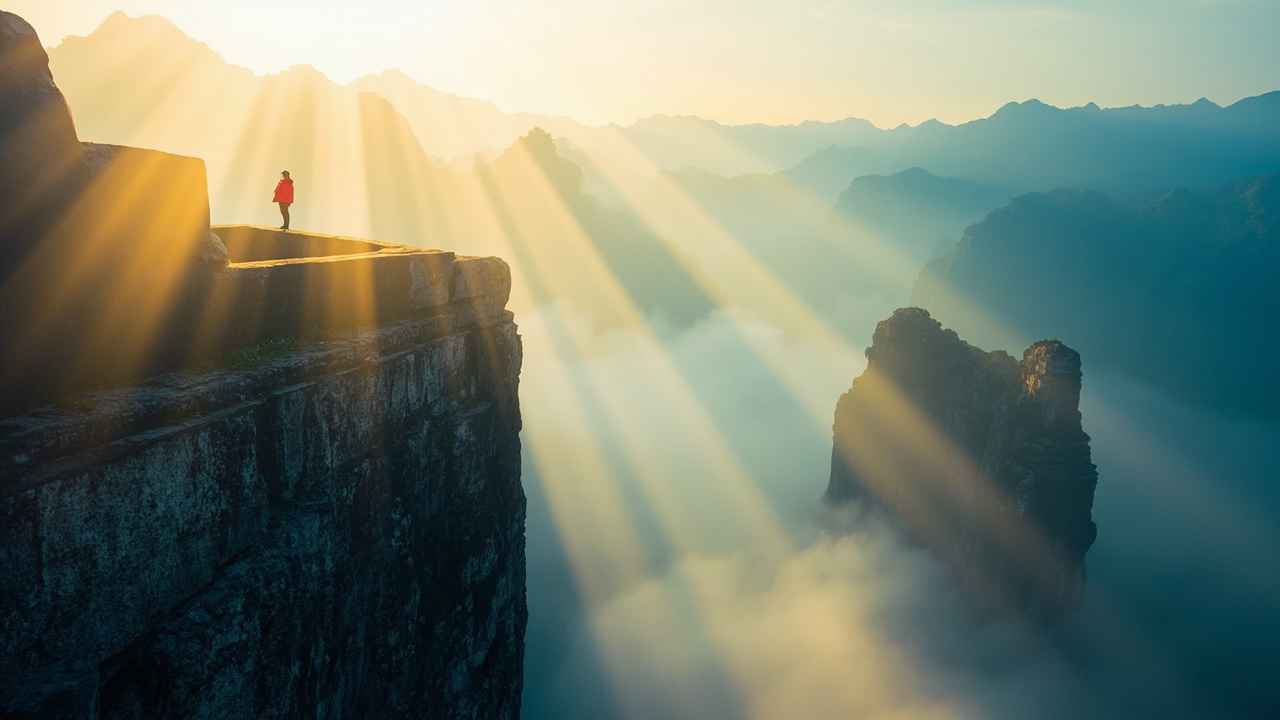
Zhangjiajie Travel Guide: The Complete 2026 Guide
The rain caught me halfway across the glass bridge. One minute I was looking down at a 300-meter drop through my feet, the next I was soaked, laughing, and gripping the railing as a mist rolled up from the canyon below like something alive. A Chinese tourist next to me—a grandmother from Changsha—handed me a tissue and said something I didn’t understand, but her smile meant I told you so. That’s Zhangjiajie for you. It doesn’t care about your plans.
This place is why you came to China. Not the Great Wall, not the Forbidden City. Those are man-made. Zhangjiajie is the planet showing off—thousands of sandstone pillars rising out of subtropical forest, wrapped in fog that moves like it has intent. It’s where James Cameron got the floating mountains for Avatar, but the real thing is stranger than CGI. The air smells like wet earth and pine. The monkeys will steal your water bottle. The elevators are terrifying. And the whole experience will rearrange something in your head.
This guide covers ten things you actually need to know: what to see, what to skip, how to get around without losing your mind, and the specific mistakes I made so you don’t have to.
The Short Version
Go for three full days. Stay in Wulingyuan town, not Zhangjiajie city. Buy the four-day park pass. Skip Tianmen Mountain if you’re scared of heights or crowds. Don’t miss Yuanjiajie at sunrise. Bring a rain jacket every single day—even in August. The glass bridge is a tourist trap but worth it once. The monkeys are not cute, they are thieves. Learn to say “duōshao qián” (how much). Your phone will have no signal inside the park. Download offline maps.
How I Picked These
I’ve been to Zhangjiajie four times over seven years. The first time, I followed a Lonely Planet itinerary and spent two days in the wrong places. The second, I went with a Chinese friend from Beijing who grew up hiking here. The third, I just wandered. The fourth was for this guide. I talked to park rangers, hostel owners, a taxi driver named Mr. Chen who drove me to three viewpoints he said “foreigners never find,” and a noodle shop lady who laughed at my pronunciation and then fed me for free. I walked every trail mentioned here, paid every entrance fee myself, and got lost at least once per trip. These recommendations come from the version of me who learned the hard way.
Quick Comparison
| Rank | Place | Best For | Approx Cost (USD) | Time Needed | When to Go |
|---|---|---|---|---|---|
| 1 | Yuanjiajie | First-timers, Avatar views | $40 (¥290) park pass | Half day | Sunrise, weekdays |
| 2 | Tianzi Mountain | Panoramic views, fewer crowds | Included in park pass | 4-6 hours | Morning, clear days |
| 3 | Bailong Elevator | The experience, not the view | $8 (¥58) one way | 2 minutes + 2 hours wait | Avoid 10am-2pm |
| 4 | Zhangjiajie Grand Canyon | Glass bridge, river walk | $35 (¥253) | 3-4 hours | Early morning |
| 5 | Yangjiajie | Hiking, solitude | Included in park pass | Full day | Weekdays |
| 6 | Tianmen Mountain | Cable car, skywalk | $45 (¥325) | 4-5 hours | Clear weather only |
| 7 | Golden Whip Stream | Easy walk, nature | Included in park pass | 2-3 hours | Afternoon |
| 8 | Huangshi Village | Classic views, history | Included in park pass | 3-4 hours | Sunset |
| 9 | Baofeng Lake | Boat ride, quiet | $25 (¥180) | 2 hours | Late afternoon |
| 10 | Yellow Dragon Cave | Underground wonder | $30 (¥216) | 3 hours | Any time |
1. Yuanjiajie — The One Everyone Photographs
The bus dropped me at a parking lot full of tour groups waving colored flags. I almost turned around. But I walked past them, took the path to the left instead of the right, and within five minutes the crowd noise faded. Then the pillars appeared. Not gradually—they just were there, rising out of the fog like fingers from a grave. The stone is gray-green, covered in pine and moss, and the mist moves between them in slow currents.
Yuanjiajie is the most famous section of the national park, and it earned it. This is where the “Avatar Hallelujah Mountain” stands—officially named Southern Sky Column, unofficially the reason half the visitors come. The viewing platforms are crowded by 9am, but the network of boardwalks extends farther than most people walk. Go past the main viewpoints, take the side trails, and you’ll find spots where you’re alone with the pillars.
📍 Location: Inside Zhangjiajie National Forest Park, Wulingyuan Scenic Area
🎫 Entry fee: Included in park pass (¥224 for 4 days, ~$31)
🕐 Opening hours: 6:30am–6:00pm (summer), 7:30am–5:00pm (winter)
🚆 How to get there: From Wulingyuan town, take bus line 1 or 2 to the park entrance (10 minutes). Enter the park, take the eco-bus to the Bailong Elevator station, ride up, then walk 15 minutes. OR hike up from Golden Whip Stream (2 hours, worth it).
⏰ When to visit: 6:30am summer, 7:30am winter. Weekdays only. Weekends are a wall of selfie sticks.
💡 Insider tips:
- The eco-bus from the entrance fills fast. Walk 200 meters past the bus stop to the next pickup point—empty buses stop there first.
- Bring ¥20 cash for the bathroom (no WeChat signal inside).
- The “First Bridge Under Heaven” is a natural stone arch. Most tourists miss it because they follow the crowd straight. Turn right at the fork after the Avatar pillar.
- Download the park map offline. The paper maps at the entrance are useless.
- If it’s raining, the pillars look better. Mist is your friend.
I met a retired geology professor from Germany at the far end of the boardwalk. He had been coming here for 15 years. “The pillars grow,” he said. “Two centimeters per century. You won’t notice. But the planet is patient.”
2. Tianzi Mountain — The View That Made Me Cry
I don’t cry at views. I’ve stood on the rim of the Grand Canyon, watched sunrise from Angkor Wat, hiked to Everest Base Camp. Nothing. But Tianzi Mountain got me. Maybe it was the solitude—I was the only foreigner on the trail that morning. Maybe it was the light. The clouds parted for exactly seven minutes, and the pillars appeared in layers, each one a different shade of blue-gray, stretching to a horizon that didn’t seem real.
Tianzi means “Son of Heaven,” and the mountain lives up to the name. The summit offers a 360-degree panorama of the quartz-sandstone pillars that defines the park. The viewing platforms are less crowded than Yuanjiajie, and the trails are steeper but more rewarding. The cable car up is worth the money—10 minutes of floating over the forest canopy with pillars rising on both sides.
📍 Location: Northwest section of Wulingyuan Scenic Area
🎫 Entry fee: Included in park pass. Cable car ¥72 ($10) one way.
🕐 Opening hours: 7:00am–6:00pm (summer), 8:00am–5:00pm (winter)
🚆 How to get there: From the park entrance, take the eco-bus to Tianzi Mountain cable car station (25 minutes). OR hike up from the Old House Village trailhead (3 hours, steep but beautiful).
⏰ When to visit: Clear mornings before 10am. Cloud cover kills the view. Check weather the night before.
💡 Insider tips:
- The “Imperial Brush Peak” viewpoint is the best photo spot. It’s a 10-minute walk from the cable car exit, past the main platform. Most tourists stop at the first platform.
- Bring a jacket. The summit is 1,200 meters and catches wind from all directions.
- The trail down to Golden Whip Stream takes 2.5 hours and passes through forest with almost no other hikers. It’s steep. Wear good shoes.
- There’s a small noodle shop at the summit that charges ¥30 for a bowl. It’s the only food option. Bring snacks.
- The monkeys here are aggressive. Do not carry food in your hands.
I sat on a bench near the “Fairy Presenting Flowers” viewpoint, eating a steamed bun I’d bought from a woman who carried them up the mountain in a bamboo basket. She charged ¥5. I gave her ¥10. She gave me two more buns and a look that said you’re hopeless, foreigner.
3. Bailong Elevator — The Terrifying Glass Box
I’m not afraid of heights. I’ve skydived. I’ve climbed cell towers. But the Bailong Elevator made my palms sweat. It’s a glass elevator bolted to the side of a cliff, rising 326 meters in 90 seconds. The first few seconds are fine. Then the ground drops away and you’re floating in a glass box with nothing between you and the canyon floor but air and bad engineering decisions.
The elevator is a practical necessity—it connects the valley floor to the mountaintop trails. But it’s also a spectacle. Built in 2002, it was the tallest outdoor elevator in the world. The ride itself is dramatic, especially if you’re pressed against the glass. The problem is the wait. During peak hours, the queue snakes for hours. I waited 90 minutes on a Tuesday in October.
📍 Location: Inside the national park, near Yuanjiajie
🎫 Entry fee: ¥58 ($8) one way, ¥108 ($15) round trip
🕐 Opening hours: 7:00am–6:00pm (summer), 8:00am–5:00pm (winter)
🚆 How to get there: From the park entrance, take the eco-bus to the elevator station (15 minutes). The entrance is well-marked.
⏰ When to visit: 7:00am sharp, or after 3:00pm. Avoid 10am–2pm at all costs.
💡 Insider tips:
- Ride up, hike down. The waiting is worse for the down elevator because everyone leaves at the same time.
- Stand on the right side of the elevator for the best view of the pillars.
- If the queue is longer than 30 minutes, hike instead. The path from the base to Yuanjiajie takes 2 hours and passes through beautiful forest.
- The elevator sometimes stops mid-ride for “maintenance.” It’s usually fine. Usually.
- Bring a handkerchief. The glass gets fogged up from all the breathing.
A woman from Shanghai was crying next to me in the elevator. Her husband was filming her. She was not happy about it. I pretended not to notice.
4. Zhangjiajie Grand Canyon & Glass Bridge — Overhyped But Worth It
The glass bridge is the most Instagrammed thing in Hunan. It’s also a logistical nightmare. I arrived at 8am on a Thursday and the ticket line was already 45 minutes. The bridge itself is 430 meters long, suspended 300 meters above the canyon floor, with a glass floor that lets you see straight down. It’s genuinely impressive engineering. But it’s also a 10-minute walk, and then you’re done.
The real reason to come here is the canyon walk below the bridge. After crossing, you descend a staircase carved into the cliff and follow a path along the river. The water is emerald green, the canyon walls rise on both sides, and the crowds thin out dramatically. The last kilometer passes through a tunnel with a glass-bottomed section that runs alongside the river. I had it almost to myself at 10am.
📍 Location: 15 minutes south of Wulingyuan town
🎫 Entry fee: ¥253 ($35) includes bridge and canyon
🕐 Opening hours: 7:30am–5:00pm
🚆 How to get there: From Wulingyuan bus station, take the Grand Canyon bus (¥10, 20 minutes). The bus leaves when full. Or take a taxi (¥40-50).
⏰ When to visit: 7:30am, before the tour buses arrive. After 2pm is also quiet.
💡 Insider tips:
- Buy tickets online through WeChat or Ctrip the night before. The ticket booth sells out by 9am in peak season.
- Don’t wear a skirt or dress. The glass floor reflects upward and you will be in someone’s photo.
- The “zip line” across the canyon costs ¥50 and lasts 20 seconds. Skip it. The “bungee jump” is closed indefinitely.
- Bring shoe covers if it’s raining. The glass gets slippery and they make you wear cloth slippers that are disgusting.
- The exit is 3km from the entrance. A free shuttle bus runs between them. Walk if you want—it’s a pleasant road through farmland.
I watched a French couple argue for 15 minutes about whether to cross the bridge. She wanted to. He was pale and sweating. She won. He crossed with his eyes closed. She took photos. They held hands on the other side.
5. Yangjiajie — For When You Need to Escape the Crowds
The path was overgrown. Not in a dangerous way, but in a nobody has walked here this week way. Spiderwebs stretched across the trail. I broke through three before I gave up and carried a stick. The forest was silent except for birds and the crunch of my boots. After two hours of hiking, I reached a viewing platform overlooking a valley of pillars. No one else was there. I sat for 45 minutes and saw exactly three other people.
Yangjiajie is the western section of the national park, named after the Yang family warriors of the Song Dynasty. It’s less developed, less visited, and more demanding. The trails are steeper, the signage is worse, and the rewards are disproportionate to the effort. This is where you go if you want to understand what Zhangjiajie felt like before tourism.
📍 Location: Western section of Wulingyuan Scenic Area
🎫 Entry fee: Included in park pass
🕐 Opening hours: Same as park hours (6:30am–6:00pm summer)
🚆 How to get there: From the park entrance, take the eco-bus to the Yangjiajie stop (30 minutes). Or hike from Tianzi Mountain (2 hours).
⏰ When to visit: Weekdays only. The trails are narrow and passing groups is awkward.
💡 Insider tips:
- The “One Step to Heaven” trail is not for people with vertigo. It’s a series of stone steps cut into a cliff face with a chain railing. Take it slowly.
- Bring more water than you think you need. There are no shops inside Yangjiajie.
- The “Sky Corridor” viewpoint is easy to miss. Look for a small sign in Chinese after the second viewing platform. It’s a 5-minute detour.
- Cell service is non-existent. Download the trail map on AllTrails or Maps.me.
- The hike from Yangjiajie down to the valley takes 3 hours and ends at a small village with a bus stop. The bus runs every hour until 5pm.
A young Chinese couple passed me on the trail. The woman was wearing platform sandals. Her boyfriend was carrying her bag. She slipped on a wet rock and laughed. I offered her my stick. She refused. Her boyfriend looked grateful.
6. Tianmen Mountain — The Cable Car to Heaven
The cable car ride is 28 minutes of pure anxiety and awe. It climbs from the city of Zhangjiajie up to the mountain’s summit, passing over farmland, forest, and finally vertical cliffs. The angle gets steeper. The cars sway. At the halfway point, you’re above the clouds. The woman next to me was praying. I don’t blame her.
Tianmen Mountain is separate from the national park, and it’s a different experience. The mountain has a natural arch called Heaven’s Gate—a hole in the cliff 131 meters high. To reach it, you climb 999 steps. Or you take the escalator. I took the escalator. I’m not ashamed. The “Skywalk” is a glass path bolted to the cliff face. It’s shorter than the Grand Canyon bridge but more dramatic because you’re higher and the path is narrower.
📍 Location: South of Zhangjiajie city, 40 minutes from Wulingyuan
🎫 Entry fee: ¥325 ($45) includes cable car
🕐 Opening hours: 7:00am–6:00pm (summer), 8:00am–5:00pm (winter)
🚆 How to get there: From Zhangjiajie city, take bus 4 or 6 to the cable car station (20 minutes). From Wulingyuan, take a bus to the city (¥20, 40 minutes), then transfer.
⏰ When to visit: Clear days only. If it’s foggy, skip it. You’ll pay $45 to see nothing.
💡 Insider tips:
- Book tickets online at least 3 days in advance. Same-day tickets sell out by 8am.
- The “Skywalk” requires shoe covers (¥5, included in ticket price). Bring your own if you want to avoid the rental fee.
- The 999 steps are optional. The escalator is free and takes 5 minutes. Most Chinese tourists climb the steps anyway. You decide.
- The mountain summit has a walking loop that takes 2 hours. The east side has better views. The west side has fewer people.
- Bring a jacket even in summer. The summit is 1,500 meters and windy.
I ate a bowl of spicy noodles at a shack near the temple on the summit. The old woman running it had been there for 22 years. She asked where I was from. When I said “America,” she laughed and said something in Hunan dialect. Her daughter translated: “She says you look tired. Eat more noodles.”
7. Golden Whip Stream — The Easy Walk
This is the walk you do on your last day, when your legs are sore and you want something gentle. The stream runs through a valley at the base of the pillars, and the trail follows it for 7.5 kilometers. It’s flat, paved, and shaded by trees. Monkeys sit on the railings and watch you pass. The water is clear enough to see fish. The pillars rise directly above you, and looking up from the valley floor gives you a different perspective—they seem taller from below.
The trail connects the park entrance to the base of the Bailong Elevator. Most people walk it in one direction (2-3 hours) and take the bus back. It’s the most popular walk in the park for a reason: it’s beautiful without being strenuous.
📍 Location: Valley floor of the national park
🎫 Entry fee: Included in park pass
🕐 Opening hours: Same as park hours
🚆 How to get there: Enter the park through the main gate. The trail starts 100 meters past the ticket checkpoint.
⏰ When to visit: Afternoon, when the morning crowds have cleared. The light is better too.
💡 Insider tips:
- Walk from the entrance toward the elevator. The trail is slightly downhill this way.
- The monkeys here are less aggressive than at Tianzi, but still don’t carry food visibly.
- There are four bridges across the stream. The third one has the best view of the pillars.
- The trail gets slippery after rain. The stone is polished smooth from millions of footsteps.
- Halfway through, there’s a rest area with a shop selling cold drinks and instant noodles. Cash only.
A group of schoolchildren on a field trip ran past me, shouting. Their teacher—a young woman with a whistle—apologized in English. “They are excited,” she said. “First time seeing the mountains.” She was excited too. I could tell.
8. Huangshi Village — The Classic View
Huangshi Village was the first developed viewing area in the park, and it shows. The paths are wider, the viewing platforms are bigger, and the crowds are heavier. But there’s a reason it was developed first: the view is spectacular. The summit offers a 360-degree panorama of the park’s eastern section, with pillars stretching to the horizon in every direction.
The cable car up is the oldest in the park, and it shows its age. The cars are smaller, the ride is slower, and the windows are scratched. I liked it more than the newer ones. It felt like a ride from a different era. The hike up takes 2 hours and passes through forest with occasional glimpses of the pillars through the trees.
📍 Location: Eastern section of the national park
🎫 Entry fee: Included in park pass. Cable car ¥65 ($9) one way.
🕐 Opening hours: Same as park hours
🚆 How to get there: From the park entrance, take the eco-bus to the Huangshi Village cable car station (10 minutes).
⏰ When to visit: Sunset. The pillars catch the golden light and the crowds thin out after 4pm.
💡 Insider tips:
- The “Five Fingers Peak” viewpoint is a 15-minute walk past the main platform. Most tourists stop at the first one.
- The cable car closes at 5:30pm. If you hike down, start by 4pm to finish before dark.
- There’s a small museum at the summit about the park’s history. It’s in Chinese only, but the photos are interesting.
- The trail down passes through a bamboo forest that’s beautiful in late afternoon light.
- Bring cash for the bathroom. ¥2. Exact change.
I met a retired couple from Australia at the summit. They were on their third visit to Zhangjiajie. “First time was 2005,” the husband said. “There was one cable car and a dirt path. Now look at it.” He didn’t sound happy about it.
9. Baofeng Lake — The Quiet Escape
The boat ride was silent except for the engine and a woman singing traditional folk songs from the shore. Her voice echoed off the canyon walls. The water was the color of jade, still and deep. The pillars rose around the lake, their reflections rippling in the boat’s wake. It felt like a different world from the crowded viewpoints above.
Baofeng Lake is a reservoir formed by a dam in the 1990s. It’s not natural, but it doesn’t matter. The canyon walls are steep and forested, and the lake winds through them for 2 kilometers. The boat ride takes 30 minutes. You can also walk around the lake on a trail that takes an hour. The water is clean enough to see fish swimming below the surface.
📍 Location: 15 minutes east of Wulingyuan town
🎫 Entry fee: ¥180 ($25) includes boat ride
🕐 Opening hours: 7:30am–5:00pm
🚆 How to get there: From Wulingyuan town, take bus line 3 to the lake entrance (15 minutes). Taxi is ¥20-30.
⏰ When to visit: Late afternoon, when the tour groups have left. The light is softer and the water is calmer.
💡 Insider tips:
- The boat leaves when full (about 15 people). If you’re alone, you might wait 20 minutes.
- The folk singer at the far end of the lake accepts tips. ¥10 is fine. She’ll sing another song.
- The trail around the lake is partially paved and partially dirt. It’s easy but can be muddy.
- There’s a small temple at the far end of the lake. It’s not special, but the view from its courtyard is.
- Bring mosquito repellent. The lake is buggy in summer.
The boat driver pointed at a rock formation and said something. I didn’t understand. He mimed a monkey. I looked again. It did look like a monkey. He laughed and gave me a thumbs up.
10. Yellow Dragon Cave — The Underground City
The cave entrance is unremarkable—a hole in a hillside with a ticket booth next to it. But inside, it opens into a space the size of a football stadium. Stalactites hang from the ceiling like frozen waterfalls. The lighting is theatrical—red, blue, green—and it looks like a Bollywood set. But the scale is undeniable. The cave system is 15 kilometers long, with four levels and an underground river.
The tour takes 3 hours and covers about 2 kilometers of walkways. You’ll climb stairs, squeeze through narrow passages, and stand in chambers so large that the ceiling disappears into darkness. The boat ride on the underground river is the highlight—10 minutes of floating through a cave with stalactites inches above your head.
📍 Location: 40 minutes east of Wulingyuan town
🎫 Entry fee: ¥216 ($30) includes boat ride
🕐 Opening hours: 8:00am–5:00pm
🚆 How to get there: From Wulingyuan bus station, take the Yellow Dragon Cave bus (¥15, 40 minutes). The bus leaves hourly.
⏰ When to visit: Any time. The cave is temperature-controlled (18°C year-round). Avoid midday in peak season when tour groups fill the passages.
💡 Insider tips:
- The temperature inside is cool even in summer. Bring a light jacket.
- The lighting is garish. If you want natural photos, bring a camera with good low-light performance and shoot in black and white.
- The boat ride is 10 minutes. Sit on the left side for the best view of the stalactites.
- The cave has 2,000 steps. If you have knee problems, take it slow.
- There’s a “music show” inside the cave at 2pm. It’s a woman playing a zither on a platform above the river. It sounds terrible acoustically but it’s charming.
I shared a boat with a family from Guangzhou. The grandmother held her phone up the entire time, recording video. Her grandson kept trying to take it from her. She swatted his hand away without looking. The boat driver laughed.
FAQ
1. Do I need a visa to visit Zhangjiajie in 2026? If you’re from the US, UK, Australia, Canada, or most European countries, China’s 144-hour visa-free transit policy applies at many airports, but Zhangjiajie isn’t one of them. You’ll need a tourist visa (L visa). Apply 2-3 months in advance. The process is online now and takes about 2 weeks. Cost is $140-160 depending on your country. New in 2025: China expanded visa-free travel to citizens of France, Germany, Italy, Netherlands, Spain, Malaysia, and a few others for up to 15 days. Check your country’s status before booking.
2. Is English spoken in Zhangjiajie? Hardly. The park has English signs, but most taxi drivers, shopkeepers, and restaurant staff speak only Chinese. Download Pleco (translation app) and Baidu Maps. Learn these phrases: “Duōshao qián” (how much), “Zhèlǐ” (here), “Nàlǐ” (there), “Xiè xiè” (thank you). I’ve survived with these and hand gestures.
3. Do I need a VPN? Yes. China blocks Google, Instagram, Facebook, WhatsApp, and most Western websites. Install a VPN before you leave China—the Chinese app store won’t have them. I use Astrill or ExpressVPN. Test it before you land. The park has zero cell signal anyway, but you’ll need it in hotels and restaurants.
4. What’s the best time of year to visit? April-May and September-October. Summer (June-August) is hot, humid, and crowded. Winter (December-February) is cold and foggy but empty. I’ve been in October twice and it was perfect—20°C, clear skies, moderate crowds. Avoid Chinese public holidays (Golden Week in October, Spring Festival in January/February, Labor Day in May). The park becomes a human river.
5. How many days do I need? Three full days. Day 1: Yuanjiajie and Tianzi Mountain. Day 2: Yangjiajie and Golden Whip Stream. Day 3: Grand Canyon/Glass Bridge in the morning, Baofeng Lake or Yellow Dragon Cave in the afternoon. Add a fourth day if you want to do Tianmen Mountain.
6. Can I use my credit card? No. China is cashless—everything runs on WeChat Pay or Alipay. Set up Alipay before you leave (it accepts foreign credit cards now). Keep ¥200-300 cash for bathrooms, small shops, and taxis. ATMs in Wulingyuan town work with foreign cards but charge fees.
7. Is Zhangjiajie safe for solo travelers? Yes. I’ve traveled here solo three times. The biggest danger is getting lost or falling off a trail. Stay on the paths, watch your step on wet stone, and don’t pet the monkeys. The locals are friendly and honest. I’ve never felt unsafe, even at night.
The Honest Wrap-up
Zhangjiajie is not a relaxing vacation. It’s loud, crowded, wet, and physically demanding. The food is spicy. The toilets are questionable. The monkeys will steal your snacks. But it’s also one of the most beautiful places I’ve ever seen, and I’ve seen a lot. The pillars don’t care about your comfort. They’ve been here for 300 million years. They’ll be here long after the selfie sticks are gone.
This guide is for people who want the real thing—not a sanitized, Western-friendly version of China. If you want a resort with English menus and air-conditioned buses, go to Bali. If you want to stand on a mountain in the mist and feel small in the best possible way, come here.
One last thing: when you’re standing on a viewing platform, looking at the pillars disappear into the clouds, put your phone down for five minutes. Just look. You’ll remember that longer than any photo.
Topics
More City Guide guides
Beijing Complete Travel Guide 2026: The Complete 2026 Guide
Everything you need to know to plan a Beijing trip in 2026 - attractions, transport, food, accommodation, and 4-day itinerary.
12 min read

Chengdu Complete Travel Guide 2026: The Complete 2026 Guide
Everything for your Chengdu trip: pandas, Sichuan food, teahouses, and Jinsha Site Museum. 2026 guide with insider tips.
12 min read
Guilin Complete Travel Guide 2026: The Complete 2026 Guide
Complete Guilin travel guide: Li River cruise, Yangshuo countryside, Longji Rice Terraces, and where to stay.
12 min read