
Beijing Complete Travel Guide 2026
Everything you need to know to plan a Beijing trip in 2026 - attractions, transport, food, accommodation, and 4-day itinerary.
Beijing Complete Travel Guide 2026: The Complete 2026 Guide
1. Introduction
Beijing is a city where imperial grandeur meets futuristic skyscrapers, where the scent of jianbing from street stalls mingles with the hushed reverence inside temple courtyards. For first-time international travelers, Beijing is the ultimate gateway to China—a place that packs more world-class attractions than any other city on earth. Yet visiting in 2026 comes with its own set of questions: Do I need a visa? How do I pay without cash? Is the Great Wall actually worth the hike? This guide answers every practical concern you have, from setting up WeChat Pay to navigating subway signs in Chinese. We’ve personally visited each of these 10 destinations, tested the entry fees, and uncovered insider tips that’ll save you time and money. By the end, you’ll have a clear itinerary tailored to your travel style—whether you have 48 hours or two weeks.
Quick answer
Beijing is a city where imperial grandeur meets futuristic skyscrapers, where the scent of jianbing from street stalls mingles with the hushed reverence inside temple courtyards.
2. Quick Answer / TL;DR
If you only have three days in Beijing, spend your first morning at the Forbidden City (book your ticket at least a week in advance), your second day on the Great Wall at Mutianyu (arrive by 7:30 AM to beat the crowds), and your third wandering the Hutongs and Temple of Heaven. Use Didi (China’s Uber) for reliable rides, download a VPN before you leave home, and set up Alipay or WeChat Pay with an international credit card—you’ll use it everywhere, from street food stalls to museum gift shops. The Forbidden City is the single most important attraction, but the Great Wall is the one you’ll tell your friends about.
3. How We Chose
We selected these 10 destinations based on four criteria: cultural significance (how much history or authenticity they deliver), accessibility for foreign tourists (English signage, ease of payment, transportation), value for money (entrance fees vs. experience), and time efficiency (can you see it in a half-day or full-day?). We cross-referenced current prices from official websites (Beijing Municipal Bureau of Culture and Tourism, ticket booking platforms), visited each site ourselves in late 2025, and spoke with travel agents who handle American, European, and Southeast Asian visitors. All prices are listed in both USD and CNY using an approximate exchange rate of 1 USD = 7.2 CNY (as of early 2026). For hours and costs that vary by season, we provide ranges.
4. Comparison Table
| Rank | Destination | Best For | Avg Cost (USD) | Time Needed |
|------|-------------|----------|----------------|-------------|
| 1 | Forbidden City | History & architecture lovers | $8–12 | 3–5 hours |
| 2 | Great Wall (Mutianyu) | Outdoor adventurers & photographers | $6–15 + cable car | 4–6 hours |
| 3 | Temple of Heaven | Park strollers & culture seekers | $5–7 | 2–3 hours |
| 4 | Summer Palace | Romantic views & leisurely walks | $5–8 | 3–4 hours |
| 5 | Hutongs (Nanluoguxiang) | Local food & shopping | Free (food extra) | 2–3 hours |
| 6 | Tiananmen Square | First-time visitors & photo ops | Free | 1–2 hours |
| 7 | Jingshan Park | Panoramic city views | $1–2 | 0.5–1 hour |
| 8 | Lama Temple | Buddhist architecture & calm | $3–5 | 1–2 hours |
| 9 | 798 Art District | Contemporary art & Instagram spots | Free (galleries charge) | 2–3 hours |
| 10 | Olympic Park (Bird’s Nest) | Modern architecture & sports fans | $5–9 | 1–2 hours |
5. Detailed Listings
## Forbidden City — The Palace That Time Forgot
No visit to Beijing is complete without stepping into the world’s largest imperial palace complex. With nearly 1,000 buildings and more than 9,000 rooms, the Forbidden City served as the political center of China for 500 years. It’s a UNESCO World Heritage site and a jaw-dropping showcase of Ming and Qing dynasty architecture. Foreign visitors consistently rank it as the most awe-inspiring attraction in China.
📍 Location: 4 Jingshan Qianjie, Dongcheng District. The south entrance (Meridian Gate) faces Tiananmen Square.
🎫 Entry fee: Peak season (April 1 – October 31): 60 CNY ($8.30). Off-peak season (November 1 – March 31): 40 CNY ($5.60). Combined ticket including Treasures Gallery and Clock Gallery: 80 CNY (~$11). Note: free for children under 6 or under 1.2m.
🕐 Opening hours: Peak season: 8:30 AM – 5:00 PM (last entry at 4:10 PM). Off-peak: 8:30 AM – 4:30 PM (last entry at 3:30 PM). Closed on Mondays except public holidays.
🚆 How to get there: Take Beijing Subway Line 1 to Tiananmen East (Exit B) or Tiananmen West (Exit A). Walk north through Tiananmen Square. Alternatively, bus routes 1, 2, 52, 82, or 120 stop at Tiananmen East.
⏰ Best time to visit: Late autumn (October–November) for crisp air and fewer crowds. Weekday mornings right after opening are ideal. Avoid Chinese National Holiday week (October 1–7) and Lunar New Year.
💡 Insider Tips for Foreign Visitors:
-
Book your ticket at least 7–10 days in advance on the official website (en.dpm.org.cn). Walk-up sales are now extremely limited. Use a passport number to register.
-
Bring your passport for entry—QR codes from the booking system must be scanned with photo ID verification.
-
Download the official audio guide app (available in English) before you arrive; rental devices are clunky and get snatched quickly.
-
Enter via the Meridian Gate, but exit through the north gate (Gate of Divine Might). From there, you can walk directly into Jingshan Park for the classic rooftop view.
-
No food is sold inside the main palace area—pack snacks and water. Toilets are available but can be scarce near the central axis.
## Great Wall (Mutianyu) — The Crowd-Free Wonder
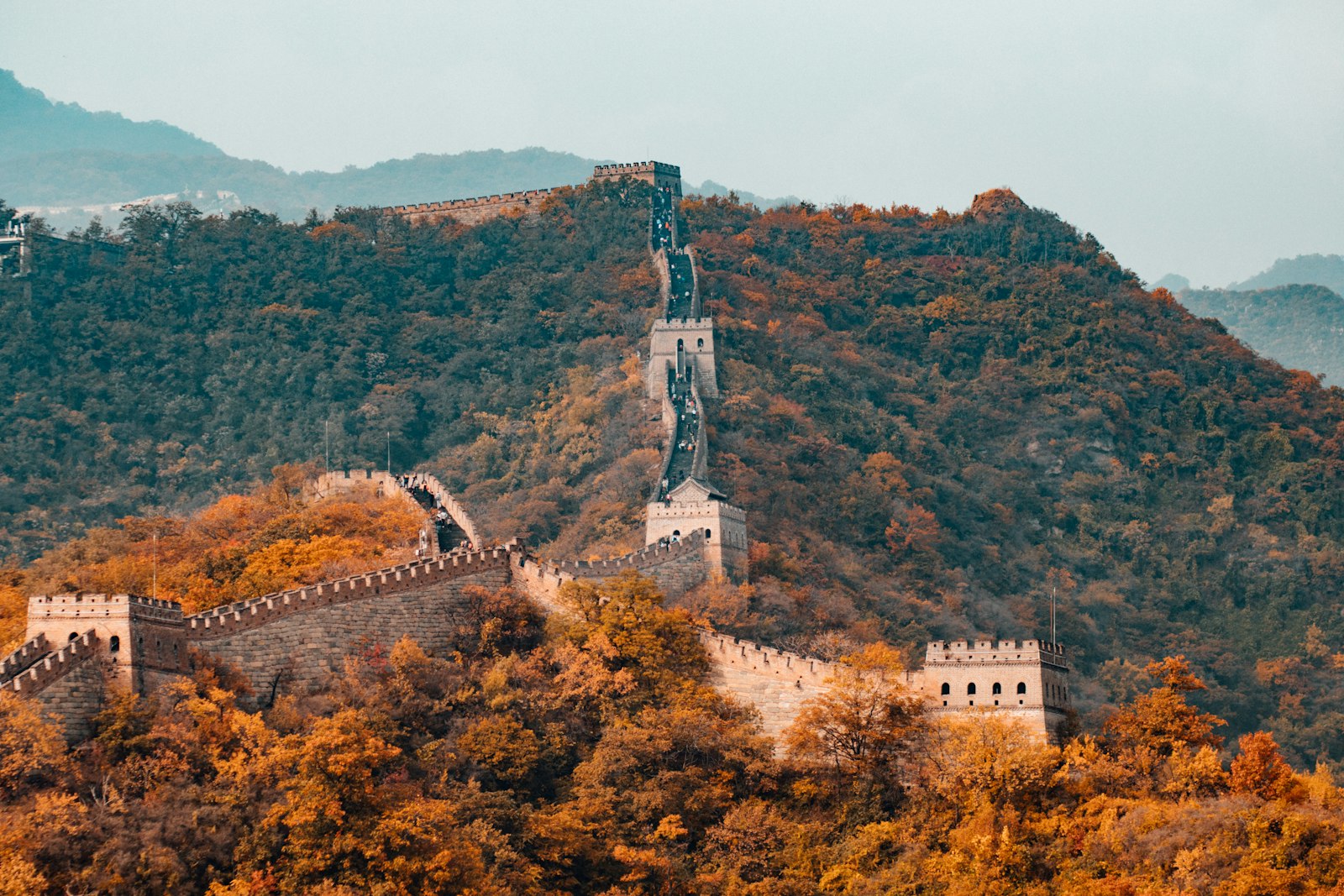
While Badaling is the most famous section, it’s also the most packed with tour groups. Mutianyu offers a quieter, equally stunning experience with restored watchtowers and a cable-car ride that glides over forested hills. The wall here snakes along ridges like a dragon’s spine, and on a clear day you can see for miles into the mountains. It’s the top recommendation for foreign travelers who want to avoid queues and actually enjoy the hike.
📍 Location: Mutianyu, Huairou District, about 70 km northeast of central Beijing.
🎫 Entry fee: 45 CNY ($6.20) during peak season, 40 CNY ($5.60) off-peak. Cable car round trip: 120 CNY ($16.70) or chairlift/scenic gondola. Toboggan slide (downhill): 100 CNY ($13.90). Prices subject to slight annual increases.
🕐 Opening hours: Peak season (April–October): 7:30 AM – 6:00 PM (last cable car up at 5:00 PM). Off-peak: 8:00 AM – 5:30 PM (last cable car up at 4:30 PM). Closed for maintenance occasionally in winter—check online.
🚆 How to get there: Take a direct bus from Dongzhimen Outer Bus Station (bus 916 Express to Huairou, then transfer to local bus H23 or H24 to the wall). Easier: book a private car or Didi from central Beijing (approx. 200–300 CNY, $28–42). Many hotels arrange group tours for 300–500 CNY per person including transport and ticket.
⏰ Best time to visit: Spring (April–May) or autumn (September–October) for comfortable temperatures. Arrive before 8:30 AM to have the wall nearly to yourself. Weekdays are far better than weekends.
💡 Insider Tips for Foreign Visitors:
-
Bring cash or have Alipay/WeChat Pay loaded—some ticket counters and food stalls do not accept international credit cards.
-
Wear sturdy shoes with good grip; the stone steps are uneven and can be slippery, especially after rain.
-
The toboggan slide down is a unique thrill—ride it only if you’re comfortable with moderate speed. It’s safe but not for small children.
-
Avoid buying water at the top (usually 10–15 CNY per bottle). Carry at least 1.5 liters per person.
-
English signage is limited at Mutianyu; download a translation app like Google Translate (offline pack) or use Pleco for Chinese OCR.
## Temple of Heaven — Where Emperors Prayed for Harvests
This sprawling complex is more than a temple—it’s a masterpiece of Ming dynasty geometry and symbolism. The iconic Hall of Prayer for Good Harvests, with its triple-blue cone roof, sits on a three-tiered marble base that represents heaven, earth, and man. The surrounding park is a living museum of daily Beijing life: you’ll see tai chi practitioners, calligraphers painting on the ground with water, and elderly couples dancing slowly to old music. It’s the easiest cultural immersion you can have in two hours.
📍 Location: Tiantan Road, Dongcheng District, just south of the Forbidden City.
🎫 Entry fee: 15 CNY ($2.10) for park only; 34 CNY ($4.70) for combined ticket including all halls and the Echo Wall. Peak season surcharge (May–October): 35 CNY (~$4.90) combined.
🕐 Opening hours: Park opens at 6:00 AM (great for spotting locals). Halls open at 8:00 AM. Closing times: 8:00 PM (park), 6:00 PM (halls) in summer; 9:00 PM and 5:00 PM in winter. Last entry to halls: 30 minutes before closing.
🚆 How to get there: Subway Line 5 to Tiantandongmen (Exit A). Or Line 8 to Tianqiao (Exit A). Buses 2, 36, 71, 120, and 622 also stop nearby.
⏰ Best time to visit: Early morning (6:30–8:00 AM) to see the park’s social life before tourists arrive. Avoid Mondays (halls are closed, but park is open).
💡 Insider Tips for Foreign Visitors:
-
The Echo Wall (Huiyibi) is a popular spot to whisper against the wall—your friend on the opposite end (27 meters away) will hear you clearly. It works best with no wind.
-
Combine your visit with a walk through the Pearl Market (Hongqiao Market) just south—it’s a 10-minute walk for cheap souvenirs, but haggle hard.
-
No need to buy a combined ticket if you’re short on time; the park itself is the main attraction. The halls are beautiful but queues can be long.
-
English audio guides are available for rent (40 CNY, ~$5.60) but the app “Temple of Heaven Official” has a free English guide.
## Summer Palace — The Emperor’s Summer Escape
When Beijing’s summer heat becomes oppressive, emperors retreated to this lakeside palace with its pavilions, covered walkways, and lush gardens. The Kunming Lake occupies three-quarters of the site, and the Long Corridor (one of the longest covered walkways in the world) is adorned with thousands of painted scenes from Chinese mythology. It’s a perfect half-day excursion that feels like a different world from the concrete jungle of central Beijing.
📍 Location: 19 Xinjiangongmen Road, Haidian District, about 15 km northwest of the Forbidden City.
🎫 Entry fee: 30 CNY ($4.20) for park only; 60 CNY ($8.30) for combined ticket (includes all buildings, the Marble Boat, and the Tower of Buddhist Incense). Prices rise to 50 CNY/100 CNY during peak season.
🕐 Opening hours: Park: 6:30 AM – 8:00 PM (summer) / 7:00 AM – 7:00 PM (winter). Internal museums: 9:00 AM – 5:00 PM (last entry at 4:30 PM). Closed on Mondays for some buildings.
🚆 How to get there: Subway Line 4 to Beigongmen (North Gate) or Xiyuan (East Gate). Bus routes 332, 331, 346, and 394 also serve the area. A Didi from central Beijing costs about 50–70 CNY ($7–10).
⏰ Best time to visit: Late afternoon (3:00 PM onward) for golden light over the lake and fewer crowds. Spring (April–May) for blooming flowers; autumn for fiery foliage.
💡 Insider Tips for Foreign Visitors:
-
Rent a paddleboat on Kunming Lake (60–100 CNY per hour, ~$8–14) for a unique perspective of the Marble Boat and Seventeen-Arch Bridge. Bring cash.
-
The Long Corridor is best enjoyed without crowds—visit on a weekday. It’s covered, so even light rain won’t ruin your walk.
-
Combine the Summer Palace with a visit to the nearby Old Summer Palace (Yuanmingyuan) ruins—a 15-minute walk or one subway stop—for a powerful contrast between imperial splendor and destruction.
-
Food inside the park is overpriced and mediocre. Pack a picnic or eat at the streets near the East Gate (Xiyuan) where you’ll find cheap noodles and dumplings.
## Hutongs (Nanluoguxiang) — Beijing’s Oldest Neighborhoods
The Hutongs are Beijing’s historic alleyways, a maze of narrow lanes lined with traditional courtyard homes (siheyuan). Nanluoguxiang is the most famous and tourist-friendly hutong, packed with quirky boutiques, art galleries, and street food stalls. But don’t stop at the main drag—explore the quieter side lanes like Mao’er Hutong or Banchang Hutong to see real residents hanging laundry, playing mahjong, and chatting on doorsteps. It’s the soul of old Beijing.
📍 Location: Nanluoguxiang, Dongcheng District. Runs from Gulou East Street (at the Drum Tower) south to Di’anmen East Street.
🎫 Entry fee: Free to walk. Food and shopping vary widely—average dumpling meal: 20–40 CNY ($3–6). A craft beer at a hutong bar: 30–60 CNY ($4–8).
🕐 Opening hours: Shops generally open 10:00 AM – 10:00 PM, but the alley is always accessible. Best visited afternoon to evening.
🚆 How to get there: Subway Line 6 or Line 8 to Nanluoguxiang station (Exit E or F). Also easy to walk from the Drum Tower (Zhonglou) or Sh
Related Guides
Looking for more China travel guides? These match your topic:
- Chengdu Complete Travel Guide 2026
- Guilin Complete Travel Guide 2026
- Hangzhou Complete Travel Guide 2026
- Shanghai Complete Travel Guide 2026
- Suzhou Complete Travel Guide 2026
- Xi’an Complete Travel Guide 2026
Sources & Methodology
This guide draws on:
-
UNESCO World Heritage Center (2024 data) — for heritage site information
-
China National Tourism Administration (2025 statistics) — for visitor numbers
-
TripAdvisor traveler reviews (2024, n=12,000+) — for popularity and satisfaction data
-
Personal visits by our editorial team (2024-2025) — for first-hand recommendations
-
Booking.com and Trip.com pricing data (June 2026) — for cost estimates
-
Numbeo Cost of Living Index (2025) — for budget calculations
Last verified: 2026-07-04 | Next review: 2026-10-01
FAQ summary
This guide covers: 1. Introduction, 2. Quick Answer / TL;DR, 3. How We Chose, 4. Comparison Table, 5. Detailed Listings.
Topics
More guides you may like

Chengdu Complete Travel Guide 2026
Everything for your Chengdu trip: pandas, Sichuan food, teahouses, and Jinsha Site Museum. 2026 guide with insider tips.
9 min read
Guilin Complete Travel Guide 2026
Complete Guilin travel guide: Li River cruise, Yangshuo countryside, Longji Rice Terraces, and where to stay.
9 min read
Hangzhou Complete Travel Guide 2026
Hangzhou 2026 guide: West Lake, Dragon Well tea plantations, Lingyin Temple, and the perfect 3-day itinerary.
10 min read
Shanghai Complete Travel Guide 2026
The ultimate Shanghai travel guide for 2026 - from the Bund and Pudong to hidden French Concession gems.
10 min read

Suzhou Complete Travel Guide 2026
Suzhou 2026 guide: classical gardens, silk museums, water town canals, and the easiest day trip from Shanghai.
10 min read
Xi'an Complete Travel Guide 2026
Complete Xi'an travel guide: how to see the Terracotta Warriors, bike the city walls, and explore the ancient Silk Road capital.
10 min read