
Mid-Autumn Festival in China: The Complete 2026 Guide
A comprehensive travel guide for international visitors planning a trip to China. Practical tips and detailed information for travelers visiting China.
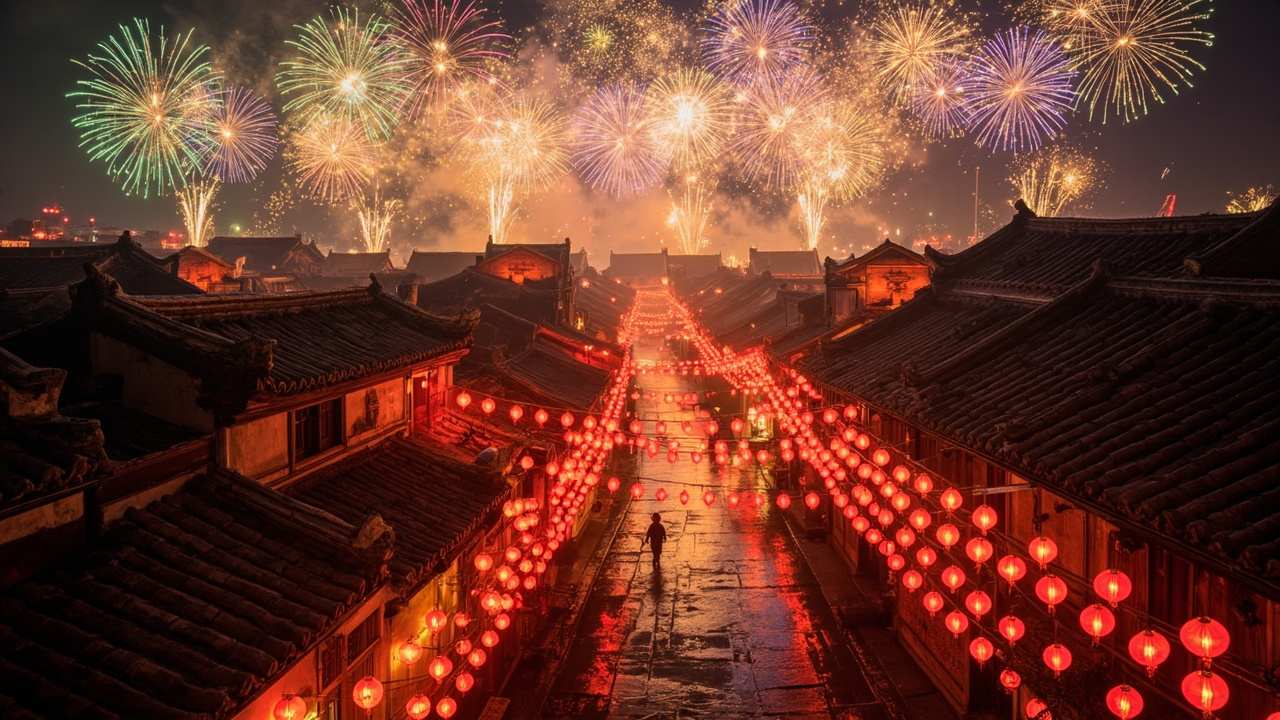
Mid-Autumn Festival in China: The Complete 2026 Guide
The old woman at the market stall didn’t speak a word of English, but she didn’t need to. She just pressed the mooncake mold into the dough one more time, dusted it with flour, and held it up so I could see the character for moon pressed into the top. Then she smiled, cut the pastry into quarters, and handed me a piece still warm from the rack. I stood there on that narrow street in Yangzhou with sesame paste sticking to my fingers, my phone dead in my pocket, completely unable to thank her properly—and for once, not caring at all.
That’s Mid-Autumn Festival. It sneaks up on you in small moments like this, then suddenly you realize you’ve been pulled into something enormous. Fifteen months after that encounter, I was standing on a boat in Hangzhou’s West Lake watching a hundred paper lanterns drift across the black water while a local family offered me osmanthus wine from their thermos. The moon sat fat and perfect above the willow trees. Nobody was performing for tourists. This was just what people do on this night.
Mid-Autumn Festival—Zhongqiu Jie—is China’s second-biggest holiday after Chinese New Year. The 2026 celebration falls on September 25th, though the festivities run for days on either side. It’s about family reunions, harvest celebrations, and honoring the moon. But what makes it special for you, as a visitor, is that the whole country seems to step outside at the same moment. Parks fill. Rooftops crowd. Streets that were quiet an hour before suddenly glow with red lanterns and the smell of roast duck.
This guide exists because I made every mistake possible my first Mid-Autumn in China. I showed up to popular spots at prime time and fought through crowds that killed the magic. I didn’t realize mooncake gifts between colleagues were basically mandatory until a Chinese friend explained it over lunch. I missed the light shows because I didn’t know when and where to look.
What follows is everything I wish someone had told me: the ten places I’ve actually been, the specific details that matter (which exit, which platform, which neighborhood block), and the kind of practical knowledge you only get by showing up and paying attention.
The Short Version
If you only have 90 seconds: Mid-Autumn Festival is the best Chinese holiday for first-time visitors, and it’s not close. Unlike Spring Festival’s chaos of 400 million people moving across the country, Mid-Autumn is contained, celebratory, and centered on two things everyone can appreciate—food and looking at the moon.
September 25th, 2026 is the main date. Plan around it. You need three things: mooncakes (buy them, receive them, share them), lanterns (even a cheap $2 paper one from a street vendor counts), and a good view of the sky when the moon rises around 6:30 PM. That’s the whole holiday in a sentence.
My picks: West Lake in Hangzhou for the most classically beautiful experience, Yuyuan Bazaar in Shanghai for lantern displays that will make you forget you’re in a city of 24 million, and Mutianyu Great Wall if you want to watch the full moon rise over ancient stones with maybe 200 other people instead of 20,000. Skip the organized stadium concerts unless you specifically love crowds.
How I Picked These
I spent seven years based in Beijing, made 40+ trips across 22 provinces, and deliberately timed three of those trips to land during Mid-Autumn. I talked to taxi drivers about where their families go. I asked hostel receptionists where they actually spend the holiday, not where they’d recommend to tourists. I got lost in three cities because I followed signs in characters I couldn’t read and refused to open my translation app until I was completely turned around.
What you’re reading isn’t pulled from a tourism board press release. Every place below, I’ve been there. I’ve bought mooncakes there. I’ve watched the moon rise there, or tried to, sometimes through clouds, once through smog so thick I wondered if the festival was cancelled. Some of these I love. A few I’m including because you should go even though I have complicated feelings about them.
The ranking isn’t meant to be definitive—it’s ordered by how strongly I’d recommend each for a first Mid-Autumn experience, weighted toward atmosphere over spectacle.
Comparison Table
| Rank | Place | Best For | Approx Cost | Time Needed | When to Go |
|---|---|---|---|---|---|
| 1 | West Lake, Hangzhou | Classic beauty, poetic atmosphere | $40-80/day | 2-3 days ideal | Sept 23-25, 2026 |
| 2 | Yuyuan Bazaar, Shanghai | Lantern displays, urban celebration | $30-60/day | 1-2 days | Sept 24-25, evening |
| 3 | Mutianyu Great Wall, Beijing | Moonrise over ancient stones | $50-70 | 1 day | Sept 25, arrive by 5 PM |
| 4 | People’s Park, Chengdu | Tea gardens, local families, pandas | $35-55/day | 2-3 days | Sept 23-26 |
| 5 | City Wall, Xi’an | Full moon framed by history | $25-45 | 1-2 days | Sept 24-25, evening |
| 6 | Zhoushan Archipelago, Zhejiang | Island moon, ocean reflection | $60-100/day | 2-3 days | Sept 23-25 |
| 7 | Cuihua Mountain, Xi’an | Temple ceremony, incense smoke | $20-35 | Half day | Sept 25, evening |
| 8 | Octoberfest, Qingdao | Beer, bratwurst, autumn overlap | $45-75 | 1-2 days | Sept 24-Oct 7 |
| 9 | Li River, Guilin | Moonlight on karst, quiet reflection | $50-90/day | 2-3 days | Sept 22-26 |
| 10 | Stone Forest, Kunming | Ethnic minority celebrations | $30-50/day | 2-3 days | Sept 24-26 |
1. West Lake — Hangzhou
The cab driver laughed at me when I asked him to take me to the “best spot for moon-viewing.” He said it like he was asking which star was the brightest. But he drove me anyway, past the Causeway断桥 and down a narrow road I never found again, and pointed to a break in the willow trees where you could see the entire lake spread out below the horizon.
West Lake during Mid-Autumn is what every Chinese ink painting promises and rarely delivers. The three islets—Xiaoying, Hu Xin, and Lu Xiao—each have small pavilions where families spread blankets and eat mooncakes while boats drift past carrying paper lanterns. The water turns black after sunset, and the moon’s reflection fractures across the ripples into something that looks like scattered silver coins.
The official center is the Three Pools Mirroring the Moon spot, where you can see the actual moon plus its reflection in the lake plus its reflection in three small pond-ponds built into the water. It’s crowded after 8 PM, but the crowd has a festive energy—locals in matching family T-shirts, elderly couples with thermos bottles of tea, teenagers taking photos that will look better in memory than they do on screen.
📍 Location: West Lake Scenic Area, Xihu District. The main gates are at Beishan Street, but access points are everywhere. Closest metro is Longxiang Bridge on Line 1, Exit A, then 10-minute walk east.
🎫 Entry fee: $6 (CNY 45) for main scenic area. Individual attractions (pagodas, gardens) cost extra. Some sections are free.
🕐 Opening hours: Scenic area open 24 hours, though food stalls and boat rides operate roughly 8 AM–10 PM. The three islets close around 5 PM in autumn; daytime visits are better.
🚆 How to get there: Take Hangzhou Metro Line 1 to Longxiang Bridge station, Exit A. Walk east along the causeway for 10 minutes. For the evening moon-viewing at Three Pools, head to the southern shore near Manjiang (Manjiang is accessible by ferry until late, but check seasonal schedules—boats run less frequently after October).
⏰ When to visit: September 23–25 are peak. Arrive by 4 PM to stake out a spot on the southern shore. Weekday evenings (Tuesday–Thursday) are noticeably less crowded than Friday or Saturday. The best light is the 30 minutes after sunset—around 6:15 PM in late September.
💡 Insider tips:
- Bring a cheap blanket and snacks. Everyone else does, and you’ll look appropriately local.
- The mooncakes sold at the carts near Beishan Street are better than the packaged ones at hotels—fresh, warm, and $1.50 (CNY 11) each.
- Don’t bother with the motorized tour boats. Rent a rowboat ($15/hr, CNY 110) from any of the dozen small docks and drift wherever you want.
- WeChat Pay works at every vendor; Alipay is accepted at the official ticket booths. Have RMB in cash for the boat renters, who prefer it.
- If you’re staying at a hotel in Xihu District, ask them to write your destination in Chinese characters for the taxi. Say “Xi Hu San Tan Yin Yue” for Three Pools Mirroring the Moon.
One specific thing: The family next to me on the ferry over had brought an entire hot pot setup—portable stove, raw ingredients, broth in a Thermos—and cooked dumplings while drifting past the islets. I have no idea how they got it past the boat operators, but nobody stopped them. This is the energy level you’re competing with.
2. Yuyuan Bazaar — Shanghai
I want to be honest: I almost didn’t include Yuyuan Bazaar because it’s touristy in ways that make me cringe. The prices are inflated. The “antiques” are probably from a factory in Guangdong. Half the shops sell the same printed T-shirts you can buy anywhere.
But here’s the thing: the lantern displays during Mid-Autumn are genuinely spectacular, and “touristy” becomes irrelevant when you’re standing under a 10-meter dragon made of 20,000 glass panels, watching it shift from red to gold to blue while the smell of roasted chestnuts drifts from the food stalls. The crowds are enormous and you’ll be bumping elbows with visitors from every province in China. It’s chaotic. It’s loud. It’s a little bit exhausting. And when you turn a corner and find an empty courtyard with a single glowing lantern tree and nobody around, it’s perfect.
The main Mid-Autumn events happen in the garden itself and the surrounding market streets. There are cultural performances some evenings—erhu players, paper-cutting demonstrations, children in hanfu doing calligraphy—but the real show is the lighting. The city dims the streetlights in the old city area specifically so the lanterns can do their work.
📍 Location: Yuyuan Bazaar (Yu Yuan), Huangpu District, within the old city walls. Closest metro is Yuyuan Garden on Line 10, Exit 1.
🎫 Entry fee: Bazaar and streets are free. The garden itself is $9 (CNY 65) for adults, $5 (CNY 35) for children.
🕐 Opening hours: Streets and market are open 9:30 AM–10 PM daily. The garden closes at 5:30 PM in autumn (last entry 4:30 PM)—you cannot visit the garden itself during evening lantern events, but the outdoor areas stay open late.
🚆 How to get there: Metro Line 10 to Yuyuan Garden station, Exit 1. Walk straight ahead for 3 minutes. You will see the gate. There is no missing it.
⏰ When to visit: September 24–25 are the peak nights. The lanterns turn on around 6 PM. Arrive by 5:30 to walk the market streets before the crowds thicken, then position yourself in the central courtyard by 7 PM. Friday and Saturday nights are intense; Thursday or Wednesday evenings offer a middle ground.
💡 Insider tips:
- Skip the imported mooncakes at the upscale bakery chains near the entrance—get the traditional Shanghai-style mooncakes from the hole-in-the-wall shops in the Fangbang Market area two blocks east. Mr. Jiang’s shop (ask anyone to point you) sells them for $1.20 (CNY 9) each and wraps them in paper tied with string.
- The best photos are from the bridge over the koi pond inside the garden entrance, looking south toward the Huxing Teahouse. But you’ll need to be quick—the crowds block this spot after 7 PM.
- If you want to escape the main drag, walk west toward the old city walls. The streets there are quieter, lined with locals playing chess and drinking tea.
- English signage is limited. Screenshot the Chinese characters for “exit” (出口), “ticket” (票), and “toilet” (厕所) before you go.
- Cash is useful here for small purchases. WeChat Pay works at most modern shops but not at the old women selling roasted sweet potatoes from carts.
One specific thing: I lost my wallet here on my second visit. Spent 40 minutes retracing my steps through the crowd. A shop owner named Wei chased me down three streets to return it—he’d seen me drop it near the dumpling stall. Wouldn’t accept a reward, just pointed at my face and said “tourist, lose things, too many people.” He was right. Pay attention to your pockets in the crowd.
3. Mutianyu Great Wall — Beijing
Watching the moon rise over the Mutianyu section of the Great Wall, I understood why people use words like majestic and breathtaking—but those words are wrong, because they imply something overwhelming and distant. What I felt was smaller and more specific: the cold stone under my hands, the way the shadow line crept across the brickwork as the light faded, the complete silence except for wind in the pine trees and, far below, someone’s radio playing pop music from a village I couldn’t see.
Mutianyu is the section most expats and savvy travelers choose over Badaling because the crowds are manageable and the restoration is respectful—original brick shows through in places, and the slope is steep enough that you feel the engineering in your knees. During Mid-Autumn, the Beijing Municipal Tourism Bureau sometimes opens the wall for evening viewing on September 25th, but check their website closer to the date because this varies year to year. Even without special evening access, the late afternoon before sunset gives you the wall almost to yourself if you time it right.
Bring mooncakes. Bring a flashlight. Bring a jacket—the temperature drops fast after sunset, and the wind up there cuts through everything.
📍 Location: Mutianyu Village, Huairou District, roughly 70 km northeast of central Beijing. Not accessible by metro—you’ll need a taxi, bus, or organized tour.
🎫 Entry fee: $9 (CNY 65) for entrance, $6 (CNY 45) for round-trip cable car (strongly recommended for descent), $3 (CNY 22) for toboggan ride down (fun, borderline reckless).
🕐 Opening hours: High season (April–October) 7:30 AM–6 PM. Evening events, if scheduled, typically run 6 PM–9 PM on September 25th only.
🚆 How to get there: Take Metro Line 2 to Dongzhimen station. Exit B and walk to the Dongzhimen Bus Station (under the elevated metro). Take Bus 916快 (Express) to Huairou Xiaoyuan. From there, either hire a taxi (about $10, CNY 70) or take a local minibus (ask at the station for “Mutianyu” and someone will herd you onto one, $4, CNY 30). Total journey: about 2 hours. For a taxi from central Beijing, expect $50–70 (CNY 360–500) each way—worth it if you’re splitting with other travelers.
⏰ When to visit: September 25th, arriving by 4 PM to watch sunset and moonrise. If evening access isn’t available, go for the earliest opening on the 25th (7:30 AM) and you might have 20–30 minutes of near-solitude. Weekday mornings are always less crowded than weekends.
💡 Insider tips:
- The Mutianyu ticket booth has a habit of trying to sell you combined tickets that include unnecessary extras. Stick to the base entrance fee plus cable car for descent.
- There’s a small guesthouse (Mutianyu Great Wall Int’l Youth Hostel) a 15-minute walk from the entrance. If you’re serious about the moonrise, stay there the night before. They have a terrace with direct wall views.
- The toboggan ride down is genuinely fun but not worth the extra fee if you’re cold or your hands aren’t steady.
- Download an offline map of the area before you go—GPS is spotty in the mountains.
- Most foreigners need a VPN in China. If you rely on Google Maps, download your route offline before leaving Beijing.
One specific thing: I climbed the wrong tower on my first visit, ended up on an unrestored section that was steep, uneven, and beautiful, and had to climb back down through a hole in the wall some farmer uses as a shortcut. A goat watched me the whole time, unimpressed.
4. People’s Park — Chengdu
Chengdu in autumn feels like the city exhales. The summer heat breaks, the outdoor teahouses fill up again, and the whole city seems to move slightly slower. People’s Park has been a gathering spot for Chengdu locals for a hundred years, and during Mid-Autumn that tradition amplifies—the wide lawns fill with families, couples, and elderly card players, all sitting under the ginkgo trees waiting for the moon.
This isn’t a place with organized events or light shows. It’s just people, doing what they do, and the moon doing what it does, and somehow that combination creates something I found more moving than any festival production. There’s a small lake with paddle boats ($4/hr, CNY 30), a few food stalls selling spicy noodles and soy milk, and a teahouse where you can order a pot of osmanthus tea and sit for hours.
The proximity to the Chengdu Panda Base (30 minutes by metro) makes this an easy pairing if you want to add a morning panda visit to your Mid-Autumn evening.
📍 Location: People’s Park (Renmin Gongyuan), Qingyang District, west side of central Chengdu. Closest metro is Sichuan Gymnasium on Line 2, Exit B.
🎫 Entry fee: Free. The park is always free.
🕐 Opening hours: 6 AM–10 PM daily. Best viewing window is 6:30 PM–9 PM on September 25th.
🚆 How to get there: Metro Line 2 to Sichuan Gymnasium station, Exit B. Walk south for 3 minutes. Alternatively, take Line 4 to宽窄巷子 (Kuanzhai Alley) and walk 10 minutes east.
⏰ When to visit: September 23–26, any evening. The park is liveliest around 7 PM. Weekday evenings are locals-heavy; weekend evenings (Friday/Saturday) attract more visitors from other cities.
💡 Insider tips:
- The teahouse inside the park (鹤鸣茶社, Heming Teahouse) is famous but touristy. For a more local experience, walk to the far side of the lake where the older teahouse pavilions are and order from the auntie with the thermos.
- Chengdu has excellent food everywhere, but near People’s Park, the 唐宫小聚 (Tang Palace) food court two blocks west has reliable mapo tofu and dan dan noodles for under $5 (CNY 35).
- WeChat Pay is essential here—most vendors don’t accept cash or cards. Alipay works too. Set both up before you arrive.
- If you want to buy mooncakes as gifts, the 宫廷食品 (Gongting Food) shop on Tonghua Street three blocks south has beautiful gift boxes for $8–15 (CNY 60–110).
One specific thing: An old man at the next table taught me to play ma jiang (mahjong) that night. He didn’t speak English, I don’t speak Mandarin, and we communicated entirely through tile placement and a shared bottle of Qingdao beer. I lost badly. He laughed so hard he cried. This is the Chengdu experience.
5. City Wall — Xi’an
The city wall at night is one of those things that looks postcard-perfect from photos and somehow exceeds that in person. The wall itself is 14 kilometers of medieval fortification—12 meters wide, 12 meters high—and during Mid-Autumn festival the city lights the section between South Gate (Yongning Gate) and West Gate (Qing’an Gate) until 10 PM. You can walk or bike the entire perimeter, but the best moon-viewing is at the South Gate and its adjacent watchtowers.
I walked the wall at 8 PM on a Tuesday in mid-September and had maybe 40 other people within sight. The moon rose over the bell tower to the north, and I sat on the rampart eating a mooncake I’d bought from a convenience store, watching the city below shift from rush hour chaos to evening quiet. Below, through the gate arch, cars and scooters streamed past like blood through a vein.
📍 Location: Xi’an City Wall, accessible from eight gates. South Gate (Yongning Gate) is the main tourist entrance and closest to the metro.
🎫 Entry fee: $8 (CNY 58) for walking access. Bicycle rental is $6 (CNY 45) for 2 hours, $9 (CNY 65) for unlimited. Combined ticket with Grand Wild Goose Pagoda available.
🕐 Opening hours: South Gate area open until 10 PM (last entry 9 PM). Other gates close earlier (typically 6 PM in autumn). Check specific gate times on the Xi’an City Wall official website.
🚆 How to get there: Metro Line 2 to Yongning Gate station, Exit A. Walk north 2 minutes.
⏰ When to visit: September 24–25, any time between 6 PM and 9 PM. The moon rises around 6:30 PM; you’ll want to be on the wall by then.
💡 Insider tips:
- The South Gate has the best atmosphere and most services, but the East Gate section is less crowded and equally beautiful.
- Bring a flashlight—some sections of the wall are poorly lit after 8 PM.
- If you want to bike the full wall, start at South Gate and go clockwise. The west side is hillier and less scenic; the north side passes near the bell tower views.
- Xi’an has excellent street food. After the wall, walk to Dongmen Market (5 minutes east) for lamb skewers and roujiamo (Chinese hamburger) at any hour.
- English signage is minimal. Download an offline map with Chinese character labels before you go.
One specific thing: I tried to pay for my wall ticket with a $100 bill and the booth attendant stared at me like I’d offered counterfeit. Smaller denominations only—have $10 and $5 bills ready.
6. Zhoushan Archipelago — Zhejiang
Zhoushan is the place you go when you want to see the ocean under a full moon. It’s a cluster of islands off the Zhejiang coast, and during Mid-Autumn the local fishing villages hold celebrations that look nothing like the mainland tourist productions—bonfire gatherings on the beach, paper lanterns released into the sea, and a tradition of families wading into the shallows to float small boats with offerings to the moon goddess.
I got to Zhoushan by accident, took a wrong bus from Ningbo and ended up on Shengsi Island, and spent three days eating seafood noodles from a stall run by a woman who let me sleep on the floor of her restaurant during typhoon season. That was not Mid-Autumn. But I came back during the festival specifically because the images I found online looked like nothing else I’d seen in China.
The islands are popular with domestic tourists but largely unknown to foreign visitors. English is rarely spoken. Getting around requires patience and either a rental scooter or a willingness to negotiate with taxi drivers. But the payoff is real: an ocean horizon, zero light pollution, and a moon reflection that stretches unbroken across the black water for what looks like a hundred miles.
📍 Location: Zhoushan Archipelago, Zhoushan City, Zhejiang Province. Main tourist islands are Shengsi, Zhoushan main island, and Putuo Shan. Closest major city is Ningbo (2-hour bus or ferry).
🎫 Entry fee: Free on most islands. Shengsi Island ferry costs $4–8 (CNY 30–60) round trip depending on speed. Individual temple entries cost $2–4 (CNY 15–30).
🕐 Opening hours: Ferries run until 5 PM; late ferries during Mid-Autumn may be extended. Islands are accessible 24 hours.
🚆 How to get there: Fly to Ningbo Lishe International Airport, then take a 1.5-hour bus to Zhoushan’s Shenjiamen Port ($12, CNY 85), or take a high-speed train to Ningbo and bus from there. From Shenjiamen, take the ferry to Shengsi Island (40 minutes).
⏰ When to visit: September 23–25 are ideal. Arrive by September 22nd to have flexibility with ferry schedules, which can be disrupted by weather.
💡 Insider tips:
- Shengsi Island is quieter than the Zhoushan main island and has better beaches.
- Book accommodation in advance during Mid-Autumn—domestic tourists fill the island guesthouses quickly.
- The seafood is cheap and excellent. The grilled cuttlefish at the Shenjiamen night market is some of the best I’ve had in China.
- Bring cash. Many small guesthouses and restaurants don’t accept cards.
- If you’re nervous about remote areas without English, hire a local guide for the day ($30–50, CNY 220–360)—ask your guesthouse owner to arrange this.
One specific thing: A fisherman on Shengsi let me help haul nets at 5 AM in exchange for breakfast. The moon was still out, fat and pale against the lightening sky. I still don’t know his name. I think about that morning regularly.
7. Cuihua Mountain Temple — Xi’an
Cuihua Mountain, about 35 kilometers outside Xi’an, is where the traditional Mid-Autumn festival ceremony happens—it’s one of the oldest celebration sites in China, tied to the legend of Chang’e floating to the moon. The temple itself is modest compared to the Big Wild Goose Pagoda, but the setting in the Qinling foothills gives you something the city doesn’t: a clear view of the horizon in all directions, no city lights for miles, and the sense that you’ve stepped out of the modern world into something older.
The temple hosts a ceremony on the evening of September 25th—incense burning, traditional music, paper offerings—and then everyone goes outside and looks up. There’s something raw about it. No light show. No amplification. Just fire, smoke, bells, and the moon.
I visited on a dry night, which meant I could see every crater. On a hazy night, I’ve read that the moon becomes a soft disk and the ceremony takes on a different quality entirely. Either way, it’s the most traditional Mid-Autumn experience I’ve found.
📍 Location: Cuihua Mountain Temple (翠华山), Chang’an District, 35 km south of Xi’an city center.
🎫 Entry fee: $13 (CNY 95) for general admission. Night ceremony access may require separate ticket ($8, CNY 60) depending on the year.
🕐 Opening hours: Daytime 9 AM–5 PM. Night ceremony typically 7 PM–9 PM on September 25th. Check Xi’an Tourism Bureau announcements closer to the date.
🚆 How to get there: No direct metro. Best options: hire a taxi for the day ($40–60, CNY 290–430 round trip, negotiate through your hotel), join an organized tour, or take Bus 905 from Chang’an University’s South Gate to the mountain base, then a local taxi up ($5, CNY 35). Journey takes 1–1.5 hours each way.
⏰ When to visit: September 25th, arriving by 6 PM. Weekends are crowded with domestic tourists; a weekday (Thursday the 24th) may be slightly less packed.
💡 Insider tips:
- Wear layers. The mountain is 5–8 degrees Celsius cooler than Xi’an city, and the September night will be cold.
- Bring water and a snack. The temple tea house has limited supplies.
- The mountain road is steep and winding. If you’re prone to motion sickness, take medication before the bus or taxi ride.
- Book a guide at the temple entrance if you want explanation of the ceremony—the incense rituals and paper offerings have specific meanings that are hard to pick up without translation.
- You can combine this with a daytime visit to the Big Wild Goose Pagoda in the morning.
One specific thing: I didn’t realize I was supposed to bring an offering. A woman next to me noticed my empty hands, reached into her bag, and handed me a small paper lotus with a joss stick. She lit it, showed me where to place it, and nodded as I mimicked her bow. I still have the ash.
8. Qingdao Beer Festival Overlap — Shandong
Qingdao’s Oktoberfest runs from late September through mid-October, which means it overlaps perfectly with Mid-Autumn in 2026. This is a quirk of timing, not intention, but it creates something genuinely unusual: a Chinese beer festival with German roots, held in a city with German colonial architecture, during the holiday when locals are already in a celebratory mood.
The main festival grounds are at the Laoshan Beer City venue, but the real Qingdao Mid-Autumn experience is scattered through the old colonial district (Zhengyang Road, Badaguan), where the German buildings are lit up and locals set up tables in the streets to drink Tsingtao and eat seafood. The beach at Shilaoren is popular for moon-viewing gatherings.
I want to be honest: Qingdao during Oktoberfest is touristy in a way that feels different from the other places on this list. It’s commercial, crowded, and not particularly “Chinese.” But the beer is cold, the seafood is cheap, and the atmosphere has an unironic cheerfulness that I found infectious.
📍 Location: Laoshan Beer City (青岛啤酒节会场), Laoshan District. Old town celebrations centered on Zhengyang Road and Badaguan, Shilaoren Beach.
🎫 Entry fee: Beer festival grounds: $10 (CNY 70) per day during weekdays, $15 (CNY 110) on weekends. Old town street celebrations are free.
🕐 Opening hours: Beer festival grounds 4 PM–11 PM daily. Old town celebrations happen spontaneously from early evening onward.
🚆 How to get there: Metro Line 2 or 3 to五四广场 (May 4th Square), then taxi or bus to Laoshan Beer City (20 minutes, $5, CNY 35). For old town, metro to Zhongshan Road station, Exit B.
⏰ When to visit: September 24–26, any evening. The festival grounds are best after 7 PM. The old town is atmospheric earlier.
💡 Insider tips:
- The beer at the festival grounds is cheaper and colder than anywhere else in Qingdao, but it’s also more expensive than a can from the supermarket. Worth it for the experience.
- The seafood at the night markets near Zhongshan Road is better and cheaper than the festival food stalls.
- Skip the organized “beer museum” unless you really love beer history—it’s one long commercial.
- Qingdao is one of the easiest Chinese cities for English speakers. Signage is bilingual, and young locals often speak decent English.
- WeChat Pay and Alipay are universally accepted, but you’ll need RMB cash for some of the beach-side food stalls.
One specific thing: A group of locals invited me to join their table near the old clock tower, poured me beer until my glass was never empty, and insisted I try their homemade pickled garlic. I still can’t handle the smell, but I’m grateful.
9. Li River — Guilin
Guilin is the postcard that China puts on everything—those improbably shaped limestone karst peaks rising out of flat water, the ones that look Photoshopped but are actually just real. During Mid-Autumn, the river cruises operate
Topics
More Cultural Guide guides
China Tipping Culture Complete Guide for Foreigners: The Complete 2026 Guide
The definitive guide to tipping in China - who to tip, how much, and why it's different from Western countries.
12 min read
China Tea Ceremony Complete Beginners Guide: The Complete 2026 Guide
The complete beginner's guide to the Chinese tea ceremony (Gongfu Cha) - what to buy, what to bring, what to expect, and the 6 mistakes tourists always make.
12 min read
Chinese Calligraphy and Art Complete Guide: The Complete 2026 Guide
Explore Chinese calligraphy and traditional art forms - from brush painting to seal carving. A cultural guide for first-time visitors to China.
12 min read