
Chinese Calligraphy and Art Complete Guide
Explore Chinese calligraphy and traditional art forms - from brush painting to seal carving. A cultural guide for first-time visitors to China.
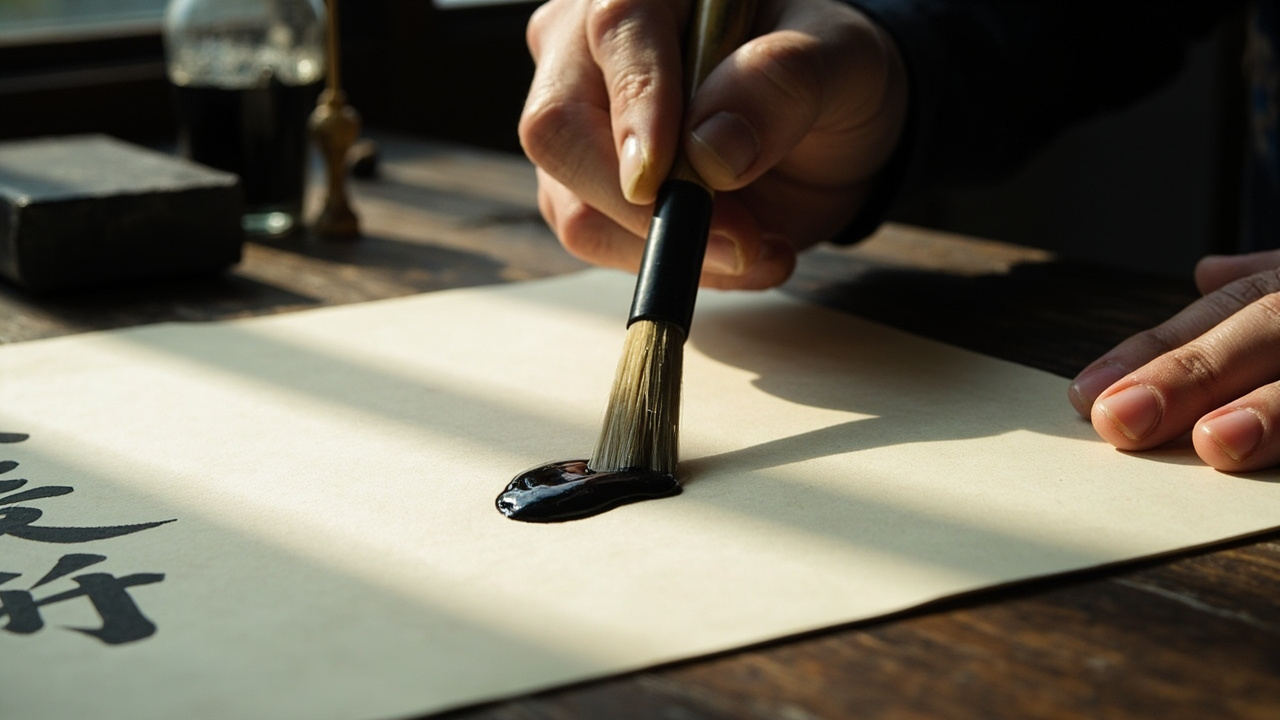
The cab driver in Beijing squinted at my phone screen, then back at me, then laughed. Not a mean laugh—the kind you get when you’ve asked for something genuinely absurd. I’d typed “closest place to buy a scroll with poetry on it” into my translation app. He shook his head, muttered something about waiguoren always wanting the wrong things, and drove me to Panjiayuan Antique Market instead. That was seven years ago, and I’ve been chasing the right version of that question ever since.
Quick answer
The cab driver in Beijing squinted at my phone screen, then back at me, then laughed. Not a mean laugh—the kind you get when you’ve asked for something genuinely absurd.
Chinese calligraphy and art aren’t just things you look at in museums here. They’re the smell of ink rising off a street vendor’s table at 6 AM in Xi’an, the way an old man in a park dips a brush into a bucket of water and paints characters onto stone tiles, the quiet tension in a gallery where a 12th-century landscape scroll hangs next to a contemporary video installation. This guide is built from those moments—the good, the confusing, and the one time I accidentally bought a fake Song Dynasty vase (don’t ask).
If you’re planning a trip to China in 2026 and want to actually understand the art you’re seeing—not just snap photos and move on—this will save you time, money, and embarrassment.
The Short Version
Skip the tourist-trap calligraphy shops on Wangfujing. Go to the National Art Museum of China in Beijing for the big picture, then take a high-speed train to Hangzhou for the China Academy of Art’s campus—it’s a masterpiece itself. Buy a cheap ink stone from a student, not a “master.” And whatever you do, don’t ask a Chinese friend to explain the difference between “art” and “craft” unless you have an hour to kill and a bottle of baijiu.
How I Picked These
I’ve visited every place on this list at least twice—some five or six times—over the last seven years. I talked to calligraphy professors at the Central Academy of Fine Arts, a scroll restorer in Shanghai who smelled like tea and old paper, and a street painter in Chengdu who taught me how to hold a brush wrong. I also made every mistake you can make: paid 300 RMB for a “certified antique” that was three weeks old, showed up to a gallery on its weekly rest day, and once spent an entire afternoon in the wrong building. These picks are the ones that survived my own stupidity.
Comparison Table
| Rank | Place | Best For | Approx Cost (USD) | Time Needed | When to Go |
|------|-------|----------|-------------------|-------------|------------|
| 1 | National Art Museum of China | Comprehensive modern & traditional | Free (some exhibits $5-10) | 2-3 hours | Weekday mornings |
| 2 | China Academy of Art Museum, Hangzhou | Contemporary ink art | $8 (¥55) | 1.5-2 hours | Late afternoon for light |
| 3 | Palace Museum Calligraphy Gallery, Beijing | Imperial masterpieces | $12 (¥80) | 2-3 hours | Off-season (Nov-Feb) |
| 4 | Shanghai Museum | Ancient bronzes & ceramics | Free | 2-3 hours | Tuesday-Thursday |
| 5 | Chengdu Du Fu Thatched Cottage | Poetry & calligraphy | $7 (¥50) | 1.5 hours | Spring (March-April) |
| 6 | Xi’an Stele Forest | Stone-carved calligraphy | $6 (¥45) | 1-2 hours | Early morning |
| 7 | 798 Art District, Beijing | Contemporary art scene | Free (gallery entry varies) | 3-4 hours | Saturday afternoon |
| 8 | Suzhou Museum | Ming/Qing scholar art | Free | 1.5-2 hours | Weekday afternoons |
| 9 | Lijiang Old Town Calligraphy Shops | Street-level art buying | Free to browse | 1 hour | Late afternoon |
| 10 | Guangzhou Museum of Art | Lingnan school painting | $5 (¥35) | 1.5 hours | Sunday morning |
1. National Art Museum of China — The Big Picture
I walked in on a Tuesday in November and found a room full of retired Beijing men standing silently in front of a single ink wash painting of a mountain. Nobody moved for maybe ten minutes. That’s the energy here.
This is the place to start because it gives you the whole arc—from 5th-century Buddhist scrolls to 2025 video installations by young artists from Chengdu. The permanent collection on the third floor is where you’ll find the calligraphy that matters: scrolls by Wang Xizhi (the guy Chinese calligraphers still worship, 1,700 years later) and massive Mao-era propaganda paintings that mix revolutionary slogans with traditional brushwork.
-
📍 Location: 1 Wusi Avenue, Dongcheng District, Beijing. East of the Forbidden City.
-
🎫 Entry fee: Free general admission (reserve online 1-3 days ahead). Special exhibits: $5-10 (¥35-70).
-
🕐 Opening hours: 9:00-17:00, last entry 16:00. Closed Mondays. Check their WeChat mini-program for holiday changes.
-
🚆 Getting there: Take Subway Line 5 or 6 to Dongsi Station, Exit E. Walk north 10 minutes. Or take Line 8 to National Art Museum Station, Exit A—you’ll see the building immediately.
-
⏰ When to visit: Weekday mornings before 11 AM. Saturday afternoons are a zoo of school groups and selfie sticks.
-
💡 Insider tips:
-
Download the “National Art Museum of China” mini-program on WeChat before you go. You’ll need it to book.
-
The audio guide is in Chinese only, but the English placards are decent—just short.
-
Bring your passport. Security checks are tighter here than at most airports.
-
The gift shop sells decent reproduction scrolls for $15-30 (¥100-200), which is cheaper than anywhere on Wangfujing.
-
Don’t miss the basement gallery—it’s where they stash the experimental stuff that doesn’t fit the official narrative.
-
I once spent an hour in the basement talking to a security guard who painted in his spare time. He showed me photos of his landscapes on his phone. They were better than half the stuff upstairs.
2. China Academy of Art Museum, Hangzhou — Where Tradition Breathes
The campus itself is the first artwork. Architect Wang Shu (Pritzker Prize winner) designed it to look like a traditional Jiangnan village—white walls, dark tiles, courtyards that frame the sky like a painting. I sat in one of those courtyards for twenty minutes watching the light shift across a bamboo grove before I even went inside.
The museum focuses on contemporary ink art—the kind that asks “what happens when you paint a smartphone with a Song Dynasty brush technique?” It’s smart, sometimes funny, and never pretentious. The calligraphy section upstairs has rotating exhibits from the academy’s archives, including student work that’s often more interesting than the masters’.
-
📍 Location: 218 Nanshan Road, Shangcheng District, Hangzhou. On the west side of West Lake.
-
🎫 Entry fee: $8 (¥55). Students with ID: $4 (¥28).
-
🕐 Opening hours: 9:00-17:00, last entry 16:30. Closed Mondays.
-
🚆 Getting there: Take Subway Line 1 to Ding’an Road Station, Exit C. Walk south along Nanshan Road for 15 minutes. Or take a taxi from West Lake—tell the driver “Zhongguo Meishu Xueyuan Bowuguan.”
-
⏰ When to visit: Late afternoon (3-4 PM) when the light hits the white walls. Avoid weekends during October’s Golden Week—the campus becomes a tourist attraction.
-
💡 Insider tips:
-
The campus cafe is actually good—get the osmanthus tea and a sesame bun.
-
Check the museum’s website for current exhibits before you go; they rotate every 6-8 weeks.
-
English signage is limited. Download Pleco or Google Translate for the Chinese labels.
-
The gift shop sells student-made ink stones and brushes for $10-20 (¥70-140)—better quality than most tourist shops.
-
Walk around the campus after the museum closes. The architecture is worth an hour on its own.
-
I bought a brush from a student vendor outside the gate for 40 RMB. It’s still the best brush I own.
3. Palace Museum Calligraphy Gallery, Beijing — The Imperial Collection
This is where they keep the heavy hitters: Wang Xizhi’s “Preface to the Orchid Pavilion” (a copy, but a very old one), Zhao Mengfu’s horses, and Ming Dynasty court calligraphy that looks like it was written by gods. The gallery is tucked away in the Palace Museum’s western section, past the Hall of Mental Cultivation. Most tourists miss it entirely.
The room is dim—deliberately so, to protect the silk and paper. You’ll lean in close to read the characters, and that’s the point. These were made to be studied, not glanced at. I spent twenty minutes on a single scroll by Dong Qichang, following the brushstrokes like a trail through a forest.
-
📍 Location: Western section of the Palace Museum (Forbidden City), 4 Jingshan Front Street, Dongcheng District, Beijing.
-
🎫 Entry fee: $12 (¥80) for general Palace Museum entry. The calligraphy gallery is included. Peak season (April-October): $15 (¥100).
-
🕐 Opening hours: 8:30-17:00 (April-October), 8:30-16:30 (November-March). Last entry 60 minutes before close. Closed Mondays.
-
🚆 Getting there: Take Subway Line 1 to Tiananmen East Station, Exit A. Walk through the Meridian Gate, then head west past the Hall of Supreme Harmony.
-
⏰ When to visit: November-February, weekday mornings. The crowds are thinner and the light is softer. Summer is a nightmare.
-
💡 Insider tips:
-
Buy your ticket online at least three days in advance during peak season. They sell out.
-
Enter through the East Gate (Donghuamen) to skip the main queue—most tourists don’t know about it.
-
The calligraphy gallery rotates its exhibits every 3-4 months. Check the Palace Museum website for what’s on display.
-
No photography with flash. Security will yell at you in Chinese. Don’t test them.
-
Bring water and snacks—the food inside is overpriced and mediocre.
-
A guard saw me staring at a Zhao Mengfu scroll for too long and nodded approvingly. “You understand,” he said in English. I didn’t, really, but I nodded back.
4. Shanghai Museum — The Scholar’s Toolkit
This is the best museum in China for understanding what a scholar-artist actually used. The ceramics and bronze galleries are world-class, but the real gem is the Ming and Qing painting and calligraphy hall on the third floor. They have a dedicated room for “scholar’s objects”—ink stones, brush pots, water droppers, seal carvings—that explains the tools behind the art better than any placard could.
I watched a teenage girl spend ten minutes examining a single ink stone from the Song Dynasty, tracing the carved patterns with her finger through the glass. That’s the kind of place this is.
-
📍 Location: 201 Renmin Avenue, Huangpu District, Shanghai. In People’s Square.
-
🎫 Entry fee: Free. Reserve online through their WeChat mini-program.
-
🕐 Opening hours: 9:00-17:00, last entry 16:00. Closed Mondays.
-
🚆 Getting there: Take Subway Line 1, 2, or 8 to People’s Square Station, Exit 1. Walk south 5 minutes. The museum looks like a giant bronze ding (ancient cooking vessel).
-
⏰ When to visit: Tuesday-Thursday mornings. Saturdays are crowded with families.
-
💡 Insider tips:
-
The free audio guide is excellent and available in English. Pick it up at the information desk.
-
The calligraphy hall is on the third floor, but start on the fourth floor with the ceramics—it provides context.
-
The museum’s seal collection is one of the best in China. Don’t skip it.
-
Bring a small notebook. You’ll want to write down names of artists to look up later.
-
The cafe on the ground floor is surprisingly good—try the jasmine tea.
-
I met a retired calligraphy teacher in the scholar’s objects room who spent twenty minutes explaining the difference between She ink stones and Duan ink stones. I still remember which is which.
5. Chengdu Du Fu Thatched Cottage — Poetry in Place
Du Fu is China’s most beloved poet—think Shakespeare but more depressed and better at landscape descriptions. This is where he lived during the Tang Dynasty, writing poems about the rain, his roof leaking, and the soldiers marching past. The cottage is a reconstruction, but the atmosphere is real.
The calligraphy here is carved into stone tablets scattered through the garden. You walk from one to the next, reading poems about the same bamboo and lotus flowers you’re looking at. It’s the closest you’ll get to understanding why Chinese poetry and painting are the same thing.
-
📍 Location: 37 Qinghua Road, Qingyang District, Chengdu.
-
🎫 Entry fee: $7 (¥50).
-
🕐 Opening hours: 8:00-18:30 (summer), 8:00-18:00 (winter). Last entry 60 minutes before close. No rest day.
-
🚆 Getting there: Take Subway Line 4 to Caotang North Road Station, Exit B. Walk south 10 minutes. Or take bus 35 or 58 to Du Fu Caotang stop.
-
⏰ When to visit: March-April when the plum blossoms are out. Weekday mornings before 10 AM.
-
💡 Insider tips:
-
Buy the English guidebook at the entrance ($5/¥35). It has translations of the poems on the tablets.
-
The bamboo grove in the back is where locals practice calligraphy with water brushes on the stone path. Join them if you’re brave.
-
Don’t expect original Du Fu manuscripts—they don’t exist. The value is in the place, not the objects.
-
The tea house inside serves decent green tea for $2 (¥15).
-
Combine this with a visit to Wuhou Shrine (Zhuge Liang’s temple)—they’re a 20-minute walk apart.
-
I tried to write a Du Fu poem with a water brush on the stone path. A seven-year-old girl corrected my stroke order. Her grandmother laughed.
6. Xi’an Stele Forest — Stone as Canvas
This is a museum of stone tablets—hundreds of them, carved with calligraphy from the Han Dynasty through the Qing. It’s the world’s largest collection of its kind, and walking through the galleries feels like being inside a library made of rock. The characters are deep enough to cast shadows.
The most famous tablet is the “Nestorian Stele” from 781 AD, which records the arrival of Christianity in China. But the real treasures are the calligraphy models—the “Thirteen Classics” carved in the Tang Dynasty, used by scholars for centuries as the definitive versions of Confucian texts.
-
📍 Location: 15 Sanxue Street, Beilin District, Xi’an. South of the city wall.
-
🎫 Entry fee: $6 (¥45).
-
🕐 Opening hours: 8:00-17:30 (March-November), 8:00-17:00 (December-February). No rest day.
-
🚆 Getting there: Take Subway Line 2 to Yongningmen Station, Exit D. Walk east along the city wall for 10 minutes, then turn south on Sanxue Street.
-
⏰ When to visit: Early morning (8-9 AM) before the tour groups arrive. Weekdays only.
-
💡 Insider tips:
-
Buy the rubbing kit at the entrance ($3/¥20) and try making your own ink rubbing on the practice stones outside.
-
The English signs are minimal. Rent the audio guide ($4/¥30) or bring a translation app.
-
The museum has a small room dedicated to the “Forest of Steles”—don’t miss the one carved with the “Heart Sutra” in multiple scripts.
-
Combine with a visit to the Xi’an City Wall—the south gate is a 10-minute walk away.
-
The gift shop sells high-quality rubbings for $20-50 (¥140-350)—better than anything in the Muslim Quarter.
-
A calligraphy student from Xi’an Normal University spent an hour showing me how to read the different scripts on the tablets. She didn’t speak English, but we communicated through characters written in my notebook.
7. 798 Art District, Beijing — The New Wave
This is where Chinese contemporary art lives—former factory buildings turned into galleries, cafes, and studios. The quality varies wildly. Some galleries sell overpriced kitsch to wealthy collectors. Others have genuinely interesting work by young artists who are rethinking what Chinese art means in 2026.
The best gallery for calligraphy-adjacent work is Pace Gallery (in a converted munitions factory). They often show artists who use traditional brush techniques on non-traditional surfaces—canvas, metal, even digital tablets. I saw a piece there that was a video of a calligrapher writing characters in the air with a light pen, the strokes fading as he moved.
-
📍 Location: 2 Jiuxianqiao Road, Chaoyang District, Beijing.
-
🎫 Entry fee: Free to enter the district. Individual galleries: free to $10 (¥70).
-
🕐 Opening hours: Most galleries open 10:00-18:00, Tuesday-Sunday. Some close Mondays. Check individual gallery schedules.
-
🚆 Getting there: Take Subway Line 14 to Wangjing South Station, Exit B. Walk east 15 minutes. Or take bus 401, 402, or 405 to 798 Art District stop.
-
⏰ When to visit: Saturday afternoon for the full vibe. Weekday mornings if you want to actually see art without crowds.
-
💡 Insider tips:
-
Don’t buy art from the street vendors outside—it’s mass-produced and overpriced.
-
The Ullens Center for Contemporary Art (UCCA) is the anchor gallery. Check their schedule for exhibitions.
-
Eat at At Cafe (inside the district)—good coffee and decent Western food if you’re tired of noodles.
-
Many galleries have English-speaking staff. Ask questions—they’re usually happy to talk.
-
The street art in the alleyways is often better than the gallery art. Walk everywhere.
-
I bought a small ink painting from a young artist named Li Wei for 200 RMB. He signed it with his seal and wrote my name in characters. I still have it framed in my apartment.
8. Suzhou Museum — Scholar’s Garden Art
I.M. Pei designed this museum, and it shows. The building itself is a lesson in how traditional Chinese aesthetics can live in modern architecture—white walls, dark roof lines, water features that mirror the sky. The collection focuses on Ming and Qing dynasty scholar art, including paintings, calligraphy, and the objects scholars surrounded themselves with.
The calligraphy gallery has a rotating selection from the museum’s collection of 30,000+ pieces. I saw a set of letters by Wen Zhengming there—casual notes to friends about tea and travel, written in a script so effortless it looked like conversation.
-
📍 Location: 204 Dongbei Street, Gusu District, Suzhou. Next to the Humble Administrator’s Garden.
-
🎫 Entry fee: Free. Reserve online through their official website or WeChat mini-program.
-
🕐 Opening hours: 9:00-17:00, last entry 16:00. Closed Mondays.
-
🚆 Getting there: Take Subway Line 4 to Beisita Station, Exit 1. Walk south 10 minutes. Or take bus 55, 178, or 202 to Suzhou Museum stop.
-
⏰ When to visit: Weekday afternoons (2-4 PM) when the light hits the white walls. Avoid weekends.
-
💡 Insider tips:
-
The museum’s architecture is the main attraction. Spend 20 minutes just walking through the courtyards.
-
The underground gallery has temporary exhibitions that are often better than the permanent collection.
-
Combine with the Humble Administrator’s Garden (adjoining)—buy a combo ticket for $12 (¥85).
-
The museum cafe has a window that frames the garden perfectly. Sit there for 10 minutes.
-
English signage is good, but the audio guide ($5/¥35) adds context.
-
I watched a Japanese tourist cry in front of a Ming Dynasty landscape scroll. I pretended not to notice.
9. Lijiang Old Town Calligraphy Shops — Street-Level Art
This is not a museum. It’s a maze of cobblestone streets lined with shops selling calligraphy, paintings, and “antiques” (most of which are reproductions). The quality ranges from tourist trash to genuine local craftsmanship. The trick is knowing where to look.
The best shops are on Wuyi Street and Sifang Street, away from the main tourist drag. Look for shops where the artist is actually working in the back—you can hear the brush on paper. I found a shop run by a Naxi minority calligrapher who wrote in both Chinese characters and the Naxi pictographic script (the only living pictographic language in the world).
-
📍 Location: Lijiang Old Town, Gucheng District, Lijiang, Yunnan Province.
-
🎫 Entry fee: Free to enter the old town. Individual shop purchases vary.
-
🕐 Opening hours: Most shops open 9:00-21:00. No rest day.
-
🚆 Getting there: Take a taxi from Lijiang Railway Station (30 minutes, $5/¥35). Or take bus 4 or 18 to the old town entrance.
-
⏰ When to visit: Late afternoon (4-6 PM) when the light is golden and the crowds thin out.
-
💡 Insider tips:
-
Bargain politely. Start at 50% of the asking price. Don’t be aggressive—it’s not a market.
-
Look for shops with a “workshop” sign—it means the artist works on-site.
-
Ask for a “seal carving” (印章, yìnzhāng)—many calligraphers will carve your name in Chinese characters for $10-20 (¥70-140).
-
Avoid the shops on the main square—they’re all mass-produced.
-
If the artist offers tea, accept. It’s a sign they want to talk, not just sell.
-
A Naxi calligrapher named A-Li spent an hour teaching me to write my name in Dongba script. I paid 50 RMB for the lesson and a small scroll. He refused to take more.
10. Guangzhou Museum of Art — The Lingnan School
This museum specializes in the Lingnan school of painting—a 20th-century movement that mixed traditional Chinese ink techniques with Western perspective and color theory. It’s bright, bold, and completely different from the restrained elegance of the northern schools.
The calligraphy collection is small but focused—mostly works by Lingnan school artists who saw calligraphy as part of the same practice as painting. I saw a scroll there by Gao Jianfu that combined a poem about a thunderstorm with a painting of lightning striking a mountain. The characters looked like they were moving.
-
📍 Location: 13 Luhu Road, Yuexiu District, Guangzhou.
-
🎫 Entry fee: $5 (¥35). Free on Wednesdays.
-
🕐 Opening hours: 9:00-17:00, last entry 16:30. Closed Mondays.
-
🚆 Getting there: Take Subway Line 5 to Xiaobei Station, Exit D. Walk east 15 minutes through the park. Or take bus 63, 109, or 110 to Guangzhou Museum of Art stop.
-
⏰ When to visit: Sunday morning for the calligraphy demonstrations in the lobby. Weekdays are quieter.
-
💡 Insider tips:
-
The museum is inside Yuexiu Park—combine with a visit to the Five Rams Statue and the Zhenhai Tower.
-
Sunday mornings often have live calligraphy demonstrations by local artists. Check the schedule.
-
The museum’s collection of Lingnan school works is the best in China. Don’t skip the second floor.
-
English signage is limited. The audio guide is available in English ($3/¥20).
-
The rooftop garden has a good view of the park and a small tea house.
-
I watched a Lingnan school painter finish a landscape in 15 minutes while a crowd of 20 people watched silently. He signed it with a single brushstroke.
FAQ
Q: Do I need to know Chinese to appreciate calligraphy?
A: No. But learn the five basic scripts (seal, clerical, regular, running, cursive) before you go. It takes 30 minutes on YouTube and transforms what you see.
Q: Can I buy genuine calligraphy as a tourist?
A: Yes, but don’t buy from street vendors in tourist areas. Go to student markets near art academies, or buy directly from working artists in places like Lijiang or 798. Expect to pay $20-100 (¥140-700) for a decent piece by a living artist.
Q: Is it rude to take photos in galleries and museums?
A: No flash, no tripods, no selfie sticks. Most museums allow non-flash photography of permanent collections. Temporary exhibits often ban all photography. When in doubt, ask.
Q: Do I need a VPN to access museum websites and booking systems?
A: Yes. Book your tickets before you leave home if possible. Inside China, you’ll need a VPN to access Google, Instagram, and many museum websites. WeChat mini-programs work without a VPN.
Q: What’s the best way to learn about calligraphy before my trip?
A: Watch the documentary “The Art of Chinese Calligraphy” on YouTube (it’s free). Read “Chinese Calligraphy: An Introduction” by Chiang Yee. Practice writing your name in Chinese characters—it will impress locals.
Q: Are there calligraphy classes for tourists?
A: Yes. Many art academies offer short workshops. The Central Academy of Fine Arts in Beijing has a 2-hour class for $30 (¥210). The China Academy of Art in Hangzhou offers 1-day workshops for $60 (¥420). Book in advance.
Q: What should I bring back as a souvenir?
A: A good ink stone (端砚, duānyàn) from Guangdong orZhejiang. A set of brushes from Huzhou (湖笔, húbǐ). A seal with your name carved in Chinese characters. Or a scroll by a living artist. Avoid “antique” scrolls from markets—they’re almost always fakes.
The Honest Wrap-up
This list is for people who want to understand, not just see. If you’re the kind of traveler who needs a perfect Instagram shot of every scroll and will be annoyed when a museum guard tells you to move along, this isn’t for you. But if you’re willing to stand in front of a single piece of calligraphy for ten minutes, to let the brushstrokes work on you the way they worked on the person who made them, then you’ll find something here that no guidebook can give you.
My final piece of advice: Buy a cheap brush and ink from a student supply shop on your first day. Practice writing one character every morning of your trip. By the end, you’ll understand why the Chinese have been doing this for 3,000 years.
Related Guides
Looking for more China travel guides? These match your topic:
Topics
More guides you may like
China Tipping Culture Complete Guide for Foreigners
The definitive guide to tipping in China - who to tip, how much, and why it's different from Western countries.
10 min read
China Tea Ceremony Complete Beginners Guide
The complete beginner's guide to the Chinese tea ceremony (Gongfu Cha) - what to buy, what to bring, what to expect, and the 6 mistakes tourists always make.
18 min read
Chinese Festivals Complete Guide for Foreigners
Chinese festivals explained for international visitors - Spring Festival, Mid-Autumn Festival, Dragon Boat Festival, and more. Dates, customs, and how to join.
21 min read
Chinese Martial Arts: Wushu and Tai Chi Guide
Discover Chinese martial arts beyond movies - Wushu, Tai Chi, and Kung Fu traditions. Schools, parks, and cultural etiquette for travelers in China.
19 min read

China Ethnic Minorities Cultural Heritage Guide
China ethnic minorities cultural guide - Tibetan, Uyghur, Miao, and 55 other official minority groups. Cultural etiquette, festival calendar, and how to visit respectfully.
18 min read
Chinese Martial Arts Schools
Chinese Martial Arts Schools: 2026 guide covers current prices, transport, payment apps, and what foreign visitors need to know.
17 min read