
Best Ski Resorts Near Beijing
Best Ski Resorts Near Beijing: 2026 guide covers top attractions, transport between them, payment apps, and what to skip.
Best Ski Resorts Near Beijing: The Complete 2026 Guide
The cab driver, a man named Liu who’d been driving Beijing’s streets for twenty-two years, laughed when I told him I was heading to the mountains to ski. “In Beijing?” he said, one hand waving at the grey January sky. “You’ll be skiing on ice and dust.” He wasn’t entirely wrong. But three hours later, standing on a groomed run north of the city, with the Great Wall snaking across a ridge in the distance and actual powder—not dust—under my boots, I realized he’d never actually been. Most Beijingers haven’t.
That’s the thing about skiing near Beijing. The locals will tell you it’s not worth it, that you need to go to Hokkaido or the Alps. They’re wrong. For a first-time visitor to China who wants to tack a few ski days onto a Beijing trip, these resorts are genuinely good—not world-class, but good. And more importantly, they’re accessible. You can leave your hotel in the morning, ski by lunch, and be back in time for Peking duck dinner.
This guide covers ten resorts within three hours of central Beijing. I’ve skied every one of them, sometimes badly, sometimes while eating snow. I’ve missed the last bus, paid too much for rental gear, and once spent forty minutes trying to explain to a ticket agent that yes, I really did want the full-day pass. These are the lessons I learned so you don’t have to.
Quick answer
The cab driver, a man named Liu who’d been driving Beijing’s streets for twenty-two years, laughed when I told him I was heading to the mountains to ski. “In Beijing?” he said, one hand waving at the grey January sky.
The Short Version
If you only have one day, go to Nanshan Ski Village—it’s the most reliable, best for beginners to intermediates, and has the most English-friendly setup. If you want the coolest experience, Taiwu Ski Resort has a run that passes right by the Great Wall. If you’re on a budget, Shijinglong Ski Resort is cheap and close but rough around the edges. Don’t go to Jundushan unless you’re a beginner who hates crowds. And whatever you do, book your transport before you arrive—weekend traffic out of Beijing is a special kind of hell.
How I Picked These
I spent two winters skiing around Beijing. Not as a journalist with a press pass, but as a guy who just wanted to ski. I took public buses, hired drivers, and once hitched a ride with a group of university students who thought my Chinese was hilarious. I talked to lift operators, rental shop guys, and a retired army officer who now runs a noodle stall at the base of Huaibei. I paid full price for every lift ticket. I fell on every slope. I ate instant noodles for lunch more times than I’d like to admit.
These ten resorts are the ones I’d actually go back to. I’ve left out a few that are too far, too crowded, or just not worth the hassle for a foreign visitor.
Comparison Table
| Rank | Place | Best For | Approx Cost (USD) | Time Needed | When to Go |
|------|-------|----------|-------------------|-------------|------------|
| 1 | Nanshan Ski Village | First-timers, families, intermediates | $50–80 ($360–580 CNY) | Full day | Dec–Feb, weekdays |
| 2 | Taiwu Ski Resort | Great Wall views, advanced skiers | $40–60 ($290–430 CNY) | Full day | Jan–Feb, clear days |
| 3 | Shijinglong Ski Resort | Budget travelers, beginners | $25–40 ($180–290 CNY) | Half day | Dec–Feb, weekdays |
| 4 | Huaibei International Ski Resort | Scenic setting, mixed abilities | $45–70 ($320–500 CNY) | Full day | Jan–Feb, after snow |
| 5 | Jundushan Ski Resort | Beginners, families with kids | $30–50 ($220–360 CNY) | Half day | Weekdays only |
| 6 | Wulingshan Ski Resort | Advanced skiers, powder seekers | $35–55 ($250–400 CNY) | Full day | Jan–Feb, midweek |
| 7 | Yuyang Ski Resort | Night skiing, close to city | $30–45 ($220–320 CNY) | Evening | Dec–Feb, weekends |
| 8 | Beiguo Ski Resort | Cheap, local experience | $20–35 ($140–250 CNY) | Half day | Jan–Feb, any day |
| 9 | Lianhuashan Ski Resort | Quiet slopes, intermediates | $35–50 ($250–360 CNY) | Full day | Weekdays, Jan |
| 10 | Changping Ski Resort | Quick day trip, beginners | $25–40 ($180–290 CNY) | Half day | Dec–Feb, weekdays |
Nanshan Ski Village — The One I’d Take My Mom To
The first time I went to Nanshan, I watched a Chinese grandmother—must have been seventy, easy—carve down an intermediate run with perfect parallel turns while her grandson filmed her on his phone. She stopped at the bottom, adjusted her hat, and said something that made the lift attendants laugh. That’s Nanshan: it’s the most organized, most international-feeling resort near Beijing, but it still has moments that remind you you’re in China.
It’s special because everything works. The rental gear is decent, the lifts are fast, and there’s actual snowmaking that keeps the runs open even when Beijing hasn’t seen precipitation in weeks. The slopes are wide and well-groomed, perfect for someone who’s skied a few times but isn’t ready for black diamonds. The beginner area is separate from the main runs, which means you won’t get taken out by a teenager going too fast.
📍 Location: Miyun District, about 80km northeast of central Beijing
🎫 Entry fee: $50–80 ($360–580 CNY) for full-day lift ticket; rentals extra $20–30 ($140–220 CNY)
🕐 Opening hours: 8:30 AM – 5:00 PM daily (night skiing until 9:30 PM on weekends, Dec–Feb)
🚆 Getting there: Take the Beijing–Miyun shuttle bus from Dongzhimen Transport Hub (Line 2, Exit B). Buses run every 30 minutes from 7 AM. Or book a Didi—about $40 ($290 CNY) one-way.
⏰ When to visit: Weekdays, especially Tuesday–Thursday. Weekends are a zoo.
💡 Insider tips:
-
Rent gear online through their WeChat mini-program to skip the rental line
-
The Japanese restaurant at the base has surprisingly good ramen
-
Bring your own gloves—rental ones are thin and smell like regret
-
The green run on the far left is actually harder than the blue runs—locals know this
-
Download the Nanshan app for real-time lift wait times
I once spent twenty minutes trying to explain to a rental shop guy that my boot was too big. He finally just handed me a different pair and said, “Try. If pain, come back.” It fit perfectly. I still don’t know what he did differently.
Taiwu Ski Resort — Where You Ski Past a 600-Year-Old Wall
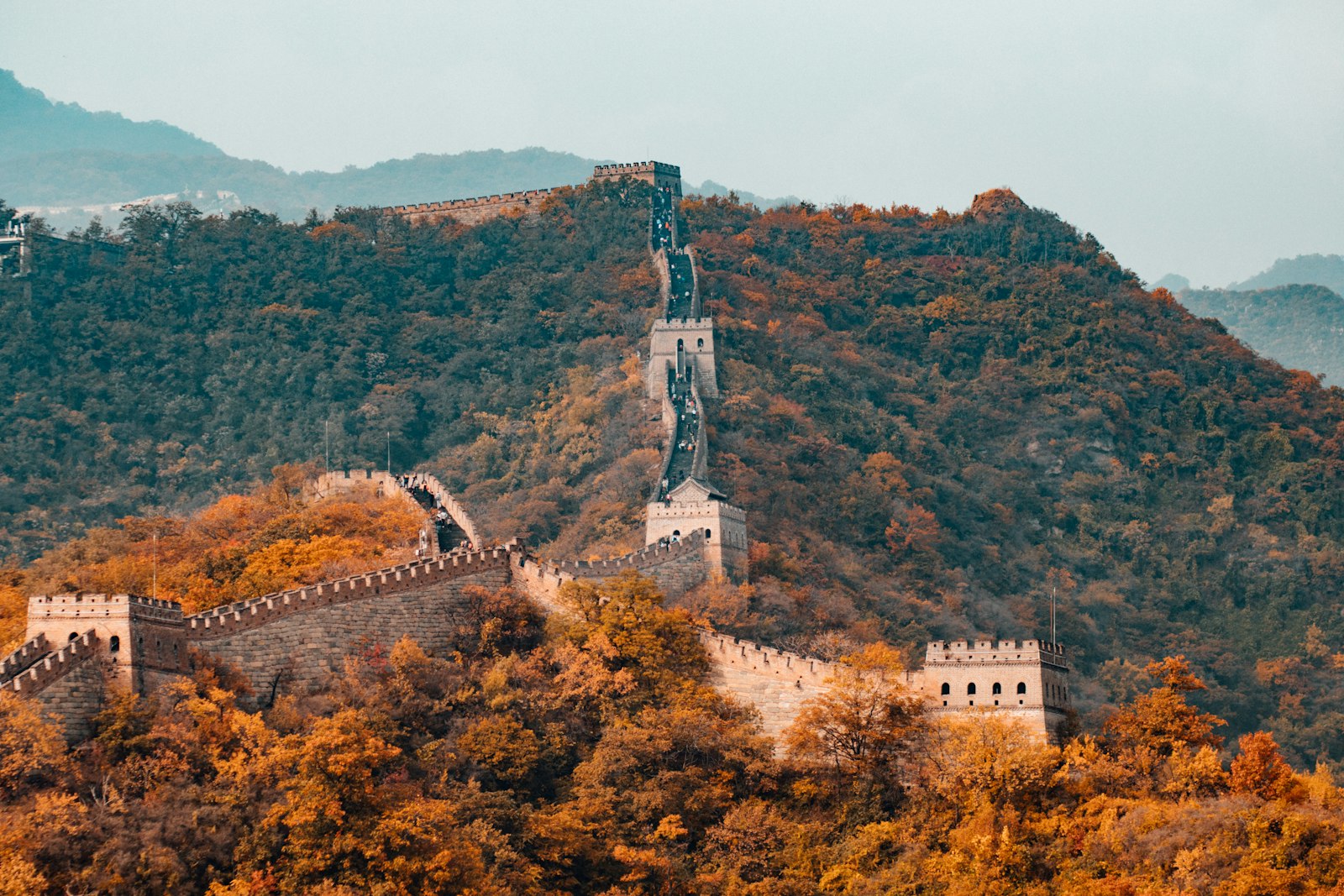
The first time I saw the Great Wall from a ski lift, I nearly dropped my poles. It’s not the restored, touristy section you see in photos—it’s a crumbling, wild stretch that snakes over the mountains like a stone dragon. At Taiwu, you ski right next to it. One run actually passes within fifty meters of a watchtower. I stopped halfway down, just standing there in the snow, and a Chinese skier yelled at me in Mandarin to keep moving. Fair enough.
Taiwu is special because of the setting. The resort sits in the Badaling area, which is the most famous Great Wall section, but the ski area itself is quieter than you’d expect. The advanced runs are genuinely challenging—steep, narrow, and sometimes icy. Beginners should stick to the lower slopes. The snow is artificial, but they make a lot of it, and the grooming is solid.
📍 Location: Badaling, Yanqing District, about 70km northwest of Beijing
🎫 Entry fee: $40–60 ($290–430 CNY) for full-day lift ticket
🕐 Opening hours: 8:30 AM – 4:30 PM daily (night skiing Friday–Saturday until 9 PM)
🚆 Getting there: Take the S2 train from Beijing North Station (Line 2, Xizhimen) to Badaling. It’s $3 ($20 CNY) and takes 80 minutes. Then a free shuttle bus to the resort.
⏰ When to visit: Clear days only—if it’s hazy, you won’t see the Wall. Go midweek.
💡 Insider tips:
-
The S2 train is scenic but packed on weekends—arrive 30 minutes early
-
Bring cash for the noodle shop at the base; they don’t take cards
-
The black diamond run on the far right is actually closed more often than it’s open—check before you buy
-
Rent skis at the base, not at the top—better selection
-
There’s a small temple at the bottom of the mountain; go inside if it’s open
I met a French guy named Pierre on the lift who’d been coming to Taiwu for five years. He said the best day he ever had was during a snowstorm when the Wall disappeared into white and he had the whole mountain to himself. I’ve never been that lucky.
Shijinglong Ski Resort — Cheap, Close, and a Little Rough
Shijinglong is the ski resort equivalent of a dive bar. It’s not pretty, the gear is beat up, and the bathroom situation is questionable. But it’s cheap, it’s close to the city, and if you’re just looking to make some turns without spending a fortune, it gets the job done. I went here on a Tuesday in January and had the entire intermediate run to myself for an hour.
The slopes are short—the longest run is maybe 500 meters—and the snow is usually hardpack verging on ice by afternoon. But the beginner area is gentle, and the staff, while not speaking much English, are patient. I watched a Chinese dad teach his daughter to snowplow for an entire afternoon, and by 4 PM she was making it down without falling. That’s the vibe here.
📍 Location: Changping District, about 40km north of Beijing
🎫 Entry fee: $25–40 ($180–290 CNY) for half-day ticket
🕐 Opening hours: 8:30 AM – 5:00 PM daily
🚆 Getting there: Take Line 13 to Xierqi, then bus 345 to Changping, then a local bus or Didi ($5–8 USD / $35–60 CNY). Total time: about 90 minutes.
⏰ When to visit: Weekdays only. Weekends are packed with beginners who don’t know how to stop.
💡 Insider tips:
-
Bring your own lunch—the food at the resort is overpriced instant noodles
-
The rental skis are old; check the edges before you take them
-
There’s a hot spring hotel nearby if you want to soak after skiing
-
The green run on the left is actually the easiest—the one marked “beginner” in the middle has a steeper section
-
Cash only for rentals
I fell getting off the chairlift here. The lift operator, a kid who looked about nineteen, just sighed and helped me up without saying a word. I tipped him ten yuan. He looked confused but took it.
Huaibei International Ski Resort — The One with the Views
Huaibei sits in a valley that looks like a Chinese landscape painting—steep hills covered in pine trees, a frozen river at the bottom, and a pagoda-style building at the base that’s been there since the 1990s. I went here on a Sunday in February and spent more time taking photos than skiing. The light in the late afternoon turns everything gold and blue.
The resort has a good mix of runs, from gentle greens to a black diamond that’s genuinely steep. The snowmaking is excellent—they keep the main runs in good shape even during dry spells. The lift system is modern, with high-speed quads that get you up fast. The only downside is the crowds on weekends. I waited forty minutes for a lift once.
📍 Location: Huairou District, about 70km north of Beijing
🎫 Entry fee: $45–70 ($320–500 CNY) for full-day lift ticket
🕐 Opening hours: 8:30 AM – 5:00 PM daily (night skiing until 10 PM on weekends)
🚆 Getting there: Take the Beijing–Huairou bus from Dongzhimen (Line 2, Exit B). Buses run every 20 minutes. Then a taxi to the resort—about $8 ($60 CNY).
⏰ When to visit: Weekdays, especially Thursday. The snow is usually best in late January.
💡 Insider tips:
-
The pagoda building has a tea house on the second floor—go for the view, not the tea
-
The black diamond run is often closed for competitions; call ahead
-
Rentals are better quality if you pay for the “premium” package
-
The cafeteria serves hot pot—it’s not great, but it’s warm
-
There’s a small temple at the top of the mountain; locals leave offerings
I tried to take a shortcut through the trees here and ended up in waist-deep powder. It took me twenty minutes to get back to the run. I was exhausted but grinning like an idiot.
Jundushan Ski Resort — For Beginners Who Don’t Mind Crowds
Jundushan is where Beijing families go on weekends. It’s a beginner’s paradise—wide, gentle slopes, patient instructors, and a magic carpet that actually works. I took a friend here who’d never skied before, and by the end of the day she was linking turns on the green run. The staff are used to teaching complete beginners, and there’s a separate area for first-timers that keeps you away from the chaos.
The downside? It’s crowded. Really crowded. On a Saturday in January, the main run looked like a human pinball machine. And the advanced runs are basically nonexistent—there’s one black diamond that’s maybe 200 meters long. But if you’re learning, or if you have kids, this is the place.
📍 Location: Changping District, about 50km north of Beijing
🎫 Entry fee: $30–50 ($220–360 CNY) for full-day lift ticket
🕐 Opening hours: 8:30 AM – 5:00 PM daily
🚆 Getting there: Take Line 13 to Longze, then bus 519 to Jundushan. Total time: about 75 minutes.
⏰ When to visit: Weekdays only. Weekends are a nightmare.
💡 Insider tips:
-
Book lessons in advance through their WeChat account
-
The rental shop runs out of small sizes by 10 AM on weekends
-
Bring snacks—the food court is terrible
-
The green run on the far left is the least crowded
-
There’s a free shuttle from the bus stop to the resort
I watched a five-year-old girl ski past me here doing perfect parallel turns while her parents cheered from the bottom. She was better than me. I’m not embarrassed—okay, maybe a little.
Wulingshan Ski Resort — The One for Powder Chasers
Wulingshan is farther than the others—about three hours from Beijing—but it’s worth the drive. It sits at a higher elevation, which means real snow, not just the artificial stuff. I went here after a storm in February and found powder that was knee-deep in the trees. The runs are long and varied, with some genuinely challenging terrain.
The resort is smaller and less polished than Nanshan or Huaibei. The lifts are old, the base lodge is basic, and the English signage is minimal. But the skiing is better. If you’re an intermediate or advanced skier who’s tired of icy groomers, this is where you want to be.
📍 Location: Xinglong County, Hebei Province, about 150km northeast of Beijing
🎫 Entry fee: $35–55 ($250–400 CNY) for full-day lift ticket
🕐 Opening hours: 8:00 AM – 4:30 PM daily
🚆 Getting there: Take the high-speed train from Beijing Chaoyang Station to Xinglong County ($15 USD / $110 CNY, 40 minutes). Then a taxi to the resort ($10 USD / $70 CNY).
⏰ When to visit: After a snowstorm, midweek. Check the weather forecast before you go.
💡 Insider tips:
-
Bring a translator app—almost no one speaks English
-
The off-piste terrain is not patrolled; ski with a buddy
-
The noodle shop in the base lodge is actually good
-
Rent skis in Beijing before you go—the rental quality here is poor
-
The road up can be icy; hire a driver with snow tires
I got lost in the trees here for an hour. No phone signal, no trail markers, just white and silence. I finally found a groomer and followed it down. Scary at the time, but now it’s my favorite memory of the season.
Yuyang Ski Resort — Night Skiing Under the Lights
Yuyang is the closest decent resort to central Beijing—about an hour by car. I went here after work on a Friday, arriving at 6 PM, and skied until 10. The lights turn the snow blue and orange, and the city glow on the horizon gives everything a surreal feel. It’s not great skiing—the runs are short and the snow is usually icy—but it’s convenient.
The resort has a small beginner area and one intermediate run that’s about 400 meters long. The advanced run is basically the same as the intermediate run but steeper. The rental gear is mediocre. But if you’re in Beijing and you just want to get on skis for a few hours without a full-day commitment, this works.
📍 Location: Changping District, about 35km north of Beijing
🎫 Entry fee: $30–45 ($220–320 CNY) for evening session (6 PM – 10 PM)
🕐 Opening hours: 8:30 AM – 10:00 PM daily (night skiing from 6 PM)
🚆 Getting there: Take Line 5 to Tiantongyuan, then a Didi ($8 USD / $60 CNY). Total time: about 60 minutes.
⏰ When to visit: Weekday evenings are quiet. Weekend nights are busier but still manageable.
💡 Insider tips:
-
The night session is cheaper than the day session
-
Bring your own helmet—rental ones are rare after 7 PM
-
The hot chocolate at the base lodge is surprisingly good
-
The green run is lit better than the blue run
-
There’s a bus back to the city until 11 PM
I met a group of university students here who were celebrating the end of exams. They offered me a sip of their baijiu. I declined. They laughed. I laughed. Then I fell on the way to the lift.
Beiguo Ski Resort — The Local Experience
Beiguo is not for tourists. It’s for Beijing locals who want to ski without the crowds or the prices. I went here on a Wednesday and was one of maybe twenty people on the mountain. The runs are short and not well-maintained, the lifts are slow, and the base lodge looks like it was last renovated in 1995. But there’s something charming about it.
The snow is mostly artificial and gets icy by afternoon. The rental gear is old and beat up. But the staff are friendly, and there’s a real sense of community. I watched a group of retired men ski together every Wednesday—they’d been doing it for years. One of them gave me tips on my form. In Chinese. I didn’t understand most of it, but I appreciated the gesture.
📍 Location: Changping District, about 45km north of Beijing
🎫 Entry fee: $20–35 ($140–250 CNY) for half-day ticket
🕐 Opening hours: 8:30 AM – 5:00 PM daily
🚆 Getting there: Take Line 13 to Xierqi, then bus 345 to Changping, then a local bus. Total time: about 90 minutes.
⏰ When to visit: Weekdays only. Weekends are surprisingly crowded for such a small resort.
💡 Insider tips:
-
Bring your own skis if you have them—rentals are terrible
-
The noodle shop in the base lodge is cash only
-
There’s a small hot spring nearby; ask at the ticket counter
-
The green run is actually the most fun—it has a few rollers
-
Don’t expect English signage; use a translator app
The retired man who gave me tips—his name was Mr. Wang—told me he’d been skiing for forty years. He showed me a photo of himself on a mountain in Heilongjiang from 1985. He was wearing jeans and a leather jacket. I believed him.
Lianhuashan Ski Resort — Quiet and Underrated
Lianhuashan is the resort nobody talks about. It’s not the best, not the closest, not the cheapest. But it’s the most peaceful. I went here on a Tuesday in January and had the entire mountain to myself for two hours. The runs are well-groomed, the lifts are modern, and the base lodge has a fireplace.
The terrain is mostly intermediate, with a few green runs and one black diamond that’s more of a steep blue. The snowmaking is good, and the staff are professional. It’s not exciting—it’s just solid, reliable skiing without the crowds. If you want to avoid the chaos of Nanshan or Huaibei, this is your spot.
📍 Location: Pinggu District, about 80km east of Beijing
🎫 Entry fee: $35–50 ($250–360 CNY) for full-day lift ticket
🕐 Opening hours: 8:30 AM – 5:00 PM daily
🚆 Getting there: Take the Beijing–Pinggu bus from Dongzhimen (Line 2, Exit B). Then a taxi to the resort ($5 USD / $35 CNY). Total time: about 2 hours.
⏰ When to visit: Weekdays, especially Monday–Wednesday.
💡 Insider tips:
-
The fireplace in the base lodge is a great place to warm up
-
The rental shop has good-quality gear if you pay for the premium package
-
There’s a small restaurant at the top of the mountain—the noodles are decent
-
The black diamond run is often closed for maintenance; call ahead
-
Bring a book—the lodge is quiet and comfortable
I sat by the fireplace for an hour after skiing, reading a novel and drinking tea. The staff didn’t bother me. It was the most relaxing day I’ve had in China.
Changping Ski Resort — The Quick Hit
Changping is the closest resort to Beijing that’s actually worth visiting. It’s not great—the runs are short, the snow is usually icy, and the rental gear is mediocre. But it’s only 40 minutes from the city center, and if you’re desperate to ski for a few hours, it’ll do.
I went here on a Saturday afternoon and regretted it. The place was packed with beginners who didn’t know how to stop, and I spent more time dodging people than skiing. But on a weekday morning, it’s quiet. The beginner area is good for first-timers, and the intermediate run is long enough to get a few turns in.
📍 Location: Changping District, about 30km north of Beijing
🎫 Entry fee: $25–40 ($180–290 CNY) for half-day ticket
🕐 Opening hours: 8:30 AM – 5:00 PM daily
🚆 Getting there: Take Line 13 to Xierqi, then bus 345 to Changping, then a local bus. Total time: about 60 minutes.
⏰ When to visit: Weekdays only. Weekends are a disaster.
💡 Insider tips:
-
Go early—the snow is best before 10 AM
-
Bring your own lunch; the food is terrible
-
The rental skis are old; check the bindings before you go
-
There’s a small hot spring nearby; ask at the ticket counter
-
The green run on the left is the least crowded
I saw a guy here trying to ski in jeans and a hoodie. He fell on the magic carpet. I didn’t laugh. Okay, I laughed a little.
FAQ summary
Key points covered: Q: Do I need to speak Chinese to ski near Beijing; Q: Can I use my credit card or do I need cash; Q: Do I need a VPN to use my phone at the ski resorts; Q: Is the snow real or artificial; Q: How do…
FAQ
Q: Do I need to speak Chinese to ski near Beijing?
A: Not really. The bigger resorts (Nanshan, Huaibei, Taiwu) have English signage and some English-speaking staff. The smaller ones don’t. Download a translator app—I use Pleco—and you’ll be fine. Most ticket counters accept WeChat Pay, which doesn’t require Chinese language skills.
Q: Can I use my credit card or do I need cash?
A: WeChat Pay and Alipay are accepted everywhere. Credit cards are not. Set up WeChat Pay before you leave your home country—you’ll need a Chinese bank account or a foreign card that supports it. Bring some cash as backup ($50–100 USD / $360–720 CNY). Smaller resorts are often cash-only for rentals and food.
Q: Do I need a VPN to use my phone at the ski resorts?
A: Yes. Google, Instagram, WhatsApp, and most Western social media are blocked in China. Install a VPN on your phone before you arrive. I use ExpressVPN. The resorts themselves have decent cell service—China Mobile and China Unicom both work well in the mountains.
Q: Is the snow real or artificial?
A: Mostly artificial. Beijing’s winters are dry, and natural snow is rare. The bigger resorts have excellent snowmaking systems that keep the runs in good shape. Wulingshan gets real snow because of its higher elevation. Check the weather forecast before you go—if it’s been cold for a week, the snow will be good.
Q: How do I get to the resorts without a car?
A: Public buses and high-speed trains work for most resorts. The S2 train to Badaling (for Taiwu) is scenic and cheap. Buses from Dongzhimen go to Miyun (for Nanshan) and Huairou (for Huaibei). Didi (China’s Uber) is reliable but expensive for longer trips—expect $30–50 USD ($220–360 CNY) one-way.
Q: What’s the best time of year to ski near Beijing?
A: Mid-January to mid-February. The snowmaking is consistent, the temperatures are cold enough to keep the snow from melting, and the days are long enough for a full day of skiing. December can be hit-or-miss—some resorts open early, but the snow is thin. March is warm and slushy.
Q: Are the resorts safe for solo travelers?
A: Yes. The slopes are patrolled, and the staff are professional. The biggest risk is getting lost on the mountain—stick to groomed runs if you’re alone. The lifts are safe, and the rental gear is inspected regularly. I’ve skied alone at five of these resorts and never felt unsafe.
The Honest Wrap-up
This list is for people who want to ski while visiting Beijing, not for people planning a ski vacation to China. If you’re a powder hound who needs steep terrain and deep snow, skip these resorts and go to Hokkaido or the Japanese Alps. But if you’re in Beijing for a week and want to spend a couple of days on the slopes, these resorts will give you a good time.
My advice: pick one resort and commit to it. Don’t try to visit multiple resorts in one trip—the travel time adds up, and you’ll spend more time in buses than on skis. Go on a weekday if you can. Bring patience, a good translator app, and a sense of humor. You’ll fall, you’ll get lost, you’ll eat bad noodles. But you’ll also ski past the Great Wall, glide through pine forests, and share a chairlift with people who’ve been skiing these mountains for decades.
And when you get back to Beijing, sore and tired and hungry, find a hot pot restaurant and order the lamb. You’ve earned it.
Related Guides
Looking for more China travel guides? These match your topic:
Topics
More guides you may like
Beijing Complete Travel Guide 2026
Everything you need to know to plan a Beijing trip in 2026 - attractions, transport, food, accommodation, and 4-day itinerary.
9 min read
Chengdu Complete Travel Guide 2026
Everything for your Chengdu trip: pandas, Sichuan food, teahouses, and Jinsha Site Museum. 2026 guide with insider tips.
9 min read
Guilin Complete Travel Guide 2026
Complete Guilin travel guide: Li River cruise, Yangshuo countryside, Longji Rice Terraces, and where to stay.
9 min read

Hangzhou Complete Travel Guide 2026
Hangzhou 2026 guide: West Lake, Dragon Well tea plantations, Lingyin Temple, and the perfect 3-day itinerary.
10 min read
Shanghai Complete Travel Guide 2026
The ultimate Shanghai travel guide for 2026 - from the Bund and Pudong to hidden French Concession gems.
10 min read

Suzhou Complete Travel Guide 2026
Suzhou 2026 guide: classical gardens, silk museums, water town canals, and the easiest day trip from Shanghai.
10 min read