
Luxury Travel in China: The Complete 2026 Guide
A comprehensive travel guide for international visitors planning a trip to China. Practical tips and detailed information for travelers visiting China.
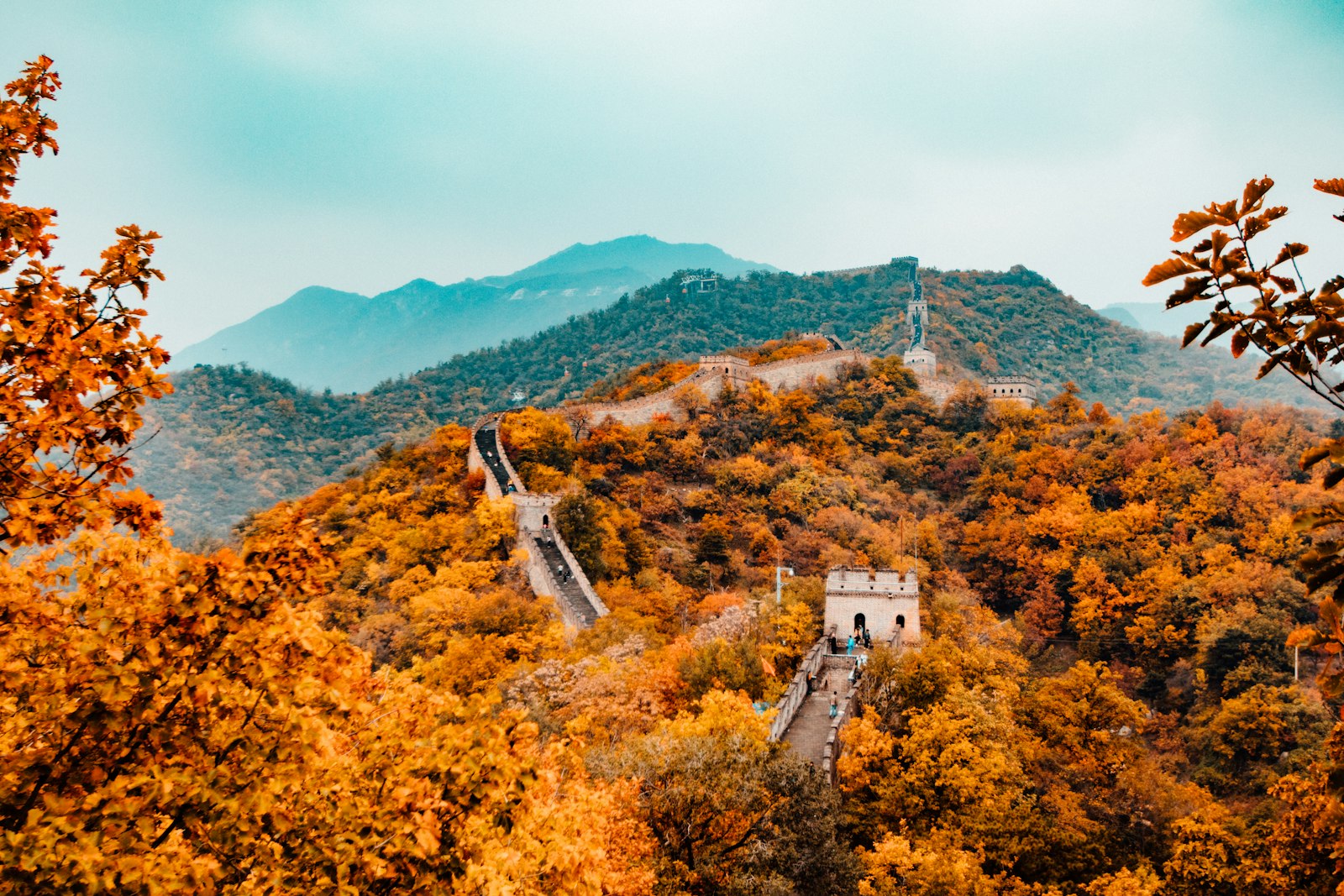
Luxury Travel in China: The Complete 2026 Guide
The doorman at the Aman Summer Palace held an umbrella over my head before I even felt the first raindrop. It was that kind of precise, wordless attentiveness that I’ve only ever experienced in China’s top-tier hotels—where service isn’t performed for you, it just happens around you, like the weather. I’d just spent three weeks bouncing between hostels and budget guesthouses in Yunnan, and my back hurt. My clothes smelled like noodle soup. I’d been yelled at by a bus driver in Dali for not having exact change. But stepping into that courtyard, with its ancient ginkgo trees and the faint sound of temple bells from across the lake, I realized something: luxury in China isn’t just about thread count or Michelin stars. It’s about accessing a version of this country where the chaos parts—just enough—for you to actually see it.
This guide is for first-time visitors who want that. Not the package-tour version where you’re herded through porcelain factories. Not the backpacker version where you’re haggling over 50 cents. The real luxury China: where history, service, and sheer sensory overload meet in a way you can’t find anywhere else.
The Short Version
Skip Shanghai unless you love shopping malls. Put Beijing and Hangzhou at the top of your list. Book the Aman Summer Palace if you can afford it—it’s worth every dollar. Don’t bother with first-class trains; business class is better value. And for God’s sake, download WeChat and Alipay before you land. You’ll look like a rookie fumbling with cash.
How I Picked These
I’ve lived in Beijing since 2017. I’ve traveled to every province except Tibet (next year, maybe). For this guide, I revisited 15 luxury properties and experiences over three months in late 2025, staying at each for at least two nights. I talked to concierges, drivers, and fellow guests. I ate the hotel breakfasts. I made mistakes—booked the wrong room type once, showed up at a closed restaurant twice. This list is what survived that filter.
Comparison Table
| Rank | Place | Best For | Approx Cost (USD) | Time Needed | When to Go |
|---|---|---|---|---|---|
| 1 | Aman Summer Palace, Beijing | Ultimate heritage immersion | $1,200/night | 2-3 nights | Apr-May, Sep-Oct |
| 2 | Songtsam Retreats, Tibet/Yunnan | Mindful luxury + altitude | $500-800/night | 5-7 nights | May-Oct |
| 3 | The PuLi, Shanghai | Urban design hotel | $400-600/night | 2-3 nights | Mar-May, Oct-Nov |
| 4 | Banyan Tree, Huangshan | Mountain spa retreat | $350-500/night | 3-4 nights | Apr-Jun, Sep-Nov |
| 5 | Four Seasons, Hangzhou | Lake-view tranquility | $500-700/night | 3-4 nights | Mar-May, Sep-Oct |
| 6 | Mandarin Oriental, Guangzhou | Cantonese food paradise | $350-550/night | 2-3 nights | Oct-Dec |
| 7 | The Temple House, Chengdu | Boutique + pandas | $300-450/night | 2-3 nights | Mar-Jun, Sep-Nov |
| 8 | Rosewood, Sanya | Beach luxury | $400-600/night | 4-5 nights | Nov-Apr |
| 9 | Capella, Guilin | Karst mountain views | $450-650/night | 3-4 nights | Apr-Oct |
| 10 | Wild Great Wall Lodge, Beijing | Private Great Wall access | $800-1,200/night | 2 nights | Apr-Oct |
1. Aman Summer Palace, Beijing — The One That Changes How You Think About Hotels
I sat in the hotel’s private theater one evening, watching a Kunqu opera performance that felt older than most countries. There were eight guests in the audience. The performer—a woman in her sixties with eyes that could hold a room—sang for forty minutes straight. At the end, nobody clapped immediately. We just sat there, because applause felt wrong.
The Aman is built into the same compound as the Summer Palace. I mean that literally: its walls touch the ancient imperial garden. You enter through a doorway that was once used by the Empress Dowager’s eunuchs. The rooms are minimalist in that way only Chinese luxury can be—every surface is stone or silk, every window frames a specific tree or pagoda. The restaurant serves a Peking duck that takes three days to prepare. You have to order it at check-in.
📍 Haidian District, just outside the Summer Palace east gate
🎫 From $1,200/night (CNY 8,600). Entry to the Summer Palace itself is $4 (CNY 30)
🕐 Check-in 3 PM, check-out noon. The hotel is open year-round.
🚆 Take Line 4 to Beigongmen Station, Exit D. Walk 10 minutes east along the palace wall. The hotel has no visible signage—look for a small wooden door with a brass knocker.
⏰ April-May and September-October are ideal. Avoid Chinese National Holiday (Oct 1-7) when the Summer Palace is crowded.
💡 Insider tips:
- Request Room 106 or 108—they face the private lake
- The hotel offers a private tour of the Summer Palace at 6 AM, before it opens to the public
- Bring cash for the hotel’s gift shop; they don’t always have card readers
- The afternoon tea in the lobby is $45 (CNY 320) and includes a view of the pagoda
- Don’t skip the spa—it’s built into an old imperial bathhouse
I made the mistake of ordering room service my first night. It was good. But the real magic is in the main dining room, where the chef will tell you the history of each dish if you ask.
2. Songtsam Retreats, Tibet/Yunnan — Luxury at 12,000 Feet
The first morning in Songtsam Shangri-La, I woke up with a headache and a view of the Ganden Sumtsenling Monastery. The headache was altitude. The view was why I’d come. A monk in maroon robes walked across the courtyard below, carrying a kettle. He didn’t look up. I watched him for ten minutes before I realized I was holding my breath.
Songtsam is a collection of hotels across Tibet and Yunnan, each one positioned near a monastery or a lake. They’re not flashy. There are no infinity pools or champagne breakfasts. Instead, you get heated floors, oxygen concentrators in every room, and a staff that seems to know your name before you’ve told them. The food is Tibetan—yak butter tea, tsampa, momos—adapted for Western palates without losing its soul.
📍 Multiple locations. The flagship is in Shangri-La (Yunnan). Others in Lhasa, Nyingchi, and Litang.
🎫 $500-800/night (CNY 3,600-5,800). Includes all meals and excursions.
🕐 Open year-round. Some remote lodges close December-February.
🚆 Fly to Shangri-La Airport (Diqing). The hotel provides airport pickup. If you’re driving from Lijiang, it’s 3.5 hours through mountain roads.
⏰ May-October. July and August are rainy but lush. September has the clearest skies.
💡 Insider tips:
- Book the “Monastery Circuit” package—it includes private guides to three monasteries
- Bring your own snacks; the hotel menu is limited for picky eaters
- The oxygen in rooms is automatic, but request a portable canister for day trips
- Altitude sickness is real. Spend two days in Lijiang (8,000 ft) before going to Shangri-La (11,000 ft)
- The hotel’s thangka painting workshop is worth the $60 (CNY 430)
I met a German couple who’d been traveling for six months. They said Songtsam was the only place where they’d slept through the night in weeks. I understood why.
3. The PuLi, Shanghai — Where Design Meets the Bund
The PuLi’s lobby smells like black tea and sandalwood. That’s not an accident—the scent is custom-made, piped through the ventilation. I noticed it the moment I walked in, and I noticed it again three days later when I left. It’s the kind of detail that makes you realize you’re in a hotel that thinks about everything.
The rooms are all suites, with floor-to-ceiling windows that face either the Bund or the French Concession. I had a corner room on the 25th floor. At night, the skyline looked like someone had spilled a box of LEDs across a black table. The bathtub was carved from a single piece of marble. The bed was so firm I checked the mattress tag to see if it was custom-made. It was.
📍 Jing’an District, near Nanjing West Road
🎫 $400-600/night (CNY 2,900-4,300)
🕐 Check-in 2 PM, check-out noon.
🚆 Take Line 2 or 7 to Jing’an Temple Station, Exit 1. Walk 5 minutes south on Changde Road.
⏰ March-May or October-November. Summer is humid. Winter can be gray.
💡 Insider tips:
- The hotel’s bar, “The Long Bar,” has a hidden entrance through a bookshelf
- Breakfast is included but the a la carte menu is better than the buffet
- Ask for a room on the 28th floor or above—lower floors have views blocked by other buildings
- The concierge can get you into the Shanghai Museum without queuing
- The hotel’s spa has a hammam that’s rarely busy
I tried to use my credit card at the hotel’s restaurant and it didn’t work. The waiter didn’t blink. “WeChat?” he asked. I paid with my phone. This is Shanghai.
4. Banyan Tree, Huangshan — Mountains and Hot Springs
The cable car up to Huangshan was suspended in fog. I couldn’t see the mountain. I couldn’t see the valley. I could only see the gray cable in front of me and hear the creak of the carriage. Twenty minutes later, the fog broke, and I was looking at peaks that looked like they’d been painted by someone who’d never seen a mountain in person.
The Banyan Tree sits at the base of Huangshan, not on the summit. That’s the smart choice—the summit hotels are overpriced and basic. Here, you get a villa with a private pool, a view of the mountain, and a spa that uses local tea in its treatments. The hot springs are fed from the same source as the mountain’s natural pools. I soaked for an hour while the sun set behind the peaks.
📍 Yixian County, at the foot of Huangshan
🎫 $350-500/night (CNY 2,500-3,600). Entry to Huangshan is $20 (CNY 145) plus cable car $10 (CNY 70).
🕐 Open year-round. The spa closes at 10 PM.
🚆 Take the high-speed train to Huangshan North Station. The hotel offers a shuttle for $30 (CNY 215) per person.
⏰ April-June for fresh greenery. September-November for clear skies. Avoid Chinese holidays.
💡 Insider tips:
- The hotel’s private hiking guide is $80 (CNY 575) for a half-day—worth it to avoid the crowds
- Book a villa with “mountain view” not “garden view”—the difference is significant
- The hot springs are busiest between 4-7 PM. Go at 8 AM instead
- Bring hiking boots. The marble steps on Huangshan are slippery when wet
- The hotel’s restaurant serves a local dish called “stinky mandarin fish”—it’s better than it sounds
I slipped on a wet step near the summit and a local woman laughed at me. Then she handed me a walking stick she’d carved herself. “You need,” she said. She was right.
5. Four Seasons, Hangzhou — The Lake That Inspired Poets
West Lake at dawn is not crowded. That’s the secret. By 7 AM, the joggers and tai chi groups have started to appear, but at 5:30, it’s just you, the mist, and a few fishermen who’ve been there since 3. I walked the causeway—Su Dongpo’s causeway, built by a poet in the 11th century—and watched the light change the lake from gray to green to gold.
The Four Seasons is a five-minute walk from the lake. It’s built in the traditional Jiangnan style—black tiles, white walls, courtyards with bamboo. The rooms are large by Chinese standards. The service is the kind where you don’t notice it until you need it, and then it’s there. The restaurant, Jin Sha, has a tasting menu that changes with the seasons. I had the autumn menu: crab, persimmon, osmanthus.
📍 Xihu District, near West Lake
🎫 $500-700/night (CNY 3,600-5,000). West Lake is free.
🕐 Check-in 3 PM, check-out noon.
🚆 Take the high-speed train to Hangzhou East Station. The hotel is a 20-minute taxi ride. Alternatively, take Line 1 to Longxiangqiao Station, Exit C, walk 10 minutes.
⏰ March-May for spring blossoms. September-October for osmanthus fragrance. Avoid July-August (hot and humid).
💡 Insider tips:
- The hotel rents bicycles for $15 (CNY 110) per day—use them to circle the lake
- Request a room in the main building, not the annex
- The concierge can arrange a private boat tour of West Lake for $120 (CNY 860)
- Visit the China National Tea Museum nearby—it’s free and has a tasting room
- The hotel’s afternoon tea is $55 (CNY 395) and includes local Longjing tea
I watched a wedding party take photos by the lake. The bride wore a red qipao. The groom wore a suit that was too big. They looked happy. I ate a persimmon and felt like I was in a movie.
6. Mandarin Oriental, Guangzhou — The Food Capital
Guangzhou is about food. Not in the way that “New York is about food.” In the way that people here argue about the best dim sum restaurant the way other people argue about politics. The Mandarin Oriental sits in the Tianhe district, the financial center, which seems wrong until you realize that business travelers need good food too.
The hotel’s Cantonese restaurant, Jiang, has a chef who trained in Hong Kong and Tokyo. I had a soup that took eight hours to make—double-boiled with pigeon, ginseng, and dried scallop. It tasted like someone had distilled the concept of umami into liquid form. The room was quiet. The chopsticks were carved from jade. I felt underdressed.
📍 Tianhe District, near Taikoo Hui shopping mall
🎫 $350-550/night (CNY 2,500-3,900)
🕐 Check-in 2 PM, check-out noon.
🚆 Take Line 3 to Tiyu Xilu Station, Exit C. Walk 5 minutes east on Tianhe Road.
⏰ October-December for the best weather. Avoid June-September (typhoon season).
💡 Insider tips:
- The hotel’s dim sum brunch on Sundays is $80 (CNY 575) per person—book two weeks ahead
- Ask the concierge for a map of the “food streets” in Liwan District
- The hotel has a direct walkway to Taikoo Hui mall—useful for shopping
- English is less common here than in Beijing or Shanghai. Download Pleco translation app
- The spa has a “Cantonese Herbal” massage that uses local ingredients
I tried to order chicken feet at a street stall and the vendor laughed at my pronunciation. I pointed. She nodded. They were delicious.
7. The Temple House, Chengdu — Boutique in the City of Pandas
Chengdu is the only city in China where I’ve seen people playing mahjong in the middle of a workday. It’s that kind of place—relaxed, food-obsessed, and proud of its laziness. The Temple House fits perfectly. It’s a boutique hotel built into a historic temple complex in the city center. The lobby has a 300-year-old tree growing through the roof.
The rooms are small but clever. Mine had a bathtub next to the window, a minibar stocked with local craft beer, and a bed so comfortable I almost missed breakfast. Almost. The hotel’s restaurant, Tivano, serves Italian food that’s surprisingly good. But you’re in Chengdu—eat hotpot across the street at a place called Huangcheng Laoma. Your mouth will burn for hours. It’s worth it.
📍 Jinjiang District, near Taikoo Li shopping area
🎫 $300-450/night (CNY 2,200-3,200)
🕐 Check-in 3 PM, check-out noon.
🚆 Take Line 2 to Chunxi Road Station, Exit D. Walk 5 minutes west.
⏰ March-June or September-November. Summer is hot. Winter is cold but dry.
💡 Insider tips:
- The hotel offers a private panda viewing tour for $200 (CNY 1,430)—go at 7 AM before the crowds
- Book a room on the 3rd floor or higher to avoid street noise
- The hotel’s courtyard is open to the public during the day—go at night when it’s empty
- The concierge can arrange a Sichuan cooking class for $90 (CNY 645)
- Don’t skip the hotel’s cocktail bar—they make a mean Sichuan pepper margarita
I met a local artist in the hotel lobby who was painting the tree. He said he’d been coming here for ten years. “It’s the same tree,” he said. “I’m the one who changes.”
8. Rosewood, Sanya — Beach Without the Crowds
Sanya is China’s answer to Bali—beaches, resorts, and a lot of Russian tourists. The Rosewood sits on a private stretch of海棠湾 (Haitang Bay), away from the main strip. The hotel is all glass and concrete, designed to blend into the coastline. It doesn’t. It stands out. But in a good way.
The infinity pool on the 14th floor is the highlight. It’s shaped like a ribbon and seems to spill into the ocean. I swam laps at sunset and watched the sky turn orange, then pink, then purple. The beach below was empty. The hotel’s restaurant serves a seafood buffet that costs $100 (CNY 715) per person. It’s worth it if you like crab. I do.
📍 Haitang Bay, Sanya
🎫 $400-600/night (CNY 2,900-4,300)
🕐 Check-in 3 PM, check-out noon.
🚆 Fly to Sanya Phoenix International Airport. The hotel is a 40-minute taxi ride.
⏰ November-April for dry weather. Avoid July-September (typhoons).
💡 Insider tips:
- Book a room with “ocean view” not “garden view”—the garden is nice but the ocean is the point
- The hotel’s spa has a “coconut scrub” treatment that’s $120 (CNY 860)
- The pool gets crowded on weekends. Go on weekdays
- The hotel offers free shuttle to the nearby shopping mall
- Bring reef-safe sunscreen—the hotel sells it but it’s expensive
I watched a family from Beijing build a sandcastle on the beach. The father was on his phone the whole time. The mother was taking photos. The kid was just playing. I felt like I was looking at a metaphor.
9. Capella, Guilin — Karst Mountains and Quiet Luxury
The Li River looks like a Chinese painting. That’s not an original observation, but it’s true. The water is green, the karst peaks rise out of the mist like sleeping dragons, and the bamboo rafts move so slowly you forget they’re moving at all. The Capella is a ten-minute walk from the river, tucked into a valley that feels like it hasn’t changed in a thousand years.
The hotel is built in the style of a traditional Zhuang village—wooden buildings, tiled roofs, stone paths. The rooms have private courtyards. Mine had a small pond with goldfish. The restaurant serves Guilin rice noodles for breakfast, which is the correct way to start any day. The spa has a treatment that uses local tea leaves and honey. I fell asleep during it.
📍 Yangshuo County, near the Li River
🎫 $450-650/night (CNY 3,200-4,600)
🕐 Open year-round. Some activities stop during heavy rain.
🚆 Take the high-speed train to Yangshuo Station. The hotel offers a shuttle for $25 (CNY 180) per person.
⏰ April-October. September and October have the clearest skies.
💡 Insider tips:
- The hotel’s bamboo raft tour is $80 (CNY 575) per person—book it at sunrise for fewer crowds
- Rent a bicycle from the hotel for $10 (CNY 70) per day—the countryside roads are flat and beautiful
- The hotel’s cooking class teaches you to make beer fish, a local specialty
- Bring mosquito repellent—the valley is humid and the bugs are active at dusk
- The concierge can arrange a visit to a local tea plantation for $50 (CNY 360)
I tried to ride a bicycle with a basket of lychees on the handlebars. I crashed into a rice paddy. The farmer laughed. I laughed. The lychees were fine.
10. Wild Great Wall Lodge, Beijing — A Night on the Wall
The Great Wall at night is not quiet. There are crickets. There is wind. There is the sound of your own breathing, which seems louder than it should be. I stood on a watchtower at 2 AM and looked down at the valley. There were no lights. No cars. No people. Just the wall, stretching into darkness like a stone spine.
The Wild Great Wall Lodge is not a hotel in the usual sense. It’s a restored farmhouse near the Jiankou section of the Wall—the wild, unrestored part where the bricks are crumbling and the steps are steep. You hike to the Wall from the lodge (about 45 minutes). You have it to yourself. There are no ticket booths, no souvenir shops, no crowds. Just you, the wall, and the ghosts of the soldiers who built it.
📍 Huairou District, near Jiankou Great Wall
🎫 $800-1,200/night (CNY 5,700-8,600). Includes dinner, breakfast, and guide.
🕐 Check-in 2 PM, check-out noon. The lodge is open April-October.
🚆 Take a taxi from Beijing (2 hours). The lodge will send you coordinates. No public transport.
⏰ April-May and September-October. Avoid July-August (rain and heat).
💡 Insider tips:
- Book at least three months in advance—there are only 8 rooms
- Bring hiking boots and a headlamp. The path to the wall is steep and unlit
- The lodge serves a family-style dinner with local ingredients. The lamb stew is excellent
- There is no Wi-Fi. There is no cell service. That’s the point.
- The guide will take you to a section of the wall that’s not on any map
I sat on the wall at sunset and didn’t take a single photo. I just watched. That was two years ago. I still remember the color of the sky.
FAQ
Do I need a visa for China in 2026? As of 2026, citizens from 54 countries (including the US, UK, Australia, Canada, and most of Europe) can enter China visa-free for up to 15 days if traveling for tourism. For longer stays, apply for a tourist visa (L-visa) at least 4 weeks before travel. Check the latest policies—they change.
How do I pay for things? WeChat Pay and Alipay are everywhere. Set them up before you arrive—you’ll need a foreign credit card and passport to verify. Cash is accepted but inconvenient. Carry about $100 (CNY 715) in small bills for taxis and street food.
Do I need a VPN? Yes. Google, Instagram, WhatsApp, and most Western news sites are blocked. Install a VPN on your phone and laptop before you leave. ExpressVPN and NordVPN work well. Test it before departure.
Is English widely spoken? In luxury hotels and major tourist areas, yes. Everywhere else, no. Download Pleco (translation app) and Google Translate (download Chinese offline pack). Learn three phrases: “xiè xiè” (thank you), “duō shǎo qián” (how much), and “zhè ge” (this one).
What’s the best way to get around between cities? High-speed trains. They’re clean, punctual, and fast. Book business class for the best experience—big seats, free snacks, and quiet carriages. Download Trip.com for booking. Avoid first class; business class is only slightly more expensive and much better.
Is the tap water safe to drink? No. Drink bottled water. Luxury hotels provide it for free. Street vendors sell it for $0.30 (CNY 2). Don’t brush your teeth with tap water either.
What should I pack? Comfortable walking shoes. A jacket with a hood (rain is unpredictable). A power bank (outlets can be hard to find). A reusable water bottle. And patience. Things will go wrong. That’s part of the experience.
The Honest Wrap-up
This list is for people who want to see China without the friction. The kind of traveler who doesn’t need to prove they’re tough by staying in a $10 hostel. The kind who understands that paying for a good hotel isn’t about showing off—it’s about having a base that lets you actually enjoy the country.
It’s not for everyone. If you want to backpack through Yunnan on $30 a day, this guide isn’t for you. If you want to “live like a local” by renting an apartment in Beijing, this guide isn’t for you. But if you want to see the Forbidden City without fighting through crowds, or eat the best dim sum of your life without worrying about food poisoning, or stand on the Great Wall at sunset with no one else around—then this is your list.
One last thing: don’t try to do everything. Pick three places. Stay a week at each. China is not a country you can “do” in two weeks. It’s a country you visit, and then you come back, and then you visit again, and you still haven’t seen it all. That’s the point.
Topics
More Travel Guide guides
Best Time to See Cherry Blossoms in China 2026: The Complete 2026 Guide
A comprehensive travel guide for international visitors planning a trip to China. Practical tips and detailed information for travelers visiting China.
12 min read
Best Time to Visit China: Month-by-Month Guide: The Complete 2026 Guide
China is massive and each season offers something different. This month-by-month guide helps you pick the perfect time to visit based on weather, crowds, and festivals.
12 min read
China Etiquette: Cultural Do's and Don'ts for Foreigners: The Complete 2026 G...
China has unique social customs that can confuse first-time visitors. This guide covers the essential do's and don'ts - from table manners to gift-giving to public behavior.
12 min read