
Wuyuan Rapeseed Flowers Guide: The Complete 2026 Guide
A comprehensive travel guide for international visitors planning a trip to China. Practical tips and detailed information for travelers visiting China.
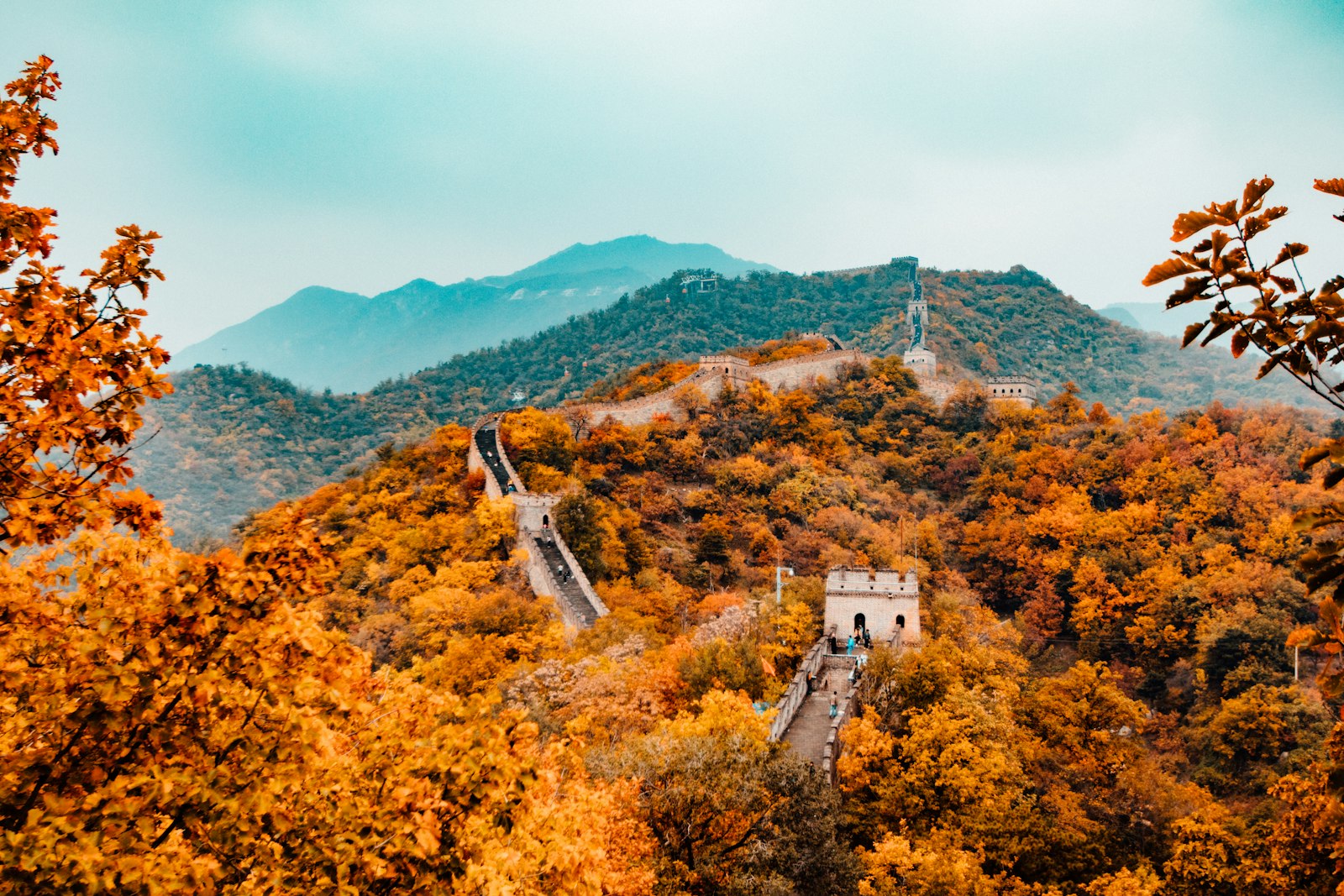
Wuyuan Rapeseed Flowers Guide: The Complete 2026 Guide
The cab driver laughed at me when I asked him to stop on the side of the highway. “Nobody stops here,” he said in Mandarin, but he pulled over anyway. I got out, and the smell hit me first—sweet, almost grassy, mixed with the damp earth of early spring. The hills in front of me were a yellow I still can’t describe properly. Not bright yellow like a school bus. Not pale like butter. Somewhere in between, layered across terraced fields that folded into the mist like someone had spilled paint on green velvet.
I stood there for ten minutes, just watching the color shift as clouds passed overhead. A farmer walked past carrying two buckets on a bamboo pole, didn’t even look at the flowers. To him, it was Tuesday.
That was my first trip to Wuyuan, seven years ago. I’ve been back nine times since, in every season, through rain and sun and one particularly miserable hailstorm. The rapeseed flowers—what locals call youcaihua—bloom for about three weeks each spring, and during those weeks, the countryside around Wuyuan becomes something that photographs don’t capture. You have to stand in it. You have to smell it. You have to get your shoes muddy.
This guide covers ten places in and around Wuyuan where the flowers are worth the trip. I’ve walked every path, paid every entrance fee, and made every mistake so you don’t have to. Some spots are famous for good reason. Others are quiet corners most tourists miss. I’ll tell you which is which.
The Short Version
If you only have time for one place, go to Jiangling at sunrise on a weekday. Skip Likeng unless you love crowds and souvenir shops. The flowers peak between March 15 and April 5, but the exact dates shift every year—check Weibo or ask a local homestay owner. Bring cash for village entry fees because card readers don’t always work. And for god’s sake, wear shoes you don’t mind ruining.
How I Picked These
I spent four weeks in March 2025 revisiting every major flower-viewing spot in Wuyuan County. I took buses, hired drivers, walked, and once hitched a ride on a farmer’s motorcycle. I talked to ticket sellers, homestay owners, and other travelers. I checked prices against what locals told me locals pay. I eliminated two famous spots because the crowds ruined the experience and one spot that was beautiful but required a four-hour hike on a road with no guardrails. The ten places here are the ones I’d send my own friends to.
Comparison Table
| Rank | Place | Best For | Approx Cost (USD) | Time Needed | When to Go |
|---|---|---|---|---|---|
| 1 | Jiangling | Sunrise views, photography | $7 (50 RMB) | 2-3 hours | 6:30-8:30 AM, late March |
| 2 | Huangling | Suspension bridge, terraced fields | $20 (140 RMB) | 3-4 hours | Weekdays, early April |
| 3 | Likeng | Easy access, architecture | $8 (60 RMB) | 1.5 hours | Skip unless you have extra time |
| 4 | Wangkou | Quieter alternative to Likeng | $8 (60 RMB) | 2 hours | Mid-afternoon |
| 5 | Jiangwan | Lakeside flowers, fewer crowds | $8 (60 RMB) | 1.5 hours | Late afternoon |
| 6 | Xiaoqi | Authentic village life | $8 (60 RMB) | 2 hours | Morning |
| 7 | Siyan | Ancient trees, flower paths | $8 (60 RMB) | 1.5 hours | Late March |
| 8 | Shicheng | Misty mornings, maple+rapeseed combo | $8 (60 RMB) | 2-3 hours | 6-8 AM, late March |
| 9 | Changxi | Hidden valley, no tourists | Free | 1-2 hours | Any weekday |
| 10 | Moon Bay | River reflection, easy photo | Free | 30 minutes | Sunset |
1. Jiangling — Where the Postcards Come From
I woke up at 4:30 AM to get to Jiangling for sunrise. The hostel owner’s mother made me a thermos of tea and pointed me toward the hill. I walked in the dark with a French couple and a guy from Singapore, none of us speaking the same language, all of us slipping on the same wet stones.
The viewing platform was already half-full when I got there. By 6:15, it was packed. But when the sun hit the first terrace, everyone went quiet. I’ve seen this view in a hundred photographs, and none of them got it right. The mist sits in the valleys like a lake. The yellow fields rise in steps up the mountainsides. The white-walled, gray-tiled houses of the village poke through like chess pieces.
This is the most famous spot in Wuyuan for a reason. The scale is overwhelming—hillside after hillside of terraced rapeseed, with ancient villages tucked into the folds. The main viewing platform gets crowded, but walk 200 meters to the left and you’ll find a smaller path that leads to a second platform with almost no one on it.
📍 Jiangling Village, Wuyuan County, Shangrao City
🎫 $7 (50 RMB) entry fee
🕐 6:00 AM – 6:00 PM (gates open at 5:30 AM during peak season)
🚆 Take a high-speed train to Wuyuan Station. From there, hire a driver ($15/100 RMB one-way, 40 minutes) or take the village bus from the main bus station ($3/20 RMB, 1 hour, departs hourly).
⏰ Sunrise, 6:30-8:30 AM. Weekdays only—weekends are a zoo.
💡 Insider tips: Bring a flashlight for the early morning walk up. The path is uneven and there are no lights. Buy entry tickets on WeChat in advance to skip the line. The best photos are from the upper platform, not the main one. If you want to stay overnight, book a homestay in Jiangling itself—there are about 20 options, all basic but clean.
I met a retired photographer from Shanghai who’d been coming here for 15 years. He told me the flowers were thinner this year because the winter was too warm. He was right.
2. Huangling — The One With the Suspension Bridge
Huangling is a reconstructed village built on a hilltop, connected by a cable car. I almost didn’t go because it sounded touristy. It is touristy. But it’s also spectacular.
The cable car ride alone is worth the ticket. You float up over terraced fields that are entirely yellow, with the village climbing the hill above you. At the top, a suspension bridge spans the valley between two flower-covered hills. Walking across it, with the wind hitting your face and yellow fields a hundred meters below, is one of those moments where you forget to take a picture because you’re too busy being there.
The village itself has been restored as an open-air museum. There are shops selling dried chili peppers, bamboo crafts, and tea. It’s not authentic in the way Xiaoqi is, but it’s beautiful in a curated way. The rapeseed terraces here are the most photogenic in Wuyuan because they’ve been planted in deliberate patterns—swirls, concentric circles, stripes.
📍 Huangling Village, Wuyuan County
🎫 $20 (140 RMB) including cable car
🕐 7:30 AM – 5:30 PM (cable car stops at 4:30 PM)
🚆 From Wuyuan Station, hire a driver ($20/140 RMB one-way, 50 minutes). No public bus goes directly.
⏰ Mid-morning, 9-11 AM, on a weekday. The cable car lines on weekends can be 45 minutes.
💡 Insider tips: Buy the combo ticket that includes the suspension bridge—it’s not optional, but some ticket windows try to sell the village-only ticket separately. Bring a wide-angle lens if you have one. The best view of the terraces is from the glass platform at the far end of the bridge. There’s a tea house near the top that serves passable huangshan maofeng for $3 (20 RMB).
I slipped on a wet wooden step near the bridge and a old lady selling dried persimmons laughed so hard she almost dropped her basket. She gave me a piece of persimmon to make me feel better. It was the best thing I ate that week.
3. Likeng — The One Everyone Goes To
I’m going to be honest: Likeng is overrated. It’s the most popular village in Wuyuan because it’s the easiest to reach, and the crowds reflect that. On a Saturday in March, you’ll be shuffling single-file through the main street behind a tour group from Nanjing.
The village itself is pretty—a stream runs through the center, lined with old houses and small bridges. There are rapeseed fields on the edges, but they’re not as dramatic as Jiangling or Huangling. The flowers here feel like decoration, not the main event.
If you’re short on time, skip Likeng. If you have an afternoon to kill and you’re staying nearby, it’s fine for a quick walk. The architecture is genuinely interesting if you care about Huizhou-style buildings—white walls, gray tiles, intricate wood carvings. But you’ll see the same architecture in every other village, without the crowds.
📍 Likeng Village, Wuyuan County
🎫 $8 (60 RMB)
🕐 7:00 AM – 6:00 PM
🚆 Take bus #1 from Wuyuan bus station ($1/6 RMB, 20 minutes).
⏰ Early morning or late afternoon. Avoid 10 AM – 3 PM on weekends.
💡 Insider tips: Don’t buy the “night tour” ticket—there’s nothing to see after dark. The best photo spot is the bridge at the south end of the village, looking north. The street food here is overpriced; eat at a restaurant down a side street instead.
A shopkeeper tried to sell me a “genuine antique” that was clearly made last week. I bought it anyway because I liked the pattern. It’s on my shelf now.
4. Wangkou — Likeng Without the Crowds
Wangkou is what Likeng would be if the tour buses didn’t stop here. Same white-walled houses, same stream running through the center, same arched stone bridges. But instead of hundreds of people taking selfies, you get a few dozen, mostly Chinese photographers with tripods and serious expressions.
The rapeseed fields here are planted in the flat areas between the village and the river. They’re not terraced, so the effect is different—more like a yellow carpet stretching toward the water. In late afternoon, the light hits the flowers and the white walls at the same angle, and the whole village glows.
There’s a temple complex at the north end that most tourists miss. It’s not well-maintained, but the carvings on the wooden beams are 400 years old and still visible. The caretaker, an old man who lives in a room behind the main hall, will show you around if you tip him $2 (15 RMB).
📍 Wangkou Village, Wuyuan County
🎫 $8 (60 RMB)
🕐 7:00 AM – 5:30 PM
🚆 Take bus #2 from Wuyuan bus station ($1/6 RMB, 25 minutes), or hire a driver ($10/70 RMB).
⏰ 3-5 PM for the best light.
💡 Insider tips: The temple caretaker speaks only Wuyuan dialect, not Mandarin. Point and smile. There’s a small restaurant near the south gate that serves the best hongshao dongpo rou (braised pork belly) I’ve had in Jiangxi—$4 (28 RMB) for a bowl. The village has one homestay that’s decent; book through WeChat.
The caretaker showed me a hidden courtyard behind the temple where a single rapeseed plant had grown through a crack in the stone floor. He pointed at it and said, “Spring.”
5. Jiangwan — Lakeside Flowers
Jiangwan sits on the edge of a reservoir, and the rapeseed fields here run right down to the water. It’s not as dramatic as the mountain terraces, but there’s something peaceful about watching the flowers reflect in the lake.
The village itself is small and mostly residential. There’s a primary school, a few shops, and a lot of old people sitting on stools in the sun. The tourists who come here are usually on their way to somewhere else, which means you get the lakeside path mostly to yourself.
The best spot is at the south end of the reservoir, where a dirt path follows the shoreline through the fields. The flowers here are taller than in other places—waist-high, sometimes chest-high on a short person. Walk slowly. The bees are active in the middle of the day.
📍 Jiangwan Village, Wuyuan County
🎫 $8 (60 RMB)
🕐 7:00 AM – 5:30 PM
🚆 Take bus #1 from Wuyuan station, get off at Jiangwan stop ($1/6 RMB, 30 minutes).
⏰ Late afternoon, 4-5:30 PM, for the golden hour light on the water.
💡 Insider tips: The path gets muddy after rain—bring waterproof shoes. There’s a small pavilion at the north end of the lake that’s perfect for a picnic. No food vendors nearby, so bring your own. The village has a public toilet near the entrance that’s cleaner than most.
I sat on a rock by the lake and watched a heron stand perfectly still for 20 minutes. I think it was fishing. I think it caught something, but I looked away at the wrong moment.
6. Xiaoqi — The Real One
Xiaoqi is the village that time forgot. No cable car, no souvenir shops, no tour groups. Just narrow alleys, old houses, and rapeseed fields that grow right up to the back doors of people’s homes.
I walked through Xiaoqi on a Tuesday morning and saw exactly three other tourists. A grandmother was washing vegetables in the stream. A man was repairing a wooden plow. Two children were chasing a chicken. The rapeseed flowers here are not a tourist attraction—they’re a crop. Farmers are working in them. That’s the difference.
The fields stretch from the village center up into the hills. There’s no marked path, so you just walk between the terraces and hope you’re not stepping on someone’s livelihood. The views from the top are raw and unpolished—no viewing platforms, no railings, just yellow hillsides and a village below.
📍 Xiaoqi Village, Wuyuan County
🎫 $8 (60 RMB)
🕐 7:00 AM – 5:00 PM (but the village is open 24/7; the ticket is just for the main house)
🚆 Take a bus from Wuyuan station toward Likeng, then walk 20 minutes east ($1/6 RMB, 20 minutes to Likeng, then walk). Or hire a driver ($12/85 RMB).
⏰ Morning, 8-10 AM, before the heat brings out the bugs.
💡 Insider tips: There’s one small restaurant in the village, run by a family who will cook whatever’s fresh that day. Point at vegetables you see growing. No English menu, no English spoken—bring a translation app. The main house (the one with the carved doorway) is worth the ticket; the carvings are 300 years old. Donate $1-2 (10 RMB) to the village temple if the door is open.
The grandmother washing vegetables saw me taking photos and waved me over. She gave me a handful of greens and said something I didn’t understand. I ate them raw. They were bitter and perfect.
7. Siyan — Ancient Trees and Flower Paths
Siyan has the oldest trees I’ve seen in Wuyuan. There’s a camphor tree near the entrance that’s supposedly 1,000 years old—it takes eight people holding hands to circle its trunk. The rapeseed fields here are planted along the paths between the trees, creating a kind of natural tunnel of yellow.
The village is built around a central square with a stage for traditional opera. During the flower season, there are occasional performances on weekends—local singers in costume, drums, the works. I caught one by accident and stood at the back for 20 minutes before I realized I was late for my next stop.
The flower fields here are less extensive than Jiangling, but they’re more accessible. You can walk right into them without climbing. The paths are flat and well-maintained, which makes this a good choice if you’re traveling with older family members or small children.
📍 Siyan Village, Wuyuan County
🎫 $8 (60 RMB)
🕐 7:00 AM – 5:30 PM
🚆 Take bus #2 from Wuyuan station ($1/6 RMB, 20 minutes).
⏰ Late March, mid-morning.
💡 Insider tips: The opera performances are usually on Saturday afternoons—check with your homestay host. The best photo spot is from the bridge over the stream, looking toward the big tree. There’s a tea stall near the square that sells fresh-picked bi luo chun for $2 (15 RMB) a cup.
The tea was so fresh I could taste the hillside it came from. The stall owner saw my face and nodded. “Good, right?” she said in English. First English I’d heard all day.
8. Shicheng — Mist and Maple
Shicheng is famous for its autumn maple leaves, but in spring, the rapeseed flowers create a different kind of magic. The village sits in a valley surrounded by low hills, and in the early morning, mist fills the basin. The yellow fields peek through the fog like islands.
I arrived at 5:45 AM and found a spot on the hill above the village. For the first hour, I couldn’t see anything—just white. Then the sun started burning through, and the mist turned golden, and the village appeared below like a painting being revealed brushstroke by brushstroke.
The combination of rapeseed yellow and maple green is unique to Shicheng. Most places have one or the other. Here, the two colors sit side by side, separated by the white lines of village walls and the gray threads of stone paths.
📍 Shicheng Village, Wuyuan County
🎫 $8 (60 RMB)
🕐 6:00 AM – 5:00 PM (but come before 8 AM for the mist)
🚆 Hire a driver from Wuyuan ($25/175 RMB one-way, 1 hour). No public bus.
⏰ 6-8 AM, late March. Mist is most likely in the morning after a rainy day.
💡 Insider tips: The viewing platform on the east hill is the best spot. Bring a telephoto lens if you have one. The village has two homestays that are basic but clean—book weeks in advance during peak season. The road from Wuyuan is winding and narrow; if you get carsick, take medication beforehand.
I shared the viewing platform with a painter from Hangzhou who was doing watercolors. She’d been coming here for 20 years. “The mist is never the same twice,” she said. She was right.
9. Changxi — The Secret Valley
Changxi doesn’t appear in most guidebooks. I found it because a taxi driver named Liu told me about it when I asked where he’d go on his day off. “My village,” he said. “No tourists. Just flowers.”
He wasn’t wrong. Changxi is a valley about 30 minutes north of Wuyuan town, with rapeseed fields that carpet the entire valley floor. There’s no entrance fee, no ticket booth, no sign. Just a dirt road that runs between the fields, with a few farmhouses scattered along the way.
I walked for an hour and saw one other person—a farmer checking his irrigation channels. The flowers here are wilder, less uniform. They grow in patches, some tall, some short, some mixed with purple wildflowers that I couldn’t identify. It’s not as photogenic as the curated spots, but it feels more real.
📍 Changxi Valley, north of Wuyuan County
🎫 Free
🕐 Always open
🚆 Hire a driver from Wuyuan ($15/100 RMB one-way, 30 minutes). Ask for “Changxi” (长溪).
⏰ Any weekday afternoon.
💡 Insider tips: Bring your own water and food—there’s nothing for sale in the valley. The dirt road is passable by car but muddy after rain. There’s a small temple halfway through the valley that’s abandoned but beautiful. Don’t go alone if you’re not comfortable with isolation—there’s no phone signal.
Liu told me his grandmother used to walk this valley every morning to get water. She died at 96. “The flowers were her calendar,” he said.
10. Moon Bay — The 30-Minute Stop
Moon Bay is not a village. It’s a bend in the river where the water curves around a sandbar, and the rapeseed fields cover the banks on both sides. It’s the kind of place you stop for 30 minutes on the way to somewhere else.
But those 30 minutes are worth it. The reflection of the yellow fields in the still water creates a mirror image that’s almost too perfect. In the late afternoon, when the light turns golden, the whole scene looks like a Chinese landscape painting come to life.
There’s a small viewing platform on the main road, but the best spot is down by the water. Follow the path from the platform to the riverbank. The flowers here are waist-high and dense. If you’re tall enough, you can see over them to the water.
📍 Moon Bay, on the road between Wuyuan town and Likeng
🎫 Free
🕐 Always open
🚆 Take bus #1 toward Likeng and ask the driver to stop at Moon Bay ($1/6 RMB, 15 minutes).
⏰ Sunset, 5-6 PM.
💡 Insider tips: The water level varies by season—in dry years, the sandbar is exposed and you can walk on it. In wet years, it’s submerged. Check the weather before you go. There’s a small food stall near the platform that sells grilled tofu skewers for $0.50 (3 RMB). They’re excellent.
I ate three skewers standing on the riverbank, watching the sun turn the water orange. A dog came and sat next to me. We watched together. He didn’t ask for any tofu.
FAQ
Q: When exactly do the flowers bloom? A: Generally March 15 to April 5, but it varies by 1-2 weeks depending on the winter temperature. In 2025, they peaked March 22. Check Weibo for “婺源油菜花” (Wuyuan rapeseed flowers) in early March for local updates.
Q: Do I need a VPN in Wuyuan? A: Yes. Google, Facebook, Instagram, and WhatsApp are all blocked in China. Install a VPN on your phone before you arrive. I use Astrill or ExpressVPN. Test it before you leave the airport.
Q: Can I pay with credit cards? A: No. Use WeChat Pay or Alipay. Set these up before you arrive—they require a Chinese bank card or a foreign credit card linked through a tourist account. Bring $200-300 (1400-2100 RMB) in cash as backup, especially for village entry fees.
Q: Is English spoken? A: In Wuyuan town, some hotel staff speak basic English. In the villages, almost no one does. Download Pleco (translation app) and learn these phrases: “多少钱?” (how much), “谢谢” (thank you), “这个” (this one).
Q: How do I get to Wuyuan from Shanghai/Beijing? A: From Shanghai, take a high-speed train to Wuyuan Station (2.5 hours, $40/280 RMB). From Beijing, take a flight to Shangrao (2 hours, $80-120/560-840 RMB) then a 30-minute taxi. No direct trains from Beijing.
Q: Is it safe to travel alone as a woman? A: Yes. Wuyuan is very safe. I’ve traveled here alone multiple times. The biggest risk is getting lost or having your phone battery die. Carry a power bank and download offline maps.
Q: What shoes should I wear? A: Waterproof hiking boots or sturdy sneakers. The paths are muddy, uneven, and sometimes slippery. I ruined a pair of white sneakers on my first trip. Don’t be me.
The Honest Wrap-up
This list is for people who want to see the flowers, not just photograph them. If you want Instagram shots without getting your shoes dirty, go to Huangling and Jiangling and skip the rest. If you want to walk through fields, smell the earth, and maybe talk to a farmer who doesn’t speak your language, go to Xiaoqi and Changxi and Shicheng.
The best advice I can give you: stay in a homestay for at least one night. Wake up early. Walk somewhere without a map. Get lost. The flowers will find you.
And when you’re standing in a field of yellow that stretches to the horizon, with no one else around, take a picture. Then put your phone away. That’s the part you’ll remember.
Topics
More Travel Guide guides
Best Time to See Cherry Blossoms in China 2026: The Complete 2026 Guide
A comprehensive travel guide for international visitors planning a trip to China. Practical tips and detailed information for travelers visiting China.
12 min read
Best Time to Visit China: Month-by-Month Guide: The Complete 2026 Guide
China is massive and each season offers something different. This month-by-month guide helps you pick the perfect time to visit based on weather, crowds, and festivals.
12 min read
China Etiquette: Cultural Do's and Don'ts for Foreigners: The Complete 2026 G...
China has unique social customs that can confuse first-time visitors. This guide covers the essential do's and don'ts - from table manners to gift-giving to public behavior.
12 min read