
One Week in China: Ultimate Guide: The Complete 2026 Guide
A comprehensive travel guide for international visitors planning a trip to China. Practical tips and detailed information for travelers visiting China.
One Week in China: Ultimate Guide: The Complete 2026 Guide
The cab driver laughed at me when I asked if we could stop at a bank. We were stuck in Beijing traffic near Dongzhimen, horns blaring, the air thick with coal smoke and fried chive dumplings from a street cart. “No bank,” he said in perfect English, grinning at me in the rearview. “You have phone. Everyone has phone.” He was right. I’d been in China for three days and hadn’t touched cash once. That was seven years ago, and the country has only gotten more seamless—and more bewildering—for first-time visitors since.
China in 2026 is a different beast than the one you’ve read about. The Great Wall still stands, the Forbidden City still sprawls, but the experience of being here has changed completely. Visa-free transit now covers 54 countries. High-speed trains connect cities that used to take overnight trains. Street vendors take QR codes. And the old trick of “just show up and figure it out” will leave you stranded at baggage claim.
I’ve made every mistake you can make in this country. I’ve paid $50 for a ride that should have cost $8. I’ve stood at the wrong train station platform watching my train depart. I’ve eaten something I still can’t name from a cart in Xi’an and spent the next 48 hours regretting every life choice that led me there. This guide exists so you don’t have to repeat my failures.
The Short Version
If you have 90 seconds: Fly into Beijing or Shanghai, spend three days in each, take the bullet train between them (4.5 hours, $80), and add one wildcard—either Xi’an for the Terracotta Warriors or Guilin for the karst mountains. Get Alipay set up before you leave home. Download a translation app that works offline. Accept that you won’t see everything, and that’s fine. The best moments happen when you stop trying to check boxes.
How I Picked These
I’ve traveled to every province except Tibet and Xinjiang (haven’t made it yet, but it’s on the list). These ten places come from 40+ trips, conversations with dozens of taxi drivers, hostel receptionists, and shop owners, and a lot of mornings spent wandering neighborhoods that weren’t in any guidebook. I’m not recommending the “official” top ten. I’m recommending the places that actually made me stop and pay attention. Some are famous for good reason. Some are famous for bad reasons and I skipped them. A few are places most tourists miss entirely.
Comparison Table
| Rank | Place | Best For | Approx Cost (USD) | Time Needed | When to Go |
|---|---|---|---|---|---|
| 1 | Great Wall at Mutianyu | First-time experience | $15-25 ($108-180 CNY) | Full day | April-Oct, weekday |
| 2 | Forbidden City | History, scale | $10 ($72 CNY) | 3-4 hours | Tue-Thu, arrive at 8am |
| 3 | Shanghai Bund + Old City | Contrast of old/new | Free ($0) | Half day | Evening for lights |
| 4 | Xi’an Muslim Quarter | Food, street life | Free ($0) | 2-3 hours | Evening |
| 5 | Guilin/Yangshuo Li River | Landscape, photography | $30-50 ($216-360 CNY) | 2 days | March-May or Sept-Oct |
| 6 | Chengdu Panda Base | Pandas (obviously) | $8 ($58 CNY) | 3-4 hours | 7:30am opening |
| 7 | West Lake, Hangzhou | Walking, tea culture | Free ($0) | Full day | October for osmanthus |
| 8 | Pingyao Ancient City | Ming dynasty walled town | $20 ($145 CNY) | 1-2 days | Spring or autumn |
| 9 | Hong Kong (if included) | Urban energy, food | Varies | 2-3 days | October-December |
| 10 | Zhangjiajie National Forest | Avatar mountains, hiking | $35 ($252 CNY) | 2 days | September-October |
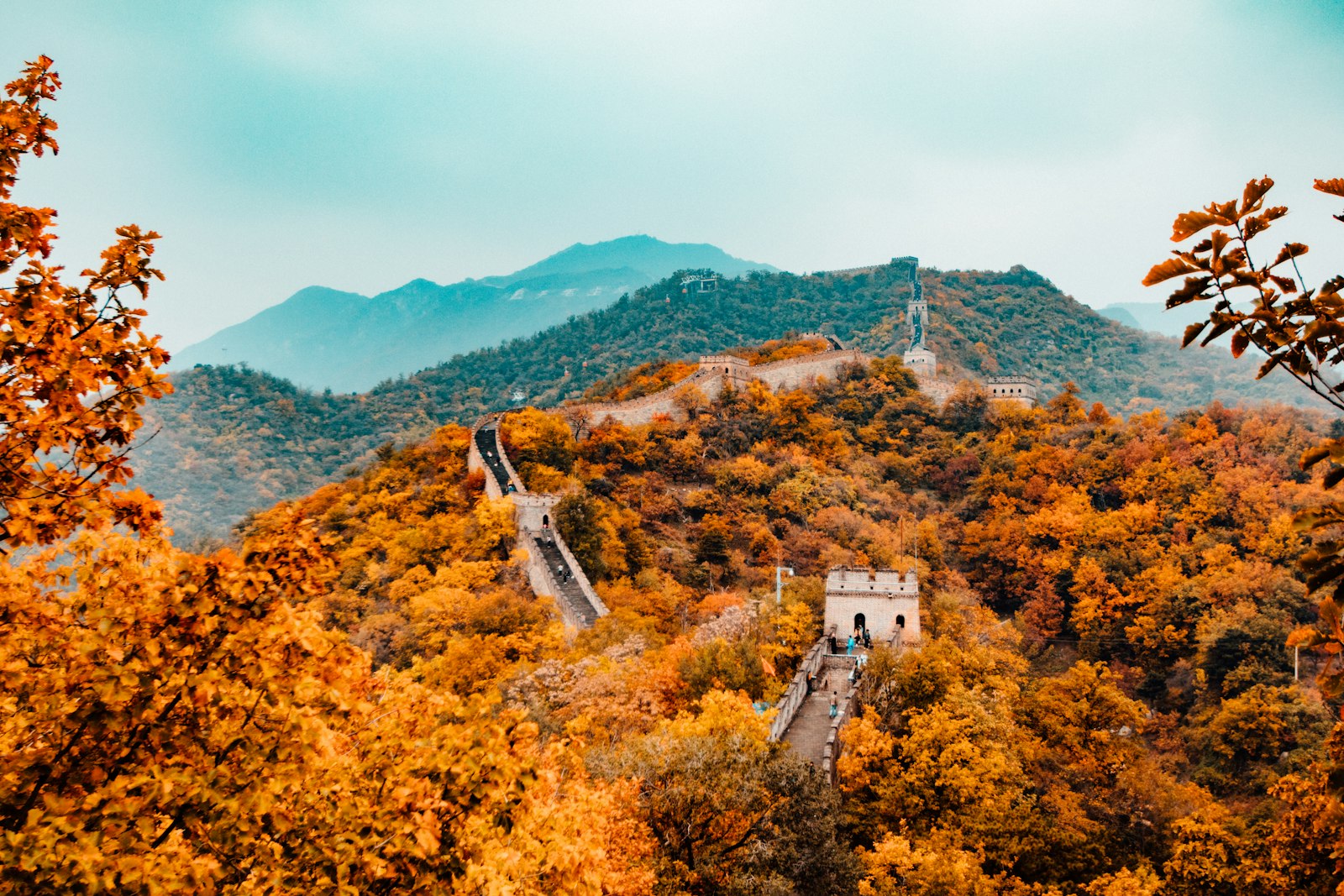
1. Great Wall at Mutianyu — The One That Won’t Ruin Your Trip
The first time I went to Badaling, I spent more time in a queue than on the wall itself. Shoulder-to-shoulder with tour groups, selfie sticks grazing my head, a man behind me eating sunflower seeds and spitting the shells onto my shoes. I almost wrote off the Great Wall entirely. A Beijing taxi driver named Liu saved me. “Mutianyu,” he said. “Less people. More wall.”
He was right. Mutianyu isn’t empty—this is still the Great Wall—but it’s manageable. The restored sections are solid underfoot, the watchtowers are spaced so you can actually see them, and the cable car drops you near the top instead of making you climb 1,000 stairs before you even start. The wall snakes over green hills in both directions, and on a clear day you can see 20 miles of it.
Why it’s special: The Great Wall is one of those things that sounds like a cliché until you’re standing on it. The scale doesn’t translate in photos. The stones are warm from the sun. The wind hits you differently up there. Mutianyu gives you the experience without the circus.
📍 Huairou District, Beijing, about 70km north of city center 🎫 $8 ($58 CNY) for entrance, $15 ($108 CNY) round-trip cable car 🕐 7:30am-5:30pm (summer), 8am-5pm (winter) 🚆 Take bus 916 from Dongzhimen to Huairou (1.5 hours), then taxi 30 minutes. Or book a private driver through your hotel for $60-80 round trip. Don’t take a tour bus unless you enjoy waiting for 40 other people to use the bathroom. ⏰ Weekday mornings, April-October. Avoid Chinese national holidays (October 1-7, May 1-3) at all costs. 💡 Insider tips:
- The toboggan slide down is $12 and absolutely worth it. You ride a plastic sled down a winding metal track. Adults love it. Children love it. Anyone who tells you it’s not fun is lying.
- Bring your own snacks. The food at the base is overpriced and mediocre.
- Go left from the cable car drop-off. Most people go right. You’ll have the left section nearly to yourself.
- Wear shoes with grip. Some sections have steep stairs and uneven stones.
- The Great Wall is not wheelchair accessible in any meaningful way.
I ate a steamed bun filled with red bean paste from a woman who had been selling them at the base for 18 years. She told me she’d never been to Beijing city proper. “Too far,” she said, as if 70 kilometers was another country.
2. Forbidden City — The Palace That Demands a Strategy
The Forbidden City is too big to wander aimlessly. I learned this the hard way on my first visit, walking in circles for three hours, missing half the good stuff, and leaving with sore feet and a vague sense that I’d seen a lot of yellow roofs. The place has 980 buildings. You need a plan.
Why it’s special: The sheer scale of imperial power is overwhelming. The throne room, the Hall of Supreme Harmony, sits on a marble platform that rises three meters above the courtyard. The bronze lions out front have ears flattened back—a message that the emperor was not to be approached casually. Every detail, from the color of the tiles (yellow for the emperor, green for princes) to the number of roof animals (nine for the emperor, fewer for everyone else), was coded with meaning.
📍 Center of Beijing, north of Tiananmen Square 🎫 $10 ($72 CNY) in low season, $15 ($108 CNY) in peak season 🕐 8:30am-5pm (last entry 4pm), closed Mondays. Check the official website before going—closures change. 🚆 Take Subway Line 1 to Tiananmen East Station, Exit B. Walk north through Tiananmen Square and the Gate of Heavenly Peace. You’ll see the ticket office on your left. ⏰ Tuesday through Thursday mornings. Arrive at 8am. The crowds start building by 10am and become oppressive by noon. 💡 Insider tips:
- Book tickets online at least 7 days in advance in peak season. They sell out. I’ve watched dozens of tourists walk up and walk away disappointed.
- Rent the audio guide ($6) at the entrance. It’s actually good and points out details you’d miss.
- Skip the main central path after the first 30 minutes. Turn left or right into the side halls and gardens. This is where the interesting stuff lives.
- The珍宝馆 (Treasure Gallery) and 钟表馆 (Clock Gallery) cost an extra $2 each and are worth it. The clocks are bizarre and wonderful—18th-century European automata that were gifts to Chinese emperors.
- Bring water. The only place to buy it inside is near the exit and it’s expensive.
I met a retired history teacher from Shandong Province who was visiting for the 12th time. “I find something new every visit,” he said. “Today I noticed the dragons on the阶梯 have five claws, but the ones on the roof have only four. Why? Because the roof dragons are closer to heaven and must show humility.”
3. Shanghai Bund + Old City — Two Sides of the Same Coin
The Bund at night is the most photographed view in China, and for good reason. The colonial-era buildings along the Huangpu River glow gold against the dark water, and across the river, Pudong’s skyscrapers pulse with LED light shows that would make Las Vegas blush. But the Bund alone is a postcard. The real Shanghai is in the alleyways two blocks back.
Why it’s special: Shanghai is the city that does contrast better than anywhere else on earth. Walk 10 minutes from the Bund’s art deco banks and you’re in the Old City, where narrow lanes are lined with wet markets selling live crabs and dried mushrooms, where old men play chess on folding tables, where laundry hangs from bamboo poles across four-story buildings. The city doesn’t hide its contradictions—it puts them on display.
📍 The Bund: Zhongshan East 1st Road, along the Huangpu River. Old City: around Yuyuan Garden, 15 minutes walk from the Bund. 🎫 The Bund is free. Yuyuan Garden is $5 ($36 CNY). 🕐 The Bund is accessible 24/7. Best light is 30 minutes before sunset until 10pm. Yuyuan Garden: 8:30am-5pm. 🚆 Take Subway Line 2 to East Nanjing Road Station, Exit 3. Walk east 10 minutes to the Bund. For the Old City, take Line 10 to Yuyuan Garden Station, Exit 1. ⏰ Visit the Bund at sunset on a weekday. Visit the Old City in the morning before the tour groups arrive. 💡 Insider tips:
- Skip the Huangpu River cruise. It’s overpriced ($30), crowded, and the view from the Bund promenade is actually better.
- Walk the Bund from north to south. It’s less crowded and you end up near the Old City.
- For the best view of the Pudong skyline, go to the bar at the top of the Peace Hotel ($15 cocktail minimum) or the observation deck of the Shanghai Tower ($30).
- In the Old City, eat at the food stalls on Fuyou Road, not the restaurants on the main tourist street. The xiaolongbao (soup dumplings) at a place called Jia Jia Tang Bao are the best I’ve had in Shanghai.
- Learn to use Didi (Chinese Uber) before you come. Taxis in Shanghai are notoriously unfriendly to foreigners.
I watched a woman in the Old City haggle for 15 minutes over the price of a live turtle. She won. She paid about $4. The turtle looked resigned to its fate.
4. Xi’an Muslim Quarter — The Street Food Capital of Northern China
Xi’an’s Muslim Quarter hits you in the face the moment you step off the main road. The smell of lamb skewers roasting over charcoal, cumin and chili floating through the air, the sound of metal spatulas scraping against flat griddles, the shouting of vendors in Mandarin and Uyghur and Arabic. This is not a sanitized food court. This is a living neighborhood where people have been cooking the same dishes for centuries.
Why it’s special: The food here is unlike anything else in China. The Muslim influence means lamb instead of pork, bread instead of rice, and spices that you don’t find in Cantonese or Sichuan cooking. The famous dish is yangrou paomo—lamb soup with shredded flatbread that you tear into pieces yourself before the kitchen adds the broth. It’s messy, it’s filling, and it’s the most satisfying meal I’ve had in any Chinese city.
📍 Beiyuanmen Street and surrounding alleys, just north of the Drum Tower 🎫 Free to enter. Budget $10-15 for a serious eating session. 🕐 Most stalls open from 11am to midnight. The best time is 6pm-9pm. 🚆 Take Subway Line 2 to Zhonglou Station (Drum Tower), Exit C. Walk north. You’ll see the archway entrance to the Muslim Quarter. ⏰ Evening, any day except Friday (the mosque area gets crowded during prayers). 💡 Insider tips:
- The stalls closest to the main entrance are tourist traps. Walk deeper into the quarter, past the 3rd intersection, before you start eating.
- The lamb skewers are 2 yuan each (about 30 cents). Eat at least 10.
- Try the persimmon cakes (shizi bing) from the old woman at the corner of Xiyangshi and Dapiyuan. She’s been making them for 30 years.
- Don’t drink tap water. Even locals don’t drink tap water. Buy bottled water from any convenience store.
- The Great Mosque inside the quarter is worth visiting ($5). It’s a fascinating blend of Chinese architecture and Islamic function—minarets that look like pagodas, Arabic calligraphy on Chinese ceramic tiles.
A Uyghur man named Adil let me try making naan bread in his tandoor oven. I burned my forearm on the edge. He laughed, gave me a free bread, and said, “Now you are a real Xi’an person.”
5. Guilin/Yangshuo Li River — The Landscape That Looks Fake
I remember standing on the deck of a bamboo raft on the Li River, watching the karst peaks rise out of the mist like something from a dream, and thinking: this cannot be real. The mountains are too perfectly shaped, the water too green, the rice paddies too neatly terraced. But it is real, and it’s been inspiring Chinese painters and poets for over a thousand years.
Why it’s special: The Li River cruise from Guilin to Yangshuo is the most scenic river journey I’ve ever taken. The karst limestone peaks—those iconic cone-shaped mountains you’ve seen in every Chinese painting—rise straight out of the riverbanks. Water buffalo graze in the shallows. Fishermen in conical hats pole bamboo rafts. The whole thing feels like you’ve stepped into a scroll painting that’s come to life.
📍 Yangshuo County, Guangxi Province. The river runs from Guilin to Yangshuo. 🎫 The cruise from Guilin to Yangshuo is $50-80 ($360-576 CNY) depending on boat class. The bamboo raft (actually motorized) is $30-50. 🕐 Cruises run 9am-2pm. Bamboo rafts run 8am-5pm. 🚆 High-speed train from Guilin to Yangshuo station (30 minutes, $15). From the station, take a bus or taxi to the river ($5). ⏰ March-May or September-October. Summer is hot and humid. Winter is cold and the river can be low. 💡 Insider tips:
- Skip the big cruise boats. Take a smaller bamboo raft from Yangdi to Xingping (the most scenic section). It’s cheaper and more intimate.
- Stay in Yangshuo, not Guilin. Yangshuo is a small town with better food, better scenery, and better energy.
- Rent a bicycle or e-bike ($5-10 per day) and ride through the countryside. The rice paddies and villages are where the real beauty is.
- The “Impression Liu Sanjie” show at night is overpriced ($40) and gimmicky. Skip it and walk along the river instead.
- Learn the word for “photo”: 拍照 (pāizhào). Locals will offer to take your picture. They’re usually good at it.
I met a farmer named Wei who had been working the same rice terrace for 47 years. He showed me how to plant seedlings in straight lines without looking. “The water tells you where to put them,” he said. I tried. I failed. He laughed.
6. Chengdu Panda Base — The Most Adorable Morning of Your Life
The Giant Panda Breeding Research Base opens at 7:30am. Get there at 7:15. I cannot stress this enough. By 9am, the pandas are asleep, the crowds are three deep at every enclosure, and you’re looking at a pile of black-and-white fur that hasn’t moved in 45 minutes. But at 7:30, the pandas are eating. And watching a panda eat bamboo is one of the most ridiculous, joyful experiences available to a human being.
Why it’s special: The base is a conservation facility, not a zoo. The pandas here are part of a breeding program that has brought the species back from the edge of extinction. You’ll see them in large, naturalistic enclosures, doing what pandas do: eating, sleeping, and occasionally rolling down hills for no apparent reason. The baby panda nursery is the highlight—tiny cubs in incubators, pink and hairless, about the size of a stick of butter.
📍 Northern suburb of Chengdu, about 30 minutes from city center 🎫 $8 ($58 CNY) 🕐 7:30am-6pm (summer), 8am-5:30pm (winter). Panda houses close at 5pm. 🚆 Take Subway Line 3 to Panda Avenue Station, Exit B. Then take the free shuttle bus or walk 10 minutes. ⏰ 7:30am opening, weekday. Avoid weekends and Chinese holidays. 💡 Insider tips:
- The red pandas (lesser pandas) are in the same complex and are actually more active and entertaining than the giant pandas. Don’t skip them.
- You can volunteer to clean panda enclosures ($200 for a half-day). It’s expensive but you get to touch a panda. Book months in advance.
- The Moon Delivery Room (where they bring out baby pandas for public viewing) happens at 9am and 2pm. Get there 20 minutes early.
- Bring a jacket even in summer. The base is in a bamboo forest and can be surprisingly cool in the morning.
- The food at the base is terrible. Eat breakfast before you come.
A panda named Chengjiu sat down directly in front of me, looked me in the eye, and methodically stripped the leaves off a bamboo stalk with her teeth. She did this for 22 minutes. I watched for all 22 minutes.
7. West Lake, Hangzhou — The Lake That Poets Wrote About
I didn’t get West Lake at first. I walked along the shore on a gray afternoon and thought: it’s a lake. It’s a nice lake. Why do Chinese people act like this is the most beautiful place on earth? Then I came back in October, when the osmanthus trees were blooming, and the entire lakeside smelled like apricot and honey, and the late afternoon sun turned the water gold, and I understood.
Why it’s special: West Lake is the most famous body of water in Chinese history. Poets have written about it for a thousand years. Emperors built gardens along its shores. The lake is surrounded by pagodas, temples, and tea plantations, and the whole area is designed to be experienced slowly—walking, cycling, sitting on a bench, drinking tea. It’s not a spectacle. It’s a mood.
📍 Xihu District, central Hangzhou 🎫 The lake is free. Surrounding attractions (Leifeng Pagoda, Lingyin Temple) cost $5-10 each. 🕐 24/7. Best light is sunrise and sunset. 🚆 High-speed train from Shanghai Hongqiao to Hangzhou East (1 hour, $20). Then take Subway Line 1 to Ding’an Road Station, Exit B. Walk west 10 minutes. ⏰ October for osmanthus blossoms. April for cherry blossoms. Weekday mornings. 💡 Insider tips:
- Rent a bicycle ($3 per hour) and cycle the full lake loop (about 10km). It’s the best way to see everything.
- The tea houses on the north side of the lake are overpriced. Walk to the south side near Longjing Village for real Dragon Well tea at local prices.
- The “Impression West Lake” show is actually good (unlike the one in Yangshuo). It’s a water-based performance directed by Zhang Yimou. Worth $30.
- Eat at a restaurant called Lou Wai Lou on the lake’s north shore. It’s famous for a reason. Order the vinegar fish and the Dongpo pork.
- The Broken Bridge (Duanqiao) is not actually broken. It’s named for a snow phenomenon. Don’t be disappointed.
I sat next to an old man who was practicing calligraphy with a brush and water on the stone pavement. He wrote a poem by Su Dongpo about the lake, watched it evaporate, then wrote it again. I asked him why. “Because it’s beautiful,” he said. “And because it won’t last.”
8. Pingyao Ancient City — The Ming Dynasty Time Capsule
Pingyao is what happens when a walled city from the 14th century survives the 20th century intact. The city walls are 12 meters high and 6 kilometers around. Inside, the streets are laid out in a grid pattern that hasn’t changed in 600 years. The buildings are gray brick with carved wooden facades. There are no cars inside the walls. At night, the only light comes from red lanterns and the occasional bicycle.
Why it’s special: Pingyao was the financial center of China in the 19th century—the Wall Street of the Qing Dynasty. The first Chinese banks were founded here, and the old banking houses still stand, with their counting rooms and vaults and secret compartments. Walking through them, you get a sense of how wealthy and sophisticated this place was before the modern era. It’s also one of the best-preserved ancient cities in the world.
📍 Pingyao County, Shanxi Province, about 100km south of Taiyuan 🎫 $20 ($145 CNY) for the combined ticket to all attractions inside the city 🕐 City gates open 24/7. Attractions open 8am-6pm. 🚆 High-speed train from Beijing West to Pingyao Ancient City station (3 hours, $40). Then take a taxi 10 minutes to the city wall ($3). ⏰ Spring (April-May) or autumn (September-October). Summer is hot and dusty. Winter is bitterly cold. 💡 Insider tips:
- Stay overnight inside the city walls. The old courtyard hotels (called “minsu”) are atmospheric and cheap ($20-40 per night).
- The County Government Office is the best-preserved in China and worth an hour.
- Climb the city wall at sunset. You’ll have it nearly to yourself and the view over the gray rooftops is stunning.
- The local specialty is pingyao beef—a cured beef that’s been made here for 500 years. It’s salty and chewy and goes well with beer.
- The nightlife consists of walking the empty streets and listening to your footsteps. This is a feature, not a bug.
A shopkeeper named Zhang showed me how to make paper cuttings. I produced something that looked like a distressed octopus. She hung it in her window anyway. “First try,” she said. “Next time better.”
9. Hong Kong — The City That Doesn’t Sleep (And Doesn’t Care If You Can’t Keep Up)
Hong Kong hits differently than mainland China. The energy is more intense, the food is more diverse, the streets are louder and brighter and more crowded. It’s a city that rewards the aggressive traveler—the one who walks fast, eats on the street, and doesn’t stop moving until their feet give out. I love it and I’m exhausted by it in equal measure.
Why it’s special: Hong Kong is the most vertical city in the world. The skyscrapers climb the mountainsides, the escalators climb the hills, the markets climb over each other in narrow alleyways. You can eat a Michelin-starred dumpling in the morning, hike a jungle trail in the afternoon, and drink cocktails on a rooftop overlooking the harbor at night. No other city in China offers this density of experience.
📍 Hong Kong Special Administrative Region 🎫 Varies wildly. Budget $50-100 per day for food, transport, and activities. 🕐 The city never stops. Most shops open 10am-10pm. Markets run until midnight. 🚆 Fly into Hong Kong International Airport. Take the Airport Express ($15) to Hong Kong Station (24 minutes). The MTR subway system is excellent. ⏰ October-December for best weather. Avoid June-August (typhoon season). 💡 Insider tips:
- Get an Octopus card at the airport ($5 deposit, load with $30). It works on the MTR, buses, ferries, and in convenience stores.
- The Star Ferry across Victoria Harbour costs 40 cents. It’s the best value sightseeing in the city.
- Eat at a dai pai dong (open-air food stall) in Sham Shui Po. The claypot rice at Lin Heung Kui is legendary.
- Take the Peak Tram to Victoria Peak ($8 round trip). Go at sunset. The view is worth the queue.
- Hong Kong is not mainland China. You need a separate visa (or use the visa-free policy for many nationalities). Check the rules before you book.
I ate a bowl of wonton noodles at a shop in Mong Kok that had been open since 1956. The owner’s grandson was working the register. He told me his grandfather still comes in every morning to taste the broth. “He’s 89,” the grandson said. “He says the soup is not as good as it was in 1970. I tell him he’s wrong. He tells me I know nothing.”
10. Zhangjiajie National Forest Park — The Mountains That Inspired Avatar
The first time I saw the quartz-sandstone pillars of Zhangjiajie, I thought my eyes were malfunctioning. The columns rise hundreds of meters straight up from the forest floor, their tops covered in pine trees, mist swirling around their bases. They look like something from another planet—which is exactly why James Cameron used them as inspiration for the floating mountains in Avatar.
Why it’s special: Zhangjiajie is the most surreal landscape I’ve ever seen. The pillars are the result of millions of years of erosion, and they’re unlike anything else in China. The park is huge—over 100 square miles—and most of it is accessible via a network of cable cars, glass bridges, and hiking trails. The Bailong Elevator, a glass elevator built into the side of a cliff, takes you 330 meters up in 90 seconds.
📍 Wulingyuan District, Zhangjiajie, Hunan Province 🎫 $35 ($252 CNY) for a 4-day pass 🕐 7am-6pm (summer), 8am-5pm (winter) 🚆 Fly into Zhangjiajie Hehua Airport (direct flights from Beijing, Shanghai, Guangzhou). Or take a high-speed train from Changsha (3 hours, $30). ⏰ September-October for clear skies. Avoid May Day and National Day holidays. 💡 Insider tips:
- Stay in Wulingyuan town, not Zhangjiajie city. It’s right at the park entrance and has better access.
- The glass bridge at Zhangjiajie Grand Canyon ($20 extra) is terrifying and amazing. Go early to avoid crowds.
- The Tianmen Mountain cable car is the longest in the world (7.5km). It’s worth a separate day trip.
- Hike the Yuanjiajie area for the best pillar views. The crowds are heaviest here, but for good reason.
- Bring rain gear. The weather changes fast and the mist can roll in within minutes.
I got caught in a sudden thunderstorm on the summit of Tianzi Mountain. A group of elderly Chinese hikers took shelter with me under a rock overhang. One of them, a woman who looked about 70, pulled out a flask of baijiu and offered me a sip. I took it. It was terrible. I thanked her. She laughed and said something in Hunan dialect that I’m pretty sure was a joke at my expense.
FAQ
1. Do I need a visa to visit China in 2026? It depends on your passport. Citizens of 54 countries can use the 144-hour visa-free transit policy in major cities like Beijing, Shanghai, and Guangzhou. That gives you 6 days without a visa. For longer stays, you need a tourist visa (L visa), which costs about $140 and takes 4-5 business days to process. Apply at least a month before your trip.
2. How do I pay for things without cash? China runs on mobile payments. Alipay and WeChat Pay are accepted everywhere—from street food carts to luxury hotels. Set them up before you leave home. You can link a foreign credit card. Some cash is useful for emergencies, but I’ve gone weeks without touching it. Don’t try to use credit cards at small shops or restaurants. They won’t work.
3. Will I need a VPN? Yes. China blocks Google, Facebook, Instagram, WhatsApp, and many other Western websites and apps. Install a reliable VPN on your phone and laptop before you arrive. Astrill and ExpressVPN work well. Test it before you leave—some VPNs don’t work in China. Without a VPN, you’ll be stuck using Baidu for searches and WeChat for messaging.
4. Is it safe to eat street food? Generally yes, with common sense. Look for stalls with high turnover—lots of customers means the food is fresh. Avoid anything that’s been sitting out for hours. Drink bottled water (not tap). I’ve eaten street food hundreds of times in China and only gotten sick twice, both times from restaurants, not stalls. Your stomach will adjust after a few days.
5. How do I get a SIM card? Buy one at the airport when you arrive. China Mobile, China Unicom, and China Telecom all have tourist SIMs. A 7-day plan with 10GB of data costs about $10-15. You’ll need your passport to register. The process takes 10 minutes. Having a Chinese number is useful for Didi (ride-hailing) and restaurant reservations.
6. How much English is spoken? Very little outside of major tourist areas. In Beijing and Shanghai, hotel staff and some restaurant workers speak basic English. In smaller cities and rural areas, you’ll rely on translation apps. Download Google Translate (with offline Chinese) or Pleco before you arrive. Learn to say “thank you” (xièxie) and “hello” (nǐ hǎo). It goes a long way.
7. Is China safe for solo travelers, especially women? Yes. China is one of the safest countries I’ve traveled in. Violent crime against tourists is extremely rare. Petty theft happens in crowded areas, same as anywhere. Solo female travelers report feeling safe walking alone at night in most cities. The main risks are scams (overpriced tea houses, fake ticket sellers) and getting lost. Use common sense and you’ll be fine.
The Honest Wrap-up
This list is for someone who wants to see China without pretending they’re a backpacker who loves hostels and instant noodles. It’s for people who want real experiences but also want to sleep in a bed with clean sheets and not spend three hours figuring out how to buy a train ticket. If you’re the type who wants to “go where the locals go” and eat “authentic” food every meal, great—but you’ll still need the practical stuff.
If you’re the type who wants to party until 4am and meet other travelers from 20 countries, go to Southeast Asia instead. China is not set up for that kind of trip.
One last thing: don’t try to do too much. I’ve seen people try to hit six cities in eight days and end up spending most of their trip in train stations. Pick three places. Stay in each one for at least two nights. Walk the streets without a destination. Sit in a park and watch people. Eat something you can’t pronounce. That’s how you actually experience China—not by checking boxes, but by letting the country happen to you.
The cab driver who laughed at me about the bank? I still think about him. He was right about everything.
Topics
More Travel Guide guides
Best Time to See Cherry Blossoms in China 2026: The Complete 2026 Guide
A comprehensive travel guide for international visitors planning a trip to China. Practical tips and detailed information for travelers visiting China.
12 min read
Best Time to Visit China: Month-by-Month Guide: The Complete 2026 Guide
China is massive and each season offers something different. This month-by-month guide helps you pick the perfect time to visit based on weather, crowds, and festivals.
12 min read
China Etiquette: Cultural Do's and Don'ts for Foreigners: The Complete 2026 G...
China has unique social customs that can confuse first-time visitors. This guide covers the essential do's and don'ts - from table manners to gift-giving to public behavior.
12 min read