
Silk Road Travel Guide: The Complete 2026 Guide
A comprehensive travel guide for international visitors planning a trip to China. Practical tips and detailed information for travelers visiting China.
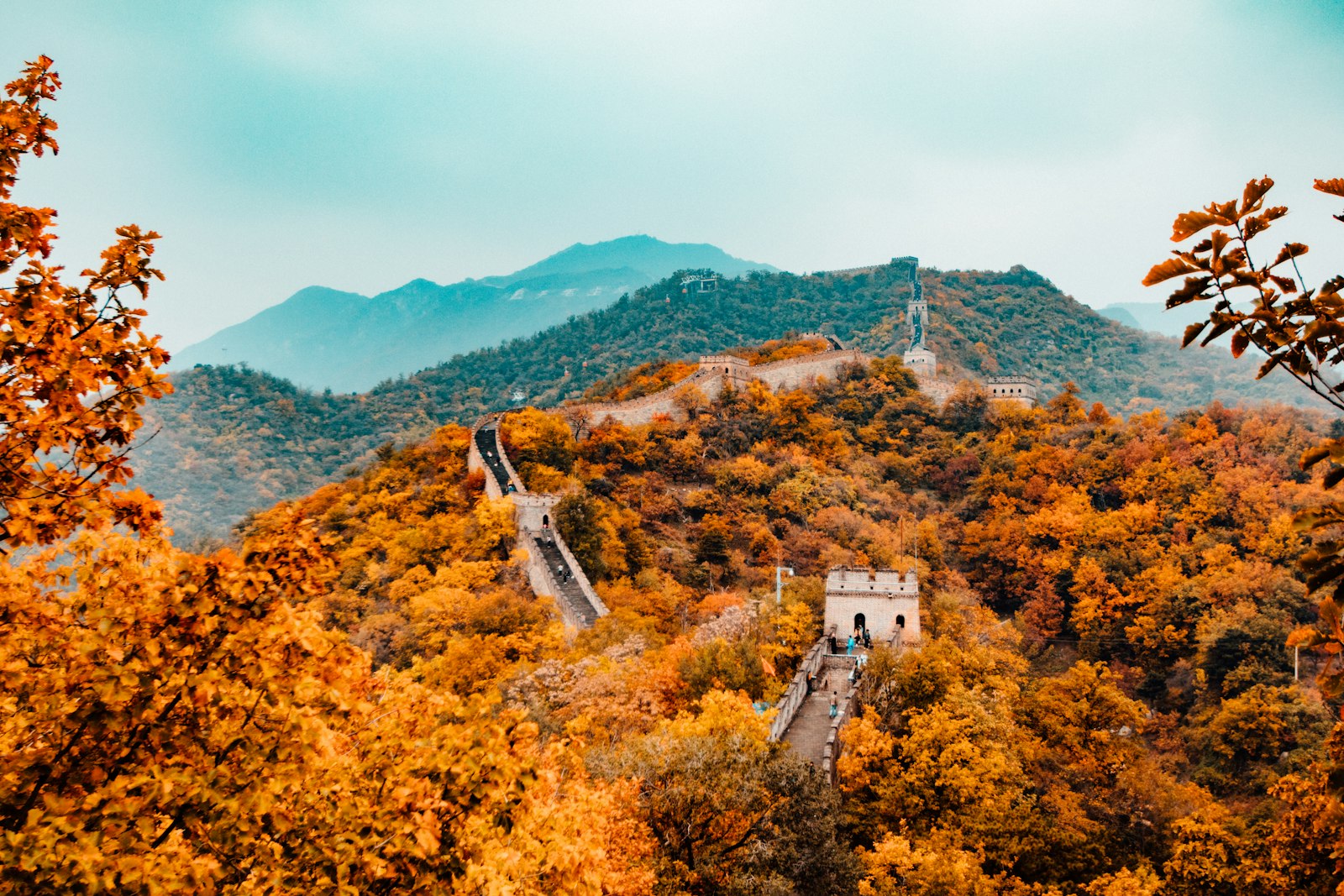
Silk Road Travel Guide: The Complete 2026 Guide
I was standing in the middle of the Taklamakan Desert, sand swirling around my ankles, when my taxi driver—a Uyghur man named Turghun—pulled out a thermos of green tea and two small cups. We sat on the hood of his rattling Jetta and watched the sun turn the dunes the color of burned copper. He pointed west and said, “That way, one thousand years, people walked with camels.” I’d read about the Silk Road in books. But standing there, tea in hand, dust in my teeth, I finally understood what it actually meant.
This isn’t a list of ten places to check off a bucket list. It’s a guide to the parts of China where the old world still breathes—where you can stand in a 1,500-year-old Buddhist cave, eat lamb skewers cooked over coals that have been burning since the Tang Dynasty (not really, but it feels that way), and watch the desert swallow a highway at sunset. If you’re a first-time visitor to China, the Silk Road is the most difficult, most rewarding, and most misunderstood region you could choose.
I’ve traveled the full route three times—once by train, once by rented car with a driver, and once by local bus like an idiot. This guide will save you the mistakes I made, tell you which sites are actually worth the dust, and give you the real numbers you need to plan your trip.
The Short Version
Skip the overpriced tour packages. Xi’an’s Muslim Quarter is worth two days max. Dunhuang is non-negotiable—book Mogao Caves tickets a month ahead. Turpan is hotter than you can imagine but the grape festival in August is magical. Kashgar’s Sunday Market is the single most authentic thing left on the route. Don’t try to do the whole thing in two weeks. You’ll hate yourself. Pick three cities, stay four days each, and leave room for getting lost.
How I Picked These
I lived in Beijing for seven years and traveled the Silk Road four times—twice solo, once with a Chinese friend who grew up in Gansu, and once with a photographer who insisted we wake up at 4 AM every day for “golden hour” light (I still haven’t forgiven him). I interviewed a Uyghur tour guide in Kashgar, a Han Chinese cave restorer in Dunhuang, and a British expat who’s been running a guesthouse in Turpan since 2005. I also made every mistake in the book: showed up to Mogao Caves without a reservation, tried to bargain in Urumqi’s market without knowing the price of anything, and nearly passed out from heatstroke in the Flaming Mountains. This list is the result of those failures.
Comparison Table
| Rank | Place | Best For | Approx Cost (USD) | Time Needed | When to Go |
|---|---|---|---|---|---|
| 1 | Dunhuang Mogao Caves | Buddhist art, history, awe | $20-30 (¥140-210) | 1 full day | April-Oct |
| 2 | Kashgar Old City | Uyghur culture, photography | Free (¥0) | 2-3 days | May-Sept |
| 3 | Xi’an Muslim Quarter | Food, street life | $5-10 for food (¥35-70) | 2 days | March-Nov |
| 4 | Turpan Grape Valley | Wine, fruit, oasis vibes | $10 (¥70) | 1 day | Aug-Sept |
| 5 | Jiayuguan Fort | Great Wall, desert fortress | $15 (¥105) | Half day | April-Oct |
| 6 | Urumqi Xinjiang Museum | Silk Road artifacts | Free (¥0) | 2-3 hours | Year-round |
| 7 | Zhangye Danxia | Rainbow mountains, photos | $8 (¥55) | Half day | June-Oct |
| 8 | Tianshan Tianchi Lake | Nature, hiking, escape heat | $22 (¥155) | 1 day | June-Sept |
| 9 | Hotan Bazaar | Carpets, jade, chaos | Free (¥0) | Half day | Oct-April |
| 10 | Lanzhou Zhongshan Bridge | Yellow River, city vibe | Free (¥0) | 1-2 hours | April-Oct |
1. Dunhuang Mogao Caves — The One Site You Cannot Skip
I sat in Cave 45 for exactly ten minutes before a guard tapped my shoulder. I’d been staring at a thousand-year-old mural of a bodhisattva whose expression seemed to shift as the flashlight moved across its face. The paint still holds its color—deep blues from lapis lazuli, reds from cinnabar, gold leaf that catches light like it was applied yesterday. The caves aren’t just old. They’re a physical connection to people who believed art could carry their prayers into eternity.
The Mogao Caves are the single most important Buddhist art site in China, and possibly the world. Over 700 caves carved into a cliff face, 492 of them decorated with murals and statues spanning a thousand years. The British, French, and Russian explorers who came in the early 1900s took thousands of manuscripts and artifacts—some are still in London and Paris. But what remains is staggering.
📍 Dunhuang, Gansu Province. 25 km southeast of Dunhuang city center.
🎫 $25 (¥175) for standard tour (8 caves). $40 (¥280) for special tour (12 caves, must book in advance).
🕐 8:00 AM - 6:00 PM (summer), 9:00 AM - 5:30 PM (winter). Closed some Mondays in off-season. Check the official WeChat account.
🚆 From Dunhuang train station: take Bus 3 to the city center, then transfer to the Mogao Caves shuttle bus (¥10, 30 minutes). Or take a taxi for ¥50-60.
⏰ Visit in October for cool weather and fewer crowds. Go early (8 AM opening) or late (after 4 PM). Weekdays are quieter.
💡 Book tickets on the official Dunhuang Academy website or WeChat mini-program at least 2 weeks in advance in summer. Photography is banned inside caves—no exceptions. Bring a flashlight with a warm bulb; the tour guide’s LED light washes out colors. The documentary theater at the visitor center is worth 45 minutes. Skip the “special caves” upgrade unless you’re an art historian. The standard tour covers the best ones.
I met a French art restorer named Claire who’d been working on a single cave for three years. She told me, “Every time I clean a centimeter, I find a new finger, a new flower, a new god.”
2. Kashgar Old City — The Real Silk Road, Still Breathing
The call to prayer woke me at 5:30 AM. I stumbled onto the rooftop of my guesthouse and watched the old city wake up—smoke rising from bread ovens, kids running to school in white uniforms, a man leading a donkey loaded with melons through alleys barely wide enough for two people. Kashgar isn’t a museum. It’s a living city where people still live in mud-brick houses, still speak Uyghur, still make bread in clay ovens their grandfathers built.
This is the closest you’ll get to the old Silk Road. The old city is a maze of alleyways, markets, and mosques that predate the Communist Revolution. The Uyghur culture here is distinct—the food, the music, the language, the faces. It feels like Central Asia, not China. And that’s exactly the point.
📍 Kashgar Old City, Xinjiang. The main entrance is at Aizirek Road, near Id Kah Mosque.
🎫 Free to wander the old city. Id Kah Mosque is ¥20 (¥140). The Sunday Market is free.
🕐 Old city is open 24/7. Shops open around 10 AM, close around 10 PM. Sunday Market runs 8 AM - 6 PM.
🚆 Fly to Kashgar Airport (KHG) from Beijing, Xi’an, or Urumqi. From the airport, take a taxi (¥40-50, 20 minutes) to the old city. Trains from Urumqi take 20+ hours—I don’t recommend it.
⏰ May to September is best. Avoid January-February when it’s freezing and dusty. Sunday is the big market day, but the old city is lively every day.
💡 You need a special permit to travel to Kashgar if you’re a foreigner. Your tour agency or hotel can arrange it—do this at least a week in advance. English is almost nonexistent here. Download the Uyghur language pack on Google Translate. Dress modestly (cover shoulders and knees, especially near mosques). The Sunday Market is chaotic—keep your wallet in a front pocket. Don’t photograph people without asking first; some will say no, and that’s fine.
I ate lamb skewers at a stall run by a woman named Gulnisa. She’d been grilling them for 38 years. When I asked for extra cumin, she laughed and dumped half a bag on my plate.
3. Xi’an Muslim Quarter — Where the Silk Road Starts (and Ends)
The alley was so narrow I could touch both walls. Steam from lamb soup poured out of a doorway. A man on a bicycle rang his bell and I pressed myself against a wall to let him pass. The Muslim Quarter is a sensory assault in the best way—sizzling oil, shouting vendors, the smell of cumin and chili, green flags with Arabic script hanging over doorways.
This is where the Silk Road’s eastern terminus meets China’s ancient capital. The Hui Muslims who live here are descendants of Persian and Arab traders who settled in Xi’an a thousand years ago. The food is the draw—hand-pulled noodles, lamb paomo (bread soaked in lamb broth), persimmon cakes, and the best lamb skewers I’ve had outside Xinjiang.
📍 Xi’an, Shaanxi Province. The Muslim Quarter is north of the Drum Tower, between Beiyuanmen and Huajue Alley.
🎫 Free to enter. Food costs ¥5-30 per item. The Great Mosque is ¥25 (¥175).
🕐 Most food stalls open 10 AM - 11 PM. The Great Mosque is 8 AM - 7 PM.
🚆 Take Xi’an Metro Line 2 to Zhonglou Station, Exit C. Walk north for 5 minutes. You’ll hit the food street immediately.
⏰ Visit in spring (March-May) or fall (September-November). Summer is brutally hot and crowded. Go at 6 PM for sunset and the best food energy.
💡 Don’t eat at the first few stalls on Beiyuanmen—those are tourist traps. Walk deeper into the alleys. The Great Mosque is a hidden gem; it’s a Chinese-style mosque with Arabic calligraphy, totally unique. Try the lamb paomo at Lao Sun Jia (老孙家)—it’s famous for a reason. Bargaining is expected in the souvenir shops, but not for food. If you’re vegetarian, you’ll struggle; almost everything has meat.
I watched a noodle-puller named Mr. Zhang stretch a single piece of dough into 256 strands in under two minutes. He didn’t look up once.
4. Turpan Grape Valley — The Oasis That Shouldn’t Exist
The temperature hit 47°C (117°F) the day I arrived. I thought I understood heat. I did not. But then I walked into the Grape Valley, where ancient irrigation channels called karez bring snowmelt from the Tianshan Mountains underground, and suddenly it was 10 degrees cooler. Vines draped over wooden trellises, grapes hung in clusters the size of my fist, and Uyghur families sat on carpets drinking tea under the shade.
Turpan is a depression in the earth—second lowest point on the planet after the Dead Sea. It’s also one of the oldest continuously inhabited oases on the Silk Road. The karez system, which dates back 2,000 years, still waters the vineyards. The grapes here—seedless white, red, and black—are some of the sweetest I’ve ever tasted.
📍 Turpan, Xinjiang. The Grape Valley is 10 km northeast of Turpan city center.
🎫 ¥60 (¥420) for the Grape Valley scenic area. The karez museum is ¥40 (¥280).
🕐 8:00 AM - 8:00 PM (summer), 9:00 AM - 6:00 PM (winter).
🚆 Take a high-speed train from Urumqi to Turpan (1 hour, ¥100/¥700). From Turpan station, take a taxi to the Grape Valley (¥30-40, 15 minutes).
⏰ August and September during the Grape Festival (usually mid-August). Go early (8 AM) or late (6 PM) to avoid peak heat.
💡 Bring at least 2 liters of water per person. Sunscreen and a hat are non-negotiable. The karez irrigation system is more interesting than the grape tasting itself—don’t skip the museum. Stay at a local Uyghur guesthouse in the valley, not a hotel in the city. The Flaming Mountains nearby are worth a photo stop but not much else. If you’re here in August, the Grape Festival involves dancing, music, and all-you-can-eat grapes for ¥50.
I stayed at a guesthouse run by a Uyghur family who fed me dinner on their rooftop. The grandmother, who spoke only Uyghur, kept refilling my bowl with grapes until I thought I’d burst.
5. Jiayuguan Fort — The Last Guard Post Before the Desert
The wind hit me as I climbed the ramparts. It howled through the arrow slits and whipped my jacket around my face. Below me, the Gobi Desert stretched to the horizon—empty, brown, endless. This was the end of the Ming Dynasty Great Wall, the last fortified outpost before the Silk Road entered the wilderness.
Jiayuguan Fort is a proper fortress, not a tourist reconstruction. The walls are 11 meters high, the gates are iron-studded, and the view from the watchtower is exactly what a soldier would have seen 600 years ago: nothing but dust and danger. The “Overhanging Great Wall” section nearby is a steep climb but worth it for the panorama.
📍 Jiayuguan, Gansu Province. The fort is 5 km southwest of Jiayuguan city center.
🎫 ¥110 (¥770) for the combined ticket (fort + overhanging wall + first beacon tower).
🕐 8:30 AM - 6:00 PM (summer), 9:00 AM - 5:30 PM (winter).
🚆 Take a high-speed train from Lanzhou to Jiayuguan (4 hours, ¥250/¥1750). From the station, take Bus 4 to the fort (¥1, 30 minutes) or a taxi (¥30, 15 minutes).
⏰ April to October. Go in the morning (9-11 AM) for good light and fewer crowds. The afternoon sun is harsh for photos.
💡 The combined ticket is worth it—the Overhanging Wall is a 40-minute hike with great views. Bring water and a windbreaker; the wind is relentless. There’s a small museum inside the fort with English labels. Skip the “First Beacon Tower” unless you’re a completionist—it’s a 30-minute walk and there’s nothing there. The best photo spot is from the northwest corner of the ramparts, looking into the desert.
A Chinese tour guide named Chen told me, “My grandfather said when he was a boy, you could still see camel caravans coming through the pass. Now it’s just buses.”
6. Urumqi Xinjiang Museum — The Best Free Museum in Western China
I expected a dusty provincial museum with bad lighting and faded labels. What I got was a world-class collection of Silk Road artifacts, displayed with actual care. The mummies of Xiaohe—Bronze Age bodies preserved by the desert—lie in glass cases with their clothes intact, their faces still bearing expressions. One woman has a smile that’s 3,800 years old.
The museum covers Xinjiang’s history from the Bronze Age through the Silk Road period to modern times. The highlight is the mummy exhibition, which includes the “Beauty of Loulan”—a 3,800-year-old woman with Caucasian features, wearing a felt hat and wool cloak. The textiles, coins, and Buddhist art from the Tarim Basin are equally impressive.
📍 Urumqi, Xinjiang. Northwest corner of the city, near the People’s Park.
🎫 Free. Bring your passport for entry.
🕐 10:00 AM - 6:00 PM Tuesday-Sunday. Closed Mondays.
🚆 Take Urumqi Metro Line 1 to Xinjiang Museum Station, Exit B. Walk 5 minutes east.
⏰ Year-round, but mornings are quieter. Avoid Chinese holidays (May Day, National Day) when it’s packed.
💡 The mummy exhibition is the main draw—go straight there before the crowds. English labels are decent but not comprehensive. Download a translation app for the Chinese-only exhibits. Photography is allowed without flash in most areas. The gift shop has good-quality replicas of Silk Road artifacts. Allow 2-3 hours minimum.
I stood next to a German archaeologist who was taking detailed notes on a mummy’s woven shoes. He said, “The weave pattern is identical to one we found in the Caucasus. Same technique, 4,000 years apart.”
7. Zhangye Danxia National Geopark — The Rainbow Mountains
I’d seen the photos. I assumed they were edited. They are not. The colors are real—bands of red, orange, yellow, green, and blue running across hills shaped like waves. The first time I saw it, I laughed out loud. It looked like someone had spilled a box of crayons on a mountain range and the wind had smoothed it out.
The Danxia landform is a geological freak—layers of sandstone and minerals deposited over 24 million years, then tilted and eroded into these striped hills. The colors are most vivid after rain, when the minerals are wet and the light is low.
📍 Zhangye, Gansu Province. 40 km west of Zhangye city center.
🎫 ¥55 (¥385) for entry + ¥20 (¥140) for the shuttle bus.
🕐 5:30 AM - 7:00 PM (summer), 7:00 AM - 5:30 PM (winter).
🚆 Take a high-speed train from Lanzhou to Zhangye (3 hours, ¥150/¥1050). From Zhangye West Station, take a taxi to the geopark (¥80-100, 40 minutes).
⏰ June to October. Go at sunrise (6 AM) or sunset (6 PM) for the best colors. Avoid midday when the light washes everything out.
💡 The shuttle bus makes 4 stops. Most tourists get off at the first three and crowd the platforms. Skip to the fourth stop—it has the best views and fewer people. Rainy days are actually the best time to visit; the colors pop. Bring a wide-angle lens if you’re into photography. The “ice cream” viewpoint (stop 2) is overrated. The “sunset viewing platform” (stop 4) is where you want to be.
I met a retired geology professor from Beijing who was on his sixth visit. “Every time it rains,” he said, “the colors change. It’s a living painting.”
8. Tianshan Tianchi Lake — The Escape From the Desert
After a week in the heat of Turpan and the dust of Jiayuguan, I needed to breathe. Tianchi Lake—Heavenly Lake—sits at 1,900 meters elevation in the Tianshan Mountains, a turquoise gem surrounded by snow-capped peaks and pine forests. The air smelled like cold water and pine resin. I sat on a rock and didn’t move for an hour.
The lake is sacred in Kazakh and Mongolian folklore. The water is so clear you can see rocks 10 meters down. In summer, yurt camps dot the shoreline and Kazakh families offer horseback rides around the lake. In winter, the lake freezes and you can walk across it.
📍 Tianshan, Xinjiang. 110 km east of Urumqi.
🎫 ¥155 (¥1085) for entry + ¥60 (¥420) for the shuttle bus from the parking lot to the lake.
🕐 8:00 AM - 8:00 PM (summer), 9:00 AM - 6:00 PM (winter).
🚆 From Urumqi, take a bus from the South Bus Station to Tianchi (¥50, 2 hours). Or hire a taxi for ¥300-400 round trip.
⏰ June to September for hiking and boat rides. January-February for ice walking and fewer crowds.
💡 The shuttle bus is mandatory—you can’t drive to the lake. Bring a jacket even in summer; it’s 15°C cooler than Urumqi. The horseback ride (¥100 for 30 minutes) is worth it if you’ve never ridden. The cable car to the top of the mountain is overpriced (¥120) and the view from the lake is better. Kazakh yurts serve decent milk tea and bread. Don’t feed the eagles—they’re wild and the park fines you.
A Kazakh man named Askar let me ride his horse around the lake. He pointed at the snow peak and said, “My grandfather said the gods live up there. I think he was right.”
9. Hotan Bazaar — The Wildest Market on the Silk Road
The noise hit me first. Then the smell—dust, sweat, spices, sheep. Then the colors. Carpets stacked 10 feet high in every shade of red and blue. Silk scarves hanging like prayer flags. Jade vendors sitting on the ground with buckets of raw stones. And in the corner, a man selling live camels.
Hotan is famous for two things: jade and carpets. The jade market is a free-for-all where you can buy raw stones for ¥50 or carved pieces for ¥50,000. The carpet market is quieter, with Uyghur women weaving patterns that haven’t changed in centuries. The chaos is real, but so is the authenticity.
📍 Hotan, Xinjiang. The main bazaar is on Beijing West Road, near the Hotan Museum.
🎫 Free to enter. Bring cash—vendors don’t take cards.
🕐 10:00 AM - 8:00 PM daily. The jade market is busiest on weekends.
🚆 Fly to Hotan Airport (HTN) from Urumqi (2 hours, ¥800-1200). From the airport, take a taxi (¥20, 10 minutes). The train from Urumqi takes 18 hours—only for the truly dedicated.
⏰ October to April when the weather is cool. Summer is brutally hot and dusty.
💡 Don’t buy jade unless you know what you’re looking at. 90% of what’s sold is fake or low-quality. Carpets are a better souvenir. Bargain hard—start at 30% of the asking price. English is almost nonexistent; use a translation app. The museum nearby has excellent Silk Road artifacts and is free. The Sunday market is bigger but the weekday market is less crowded and more relaxed.
A carpet seller named Rahman showed me a 100-year-old silk carpet his grandfather had woven. “This one,” he said, “has real gold thread. Feel it.” I did. It was soft and heavy and smelled like dust and history.
10. Lanzhou Zhongshan Bridge — The Iron Bridge Over the Yellow River
I stood on the bridge at dusk, watching the Yellow River churn below—brown, fast, and impossibly wide. The sun was setting behind the Baita Mountain pagoda, and the city’s lights were flickering on. A man was fishing from the bank. A couple was taking wedding photos on the bridge. A kid was flying a kite shaped like a dragon.
The Zhongshan Bridge is Lanzhou’s most famous landmark—a 1907 iron bridge built by a German company that’s still standing despite floods, wars, and a century of traffic. It’s not flashy. But it’s the heart of the city, and the view from the middle of the bridge at sunset is one of the best free experiences on the Silk Road.
📍 Lanzhou, Gansu Province. Connects Chengguan District to Baita Mountain.
🎫 Free.
🕐 Open 24/7. Best at sunset (5:30-7 PM depending on season).
🚆 Take Lanzhou Metro Line 1 to Xiguan Station, Exit B. Walk north 10 minutes to the river.
⏰ Year-round. April-October for pleasant weather. Winter is cold but the river is dramatic.
💡 Cross the bridge and hike up Baita Mountain (20 minutes, free) for the best view of the city and river. The night market on the south bank has excellent hand-pulled beef noodles (Lanzhou’s specialty). The Gansu Provincial Museum is 20 minutes away by taxi and has the famous “Flying Horse of Gansu” statue—free entry with passport. The bridge is pedestrian-only after 10 PM. Don’t swim in the Yellow River—it’s fast, cold, and polluted.
I ate a bowl of Lanzhou lamian at a shop near the bridge. The owner, a woman named Auntie Wang, told me her father learned the noodle-pulling technique from a Hui master in 1958. “He pulled noodles for 50 years,” she said. “I’ve only been doing it for 30.”
FAQ
Do I need a visa to travel the Silk Road in 2026? As of 2025, China offers 15-day visa-free entry for citizens of many European countries, Australia, New Zealand, and Southeast Asian nations. For the full Silk Road (including Xinjiang), you’ll need a visa if you’re staying longer than 15 days. Apply at least 3 weeks before departure. The L visa (tourist) costs about $140 (¥980) and is valid for 90 days.
Is it safe to travel to Xinjiang as a foreigner? Yes, but you need a special permit for Kashgar and Hotan. The permit is free but takes 3-7 days to process through a registered tour agency. Security checks are frequent but routine. Avoid political discussions. The food is amazing, the people are friendly, and the scenery is incredible. Just follow the rules and you’ll be fine.
Do I need a VPN for internet access in China? Yes. Google, Facebook, Instagram, WhatsApp, and most Western news sites are blocked. Install a VPN on your phone and laptop before you arrive. I use ExpressVPN (about $13/month) or Astrill ($15/month). Test it before you leave. Some VPNs don’t work in Xinjiang—Astrill has been reliable for me there.
Can I use my credit card on the Silk Road? No. Outside of major hotels and airports, cash is king. Bring enough USD or EUR to exchange at banks (not hotels—bad rates). ATMs in Xi’an and Lanzhou work with international cards. In Xinjiang, ATMs are unreliable. I recommend carrying ¥2,000-3,000 ($280-420) in cash at all times.
How do I get around between Silk Road cities? High-speed trains connect Xi’an, Lanzhou, Jiayuguan, and Urumqi. Book tickets on Trip.com or at the station (bring passport). For Dunhuang, Turpan, and Kashgar, fly—the trains are too slow. Domestic flights cost $50-150 (¥350-1050) and are reliable. In Xinjiang, hire a private driver for remote sites (about $80-120/day).
What should I pack for the Silk Road? Layers. The temperature can swing 20°C in a day. A sun hat, sunscreen, and reusable water bottle are essential. Comfortable walking shoes (you’ll walk 10-15 km daily). A scarf for dust and sun. A power bank (outlets are rare in rural areas). Earplugs (mosques and roosters). And a sense of humor—things will go wrong.
Is English widely spoken on the Silk Road? Only in Xi’an and at major tourist sites. In Xinjiang, almost no one speaks English. Download Google Translate with the Chinese and Uyghur language packs. Learn a few phrases: “Thank you” (xièxiè), “How much?” (duōshao qián), and “Delicious” (hǎochī). Most young people have translation apps on their phones.
The Honest Wrap-up
This list is for the traveler who wants to feel the dust in their teeth, who doesn’t mind getting lost in a market for three hours, who understands that the best meal will come from a stall with no English sign and a line of locals. It’s not for the person who wants air-conditioned buses and English-speaking guides at every stop. Those exist, but they’ll cost you $300 a day and you’ll miss everything that makes the Silk Road special.
The Silk Road is hard. It’s hot, dusty, chaotic, and sometimes confusing. The toilets are bad, the internet is worse, and you will almost certainly eat something that makes your stomach unhappy. But you’ll also stand in a cave where a monk prayed 1,500 years ago, eat a grape that tastes like sunlight, and meet people who will share their tea with a stranger for no reason other than kindness.
My final advice: book the flight. Leave room for the unexpected. And when a Uyghur taxi driver offers you tea in the middle of the desert, say yes.
Topics
More Travel Guide guides
Best Time to See Cherry Blossoms in China 2026: The Complete 2026 Guide
A comprehensive travel guide for international visitors planning a trip to China. Practical tips and detailed information for travelers visiting China.
12 min read
Best Time to Visit China: Month-by-Month Guide: The Complete 2026 Guide
China is massive and each season offers something different. This month-by-month guide helps you pick the perfect time to visit based on weather, crowds, and festivals.
12 min read
China Etiquette: Cultural Do's and Don'ts for Foreigners: The Complete 2026 G...
China has unique social customs that can confuse first-time visitors. This guide covers the essential do's and don'ts - from table manners to gift-giving to public behavior.
12 min read