
Two Weeks in China: Complete Guide: The Complete 2026 Guide
A comprehensive travel guide for international visitors planning a trip to China. Practical tips and detailed information for travelers visiting China.
The cab driver in Beijing, a man named Liu who chain-smoked through a conversation I couldn’t follow, looked at me in his rearview mirror and laughed when I told him my itinerary. “Two weeks?” he said in broken English. “You will see nothing. You will see everything.” He was right on both counts. I’d just landed, my phone didn’t work, my WeChat wasn’t set up, and I had a crumpled printout of a train schedule that was already wrong. That was seven years ago. Since then, I’ve been back forty-something times, lived in a hutong apartment near the Lama Temple, and learned that two weeks in China is less about seeing everything and more about seeing the right things well.
This guide is for the first-timer who wants to skip the mistakes I made—the overpriced tours, the wrong train station, the afternoon I spent in a “tourist restaurant” that served the same bland kung pao chicken as the one before it. I’ve picked ten places that give you a real slice of China without making you feel like you’re on a conveyor belt. You’ll get specific directions, honest opinions, and a few stories about the people who made these places stick.
The Short Version
Beijing, Xi’an, and Shanghai are your non-negotiables. Add Guilin or Chengdu if you want nature or pandas. Skip the Great Wall at Badaling—go to Mutianyu. Don’t try to do more than four cities. Get a VPN before you land. Carry cash for street food but use Alipay for everything else. And for god’s sake, don’t eat at the restaurant with the English menu and the photos of food out front.
How I Picked These
I didn’t Google “best places to visit in China” and copy-paste. I spent months living in Beijing, taking overnight trains to places nobody had heard of, and asking taxi drivers and hostel receptionists where they would take a friend. I’ve walked every site on this list at least twice—once as a tourist with a guidebook, once as someone who knew where to find the back entrance. I’ve also made every mistake you can make: missed the last train, paid triple for a “private tour,” ate something I shouldn’t have, and stood in a line for two hours that turned out to be the wrong line. This list is what survived.
Comparison Table
| Rank | Place | Best For | Approx Cost (USD) | Time Needed | When to Go |
|---|---|---|---|---|---|
| 1 | The Great Wall (Mutianyu) | Iconic landscape, fewer crowds | $10-15 ($70-105 CNY) | Full day | Spring (Apr-May) or Fall (Sep-Oct) |
| 2 | Forbidden City & Temple of Heaven | Imperial history, architecture | $12-18 ($85-125 CNY) | Full day | Weekdays, early morning |
| 3 | Xi’an’s Muslim Quarter & City Wall | Street food, ancient atmosphere | $5-10 ($35-70 CNY) | 1.5 days | Evening for food, morning for wall |
| 4 | Terracotta Warriors | Archaeological wonder | $25 ($175 CNY) | Half day | Arrive by 8:30 AM |
| 5 | Shanghai’s Bund & French Concession | Modern China, colonial history | Free (Bund), $5-10 for museums | 1.5 days | Weekdays, clear skies |
| 6 | Guilin & Yangshuo (Li River) | Karst mountains, cycling | $30-50 ($210-350 CNY) | 2-3 days | Fall (Oct-Nov) |
| 7 | Chengdu’s Panda Base & Old Town | Pandas, Sichuan food | $8-15 ($55-105 CNY) | 2 days | Morning for pandas |
| 8 | Hong Kong’s Victoria Peak & Mong Kok | Skyline, street markets | Free (Peak Tram $8) | 2-3 days | Winter (Dec-Feb) |
| 9 | Zhangjiajie National Forest Park | Avatar mountains, glass bridge | $30 ($210 CNY) | 2 days | Fall, avoid Chinese holidays |
| 10 | Lijiang Old Town & Tiger Leaping Gorge | Yunnan culture, hiking | $15-20 ($105-140 CNY) | 2-3 days | Spring (Mar-May) |
1. The Great Wall at Mutianyu — The One You Actually Want to Walk On
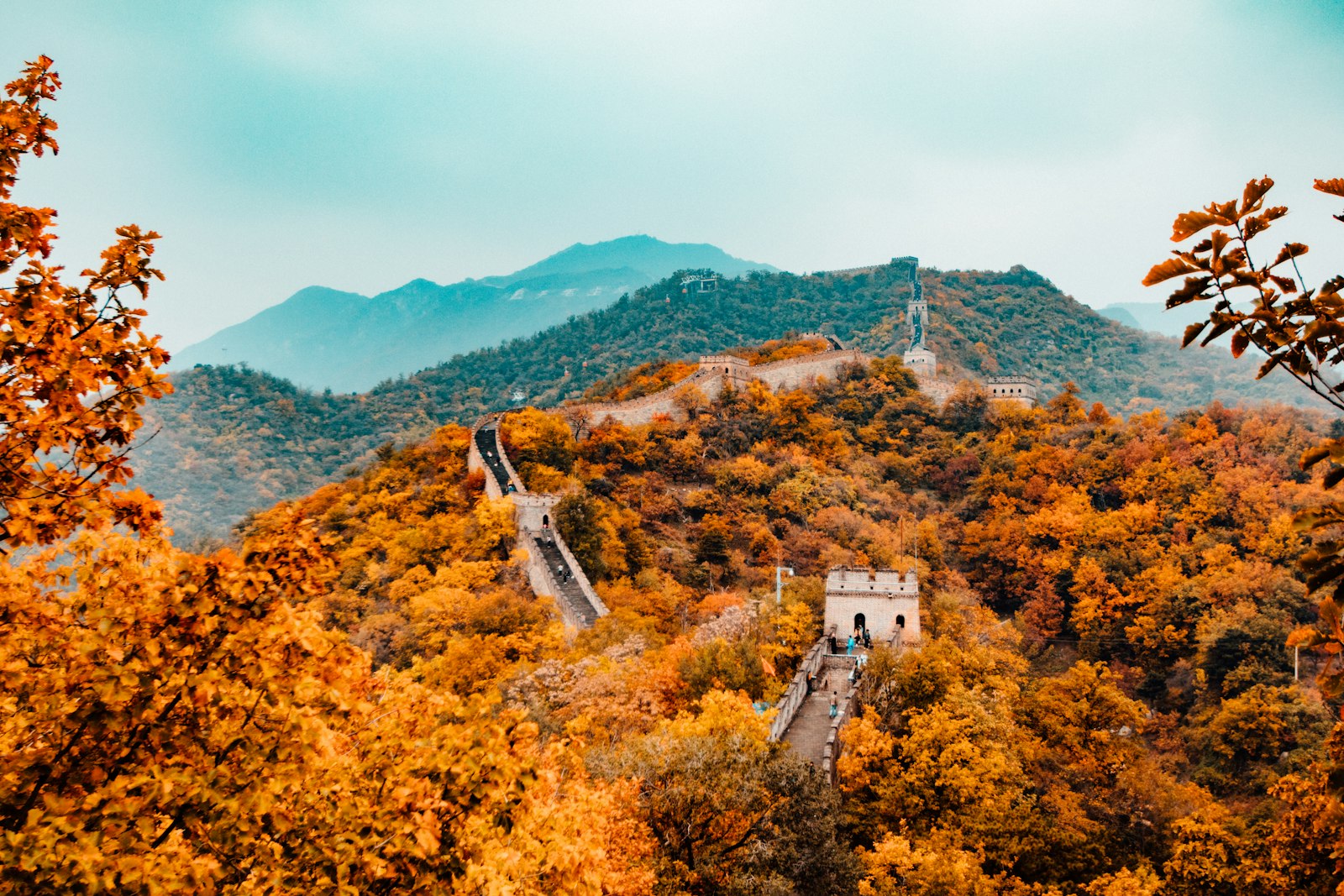
I remember the moment the bus dropped me off and I saw the wall snaking over the ridge like a spine. It was foggy, and the towers disappeared into gray nothing. A group of Chinese retirees were doing tai chi on a platform, moving so slowly they looked like they were underwater. I stood there for ten minutes before I even thought to take a photo.
Mutianyu is the right choice because it’s restored enough to be safe but not so polished that it feels fake. Badaling, the one every tour bus goes to, is basically a human escalator. Here, you can walk a kilometer without bumping into anyone. The wall here was built in the 6th century and rebuilt under the Ming dynasty, and the stone steps are uneven in a way that makes you feel the age. Take the cable car up (saves an hour of climbing), then walk west toward the watchtowers. The toboggan ride down is ridiculous and worth every yuan.
- 📍 Huairou District, about 70 km north of Beijing
- 🎫 $10 (70 CNY) entrance, cable car $15 (100 CNY) round trip
- 🕐 7:30 AM–5:30 PM (winter until 4:30 PM)
- 🚆 Take subway Line 2 to Dongzhimen, then bus 916 Express to Huairou, then transfer to H23 or H24 bus. Or book a shared van from Dongzhimen for about $30 (210 CNY) round trip.
- ⏰ October weekdays are perfect. Avoid Chinese National Holiday (Oct 1-7) at all costs.
- 💡 Bring snacks—the food at the base is overpriced and mediocre. Wear hiking shoes, not sneakers. The steps are steep and uneven. Go left from the cable car drop-off; most tourists go right. If you want solitude, walk 20 minutes past the last watchtower where the unrestored section begins.
- I ate a steamed bun filled with red bean paste from a woman who had been selling them at the same spot for 22 years. It was the best thing I ate all week.
2. Forbidden City & Temple of Heaven — The Imperial Heartbeat
The first time I walked through the Meridian Gate, I felt small in a way that had nothing to do with the crowd. The courtyard stretches out like a stone ocean. I sat on a bench near the Hall of Supreme Harmony and watched a tour guide in a red flag explain to a group of teenagers that this was where the emperor held court. One kid was playing on his phone. The guide didn’t seem to care.
The Forbidden City is overwhelming, so don’t try to see it all. Focus on the central axis (the main halls) and then peel off to the western palaces, where the empresses and concubines lived. The Temple of Heaven, a separate site a few kilometers south, is where the emperor prayed for good harvests. The Hall of Prayer for Good Harvests is the iconic round building you’ve seen in photos, but the real magic is the surrounding park at dawn, when locals practice tai chi, play cards, and sing opera.
- 📍 Forbidden City: Donghuamen, Dongcheng District, Beijing. Temple of Heaven: Tiantan Road, Dongcheng District
- 🎫 Forbidden City: $12 (85 CNY) in low season, $18 (125 CNY) in high. Temple of Heaven: $5 (35 CNY) for the park, $8 (55 CNY) for the main halls
- 🕐 Forbidden City: 8:30 AM–5 PM (last entry 4 PM). Closed Mondays. Temple of Heaven: 6 AM–9 PM (park), 8 AM–5:30 PM (halls)
- 🚆 Forbidden City: Line 1 to Tiananmen East, Exit B. Walk north 5 minutes. Temple of Heaven: Line 5 to Tiantan Dongmen, Exit A. Walk west 3 minutes.
- ⏰ Visit the Forbidden City on a Tuesday or Wednesday morning. Book tickets online at least a week in advance—they sell out. Temple of Heaven is best at 7 AM before the tour groups arrive.
- 💡 The Forbidden City has a strict one-way route—you enter from the south and exit from the north. Don’t bring a selfie stick (they confiscate them). For the Temple of Heaven, enter through the East Gate for the shortest walk to the main hall. The Echo Wall is a fun acoustic trick—stand at one end and whisper, someone at the other end can hear you clearly.
- I watched an old man write calligraphy with a brush dipped in water on the stone floor of the Temple of Heaven park. He did it every morning, he told me, because the water evaporates and leaves no trace. “Like everything,” he said.
3. Xi’an’s Muslim Quarter & City Wall — Where the Food Happens
The Muslim Quarter hits you with smell first—cumin, lamb fat, sesame, smoke, sugar. I walked into it at dusk, and the alley was packed with people eating from skewers, steam rising from giant woks, and a man pulling noodles by slapping them against a counter so hard I thought he was angry. He wasn’t. He was making biang biang noodles, and they were perfect.
This is Xi’an’s old heart, where the Silk Road traders settled a thousand years ago. The food is a mix of Chinese and Central Asian—lamb skewers (yang rou chuan), pita bread soaked in lamb soup (yang rou pao mo), and a cold noodle dish called liang pi that I still dream about. The Great Mosque, tucked inside the quarter, is a beautiful blend of Chinese architecture and Islamic design. The City Wall, which you can rent a bike and ride for 14 kilometers, gives you the best view of the old city.
- 📍 Muslim Quarter: Beiyuanmen, Lianhu District, Xi’an. City Wall: multiple gates, South Gate (Yongningmen) is the main entrance
- 🎫 Muslim Quarter: free. Great Mosque: $10 (70 CNY). City Wall: $8 (55 CNY), bike rental $5 (35 CNY) per hour
- 🕐 Muslim Quarter: shops open 10 AM–midnight. Great Mosque: 8 AM–7 PM. City Wall: 8 AM–10 PM (spring/summer)
- 🚆 Take subway Line 2 to Zhonglou (Bell Tower) station, Exit C. Walk west 5 minutes into the quarter. City Wall: Line 2 to Yongningmen, Exit D.
- ⏰ Visit the Muslim Quarter in the evening (6–9 PM) when the food stalls are most active. The City Wall is best at sunset.
- 💡 Don’t eat at the first stalls you see—walk deeper into the alleys. Look for places with long lines of locals. The lamb skewers are about $0.50 (3.5 CNY) each, and you should eat at least ten. If you’re nervous about street food hygiene, stick to stalls that cook everything in front of you. The Great Mosque is still an active place of worship—women should cover their shoulders and knees.
- I met a Uyghur man named Ahmed who sold pomegranate juice from a hand-cranked press. He’d been in Xi’an for 30 years and said the only thing that changed was the price of lamb.
4. Terracotta Warriors — Worth the Hype, Barely
I’ll be honest: when I first saw Pit 1, I felt a little disappointed. It’s a giant hangar, like an airplane hangar, with rows of soldiers standing in formation. The lighting is fluorescent. There are barriers everywhere. But then I walked to the back of the pit, where the restoration work is happening, and saw a single warrior being pieced together from hundreds of fragments. A woman with a tiny brush was cleaning a piece of armor. That’s when it hit me—these aren’t just statues. They’re 2,200-year-old soldiers, each one unique, and someone is still putting them back together.
The site is about 40 kilometers east of Xi’an. There are three pits: Pit 1 (the big one with the army), Pit 2 (archers and cavalry), and Pit 3 (the command center). Most tourists do Pit 1 and leave. Don’t. Pit 2 has the best-preserved warriors, including a kneeling archer that’s stunning up close.
- 📍 Lintong District, Xi’an
- 🎫 $25 (175 CNY) includes all three pits
- 🕐 8:30 AM–5:30 PM (last entry 4:45 PM)
- 🚆 Take subway Line 1 to Fangzhicheng, then bus 306 or 307 (about $1.50, 10 CNY). Or take a direct bus from Xi’an Railway Station (bus 5, also called 306). The ride takes about an hour.
- ⏰ Arrive at 8:30 AM when the gates open. By 10 AM, Pit 1 is shoulder-to-shoulder. Go on a weekday.
- 💡 Skip the electric cart inside the complex—it’s a 5-minute walk. Don’t buy the “jade” souvenirs from the vendors outside. The museum has a good English audio guide for $5 (35 CNY). If you’re tall, watch your head in the low-ceilinged restoration area. The toilets at the entrance are cleaner than the ones inside.
- I watched a French tourist argue with a vendor over the price of a miniature warrior. The vendor won. He always wins.
5. Shanghai’s Bund & French Concession — Old Money, New China
I stood on the Bund at 6 AM once, before the crowds, and watched the Pudong skyline emerge from the fog like a sci-fi movie. The buildings across the river—the Oriental Pearl Tower, the Shanghai Tower—looked like they were still being built, even though they’ve been finished for years. Behind me, the colonial banks and hotels were quiet, their stone facades glowing in the morning light. It was the only time I’ve seen Shanghai without its guard up.
The Bund is the iconic waterfront promenade, but the French Concession is where Shanghai lives. Tree-lined streets, art deco apartments, tiny cafes, and the kind of boutiques that sell a single T-shirt for $200. Walk down Wukang Road and Fuxing Road. Stop at a place called Grains for a flat white that’s better than anything in London. The Shanghai Museum on People’s Square is free and has one of the best collections of ancient Chinese art in the world.
- 📍 The Bund: Zhongshan East 1st Road, Huangpu District. French Concession: between Huaihai Road and Fuxing Road, Xuhui District
- 🎫 The Bund: free. Shanghai Museum: free (book online). Oriental Pearl Tower: $20 (140 CNY)
- 🕐 The Bund: 24/7. Shanghai Museum: 9 AM–5 PM, closed Mondays
- 🚆 The Bund: Line 2 to East Nanjing Road, Exit 1. Walk east 5 minutes. French Concession: Line 10 to Shanghai Library, Exit 4. Walk south 3 minutes.
- ⏰ Visit the Bund at sunrise or on a clear winter afternoon. The French Concession is best on a weekday afternoon when it’s quiet.
- 💡 The Bund is a tourist magnet at night—go early morning instead. For a great view without the crowds, go to the bar at the top of the Peace Hotel (expensive but worth one drink). In the French Concession, don’t just walk the main streets—duck into the residential lanes (longtang) between Wukang Road and Anfu Road. The Shanghai Museum has a WeChat mini-program for free tickets; book the day before.
- I sat in a tiny coffee shop on Wukang Road and watched a woman in a silk dress argue with her boyfriend about where to have lunch. She won. They went to a dumpling place around the corner.
6. Guilin & Yangshuo (Li River) — The Landscape You’ve Seen in Paintings
The Li River cruise from Guilin to Yangshuo is four hours of karst peaks rising out of flat water like giant green teeth. I sat on the top deck, and a Chinese man next to me pointed at a peak shaped like a camel. “Camel Mountain,” he said. Then he pointed at one shaped like a woman. “Woman Mountain.” He did this for the entire trip. By the end, every rock had a name, and I believed all of them.
Yangshuo is the backpacker hub at the end of the cruise, and it’s touristy—no way around it—but the countryside around it is spectacular. Rent a bicycle or an e-bike and ride through the rice paddies to Moon Hill, a natural arch in a limestone peak. The Li River itself is best seen from a bamboo raft (motorized, not the pole kind) on the Yulong River, a tributary that’s quieter and greener.
- 📍 Guilin city center to Yangshuo county (about 60 km south)
- 🎫 Li River cruise: $50-70 (350-490 CNY) depending on boat class. Yulong River raft: $20-30 (140-210 CNY). Moon Hill: $3 (20 CNY)
- 🕐 Cruises run 9 AM–2 PM. Bike rentals: most shops open 8 AM–7 PM
- 🚆 Take a high-speed train from Guilin Station to Yangshuo Station (about 30 minutes, $8 or 55 CNY). Then take a bus or taxi to Yangshuo town (20 minutes, $3 or 20 CNY). The cruise departs from Guilin’s Mopanshan Dock.
- ⏰ October and November are perfect—rice paddies are golden, skies are clear, and the water is high enough for rafting. Avoid summer (June-August) when it’s hot and rainy.
- 💡 Don’t take the “bamboo raft” tour that’s actually a motorboat with a bamboo roof—that’s the tourist trap. The real bamboo rafts are on the Yulong River, and they’re poled by hand. Rent an e-bike for $10 (70 CNY) per day—it’s the best way to explore. The “West Street” night market in Yangshuo is fun for an hour but the food is overpriced. Eat at the local restaurants on the side streets instead.
- I ate beer fish (li yu) at a restaurant called The Giggling Tree, where the owner, a woman named Lily, told me she learned to cook from her grandmother. The fish was cooked in a clay pot with beer and chilies, and I ate every bite.
7. Chengdu’s Panda Base & Old Town — Pandas, Spice, and Slowness
The Giant Panda Breeding Research Base opens at 7:30 AM, and if you’re not there by 8, you’ve missed the best part. I walked in at 7:45, and the first thing I saw was a panda sitting on a platform, eating bamboo with the lazy precision of someone who knows they’re the star of the show. A baby panda, maybe six months old, was rolling down a hill. A Chinese woman next to me started crying. “I’ve waited 40 years to see this,” she said.
Chengdu is also the capital of Sichuan food, which means chili, Sichuan peppercorn, and a kind of numbness that’s addictive. Go to Jinli Old Street for the tourist version of old Chengdu, but skip the restaurants there—walk to the side streets for real dan dan noodles and mapo tofu. The Wuhou Shrine, dedicated to the Three Kingdoms period, is worth a visit if you have any interest in Chinese history.
- 📍 Panda Base: 1375 Xiongmao Avenue, Chenghua District, Chengdu. Jinli Old Street: Wuhouci Street, Wuhou District
- 🎫 Panda Base: $8 (55 CNY). Wuhou Shrine: $8 (55 CNY). Jinli Old Street: free
- 🕐 Panda Base: 7:30 AM–6 PM (last entry 5 PM). Wuhou Shrine: 8 AM–6:30 PM
- 🚆 Panda Base: Line 3 to Panda Avenue, Exit B. Then take the free shuttle bus or walk 15 minutes. Jinli: Line 3 to Gaoshengqiao, Exit D. Walk east 5 minutes.
- ⏰ Go to the Panda Base at opening time (7:30 AM) on a weekday. The pandas are most active in the morning before they nap. Avoid weekends and Chinese holidays.
- 💡 The panda base has a “moonlight” viewing area for red pandas—don’t miss it. Bring your own water; the on-site drinks are expensive. If you want to see the newborn pandas, go to the nursery building (building 14). For Sichuan food, skip the famous chain restaurants and go to a place called Chen Mapo Tofu on West Yulong Street—it’s been open since 1862.
- I had dan dan noodles from a street cart near Jinli, and the vendor, a man in his 60s, asked me if I wanted “American spicy” or “Sichuan spicy.” I said Sichuan. He smiled and added an extra scoop of chili oil. I couldn’t feel my lips for an hour.
8. Hong Kong’s Victoria Peak & Mong Kok — The City That Never Sleeps
The Peak Tram is a tourist institution, and it’s worth the line if you go at the right time. I went at 5 PM on a Tuesday, and the queue was 15 minutes. The tram climbs at a 45-degree angle, and the buildings outside the window tilt like they’re falling over. At the top, the view of the harbor and the skyscrapers is the kind of thing that makes you understand why people move here.
But Hong Kong isn’t just the skyline. Mong Kok at night is a sensory overload—neon signs, street food, electronics markets, and a crowd that moves like a river. The Ladies’ Market on Tung Choi Street is mostly cheap souvenirs, but the Goldfish Market and Flower Market are genuine. The Star Ferry across Victoria Harbour costs about $0.50 (3.5 HKD) and is the best value in the city.
- 📍 Victoria Peak:山顶, Central and Western District. Mong Kok: Kowloon
- 🎫 Peak Tram: $8 (56 HKD) one way, $13 (91 HKD) round trip. Sky Terrace viewing platform: $8 (56 HKD) extra. Mong Kok markets: free
- 🕐 Peak Tram: 7 AM–midnight. Mong Kok markets: 11 AM–11 PM
- 🚆 Peak Tram: Take the MTR to Central Station, Exit J2. Walk 10 minutes to the Peak Tram terminus. Mong Kok: MTR to Mong Kok Station, Exit E2.
- ⏰ Victoria Peak at sunset (5:30–6:30 PM) is ideal. Mong Kok is best after 8 PM.
- 💡 For the Peak, skip the overpriced Sky Terrace and walk the Lugard Road loop instead—it’s free, takes about 30 minutes, and has the same view. In Mong Kok, don’t buy electronics from street stalls—they’re often fake. The real electronics market is in the shopping malls on Sai Yeung Choi Street. The Star Ferry from Tsim Sha Tsui to Central is the cheapest harbor cruise you’ll ever take.
- I ate egg waffles (gai daan jai) from a stall on Portland Street, and the woman making them told me she’d been doing this for 35 years. She added condensed milk without asking. She knew.
9. Zhangjiajie National Forest Park — The Avatar Mountains Are Real
The first time I saw the quartz-sandstone pillars of Zhangjiajie, I thought the photos were edited. They’re not. These are 200-meter-tall columns of rock that rise straight out of the forest floor, covered in green, with mist wrapping around them like smoke. The park was the inspiration for the floating mountains in Avatar, and the Chinese government renamed one of the peaks “Avatar Hallelujah Mountain” because, well, marketing.
The park is huge—you need two days at minimum. The Bailong Elevator (the “Hundred Dragons” elevator) is a glass elevator built into a cliff face that takes you 330 meters up in under two minutes. It’s terrifying and brilliant. The glass-bottomed bridge at Zhangjiajie Grand Canyon is 430 meters long and 300 meters high. If you’re afraid of heights, skip it. If you’re not, walk across it and look down.
- 📍 Wulingyuan District, Zhangjiajie, Hunan Province
- 🎫 $30 (210 CNY) for the main park, valid for 4 days. Bailong Elevator: $10 (70 CNY) one way. Grand Canyon glass bridge: $20 (140 CNY)
- 🕐 Park: 7 AM–6 PM (summer), 7:30 AM–5 PM (winter)
- 🚆 Take a high-speed train to Zhangjiajie West Station. Then take bus 17 to the Wulingyuan entrance (about 45 minutes, $1 or 7 CNY). Or take a taxi for $15 (105 CNY).
- ⏰ October and November are perfect—clear skies, mild temperatures, and fewer crowds. Avoid the Chinese National Day holiday (Oct 1-7) at all costs.
- 💡 Enter through the Wulingyuan gate (the eastern entrance), not the Forest Park gate (southern entrance). The Wulingyuan entrance is less crowded and closer to the elevator. Take the park buses (free with entry) between scenic areas—walking between them is exhausting. Bring rain gear; the weather changes fast. The Tianzi Mountain area has the best views and the fewest tourists.
- I stood on a viewing platform near Tianzi Mountain, and a fog rolled in so fast that the pillars disappeared one by one. For five minutes, I couldn’t see anything. Then the fog lifted, and they were all still there.
10. Lijiang Old Town & Tiger Leaping Gorge — Yunnan’s Quiet Magic
Lijiang Old Town is famous for its canals, stone bridges, and Naxi minority culture. It’s also famous for being overrun with tourists. I walked through it at 10 AM, and it was a wall of selfie sticks and tour groups. But I came back at 6 AM the next morning, and it was empty. The canals were running, the red lanterns were still on, and an old woman was sweeping her doorstep with a bamboo broom. That was the real Lijiang.
The real reason to come to this part of Yunnan is Tiger Leaping Gorge, one of the deepest gorges in the world. The two-day hike along the high trail is one of the best I’ve done anywhere. The path clings to the side of the mountain, with the Jinsha River roaring 3,000 meters below. You’ll pass through tiny villages, stay in guesthouses with views that make you forget to eat, and meet hikers from all over the world.
- 📍 Lijiang Old Town: Dayan, Gucheng District, Lijiang. Tiger Leaping Gorge: about 100 km north of Lijiang
- 🎫 Lijiang Old Town: free (but there’s a “maintenance fee” of $8 or 55 CNY that’s rarely enforced). Tiger Leaping Gorge: $10 (70 CNY) entrance
- 🕐 Lijiang: 24/7. Tiger Leaping Gorge: best hiked April-October
- 🚆 Take a high-speed train to Lijiang Station. Then take bus 4 or 18 to the old town (20 minutes, $0.50 or 3.5 CNY). For Tiger Leaping Gorge, take a bus from Lijiang Bus Station to Qiaotou (about 2 hours, $5 or 35 CNY).
- ⏰ Visit Lijiang Old Town at dawn or late evening. Hike Tiger Leaping Gorge in spring (April-May) or fall (September-October).
- 💡 In Lijiang, don’t stay inside the old town—it’s noisy and expensive. Stay in the Shuhe Old Town (a 15-minute walk north), which is quieter and cheaper. For Tiger Leaping Gorge, hire a guide only if you’re nervous; the trail is well-marked. Carry cash—there are no ATMs on the trail. The guesthouse at Halfway Point (Tea Horse Guesthouse) has the best noodles in the gorge.
- I stayed at a Naxi-run guesthouse in Shuhe, and the owner, a woman named Ah Mei, made me tea and told me about her daughter who was studying in Kunming. She showed me photos on her phone. “She will not come back,” Ah Mei said. “But someone must stay to sweep the doorstep.”
FAQ
Q: Do I need a visa to visit China in 2026? A: It depends on your passport. As of 2026, citizens of France, Germany, Italy, Netherlands, Spain, Malaysia, Singapore, and several other countries can enter visa-free for up to 15 days. Americans, Brits, and Australians still need a visa (about $140 or 980 CNY, 4-5 business days processing). Check the Chinese embassy website for your country—policies change fast.
Q: Can I use my phone in China? A: Not without preparation. Google, Facebook, Instagram, WhatsApp, and most Western news sites are blocked. You need a VPN installed before you arrive. I recommend Astrill or ExpressVPN. For a SIM card, buy one at the airport (China Unicom or China Mobile, about $20 or 140 CNY for 15 days with 10GB data). Or activate an eSIM from Airalo before you leave.
Q: How do I pay for things? A: China is almost cashless. You need Alipay or WeChat Pay. Download the apps before you leave and link your international credit card (Visa/Mastercard). It’s a pain to set up—watch a YouTube tutorial—but once it works, you can pay for everything from street food to train tickets by scanning a QR code. Carry some cash ($50-100 or 350-700 CNY) for emergencies and small vendors.
Q: Is English widely spoken? A: In big cities and tourist areas, some English. In smaller towns, almost none. Download Google Translate (with offline packs) or Pleco before you leave. Learn a few phrases: “Xie xie” (thank you), “Duo shao qian?” (how much?), and “Zhe ge” (this one). You’ll survive.
Q: How do I get around between cities? A: High-speed trains are your best friend. Book tickets on Trip.com (formerly Ctrip) or the 12306 app (requires Chinese registration). Second-class seats are comfortable and cheap—Beijing to Xi’an (4.5 hours) costs about $60 (420 CNY). Domestic flights are also cheap but factor in airport time. Avoid overnight buses unless you’re desperate.
Q: Is the food safe to eat? A: Yes, but use common sense. Street food is generally safe if it’s cooked in front of you and the stall is busy. Avoid raw vegetables and tap water. Drink bottled water (about $0.30 or 2 CNY). If you have a sensitive stomach, bring Imodium and probiotics. I’ve eaten street food hundreds of times and gotten sick exactly twice—both times from hotel buffets.
Q: What should I pack? A: Comfortable walking shoes (you’ll do 15,000-20,000 steps a day), a reusable water bottle (many hotels have filtered water stations), a power bank (outlets are scarce in public spaces), a universal adapter (China uses Type A and I plugs, 220V), and a small umbrella. Pack layers—China’s weather varies wildly. And bring a paper copy of your passport and visa.
The Honest Wrap-up
This list is for the first-timer who wants to see the iconic places without feeling like a tourist on a conveyor belt. It’s for the person who’s willing to wake up early, eat strange things, and get lost in an alley that wasn’t on the map. It’s not for the person who wants a resort vacation or a guided tour where everything is handled—China rewards the curious and punishes the passive.
My one piece of advice: talk to people. The taxi driver, the noodle vendor, the woman sweeping her doorstep. Most Chinese people are genuinely curious about foreigners and will go out of their way to help you, even if you can’t understand each other. I’ve been invited into homes, given free meals, and directed to places no guidebook knows about, all because I smiled and said “xie xie” at the right moment.
Two weeks in China is not enough. But it’s enough to change how you see the world.
Topics
More Travel Guide guides
Best Time to See Cherry Blossoms in China 2026: The Complete 2026 Guide
A comprehensive travel guide for international visitors planning a trip to China. Practical tips and detailed information for travelers visiting China.
12 min read
Best Time to Visit China: Month-by-Month Guide: The Complete 2026 Guide
China is massive and each season offers something different. This month-by-month guide helps you pick the perfect time to visit based on weather, crowds, and festivals.
12 min read
China Etiquette: Cultural Do's and Don'ts for Foreigners: The Complete 2026 G...
China has unique social customs that can confuse first-time visitors. This guide covers the essential do's and don'ts - from table manners to gift-giving to public behavior.
12 min read