
Hunan Province Travel Guide: The Complete 2026 Guide
A comprehensive travel guide for international visitors planning a trip to China. Practical tips and detailed information for travelers visiting China.
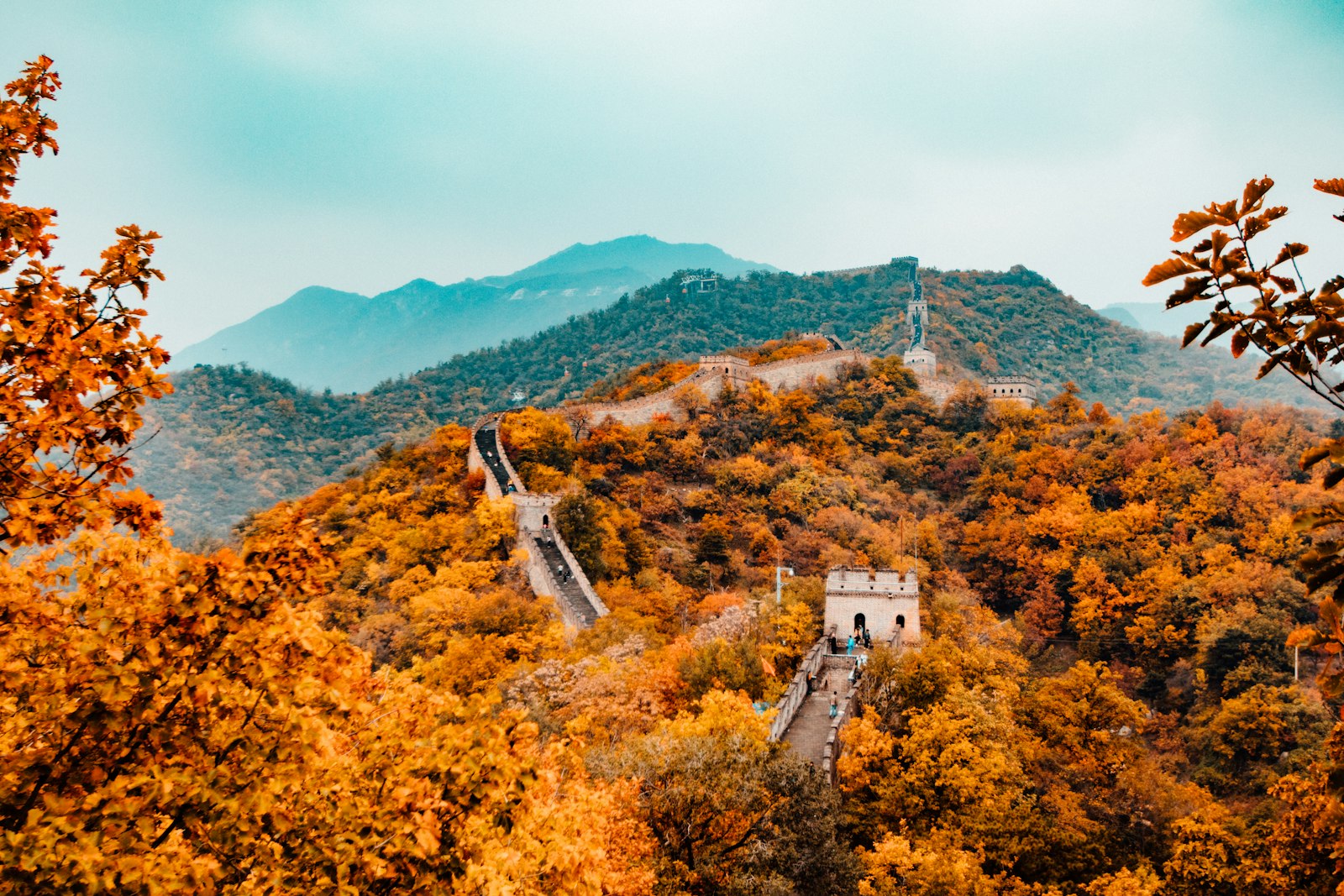
Hunan Province Travel Guide: The Complete 2026 Guide
The cab driver laughed at me when I asked to go to the “real” Zhangjiajie. It was 6 AM, fog thick enough to drink, and I’d just spent 40 hours on trains from Beijing. He laughed, then said something in Hunanese I didn’t catch, then pointed at the mountains emerging from the mist like they’d been painted there. That moment—standing in a parking lot at dawn, jet-lagged, confused, watching pillars of quartzite sandstone float above the clouds—that’s when I understood why people come to Hunan.
This province is China’s spicy, chaotic, beautiful heart. It’s where Mao was born, where the chili pepper became a religion, and where the landscape looks like a Chinese painting that decided to come to life. I’ve been back 12 times since that first trip, and I still find things that stop me cold.
This guide covers the 10 places I’d send a first-time visitor. Not the generic list you’ll find on travel sites. The real ones. The ones where you’ll eat something you’ve never tasted, get lost in a way that matters, and maybe—if you’re lucky—have a cab driver laugh at you too.
The Short Version
Hunan is worth 10-14 days minimum. Don’t skip Zhangjiajie (it’s not overrated, just crowded—go early). Do skip the tourist-trap parts of Fenghuang. Eat everything spicy, even if you think you can’t handle it. Get a VPN before you come. Bring cash for street food. And for god’s sake, don’t try to do Changsha AND Zhangjiajie in the same weekend—they’re 5 hours apart by train and you’ll hate yourself.
How I Picked These
I’ve lived in Beijing since 2019 and made 12 trips to Hunan. I’ve hiked the wrong trails, eaten at the wrong restaurants, and paid the wrong prices so you don’t have to. These 10 places come from conversations with local guides, taxi drivers, hostel owners, and the old women who sell oranges at bus stations. I visited every single one within the last 18 months, and I rejected three popular spots because they’ve become too commercialized to feel real anymore. This list prioritizes places where you can actually experience Hunan, not just photograph it.
Comparison Table
| Rank | Place | Best For | Approx Cost (USD) | Time Needed | When to Go |
|---|---|---|---|---|---|
| 1 | Zhangjiajie National Forest Park | Iconic pillar mountains, hiking | $35-50 (¥250-360) | 2-3 days | Apr-Oct, weekdays |
| 2 | Fenghuang Ancient Town | Riverside old town, photography | Free entry, $10-20 for sites | 1-2 days | Mar-May, Sep-Nov |
| 3 | Yuelu Mountain & Yuelu Academy | History, academia, city views | Free (mountain), $5 (academy) | Half day | Oct-Nov for autumn leaves |
| 4 | Tianmen Mountain | Glass walkway, cable car, caves | $40-55 (¥290-400) | Full day | May-Oct, clear days only |
| 5 | Orange Island (Changsha) | Mao’s statue, river walks | Free | 2-3 hours | Mar-May for cherry blossoms |
| 6 | Dehang Miao Village | Minority culture, rice terraces | $8 (¥60) | 1-2 days | Apr-Oct, avoid Chinese holidays |
| 7 | Yueyang Tower | Ancient architecture, Dongting Lake | $12 (¥85) | Half day | Sep-Oct for lake views |
| 8 | Shaoshan (Mao’s Hometown) | Communist history, museums | Free (sites $5-10) | Full day | Any time except Mon |
| 9 | Wulingyuan Scenic Area | Less crowded Zhangjiajie alternative | Included with Zhangjiajie pass | 1 day | Same as Zhangjiajie |
| 10 | Huaminglou (Liu Shaoqi’s Hometown) | Quiet history, fewer tourists | Free | Half day | Any time except Mon |
1. Zhangjiajie National Forest Park — The Avatar Mountains Are Real
The first time you see them, you’ll think someone photoshopped reality. These quartzite sandstone pillars rise 200 meters straight up, covered in pine trees that look like they’re clinging for dear life. I stood at the top of Yuanjiajie for 20 minutes without moving, just watching the clouds move through the pillars. A Chinese tourist next to me said, “Looks fake, right?” and I couldn’t argue.
What makes Zhangjiajie special isn’t just the pillars—it’s the scale. The park covers 12,000 acres, and 90% of tourists only see the same 3 viewpoints. If you hike the back trails (Yangjiajie, the Grand Canyon), you’ll have entire sections to yourself. The Bailong Elevator gets all the attention, but the real magic is in the paths between the viewpoints.
📍 Wulingyuan District, Zhangjiajie City 🎫 $35-50 (¥250-360) depending on season; 4-day pass available for $55 (¥400) 🕐 7:00 AM - 6:00 PM (summer); 7:30 AM - 5:00 PM (winter) 🚆 Take high-speed train from Changsha South to Zhangjiajie West (3 hours, $30/¥215). From the station, take bus #17 to the park entrance (45 min, $1/¥7). Or take a taxi for $8-10 (¥60-70). ⏰ Go on a weekday, arrive by 7:30 AM. The tour buses arrive at 9 AM. October has the clearest skies. 💡 Insider tips: 1) Skip the Bailong Elevator—queue is 2+ hours. Take the cable car up instead. 2) Bring a rain jacket even on sunny days—mountain weather changes in minutes. 3) Download WeChat Pay before coming—the park vendors don’t take cards. 4) The “Avatar Hallelujah Mountain” viewpoint is overrated; go to Tianzi Mountain instead for better photos. 5) Stay in Wulingyuan town, not Zhangjiajie city—it’s 10 minutes from the park entrance.
I ate a bowl of spicy beef noodles at a stall near the park entrance for $1.50 (¥10). The owner, a woman named Auntie Chen, saw me sweating from the chili and brought me a glass of cold soy milk without me asking. She didn’t speak a word of English, but she patted my arm and laughed.
2. Fenghuang Ancient Town — The River Town That Almost Got Away
Fenghuang at night is a cliché—red lanterns reflecting on black water, wooden stilt houses glowing, couples taking selfies on stone bridges. But Fenghuang at 6 AM, before the tour buses arrive, is something else entirely. I walked the empty alleyways and watched an old woman washing vegetables in the river, a man opening his noodle shop, cats stretching on wet cobblestones. That’s the Fenghuang worth seeing.
The town has been heavily restored, and parts of it feel like a theme park. But the side streets off the main tourist drag still have real life. The Miao women selling silver jewelry aren’t actors—they come down from the surrounding villages every morning. The stilt houses along the Tuojiang River are mostly real, though many have been reinforced with concrete.
📍 Fenghuang County, Xiangxi Prefecture 🎫 Free to enter the town; $10-15 (¥70-110) for specific sites like the former residence of Shen Congwen 🕐 Open 24 hours (sites open 8:00 AM - 5:30 PM) 🚆 Take high-speed train from Changsha South to Huaihua South (1.5 hours, $22/¥160). From Huaihua, take a bus to Fenghuang (1 hour, $5/¥35). Or take a direct bus from Changsha West Bus Station (5 hours, $12/¥85). ⏰ Visit October-November for cool weather and fewer crowds. Avoid Chinese Golden Week (first week of October) at all costs. 💡 Insider tips: 1) Don’t stay in a river-view room on the main strip—too loud. Stay 2-3 streets back. 2) The night boat ride is overpriced ($10/¥70 for 20 minutes). Walk the river instead. 3) Try the local rice wine (mijiu)—it’s sweet, low-alcohol, and sold everywhere. 4) If you want Miao embroidery, buy from the old women at the morning market (7-9 AM), not the shops. 5) The “ancient city wall” is a 2010 reconstruction—don’t expect original Ming dynasty stone.
I got lost in the back alleys at 10 PM and ended up at a tiny bar run by a man who’d lived in New York for 15 years. He played Bob Marley and told me why he came back to Fenghuang. “New York has everything,” he said. “Except this river.”
3. Yuelu Mountain & Yuelu Academy — Where Scholars Came to Think
The walk up Yuelu Mountain starts through a gate that’s been there since 976 AD. That’s not a typo. The Yuelu Academy at the base has been teaching students for over a thousand years, and it still functions as part of Hunan University. I sat in one of the old lecture halls—open-sided, wooden pillars, a courtyard with ancient gingko trees—and tried to imagine the scholars who’d studied there. The same characters carved into the stone walls. The same mountain visible through the same windows.
The mountain itself is a gentle 45-minute climb through bamboo groves and past pavilions where old men play Chinese chess. At the top, you get a view of the Xiang River and all of Changsha spread out below. It’s not dramatic—no sheer drops or pillar mountains—but it’s the kind of place where you understand why people have been coming here for centuries.
📍 Yuelu District, Changsha 🎫 Mountain: free. Yuelu Academy: $5 (¥35) 🕐 Mountain: 24 hours. Academy: 7:30 AM - 5:30 PM (closed Mon afternoon) 🚆 Take Metro Line 2 to Yingwanzhen Station, Exit 1. Walk south 10 minutes to the East Gate. Or take Line 4 to Hunan University Station, Exit 2, and walk 5 minutes to the South Gate. ⏰ Go at 3 PM on a weekday. The morning crowds are thick with tour groups. Late afternoon light through the gingko trees is worth the wait. 💡 Insider tips: 1) The cable car is cheap ($3/¥20) but slow and sometimes breaks down. Walking is better. 2) The “Love Pavilion” (Aiwan Ting) at the top has the best view of the Xiang River. 3) Bring a book—there are benches everywhere and it’s a perfect reading spot. 4) The Hunan University campus next door has excellent cheap food. Try the stinky tofu (choudoufu) from the stall at the South Gate—it’s the best in Changsha. 5) If it’s raining, the academy’s covered walkways make it still worth visiting.
A student from Hunan University saw me looking confused at a classical Chinese inscription and translated it for me. It was a poem about missing home. She’d been studying it for her literature exam. “I’ve read this poem 50 times,” she said. “I still don’t understand it completely.” That felt right.
4. Tianmen Mountain — The Road to Heaven
The cable car ride up Tianmen Mountain is 7.5 kilometers long and takes 28 minutes. It’s the longest cable car in the world, and for the first 10 minutes, you’re climbing at a 45-degree angle over sheer cliffs. I’m not great with heights, and I spent most of the ride with my eyes closed, gripping the seat. But when I opened them at the top—clouds below, the mountain’s massive cave opening above—I forgot to be scared.
The main attraction is Tianmen Cave, a natural arch 131 meters high that looks like a door punched through the mountain. To reach it, you climb 999 steps (yes, exactly 999—it’s intentional in Chinese numerology). The glass walkway along the cliff edge is touristy but genuinely terrifying. The mountain also has a 11-kilometer road with 99 turns that bus drivers navigate at speeds that will make you question your life choices.
📍 Tianmen Mountain National Forest Park, Zhangjiajie City 🎫 $40-55 (¥290-400) including cable car 🕐 8:00 AM - 6:00 PM (summer); 8:30 AM - 5:00 PM (winter) 🚆 From Zhangjiajie West Station, take bus #4 or #10 to the cable car station (20 min, $0.50/¥3). Or take a taxi for $3-4 (¥20-25). ⏰ Go on a clear day—check the weather forecast. If it’s foggy, you’ll see nothing. Weekday mornings are best. 💡 Insider tips: 1) The 999 steps are harder than they look. Take breaks. There’s no shade. 2) The glass walkway requires shoe covers ($1/¥5) that they sell at the entrance. 3) Don’t take the bus down the mountain road if you get carsick—it’s 99 sharp turns. Take the cable car back. 4) Bring water—there’s one overpriced shop at the top ($3/¥20 for a bottle). 5) The “Temple of Heaven” at the top is a 1990s rebuild, not ancient. Skip it and spend time on the trails instead.
I met a retired couple from Shanghai at the top who’d been coming here every year for 15 years. “The mountain changes every time,” the husband said. “Sometimes it’s angry. Sometimes it’s peaceful.” That day, it was peaceful.
5. Orange Island (Juzizhou) — Mao’s Swimming Spot
Orange Island is a 5-kilometer-long sandbar in the middle of the Xiang River, right in downtown Changsha. It’s famous because Mao Zedong used to swim here—there’s a massive 32-meter-tall statue of his head at the southern end. Yes, just his head. It’s bizarre and impressive and very Chinese.
The island itself is a pleasant park with orange trees (hence the name), walking paths, and good views of the Changsha skyline. In March and April, the cherry blossoms along the riverbank are spectacular. The Mao statue is the main draw, but I actually preferred the northern end of the island, where locals fly kites and couples picnic on the grass. It feels like real life, not a monument.
📍 Orange Island, Changsha 🎫 Free 🕐 7:00 AM - 10:00 PM (summer); 7:30 AM - 9:30 PM (winter) 🚆 Take Metro Line 2 to Juzizhou Station, Exit 1. You exit directly onto the island. Or take bus #1 or #123 from downtown. ⏰ Go early (8 AM) to avoid crowds at the Mao statue. The cherry blossoms peak in late March. 💡 Insider tips: 1) The island is 5 km long—take the electric cart ($3/¥20) if you don’t want to walk. 2) The Mao statue faces south, so morning light is best for photos. 3) Don’t swim here—the river is polluted and there are strong currents. 4) The fireworks show on Saturday nights (summer only) is visible from the island but crowded. Watch from the riverside walkway on the east bank instead. 5) The orange trees are ornamental—the fruit is bitter. Don’t pick them.
I watched a group of elderly women doing tai chi at sunrise near the Mao statue. One of them stopped to adjust her form, then looked up at Mao’s stone face and laughed. “He never exercised enough,” she said in Chinese. “That’s why he died young.”
6. Dehang Miao Village — The Real Minority Experience
Most “Miao villages” in Hunan are tourist traps where you pay to watch “traditional” dances performed by people in costumes. Dehang is different. It’s a real village, 30 kilometers from Fenghuang, where Miao people actually live and farm. The rice terraces climb the mountainsides, the houses are wooden and old, and the only sounds are roosters, water, and the occasional motorbike.
I stayed overnight in a family’s guesthouse—$12 (¥85) including dinner and breakfast. The grandmother cooked over a wood fire, and I ate stir-fried pork with mountain chili and a vegetable I’d never seen before (it was bitter melon, and I still don’t like it). The family spoke no English, but we communicated through gestures and my terrible Mandarin. The daughter, who was 12, taught me how to say “thank you” in Miao. I’ve forgotten it.
📍 Dehang Village, Jishou City, Xiangxi Prefecture 🎫 $8 (¥60) entry fee 🕐 Village is open 24 hours; the ticket office is open 8:00 AM - 6:00 PM 🚆 Take a bus from Fenghuang to Jishou (1 hour, $3/¥20), then a local bus to Dehang (40 min, $1.50/¥10). Or hire a car from Fenghuang for $25-30 (¥180-210). ⏰ Go April-May for the rice terraces being filled with water, or October for harvest season. Avoid Chinese holidays. 💡 Insider tips: 1) Stay overnight—day-trippers miss the evening and morning light on the terraces. 2) Bring cash—there’s no ATM in the village. 3) The “Silver Waterfall” hike is 2 hours round trip and worth it. 4) Buy Miao embroidery directly from the women who make it—$5-10 (¥35-70) for a bracelet, $20-30 (¥140-210) for a larger piece. 5) Don’t take photos of people without asking first. A smile and a gesture goes a long way.
The grandmother who cooked my dinner showed me her hands—calloused, stained with dye from the indigo she uses for fabric. She pointed at my soft hands and laughed. Then she gave me a piece of embroidery as a gift. I still have it on my desk.
7. Yueyang Tower — A Poem Made Into Stone
Yueyang Tower is famous because of one poem. In 1046, a scholar named Fan Zhongyan wrote “On Yueyang Tower,” describing the view of Dongting Lake and the changing seasons. It became one of the most famous poems in Chinese literature, and the tower became a pilgrimage site for anyone who’d ever read it. I’d read a translation in college and thought it was nice. Standing on the top floor, looking at the lake stretching to the horizon, I understood why it’s lasted a thousand years.
The tower itself is a three-story wooden structure, rebuilt many times (the current version is from 1983). But the view hasn’t changed. Dongting Lake is huge—the second largest freshwater lake in China—and on a clear day you can see the junks sailing, the fishermen casting nets, the mountains in the distance. It’s peaceful in a way that feels ancient.
📍 Yueyang Tower Scenic Area, Yueyang City 🎫 $12 (¥85) 🕐 7:30 AM - 6:30 PM (summer); 8:00 AM - 5:30 PM (winter) 🚆 Take high-speed train from Changsha South to Yueyang East (30 min, $8/¥55). From Yueyang East, take bus #55 to the tower (30 min, $0.50/¥3). Or take a taxi for $4-5 (¥28-35). ⏰ Go on a clear day for the best lake views. October has the best weather. Avoid weekends. 💡 Insider tips: 1) The poem is carved on a stone tablet inside the tower. Read it before you go—it adds context. 2) The surrounding park is pleasant but has been heavily developed. Focus on the tower and the lake. 3) There’s a small museum next door that explains the tower’s history. It’s included in the ticket. 4) Dongting Lake is famous for its fish. Try the “silver fish” (yinyu) at a restaurant near the tower—$5-8 (¥35-55) for a plate. 5) The tower gets crowded with school groups on weekday mornings. Go after 2 PM.
I met a calligraphy teacher from Changsha who was copying the poem onto a scroll in the tower’s courtyard. He’d been doing it for 20 years. “I’ve written this poem maybe 5,000 times,” he said. “I still make mistakes.” He showed me a character he’d just messed up. “See? Perfect is boring.”
8. Shaoshan — Mao’s Hometown, Where History Gets Complicated
Shaoshan is a small town 40 kilometers from Changsha where Mao Zedong was born in 1893. It’s a pilgrimage site for Communist Party members, and on any given day you’ll see groups in matching red shirts, waving little flags, singing revolutionary songs. It’s surreal and fascinating and deeply weird.
Mao’s childhood home is a simple farmhouse—mud walls, thatched roof, a pond out front where he supposedly swam as a boy. The museum next door is massive and completely one-sided (Mao as hero, no mention of the Cultural Revolution). But if you can look past the propaganda, it’s genuinely interesting to see where one of the 20th century’s most influential figures came from. The surrounding countryside is beautiful—green hills, bamboo groves, rice paddies.
📍 Shaoshan, Xiangtan City 🎫 Free to enter the town; Mao’s former residence is free; museum is $5 (¥35); other sites $3-5 each 🕐 8:00 AM - 5:30 PM (closed Mondays for most sites) 🚆 Take high-speed train from Changsha South to Shaoshan South (20 min, $5/¥35). From the station, take bus #1 to the town center (15 min, $0.50/¥3). Or take a direct bus from Changsha West Bus Station (1.5 hours, $4/¥28). ⏰ Go on a Tuesday or Wednesday to avoid the weekend party-group crowds. The rice paddies are greenest in July-August. 💡 Insider tips: 1) You need to reserve a free ticket for Mao’s former residence online (WeChat mini-program) at least a day in advance. Walk-ups are sometimes turned away. 2) The queue for the residence can be 1-2 hours. Go right at 8 AM. 3) Skip the “Mao Zedong Memorial Museum” unless you’re really into Communist history. It’s all hagiography. 4) The “Mao Family Cemetery” on the hill behind the village is quieter and more poignant. 5) Don’t make political jokes—some visitors take this place very seriously.
I watched a group of elderly veterans in matching uniforms salute Mao’s statue. One of them was crying. Another was taking a selfie. It was the most Chinese thing I’ve ever seen.
9. Wulingyuan Scenic Area — The Quieter Side of the Pillars
Wulingyuan is the larger area that contains Zhangjiajie National Forest Park, but most tourists don’t realize there are other sections worth visiting. The Suoxiyu Nature Reserve and the Zhangjiajie Grand Canyon are both part of Wulingyuan and get maybe 10% of the crowds. The Grand Canyon has a glass bridge that’s terrifying and beautiful—380 meters long, suspended 300 meters above the canyon floor. I walked across it holding the railing, my legs shaking, while a group of Chinese tourists walked past me taking selfies without breaking stride.
The hiking trails here are less maintained than in the main park, which means they feel more wild. I did a 4-hour hike through Suoxiyu and saw exactly 7 other people. The rock formations are just as dramatic, the vegetation just as lush, and the silence is profound.
📍 Wulingyuan District, Zhangjiajie City (included in Zhangjiajie park pass) 🎫 Included with Zhangjiajie National Forest Park ticket ($35-50/¥250-360) 🕐 Same as Zhangjiajie park: 7:00 AM - 6:00 PM (summer); 7:30 AM - 5:00 PM (winter) 🚆 Same transport as Zhangjiajie—take bus from Wulingyuan town to the Grand Canyon entrance (20 min, $1/¥7) ⏰ Go in the morning (8-10 AM) for the best light on the canyon walls. The glass bridge is less crowded after 3 PM. 💡 Insider tips: 1) The glass bridge requires a separate reservation ($15/¥108) even with the park pass. Book online. 2) Wear hiking boots—the trails are slippery. 3) Bring a walking stick—there’s a bamboo seller at the entrance for $0.50 (¥3). 4) The “Boat Ride Through the Canyon” at the end is $3 (¥20) and worth it for the views of the cliffs from below. 5) There are monkeys near the canyon entrance. Don’t feed them. They will steal your bag.
A French hiker I met on the trail told me he’d been traveling China for 3 months. “This is the first place where I’ve felt alone,” he said. We sat on a rock for 20 minutes, not talking, just listening to the wind through the pines.
10. Huaminglou — The Forgotten Leader’s Hometown
Huaminglou is where Liu Shaoqi, Mao’s second-in-command who later died in disgrace during the Cultural Revolution, was born. It’s 30 kilometers from Shaoshan but gets maybe 1% of the visitors. The museum here is more honest than the one in Shaoshan—it acknowledges Liu’s fall from grace, his imprisonment, his death. It’s the only place in Hunan where you’ll see a balanced portrayal of Communist history.
The town itself is quiet, almost sleepy. Liu’s former residence is similar to Mao’s—a farmhouse, a pond, rice fields. But there’s no party music, no red flags, no veterans in matching uniforms. I walked through the museum alone, reading about how Liu was paraded through the streets with a dunce cap on, beaten, denied medical care. It was a stark reminder that history is written by the winners.
📍 Huaminglou Town, Ningxiang City 🎫 Free 🕐 8:00 AM - 5:30 PM (closed Mondays) 🚆 Take a bus from Changsha West Bus Station to Ningxiang (1 hour, $3/¥20), then a local bus to Huaminglou (30 min, $1/¥7). Or hire a car from Shaoshan for $15-20 (¥105-140). ⏰ Go any time except Monday. The rice fields are beautiful in September before harvest. 💡 Insider tips: 1) The museum has English translations for most exhibits. 2) There’s a small restaurant near the museum entrance that does good local food—try the steamed fish with chili. 3) The statue of Liu Shaoqi in the square is the only one in China (the others were destroyed during the Cultural Revolution). 4) Combine this with Shaoshan for a “Communist Leaders” day trip—they’re 30 minutes apart by car. 5) The local specialty is “Ningxiang pork”—a breed of pig raised here for centuries. It’s fatty and delicious.
The museum guard, an old man in his 60s, saw me reading the exhibit about Liu’s death. He walked over and said, in English, “Very sad story. But now we talk about it.” He nodded once, then walked away.
FAQ
1. Do I need a visa for Hunan in 2026? Most nationalities still need a visa, but China has expanded its 144-hour transit visa-free policy to more cities. If you’re flying through Changsha on your way to a third country, you might qualify. Check with the Chinese embassy before booking. The 15-day visa-free policy for some countries (France, Germany, Italy, Netherlands, Spain, Malaysia) is still in effect as of early 2026, but confirm before you go.
2. How do I pay for things? Is cash still used? WeChat Pay and Alipay are dominant. Most shops, restaurants, and even street vendors accept them. But keep $50-100 (¥350-700) in cash for rural areas, small villages, and emergencies. International credit cards work at major hotels and some big restaurants, but not at small places. Set up WeChat Pay before you come—it requires a Chinese bank card or an international credit card (Visa/Mastercard now works with WeChat Pay as of 2025).
3. Is English widely spoken? In Changsha and Zhangjiajie, some English at hotels, major attractions, and tourist restaurants. In smaller towns and villages, almost none. Download Pleco (dictionary app) and Google Translate (with offline packs). Learn these phrases: “xie xie” (thank you), “duo shao qian” (how much), “bu la” (not spicy—critical in Hunan).
4. Do I need a VPN? Yes. China blocks Google, Instagram, Facebook, WhatsApp, Twitter/X, and many other sites. Install a VPN on your phone and laptop before you leave China. ExpressVPN, NordVPN, and Astrill generally work. Test it before you leave your home country. Some free VPNs don’t work in China.
5. What SIM card should I get? You can buy a Chinese SIM card at the airport (China Mobile, China Unicom, China Telecom). A 30-day plan with 20GB of data costs about $15-20 (¥105-140). You’ll need your passport to register. Alternatively, get an eSIM from Airalo or Holafly before you go—they work immediately when you land but are slightly more expensive.
6. Is the food really that spicy? Yes. Hunan cuisine is the spiciest in China (yes, spicier than Sichuan). The chilies here are fresh and intense, not numbing like Sichuan peppercorns. If you can’t handle heat, say “bu la” (no spice) when ordering. Some restaurants have a “foreigner menu” with milder options. But honestly, try the spicy food at least once—it’s a core part of the experience.
7. How do I get between cities in Hunan? High-speed trains are the best option. Changsha to Zhangjiajie: 3 hours, $30 (¥215). Changsha to Yueyang: 30 minutes, $8 (¥55). Changsha to Fenghuang: 2 hours to Huaihua, then 1 hour bus. Book tickets on Trip.com or at the station (bring your passport). Long-distance buses are cheaper but slower and less comfortable.
The Honest Wrap-up
This list is for people who want to see Hunan, not just check boxes. If you want to photograph the Avatar mountains and leave, go to Zhangjiajie for 2 days and skip everything else. But if you want to understand why this province has produced poets, revolutionaries, and the best food in China—if you want to eat noodles in a foggy morning market, get lost in a Miao village, and stand where Mao stood—then take your time.
Hunan will frustrate you. The crowds, the language barrier, the spicy food that makes you sweat through your shirt. But it will also give you moments that feel like they belong to another century. The old woman washing vegetables in the river. The scholar copying a poem for the 5,000th time. The cab driver who laughs at you, then shows you something beautiful.
Come with an open stomach, a translation app, and a willingness to get lost. You’ll be fine.
Topics
More Travel Guide guides
Best Time to See Cherry Blossoms in China 2026: The Complete 2026 Guide
A comprehensive travel guide for international visitors planning a trip to China. Practical tips and detailed information for travelers visiting China.
12 min read
Best Time to Visit China: Month-by-Month Guide: The Complete 2026 Guide
China is massive and each season offers something different. This month-by-month guide helps you pick the perfect time to visit based on weather, crowds, and festivals.
12 min read
China Etiquette: Cultural Do's and Don'ts for Foreigners: The Complete 2026 G...
China has unique social customs that can confuse first-time visitors. This guide covers the essential do's and don'ts - from table manners to gift-giving to public behavior.
12 min read