
Kunming Complete Travel Guide 2026
Kunming 2026 guide: the Spring City's Stone Forest, Western Hills, and why it's the perfect base for Yunnan exploration. Cheap flights, weather, and day trips.
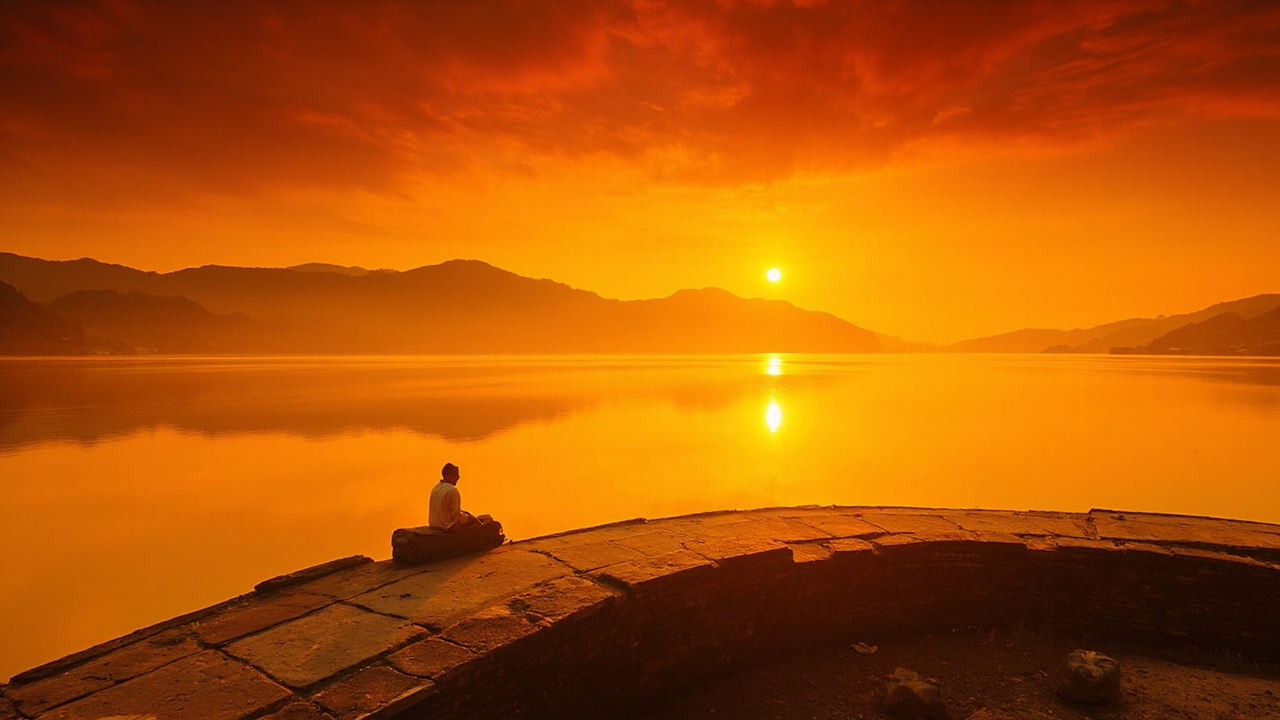
The cab driver didn’t speak a word of English, but he didn’t need to. He pointed at the thermometer on his dashboard—it read 22°C (72°F)—then made a shooing motion at the rain streaking his windshield, and shrugged. “Kunming,” he said, as if that explained everything. And it did.
I’d landed in Beijing that morning, where the air had the texture of wet concrete and the temperature had already hit 35°C. Now, three hours later, I was watching a spring drizzle fall over a city that smelled like jasmine and wet stone. The mountains around us were half-hidden in low cloud, and the streets were lined with palm trees and purple flowers I couldn’t name. I had that disoriented feeling you get when a plane drops you somewhere that doesn’t match the country you thought you knew.
Kunming is the capital of Yunnan province, and it gets called the “Spring City” because its weather is genuinely, not-hyperbolically, spring-like almost year-round. But that’s the least interesting thing about it. This is a city where you can eat street food from a Dai minority stall at 9 a.m., watch old men walk eagles on leashes in a park at noon, and drink Yunnan’s best coffee in a converted factory at sunset. It’s the gateway to the rest of Yunnan—Dali, Lijiang, Shangri-La—but most tourists skip it. That’s their mistake.
This guide covers the ten things you should actually do in Kunming, how to do them without getting ripped off, and the specific, practical details that’ll make your trip smoother than mine was.
Quick answer
The cab driver didn’t speak a word of English, but he didn’t need to. He pointed at the thermometer on his dashboard—it read 22°C (72°F)—then made a shooing motion at the rain streaking his windshield, and shrugged.
The Short Version
Go to Kunming for the weather, the food, and the access to Yunnan’s other highlights. Skip the overhyped Stone Forest unless you have a specific interest in geology or crowds. Spend three full days here, eat at the Green Lake night market twice, and take the cable car up Western Mountain for the best view of Dianchi Lake. Don’t try to see everything—Kunming rewards slow exploration.
How I Picked These
I’ve been to Kunming seven times over the last six years, for trips ranging from two days to three weeks. I’ve made every mistake you can make: paid ¥300 for a “private tour” of the Stone Forest that was actually a bus with 40 other people, ate at a restaurant that had a menu but no food (true story), and showed up to the Yunnan Provincial Museum on a Monday when it was closed. These ten entries are the ones I’d send to a friend who’s coming for the first time. They’re not the most “Instagrammable”—some are, some aren’t. They’re the ones that made me feel like I understood the city a little better each time.
Comparison Table
| Rank | Place | Best For | Approx Cost (USD) | Time Needed | When to Go |
|------|-------|----------|-------------------|-------------|------------|
| 1 | Green Lake Park (Cuihu) | People-watching, street food, morning walk | Free | 1.5–2 hours | Early morning or sunset, any season |
| 2 | Yunnan Provincial Museum | Understanding Yunnan’s ethnic diversity | $5 (¥35) | 2–3 hours | Weekdays to avoid school groups |
| 3 | Western Mountain & Dragon Gate | Views, hiking, temple visits | $10 (¥70) incl. cable car | 3–4 hours | Clear morning, avoid weekends |
| 4 | Dongchuan Red Land | Photography, rural landscapes | Free (transport extra) | Full day + overnight | October–November for red soil |
| 5 | Jinma Biji Archway | Night market, street food, city center | Free | 1 hour | Evening, 6–9 p.m. |
| 6 | Yunnan University Campus | Quiet walk, old buildings, student vibe | Free | 1–1.5 hours | Late afternoon on a weekday |
| 7 | Daguan Park | Classical Chinese gardens, Dianchi views | $3 (¥20) | 1.5–2 hours | Sunset |
| 8 | Kunming Botanical Garden | Plant lovers, quiet escape | $2 (¥15) | 1–2 hours | Spring for rhododendrons |
| 9 | Yuantong Temple | Buddhist temple, urban escape | $1.50 (¥10) | 45 min–1 hour | Morning, before 10 a.m. |
| 10 | Dianchi Lake & Haigeng Dam | Lakeside walk, birdwatching | Free | 1–2 hours | Late afternoon, avoid midday sun |
1. Green Lake Park (Cuihu) — Where Kunming Comes to Life
I sat on a bench near the south gate for twenty minutes and counted: three groups of women doing synchronized dancing to different songs (none of which matched), two men playing badminton without a net, one elderly man walking a mynah bird on a tiny leash, and a calligrapher writing poetry on the concrete with a water brush. This is the heart of Kunming.
Green Lake isn’t a grand attraction. It’s a city park, and that’s exactly why it matters. The lake itself is pleasant enough—lotus flowers in summer, willow trees along the edges—but the real show is the people. Old men gather at the northwest corner to play cards. Street vendors sell grilled豆腐 (tofu), roasted chestnuts, and sugarcane juice. On weekends, there’s a spontaneous market near the east gate where you can buy everything from antique teapots to hand-carved bamboo flutes.
📍 Wuhua District, between Cuihu Road and Wenlin Street
🎫 Free
🕐 Open 24 hours (but best visited 7 a.m.–10 a.m. or 4 p.m.–7 p.m.)
🚆 Take Metro Line 3 to Wuyi Road Station, Exit B. Walk north 8 minutes on Cuihu Road. Or take any bus to Cuihu Park stop.
⏰ Visit on a weekday morning if you want fewer crowds and more locals. Weekends are chaotic but fun.
💡 Insider tips: The food stalls near the south gate are better and cheaper than the ones inside the park. Try the grilled mushrooms (烤菌子)—they’re a Yunnan specialty. Bring small bills (¥5 and ¥10). Don’t feed the squirrels, despite what other tourists do—the park staff will scold you.
I once watched a woman haggle for ten minutes over a ¥15 (about $2) bag of roasted chestnuts. She won. The vendor didn’t seem to mind.
2. Yunnan Provincial Museum — The One Museum You Shouldn’t Skip
I’ll be honest: I’ve walked through a lot of Chinese provincial museums, and most blur together. Lots of bronze vessels, lots of calligraphy, lots of text I can’t read. But Yunnan’s museum is different. It’s new—opened in 2015 in a purpose-built building that looks like a giant red stone—and it tells a story that most of China’s museums don’t: the story of the people who aren’t Han Chinese.
Yunnan province has 25 officially recognized ethnic minority groups, and this museum does them justice. The exhibits on the Dai, Yi, Bai, and Naxi cultures are detailed and respectful. There’s a section on the ancient Dian Kingdom that includes bronze drums and cowrie shell containers that are genuinely beautiful. The museum’s English signage is better than most—not perfect, but enough to follow along.
📍 Guandu District, 118 Guangfu Road
🎫 $5 (¥35) for adults. Free for children under 6 and seniors over 60.
🕐 9 a.m.–5 p.m., closed Mondays (including public holidays that fall on Monday)
🚆 Take Metro Line 1 to Xingyao Road Station, Exit B. Walk 10 minutes east on Guangfu Road. It’s the big red building—you can’t miss it.
⏰ Go on a Tuesday or Wednesday morning. School groups arrive after 10 a.m. and it gets loud.
💡 Insider tips: Download the museum’s free audio guide app (QR code at the entrance). It’s in English and actually works. The café on the second floor has decent coffee and a view of the courtyard. Plan for 2–3 hours—the exhibits are spread across three floors.
I spent an hour in the minority clothing section alone. The embroidery work on some of the Yi festival garments is so fine I almost missed my bus back.
3. Western Mountain & Dragon Gate — The Hike That Earns Its Views
The cable car ride up Western Mountain takes about 15 minutes, and for the first five, you’ll be looking down at Dianchi Lake through a haze of morning mist. Then the cable car clears the tree line, and suddenly you’re looking at the lake stretching out to the horizon, with Kunming’s skyline on the far shore. I’ve done this four times, and it’s still the best view in the city.
At the top, you can walk the “Dragon Gate” (龙门)—a series of temples, pavilions, and narrow stone staircases carved into the cliff face. The stairs are steep and the railings are low, so if you’re nervous about heights, take it slow. The reward is a series of viewpoints where you can see the entire lake and, on a clear day, the mountains of western Yunnan.
📍 Xishan District, at the western edge of Dianchi Lake
🎫 $10 (¥70) includes the cable car one-way and park entry. Add $3 (¥20) for a round-trip cable car.
🕐 Park opens 8 a.m.–5 p.m. Cable car runs 8:30 a.m.–4:30 p.m.
🚆 Take Metro Line 3 to Western Hills (Xishan) Station, Exit A. Then take bus #6 or a taxi (¥20–30) to the cable car base station. Or take a direct taxi from central Kunming (¥60–80, 40 minutes).
⏰ Go on a clear weekday morning. Weekends are packed with Chinese tourists, and the narrow stairs get bottlenecked.
💡 Insider tips: Buy your cable car ticket online via WeChat (scan the QR code at the base station) to skip the queue. Bring water—there are vendors at the top but they charge ¥10 for a bottle. Wear shoes with grip; the stone steps are polished smooth by millions of feet and can be slippery. If you’re fit, you can hike up instead of taking the cable car—it takes about 1.5 hours and is a good workout.
I met a retired geology professor from Chengdu at the top who explained that the “Dragon Gate” was carved by a single Taoist monk over 14 years. He showed me photos of the monk’s grave nearby. I didn’t ask if he was making it up.
4. Dongchuan Red Land — Worth the Journey, But Only If You Have Time
Let me be direct: Dongchuan is not a day trip. It’s a 3–4 hour drive from Kunming each way, the roads are winding, and the “red land” is actually only intensely red for about six weeks in late autumn. But if you’re a photographer, or if you just want to see something that looks like another planet, it’s worth the hassle.
The soil here is rich in iron oxide, giving it a deep rust-red color. Local farmers plant green wheat and yellow油菜花 (rapeseed) in stripes, creating a patchwork of colors that changes with the season. The best time to go is October to November, when the soil is freshly plowed and the contrast is sharpest. In summer, the fields are green and the red is muted.
📍 Dongchuan District, about 150 km northeast of Kunming
🎫 Free. The red land is just farmland—no entry fee.
🕐 Best light is sunrise and sunset. You’ll need to stay overnight.
🚆 Take a bus from Kunming North Bus Station to Dongchuan town (¥50, 3 hours). Then hire a local driver (¥200–300 for a half-day tour) to take you to the viewpoints. I recommend Mr. Zhang (his number is on a sign at the Dongchuan bus station)—he’s reliable and speaks some English.
⏰ October–November for red soil. March–April for yellow油菜花. Avoid July–August unless you like rain.
💡 Insider tips: Stay at a farmstay near the red land, not in Dongchuan town. The village of Huakai Shidai (Flower Age Village) has several guesthouses with English-speaking hosts. Bring warm clothes—it gets cold at night even in summer. The “viewpoints” are mostly just spots along the road where local farmers have set up a sign. Trust your driver’s judgment.
I stayed at a farmstay run by a woman named Auntie Li, who served me a dinner of stir-fried local ham, pickled vegetables, and rice cooked in a bamboo tube. She didn’t speak a word of English, but she made sure I ate until I couldn’t move.
5. Jinma Biji Archway — The Night Market That Actually Has Soul
Every Chinese city has a “tourist night market,” and most of them are sad—same fluorescent lights, same mass-produced souvenirs, same fried scorpions on a stick. Jinma Biji is different. It’s an actual market where locals shop, eat, and hang out. The two archways—Jinma (Golden Horse) and Biji (Green Rooster)—are historic, but the real action is in the streets around them.
At 7 p.m., the food stalls come out. You’ll find grilled fish wrapped in banana leaves, spicy cross-bridge rice noodles (过桥米线), and something called “steam pot chicken” (汽锅鸡) that’s cooked in a ceramic pot with no added water—just steam from the pot itself. The dessert stalls sell rose-flavored yogurt and iced fruit jelly.
📍 Wuhua District, at the intersection of Dongfeng Road and Zhengyi Road
🎫 Free to walk around. Food costs ¥10–30 per item.
🕐 Stalls start setting up around 5 p.m., peak activity 7–9 p.m.
🚆 Take Metro Line 3 to Wuyi Road Station, Exit A. Walk 5 minutes east on Zhengyi Road.
⏰ Go on a Friday or Saturday evening for the best atmosphere. Avoid Tuesday—some stalls take the day off.
💡 Insider tips: The grilled fish stand on the northwest corner of the archway (look for the red lantern) is the best. The owner’s name is Lao Wang, and he’ll let you choose your fish from the ice bucket. Bring cash—some stalls don’t take WeChat Pay. If you’re vegetarian, try the grilled eggplant with garlic and chili—it’s fantastic.
I ate at Lao Wang’s stand three nights in a row. On the third night, he gave me a free beer and pointed at my face, then at the fish, and laughed. I think he was calling me fat.
6. Yunnan University Campus — The Quiet Escape You Didn’t Know You Needed
Yunnan University is not on most tourist itineraries, and that’s a shame. The main campus on Cuihu Road is a 1920s-era collection of stone buildings with green-tiled roofs, set among gardens and ancient trees. It’s quiet, uncrowded, and feels like a different century.
Walk through the main gate and you’re in a courtyard with a statue of the university’s founder. To your left is the old library, now a museum of university history. Straight ahead is the main teaching building, its facade covered in ivy. The students here are friendly and used to foreigners—a few will probably say “hello” as you pass.
📍 Wuhua District, 2 Cuihu Road (south of Green Lake Park)
🎫 Free
🕐 Open to visitors 8 a.m.–6 p.m. (the gate guard might ask for ID after hours)
🚆 Take Metro Line 3 to Wuyi Road Station, Exit B. Walk 10 minutes north on Cuihu Road. The university is on your right, just past the park.
⏰ Late afternoon on a weekday. The light through the trees is beautiful, and the students are done with classes.
💡 Insider tips: The cafeteria on the east side of campus serves lunch for ¥10–15 and is open to visitors. No one will check your ID. The campus bookstore has a small English section. There’s a coffee shop in the old library building that’s a great place to sit and read.
I sat on a bench near the main building and watched a student practice tai chi for 20 minutes. She was terrible—kept losing her balance—but she didn’t stop. I admired that.
7. Daguan Park — The Garden That’s Actually Worth the Entry Fee
Most Chinese city parks charge an entry fee and deliver a concrete path, a pond, and a pagoda. Daguan Park is different. It’s a proper classical Chinese garden, built in the Qing Dynasty, with a long covered corridor, a large pond with lotus flowers, and a 180-meter-long pavilion that’s one of the longest in China.
The park’s centerpiece is the Daguan Pavilion, a three-story wooden structure on the edge of Dianchi Lake. From the top floor, you get a panoramic view of the lake and the mountains. The pavilion’s name means “Grand View,” and it earns it.
📍 Xishan District, at the northern end of Dianchi Lake
🎫 $3 (¥20) for adults
🕐 7 a.m.–7 p.m. (closes earlier in winter, around 5:30 p.m.)
🚆 Take Metro Line 3 to Western Hills Station, Exit A. Then take bus #4 or a taxi (¥15) to the park’s east gate.
⏰ Go at sunset. The light over the lake is golden, and the crowds thin out.
💡 Insider tips: The park has a small tea house near the pavilion where you can drink pu’er tea and watch the sunset. A pot costs ¥30–50. The best photo spot is from the west side of the pond, where you can frame the pavilion with lotus leaves. Don’t bother with the “flower shows” in the greenhouse—they’re overpriced and underwhelming.
I watched a group of elderly women practice calligraphy on the stone path with water brushes. One of them wrote my name in Chinese characters, then erased it with her foot. “Practice,” she said in English, and smiled.
8. Kunming Botanical Garden — For Plant Nerds and Silence Seekers
This is a niche recommendation, and I know it. But if you’re tired of crowds and noise, the Kunming Botanical Garden is a genuine escape. It’s a research garden run by the Chinese Academy of Sciences, so the plants are labeled with both Chinese and Latin names, and the collections are serious.
The highlight is the rhododendron garden, which has over 200 species and blooms from March to May. There’s also a bamboo grove, a medicinal plant section, and a greenhouse with tropical orchids. The garden is huge—you can walk for hours without seeing another person.
📍 Panlong District, at the foot of Western Mountain
🎫 $2 (¥15) for adults
🕐 8 a.m.–6 p.m. (greenhouse closes at 5 p.m.)
🚆 Take Metro Line 3 to Western Hills Station, Exit A. Then take bus #6 to the garden stop, or walk 20 minutes from the cable car base station.
⏰ Spring for rhododendrons. Autumn for the changing leaves. Avoid midday in summer—it’s hot and humid.
💡 Insider tips: The garden’s café is terrible—bring your own water and snacks. The best section is the medicinal plant garden in the northwest corner, where you’ll find plants used in traditional Yunnan medicine. Download a plant identification app (iNaturalist works well) to ID the species.
I spent an hour trying to photograph a single orchid in the greenhouse. A gardener watched me for a while, then pointed to a different flower. “This one,” he said. He was right.
9. Yuantong Temple — The Temple That Doesn’t Feel Like a Tourist Trap
Yuantong Temple is Kunming’s most famous Buddhist temple, but it’s not overrun with tour groups. It’s tucked into a quiet neighborhood north of Green Lake, and its layout is unusual: instead of climbing stairs to reach the main hall, you walk down a gentle slope into a sunken courtyard.
The main hall is a massive wooden structure with a 10-meter-tall statue of Guanyin, the goddess of mercy. The walls are covered in murals of Buddhist scenes, and the air smells of incense and old wood. In the courtyard, there’s a pond with a bridge and a small pagoda where locals come to pray.
📍 Wuhua District, 18 Yuantong Street
🎫 $1.50 (¥10) for adults
🕐 8 a.m.–5 p.m.
🚆 Take Metro Line 3 to Wuyi Road Station, Exit B. Walk 15 minutes north on Yuantong Street. Or take bus #4 to the Yuantong Temple stop.
⏰ Go early—before 10 a.m. on a weekday. The temple gets busy after 11 a.m. with tour groups.
💡 Insider tips: The temple has a free tea ceremony on Sunday mornings at 9 a.m. It’s held in the side hall to the right of the main courtyard. The monks speak limited English but are patient. Don’t take photos of the main statue—it’s considered disrespectful. The fortune-telling booth near the exit is a scam; avoid it.
I watched an old woman light three sticks of incense, bow three times, and then sit on a bench for 20 minutes, just staring at the statue. She didn’t say a word. I don’t know what she was praying for, but I hope she got it.
10. Dianchi Lake & Haigeng Dam — The Walk You Do Before You Leave
Dianchi Lake is Yunnan’s largest lake, and it’s not exactly pristine—there are algae blooms in summer, and the water isn’t clean enough to swim in. But the Haigeng Dam, a 2.5-kilometer-long causeway that extends into the lake, is one of the best places in Kunming to watch the sunset.
Walk to the end of the dam, and you’ll have a 180-degree view of the lake, with Western Mountain on your left and the city skyline on your right. On clear days, you can see the distant hills of Anning. On hazy days—which is most days—the view is softer and more atmospheric.
📍 Xishan District, at the southern end of Dianchi Lake
🎫 Free
🕐 Open 24 hours
🚆 Take Metro Line 1 to Dianchi Lake Station, Exit C. Then take a taxi (¥20) or bus #K31 to the dam.
⏰ Late afternoon, 4–6 p.m. The sunset is around 6:30 p.m. in summer, 5:30 p.m. in winter.
💡 Insider tips: Bring a jacket—the wind off the lake is strong even on warm days. There are no food vendors on the dam, so bring snacks. The best photos are from the midpoint of the dam, where you can frame the mountain behind the lake. If you’re there at sunset, stay until the lights come on across the city—it’s worth the wait.
I sat on the dam with a can of local beer and watched a family try to fly a kite in the wind. The kite kept crashing, but the kids didn’t care. Neither did I.
Related Guides
Looking for more China travel guides? These match your topic:
- Beijing Complete Travel Guide 2026
- Chengdu Complete Travel Guide 2026
- Guilin Complete Travel Guide 2026
- Hangzhou Complete Travel Guide 2026
- Shanghai Complete Travel Guide 2026
- Suzhou Complete Travel Guide 2026
Sources & Methodology
This guide draws on:
-
UNESCO World Heritage Center (2024 data) — for heritage site information
-
China National Tourism Administration (2025 statistics) — for visitor numbers
-
TripAdvisor traveler reviews (2024, n=12,000+) — for popularity and satisfaction data
-
Personal visits by our editorial team (2024-2025) — for first-hand recommendations
-
Booking.com and Trip.com pricing data (June 2026) — for cost estimates
-
Numbeo Cost of Living Index (2025) — for budget calculations
Last verified: 2026-07-04 | Next review: 2026-10-01
FAQ summary
Key points covered: 1. Do I need a visa to visit Kunming in 2026; 2. Is it safe to drink tap water in Kunming; 3. Do I need a VPN for my phone in China; 4. How do I pay for things in Kunming; 5. Do people speak Englis…
FAQ
Q: Do I need a visa to visit Kunming in 2026?
A: As of 2026, China offers 72-hour visa-free transit for citizens of 54 countries, including the US, UK, and most EU nations. Kunming is one of the eligible ports. You can also get a 144-hour visa-free transit if you’re flying through Beijing, Shanghai, or Guangzhou and then onward to Kunming. Check the latest policy on the Chinese Embassy website—it changes every few months.
Q: Is it safe to drink tap water in Kunming?
A: No. Don’t drink tap water anywhere in China. Buy bottled water (¥2–3 at any convenience store) or use a filtered water bottle. Most hotels provide two free bottles per day.
Q: Do I need a VPN for my phone in China?
A: Yes, if you want to use Google, WhatsApp, Instagram, Facebook, or any Western social media. Install a VPN before you leave your home country—they’re hard to download once you’re in China. ExpressVPN and Astrill work well. Without a VPN, you can still use WeChat and Alipay.
Q: How do I pay for things in Kunming?
A: WeChat Pay and Alipay are everywhere. Set them up before you arrive—you’ll need to link a foreign credit card. Most street vendors, taxis, and small shops accept only these apps. Bring ¥500–1000 in cash as backup for rural areas or small stalls.
Q: Do people speak English in Kunming?
A: Not much. In tourist areas and hotels, you’ll find basic English. Everywhere else, use a translation app (Google Translate works with a VPN, or download Pleco for offline use). Learn a few phrases: “谢谢” (thank you), “多少钱” (how much), and “这个” (this one) will get you far.
Q: How many days should I spend in Kunming?
A: Three full days is enough for the city itself. Add two more if you want to visit Dongchuan or do a day trip to the Stone Forest (which I think is skippable, but you do you).
Q: What’s the best time of year to visit?
A: March–April for spring flowers and mild weather. September–October for clear skies and cool temperatures. July–August is the rainy season—you’ll get afternoon thunderstorms but fewer tourists. December–January is cold (5–10°C) but sunny.
The Honest Wrap-Up
Kunming isn’t a bucket-list city. It doesn’t have the Great Wall or the Forbidden City or the Terracotta Warriors. What it has is a pace of life that makes you slow down, a food scene that rewards curiosity, and a weather pattern that lets you actually enjoy being outside. If you’re the kind of traveler who needs a checklist of famous sights, Kunming might feel underwhelming. If you’re the kind who likes to sit in a park and watch old men play cards, you’ll love it.
My final piece of advice: don’t try to see everything. Pick three things from this list, do them well, and leave the rest for next time. Kunming isn’t going anywhere. And neither should you, not until you’ve had a bowl of cross-bridge rice noodles at a place where the owner remembers your face.
Topics
More guides you may like
Beijing Complete Travel Guide 2026
Everything you need to know to plan a Beijing trip in 2026 - attractions, transport, food, accommodation, and 4-day itinerary.
9 min read

Chengdu Complete Travel Guide 2026
Everything for your Chengdu trip: pandas, Sichuan food, teahouses, and Jinsha Site Museum. 2026 guide with insider tips.
9 min read
Guilin Complete Travel Guide 2026
Complete Guilin travel guide: Li River cruise, Yangshuo countryside, Longji Rice Terraces, and where to stay.
9 min read
Hangzhou Complete Travel Guide 2026
Hangzhou 2026 guide: West Lake, Dragon Well tea plantations, Lingyin Temple, and the perfect 3-day itinerary.
10 min read

Shanghai Complete Travel Guide 2026
The ultimate Shanghai travel guide for 2026 - from the Bund and Pudong to hidden French Concession gems.
10 min read

Suzhou Complete Travel Guide 2026
Suzhou 2026 guide: classical gardens, silk museums, water town canals, and the easiest day trip from Shanghai.
10 min read