
Nanning Complete Travel Guide 2026
Nanning 2026 guide - the Garden City gateway to Southeast Asia. Green spaces, Guangxi cuisine, and cross-border trips to Vietnam.
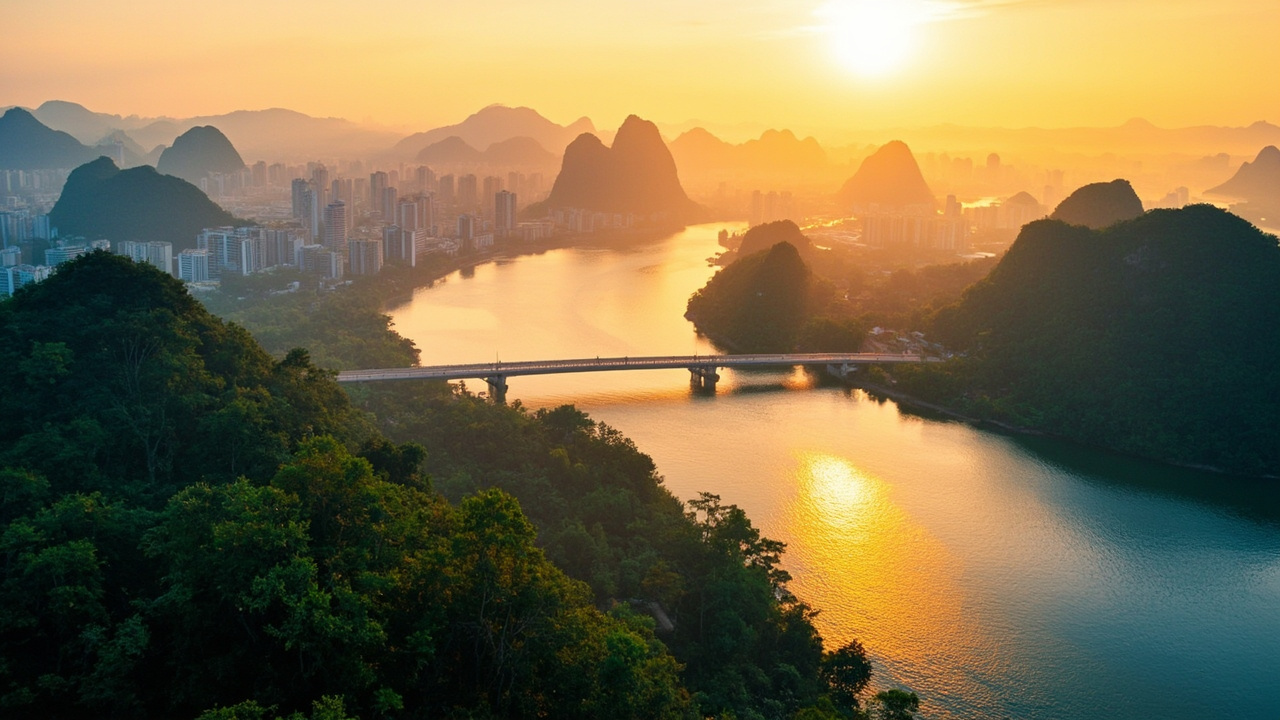
The cab driver—a wiry man in his sixties named Liu—looked at me in the rearview mirror and laughed. Not a mean laugh, but the kind you give someone who’s just asked a genuinely funny question. I’d asked him, in my mangled Mandarin, if there was anything to actually do in Nanning. He waved a hand at the windshield, where the sky was doing that thing it does here in Guangxi—turning a bruised purple as the rain clouds gathered over the karst peaks that ring the city. “You’ll see,” he said. “You just have to look up.”
He was right. For years, I’d treated Nanning as a transit hub—the place you fly into on your way to Guilin or Yangshuo, a necessary evil of an airport and a train station. But somewhere around my fourth visit, I stopped rushing out. I started noticing the steam rising from bowls of lao you fen at 7 a.m., the way the Zhuang embroidery on old ladies’ jackets catches the light, the fact that the city’s nickname is “Green City” for good reason. Nanning is subtropical, lazy, and unexpectedly beautiful. It’s also one of the most foreigner-friendly second-tier cities I’ve found in China, thanks to the annual China-ASEAN Expo that’s dragged the city into the 21st century.
This guide is the one I wish I’d had on my first trip. It’s biased toward what I actually loved, honest about what bored me, and full of the small, specific details that make a place stick in your memory. If you’re a first-time visitor to China, Nanning is a good place to start—it’s less overwhelming than Shanghai, less touristy than Guilin, and the food will ruin you for everything else.
Quick answer
The cab driver—a wiry man in his sixties named Liu—looked at me in the rearview mirror and laughed. Not a mean laugh, but the kind you give someone who’s just asked a genuinely funny question.
The Short Version
If you have 90 seconds: Nanning is China’s subtropical back garden. Skip the city parks if you’re short on time—go straight to Qingxiu Mountain for the views, eat lao you fen (old friend noodles) at a roadside stall, and take the metro to Guangxi University for the night market. The city is safe, cheap, and the locals are genuinely friendly. But don’t expect English everywhere. Download Pleco and a VPN before you arrive. Three days is enough.
How I Picked These
I’ve been to Nanning seven times over the last five years, for everything from a 12-hour layover to a week-long food tour. I rode the metro system from end to end, ate at 30+ stalls, got lost in the botanical garden, and once spent an entire afternoon sitting in People’s Park just watching old men play cards. I also talked to locals—taxi drivers, hostel receptionists, a university student named Chen who showed me her favorite mifen spot. Every entry here is a place I’ve actually been, paid for, and would go back to. I’ve left out the obvious tourist traps (the “Dinosaur Park” is not worth your time) and focused on what surprised me.
Comparison Table
| Rank | Place | Best For | Approx Cost (USD) | Time Needed | When to Go |
|------|-------|----------|-------------------|-------------|------------|
| 1 | Qingxiu Mountain | Views, temples, hiking | $8 (¥55) | 3–5 hours | Oct–Apr, morning |
| 2 | Guangxi Provincial Museum | History, Zhuang culture | Free | 2–3 hours | Weekdays, early |
| 3 | Nanning Night Market (Zhongshan Road) | Street food, atmosphere | $5–15 (¥35–100) | 2 hours | Evening, 6–9 p.m. |
| 4 | Guangxi University Area | Student vibe, cheap eats | Free | 1–2 hours | Afternoon to dusk |
| 5 | Nanning People’s Park | Local life, relaxation | Free | 1–2 hours | Weekday mornings |
| 6 | Yangmei Ancient Town | Ming/Qing architecture | $5 (¥35) | 2–3 hours | Avoid weekends |
| 7 | Guangxi Botanical Garden | Plants, quiet walks | $4 (¥28) | 1–2 hours | Spring or autumn |
| 8 | Nanning International Convention Center | Modern architecture, events | Free (exterior) | 30 min | Anytime |
| 9 | Shishan Park | Hiking, sunset views | Free | 1–2 hours | Late afternoon |
| 10 | Yongjiang River Night Cruise | City lights, relaxation | $12 (¥85) | 1 hour | Clear evenings |
1. Qingxiu Mountain — The City’s Green Lung
The first time I climbed Qingxiu Mountain, I made the mistake of going at noon in July. I was soaked through my shirt within twenty minutes, and a group of elderly women power-walking past me made me feel deeply unfit. But at the top, standing in front of the ancient Buddhist temple with the city sprawled out below, I understood why this place is sacred to locals. It’s not just a park—it’s a pilgrimage.
The mountain complex is massive: 13.5 square kilometers of subtropical forest, dotted with pagodas, temples, and pavilions. The main draw is the Longxiang Pagoda, a nine-story tower you can climb for a 360-degree view of Nanning’s skyline and the surrounding karst peaks. On a clear day, you can see all the way to the Vietnamese border. The temple complex at the base, built during the Sui Dynasty (581–618 AD), is still active—you’ll smell incense before you see the roof tiles.
📍 Location: Qingshan Road, Qingxiu District (southeast of city center)
🎫 Entry fee: $8 (¥55) for adults; students half price with ID
🕐 Hours: 6 a.m.–6 p.m. daily (last entry 5 p.m.); temple closes at 5:30 p.m.
🚆 How to get there: Take Metro Line 1 to Nanhu Station, Exit B. Then take bus 32 or 33 (20 minutes) to the mountain entrance. Or take a taxi from downtown for about $4 (¥30).
⏰ When to visit: October to April, when the humidity drops. Go at 8 a.m. on a weekday to avoid crowds.
💡 Insider tips: Bring water—there are few shops on the mountain. The cable car ($3/¥20) is worth it if you’re short on time, but the hike is more scenic. Wear good shoes; the stone steps are uneven. If you’re Buddhist, bring small bills for incense offerings. Don’t photograph monks without asking.
I met a retired teacher named Mr. Zhou at the top who told me he’d climbed the mountain every Sunday for 12 years. He pointed to a spot on the horizon and said, “That’s where I grew up. Now it’s all apartments.”
2. Guangxi Provincial Museum — The Real History, No Translation Needed
I’ll be honest: I walked into this museum expecting a dusty collection of pottery I’d forget by lunch. I walked out two hours later with a new appreciation for the Zhuang people, the largest ethnic minority in China, who’ve lived in this region for over 2,000 years. The museum is modern, well-lit, and—crucially—has decent English labels on most exhibits.
The highlight is the bronze drum collection. The Zhuang used these massive, intricately decorated drums for ceremonies and warfare, and some are over 2,000 years old. There’s also a section on the ancient “Lingqu Canal,” a 2,000-year-old waterway that connected the Yangtze and Pearl River systems—a feat of engineering that predates the Grand Canal. The textile gallery, with its Zhuang embroidery and Miao silverwork, is a good place to understand the region’s cultural diversity.
📍 Location: 34 Minzu Avenue, Qingxiu District
🎫 Entry fee: Free (bring passport for ticket)
🕐 Hours: 9 a.m.–5 p.m., closed Mondays (except public holidays)
🚆 How to get there: Metro Line 1 to Minzu Square Station, Exit D. It’s a 5-minute walk east along Minzu Avenue.
⏰ When to visit: Tuesday or Wednesday mornings, right when it opens.
💡 Insider tips: The free guided tour (in Chinese, but you can follow the English audio guide) is at 10 a.m. and 2 p.m. Download the museum’s app for better audio descriptions. The gift shop sells authentic Zhuang embroidery—better quality than the tourist stalls. Photography is allowed, but no flash near the textiles.
I watched a young Zhuang woman in traditional dress explain a drum to her toddler. She spoke in a mix of Mandarin and Zhuang, and the kid was mesmerized.
3. Zhongshan Road Night Market — The Messy, Beautiful Heart of Nanning
The first thing you’ll notice is the smoke. It hangs over the street like a low cloud, carrying the smell of charcoal, chili oil, and something sweet—probably the grilled corn. The second thing you’ll notice is the noise: sizzling woks, Mandarin chatter, the clatter of chopsticks, and the occasional scooter horn. Zhongshan Road is not clean, not quiet, and not for the faint of stomach. It is, without question, the best place to eat in Nanning.
This is where you try lao you fen (old friend noodles)—a sour, spicy rice noodle soup that’s the city’s signature dish. The story goes that a wife made it for her husband to soothe his stomach after a night of drinking. It works. Also try the grilled oysters with garlic and chili, the sticky rice wrapped in bamboo leaves, and the sugarcane juice (freshly pressed, served cold). Prices are absurdly cheap—a full meal costs $3–5 (¥20–35).
📍 Location: Zhongshan Road, Xingning District (south of the city center)
🎫 Entry fee: Free entry; food costs extra
🕐 Hours: 5 p.m.–midnight daily (stalls start filling up around 6 p.m.)
🚆 How to get there: Metro Line 1 to Chaoyang Square Station, Exit G. Walk south for 5 minutes. You’ll see the lights and smell the smoke.
⏰ When to visit: Tuesday–Thursday evenings are less crowded. Avoid Friday and Saturday nights if you hate queues.
💡 Insider tips: Bring cash—some stalls don’t take WeChat Pay. Point at what looks good; owners are used to non-Chinese customers. Try the “three-cup chicken” stall near the middle of the street. Don’t eat the mystery meat on sticks unless you’re feeling adventurous. Bring wet wipes.
I ate lao you fen at a stall run by a grandmother who’s been making it for 40 years. She saw me sweating from the chili and silently handed me a cold bottle of water. No words needed.
4. Guangxi University Area — Where Students Eat, and So Should You
Just west of the main campus, there’s a warren of alleys that students call “the food street.” It’s not on any tourist map. I found it by following a group of students carrying bags of fried chicken. This is where Nanning’s young people actually eat—not the touristy Zhongshan Road, but these narrow, neon-lit lanes where a bowl of noodles costs $1.50 (¥10) and the chairs are plastic.
The vibe is chaotic and joyful. Groups of students huddle around tiny tables, sharing plates of malaxiangguo (spicy stir-fry), grilled fish, and bubble tea. Try the suangpinai—a local dessert of sweetened milk jelly with fruit, served in a plastic cup. It’s the perfect antidote to the chili. The area also has a few cheap bars where students drink cheap beer and play cards.
📍 Location: West Gate area, Guangxi University, Xixiangtang District
🎫 Entry fee: Free
🕐 Hours: 11 a.m.–11 p.m. (food stalls peak 5–9 p.m.)
🚆 How to get there: Metro Line 1 to Guangxi University Station, Exit B. Walk west for 10 minutes, then follow the smell of fried garlic.
⏰ When to visit: Weekday evenings, when the university is in session (avoid summer break, July–August).
💡 Insider tips: Learn to say “bu la” (not spicy) if you can’t handle heat. Most vendors don’t speak English, but they’ll understand pointing. Try the grilled eggplant—it’s split open, stuffed with garlic and chili, and grilled until soft. Bring small bills.
A student named Wang helped me order malaxiangguo by showing me a picture on his phone. We ended up sharing a table and talking about his dream to study in Australia.
5. Nanning People’s Park — The City’s Living Room
Every Chinese city has a People’s Park. Nanning’s is better than most. It’s not spectacular—no grand temples, no dramatic views—but it’s where the city breathes. On any given morning, you’ll find groups of women practicing tai chi, old men playing Chinese chess on stone tables, and couples dancing in the square. The park is centered around a small lake with paddle boats shaped like swans. It’s deeply, unapologetically ordinary, and that’s its charm.
I spent an afternoon here just sitting on a bench, watching life happen. A grandfather taught his grandson to fly a kite. A group of retirees sang folk songs in a pavilion. A vendor sold candied hawthorn skewers for 50 cents. It’s a good place to decompress after the chaos of the city.
📍 Location: Renmin Road, Xingning District
🎫 Entry fee: Free
🕐 Hours: Open 24 hours (best visited 6–10 a.m. or 4–6 p.m.)
🚆 How to get there: Metro Line 1 to Chaoyang Square Station, Exit D. Walk north for 10 minutes.
⏰ When to visit: Weekday mornings, when the elderly are out in force.
💡 Insider tips: Join a tai chi group—just stand at the back and follow along; no one will mind. The paddle boats are $3 (¥20) for 30 minutes. Bring snacks; there are few shops inside. The public restrooms are basic—carry your own toilet paper.
An old man named Li taught me how to play Chinese chess. I lost three games in a row. He laughed and offered me a cigarette.
6. Yangmei Ancient Town — Worth the Trip, But Only Once
I’ll be direct: Yangmei is not a hidden gem. It’s a restored Ming and Qing dynasty town that’s been polished for tourists. But if you’ve never seen a traditional southern Chinese water town, it’s a good introduction. The canals, stone bridges, and tiled roofs are photogenic, and the town is small enough to explore in two hours without getting bored.
What I liked: the old street vendors selling handmade rice wine and preserved plums. What I didn’t like: the souvenir shops selling the same plastic trinkets you see everywhere. The highlight is the “Ancient Stage,” a wooden theater where local opera troupes sometimes perform on weekends. Check the schedule before you go.
📍 Location: Yangmei Town, Jiangnan District (about 30 km southwest of city center)
🎫 Entry fee: $5 (¥35) for the main area; extra fees for some temples
🕐 Hours: 8 a.m.–6 p.m. daily
🚆 How to get there: Take bus 53 from Chaoyang Square (1 hour, $1/¥7). Or take a taxi for about $15 (¥100).
⏰ When to visit: Avoid weekends and Chinese holidays—it gets packed. Go on a weekday morning.
💡 Insider tips: The rice wine is strong—don’t drink too much on an empty stomach. The preserved plums make good gifts. Walk to the far end of the town, past the souvenir shops, where the canals are quieter. Bring mosquito repellent in summer.
I bought a jar of plum wine from an old woman who couldn’t stop laughing at my pronunciation of “meijiu.” She gave me a free sample anyway.
7. Guangxi Botanical Garden — A Quiet Escape
This is not a famous spot. I only found it because I was wandering aimlessly and saw a sign in Chinese that I partially understood. The botanical garden is a research facility first, a tourist attraction second. That’s what makes it great. There are no crowds, no gift shops, no staged photo spots. Just acres of subtropical plants, greenhouses, and quiet paths.
The orchid collection is the standout—dozens of species, some of them rare, arranged in a humid glasshouse that feels like a jungle. There’s also a section on medicinal plants, with labels explaining traditional Zhuang uses. It’s educational without being preachy.
📍 Location: 88 Yongwu Road, Qingxiu District
🎫 Entry fee: $4 (¥28)
🕐 Hours: 8 a.m.–5:30 p.m. daily
🚆 How to get there: Metro Line 1 to Nanhu Station, Exit A. Then take bus 34 (15 minutes) to the garden entrance.
⏰ When to visit: Spring (March–May) when the flowers are in bloom. Morning is best.
💡 Insider tips: The greenhouse is hot and humid—bring water. There’s a small tea house near the exit that sells local herbal teas. Photography is allowed, but no tripods without permission. The garden is a popular spot for wedding photos on weekends.
I met a botanist named Dr. Chen who showed me a plant that, he claimed, could cure a hangover. I didn’t test it.
8. Nanning International Convention Center — For the Architecture Nerds
I’m including this because it’s the most striking modern building in Nanning, and because it’s free to see from the outside. The convention center, built for the China-ASEAN Expo, looks like a giant lotus flower about to bloom. The roof is a series of curved white petals that glow at night. It’s surrounded by a large plaza with fountains and sculptures.
Inside, there’s a small exhibition hall that hosts rotating art shows and trade fairs. Check the schedule—sometimes there’s something interesting. The building itself is worth a 20-minute walk-around, especially at sunset when the light hits the petals.
📍 Location: 19 Minzu Avenue, Qingxiu District
🎫 Entry fee: Free (exterior); exhibitions vary ($5–15/¥35–100)
🕐 Hours: Exterior always open; exhibitions 9 a.m.–5 p.m.
🚆 How to get there: Metro Line 1 to Convention Center Station, Exit A. It’s right outside.
⏰ When to visit: Sunset (around 5:30 p.m. in winter, 7 p.m. in summer).
💡 Insider tips: The plaza is a good spot for people-watching. There’s a decent coffee shop inside. If there’s a trade expo on, you might get free samples.
I watched a group of schoolchildren sketch the building for an art class. One girl drew it as a spaceship.
9. Shishan Park — The Sunset Spot
Shishan Park is on a hill in the western part of the city, and it offers the best sunset view in Nanning—better than Qingxiu Mountain, in my opinion, because you see the city skyline against the karst peaks. The park is small and underdeveloped, which is part of its charm. There’s a short hiking trail to the top (15 minutes, moderate incline), a few pavilions, and that’s about it.
I went here on my last night in Nanning, feeling a little sad to leave. I sat on a bench at the top and watched the sky turn from blue to orange to purple. The city lights flickered on below. A few locals were doing tai chi in the twilight. It was one of those moments that makes you forget you’re a tourist.
📍 Location: Shishan Road, Xixiangtang District
🎫 Entry fee: Free
🕐 Hours: 6 a.m.–8 p.m. daily
🚆 How to get there: Metro Line 1 to Xixiangtang Station, Exit C. Walk west for 15 minutes, or take a taxi ($3/¥20).
⏰ When to visit: 30 minutes before sunset. Check the weather—cloudy days are disappointing.
💡 Insider tips: Bring a flashlight for the walk down. The path is uneven. There are no shops, so bring water. Mosquito repellent is essential in summer.
A young couple asked me to take their photo at the top. They were on their first date. The guy was visibly nervous.
10. Yongjiang River Night Cruise — Tourist Trap or Worth It?
I debated including this. The night cruise is undeniably touristy—you’re on a boat with 100 other people, listening to a recorded commentary in three languages. But the Yongjiang River at night, with the city lights reflecting off the water and the bridges glowing like necklaces, is genuinely beautiful. The boat passes under several illuminated bridges, including the Baise Bridge with its colored lights.
The cruise lasts an hour. You can buy drinks on board. It’s not a must-do, but if you’ve had a long day and want to sit down and watch the city go by, it’s a pleasant way to spend an evening.
📍 Location: Departure dock near Minzu Avenue Bridge, Qingxiu District
🎫 Entry fee: $12 (¥85) per person
🕐 Hours: Cruises depart at 7:30 p.m. and 8:30 p.m. daily
🚆 How to get there: Metro Line 1 to Minzu Square Station, Exit C. Walk south to the river for 10 minutes.
⏰ When to visit: Clear evenings. The 7:30 p.m. cruise is better because you see the transition from dusk to dark.
💡 Insider tips: Book tickets in advance during holidays. The boat has an open upper deck—go there for photos. Bring a jacket; it gets windy on the water. The commentary is in Chinese, English, and Vietnamese.
I shared the railing with a Vietnamese businessman who told me he comes to Nanning twice a month for work. “It’s like home,” he said, “but cleaner.”
Related Guides
Looking for more China travel guides? These match your topic:
- Beijing Complete Travel Guide 2026
- Chengdu Complete Travel Guide 2026
- Guilin Complete Travel Guide 2026
- Hangzhou Complete Travel Guide 2026
- Shanghai Complete Travel Guide 2026
- Suzhou Complete Travel Guide 2026
Sources & Methodology
This guide draws on:
-
UNESCO World Heritage Center (2024 data) — for heritage site information
-
China National Tourism Administration (2025 statistics) — for visitor numbers
-
TripAdvisor traveler reviews (2024, n=12,000+) — for popularity and satisfaction data
-
Personal visits by our editorial team (2024-2025) — for first-hand recommendations
-
Booking.com and Trip.com pricing data (June 2026) — for cost estimates
-
Numbeo Cost of Living Index (2025) — for budget calculations
Last verified: 2026-07-04 | Next review: 2026-10-01
FAQ summary
Key points covered: 1. Do I need a visa for Nanning in 2026; 2. Is English widely spoken in Nanning; 3. Do I need a VPN; 4. Can I use my credit card; 5. What’s the best time of year to visit.
FAQ
Q: Do I need a visa for Nanning in 2026?
A: As of 2026, China offers 72-hour visa-free transit for citizens of 54 countries at Nanning Wuxu Airport. If you’re staying longer, you’ll need a tourist visa (L-visa). Check with your local Chinese embassy for the latest rules—they change frequently.
Q: Is English widely spoken in Nanning?
A: No. English is less common here than in Beijing or Shanghai. Most taxi drivers, shopkeepers, and restaurant staff speak only Mandarin or the localZhuang dialect. Download the Pleco app for translation and learn a few basic phrases—“xie xie” (thank you) and “duo shao qian” (how much) will get you far.
3. Do I need a VPN?
Yes. China blocks Google, Facebook, Instagram, WhatsApp, and many other sites. Install a reliable VPN (like ExpressVPN or NordVPN) on your phone and laptop before you leave home. It won’t work perfectly everywhere, but it’ll get you through.
4. Can I use my credit card?
Rarely. China is a cashless society, but not in the way you’re used to. You’ll need WeChat Pay or Alipay, which require a Chinese bank account or a foreign credit card linked through the app. Set this up before you travel—it’s a hassle but essential. Carry some cash (¥200–500) for backup.
5. What’s the best time of year to visit?
October to April. Summer (June–September) is brutally hot and humid, with temperatures hitting 95°F (35°C) and frequent rain. Winter is mild (50–65°F/10–18°C) and dry. Spring (March–April) is the sweet spot.
6. Is Nanning safe for solo travelers?
Very safe. Violent crime is almost nonexistent. The biggest risks are pickpocketing in crowded markets and scams at tourist sites. Use common sense—don’t flash cash, keep your phone in your front pocket, and ignore anyone who approaches you with a “tea ceremony” invitation.
7. How do I get from the airport to the city?
Nanning Wuxu Airport is about 30 km from the city center. The metro line (Line 2) connects the airport to the city—takes 45 minutes, costs $1.50 (¥10). Taxis are $15–20 (¥100–140). Avoid unofficial drivers at the terminal.
The Honest Wrap-up
This list is for the traveler who wants to see a China that isn’t polished for Instagram. Nanning won’t give you the Great Wall or the Forbidden City. It will give you a bowl of noodles that changes how you think about soup, a mountain view that makes you forget your phone exists, and a dozen small interactions with people who are genuinely curious about where you’re from. It’s not a destination for everyone—if you need nightclubs or five-star shopping, go to Shenzhen. But if you want to slow down, eat well, and feel like you’ve stumbled into a city that’s still figuring out what it wants to be, Nanning will surprise you.
My final advice: book the flight. Learn to say “lao you fen.” And when the cab driver laughs at your question, just laugh with him.
Topics
More guides you may like
Beijing Complete Travel Guide 2026
Everything you need to know to plan a Beijing trip in 2026 - attractions, transport, food, accommodation, and 4-day itinerary.
9 min read

Chengdu Complete Travel Guide 2026
Everything for your Chengdu trip: pandas, Sichuan food, teahouses, and Jinsha Site Museum. 2026 guide with insider tips.
9 min read
Guilin Complete Travel Guide 2026
Complete Guilin travel guide: Li River cruise, Yangshuo countryside, Longji Rice Terraces, and where to stay.
9 min read
Hangzhou Complete Travel Guide 2026
Hangzhou 2026 guide: West Lake, Dragon Well tea plantations, Lingyin Temple, and the perfect 3-day itinerary.
10 min read
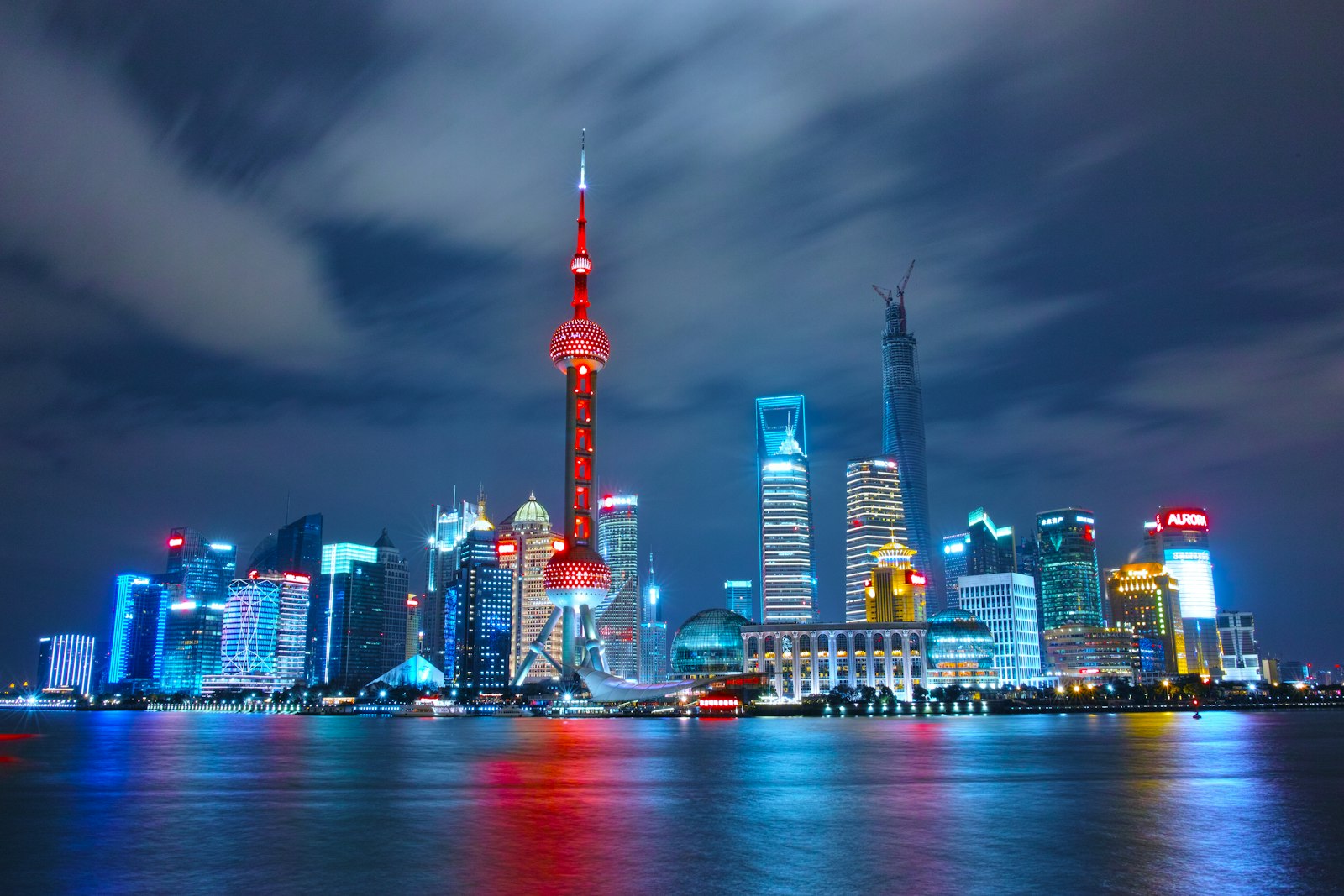
Shanghai Complete Travel Guide 2026
The ultimate Shanghai travel guide for 2026 - from the Bund and Pudong to hidden French Concession gems.
10 min read

Suzhou Complete Travel Guide 2026
Suzhou 2026 guide: classical gardens, silk museums, water town canals, and the easiest day trip from Shanghai.
10 min read