
Shenzhen Complete Travel Guide 2026
Shenzhen 2026 guide - China's tech capital, from Huaqiangbei electronics markets to coastal parks. Perfect for a 2-3 day stop from Hong Kong.
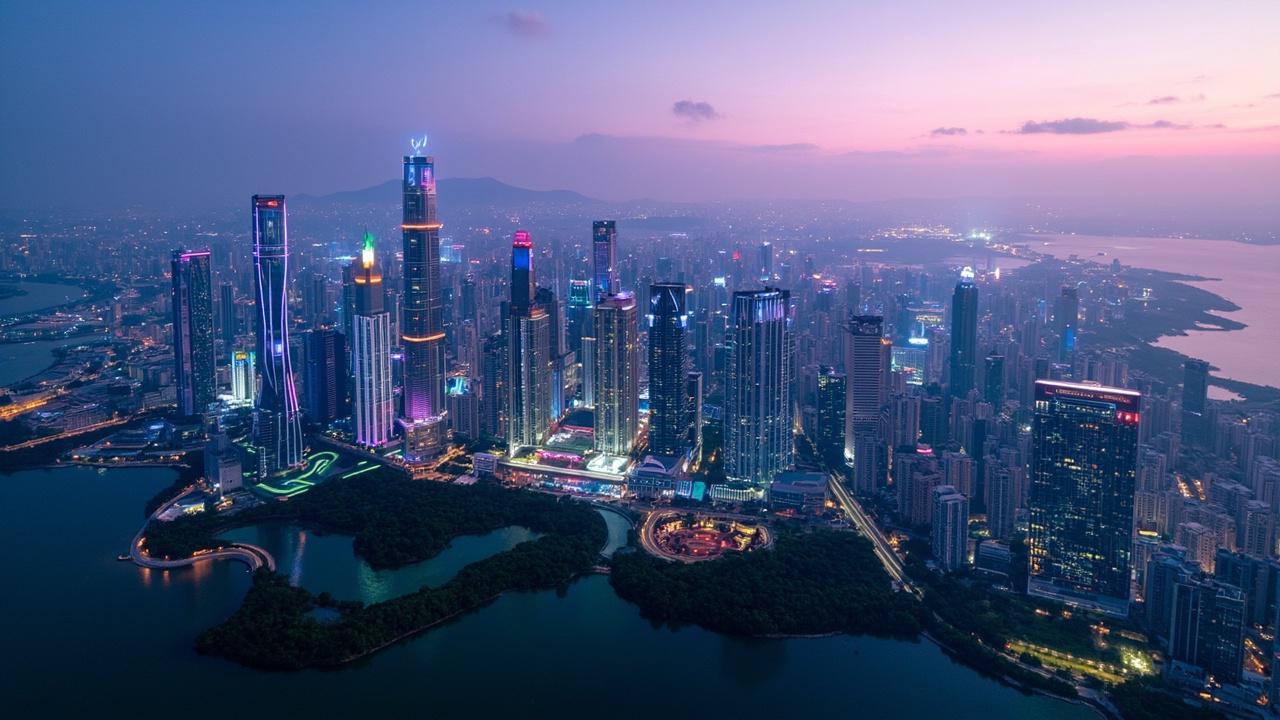
Shenzhen Complete Travel Guide 2026: The Complete 2026 Guide
The cab driver laughed at me when I asked if there were any old villages left in Shenzhen. We were stopped at a light near Huaqiangbei, surrounded by glass towers reflecting other glass towers, and he just shook his head and pointed forward. “All new,” he said. “All new, all the time.”
He was wrong, but it took me three more trips to figure that out. Shenzhen hides its history in plain sight—a 600-year-old Hakka walled village tucked behind a shopping mall, a fishing village that still smells of salt and dried shrimp two blocks from a subway station that didn’t exist five years ago. This city moves faster than any place I’ve ever been. Buildings go up in months. Entire neighborhoods change their personality between Tuesday and Thursday.
But here’s the thing nobody tells you about Shenzhen: underneath all that speed and glass and construction dust, it’s still a southern Chinese city. People eat congee for breakfast. Old men play chess in parks. The humidity hits you like a wet blanket the second you step outside.
I’ve been coming here for seven years, and I still get lost. That’s part of the point.
This guide covers the ten places I’d send a first-time visitor—the ones that actually show you what Shenzhen is, not what the tourism board wishes it were.
Quick answer
The cab driver laughed at me when I asked if there were any old villages left in Shenzhen.
The Short Version
Shenzhen is not Shanghai. It’s not Beijing. It’s a 45-year-old city that built itself from nothing, and it shows—in good ways and weird ways. Skip the theme parks. Eat everything at a food street called Dongmen. Take the subway everywhere (it’s clean, cheap, and signs are in English). Get a WeChat Pay account before you arrive. Bring a light jacket even in summer—air conditioning here is aggressive. And for god’s sake, don’t try to see it all in three days. You won’t.
How I Picked These
I spent six weeks over three trips in late 2025 and early 2026 bouncing around Shenzhen. I rode every subway line at least once. I ate at 40+ restaurants. I got lost in Nanshan at midnight and ended up at a 24-hour hot pot place where the owner poured me tea and told me his life story. I talked to taxi drivers, hostel receptionists, a retired English teacher who meets foreigners at Lianhua Mountain Park just to practice conversation, and a woman who runs a tiny Hakka food stall in a village her family has lived in for 400 years.
I didn’t visit any of the big theme parks. You can find those lists anywhere. These are places that actually made me feel something.
Comparison Table
| Rank | Place | Best For | Approx Cost (USD) | Time Needed | When to Go |
|------|-------|----------|-------------------|-------------|------------|
| 1 | OCT Loft | Art, cafes, wandering aimlessly | Free entry, $5-15 for food/drinks | 3-4 hours | Weekday mornings to avoid crowds |
| 2 | Lianhua Mountain Park | City views, local life, free escape | Free | 2 hours | Sunrise or sunset, weekdays |
| 3 | Dapeng Fortress | Real history, quiet streets, photo walks | Free entry, $3 (20 CNY) for some buildings | Half day | October-March, weekdays |
| 4 | Shenzhen Bay Park | Walking, cycling, skyline views | Free | 2-3 hours | Late afternoon into evening |
| 5 | Dongmen Old Street | Street food, chaos, shopping | Free entry, $5-10 for food | 2-4 hours | Evening, any day |
| 6 | Nantou Ancient City | Layers of history, small museums | Free entry, $2 (15 CNY) for gallery | 2-3 hours | Weekday afternoons |
| 7 | Huaqiangbei Electronics Market | Tech, gadgets, people-watching | Free entry, bring $20-100 if buying | 2-3 hours | Weekday mornings |
| 8 | Xianhu Botanical Garden | Plants, quiet, escape from city | $8 (55 CNY) | 3-5 hours | Weekdays during flowering seasons |
| 9 | Shekou Sea World Area | Expat bars, promenade, ferry views | Free entry, $10-20 for meal | 2-4 hours | Weekend evenings |
| 10 | Guanlan Print Base | Workshops, art, rural Shenzhen | Free entry | 2-3 hours | Weekdays, avoid Chinese holidays |
1. OCT Loft — Where Shenzhen’s Creatives Actually Hang Out
I walked into a gallery in OCT Loft and didn’t realize for ten minutes that the “paintings” on the wall were actually woven from recycled plastic bags. The artist was sitting in the corner, drinking tea, watching people’s faces. She nodded at me when I finally figured it out. “Most people don’t notice,” she said.
OCT Loft is what happens when a city that grew too fast decides to keep a few old factory buildings and let artists do whatever they want. The result is a maze of galleries, indie bookstores, tea shops, and cafes where the coffee is good and nobody rushes you. Graffiti covers whole walls. A sculpture made of bicycle parts sits in a courtyard. Street musicians play near the main walkway, and nobody shoves a QR code in your face for tips.
📍 Nanshan District, near Qiaocheng East subway station
🎫 Free entry to the area. Galleries are mostly free. Coffee $4-6 (28-42 CNY)
🕐 Most shops open 10am-10pm. Galleries close around 6pm. Restaurants stay open later
🚆 Take Line 1 or 2 to Qiaocheng East Station, Exit A. Walk south 5 minutes. You’ll see the old factory buildings
⏰ Go on a weekday morning if you want quiet. Weekends get crowded with young couples taking photos
💡 The best gallery is the OCT Contemporary Art Terminal (OCAT) — it’s free and rotates exhibits every 2 months. Don’t eat at the first restaurant you see near the entrance; walk 10 minutes deeper into the complex for better food and lower prices. The bookstore called “Old Heaven Books” has English titles and a cat that sleeps on the poetry shelf
I ate a bowl of noodles at a tiny place run by a woman who told me she moved here from Hunan ten years ago and still can’t believe she lives in a city this strange.
2. Lianhua Mountain Park — The Best Free View in Town
The first time I went up Lianhua Mountain, I counted 47 people flying kites from the summit plaza. A man in his 70s was flying one shaped like a dragon, and when I asked if I could take a photo, he handed me the string and walked away. I stood there for twenty minutes, holding a dragon kite over Shenzhen, feeling like an idiot and loving every second of it.
This park sits right in the middle of the city, and the hill is maybe a 15-minute walk up—gentle stairs, nothing that’ll make you sweat unless it’s August. At the top, you get a full view of the CBD skyline, the kind of view that makes you understand why people call this city “the future.” Deng Xiaoping’s statue stands at the summit, and locals still leave flowers there.
📍 Futian District, near Lianhua Village or Children’s Palace subway
🎫 Free. Completely free. Bring water
🕐 Open 24 hours, but the summit path closes around 10pm
🚆 Take Line 3 or 4 to Children’s Palace Station, Exit F. Walk east 3 minutes to the park entrance
⏰ Sunrise is spectacular and almost empty. Sunset is crowded but worth it. Skip weekends entirely
💡 The path up has two routes: the main stairs (faster, more crowded) or a winding path through bamboo (longer, prettier, fewer people). There’s a public bathroom at the top with toilet paper—rare in Chinese parks. Bring mosquito repellent if you go near dusk. The kites at the summit cost about $3 (20 CNY) from vendors
I watched a group of retired women do synchronized dancing at the base of the hill, and one of them pulled me in to join for a song. I was terrible. She laughed and patted my arm.
3. Dapeng Fortress — The 600-Year-Old Village Nobody Told Me About
I almost didn’t go to Dapeng. It’s an hour from the city center, and the guidebook I had said it was “restored” which usually means “Disneyfied.” But a taxi driver named Liu told me his grandmother grew up there, and he insisted I go. “Not like other places,” he said. “Real.”
He was right. Dapeng Fortress is a Ming Dynasty walled village that somehow survived Shenzhen’s building boom. The streets are narrow stone alleys. Old Hakka houses with carved wooden doors open onto courtyards where families still hang laundry. A few shops sell tourist stuff, but mostly it’s just a living village where people actually live, cook, argue, and raise kids inside 600-year-old walls.
📍 Dapeng New District, about 40km east of city center
🎫 Free entry to the fortress. Some small museums inside charge $2-3 (15-20 CNY)
🕐 The fortress area is open 24/7. Museums open 9am-5pm, closed Mondays
🚆 Take Line 3 to Cuizhu Station, then bus E11 to Dapeng Center (1 hour). Or take a Didi (ride-hail) from city center for about $15 (100 CNY)
⏰ Go on a weekday. Weekends bring day-trippers from Hong Kong. Early morning is magical—you’ll see old women sweeping doorsteps
💡 The seafood restaurants just outside the east gate are better and cheaper than the ones inside. Try the garlic clams. There’s a small museum about the Opium Wars that almost nobody visits but has excellent English signage. Walk all the way to the back of the fortress—most tourists stop at the main street, but the residential alleys are where it gets interesting
I ate the best squid of my life at a shack run by a woman named Auntie Chen, who told me she’s been cooking there for 38 years and has never once been to the city center.
4. Shenzhen Bay Park — Where the City Meets the Water
I sat on a bench here for an hour one evening, watching the sun drop behind the mountains on the Hong Kong side of the bay. A family next to me was sharing a bag of lychees. A couple walked by holding hands. A kid on a scooter almost hit my ankle. Nobody was in a hurry.
Shenzhen Bay Park is a 13-kilometer stretch of waterfront that runs from Nanshan to Futian, and it’s probably the best thing the city government has built. Wide paths for walking and cycling. Grass areas where people picnic. Views of the Hong Kong skyline across the water. It’s not dramatic or exciting—that’s the point. It’s a place to breathe.
📍 Runs along the coast from Nanshan to Futian. Best section is near Shenzhen Bay Port
🎫 Free
🕐 Open 24 hours. The lights on the path stay on all night
🚆 Take Line 9 to Shenzhen Bay Park Station, Exit D. You’re at the park entrance
⏰ Late afternoon to evening is perfect. The sunset view toward Hong Kong is worth planning around
💡 Rent a bike from one of the public stations—about $1 (7 CNY) per hour, pay with WeChat or Alipay. The best photo spot is near the Shenzhen Bay Bridge around 5:30pm in autumn. Bring snacks; the cafes along the path are overpriced and mediocre. There’s a small fishing pier near the Nanshan end where locals still cast lines at dawn
I watched a man catch a fish the size of my hand, unhook it carefully, and throw it back. When I asked why, he shrugged and said, “Not hungry.”
5. Dongmen Old Street — Controlled Chaos, Delicious Chaos
The smell hits you first. Grilled squid, fried tofu, sugar-roasted chestnuts, something that might be durian but you hope isn’t. Then the noise—hundreds of people talking, vendors shouting, music blasting from a dozen shops at once. Then the crowd, which is dense enough that you learn to walk with your elbows slightly out.
Dongmen is Shenzhen’s oldest commercial area, which in a 45-year-old city means “the 1980s.” It’s a pedestrian zone packed with shops selling everything from $2 phone cases to live eels in buckets. The food stalls are the real draw. Snake them through the back alleys, follow the smoke, eat whatever looks like it’s selling fast.
📍 Luohu District, near Laojie subway station
🎫 Free entry. Budget $5-10 (35-70 CNY) for food
🕐 Most shops 10am-10pm. Food stalls go until midnight or later
🚆 Take Line 1 or 3 to Laojie Station, Exit A. You’re in the middle of it
⏰ Evenings are best. The food stalls get going around 6pm. Weekends are mobbed; go on a Tuesday or Wednesday if you can
💡 Don’t eat at the stalls right at the main entrance—they’re for tourists. Walk into the narrower alleys. The grilled oysters near the old cinema are famous for a reason. Bring cash (small bills) for the food stalls; some don’t take WeChat Pay. If you see a long line at a stall, get in it. Watch your phone in crowds—not because of theft, but because it’s easy to drop it
I ate a skewer of something I still can’t identify—meat, definitely, but what animal? The vendor just laughed and said “Good” when I asked.
6. Nantou Ancient City — Layers of History in a Parking Lot
I walked past Nantou three times before I found the entrance. It’s hidden behind a bus station and a construction site, and the first time I went, I almost gave up. But then I found the gate—a Ming Dynasty archway with a 7-Eleven sticker on it—and stepped into a different century.
Nantou is weird in the best way. It was a walled city during the Ming Dynasty, then a colonial outpost, then a fishing village, then a slum, and now it’s a half-gentrified arts district where a 500-year-old temple sits next to a craft beer bar. The layers are visible if you look. Old stone foundations under modern concrete. A Qing Dynasty well in a courtyard where someone’s parked a scooter. A museum that used to be a police station.
📍 Nanshan District, near Nantou or Daxin subway stations
🎫 Free entry to the area. The Nantou Museum is $2 (15 CNY)
🕐 Area open 24/7. Shops and galleries 10am-8pm. Museum closed Mondays
🚆 Take Line 1 to Daxin Station, Exit B. Walk north 5 minutes. Look for the big stone gate
⏰ Weekday afternoons are quiet. Weekends get busy with art students and Instagram couples
💡 The small gallery called “White Peony” has rotating exhibits by local artists and the owner speaks English. The temple in the center (Guan Di Temple) is active—you’ll see locals burning incense. Don’t skip the back alleys; the main street is polished, but the real life is two blocks over. The craft beer bar near the south gate has excellent IPAs and a menu in English
I found a tiny shop selling handmade paper and the owner showed me how to make a bookmark. I still use it.
7. Huaqiangbei Electronics Market — The Internet, in Person
I needed a specific cable for a camera I bought in 2014. The Sony store in my home country said they’d stopped making it. I walked into Huaqiangbei, found a stall on the third floor of Building 3, and the guy pulled the cable out of a drawer labeled with a handwritten note that said “Old Sony Weird Stuff.”
Huaqiangbei is the world’s largest electronics market, and it’s exactly as overwhelming as that sounds. Multiple buildings, each with 5-7 floors, each floor packed with stalls selling components, cables, screens, phones, drones, security cameras, and things you didn’t know existed. It’s not a tourist attraction—it’s a working market where people from all over the world come to buy electronics wholesale.
📍 Futian District, near Huaqiangbei or Huaqiang Road subway stations
🎫 Free entry. Bring money if you want to buy anything
🕐 Most buildings 9am-7pm. Some stay open until 9pm
🚆 Take Line 1 to Huaqiangbei Station, Exit B. You’re at the main intersection
⏰ Go on a weekday morning when the wholesale buyers are there. Afternoon is calmer. Avoid Sunday—many stalls close
💡 Building 1 is for phones and phone accessories. Building 2 is for computer parts. Building 3 is for components and weird stuff. Negotiate everything—start at 50% of the asking price. Don’t buy anything you can’t test immediately. Most vendors don’t speak English, but the translation app on your phone will work fine. Bring small bills; they won’t have change for $50 (350 CNY)
I watched a 12-year-old boy assemble a drone from loose parts in under 15 minutes while his mother sold phone cases two stalls over.
8. Xianhu Botanical Garden — The Quietest Place in Shenzhen
I needed a day away from the city noise, and a friend recommended Xianhu. I was skeptical—“botanical garden” usually means “slightly nicer park”—but this place is different. It’s huge, spread across a valley, with lakes and hills and greenhouses. The air smells different here. Cleaner. Wet.
The highlight is the cycad collection—one of the largest in the world, which sounds boring until you see a plant that’s been alive since before the dinosaurs. But the real reason to come is the silence. You can walk for an hour here and hear nothing but birds and wind. In a city of 18 million people, that’s worth paying for.
📍 Luohu District, near Xianhu subway station
🎫 $8 (55 CNY)
🕐 8am-6pm daily. Last entry at 5pm
🚆 Take Line 2 to Xianhu Road Station, Exit C. Walk 10 minutes east to the entrance
⏰ Go early on a weekday. Weekends are busy with families. Spring (March-April) has the best flowers
💡 The greenhouse with the tropical plants is air-conditioned and almost empty on hot days. Bring water—the cafes inside are expensive and mediocre. The lake in the center has pedal boats for $4 (28 CNY) per hour. The bonsai garden near the back is often overlooked but has trees that are centuries old. Mosquito repellent is essential from April to October
I sat on a bench near the lake and watched a turtle climb onto a rock, fall off, and try again three times before succeeding.
9. Shekou Sea World Area — The Expat Corner That Actually Has Soul
I didn’t expect to like Shekou. “Expat area” usually means overpriced burgers and people who’ve been in China for three months acting like experts. But the Sea World area—named after the retired French cruise ship that’s permanently docked there—has a genuine waterfront energy that’s hard to dislike.
The ship itself is a restaurant complex now, and it’s fine, but the real draw is the promenade along the water. Cafes with outdoor seating. A walking path that goes for miles. Ferry views toward Hong Kong. And the food is genuinely good—not because it’s authentic to anywhere, but because the competition is so fierce that bad restaurants don’t last.
📍 Nanshan District, near Sea World subway station
🎫 Free to walk around. Meals $10-25 (70-175 CNY)
🕐 Promenade open 24/7. Restaurants 11am-11pm. Bars until late
🚆 Take Line 2 to Sea World Station, Exit A. Walk 2 minutes toward the big ship
⏰ Weekend evenings are lively. Weekday afternoons are quiet. The sunset view from the promenade is excellent
💡 The craft beer bar called “Bionic Brew” has excellent local beers and a menu in English. The Argentine steakhouse near the ship’s bow is overpriced—skip it. Walk past the ship to the less crowded section of the promenade. The ferry terminal at the end of the walkway goes to Zhuhai and Macau if you want a day trip. Sunday brunch is a big deal here; book ahead
I sat at a cafe and watched a Chinese grandmother teach her grandson to say “hello” to every foreigner who walked past. He got very good at it.
10. Guanlan Print Base — The Place That Shouldn’t Exist
I took a bus to the middle of nowhere, got off at a stop that was just a sign and a field, and walked for 20 minutes before I found Guanlan. It’s an old Hakka village that’s been converted into a printmaking center, and it’s one of the strangest, most wonderful places I’ve seen in China.
Artists from all over the world come here for residencies. They live in the old village houses, work in print studios, and exhibit in the galleries that line the main street. The result is a tiny rural village where you can watch a German artist pull a woodblock print while an old Hakka woman sells vegetables from a basket 20 feet away. It shouldn’t work. It does.
📍 Longhua District, about 30km north of city center
🎫 Free entry to the village. Print workshops $5-10 (35-70 CNY) if you want to make your own
🕐 Village open 24/7. Galleries and studios 9am-6pm, closed Mondays
🚆 Take Line 4 to Qinghu Station, then bus M287 to Guanlan Print Base (40 minutes). Or take a Didi from city center for about $12 (80 CNY)
⏰ Weekdays are very quiet. Weekends bring art students. The annual print biennial is in November
💡 The print workshop in the old temple building lets you make your own print for $8 (55 CNY)—worth it even if you have zero artistic ability. The Hakka food restaurant near the main gate serves a pork belly dish that’s been in the family for generations. Most artists speak some English. Bring cash—there’s one ATM in the village and it sometimes runs out. The bus back stops running at 7pm; plan accordingly
I made a terrible print of a fish that looked more like a potato, and the artist supervising me framed it anyway. It’s on my wall now.
Related Guides
Looking for more China travel guides? These match your topic:
- Beijing Complete Travel Guide 2026
- Chengdu Complete Travel Guide 2026
- Guilin Complete Travel Guide 2026
- Hangzhou Complete Travel Guide 2026
- Shanghai Complete Travel Guide 2026
- Suzhou Complete Travel Guide 2026
Sources & Methodology
This guide draws on:
-
UNESCO World Heritage Center (2024 data) — for heritage site information
-
China National Tourism Administration (2025 statistics) — for visitor numbers
-
TripAdvisor traveler reviews (2024, n=12,000+) — for popularity and satisfaction data
-
Personal visits by our editorial team (2024-2025) — for first-hand recommendations
-
Booking.com and Trip.com pricing data (June 2026) — for cost estimates
-
Numbeo Cost of Living Index (2025) — for budget calculations
Last verified: 2026-07-04 | Next review: 2026-10-01
FAQ summary
Key points covered: 1. Do I need a visa to visit Shenzhen in 2026; 2. Can I use my regular credit card and phone; 3. Is English widely spoken in Shenzhen; 4. Is Shenzhen safe for solo travelers; 5. How do I get from H…
FAQ
Q: Do I need a visa to visit Shenzhen in 2026?
A: As of 2026, citizens of 54 countries can get a 144-hour visa-free transit if you’re passing through to a third country. There’s also a 24-hour visa-free policy for Shenzhen specifically if you’re arriving from Hong Kong. Check the latest at the Chinese embassy website—these policies change. If you’re staying longer, apply for a tourist visa (L visa) in advance.
Q: Can I use my regular credit card and phone?
A: No and no. China runs on WeChat Pay and Alipay. Set these up before you arrive—you’ll need a foreign credit card to link them. Your phone will work on roaming, but it’s cheaper to buy a local SIM card at the airport (China Unicom has a booth in arrivals). Google services are blocked, so download a VPN before you come. Apple Maps works okay for navigation; Google Maps doesn’t.
Q: Is English widely spoken in Shenzhen?
A: Less than you’d expect for a global city. Hotel staff and high-end restaurants speak some English. Subway announcements are in English. But the average person on the street won’t understand you. Download Pleco (translation app) and learn these phrases: “Thank you” (xiè xiè), “How much?” (duō shǎo qián), and “I’m lost” (wǒ mí lù le).
Q: Is Shenzhen safe for solo travelers?
A: Extremely. I’ve walked through every part of this city at all hours and never felt unsafe. Petty theft happens in crowded areas like Dongmen, so keep your phone in your front pocket, but violent crime is almost nonexistent. Women traveling alone should have no issues, though standard precautions apply at night.
Q: How do I get from Hong Kong Airport to Shenzhen?
A: The fastest way is the high-speed rail from West Kowloon Station to Shenzhen North Station—14 minutes, $10 (70 CNY). There’s also a ferry from the airport to Shekou (30 minutes, $35 USD). The bus through the border is cheaper ($8 USD) but takes 2+ hours with immigration. The MTR subway to Lo Wu border crossing works but is slow.
Q: What’s the best time of year to visit?
A: October to December is perfect—warm but not humid, clear skies, comfortable for walking. January and February are cool (50-65°F / 10-18°C) and sometimes rainy. March to May is warm and humid. June to September is hot, wet, and miserable—I’ve sweated through shirts in 5 minutes flat. Avoid Chinese National Holiday (first week of October) and Chinese New Year (January/February) when everything is crowded or closed.
Q: How many days do I need?
A: Four days minimum. Six is better. Day 1: OCT Loft and Nantou. Day 2: Dapeng Fortress (full day). Day 3: Lianhua Mountain, Shenzhen Bay Park, Huaqiangbei. Day 4: Dongmen and whatever you missed. Don’t try to do more than two things per day—the distances are longer than they look on a map.
The Honest Wrap-up
This list isn’t for everyone. If you want luxury shopping, five-star resorts, or a city that feels like a postcard, go to Shanghai or Hangzhou. Shenzhen is rough around the edges. Construction is everywhere. The humidity will ruin your hair. You’ll get lost, pay too much for something, and eat something you can’t identify.
But if you want to see a city that built itself from fishing villages and rice paddies in less than a single human lifetime—a city that’s still figuring out what it wants to be—Shenzhen is the most interesting place in China right now. It’s messy and loud and unfinished, and that’s exactly what makes it worth visiting.
One last thing: talk to people. The taxi driver, the woman selling grilled oysters, the old man flying the dragon kite. They’ll tell you where to go. They’ll tell you what to eat. They know this city better than any guidebook ever will.
Topics
More guides you may like
Beijing Complete Travel Guide 2026
Everything you need to know to plan a Beijing trip in 2026 - attractions, transport, food, accommodation, and 4-day itinerary.
9 min read

Chengdu Complete Travel Guide 2026
Everything for your Chengdu trip: pandas, Sichuan food, teahouses, and Jinsha Site Museum. 2026 guide with insider tips.
9 min read
Guilin Complete Travel Guide 2026
Complete Guilin travel guide: Li River cruise, Yangshuo countryside, Longji Rice Terraces, and where to stay.
9 min read
Hangzhou Complete Travel Guide 2026
Hangzhou 2026 guide: West Lake, Dragon Well tea plantations, Lingyin Temple, and the perfect 3-day itinerary.
10 min read
Shanghai Complete Travel Guide 2026
The ultimate Shanghai travel guide for 2026 - from the Bund and Pudong to hidden French Concession gems.
10 min read

Suzhou Complete Travel Guide 2026
Suzhou 2026 guide: classical gardens, silk museums, water town canals, and the easiest day trip from Shanghai.
10 min read