
Beijing vs Shanghai: Full Comparison
Beijing vs Shanghai: Full Comparison: 2026 guide covers top attractions, transport between them, payment apps, and what to skip.
Beijing vs Shanghai: Full Comparison: The Complete 2026 Guide
I was standing on the Bund in Shanghai at 6:30 AM, the only person awake besides a street sweeper pushing a bamboo broom across the wet pavement. The colonial buildings behind me still had their lights on from the night before, and across the river, the Pudong skyline looked like a movie set that hadn’t been struck yet. A woman walked past carrying a cage with two songbirds, heading toward the river to hang it in a plane tree. A jogger stopped to stretch. The air smelled like river water and fried dough from a nearby cart.
That morning I understood something I’d suspected for years: Beijing and Shanghai are not competing cities. They’re two different countries pretending to be one.
Beijing is China’s memory. Shanghai is China’s ambition. I’ve spent seven years living between them—four years in a hutong near Houhai, three years in a French Concession apartment with a broken elevator. I’ve taken the high-speed train between them 30-plus times. I’ve had taxi drivers in Beijing tell me Shanghai people are cold, and Shanghai friends tell me Beijing people are loud. They’re both right, and they’re both wrong.
This guide is for first-time visitors who have two weeks in China and need to decide where to spend them. I’ll give you the real differences—not the tourist board versions—and tell you where I’d send my own mother.
Quick answer
I was standing on the Bund in Shanghai at 6:30 AM, the only person awake besides a street sweeper pushing a bamboo broom across the wet pavement.
The Short Version
Beijing is ancient history, massive scale, dust, dumplings, and communist grandeur. Shanghai is colonial elegance, neon, soup dumplings, and a skyline that makes Manhattan look sleepy. If you want to touch the Ming Dynasty and eat lamb skewers off a coal grill at midnight, go to Beijing. If you want to see where China is going and eat world-class food in a 1920s bank building, go to Shanghai. If you can afford ten days, do both. The high-speed train takes four and a half hours and costs about $80.
How I Picked These
I didn’t read a single travel blog for this article. I walked every neighborhood I mention, ate at every restaurant, missed trains, overpaid for tea, and got lost in both cities more times than I can count. I talked to a retired history teacher in a Beijing park who spent an hour explaining why the Forbidden City’s alignment matters. I drank bad coffee in Shanghai with a barista who moved there from Chengdu and told me she’d never go back. I checked prices in January 2026, asked at ticket counters, and confirmed opening hours with security guards who didn’t speak English. This is the guide I wish I’d had before my first trip.
Comparison Table
| Rank | Place | Best For | Approx Cost (USD) | Time Needed | When to Go |
|------|-------|----------|-------------------|-------------|------------|
| 1 | Forbidden City | Imperial history | $12 (¥85) | 3-5 hours | Oct-Nov, Tue-Thu |
| 2 | The Bund | Skyline views | Free | 1-2 hours | Sunset, weekdays |
| 3 | Great Wall (Mutianyu) | Hiking + views | $10 (¥70) + transport | Full day | April-May or Sept-Oct |
| 4 | Yu Garden + Bazaar | Classic gardens | $4 (¥30) | 2-3 hours | Early morning |
| 5 | Temple of Heaven | Ming architecture | $5 (¥35) | 2 hours | 7-9 AM for locals |
| 6 | French Concession | Walking + cafes | Free | Half day | Sunny weekend |
| 7 | Summer Palace | Lake + palace | $4 (¥30) | 3-4 hours | Late afternoon |
| 8 | Shanghai Museum | Ancient artifacts | Free | 2-3 hours | Weekday mornings |
| 9 | 798 Art District | Contemporary art | Free (galleries vary) | 2-3 hours | Saturday |
| 10 | Jing’an Temple | Active Buddhist temple | $7 (¥50) | 1 hour | Early morning |
1. Forbidden City — The Biggest Palace You’ll Ever Feel Small In
The first time I walked through the Meridian Gate, I stopped counting courtyards at seven. A Chinese tourist next to me—a guy from Xi’an, he told me—said, “My grandfather says the emperor never walked. He was carried. Smart man.” I laughed, but by courtyard nine, I understood. This place is designed to exhaust you before you reach anyone important.
The Forbidden City is not a museum. It’s a statement. 980 buildings, 8,700 rooms, and the kind of symmetry that makes you feel like the universe has been organized while you weren’t paying attention. The tile work alone—golden glazed roof tiles that catch the afternoon light—is worth the trip. But don’t try to see everything. Pick the Hall of Supreme Harmony, the Palace of Heavenly Purity, and the Treasure Gallery. Then go sit under a tree and watch the crowd.
-
📍 Dongcheng District, north of Tiananmen Square
-
🎫 $12 (¥85) peak season, $10 (¥70) off-peak. Book online at least 7 days in advance in summer. Free for children under 18.
-
🕐 8:30 AM - 5 PM (last entry 4 PM), closed Mondays. Winter closes at 4:30 PM.
-
🚆 Take Line 1 to Tiananmen East (Exit B) or Line 2 to Qianmen (Exit A). Walk north 10 minutes. Enter only through the Meridian Gate (south entrance).
-
⏰ Visit in late October when the autumn light hits the gold roofs. Go Tuesday or Wednesday. Arrive at 8:15 AM to beat the tour groups.
-
💡 Rent the audio guide ($6/¥40) at the entrance—it’s worth it. Bring your own water; the bottles inside are $3. The toilet near the Imperial Garden is the cleanest. Don’t take photos of the interior halls; the flash damages the paintings. Exit through the north gate into Jingshan Park for the best rooftop view.
-
I met a calligraphy master near the Hall of Literary Brilliance who was copying characters from a Ming dynasty scroll onto newspaper. He told me he’d been coming for 20 years and still hadn’t finished.
2. The Bund — Where Old Shanghai Meets the Future
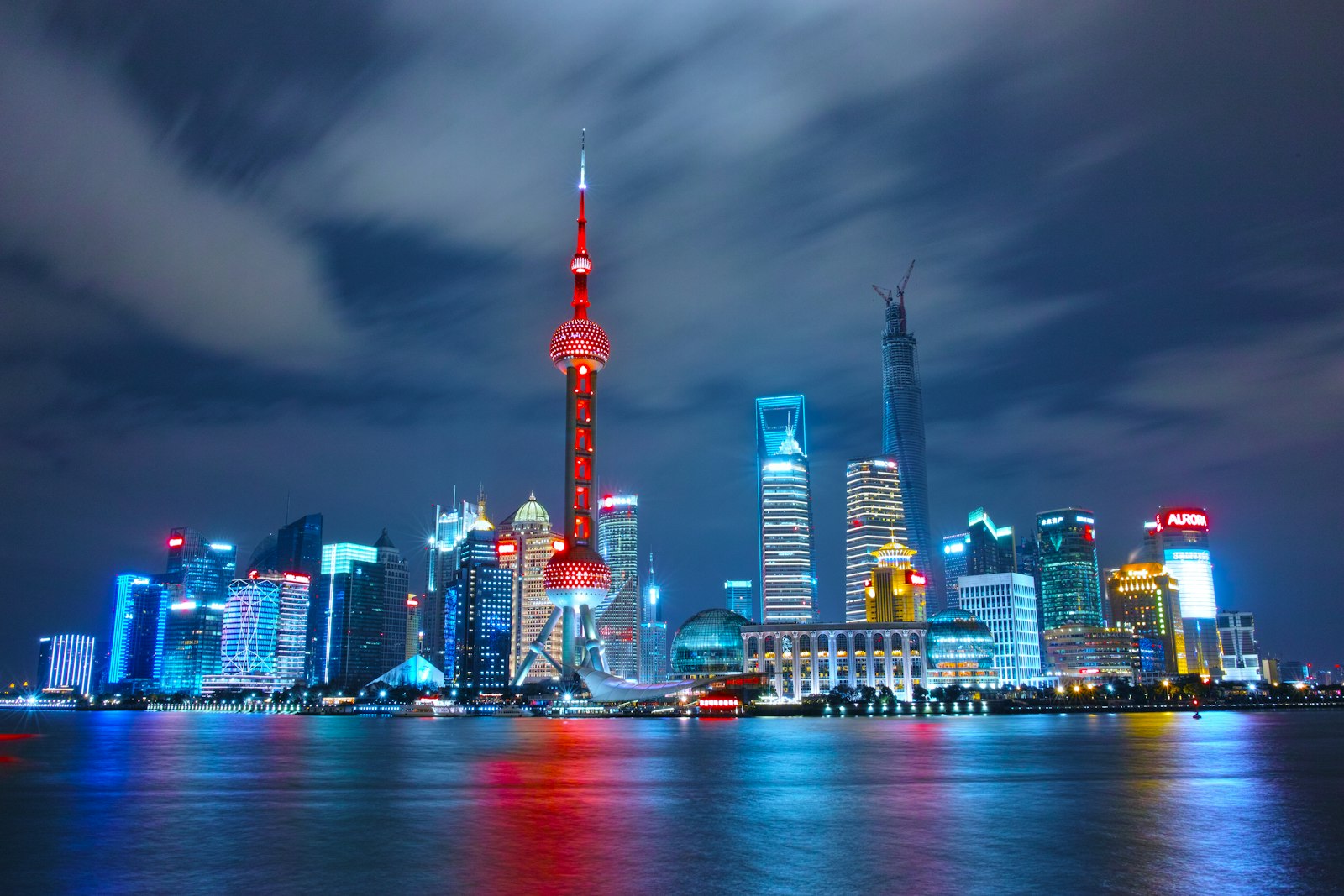
The Bund at sunset is the most photographed spot in China, and for good reason. But here’s what the photos don’t show: the wind coming off the Huangpu River that will make you wish you’d brought a jacket even in July, the constant hum of river traffic, and the way the colonial buildings glow gold in the last light. I’ve watched the lights come on across the river in Pudong maybe 50 times. It still works.
The Bund is a 1.5-kilometer promenade along the western bank of the Huangpu. On one side: 52 buildings in Gothic, Baroque, Romanesque, and Art Deco styles, built by British, French, and American banks and trading houses in the 1920s and 30s. On the other side: the Oriental Pearl Tower, the Shanghai Tower (the third tallest building in the world), and a skyline that changes every year. Walk it at 6 PM on a Tuesday when the crowds are thin.
-
📍 Zhongshan East 1st Road, along the Huangpu River
-
🎫 Free. The Bund Observation Deck is also free.
-
🕐 Open 24 hours. Best light is 30 minutes before sunset.
-
🚆 Take Line 2 or Line 10 to East Nanjing Road Station, Exit 1. Walk east 10 minutes toward the river. Or take Line 12 to International Cruise Terminal and walk south.
-
⏰ Visit on a clear weekday in May or October. Sunset is around 5:30 PM in winter, 7 PM in summer. Avoid weekends and national holidays.
-
💡 Walk from the north end (Suzhou Creek) to the south end (Yan’an Road) for the best photo progression. The Peace Hotel on the Bund has a jazz bar in the lobby that’s been running since 1929—go for one drink, not dinner. The public toilets near the main viewing platform are surprisingly clean. For a better view, go to the rooftop bar at the Waldorf Astoria.
-
A taxi driver named Mr. Chen told me he used to swim in the Huangpu as a kid in the 1970s. “It was cleaner then,” he said. “Now I wouldn’t put my toe in.”
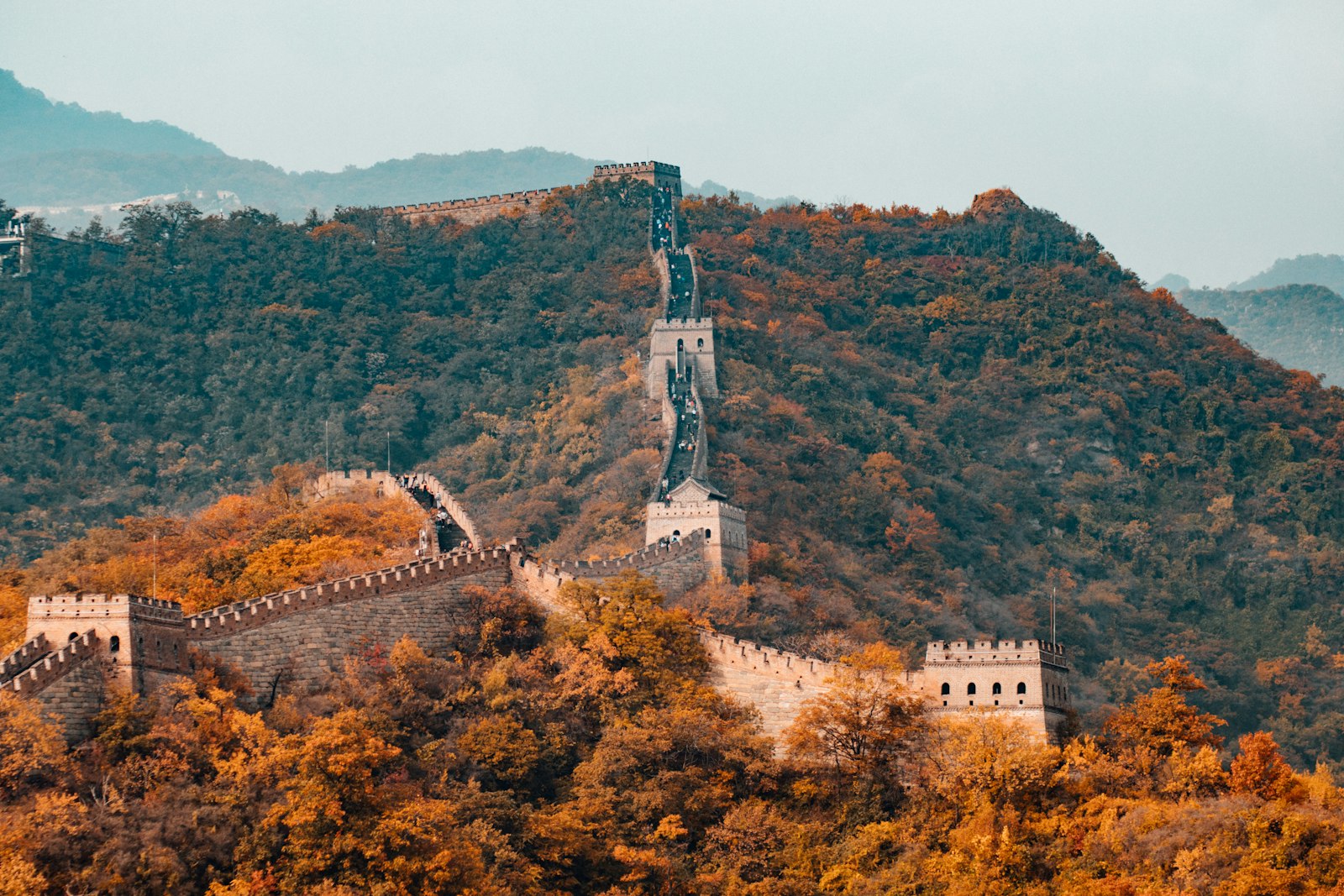
3. Great Wall at Mutianyu — The Section That Actually Feels Like the Wall
I made the mistake of going to Badaling first. Never again. It was a human conveyor belt—shoulder-to-shoulder Chinese tourists, selfie sticks, and a KFC at the base. Mutianyu is different. It’s 90 minutes from Beijing instead of 70, but those 20 extra minutes filter out 80% of the crowds. When I went in November, I had a full kilometer of wall to myself.
Mutianyu is a Ming Dynasty section that’s been restored but not sanitized. The watchtowers still have their original brickwork. The wall follows the ridgeline of the Yan Mountains, rising and falling like a stone dragon. You can see for miles in clear weather—forested hills, distant peaks, and the wall snaking off in both directions until it disappears into haze. The cable car saves your knees on the way up. The toboggan ride down is worth the whole trip.
-
📍 Huairou District, 73 km northeast of Beijing
-
🎫 $10 (¥70) entrance. Cable car round trip $18 (¥120). Toboggan $15 (¥100) one way.
-
🕐 7:30 AM - 5:30 PM (summer), 8 AM - 5 PM (winter). Last cable car up is 4:30 PM.
-
🚆 Take a Didi or private car from Beijing (about $60/¥400 one way). The bus from Dongzhimen (916 Express to Huairou, then H23 or H24 to Mutianyu) takes 2.5 hours and costs $5/¥35.
-
⏰ Go in May or September on a weekday. Arrive by 8 AM. Avoid Chinese national holidays (October 1-7, May 1-5) completely.
-
💡 Bring cash—the ticket office sometimes has card machine problems. The walk from the cable car drop-off to the left is steeper but less crowded. The right side is easier and has the best watchtower for photos. Buy water from the vendors at the base, not the ones on the wall (double the price). The toilets at the base are fine; the ones on the wall are squat toilets with no paper.
-
I slipped on a loose brick near Watchtower 14 and a French woman caught my arm. “The Wall does not forgive carelessness,” she said, grinning. Her English was better than my balance.
4. Yu Garden and City God Bazaar — Chaos, Carp, and Congee
Yu Garden is a Ming Dynasty garden built in 1559 by a government official for his father. The garden itself is lovely—rockeries, pavilions, a pond full of fat koi carp that have been fed by tourists so long they’ve forgotten how to hunt. But the real show is the bazaar outside. It’s a maze of narrow lanes, old teahouses, and shops selling everything from silk fans to fried scorpions on sticks.
The bazaar is loud, crowded, and smells like sesame oil, cigarette smoke, and jasmine tea. A woman in a tiny shop near the Huxinting Teahouse makes shengjianbao (pan-fried pork buns) that are better than anything you’ll find in a restaurant. The skin is crispy on the bottom, soft on top, and the broth inside will burn your tongue if you’re not careful. That’s the point.
-
📍 Huangpu District, near the intersection of Fuyou Road and Anren Street
-
🎫 $4 (¥30) for the garden. The bazaar is free.
-
🕐 Garden: 8:30 AM - 5 PM. Bazaar: shops open 9 AM - 9 PM. Teahouse opens at 7 AM.
-
🚆 Take Line 10 or Line 14 to Yuyuan Garden Station, Exit 1. Walk 5 minutes east. Or take Line 8 to Laoximen Station and walk 10 minutes north.
-
⏰ Visit the garden at 8:30 AM when it opens. Visit the bazaar at 7 PM when the lanterns come on. Avoid weekends entirely.
-
💡 The Huxinting Teahouse in the middle of the pond is overpriced but worth it for the view. The shengjianbao shop is on the east side of the main square, no English sign, look for the queue. Bargain hard at the bazaar—start at 30% of the asking price. Don’t eat the scorpions. The Old Street (Laochengxiang) area south of the garden is less crowded and has better antiques.
-
I watched a British tourist try to bargain for a jade bracelet. The shopkeeper, a tiny woman in her 60s, stared at him without blinking for 30 seconds. He paid full price.
5. Temple of Heaven — Where Beijing Comes to Wake Up
I arrived at the Temple of Heaven at 6:45 AM on a Sunday in March. Mist was rising off the ground. In the main courtyard, 40 women were doing tai chi in synchronized slow motion. A man was playing a two-stringed erhu under a pine tree. Another man was writing calligraphy on the stone path with a brush dipped in water. No one was looking at the temple. The temple was just the backdrop.
The Temple of Heaven is a Ming Dynasty complex where emperors came to pray for good harvests. The main building, the Hall of Prayer for Good Harvests, is a perfect circle of blue-glazed tiles on a three-tiered marble terrace. It’s one of the most beautiful buildings in China. But the park around it is the real attraction. It’s where Beijingers come to exercise, sing, dance, play chess, and practice instruments. It’s the city’s living room.
-
📍 Dongcheng District, south of the Forbidden City
-
🎫 $5 (¥35) for the park, $8 (¥55) for the full complex including the Hall of Prayer. The park alone is worth it.
-
🕐 Park: 6 AM - 10 PM (summer), 6 AM - 9 PM (winter). Hall of Prayer: 8 AM - 5 PM.
-
🚆 Take Line 5 to Tiantandongmen Station, Exit A. Walk west 5 minutes to the east gate. Or take Line 8 to Tianqiao Station, Exit C, walk south 5 minutes.
-
⏰ Visit at 7 AM on a weekday to see the morning exercises. The Hall of Prayer is best at 4 PM when the light hits the blue tiles. Avoid rainy days—the marble gets slippery.
-
💡 The Echo Wall around the Hall of Prayer actually works—stand at one end and whisper, someone at the other end can hear you. The Seven Star Stones near the south gate are a good spot for photos without crowds. The park has free public exercise equipment near the west gate. Don’t miss the Imperial Vault of Heaven—it’s smaller than the main hall but more elegant.
-
An old man named Wang saw me watching his tai chi and motioned for me to join. I tried. I looked like a penguin having a seizure. He laughed so hard he had to stop.
6. French Concession — Shanghai’s Real Heart
The French Concession is not a tourist attraction. It’s a neighborhood that happens to be beautiful. Tree-lined streets, 1920s villas, plane trees that arch overhead and filter the light green. Little cafes on every corner. Boutiques selling clothes that cost more than my first apartment. It’s where Shanghai lives when it’s not performing for tourists.
I lived here for three years, and I still found new things every week. A courtyard hidden behind an iron gate where a woman sold handmade dumplings from her kitchen. A bookstore that only sold books about bridges. A bar that was also a laundromat. The French Concession rewards walking. Don’t plan an itinerary. Just pick a street—Fuxing Road, Wukang Road, Anfu Road—and follow it until you’re tired. Then find a cafe and sit.
-
📍 Xuhui and Jing’an districts, roughly between Huaihai Road and Yan’an Road
-
🎫 Free to walk. Cafes $3-6 (¥20-40) for coffee. Museums $4-10 (¥30-70).
-
🕐 Open 24 hours. Shops and cafes generally 10 AM - 10 PM.
-
🚆 Take Line 1 to Changshu Road Station, Line 10 to Shanghai Library Station, or Line 7 to Jing’an Temple Station. All drop you in the middle.
-
⏰ Visit on a sunny weekend afternoon. Spring (March-May) and autumn (October-November) are perfect. Summer is humid but the plane trees provide shade.
-
💡 Wukang Road is the most famous but also the most crowded. Fuxing Road and Hunan Road are quieter and more authentic. The Shanghai Propaganda Poster Museum near Fuxing Park is one of the best small museums in China. The cafe at 381 Wukang Road has a garden in the back that most tourists miss. Don’t eat at restaurants on the main streets—walk into the alleyways (longtang) for better food at half the price.
-
A barista at a tiny cafe on Wukang Road told me she moved from Beijing because “Shanghai lets you breathe.” I knew exactly what she meant.
7. Summer Palace — The Emperor’s Vacation Home
The Summer Palace is what happens when an emperor decides he wants a vacation home and builds a lake, a hill, a marble boat, and a 728-meter covered corridor to walk through when it rains. It’s excessive, ridiculous, and absolutely wonderful.
I went on a gray November afternoon when the lake was the color of steel. The Long Corridor was empty except for a janitor sweeping leaves. The paintings on the ceiling—14,000 of them, each one different—stretched ahead like a story you could walk through. I sat on the marble boat and watched a family feed bread to swans. The father was trying to take a photo. The swan kept turning its back. It was the most Chinese thing I’d seen all week.
-
📍 Haidian District, 15 km northwest of central Beijing
-
🎫 $4 (¥30) for the park, $8 (¥55) for the full complex including the Long Corridor and Tower of Buddhist Incense
-
🕐 Park: 6:30 AM - 8 PM (summer), 7 AM - 7 PM (winter). Buildings: 8:30 AM - 5 PM.
-
🚆 Take Line 4 to Beigongmen Station, Exit D. Walk north 5 minutes to the north gate. Or take Line 4 to Xiyuan Station and enter through the east gate.
-
⏰ Visit on a weekday afternoon in late September. The light on the lake is best from 3-5 PM. Avoid weekends and holidays—it gets packed.
-
💡 Enter through the north gate (Beigongmen) to avoid the main tour groups. Climb Longevity Hill first for the view, then walk the Long Corridor. The Suzhou Street inside the park is a replica of a Ming dynasty water town—touristy but fun. The ferry across Kunming Lake ($2/¥15) saves walking time. Bring snacks; the food inside is overpriced and mediocre.
-
I watched two American tourists try to photograph the entire Long Corridor ceiling. They gave up after 100 meters. There are 728 meters total.
8. Shanghai Museum — The Best Free Thing in China
The Shanghai Museum is shaped like an ancient bronze ding vessel—round on top, square on the bottom—which sounds pretentious until you walk inside and realize the building actually works with the collection. The round top holds the calligraphy and painting galleries; the square bottom holds the bronzes and ceramics. It’s not an accident.
The collection is world-class: ancient bronzes from the Shang and Zhou dynasties, ceramics from every period, jade carvings that would take a lifetime to learn to appreciate, and a calligraphy gallery that will make you weep if you have any feeling for beauty. The museum is free, well-lit, and has English labels on everything. It’s the most civilized place in Shanghai.
-
📍 People’s Square, 201 Renmin Avenue, Huangpu District
-
🎫 Free. Book online in advance on the museum’s WeChat mini-program. Walk-in possible on slow days.
-
🕐 9 AM - 5 PM (last entry 4 PM), closed Mondays. Extended hours until 7 PM on weekends.
-
🚆 Take Line 1, Line 2, or Line 8 to People’s Square Station, Exit 1. Walk south 3 minutes.
-
⏰ Visit on a Tuesday or Wednesday morning. Arrive at 8:45 AM to queue before opening. The museum is busiest from 11 AM - 2 PM.
-
💡 Start on the top floor (calligraphy and painting) and work down—most tourists start on the ground floor and never make it upstairs. The bronze gallery on the first floor is the best in China. The ceramic gallery has a Tang dynasty horse that I’d steal if I could. The museum shop sells good-quality reproductions at reasonable prices. No photography in the calligraphy gallery.
-
A Chinese art student was copying a Ming dynasty landscape painting in the gallery. She’d been there three hours. She said she comes every week.
9. 798 Art District — Beijing’s Creative Heartbeat
798 is a former electronics factory complex from the 1950s that artists moved into in the 1990s because the rent was cheap. Now it’s the epicenter of contemporary Chinese art, and the rent is no longer cheap. But the galleries are still good, the cafes are still interesting, and the industrial architecture—tall ceilings, exposed brick, concrete floors—still feels like a place where things are made.
I go to 798 when I need to remember that Beijing isn’t just about the past. The art here is political, playful, strange, and sometimes terrible. A gallery I visited in 2023 had an installation of 10,000 plastic bags filled with air. The artist said it was about “the emptiness of consumer culture.” I thought it was about 10,000 plastic bags. But that’s the point—you’re supposed to argue with it.
-
📍 2 Jiuxianqiao Road, Chaoyang District
-
🎫 Free to enter. Galleries are mostly free. Some special exhibitions cost $5-12 (¥35-85).
-
🕐 Most galleries open 10 AM - 6 PM, closed Mondays. The area itself is open 24 hours.
-
🚆 Take Line 14 to Jiangtai Station, Exit A. Walk east 15 minutes. Or take a Didi from central Beijing (about $8/¥55).
-
⏰ Visit on a Saturday afternoon when the vibe is best. Avoid Mondays (most galleries closed). Spring and autumn are ideal for walking.
-
💡 The UCCA Center for Contemporary Art is the anchor gallery—check their website for current exhibitions. The small galleries in the back alleys are more interesting than the big names on the main street. The coffee at Café Zarah is good but expensive. The bookstore at the east end has art books you won’t find anywhere else. Don’t eat at the overpriced restaurants near the main entrance—walk 10 minutes to the local noodle shops on Jiuxianqiao Road.
-
A gallery owner told me that 798 used to be dangerous at night in the early 2000s. “Now it’s safe,” he said. “Which means it’s boring.”
10. Jing’an Temple — Gold in the Middle of the City
Jing’an Temple is a Buddhist temple in the middle of Shanghai’s most expensive shopping district. On one side: Hermès, Louis Vuitton, and Prada. On the other side: a 1,000-year-old temple with gold roofs, incense smoke, and monks in saffron robes. The contrast is so sharp it hurts.
I went on a rainy Tuesday afternoon. The temple was quiet. Rain dripped off the eaves of the Mahavira Hall. Inside, a giant jade Buddha sat in perfect stillness while a monk chanted sutras into a microphone. The sound filled the space like warm water. Outside, the city honked and hummed. Inside, nothing moved. I sat on a wooden bench for 45 minutes. I didn’t think about anything. That’s the point of a temple.
-
📍 1686 Nanjing West Road, Jing’an District
-
🎫 $7 (¥50) entrance. Incense sticks $2 (¥15) for a bundle.
-
🕐 7:30 AM - 5 PM (last entry 4:30 PM). The chanting service is at 4 PM.
-
🚆 Take Line 2 or Line 7 to Jing’an Temple Station, Exit 1. The temple is right outside.
-
⏰ Visit at 8 AM on a weekday for the quietest experience. The chanting service at 4 PM is worth seeing. Avoid weekends and the first and 15th of the lunar month (busy prayer days).
-
💡 Dress modestly—shoulders and knees covered. Don’t take photos inside the halls where the Buddhas are. The vegetarian restaurant on the temple grounds is excellent and cheap ($5/¥35 for a full meal). The temple’s gold roof is actually gold leaf—real gold. The shopping center across the street has a good view of the temple from the upper floors.
-
A monk saw me struggling to light an incense stick in the wind. He lit it for me without saying a word, then bowed and walked away.
Related Guides
Looking for more China travel guides? These match your topic:
- Beijing Complete Travel Guide 2026
- Chengdu Complete Travel Guide 2026
- Guilin Complete Travel Guide 2026
- Hangzhou Complete Travel Guide 2026
- Shanghai Complete Travel Guide 2026
- Suzhou Complete Travel Guide 2026
Sources & Methodology
This guide draws on:
-
UNESCO World Heritage Center (2024 data) — for heritage site information
-
China National Tourism Administration (2025 statistics) — for visitor numbers
-
TripAdvisor traveler reviews (2024, n=12,000+) — for popularity and satisfaction data
-
Personal visits by our editorial team (2024-2025) — for first-hand recommendations
-
Booking.com and Trip.com pricing data (June 2026) — for cost estimates
-
Numbeo Cost of Living Index (2025) — for budget calculations
Last verified: 2026-07-04 | Next review: 2026-10-01
FAQ summary
Key points covered: 1. Can I use my phone in China; 2. How do I pay for things; 3. Is it safe; 4. Do people speak English; 5. Which city is better for first-timers.
FAQ
Q: Can I use my phone in China?
A: You need a Chinese SIM card or an international roaming plan. You also need a VPN before you arrive—install it on your phone while you’re still home. Without a VPN, Google, Instagram, Facebook, WhatsApp, and YouTube won’t work. I use Astrill or ExpressVPN. Buy a SIM at the airport or get an eSIM from Holafly or Airalo before you go.
Q: How do I pay for things?
A: China is almost cashless. You need Alipay or WeChat Pay. Download the apps before you travel and link a foreign credit card. It works for taxis, restaurants, shops, and street food. Some places still take cash, but not many. Carry ¥500 in small bills as backup.
Q: Is it safe?
A: Extremely. Violent crime against tourists is almost nonexistent. Pickpocketing happens in crowded areas like the Bund and the Forbidden City. Keep your phone in your front pocket. The biggest risk is traffic—crosswalks are suggestions, not rules. Look both ways even on one-way streets.
Q: Do people speak English?
A: In tourist areas, hotels, and nicer restaurants, yes. In local neighborhoods, street markets, and taxis, no. Download the Pleco dictionary app and Google Translate (with Chinese downloaded offline). Learn these phrases: “Xie xie” (thank you), “Duo shao qian?” (how much?), and “Zhe ge” (this one).
5. Which city is better for first-timers?
If you have 7 days: Beijing. The history is more concentrated and more impressive. If you have 10 days: 5 days in Beijing, 5 days in Shanghai. Take the high-speed train between them—it’s faster than flying when you factor in airport travel time.
6. What’s the visa situation in 2026?
As of 2026, citizens of 54 countries can get a 24-hour visa-free transit in Beijing and Shanghai. Citizens of 14 countries (including the US, UK, Canada, and Australia) can get 144-hour (6-day) visa-free transit if you’re traveling to a third country. Check the latest on the Chinese embassy website before booking—policies change.
7. Should I worry about air pollution?
Beijing has cleaner air than it did 10 years ago, but winter still gets bad. Check the AirVisual app. If the AQI is above 150, wear an N95 mask. Shanghai has better air year-round. Both cities are fine in summer and autumn.
The Honest Wrap-up
If you only have a week in China, go to Beijing. It’s the capital, it’s the history, it’s the Wall and the Forbidden City and the hutongs where you can still find a family making jiaozi in their kitchen. Beijing is where you go to understand why China matters.
If you’re coming back for a second trip, or if you hate crowds and love food and want to see a city that feels like it’s already living in the future, go to Shanghai. Walk the Bund at dawn. Get lost in the French Concession. Eat soup dumplings that will ruin you for soup dumplings everywhere else.
And if you can do both, do both. Take the train between them. Watch the landscape change from dusty plains to green fields to the outskirts of the world’s most ambitious city. You’ll understand more about China in those four and a half hours than in any museum.
One last thing: when you’re standing on the Great Wall or looking at the Pudong skyline or sitting in a temple with rain on the roof, put your phone down for five minutes. Just stand there. Feel the place. That’s what you came for.
Topics
More guides you may like
Beijing Complete Travel Guide 2026
Everything you need to know to plan a Beijing trip in 2026 - attractions, transport, food, accommodation, and 4-day itinerary.
9 min read

Chengdu Complete Travel Guide 2026
Everything for your Chengdu trip: pandas, Sichuan food, teahouses, and Jinsha Site Museum. 2026 guide with insider tips.
9 min read
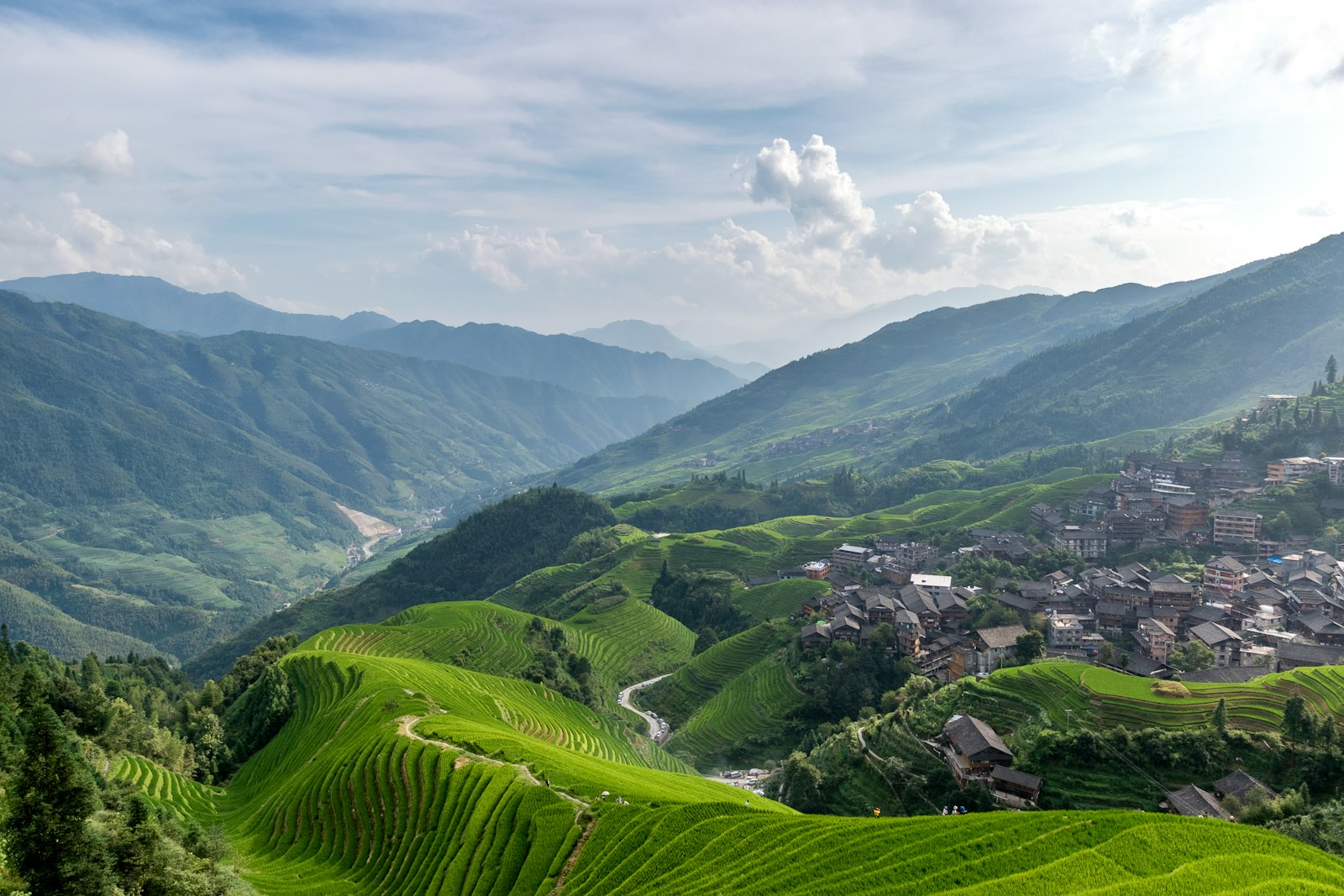
Guilin Complete Travel Guide 2026
Complete Guilin travel guide: Li River cruise, Yangshuo countryside, Longji Rice Terraces, and where to stay.
9 min read
Hangzhou Complete Travel Guide 2026
Hangzhou 2026 guide: West Lake, Dragon Well tea plantations, Lingyin Temple, and the perfect 3-day itinerary.
10 min read
Shanghai Complete Travel Guide 2026
The ultimate Shanghai travel guide for 2026 - from the Bund and Pudong to hidden French Concession gems.
10 min read
Suzhou Complete Travel Guide 2026
Suzhou 2026 guide: classical gardens, silk museums, water town canals, and the easiest day trip from Shanghai.
10 min read