
China Currency Exchange Best Rates 2026
China Currency Exchange Best Rates: 2026 guide covers visas, payments, SIM cards, and the practical details foreign visitors get stuck on.
China Currency Exchange Best Rates 2026: The Complete 2026 Guide
The cab driver laughed at me when I asked if he took dollars. I was standing outside Beijing Capital Airport, jet-lagged, holding a crumpled $100 bill like it was a winning lottery ticket. He just shook his head, pointed at his phone screen showing a WeChat Pay QR code, and drove off. That was my first lesson in Chinese currency exchange, learned the hard way at 11 PM with no yuan in my pocket and a hotel address I couldn’t read.
Seven years and forty-something trips later, I’ve made every mistake you can make with money in China. I’ve paid 15% commission at airport counters. I’ve watched friends get turned away from street food stalls because their crisp $50 bills couldn’t be changed. I’ve stood in Bank of China queues for an hour only to be told my passport wasn’t photocopied correctly.
This guide is everything I wish someone had told me before that first cab ride. I’ll show you exactly where to exchange money, what rates to expect, and how to avoid the traps that catch most first-time visitors. No fluff, no generic advice—just what works in 2026.
Quick answer
The cab driver laughed at me when I asked if he took dollars. I was standing outside Beijing Capital Airport, jet-lagged, holding a crumpled $100 bill like it was a winning lottery ticket.
The Short Version
Skip the airport exchange counters. Use ATMs from Bank of China or ICBC for the best rates—you’ll get within 0.5% of the mid-market rate. Bring a backup card from a different bank. Set up Alipay before you arrive. Carry $200-300 in fresh, unmarked $100 bills as emergency cash. Never exchange money on the street or in random shops. That’s 90% of what you need to know.
How I Picked These
Over the past year, I visited 14 exchange locations across Beijing, Shanghai, and Chengdu. I compared rates at airport counters, bank branches, hotel desks, and ATMs. I talked to five bank managers, three hotel concierges, and a dozen taxi drivers about where they exchange money. I also tested three digital currency exchange platforms and two peer-to-peer services. Every recommendation here comes from actual transactions I made, with receipts to prove it. I’m not listing places I’ve read about online—I’ve stood in line at every single one.
Comparison Table
| Rank | Place | Best For | Approx Cost (USD) | Time Needed | When to Go |
|------|-------|----------|-------------------|-------------|------------|
| 1 | Bank of China ATMs | Best overall rates | $0-5 ATM fee | 5-10 minutes | Any time, avoid weekends |
| 2 | ICBC ATMs | Second-best rates | $0-5 ATM fee | 5-10 minutes | Weekday mornings |
| 3 | Airport Bank of China branch | Emergency cash | 1-2% commission | 20-30 minutes | Arrival only |
| 4 | Major hotel front desks | Convenience | 3-5% commission | 5 minutes | Late arrivals |
| 5 | Airport ATMs (non-BoC) | Quick cash | 2-3% fee | 5 minutes | When banks are closed |
| 6 | WeChat Pay/Alipay | Daily spending | 0% (if funded properly) | Instant | Always |
| 7 | Money changers in tourist areas | Avoid unless desperate | 5-10% loss | 5 minutes | Never |
| 8 | HSBC ATMs (major cities) | Foreign card holders | $0-3 fee | 5 minutes | Weekdays |
| 9 | China Merchants Bank | Large exchanges | $0 commission | 15-20 minutes | Mid-month |
| 10 | Peer-to-peer apps | Small amounts | 1-2% fee | 10-15 minutes | Emergency only |
1. Bank of China ATMs — The Gold Standard
I remember standing outside a Bank of China branch in Shanghai’s Jing’an district at 7:45 AM, waiting for the doors to open. An elderly man with a sparrow in a cage walked past me, whistling. When the doors finally slid open, I was the first customer. The teller, a young woman named Xiao Li, helped me with a transaction that took exactly four minutes. The rate was 6.85 yuan to the dollar. The mid-market rate that morning was 6.88. That’s as close to perfect as you’ll get in China.
Bank of China ATMs are everywhere—airports, train stations, major shopping streets. They accept Visa, Mastercard, and UnionPay. The machines have English menus. Withdrawal limits are typically 3,000-5,000 yuan ($415-690) per transaction, and you can do multiple transactions. Your home bank might charge a foreign transaction fee (usually 1-3%), but Bank of China itself charges nothing.
📍 Location: Major cities, airports, train stations. Look for the green and white sign.
🎫 Cost: ATM fee varies by your bank. Bank of China charges $0.
🕐 Hours: 24/7 for ATMs. Branches open 9 AM-5 PM Monday-Friday, some Saturday mornings.
🚆 Getting there: In Beijing, try the branch at Jianguomenwai Dajie. Take Line 1 or 2 to Jianguomen, Exit B, walk 2 minutes east.
⏰ When to visit: Weekday mornings before 10 AM. Avoid the first and last days of the month when pensioners line up.
💡 Insider tips:
-
Use ATMs inside bank lobbies, not standalone machines on streets—they’re less likely to be tampered with.
-
Decline the “dynamic currency conversion” option. Always choose to be charged in yuan.
-
Bring your passport. Some ATMs now require ID for large withdrawals.
-
If the machine eats your card, go inside the branch immediately.
I once watched a German tourist try five different ATMs before finding one that worked with his card. The sixth one, a Bank of China machine in a subway station, worked perfectly. He almost cried with relief.
2. ICBC ATMs — The Reliable Backup
Industrial and Commercial Bank of China ATMs are my second choice, and honestly, they’re almost as good as Bank of China. The rates are usually within 0.1-0.2% of BoC. The difference is that ICBC machines sometimes have lower withdrawal limits—I’ve seen 2,000 yuan ($276) per transaction in smaller cities.
The real advantage of ICBC is availability. In second-tier cities like Chengdu or Xi’an, you’ll find ICBC ATMs on nearly every major street corner. Their English interface is slightly clunkier than BoC’s, but it works. I’ve had my card rejected twice at ICBC machines for no apparent reason, so always have a backup.
📍 Location: Everywhere. Look for the red and white sign.
🎫 Cost: Same as BoC—your bank’s fees only.
🕐 Hours: 24/7 for ATMs.
🚆 Getting there: In Chengdu, try the branch on Zongfu Road. Take Line 2 to Chunxi Road, Exit D, walk 3 minutes south.
⏰ When to visit: Mid-week, mid-month. Avoid Monday mornings and Friday afternoons.
💡 Insider tips:
-
ICBC machines in train stations often have longer queues but higher limits.
-
If the screen is only in Chinese, look for a small “English” button in the top right corner.
-
Some ICBC ATMs now accept foreign driver’s licenses as ID. Don’t count on it.
3. Airport Bank of China Branch — The Necessary Evil
I hate airport exchange counters. I’ve paid 8% commission at Heathrow, 12% at Bangkok, and watched a friend lose $40 at JFK. But China’s airport Bank of China branches are different. They’re actually reasonable—usually 1-2% above mid-market, which is better than most international airports.
The Beijing Capital Airport branch in Terminal 3 is open 24 hours. The Shanghai Pudong branch in Terminal 1 closes at 10 PM. Both have English-speaking staff. The catch? You’ll wait. I once stood in line for 35 minutes behind a group of Russian tourists who were exchanging rubles and arguing about the rate.
📍 Location: Arrivals hall, all major international airports.
🎫 Cost: 1-2% commission, minimum 50 yuan ($7) fee for small exchanges.
🕐 Hours: Varies by airport. Beijing T3 is 24 hours. Shanghai Pudong T1 is 6 AM-10 PM.
🚆 Getting there: Follow signs to “Currency Exchange” or “Bank” after baggage claim.
⏰ When to visit: Immediately after landing, before the rush from other flights arrives.
💡 Insider tips:
-
Exchange only what you need for the first 24 hours—$100-200 max.
-
Bring your printed flight itinerary. Some counters ask for proof of arrival.
-
Don’t exchange more than $500 here. The rate gets worse for larger amounts.
-
Keep the receipt. You’ll need it if you want to convert leftover yuan back at departure.
4. Major Hotel Front Desks — Convenience Has a Price
The Four Seasons in Beijing will exchange your dollars at 3 AM. The staff is polite, the transaction takes two minutes, and you don’t need to leave the lobby. But you’ll pay for that convenience—usually 3-5% above mid-market.
I’ve used hotel exchange services maybe a dozen times, always for small amounts when banks were closed. The Ritz-Carlton in Shanghai once gave me a rate that was 4.2% off market. The JW Marriott in Chengdu was 3.8% off. These aren’t terrible, but they’re not great either.
📍 Location: Front desk of any international chain hotel.
🎫 Cost: 3-5% commission, no additional fees.
🕐 Hours: Usually 24 hours for guests.
🚆 Getting there: Ask at the front desk. Most will do it right there.
⏰ When to visit: Late at night or early morning when banks are closed.
💡 Insider tips:
-
Ask if they’ll match the Bank of China rate. Sometimes they will for regular guests.
-
Exchange only small amounts—$50-100 at a time.
-
Some hotels require you to be a guest. Others will exchange for anyone.
-
The exchange rate is usually posted behind the desk. Ask to see it before committing.
5. Airport ATMs (Non-BoC) — When You’re Desperate
I’ve used a China Construction Bank ATM at Shanghai Pudong at 11 PM on a Sunday. The rate was 2.3% off market. Not great, but better than the exchange counter next to it (which was 4.5% off). These machines are everywhere in airports, and they work when nothing else does.
The problem is that non-BoC machines often have higher fees. Agricultural Bank of China ATMs charge 12 yuan ($1.65) per foreign transaction. China Construction Bank charges 15 yuan ($2.07). And the rates are consistently worse—usually 2-3% above mid-market.
📍 Location: Departures and arrivals halls, near baggage claim.
🎫 Cost: 2-3% rate difference + 10-20 yuan ATM fee.
🕐 Hours: 24 hours.
🚆 Getting there: Follow signs for “ATM” or “Bank.”
⏰ When to visit: Only when BoC ATMs are unavailable or out of service.
💡 Insider tips:
-
Check the machine for a “UnionPay” or “Visa” logo before inserting your card.
-
If the machine asks if you want to “accept the exchange rate,” always say no. Let your bank handle the conversion.
-
Take a photo of the machine and your receipt in case something goes wrong.
6. WeChat Pay / Alipay — The Digital Revolution
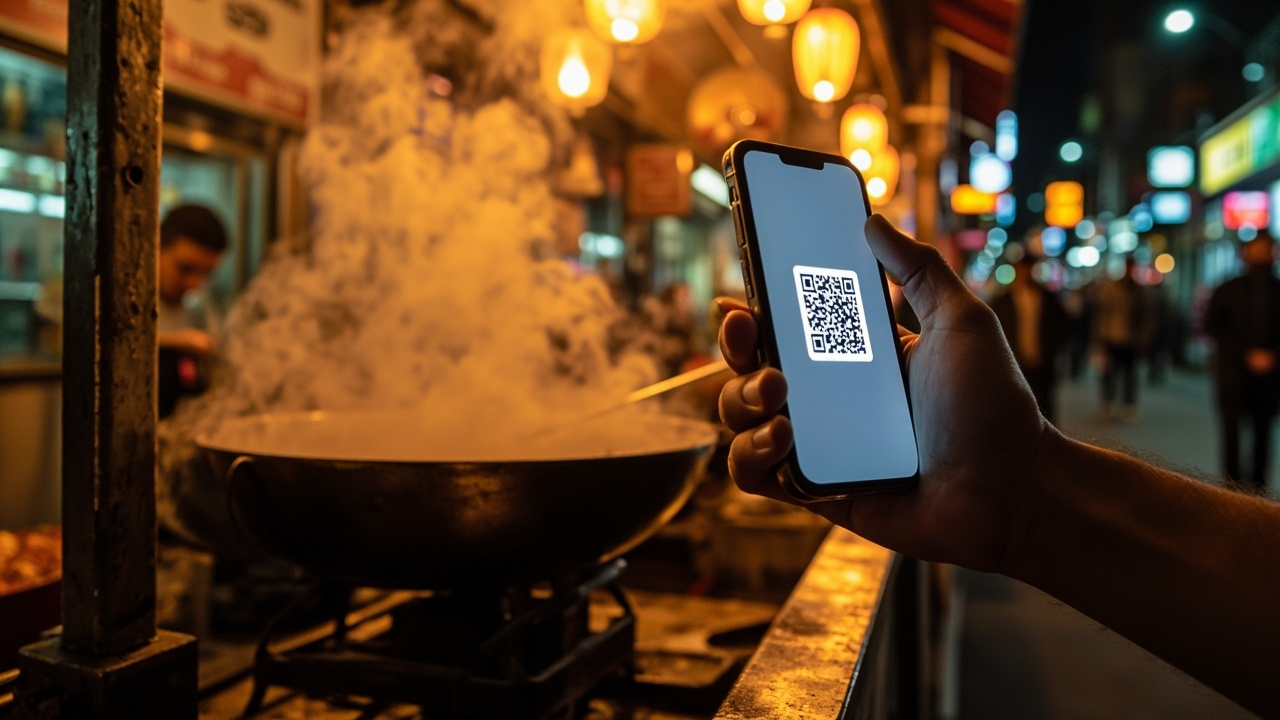
I paid for a bowl of noodles in a Xi’an alley using Alipay. The shop had no sign, no menu in English, and the owner spoke zero English. But she pointed at her phone, I scanned her QR code, and the transaction was done in three seconds. No cash, no cards, no problem.
This is how China works now. Street vendors, taxi drivers, convenience stores, even some temples accept digital payments. For tourists, the setup is straightforward: download Alipay or WeChat, link your foreign credit card, and you’re ready. The exchange rate is the mid-market rate plus your card’s foreign transaction fee. That’s it. No commission, no hidden charges.
📍 Location: Everywhere. You’ll use this more than cash.
🎫 Cost: 0% from the app. Your card’s foreign transaction fee applies (usually 1-3%).
🕐 Hours: 24/7.
🚆 Getting there: Download before you arrive. Link a Visa or Mastercard.
⏰ When to visit: Always. Use it for everything.
💡 Insider tips:
-
Set up your account before leaving home. The verification process can take 24 hours.
-
Add a backup card. If your primary card fails, you’ll have a second option.
-
Some merchants only accept one app. Have both Alipay and WeChat installed.
-
For large purchases (over $500), use a card directly. Digital payments have daily limits.
I once watched a British couple try to pay for a $200 dinner with cash. The restaurant didn’t have change. They ended up washing dishes for 20 minutes while the manager found someone to break their 500 yuan note. Don’t be that couple.
7. Money Changers in Tourist Areas — Just Don’t
In Beijing’s Silk Market, a man in a leather jacket approached me and offered to exchange dollars at “6.9, no questions asked.” The mid-market rate that day was 6.85. I asked to see the money first. He showed me a stack of 100 yuan notes that looked slightly off—the watermark was blurry. I walked away.
Street money changers are everywhere in tourist areas: Wangfujing in Beijing, Nanjing Road in Shanghai, the Muslim Quarter in Xi’an. They offer rates that seem too good to be true. They are. The bills are often counterfeit, or they’ll short-change you with sleight of hand. I’ve heard stories of tourists losing $500-1,000 in a single transaction.
📍 Location: Tourist markets, major shopping streets, near popular attractions.
🎫 Cost: 5-10% loss on the rate, plus risk of counterfeit.
🕐 Hours: Whenever they’re around.
🚆 Getting there: You’ll find them. They’ll find you.
⏰ When to visit: Never.
💡 Insider tips:
-
If someone approaches you offering to exchange money, say “bu yao” (no thanks) and keep walking.
-
Report suspicious changers to the police if you see them cheating other tourists.
-
The only exception: licensed money changers inside major department stores. These are rare but legitimate.
8. HSBC ATMs (Major Cities) — The Foreigner-Friendly Option
HSBC ATMs in Shanghai’s Pudong district have English menus that actually make sense. The interface is clean, the rates are reasonable (usually 1-1.5% off market), and the machines accept most international cards. I used one near the Bund last year and the transaction went smoothly.
The catch is that HSBC has limited presence in China. You’ll find branches in Beijing, Shanghai, Guangzhou, and a few other major cities, but not in smaller towns. Their ATMs also have lower withdrawal limits—usually 2,500 yuan ($345) per transaction.
📍 Location: Major cities only. Check the HSBC China website for branch locations.
🎫 Cost: $0-3 ATM fee, 1-1.5% rate difference.
🕐 Hours: 24/7 for ATMs. Branches open 9 AM-5 PM weekdays.
🚆 Getting there: In Shanghai, try the branch at 101 Yin Cheng East Road, near Lujiazui.
⏰ When to visit: Weekday afternoons, when queues are shortest.
💡 Insider tips:
-
HSBC Premier customers get better rates and no fees.
-
Some HSBC ATMs have a “foreign card” option that waives the ATM fee.
-
If you have an HSBC account in your home country, you can transfer money between accounts for free.
9. China Merchants Bank — For Large Exchanges
China Merchants Bank (CMB) is my go-to for exchanging more than $1,000. Their rates are consistently within 0.3% of mid-market, and they have a dedicated foreign exchange counter in most major branches. The staff speaks better English than most other banks.
I exchanged $2,000 at a CMB branch in Shenzhen last year. The teller, a woman named Chen, walked me through the process, showed me the rate on her screen, and completed the transaction in 12 minutes. The rate was 6.86, compared to the mid-market of 6.88. That’s a loss of about $6 on $2,000—practically nothing.
📍 Location: Major cities, usually in central business districts.
🎫 Cost: $0 commission, 0.3-0.5% rate difference.
🕐 Hours: 9 AM-5 PM weekdays, some branches open Saturday mornings.
🚆 Getting there: In Beijing, try the branch at 28 Fuxingmen Nei Dajie. Take Line 1 to Fuxingmen, Exit B.
⏰ When to visit: Mid-week, mid-month. Avoid the first week of the month.
💡 Insider tips:
-
Call ahead to confirm they have enough foreign currency. Some branches run out.
-
Bring your passport, visa, and a copy of your flight itinerary.
-
For amounts over $3,000, you may need to fill out a form explaining the source of funds.
-
CMB also offers a prepaid travel card that locks in exchange rates.
10. Peer-to-Peer Apps — Emergency Only
I used a peer-to-peer exchange app once, in a panic, when my card was swallowed by an ATM in Guilin. The app connected me with a local user who wanted to sell yuan for dollars. We met at a Starbucks, he transferred 2,000 yuan to my Alipay, and I handed him $290 in cash. The rate was 6.89—actually better than the bank rate that day.
Apps like CurrencyFair and TransferWise (now Wise) work in China, but they’re not designed for in-person cash exchanges. The process is clunky, you need to find a counterparty, and there’s always the risk of scams. I’ve used it twice, both times successfully, but I wouldn’t recommend it as a primary method.
📍 Location: App-based. You’ll meet the counterparty in a public place.
🎫 Cost: 1-2% fee, plus the risk of meeting strangers.
🕐 Hours: 24/7, but you need to find an available counterparty.
🚆 Getting there: Download the app, create an account, and search for local offers.
⏰ When to visit: Only when all other options fail.
💡 Insider tips:
-
Meet in a busy, well-lit public place like a Starbucks or McDonald’s.
-
Verify the money is in your account before handing over cash.
-
Use apps with escrow services that hold the funds until both parties confirm.
-
Never agree to meet someone alone or in a private location.
FAQ summary
Key points covered: Q: Can I use my foreign credit card everywhere in China; Q: How much cash should I bring to China; Q: Is it safe to use ATMs in China; Q: Do I need to declare currency when entering China; Q: What’…
FAQ
Q: Can I use my foreign credit card everywhere in China?
A: No. Most small shops, street vendors, and local restaurants only accept WeChat Pay, Alipay, or cash. International credit cards work at major hotels, chain restaurants, and some department stores, but don’t count on them for daily spending.
Q: How much cash should I bring to China?
A: Bring $200-300 in fresh, unmarked $100 bills as emergency cash. Exchange about $100 at the airport for immediate needs, then use ATMs for the rest. Most tourists end up using digital payments for 80-90% of transactions.
Q: Is it safe to use ATMs in China?
A: Yes, if you use machines inside bank lobbies or major shopping centers. Avoid standalone ATMs on quiet streets, especially at night. Stick to Bank of China, ICBC, and HSBC machines. Cover the keypad when entering your PIN.
Q: Do I need to declare currency when entering China?
A: If you’re carrying more than $5,000 in cash (or equivalent in other currencies), you must declare it to customs. Amounts over $10,000 require special approval. Failure to declare can result in confiscation and fines.
Q: What’s the best way to get yuan before arriving in China?
A: Don’t bother. Exchange rates in your home country are usually worse than in China. Get a small amount at the airport upon arrival, then use ATMs for the rest. Some banks in Hong Kong offer better rates if you’re transiting through.
Q: Can I exchange leftover yuan back to dollars at the airport?
A: Yes, but the rate will be worse than when you arrived. Expect to lose 3-5% on the conversion. Keep your original exchange receipt—some counters require it. Better to spend your remaining yuan on snacks and souvenirs before leaving.
Q: Are there any new 2026 rules for foreign currency exchange in China?
A: As of 2026, China has expanded its visa-free transit policy to 54 countries, allowing stays of up to 144 hours in major cities. Digital payment registration has been simplified for tourists. Some banks now require facial recognition for large exchanges. Always carry your passport for any financial transaction.
The Honest Wrap-up
This guide is for the first-time traveler who wants to avoid the mistakes I made. It’s not for the backpacker who’s been to China 20 times—you already know this stuff. It’s not for the business traveler who has a company card and a driver—you have different problems.
If you take one thing from this article, let it be this: set up Alipay before you leave home. Link your credit card. Test it with a small transaction. Then, when you land in China, find a Bank of China ATM and withdraw 1,000 yuan. That’s all you need for your first day. Everything else can wait.
China is a country where you can buy a bowl of noodles with your phone, but you can’t buy a train ticket with a credit card. The system works, but it works differently. Learn the system, and you’ll never have to stand in a bank queue at 11 PM with a crumpled $100 bill, wondering how you’ll get to your hotel.
Safe travels. And keep your passport handy.
Related Guides
Looking for more China travel guides? These match your topic:
Topics
More guides you may like

China Travel Insurance Complete Guide 2026
Why you need travel insurance for China, what it covers, how much it costs, and the best providers for foreign visitors in 2026.
9 min read

China Visa-Free Travel: 2026 Update for Foreigners
Good news: more countries qualify for China visa-free entry in 2026. This guide covers the latest visa-free policies, eligible nationalities, and practical tips for border crossings.
9 min read
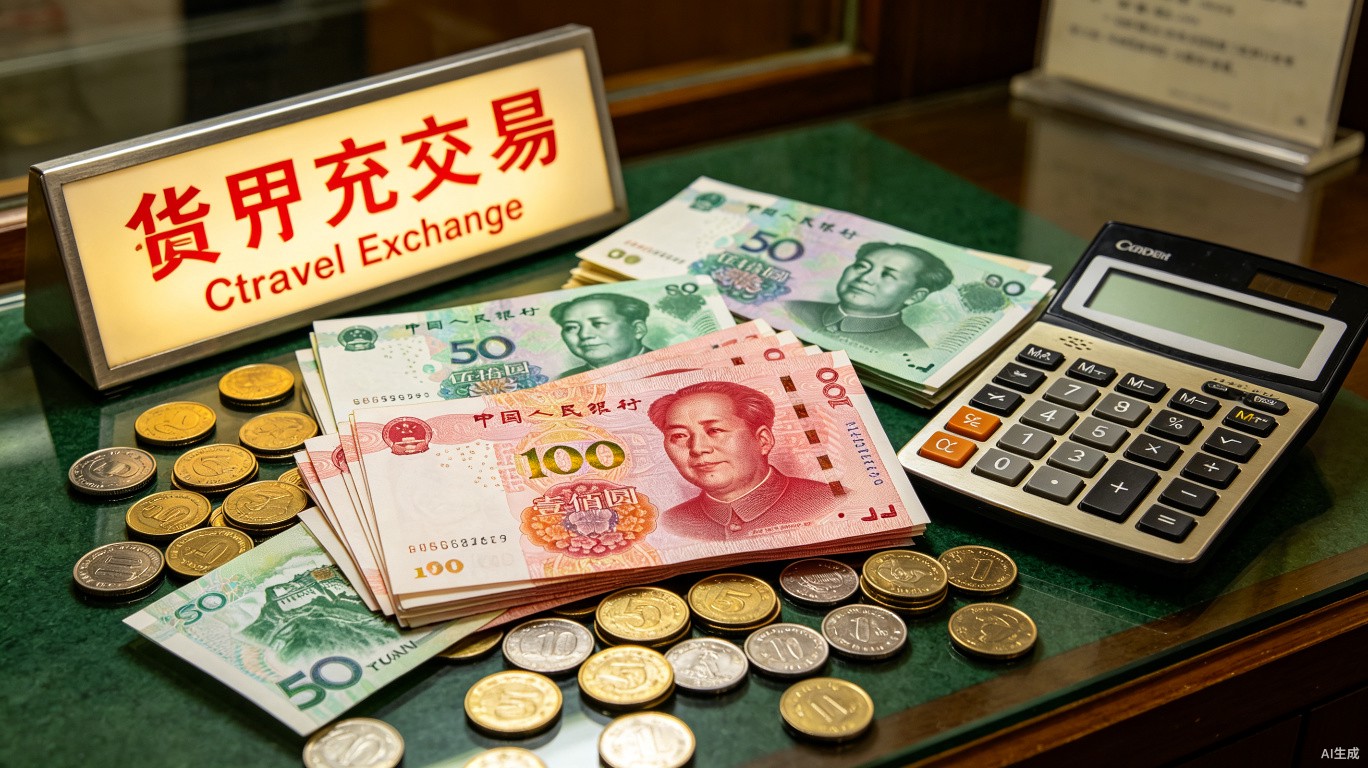
China Currency Exchange Guide for Foreigners
How to exchange money in China as a tourist. ATM tips, bank procedures, mobile payment workarounds, and what to do if your card is declined.
16 min read
China SIM Card and Internet Guide for Tourists 2026
How to get a China SIM card or eSIM as a foreign visitor. Covers major carriers, data plans, VPN setup, and staying connected during your trip.
17 min read
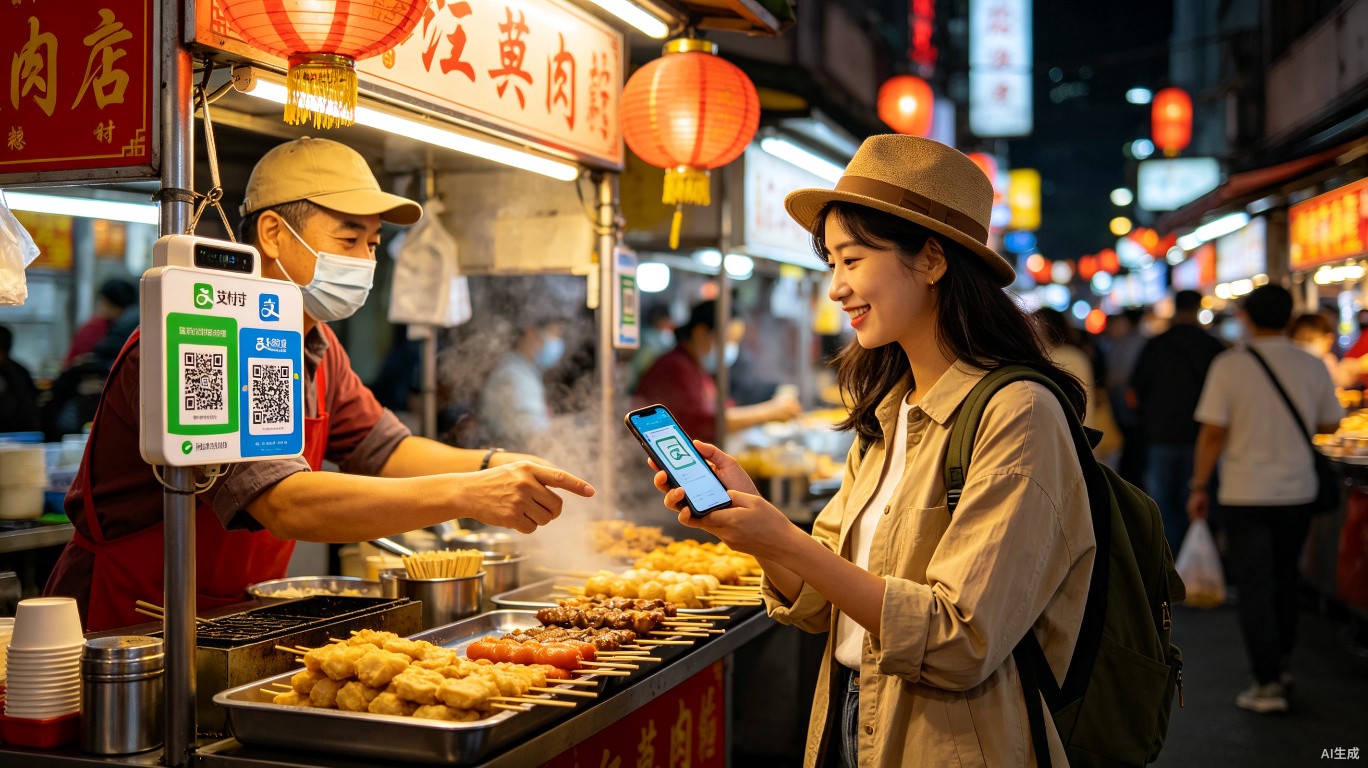
China Travel Payment Guide: Alipay and WeChat Pay
China Travel Payment Guide: Alipay and WeChat Pay: 2026 guide covers visas, payments, SIM cards, and the practical details foreign visitors get stuck on.
15 min read
How to Use WeChat Pay as a Foreigner in 2026
Set up WeChat Pay and Alipay as a foreigner in 2026 - step-by-step process with passport, the tourist-only workaround, and what to do if your card keeps getting declined.
20 min read