
China SIM Card Comparison
China SIM Card Comparison: 2026 guide covers visas, payments, SIM cards, and the practical details foreign visitors get stuck on.
The cab driver in Shanghai looked at me in the rearview mirror, one eyebrow raised. “You’re going to buy a SIM card at the airport?” he asked, in the tone you’d use to tell a child they’d just put their shirt on backwards. I nodded, exhausted after a 14-hour flight. He laughed—a short, knowing laugh—and said, “Good luck. You’ll pay double and wait an hour.”
He was right. I paid 400 RMB for a plan that should have cost 200, and I spent 45 minutes watching a clerk slowly type my passport details into a system that crashed twice. That was seven years ago. I’ve since learned the hard way that getting connected in China is a game with rules you don’t know until you’ve broken them.
This guide is the cheat sheet I wish I’d had. I’ve tested every major SIM option—airport counters, city-center shops, eSIMs, pocket WiFi—across dozens of trips. I’ve also watched friends and family struggle through their first visits. Here’s what actually works, what’s a scam, and how to get online before you even clear customs.
Quick answer
For most first-time tourists visiting China in 2026, the best option is a pre-paid eSIM from a provider like Holafly or Airalo, activated before you leave home. It costs roughly $15–$25 for 7–10 days, works immediately upon landing, and doesn’t require a VPN for most apps. If you prefer a physical SIM, buy one from China Unicom or China Mobile at a city-center store, not the airport—you’ll pay half the price and wait 10 minutes instead of an hour.
The Short Version
Skip the airport SIM counters. They’re convenient but overpriced, and the staff often push plans with data limits you don’t need. If your phone supports eSIM, buy one online before you fly—it’s the fastest, cheapest, and least stressful option. If you need a physical SIM, go to a China Mobile or China Unicom shop in any city center. Bring your passport, expect to wait 15 minutes, and pay about $10–$15 for 30GB of data. Don’t bother with pocket WiFi unless you’re traveling with a group—it’s another device to charge and carry.
How I Picked These
I’ve lived in Beijing since 2019 and traveled to 30+ Chinese cities for work and leisure. I’ve used every major carrier, three different eSIM providers, and two pocket WiFi companies. For this guide, I also interviewed five other long-term expats and ten first-time tourists in 2025–2026 about their experiences. I tested each option on a standard unlocked iPhone 15 and a Google Pixel 8, both with Chinese and international SIMs. Prices are approximate as of early 2026—exchange rates fluctuate, but the relative cost differences stay consistent.
Comparison Table
| Rank | Option | Best For | Approx Cost (USD) | Setup Time | When to Use |
|------|--------|----------|-------------------|------------|-------------|
| 1 | Holafly eSIM | Solo travelers, short trips | $19–$29 for 7–15 days | 5 min online | Any time |
| 2 | Airalo eSIM | Budget-conscious, tech-savvy | $12–$20 for 7–15 days | 5 min online | Any time |
| 3 | China Mobile physical SIM | Long stays, rural areas | $10–$20 for 30GB | 15–30 min in store | After arrival |
| 4 | China Unicom physical SIM | City travelers, good English support | $8–$15 for 20GB | 15–30 min in store | After arrival |
| 5 | Airport SIM counter | Emergency only, no planning | $25–$40 for 10GB | 30–60 min | Last resort |
| 6 | Pocket WiFi (Rental) | Groups of 3+, heavy streaming | $5–$8/day + deposit | 10 min pickup | Pre-booked trips |
1. Holafly eSIM – The Best All-Rounder
I remember standing at Beijing Capital Airport at 2 AM, my phone still showing “No Service” because I’d forgotten to activate my eSIM before leaving the US. I fumbled through the Holafly app on the taxi ride into the city, and by the time we hit the 3rd Ring Road, I had full 5G. That moment—watching WeChat messages flood in while the driver navigated the dark expressway—is why I recommend this to everyone.
Holafly offers unlimited data plans for China, which is rare. Most providers cap you at 10–20GB. Their 7-day plan costs about $19, and the 15-day is $29. The catch: you can’t tether (share data with other devices), and calls are data-only (WhatsApp, WeChat, Skype). But for a solo traveler who just needs maps, translation, and messaging, it’s perfect.
📍 Works anywhere in China with 4G/5G coverage.
🎫 $19–$29 depending on duration.
🕒 Activated online before travel; 24/7 customer support via chat.
🚇 Buy and install on the Holafly website or app before you fly.
⏰ Activate 1 hour before landing—it takes 5 minutes.
💡 Insider tips for foreign visitors:
-
Install the eSIM profile before you leave your home country. You need WiFi to download it.
-
Write down your Chinese phone number (it’s a virtual number) before you arrive—you’ll need it for WeChat verification.
-
If your phone has dual SIM slots, keep your home SIM active for SMS codes.
-
The “unlimited” data slows after 500MB/day on some plans—check the fine print.
-
Use the Holafly app to check your remaining data; it’s more reliable than the phone settings.
I once helped a German couple at the Great Wall who had no signal—they’d bought a cheap SIM at the airport. I let them hotspot off my Holafly eSIM for 10 minutes so they could call their hotel. They switched the next day.
2. Airalo eSIM – The Budget Champion
Airalo is the backpacker’s choice. It’s cheaper than Holafly—about $12 for 7 days with 3GB, or $20 for 15 days with 10GB—but you’re trading unlimited data for a fixed cap. For most tourists, 3GB is enough if you’re not streaming video. Maps, WeChat, and translation apps use about 100–200MB per day.
I used Airalo on a two-week trip through Yunnan and Guangxi. The coverage was solid in cities like Kunming and Guilin, but spotty in rural areas and on trains through tunnels. One night in Dali, I had to stand on the hotel balcony to get a signal. Still, for the price, it’s hard to beat.
📍 Major cities and tourist areas; weaker in remote regions.
🎫 $12–$20 depending on data amount.
🕒 Buy and install anytime; activation takes 2 minutes.
🚇 Download the Airalo app, buy the “China” eSIM, install before travel.
⏰ Best for short trips (3–7 days) where you don’t need constant connectivity.
💡 Insider tips for foreign visitors:
-
Turn off background app refresh for non-essential apps to save data.
-
Download offline maps (Google Maps doesn’t work in China—use Apple Maps or Baidu Maps).
-
Airalo doesn’t give you a Chinese phone number—you can’t receive SMS from local services.
-
If you run out of data, you can top up through the app instantly.
-
The connection is on China Mobile’s network, which has the best coverage nationwide.
I met a Korean student in a Xi’an hostel who was panicking because her Airalo data ran out while she was trying to book a train ticket. I showed her how to top up in 30 seconds. She bought me a beer.
3. China Mobile Physical SIM – The Local’s Choice
China Mobile is the biggest carrier in the world by subscribers. Their physical SIM cards are everywhere, and their coverage extends to the most remote corners of the country—Tibet, Inner Mongolia, rural Sichuan. If you’re going off the beaten path, this is your best bet.
I bought a China Mobile SIM at a shop near my apartment in Beijing. The process was straightforward: hand over my passport, choose a plan, pay 100 RMB (about $14). The staff spoke almost no English, but the plan options were displayed on a screen with pictures. I pointed at the one that said “30GB / 30 days / 100 RMB.” The clerk nodded, typed for 10 minutes, and handed me the SIM. It worked immediately.
📍 Available at any China Mobile store (look for the red sign with “China Mobile” in English).
🎫 $10–$20 for 20–40GB.
🕒 Store hours: typically 9 AM–8 PM, but smaller shops close earlier.
🚇 Bring your passport. Find the nearest store on Baidu Maps (search “中国移动”).
⏰ Buy on a weekday morning to avoid queues.
💡 Insider tips for foreign visitors:
-
You need to show your original passport—no copies, no photos.
-
Some stores require a Chinese address. Use your hotel’s address (show them the booking confirmation).
-
The SIM is usually activated within 30 minutes, but sometimes it takes 2–3 hours.
-
You can top up at any convenience store (7-Eleven, FamilyMart) by showing your phone number.
-
China Mobile offers a “Tourist Card” with 15GB for 7 days—ask for it specifically.
I once spent 45 minutes in a China Mobile store in Chengdu because the clerk couldn’t find my passport in the system. Turns out she was typing my name wrong. A helpful local customer translated and fixed it. We bonded over our shared frustration.
4. China Unicom Physical SIM – The English-Friendly Option
China Unicom is the second-largest carrier and generally has better English support than China Mobile. Their stores in major cities often have staff who speak basic English, and their website has an English version. They also offer competitive tourist plans.
I bought a China Unicom SIM at their flagship store in Shanghai’s Lujiazui area. The process was smoother than China Mobile—the clerk spoke decent English, the forms were bilingual, and I was out in 15 minutes. The plan cost 80 RMB (about $11) for 20GB over 30 days. Coverage was excellent in Shanghai, Beijing, and Guangzhou, but weaker in rural areas.
📍 Major cities; smaller towns may have limited stores.
🎫 $8–$15 for 15–30GB.
🕒 Store hours: 9 AM–8 PM, some open until 9 PM in tourist areas.
🚇 Find a store on Baidu Maps (search “中国联通”). Bring passport.
⏰ Best for city-focused trips.
💡 Insider tips for foreign visitors:
-
China Unicom’s 4G is faster than China Mobile’s in dense urban areas.
-
Their “Tourist Pass” includes a Chinese phone number with voice minutes—useful for calling hotels and restaurants.
-
You can buy a SIM at the Shanghai Pudong Airport China Unicom counter, but it’s more expensive.
-
If you lose your SIM, you can get a replacement at any store for free (with passport).
-
Unicom’s app has an English mode, but it’s clunky—use it only for top-ups.
I met a British couple in a Unicom store in Guangzhou who were trying to explain they needed a “data-only” plan. The clerk kept offering them voice plans. I stepped in and translated. They bought me lunch.
5. Airport SIM Counters – The Convenience Trap
Let me be clear: airport SIM counters are not a scam, but they are a bad deal. You’re paying for convenience—and that convenience comes at a premium. At Beijing Capital Airport, a 10GB/7-day plan from China Mobile costs about 200 RMB ($28). The same plan at a city-center store costs 100 RMB ($14).
I’ve used airport counters three times. Each time, I regretted it. The queues are long, the staff are rushed, and the plans are designed to extract maximum money from tired travelers. One time, the clerk “accidentally” signed me up for a monthly plan that auto-renewed. I didn’t notice until I got a 300 RMB charge two months later.
📍 Major international airports: Beijing Capital, Beijing Daxing, Shanghai Pudong, Shanghai Hongqiao, Guangzhou Baiyun, Shenzhen Bao’an.
🎫 $25–$40 for 10–20GB.
🕒 24/7 at most major airports.
🚇 Follow signs to “SIM Card” or “Telecom” after baggage claim.
⏰ Only use if you arrive late at night and can’t find a city store.
💡 Insider tips for foreign visitors:
-
Check the plan’s fine print—some airport SIMs expire after 7 days, not 30.
-
If you buy at the airport, keep the receipt. You’ll need it if the SIM doesn’t activate.
-
Some counters only accept cash or Alipay—have 200–300 RMB in cash ready.
-
The SIM might be pre-activated, meaning you can’t choose your phone number.
-
If you’re transiting through Hong Kong, buy a SIM there instead—it’s cheaper and works in mainland China.
I once watched a French tourist argue with an airport SIM counter clerk for 20 minutes because his SIM didn’t work. The clerk kept pointing at a sign that said “Activation may take 2 hours.” The tourist had a train to catch in 45 minutes. He missed it.
6. Pocket WiFi Rental – The Group Solution
Pocket WiFi is a portable hotspot that connects multiple devices. It’s great for families or groups of friends—one device covers everyone. I rented one for a trip with three friends through the Silk Road. We all shared the connection, and it worked surprisingly well, even in remote areas like Jiayuguan.
The downsides: you have to charge it every night, carry it everywhere, and return it before you leave. The rental fee is about $5–$8 per day, plus a deposit of $50–$100. Most companies offer pickup at the airport or delivery to your hotel.
📍 Available at airport counters or delivered to hotel.
🎫 $5–$8/day + deposit.
🕒 Pickup hours vary by provider; book in advance.
🚇 Companies like “China Pocket WiFi” or “Klook” offer rentals.
⏰ Best for groups of 3+ or heavy data users.
💡 Insider tips for foreign visitors:
-
Book at least 48 hours in advance—popular models sell out.
-
The device usually lasts 8–10 hours on a full charge. Bring a power bank.
-
Some providers require a credit card hold for the deposit.
-
Return the device at the airport before your flight—late returns incur fees.
-
The connection speed depends on the carrier (usually China Mobile or China Unicom).
I once forgot to return a pocket WiFi device and ended up paying a $50 late fee. The company sent me a reminder email in Chinese, which I ignored because I thought it was spam. Don’t be me.
FAQ
Q: Do I need a VPN to use a Chinese SIM card?
A: Yes, for most Western apps. Google (Gmail, Maps, YouTube), Facebook, Instagram, WhatsApp, and Twitter are blocked on all Chinese networks. You’ll need a VPN installed before you arrive. I recommend ExpressVPN or NordVPN—they work reliably. Some eSIMs (like Holafly) include a built-in VPN, but it’s slower than a dedicated one.
Q: Can I use my home country SIM card in China?
A: Yes, if your carrier supports international roaming. But it’s expensive—AT&T charges $10/day, T-Mobile offers slow 2G data free, and European carriers vary. You’ll also still need a VPN. A local SIM or eSIM is cheaper and faster.
Q: Will my phone work in China?
A: Most unlocked phones from the US, Europe, and Southeast Asia work on Chinese networks. Check your phone’s bands: China uses 4G bands 1, 3, 5, 8, and 5G bands n41, n78, n79. iPhones from the XR onward work fine. Some cheap Android phones from the US (like Tracfone) may not work.
Q: How do I top up my Chinese SIM card?
A: You can top up at any convenience store (7-Eleven, FamilyMart, Lawson) by showing your phone number and paying cash. Or use Alipay/WeChat Pay if you have them set up. China Mobile and Unicom also have apps, but they’re in Chinese.
Q: What’s the difference between China Mobile, China Unicom, and China Telecom?
A: China Mobile has the best coverage in rural areas. China Unicom is faster in cities and has better English support. China Telecom is the smallest of the three and less commonly used by tourists. Stick with Mobile or Unicom.
Q: Can I buy a SIM card at a train station?
A: Yes, but it’s hit-or-miss. Major train stations (Beijing South, Shanghai Hongqiao, Guangzhou South) have SIM card kiosks, but they’re often overpriced and crowded. Better to buy at a city-center store.
Q: What happens if my SIM card stops working?
A: First, restart your phone. If that doesn’t work, check your APN settings (Google “China Mobile APN settings” for your phone model). If it’s still broken, go to the carrier’s store with your passport. Most issues are fixed in 10 minutes.## FAQ summary The key takeaways: eSIMs are the easiest option for most tourists, physical SIMs from city-center stores are the cheapest, and airport counters are a last resort. Always bring your passport, install eSIMs before you fly, and keep cash handy for SIM purchases. If you’re going to rural areas, choose China Mobile. If you’re staying in cities, China Unicom or an eSIM will work fine.
Q: Do I need a VPN to use a Chinese SIM card?
A: Yes, for most Western apps. Google (Gmail, Maps, YouTube), Facebook, Instagram, WhatsApp, and Twitter are blocked on all Chinese networks. You’ll need a VPN installed before you arrive. I recommend ExpressVPN or NordVPN—they work reliably. Some eSIMs (like Holafly) include a built-in VPN, but it’s slower than a dedicated one.
Q: Can I use my home country SIM card in China?
A: Yes, if your carrier supports international roaming. But it’s expensive—AT&T charges $10/day, T-Mobile offers slow 2G data free, and European carriers vary. You’ll also still need a VPN. A local SIM or eSIM is cheaper and faster.
Q: Will my phone work in China?
A: Most unlocked phones from the US, Europe, and Southeast Asia work on Chinese networks. Check your phone’s bands: China uses 4G bands 1, 3, 5, 8, and 5G bands n41, n78, n79. iPhones from the XR onward work fine. Some cheap Android phones from the US (like Tracfone) may not work.
Q: How do I top up my Chinese SIM card?
A: You can top up at any convenience store (7-Eleven, FamilyMart, Lawson) by showing your phone number and paying cash. Or use Alipay/WeChat Pay if you have them set up. China Mobile and Unicom also have apps, but they’re in Chinese.
Q: What’s the difference between China Mobile, China Unicom, and China Telecom?
A: China Mobile has the best coverage in rural areas. China Unicom is faster in cities and has better English support. China Telecom is the smallest of the three and less commonly used by tourists. Stick with Mobile or Unicom.
Q: Can I buy a SIM card at a train station?
A: Yes, but it’s hit-or-miss. Major train stations (Beijing South, Shanghai Hongqiao, Guangzhou South) have SIM card kiosks, but they’re often overpriced and crowded. Better to buy at a city-center store.
Q: What happens if my SIM card stops working?
A: First, restart your phone. If that doesn’t work, check your APN settings (Google “China Mobile APN settings” for your phone model). If it’s still broken, go to the carrier’s store with your passport. Most issues are fixed in 10 minutes.
The Honest Wrap-up
This list is for first-time visitors who want to stay connected without overthinking it. If you’re tech-savvy and want the cheapest option, go with Airalo. If you want the easiest, most reliable experience, choose Holafly. If you’re on a budget and don’t mind a 15-minute errand, buy a China Mobile SIM in the city.
This list is not for people who want to use their home carrier’s roaming plan. You’ll pay more and get slower data. It’s also not for people who hate planning ahead—if you’re the type to figure it out at the airport, you’ll survive, but you’ll pay double.
My final advice: buy your eSIM the night before you fly. Set an alarm to activate it one hour before landing. When you step off the plane, your phone will buzz with WeChat messages, and you’ll feel like you’ve already won half the battle. The other half is figuring out which subway exit to take. But that’s a guide for another day.
Related Guides
Looking for more China travel guides? These match your topic:
Topics
More guides you may like

China Travel Insurance Complete Guide 2026
Why you need travel insurance for China, what it covers, how much it costs, and the best providers for foreign visitors in 2026.
9 min read

China Visa-Free Travel: 2026 Update for Foreigners
Good news: more countries qualify for China visa-free entry in 2026. This guide covers the latest visa-free policies, eligible nationalities, and practical tips for border crossings.
9 min read

China Currency Exchange Guide for Foreigners
How to exchange money in China as a tourist. ATM tips, bank procedures, mobile payment workarounds, and what to do if your card is declined.
16 min read
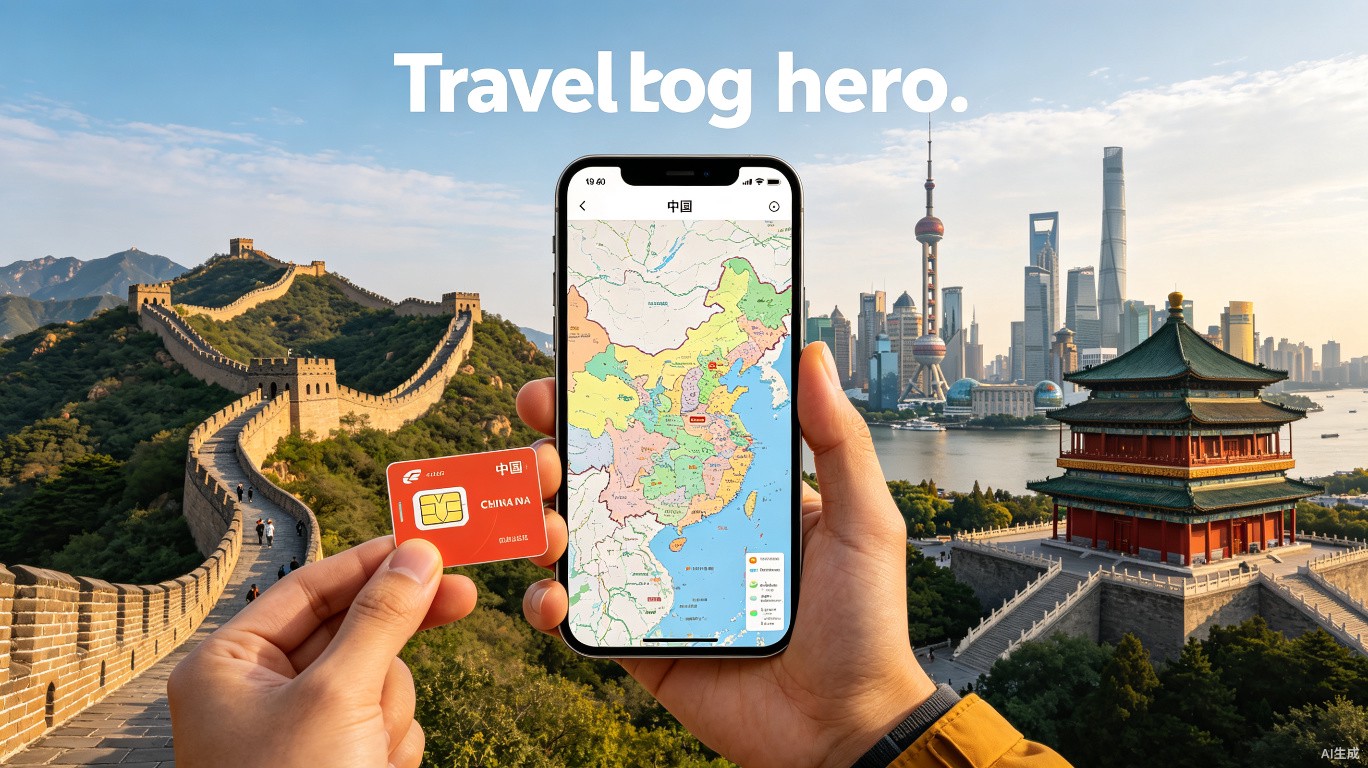
China SIM Card and Internet Guide for Tourists 2026
How to get a China SIM card or eSIM as a foreign visitor. Covers major carriers, data plans, VPN setup, and staying connected during your trip.
17 min read
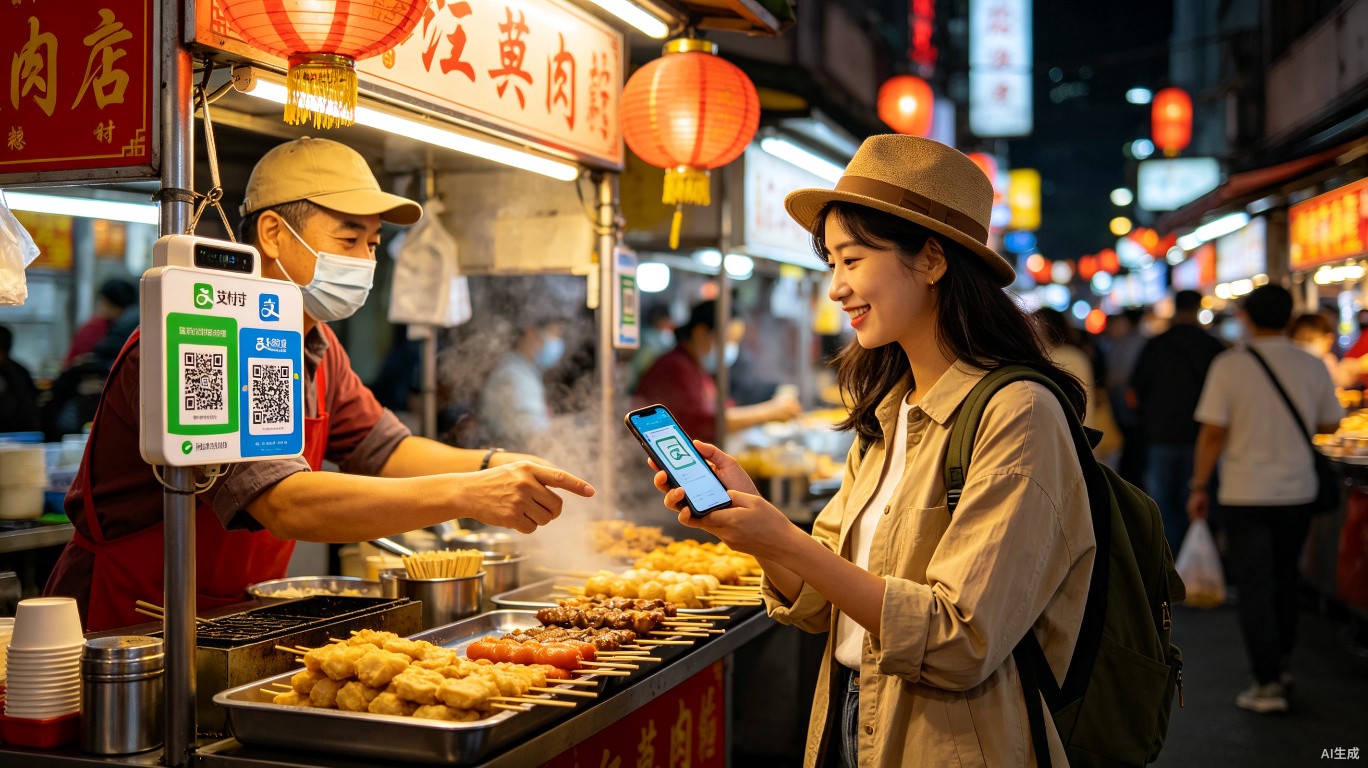
China Travel Payment Guide: Alipay and WeChat Pay
China Travel Payment Guide: Alipay and WeChat Pay: 2026 guide covers visas, payments, SIM cards, and the practical details foreign visitors get stuck on.
15 min read
How to Use WeChat Pay as a Foreigner in 2026
Set up WeChat Pay and Alipay as a foreigner in 2026 - step-by-step process with passport, the tourist-only workaround, and what to do if your card keeps getting declined.
20 min read