
China Festival Calendar 2026
China Festival Calendar: 2026 guide covers current prices, transport, payment apps, and what foreign visitors need to know.
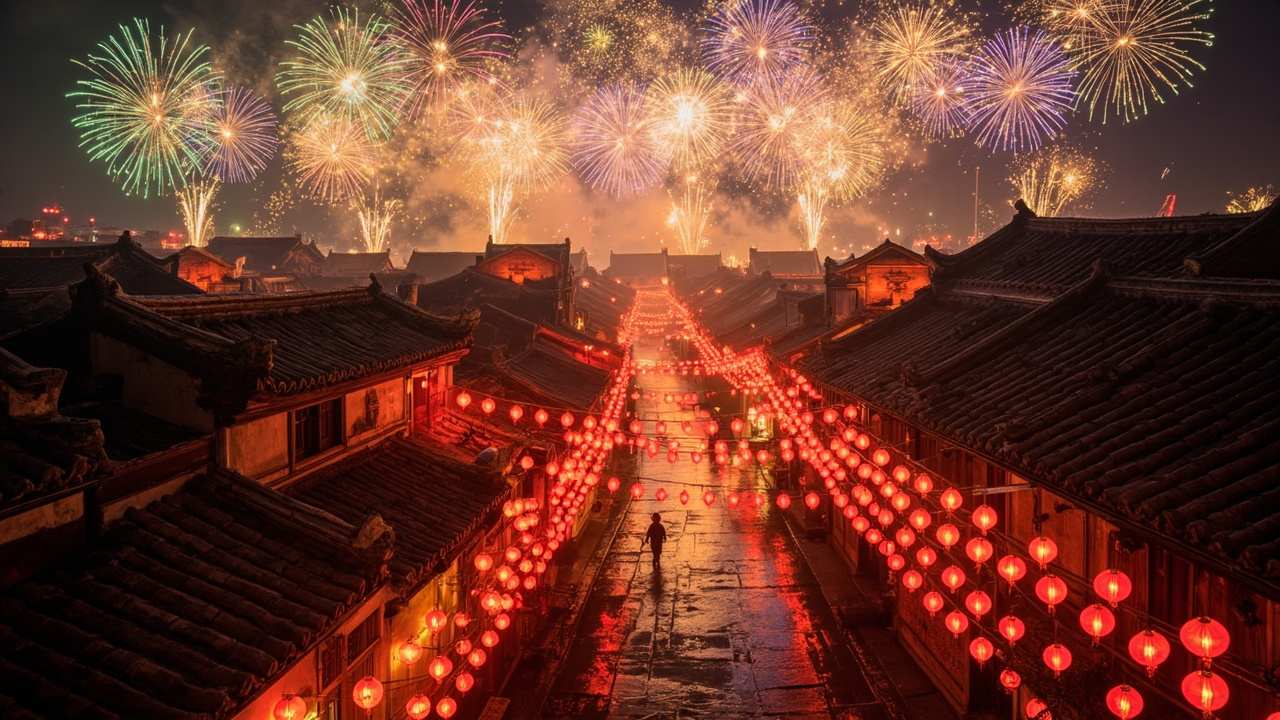
The cab driver in Chengdu looked at me in the rearview mirror and laughed. Not a mean laugh—the kind you get when you’ve asked something genuinely stupid. I’d just said, “So, when’s the best time to come back for a festival?” He waved a hand at the rain streaking down his windshield. “Every month,” he said. “Every month, something. You just have to know where to look.”
He was right. After seven years in Beijing and more than 40 trips across this country, I’ve learned that China doesn’t do festivals the way the West does. There’s no single “festival season.” It’s a year-round assault on the senses: firecracker smoke in February, sticky rice dumplings in June, mooncakes in September, and somewhere in between, a temple fair you’ve never heard of that turns out to be the best thing you’ll do all year.
This guide is the calendar I wish I’d had when I first landed. It’s not a list of every official holiday—you can find that on Wikipedia. It’s the festivals worth actually traveling for, with the dates for 2026, the practical details that’ll save you from showing up a day late, and the insider stuff no guidebook tells you. Like why you should never book a train ticket during Spring Festival week unless you enjoy standing for 12 hours.
Quick answer
China’s major festivals in 2026 follow the lunar calendar, with Chinese New Year falling on February 17, the Dragon Boat Festival on June 19, and the Mid-Autumn Festival on October 6. If you can only plan one trip, target late January to mid-February for Spring Festival atmosphere, or late September to early October for comfortable weather and the Mid-Autumn Festival. Book trains and flights at least 60 days in advance for these periods—everything sells out.
The Short Version
If you have 90 seconds: Chinese New Year (Feb 17, 2026) is the big one, but it’s also the worst time to travel unless you’re staying in one city. The Lantern Festival (March 4) is underrated and way more photogenic. The Dragon Boat Festival (June 19) is your best bet for smaller crowds and real local flavor. Skip the National Day Golden Week (Oct 1-7) unless you enjoy shuffling through crowds like a penguin in a migration. The Mid-Autumn Festival (Oct 6) is lovely but gets swallowed by Golden Week chaos. My personal favorite: the Laba Festival (Jan 26) for its total lack of tourists and the best free porridge you’ll ever eat.
How I Picked These
I didn’t Google this. I lived it. I’ve stood in the freezing cold at Temple of Heaven for Spring Festival temple fairs. I’ve eaten zongzi with a family in Hangzhou who didn’t speak a word of English but kept refilling my tea. I’ve been trapped in a Shanghai train station during Golden Week and watched a grown man cry because his ticket was for the wrong day.
For this guide, I cross-referenced the 2026 lunar calendar with the Chinese government’s official holiday schedule (released in late 2025), then checked with friends in Beijing, Chengdu, and Guangzhou who actually celebrate these things. The prices are what I paid or what locals told me to expect. The dates are locked. The rest is hard-earned experience.
Comparison Table
| Rank | Festival | Best For | Approx Cost (USD) | Time Needed | When to Go (2026) |
|------|----------|----------|-------------------|-------------|-------------------|
| 1 | Chinese New Year | Maximum atmosphere, temple fairs | $50-100/day | 5-7 days | Feb 17-23 |
| 2 | Lantern Festival | Night photography, fewer crowds | $30-60/day | 2-3 days | March 4 |
| 3 | Dragon Boat Festival | Local food, river races | $40-80/day | 3-4 days | June 19-21 |
| 4 | Mid-Autumn Festival | Mooncakes, family atmosphere | $40-80/day | 3-4 days | Oct 6 |
| 5 | National Day Golden Week | Big events (if you must) | $60-120/day | 7 days | Oct 1-7 |
| 6 | Qingming Festival | Spring scenery, tomb sweeping | $30-60/day | 2-3 days | April 4-6 |
| 7 | Laba Festival | Authentic local experience | $20-40/day | 1-2 days | Jan 26 |
| 8 | Double Seventh Festival | Romantic vibe, night markets | $30-60/day | 2 days | Aug 19 |
| 9 | Winter Solstice | Hotpot, family gatherings | $30-50/day | 1-2 days | Dec 22 |
| 10 | Ghost Festival | Spooky atmosphere, river lanterns | $20-40/day | 1-2 days | Aug 27 |
1. Chinese New Year (Spring Festival) — The one you’ve heard about, and it delivers
I remember my first Chinese New Year in Beijing. I thought I knew what to expect—loud, red, crowded. I was wrong. It was louder, redder, and more crowded than anything I’d imagined. At midnight on February 17, the entire city sounded like a war zone. Firecrackers don’t just pop here. They crack and boom and echo off apartment buildings for hours. The air smelled like sulfur and fried dumplings. I stood on my balcony at 1 AM, grinning like an idiot.
📍 Every major city, but Beijing (Temple of Heaven, Ditan Park) and Xi’an (ancient city wall) have the best temple fairs.
🎫 Temple fairs cost $3-8 (20-60 CNY). Street areas are free.
🕒 Temple fairs run 9 AM to 5 PM during the holiday week. Restaurants and shops close for 3-7 days.
🚇 In Beijing, take Line 5 to Temple of Heaven East Gate Station, Exit A. Walk north 5 minutes.
⏰February 17-23, 2026. The week before is dead quiet as people travel home. The week after is chaos.
💡 Insider tips: (1) Download WeChat Pay and Alipay before you come—cash is hard to get during the holiday. (2) Don’t expect Uber-style Didi to work easily; taxis are scarce. (3) Temple fairs are best before 11 AM. (4) Bring earplugs for the fireworks. (5) Most museums and attractions stay open, but double-check.
I ate my first jiaozi (dumplings) with a family in a hutong who took pity on me eating alone. The grandmother kept saying “chi, chi” (eat, eat) and filling my bowl. I ate 23 dumplings. I don’t even like dumplings that much. But you don’t say no to a Chinese grandmother during Spring Festival.
2. Lantern Festival — The prettiest thing you’ll see all year
The Lantern Festival is what happens when Chinese New Year’s hangover finally fades and everyone remembers they actually like each other. March 4, 2026. The streets fill with paper lanterns in every shape you can imagine—dragons, pandas, cartoon characters, zodiac animals. In Nanjing, they float lanterns down the Qinhuai River. In Pingyao, the ancient city walls glow like something out of a fantasy novel.
📍 Nanjing (Confucius Temple area) and Pingyao (Ancient City) are the best spots. Beijing’s Shichahai area is good but crowded.
🎫 Free to walk around. Lantern purchases cost $2-10 (15-80 CNY).
🕒 Sunset to midnight. Lantern displays start around 6 PM.
🚇 In Nanjing, take Line 1 to Sanshanjie Station, Exit 3. Walk east 10 minutes to the Confucius Temple area.
⏰March 4, 2026. Go on the actual evening—not the weekend before. The atmosphere peaks on the night itself.
💡 Insider tips: (1) Bring a tripod for photos—it gets dark fast and lanterns need slow shutter speeds. (2) Eat tangyuan (sweet rice balls) from a street vendor, not a restaurant. (3) The best lanterns are often in smaller alleys, not the main square. (4) Expect crowds, but nothing like Spring Festival. (5) If you’re in Beijing, skip the official displays and find a hutong with residents hanging their own lanterns.
I bought a paper rabbit lantern from an old woman in Nanjing for 15 yuan. She showed me how to light the candle inside without burning my fingers. I carried it through the crowd like a kid. No shame.
3. Dragon Boat Festival — The one for food and noise
June 19, 2026. If you like sticky rice wrapped in bamboo leaves, this is your holiday. The Dragon Boat Festival commemorates the poet Qu Yuan, who drowned himself in protest. Locals honor him by… eating sticky rice dumplings (zongzi) and paddling boats really fast. It’s weird, but it works.
📍 Hangzhou (West Lake), Guangzhou (Pearl River), and Yueyang (Miluo River) have the best dragon boat races.
🎫 Free to watch races from the shore. Zongzi cost $1-3 (8-20 CNY) each.
🕒 Races run 8 AM to 4 PM on June 19. Practice runs happen the week before.
🚇 In Hangzhou, take Line 1 to Longxiangqiao Station, Exit C. Walk east to the West Lake shore.
⏰June 19-21, 2026. Go for the actual race day (June 19) and stay for the food.
💡 Insider tips: (1) Get to the race location by 7:30 AM for a good spot. (2) Zongzi vary by region—sweet in the north, savory in the south. Try both. (3) Don’t wear white shoes near the water. (4) Bring a hat and sunscreen—you’ll be standing in the sun for hours. (5) The best zongzi are sold by old women on street corners, not in tourist shops.
I watched a dragon boat race in Hangzhou and got splashed by a rower’s oar. He apologized in English. I apologized in Chinese. Neither of us understood the other. We laughed. That’s the festival.
4. Mid-Autumn Festival — Mooncakes and family, if you can find a family
October 6, 2026. This is China’s Thanksgiving. Families gather, eat mooncakes, and stare at the full moon. If you’re a solo traveler, it can feel a bit lonely—everyone’s with their relatives. But the mooncakes are worth it. They’re dense, sweet, and filled with lotus seed paste or red bean. Some have salted egg yolks inside, representing the moon.
📍 Anywhere, but Suzhou (for the mooncakes) and Beijing (for the view from Jingshan Park) are standouts.
🎫 Mooncakes cost $2-10 (15-80 CNY) each. Park entry is $1-3 (5-20 CNY).
🕒 Mooncake shops open from September. The festival itself is one evening.
🚇 In Beijing, take Line 6 to Nanluoguxiang Station, Exit A. Walk south 10 minutes to Jingshan Park.
⏰October 6, 2026. The moon is fullest around 8 PM. Go to a park or rooftop.
💡 Insider tips: (1) Don’t buy mooncakes from tourist shops—they’re overpriced and old. Go to a bakery like Daoxiangcun. (2) Bring your own mooncake to a park and share it with strangers. (3) The best mooncakes are the simplest: lotus seed paste with one egg yolk. (4) Avoid the “modern” flavors like durian or green tea unless you’re adventurous. (5) If you’re invited to a family dinner, bring fruit or tea, not mooncakes (they’ll already have too many).
I sat on a bench in Jingshan Park with a mooncake and watched families take photos of the moon. A little girl pointed at me and said something to her mother. The mother smiled and handed me another mooncake. I ate it. I was full. I ate it anyway.
5. National Day Golden Week — The one to avoid unless you have no choice
October 1-7, 2026. This is China’s national holiday, celebrating the founding of the People’s Republic. It’s also the busiest travel week of the year. Trains sell out in minutes. Hotels triple their prices. Tourist sites look like a music festival crowd. I once spent 45 minutes trying to cross a bridge in Hangzhou during Golden Week. It was 50 meters long.
📍 All major tourist sites. Avoid the Great Wall, West Lake, and the Bund unless you enjoy crowds.
🎫 Normal entry fees, but hotels cost 2-3x more.
🕒 Everything is open, but packed.
🚇 Don’t take public transport during peak hours if you can help it.
⏰October 1-7, 2026. If you must travel, go to smaller cities like Dali or Lijiang, which handle crowds better.
💡 Insider tips: (1) Book everything 60 days in advance. (2) Use the official train app (12306) or a travel agent. (3) Avoid the first and last days of the holiday—that’s when everyone travels. (4) Consider staying in one city and exploring neighborhoods instead of attractions. (5) Bring patience. Lots of it.
I watched a man in Shanghai argue with a ticket machine for 10 minutes. The machine won. He walked away muttering. I felt that.
6. Qingming Festival — Tomb sweeping and spring flowers
April 4-6, 2026. This is when Chinese families clean their ancestors’ graves and make offerings. It sounds morbid, but it’s actually beautiful. The weather is perfect—cool, clear, and flowers are blooming. In the countryside, you’ll see families walking through fields with paper offerings and incense.
📍 Rural areas around Hangzhou, Suzhou, and Guilin are best. Avoid cemeteries unless you’re invited.
🎫 Free to observe. Transport costs vary.
🕒 Daytime only. Most activities happen before noon.
🚇 Take a bus or taxi to a village outside the main city. Ask your hotel for recommendations.
⏰April 4-6, 2026. Go early in the morning.
💡 Insider tips: (1) Don’t take photos of people at gravesites—it’s disrespectful. (2) The paper money you see burning is “spirit money” for the ancestors. (3) This is a great time for hiking—the weather is perfect. (4) Avoid major highways on April 4 (travel day). (5) If you see a family offering food, don’t ask for a bite.
I walked through a village outside Guilin during Qingming and saw a family burning paper money at a grave. The smoke rose straight up in the still air. No one spoke. It was the quietest I’ve ever seen China.
7. Laba Festival — The secret gem
January 26, 2026. This is the festival nobody talks about. It marks the beginning of Spring Festival preparations. Temples give away free Laba porridge—a thick, sweet rice porridge with nuts, dried fruit, and beans. It’s warm, filling, and absolutely free. The queues can be long, but the atmosphere is pure kindness.
📍 Buddhist temples in Beijing (Yonghe Temple), Hangzhou (Lingyin Temple), and Chengdu (Wenshu Monastery).
🎫 Free. The porridge is free. Donations are optional.
🕒 Temples start giving porridge around 6 AM. Go early—it runs out by 10 AM.
🚇 In Beijing, take Line 2 to Yonghe Temple Station, Exit C. Walk 3 minutes.
⏰January 26, 2026. Go at 7 AM.
💡 Insider tips: (1) Bring your own bowl and spoon—some temples don’t provide them. (2) The porridge is vegetarian. (3) Don’t be shy—take a bowl and eat it right there. (4) This is a great photo opportunity, but ask before taking pictures of monks. (5) After the porridge, explore the temple—it’s usually quiet.
I got to Yonghe Temple at 6:45 AM and joined a queue of about 50 people. An old man in front of me turned around and asked where I was from. When I said “America,” he laughed and handed me his bowl. “You go first,” he said. “You need it more.”
8. Double Seventh Festival — China’s Valentine’s Day
August 19, 2026. Based on a love story about a cowherd and a weaver girl separated by the Milky Way, this is when Chinese couples go on dates, exchange gifts, and buy roses that cost three times the normal price. It’s not as big as Western Valentine’s Day, but the night markets get romantic.
📍 Night markets in Chengdu (Jinli), Shanghai (Yuyuan Garden), and Xi’an (Muslim Quarter).
🎫 Free to walk around. Gifts cost whatever you’re willing to spend.
🕒 Evening, from 6 PM to midnight.
🚇 In Chengdu, take Line 3 to Gaoshengqiao Station, Exit D. Walk 5 minutes to Jinli.
⏰August 19, 2026. Go at sunset.
💡 Insider tips: (1) If you’re single, skip it—the romance is overwhelming. (2) Street food stalls have special “love” themed snacks. (3) Avoid expensive restaurants—they’re packed with couples. (4) The best atmosphere is in the older neighborhoods. (5) If you’re with someone, write a wish on a lantern and release it.
I walked through Jinli night market alone, eating a candied hawthorn stick, watching couples take selfies. A street vendor tried to sell me a rose. I said, “For myself.” He shrugged and gave me two for the price of one.
9. Winter Solstice — Hotpot and family
December 22, 2026. The shortest day of the year. In northern China, people eat dumplings. In the south, they eat tangyuan (sweet rice balls) and hotpot. It’s a quiet, cozy festival. No fireworks, no parades. Just food and family.
📍 Anywhere, but Chengdu (for hotpot) and Beijing (for dumplings) are best.
🎫 A hotpot meal costs $10-20 (70-150 CNY) per person.
🕒 Dinner time, 6 PM to 9 PM.
🚇 In Chengdu, go to a hotpot restaurant in the Yulin neighborhood. Ask your hotel for recommendations.
⏰December 22, 2026. Book a hotpot restaurant in advance.
💡 Insider tips: (1) Hotpot is a group activity—bring friends or join a local food tour. (2) Don’t drink the soup base—it’s not meant to be consumed. (3) Dip your meat in sesame sauce, not soy sauce. (4) The spicier the broth, the more authentic. (5) If you can’t handle spice, order a split pot (yuanyang guo).
I spent Winter Solstice in Chengdu with a group of travelers I’d met at my hostel. We ordered the spiciest hotpot on the menu. Two of us cried. The waiter laughed. We ordered another round.
10. Ghost Festival — Spooky and beautiful
August 27, 2026. The Ghost Festival is when the spirits of the dead are said to return to the living world. People burn paper money and incense to appease them. It sounds creepy, but it’s actually quite beautiful—especially along rivers, where floating lanterns light up the water.
📍 Rural areas and smaller towns. Hong Kong has the best organized celebrations.
🎫 Free to observe. Paper offerings cost $1-3 (8-20 CNY).
🕒 Evening, from 7 PM to midnight.
🚇 In Hong Kong, take the MTR to Central Station, Exit A. Walk to the waterfront.
⏰August 27, 2026. Go after dark.
💡 Insider tips: (1) Don’t step on the paper offerings—it’s considered bad luck. (2) The floating lanterns are best photographed from a bridge. (3) This is not a tourist event—be respectful and quiet. (4) Avoid wearing red, which is associated with spirits. (5) If you see an empty chair set out, don’t sit in it—it’s for the ghosts.
I watched floating lanterns drift down a river in a small town near Guilin. The water was black except for the tiny flames. No one spoke. A woman next to me was crying quietly. I pretended not to notice.
FAQ summary
The most important things to know: Chinese New Year (Feb 17, 2026) is the biggest festival but also the hardest to travel during. The Lantern Festival (March 4) is more photogenic and less crowded. Always book transport 60 days in advance for major holidays. Download WeChat Pay and Alipay before you arrive—cash is hard to use during festivals. And if you can only pick one, choose the Dragon Boat Festival (June 19) for the best balance of atmosphere, food, and manageable crowds.
FAQ
Q: Do I need a visa to visit China for festivals in 2026?
A: It depends on your passport. As of 2026, citizens of France, Germany, Italy, Netherlands, Spain, Malaysia, Singapore, and several other countries can enter visa-free for up to 15 days (for tourism). Americans, Brits, and Australians still need a visa. Check the Chinese embassy website for your country—policies change fast.
Q: Will everything be closed during Chinese New Year?
A: Most shops and restaurants close for 3-7 days. Hotels and major attractions stay open. Temple fairs are the main event. Stock up on snacks and cash before the holiday starts.
Q: Can I use my credit card at festivals?
A: No. China is a cashless society. You need WeChat Pay or Alipay. Set them up before you arrive—it’s hard to do without a Chinese bank account. Bring some cash as backup (200-500 CNY is enough).
Q: Is it safe to travel alone during festivals?
A: Yes. China is very safe. The biggest risks are pickpockets in crowds and getting lost in the chaos. Keep your phone charged and your hotel address written in Chinese.
Q: Do I need a VPN?
A: Yes. Google, Facebook, Instagram, WhatsApp, and many news sites are blocked. Install a VPN on your phone and laptop before you arrive. ExpressVPN and NordVPN work well. Test it before you leave—some don’t work in China.
Q: What’s the best festival for photography?
A: The Lantern Festival (March 4). The combination of paper lanterns, night scenes, and fewer crowds makes it the most photogenic. Bring a tripod and a wide-angle lens.
Q: How do I get tickets for trains during Spring Festival?
A: Use the official 12306 app (in Chinese) or have your hotel book for you. Tickets go on sale 15 days in advance. For Spring Festival, they sell out in minutes. Book exactly at 8 AM when they release. Consider flying instead—it’s more expensive but less stressful.
The Honest Wrap-up
This list isn’t for everyone. If you want a quiet, predictable vacation, don’t plan your trip around a Chinese festival. They’re loud, chaotic, and occasionally frustrating. You will get lost. You will overpay for something. You will probably eat something you can’t identify.
But if you want to see China at its most alive—when the streets are packed with families, the air smells like food and fireworks, and strangers hand you free dumplings—then pick a festival and go. Don’t overplan. Don’t worry about seeing everything. Sit in a park, eat a mooncake, and watch the moon rise over a city that’s been doing this for thousands of years.
The cab driver in Chengdu was right. Every month, something happens. You just have to show up.
Related Guides
Looking for more China travel guides? These match your topic:
Topics
More guides you may like
China Tipping Culture Complete Guide for Foreigners
The definitive guide to tipping in China - who to tip, how much, and why it's different from Western countries.
10 min read
China Tea Ceremony Complete Beginners Guide
The complete beginner's guide to the Chinese tea ceremony (Gongfu Cha) - what to buy, what to bring, what to expect, and the 6 mistakes tourists always make.
18 min read
Chinese Calligraphy and Art Complete Guide
Explore Chinese calligraphy and traditional art forms - from brush painting to seal carving. A cultural guide for first-time visitors to China.
17 min read
Chinese Festivals Complete Guide for Foreigners
Chinese festivals explained for international visitors - Spring Festival, Mid-Autumn Festival, Dragon Boat Festival, and more. Dates, customs, and how to join.
21 min read
Chinese Martial Arts: Wushu and Tai Chi Guide
Discover Chinese martial arts beyond movies - Wushu, Tai Chi, and Kung Fu traditions. Schools, parks, and cultural etiquette for travelers in China.
19 min read

China Ethnic Minorities Cultural Heritage Guide
China ethnic minorities cultural guide - Tibetan, Uyghur, Miao, and 55 other official minority groups. Cultural etiquette, festival calendar, and how to visit respectfully.
18 min read