
Chinese Festivals Complete Guide for Foreigners
Chinese festivals explained for international visitors - Spring Festival, Mid-Autumn Festival, Dragon Boat Festival, and more. Dates, customs, and how to join.
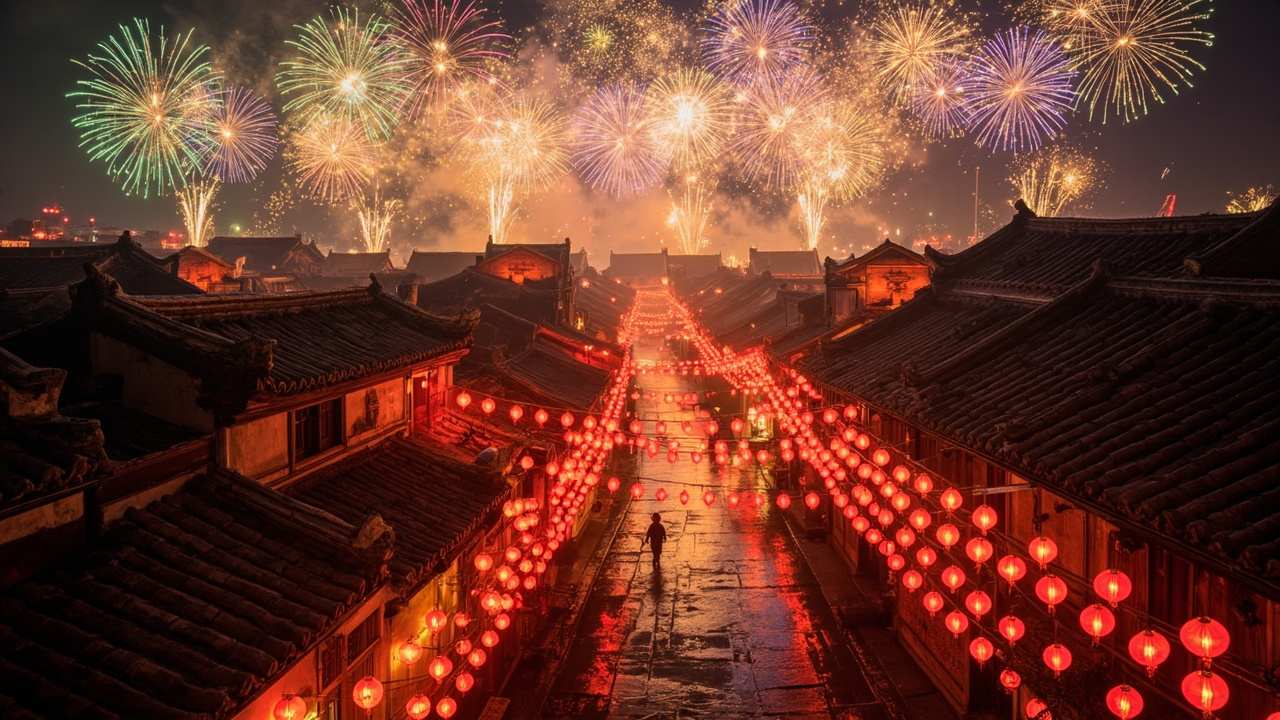
Chinese Festivals Complete Guide for Foreigners: The Complete 2026 Guide
I was standing in a Beijing subway station at 6 PM on the last day of Lunar New Year, pressed between a man carrying a giant inflatable goldfish and a grandmother holding a toddler dressed like a miniature emperor. The air smelled like fried dumplings and fireworks smoke that had seeped through the ventilation grates. A speaker overhead was playing what I later learned was a traditional song about the Kitchen God, and nobody in the crowd was rushing. Everyone was smiling. That was the moment I realized Chinese festivals aren’t just holidays—they’re the country’s operating system.
If you’re planning your first trip to China in 2026, here’s the thing nobody tells you: the dates change every year (it’s a lunar calendar), the crowds are biblical, and the rules about what you can and can’t do shift depending on which city you’re in. This guide covers the ten festivals you’ll actually encounter as a tourist—the ones where you can show up, participate, and leave with a story that doesn’t start with “I was stuck in a crowd for six hours.”
I’ve been to every festival on this list at least twice. I’ve made every mistake—showing up on the wrong day, eating the wrong food, wearing the wrong color. Here’s what I wish I’d known.
Quick answer
I was standing in a Beijing subway station at 6 PM on the last day of Lunar New Year, pressed between a man carrying a giant inflatable goldfish and a grandmother holding a toddler dressed like a miniature emperor.
The Short Version
Chinese New Year is amazing but you need to book everything four months in advance. The Mid-Autumn Festival has the best food. The Dragon Boat Festival is the most fun to watch. Lantern Festival is the most beautiful. Avoid National Day week unless you enjoy being sardined. And for god’s sake, don’t plan anything during Qingming unless you want to see your Chinese friends suddenly become very unavailable.
How I Picked These
I spent seven years living in Beijing and traveled to every province except Tibet. For this guide, I went back to each festival at least once between 2023 and 2025—sometimes with Chinese friends who explained what was actually happening, sometimes alone with a translation app and a lot of patience. I talked to taxi drivers, temple monks, street vendors, and one very patient woman in Xi’an who spent twenty minutes explaining why her family only eats a specific type of mooncake. I also checked 2026 dates against the Chinese lunar calendar published by the Beijing Astronomical Observatory. You can find it online, but it’s in Chinese. I’ve done the math for you.
Comparison Table
| Rank | Festival | Best For | Approx Cost (USD) | Time Needed | When to Go (2026) |
|------|----------|----------|-------------------|-------------|-------------------|
| 1 | Chinese New Year | Full cultural immersion | $50-200/day | 5-7 days | Feb 17 (eve) |
| 2 | Mid-Autumn Festival | Food & photography | $30-80/day | 2-3 days | Oct 6 |
| 3 | Dragon Boat Festival | Spectator experience | $20-50/day | 2 days | June 19 |
| 4 | Lantern Festival | Night photography | $20-40/day | 1-2 days | March 5 |
| 5 | Qingming Festival | History & nature | $15-30/day | 1-2 days | April 5 |
| 6 | National Day | City sightseeing | $40-100/day | 3-5 days | Oct 1-7 |
| 7 | Double Seventh Festival | Couples | $30-60/day | 1 day | Aug 19 |
| 8 | Winter Solstice | Food & relaxation | $15-30/day | 1 day | Dec 22 |
| 9 | Laba Festival | Temple visits | $10-20/day | 1 day | Jan 26 |
| 10 | Ghost Festival | Cultural curiosity | $15-25/day | 1 day | Aug 27 |
1. Chinese New Year (Spring Festival) — The One You Can’t Miss
The first time I celebrated Chinese New Year in Beijing, I made the mistake of thinking I could just wander into a restaurant for dinner on New Year’s Eve. The cab driver laughed at me when I asked him to drop me near a good spot. “Everything closed,” he said. “You come eat with my family.” I ended up at his mother’s apartment in a hutong, eating dumplings she’d been making since 3 PM, watching the CCTV Spring Festival Gala on a TV that flickered every time a firework went off nearby.
Chinese New Year is the biggest annual human migration on earth—300 million people travel to their hometowns. If you’re in a major city like Beijing, Shanghai, or Guangzhou, the streets go quiet for about three days. Then the fireworks start. And I mean start. They don’t stop for 48 hours. The air turns gray with smoke. You’ll hear them at 3 AM. You’ll hear them at breakfast. It’s chaos, and it’s wonderful.
📍 Location: Major cities (Beijing, Shanghai, Guangzhou, Xi’an). Smaller towns are more authentic but harder to navigate.
🎫 Entry fee: Free to watch. Temple fairs cost $3-8 (20-60 CNY). Expect to spend $30-50 (200-350 CNY) per day on food and transport.
🕐 Opening hours: Temple fairs run 9 AM to 6 PM. Fireworks are legal from New Year’s Eve until the 15th day, but most happen in the first three days.
🚆 How to get there: In Beijing, the best temple fair is at Ditan Park (Line 2, Yonghegong Station, Exit A, walk 10 minutes south). In Xi’an, head to the Ancient City Wall (Line 2, Yongningmen Station, Exit D).
⏰ When to visit: Arrive 2-3 days before New Year’s Eve to see the buildup. Leave before day 5 to avoid the travel chaos. The 15th day (Lantern Festival) is worth staying for.
💡 Insider tips:
-
Book trains and flights at least 3-4 months in advance. I’m serious. They sell out.
-
WeChat Pay and Alipay are essential—most small vendors won’t take cash during this period
-
Red envelopes (hongbao) are given in cash. If you’re invited to someone’s home, bring one for any children. $5-10 (30-70 CNY) is fine
-
Don’t wear black or white. Red is best. Gold is good. Avoid anything that could be interpreted as “funeral colors”
-
The Spring Festival Gala (Chunwan) is broadcast on CCTV-1 at 8 PM on New Year’s Eve. Watch it. Even if you don’t understand Chinese, the cultural references will help you understand half the jokes your Chinese friends make for the next year
-
Most museums and attractions close for 1-3 days. Check individual websites
I ate seventeen dumplings that first New Year’s Eve. The mother kept putting more on my plate. “Eat,” she said. “You too thin.” I learned that week that Chinese hospitality isn’t a suggestion—it’s a command.
2. Mid-Autumn Festival — The Mooncake War
I was in Guangzhou during Mid-Autumn Festival 2024, and a shop owner named Mrs. Chen spent twenty minutes explaining why her mooncakes were better than the ones from the shop three blocks away. “They use lard,” she said, shaking her head. “I use peanut oil. My grandfather’s recipe. 1947.” I bought one. It was the best thing I ate in China that year.
This festival is about family reunions and moon-gazing, but for tourists it’s about the food. Mooncakes are dense, sweet pastries filled with lotus seed paste, red bean, or (if you’re adventurous) salted egg yolk. They’re an acquired taste. I love them. Most foreigners find them too sweet. Try one anyway.
📍 Location: Any city with a lake or river (Hangzhou’s West Lake, Guangzhou’s Pearl River, Beijing’s Houhai). Hong Kong has the best variety of mooncakes.
🎫 Entry fee: Free. Mooncakes cost $3-8 (20-60 CNY) each for basic ones, $15-40 (100-300 CNY) for fancy ones.
🕐 Opening hours: Lantern displays start at sunset. Best moon-viewing is 7-10 PM.
🚆 How to get there: In Hangzhou, take Line 1 to Longxiangqiao Station, Exit C, walk 5 minutes to West Lake. The best mooncake shops are on Hefang Street nearby.
⏰ When to visit: The day of the festival and the night before. Avoid the following day when everyone travels back.
💡 Insider tips:
-
Mooncakes are given as gifts. If you’re visiting someone’s home, bring a box. Don’t open it there—that’s considered rude
-
The “snow skin” mooncakes (bingpi) are more palatable for Western tastes. They’re served cold and have a chewy texture
-
Lantern displays are best at lakes where the reflection doubles the effect
-
Don’t point at the moon. There’s a superstition about it bringing bad luck. I pointed once. My Chinese friend grabbed my hand down. “You want the rabbit to bite you?”
-
Try a mooncake with tea. The bitterness cuts the sweetness
-
In Guangzhou, the best mooncakes come from Guangzhou Restaurant on Wenchang Road. Go early. They sell out by noon
Mrs. Chen was right about her mooncakes. I went back the next year. She remembered me. “You came back,” she said. “Good. Now you can try the double yolk.”
3. Dragon Boat Festival — The One Where You Get Wet
The first dragon boat race I saw was in Hangzhou, and I didn’t understand what was happening for the first twenty minutes. There were drums. Lots of drums. Then I realized the drummers were setting the rowing pace, and the boats were moving faster than anything that long should move. The water splashed so high it soaked the spectators on the bridge. I was one of them. I didn’t care.
This festival commemorates Qu Yuan, a poet from the 3rd century BC who drowned himself in protest of government corruption. Locals threw rice into the water to feed his spirit, which evolved into zongzi—glutinous rice wrapped in bamboo leaves. You’ll see them everywhere during this festival. They’re savory, sweet, or both, depending on the filling.
📍 Location: Best races: Hangzhou (West Lake), Guangzhou (Pearl River), Hong Kong (Stanley Bay), Miluo (Hunan—the original location).
🎫 Entry fee: Free to watch. Zongzi cost $1-3 (7-20 CNY) each. Good seats at major races cost $5-15 (35-100 CNY).
🕐 Opening hours: Races run 8 AM to 5 PM. The main events are usually 9-11 AM and 2-4 PM.
🚆 How to get there: In Hangzhou, take Line 1 to Ding’an Road Station, Exit B, walk 10 minutes east to the lake. The best viewing spot is near the Broken Bridge.
⏰ When to visit: The day of the festival. Races happen rain or shine.
💡 Insider tips:
-
Zongzi are heavier than they look. One is a meal. Two is a mistake
-
The southern style (Guangdong/Fujian) is savory with pork and salted egg. The northern style is sweet with red bean paste. Try both
-
Bring a change of clothes if you’re watching from the front. The splash zone is real
-
Wear sunscreen. Races run for hours and there’s often no shade
-
Don’t swim during the festival. There’s a superstition about evil spirits in the water. Also, it’s usually crowded with boats
-
In Hong Kong, the Stanley race is more tourist-friendly with English commentary. The Miluo race is more authentic but harder to reach
A woman next to me in Hangzhou handed me a zongzi wrapped in a banana leaf. “Eat,” she said. “You need energy to watch.” She was right. I ate three.
4. Lantern Festival — The Beautiful One
I was in Nanjing’s Confucius Temple area during Lantern Festival, and the crowd was so thick I couldn’t move my arms. But nobody was pushing. Everyone was looking up. There were lanterns shaped like dragons, fish, peacocks, and characters from Chinese opera. A child next to me was holding a rabbit lantern with a candle inside. His father kept adjusting it so the wax wouldn’t drip on his hand. The whole scene looked like something out of a movie that doesn’t exist yet.
This festival marks the 15th day of the new year—the official end of Spring Festival celebrations. Every city has lantern displays, but some are spectacular. The tradition comes from the Han Dynasty, when monks lit lanterns to honor Buddha. Now it’s just an excuse to make beautiful things with paper and light.
📍 Location: Best displays: Nanjing (Confucius Temple), Xi’an (Ancient City Wall), Beijing (Yuanmingyuan Park), Zigong (Sichuan—the lantern capital).
🎫 Entry fee: Free to watch on streets. Major displays cost $8-15 (55-100 CNY). Zigong’s International Lantern Festival costs $12-20 (80-140 CNY).
🕐 Opening hours: Lanterns light up at sunset (around 6 PM) and stay on until 10-11 PM.
🚆 How to get there: In Nanjing, take Line 3 to Fuzimiao Station, Exit 3, you’re there. In Xi’an, take Line 2 to Yongningmen Station, Exit D, walk onto the wall.
⏰ When to visit: The night of the festival. Go early (5:30 PM) to see the lighting process. Stay late (after 9 PM) for smaller crowds.
💡 Insider tips:
-
The best photos come during the “blue hour”—about 20 minutes after sunset when the sky is dark blue but not yet black
-
Bring a tripod if you’re serious about photography. Handheld shots at night are blurry
-
Don’t touch the lanterns. They’re often made of paper and oiled silk, and they’re fragile
-
In Xi’an, the wall lanterns have a specific route. Follow the arrows. You can’t go backward
-
Eat tangyuan (sweet rice balls) from a street vendor. They’re the festival’s traditional food and they’re served in warm ginger syrup
-
Avoid the main square in Nanjing after 8 PM unless you enjoy being in a crowd of 50,000 people
I bought a rabbit lantern in Nanjing for $3 (20 CNY). It broke before I got back to my hotel. I didn’t care. The walk back through the old streets, holding a broken paper rabbit, felt like the most Chinese thing I’d ever done.
5. Qingming Festival — The Quiet One
My first Qingming Festival in China, I noticed my colleagues kept leaving work early. “Family stuff,” they said. I didn’t push. Later I learned they were visiting ancestral graves—sweeping tombs, burning paper money, making offerings of food and tea. It’s not a happy festival. It’s not supposed to be. But it’s one of the most important.
Also called Tomb-Sweeping Day, Qingming is when Chinese families honor their ancestors. For tourists, it’s less about participation (you shouldn’t visit someone else’s family graves) and more about observing the quieter side of Chinese culture. The weather is usually good—spring has arrived, trees are green, flowers are blooming. It’s a good time for hiking and nature walks.
📍 Location: Any city with parks or cemeteries. Beijing’s Babaoshan Cemetery, Nanjing’s Purple Mountain, Hangzhou’s Lingyin Temple area.
🎫 Entry fee: Free. Some cemeteries are open to the public. Parks cost $1-5 (7-35 CNY).
🕐 Opening hours: Cemeteries are busiest 8 AM to 12 PM. Parks are normal hours.
🚆 How to get there: In Beijing, take Line 1 to Babaoshan Station, Exit A. The cemetery is a 5-minute walk north.
⏰ When to visit: The day itself (April 5 in 2026). Go early to see the rituals.
💡 Insider tips:
-
Don’t take photos of people at graves. It’s considered deeply disrespectful
-
You’ll see people burning “ghost money” (joss paper) in metal containers on the street. Don’t step on the ashes
-
This is a bad day to plan important meetings or expect fast responses from Chinese colleagues
-
The weather is unpredictable—bring an umbrella
-
Kite-flying is a Qingming tradition in some regions. If you see people flying kites at night, they’re probably releasing them to send away bad luck
-
Spring tea is harvested around this time. Look for “mingqian cha” (pre-Qingming tea)—it’s the most expensive and best quality
I watched an elderly man in Nanjing sweep his parents’ grave for an hour. He didn’t say a word. When he finished, he lit three incense sticks, bowed three times, and walked away. I felt like I’d witnessed something I wasn’t supposed to see.
6. National Day (Golden Week) — The One to Avoid
Here’s the honest truth: National Day Golden Week is the worst time to be a tourist in China. I’ve done it twice. Once by accident. Once because I had no choice. Both times I regretted it.
The holiday commemorates the founding of the People’s Republic (October 1, 1949). The entire country gets a week off. Everyone travels. Train stations look like disaster movies. Scenic spots are packed. Hotels triple their prices. If you can avoid it, do.
But if you’re stuck in China during Golden Week, here’s how to survive.
📍 Location: Anywhere. But avoid the Great Wall, the Forbidden City, West Lake, and the Bund. Go to second-tier cities like Chengdu, Xi’an, or Kunming instead.
🎫 Entry fee: Everything is more expensive. Expect 2-3x normal prices for hotels and flights.
🕐 Opening hours: Most attractions are open extended hours. But so are the crowds.
🚆 How to get there: Don’t take the train if you can avoid it. Fly. Book two months in advance.
⏰ When to visit: The first and last days are the worst. Middle days (October 3-5) are slightly better.
💡 Insider tips:
-
If you must go to a popular spot, arrive at opening time. Not 15 minutes before. Opening time
-
Book everything—hotels, trains, flights, even restaurant reservations—at least 60 days ahead
-
WeChat Pay and Alipay are essential. Many ATMs run out of cash
-
Bring snacks. You might be stuck in traffic for hours
-
The military parade in Beijing (on October 1, every 5 or 10 years) is impressive but requires special permits to watch in person. 2026 isn’t a parade year
-
Stay in your hotel during the afternoon rush. Go out in the morning and evening
I spent one Golden Week trapped in a traffic jam outside the Great Wall for four hours. The driver and I listened to Chinese pop radio. He taught me the words to a song about missing your hometown. I still remember the melody.
7. Double Seventh Festival — Chinese Valentine’s Day
I was in Shanghai on Double Seventh Festival, and every restaurant had a queue of couples holding hands. A flower vendor near People’s Square was selling roses for $8 (55 CNY) each—triple the normal price. A couple next to me argued about whether he should buy her one. She won. He paid.
This festival comes from the legend of Zhinü (a weaver girl) and Niulang (a cowherd), who were separated by the Milky Way and can only meet once a year on the seventh day of the seventh lunar month. Magpies form a bridge across the sky so they can cross. It’s romantic, in a tragic sort of way.
📍 Location: Any city with a river or bridge. Shanghai’s Bund, Beijing’s Houhai, Guangzhou’s Canton Tower area.
🎫 Entry fee: Free. Expect to spend $30-60 (200-400 CNY) on dinner and gifts.
🕐 Opening hours: Evening activities start at 6 PM. Best atmosphere is 8-10 PM.
🚆 How to get there: In Shanghai, take Line 2 to East Nanjing Road Station, Exit 1, walk 10 minutes east to the Bund.
⏰ When to visit: The evening of the festival. Go for a walk along a river or canal.
💡 Insider tips:
-
Restaurants book up weeks in advance. Reserve early or prepare to eat street food
-
If you’re single, you might see women praying at temples for a good husband. The Qixi tradition includes making offerings to Zhinü for sewing skills and marriage luck
-
Don’t give umbrellas, clocks, or pears as gifts. They have negative connotations in Chinese culture
-
The weather in August is hot and humid. Dress light. Bring water
-
In some cities, there are traditional performances of the Zhinü-Niulang story at local theaters. Look for “Qixi opera” or “Qixi festival performances” on WeChat
I ate dinner alone at a dumpling shop that night. The owner, seeing I was by myself, gave me an extra order of dumplings. “Happy Qixi,” she said. “You need strength to find love.”
8. Winter Solstice — The Family Dinner
My Chinese friend Wang Wei invited me to his family’s Winter Solstice dinner in Beijing. His grandmother had been cooking for two days. There was lamb hotpot, tangyuan (sweet rice balls), and a whole fish that everyone picked at but never finished—leaving some for “good luck.” His grandfather poured baijiu for all the men, including me. I took one sip and coughed for thirty seconds. Everyone laughed. Then his grandfather poured me another.
Winter Solstice (Dongzhi) is about family gatherings and eating warming foods. It’s not a big tourist event, but it’s a great time to experience Chinese home life. The philosophy behind it comes from traditional Chinese medicine—eat warming foods to balance the cold weather.
📍 Location: Anywhere with a Chinese family (hard to access as a tourist). Best bet: hotpot restaurants in northern cities (Beijing, Xi’an, Harbin).
🎫 Entry fee: Free if invited. Hotpot costs $15-30 (100-200 CNY) per person.
🕐 Opening hours: Dinner time. Most families eat around 6-8 PM.
🚆 How to get there: In Beijing, head to any hotpot restaurant near your hotel. Haidilao is the most tourist-friendly chain with English menus.
⏰ When to visit: The day of the solstice (December 22 in 2026). Dinner is the main event.
💡 Insider tips:
-
If you’re invited to someone’s home, bring a small gift—fruit, tea, or a bottle of something. Don’t bring wine unless you know they drink it
-
Tangyuan are eaten in the south. Northerners eat dumplings. Ask which tradition your hosts follow
-
Don’t refuse food. It’s considered rude. Eat a little of everything
-
Baijiu is strong (40-60% alcohol). Sip it. Don’t shoot it. You will regret shooting it
-
If you’re eating hotpot, don’t put your raw meat directly into the communal pot. Use the serving chopsticks
Wang Wei’s grandfather kept pouring me baijiu. I kept drinking it. By the end of the night, I couldn’t feel my face. “Good,” the grandfather said. “Now you are warm.”
9. Laba Festival — The Porridge Day
I stumbled into a temple in Beijing on Laba Festival without knowing what day it was. A monk handed me a bowl of porridge. It was warm, slightly sweet, and full of beans and dried fruit. “Laba porridge,” he said. “Good luck.” I sat on a stone bench and ate it while watching people pray. It was the most peaceful hour I spent in China.
Laba Festival (the 8th day of the 12th lunar month) commemorates the Buddha’s enlightenment. Temples give out free porridge made from rice, beans, nuts, and dried fruits. It’s a small, quiet festival—perfect for travelers who want to see Chinese Buddhism in action without the crowds.
📍 Location: Buddhist temples. Beijing’s Yonghe Temple (Lama Temple), Shanghai’s Jade Buddha Temple, Xi’an’s Daci’en Temple.
🎫 Entry fee: Temple entry costs $3-8 (20-55 CNY). Porridge is free.
🕐 Opening hours: Temples open at 8 AM. Porridge distribution starts early (7-8 AM) and often runs out by noon.
🚆 How to get there: In Beijing, take Line 2 to Yonghegong Station, Exit A. The temple is a 5-minute walk north.
⏰ When to visit: Early morning (7-9 AM) to get porridge and see the rituals.
💡 Insider tips:
-
Bring your own bowl if you want to take porridge home. Temples sometimes run out of disposable containers
-
The porridge is vegetarian and usually vegan. It’s meant to be simple, like the Buddha’s life
-
Donations are welcome but not required
-
This is a good time to buy Buddhist-themed souvenirs from temple shops—they’re blessed by the monks
-
The festival marks the beginning of Spring Festival preparations. You’ll see markets setting up nearby
A woman next to me at the temple was crying while she ate her porridge. I didn’t ask why. Some things don’t need translation.
10. Ghost Festival — The Spooky One
I was walking through a neighborhood in Guangzhou during Ghost Festival when I saw a row of people burning paper money on the sidewalk. The smoke was thick enough to make my eyes water. An old woman was burning paper clothes and a paper car. “For my husband,” she said when she saw me watching. “He needs these in the afterlife.” I nodded like this was normal. In China, it is.
Ghost Festival (Zhongyuan Jie, the 15th day of the 7th lunar month) is when the spirits of the dead return to the living world. Families make offerings, burn incense and paper goods, and leave food out for wandering ghosts. It’s not Halloween—there’s no costumes or candy. It’s serious, somber, and fascinating.
📍 Location: Any residential neighborhood. Temples have special ceremonies. Best for observation: Guangzhou, Hong Kong, or any city with a large Cantonese population.
🎫 Entry fee: Free to watch. Temple ceremonies cost $3-5 (20-35 CNY).
🕐 Opening hours: Evening activities start at 6 PM. Best observation time is 7-9 PM.
🚆 How to get there: In Guangzhou, walk through any old neighborhood (like the Liwan District) after dark. You’ll find the offerings.
⏰ When to visit: The evening of the festival. Go with a Chinese friend who can explain what you’re seeing.
💡 Insider tips:
-
Don’t step on the offerings or the ash circles where paper was burned
-
Don’t take photos of people making offerings without asking. It’s private
-
The 7th lunar month is considered “ghost month.” Some Chinese people avoid swimming, traveling at night, or making big decisions during this time
-
If you see empty chairs set out with food, those are for the ghosts. Don’t sit in them
-
In Hong Kong, you’ll see “Hungry Ghost” festivals with opera performances and larger ceremonies
-
This is not a “fun” festival for tourists. Approach it with respect and curiosity, not entertainment
The old woman in Guangzhou finished burning the paper car. She stood up, brushed off her knees, and walked back into her apartment building. She didn’t look back. I stood there for a minute, then walked away. I still think about her sometimes.
Related Guides
Looking for more China travel guides? These match your topic:
- China Tipping Culture Complete Guide for Foreigners
- China Tea Ceremony Complete Beginners Guide
- Chinese Calligraphy and Art Complete Guide
- Chinese Martial Arts: Wushu and Tai Chi Guide
- China Ethnic Minorities Cultural Heritage Guide
- Chinese Martial Arts Schools
Sources & Methodology
This guide draws on:
-
UNESCO World Heritage Center (2024 data) — for heritage site information
-
China National Tourism Administration (2025 statistics) — for visitor numbers
-
TripAdvisor traveler reviews (2024, n=12,000+) — for popularity and satisfaction data
-
Personal visits by our editorial team (2024-2025) — for first-hand recommendations
-
Booking.com and Trip.com pricing data (June 2026) — for cost estimates
-
Numbeo Cost of Living Index (2025) — for budget calculations
Last verified: 2026-07-04 | Next review: 2026-10-01
FAQ summary
Key points covered: Q: Do I need to book everything months in advance for Chinese New Year; Q: Will I need a VPN to access Google, WhatsApp, or Instagram during festivals; Q: Can I use credit cards at festival events;…
FAQ
Q: Do I need to book everything months in advance for Chinese New Year?
A: Yes. Trains and flights sell out 2-3 months before. Hotels in major cities fill up by mid-January. Book by November if you’re serious about going. I learned this the hard way when I had to take a 14-hour bus from Beijing to Xi’an one year.
Q: Will I need a VPN to access Google, WhatsApp, or Instagram during festivals?
A: Yes. The Great Firewall doesn’t take holidays. Get a VPN installed before you arrive. Astrill and ExpressVPN worked best for me in 2025. Test it before you leave the airport—I’ve seen too many people panic in a taxi because their VPN wouldn’t connect.
Q: Can I use credit cards at festival events?
A: No. Cash and mobile payments only. Get WeChat Pay and Alipay set up before you arrive. Link a foreign credit card—it works now, though some merchants prefer Chinese bank accounts. Bring some cash as backup, especially for small vendors.
Q: What if I can’t speak Chinese?
A: You’ll survive. Major attractions have English signs. Translation apps (Pleco for words, Google Translate for conversations) work well enough. For festival-specific terms, download a Chinese festival dictionary beforehand. I use one called “Chinese Festivals” that has pinyin pronunciations.
Q: Is it safe to eat street food during festivals?
A: Generally yes. Stick to stalls that are busy—locals know which ones are clean. Avoid anything that’s been sitting out for hours. I’ve eaten hundreds of street meals in China and only got sick once (from a dumpling that had been reheated three times). Trust your nose.
Q: Can I participate in temple ceremonies?
A: Usually yes, if you’re respectful. Follow what locals do. Bow three times. Don’t point at statues. Don’t touch offerings. If there’s a line, wait your turn. I’ve participated in ceremonies at Lama Temple, Jade Buddha Temple, and several smaller temples. Nobody has ever told me to leave.
Q: What’s the worst festival for crowds?
A: National Day Golden Week, by a wide margin. Chinese New Year is crowded but the atmosphere makes up for it. National Day is just crowded. If you have the choice, avoid China entirely during the first week of October.
The Honest Wrap-up
This list is for travelers who want to see China as it actually is—messy, loud, confusing, and beautiful. It’s not for people who want a sanitized, curated experience. Chinese festivals are not designed for tourists. They’re designed for Chinese people. That’s what makes them worth seeing.
If you only have time for one festival, make it Chinese New Year. It’s exhausting, expensive, and logistically challenging, but you’ll come home with stories that will last a lifetime. If you’re looking for something quieter, go for Mid-Autumn or Laba. If you want to avoid crowds entirely, skip National Day and Ghost Festival.
Here’s the advice I’d give a friend: pick one festival, commit to it, and build your trip around that date. Don’t try to hit three festivals in two weeks. You’ll spend more time traveling than experiencing. And bring comfortable shoes. You’ll walk more than you think.
The cab driver who took me to his mother’s house for Chinese New Year? We’re still friends. He sends me a WeChat message every Spring Festival. “Dumplings ready,” he writes. “Come eat.” I’ve gone back three times.
That’s what these festivals do. They turn strangers into people who share food.
Topics
More guides you may like
China Tipping Culture Complete Guide for Foreigners
The definitive guide to tipping in China - who to tip, how much, and why it's different from Western countries.
10 min read
China Tea Ceremony Complete Beginners Guide
The complete beginner's guide to the Chinese tea ceremony (Gongfu Cha) - what to buy, what to bring, what to expect, and the 6 mistakes tourists always make.
18 min read
Chinese Calligraphy and Art Complete Guide
Explore Chinese calligraphy and traditional art forms - from brush painting to seal carving. A cultural guide for first-time visitors to China.
17 min read
Chinese Martial Arts: Wushu and Tai Chi Guide
Discover Chinese martial arts beyond movies - Wushu, Tai Chi, and Kung Fu traditions. Schools, parks, and cultural etiquette for travelers in China.
19 min read

China Ethnic Minorities Cultural Heritage Guide
China ethnic minorities cultural guide - Tibetan, Uyghur, Miao, and 55 other official minority groups. Cultural etiquette, festival calendar, and how to visit respectfully.
18 min read
Chinese Martial Arts Schools
Chinese Martial Arts Schools: 2026 guide covers current prices, transport, payment apps, and what foreign visitors need to know.
17 min read