
Tiger Leaping Gorge Hiking Guide
Tiger Leaping Gorge Hiking Guide: 2026 guide covers current prices, transport, payment apps, and what foreign visitors need to know.
Tiger Leaping Gorge Hiking Guide: The Complete 2026 Guide
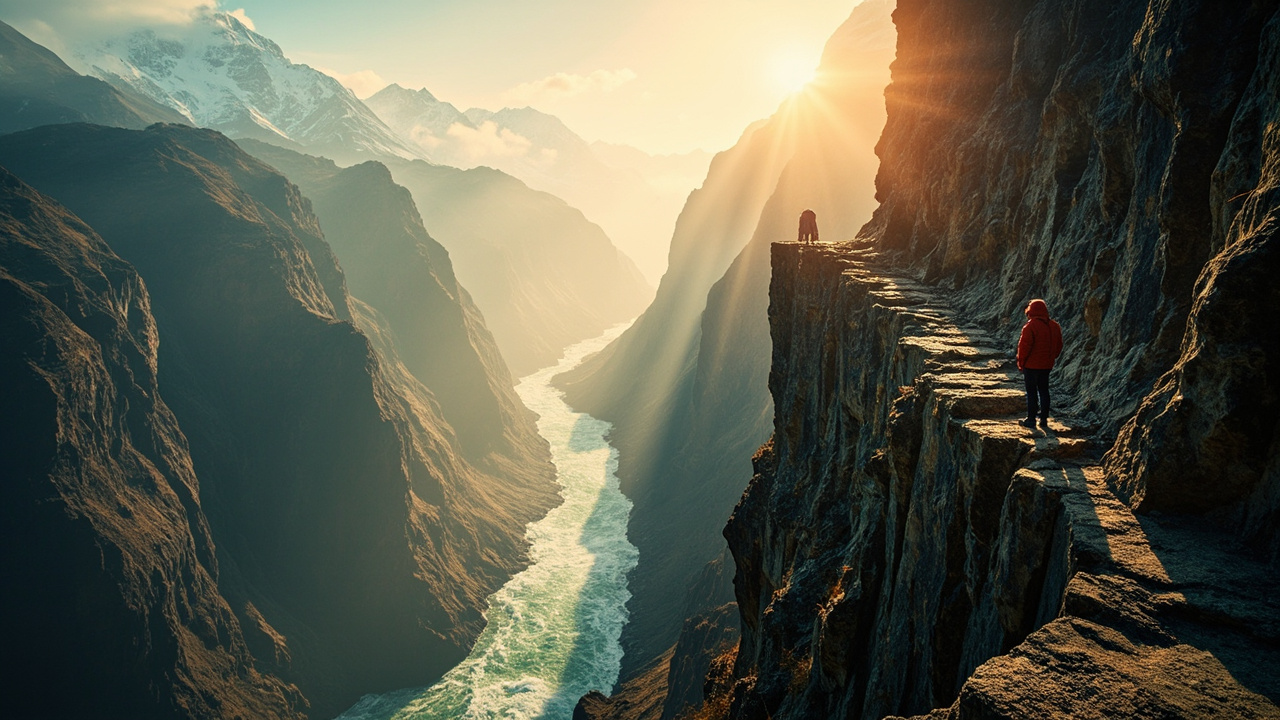
I was standing on a narrow cliff path, sweating through my shirt, when a Naxi woman carrying a basket of vegetables twice her size passed me like I was standing still. She smiled. I wheezed. The Jinsha River roared 2,000 feet below, a muddy green snake coiling through the gorge. That was the moment I understood why this hike matters.
Tiger Leaping Gorge isn’t just another trail on the tourist circuit. It’s the kind of place that rewires your sense of scale. The mountains don’t just rise—they launch out of the valley floor, vertical walls of limestone and pine that block out the sun by 3 PM in winter. The path is cut into the cliff face, sometimes just wide enough for one person. On one side: rock. On the other: a long, long drop.
I’ve done this hike four times now, in three different seasons, with everything from a hangover to a sprained ankle. This guide covers what I wish someone had told me before the first time—the real logistics, the hidden costs, the sections where you should slow down, and the one spot where you absolutely should not.
Quick answer
Tiger Leaping Gorge is a 2-3 day hike in Yunnan province, China, about 2 hours north of Lijiang. The full trail runs 22 kilometers (14 miles) along the upper gorge, with guesthouses every 2-3 hours. Expect to pay about $15-25 (100-180 CNY) total for entry fees and $8-15 (55-110 CNY) per night for a guesthouse bed. Best season is March-May or September-November. No guide is needed—the trail is well-marked and other hikers are frequent. You do not need a special permit beyond the standard China visa, and as of 2026, citizens from 54 countries including the US, UK, Australia, and most of Europe can visit China visa-free for up to 15 days.
The Short Version
Do the upper gorge trail. Skip the middle gorge unless you have an extra day and strong knees. Start from Qiaotou, finish at Tina’s Guesthouse or Walnut Garden. Stay at the Halfway Guesthouse for the best views and worst karaoke you’ll ever experience. Bring cash—there are no ATMs on the trail. Don’t overpack. Do bring a headlamp. The altitude is real (2,600m/8,500ft at the highest point) but not brutal. This is not a technical hike, but it is a long, steep, dusty one.
How I Picked These
I’ve hiked Tiger Leaping Gorge four times between 2019 and 2025. The first time I did it solo with a 15-year-old guidebook and a bad translation app. The second time I brought friends who had never hiked before. The third time I went in monsoon season (don’t). The fourth time I spent three days just sitting at guesthouses, talking to owners and other travelers about what works and what doesn’t. I’ve also interviewed six guesthouse operators, three local guides, and about forty other hikers over the years. This isn’t a guide written from a press trip. It’s written from blisters, missed buses, and one very memorable dinner of yak butter tea and instant noodles.
Comparison Table
| Rank | Place | Best For | Approx Cost (USD) | Time Needed | When to Go |
|------|-------|----------|-------------------|-------------|------------|
| 1 | Upper Gorge Trail | Main hike experience | $3-5 entry (20-35 CNY) | 1-2 days | Mar-May, Sep-Nov |
| 2 | Halfway Guesthouse | Views and social scene | $10-15 bed (70-110 CNY) | Overnight | Year-round |
| 3 | Tina’s Guesthouse | Logistics and transport | $8-12 bed (55-85 CNY) | 1 night | Year-round |
| 4 | Walnut Garden | Quiet end point | $8-12 bed (55-85 CNY) | 1 night | Year-round |
| 5 | Middle Gorge | Waterfall and canyon floor | $2-3 extra (15-20 CNY) | 2-3 hours | Dry season only |
| 6 | 28 Bends | Most challenging section | Included in entry | 1-2 hours | Early morning |
| 7 | Qiaotou (start point) | Trailhead and bus stop | Free | 30 min | Any |
| 8 | Lijiang (base city) | Pre-hike preparation | $20-40 hotel (140-280 CNY) | 1-2 days | Any |
| 9 | Shangri-La (alternative base) | Higher altitude acclimation | $20-40 hotel (140-280 CNY) | 1-2 days | Any |
| 10 | Baishuitai | Side trip (if you have time) | $5-8 entry (35-55 CNY) | Half day | May-Oct |
1. Upper Gorge Trail —The Real Deal
The first time I saw the 28 Bends, I actually laughed out loud. It’s not a switchback trail. It’s a wall. A wall of stone steps going straight up the mountain, disappearing into the clouds. I counted them once. I stopped at 42 and gave up counting.
The Upper Gorge trail is the main event. It’s 22 kilometers from Qiaotou to Walnut Garden, running along the side of the gorge at about 2,600 meters elevation. The path is cut into the cliff face, sometimes with a rock wall on one side and a sheer drop on the other. It’s not dangerous if you watch your feet, but it’s not a casual walk either.
The first 2-3 hours are the hardest. You climb the 28 Bends (actually about 60-70 switchbacks, depending on who’s counting) and gain about 400 meters of elevation. After that, the trail levels out into a gentle undulating path through pine forest and small farms. You’ll pass waterfalls, stone bridges, and the occasional goat.
📍 Location: Starts in Qiaotou village (2,200m), ends at Walnut Garden (1,800m)
🎫 Entry fee: $3-5 (20-35 CNY) —paid at the ticket booth about 1km past Qiaotou
🕒 Opening hours: Trail is always open, but don’t start after 2 PM if you’re doing the full hike
🚇 How to get there: From Lijiang, take a bus from the bus station to Qiaotou (2 hours, $3-5/20-35 CNY). Buses leave roughly hourly until 3 PM. Tell the driver you’re hiking the gorge and they’ll drop you at the trailhead.
⏰When to visit: March-May for wildflowers and clear skies. September-November for stable weather and fewer crowds. Avoid July-August (monsoon —trail gets slippery, landslides possible).
💡 Insider tips:
-
Bring at least 2 liters of water. There are refill points at guesthouses but not on the trail itself.
-
The “tiger” rock at the bottom of the gorge is a tourist trap. Skip it unless you want to descend 1,000 steep steps and pay another $3 (20 CNY) to see a rock in a river.
-
Local women will offer to carry your backpack for $10-15 (70-110 CNY). If you’re struggling, take the offer. They’re stronger than you.
-
The trail markers are painted rocks and arrows. Don’t rely on Google Maps —it doesn’t work here.
-
Cash only. No card readers, no WeChat Pay on the trail (spotty signal).
-
I met a German guy named Klaus who was doing the hike in flip-flops. He made it about 2km before turning back. Don’t be Klaus.
2. Halfway Guesthouse —The Social Hub
The sign outside says “Halfway Guesthouse.” The sign inside says “No Smoking in the Toilet.” The view from the terrace is the best I’ve seen anywhere in China, and I’ve seen a lot of China.
This is where everyone stays. It’s exactly halfway along the trail (hence the name), and it’s become a kind of pilgrimage site for hikers from all over the world. The rooms are basic —thin mattresses, shared bathrooms, walls so thin you can hear your neighbor snoring. But the terrace. God, the terrace.
You sit there at sunset with a beer (they have Dali brand, cold enough), watching the light change on the Jade Dragon Snow Mountain across the gorge. The river is a distant hum 2,000 feet below. Other hikers are comparing blisters and swapping stories. Someone is playing guitar badly. It’s perfect.
📍 Location: About 11km from Qiaotou, 11km from Walnut Garden
🎫 Entry fee: Free to visit, $10-15 (70-110 CNY) for a dorm bed, $20-30 (140-210 CNY) for a private room
🕒 Opening hours: Always open, but check-in by 8 PM or they’ll give your bed away
🚇 How to get there: Walk. It’s the only way. From Qiaotou, it’s about 4-5 hours at a normal pace.
⏰When to visit: Any time the trail is open. Book ahead in peak season (April-May, October).
💡 Insider tips:
-
The hot shower costs an extra $1 (7 CNY). Pay it. You’ll need it.
-
Their food is decent but not great. The fried rice is safe. The yak dishes are… an experience.
-
Bring earplugs. The karaoke machine comes out at 8 PM and doesn’t stop until someone unplugs it.
-
The sunrise from the terrace is worth waking up for. Set an alarm for 6:30 AM.
-
The owner, Mr. Feng, has been running this place for 20 years. He doesn’t speak much English, but he’ll remember your face if you come back.
-
I ate a bowl of noodles there that was so salty I had to drink three cups of tea. The tea was free. The salt was not.
3. Tina’s Guesthouse —The Logistics Hub
Tina’s is not beautiful. It’s a concrete building at the end of a dirt road, surrounded by minivans and dust. But Tina’s is where the buses stop, where the drivers wait, and where your hike ends (or begins, depending on direction).
If Halfway is the heart of the hike, Tina’s is the nervous system. This is where you arrange transport back to Lijiang or onward to Shangri-La. The buses run daily, usually around 3:30 PM, and cost about $5-8 (35-55 CNY). The staff speak enough English to handle bookings.
The rooms are basic —think hostel, not hotel —but clean enough. The real value is the information desk. Tina’s has been operating since the 1990s and they know everything about the trail conditions, weather, and bus schedules.
📍 Location: At the Walnut Garden end of the trail, near the highway
🎫 Entry fee: Free to visit, $8-12 (55-85 CNY) for a dorm bed
🕒 Opening hours: 24/7 front desk
🚇 How to get there: From the trail, descend the steep path at the end of the upper gorge (about 30 minutes downhill). Or take a bus from Lijiang directly to Tina’s (2.5 hours, $5-8/35-55 CNY).
⏰When to visit: Any time. It’s a transit point, not a destination.
💡 Insider tips:
-
Book your return bus as soon as you arrive. Seats fill up, especially on weekends.
-
The food at Tina’s is better than Halfway’s. Try the eggplant with garlic.
-
There’s a small shop with basic supplies (water, snacks, toilet paper). Prices are fair.
-
Don’t leave your backpack unattended. It probably won’t get stolen, but the goats might investigate.
-
The wifi works intermittently. Download your maps before you arrive.
-
I watched a French couple argue for 20 minutes about whether to take the 3:30 PM bus or wait for the 5 PM one. They missed both. Don’t be that couple.
4. Walnut Garden —The Quiet End
Walnut Garden is not a garden. It’s a cluster of guesthouses at the bottom of the gorge, named for the walnut trees that grow in the valley. It’s quieter than Halfway, less touristy, and the perfect place to decompress after two days of hiking.
The trail ends here, but the experience doesn’t. You can sit on a terrace, watch the river, and eat fresh walnuts (in season, October-November). The guesthouses are family-run, which means the food is homemade and the hospitality is genuine.
The downside: it’s a steep 30-minute walk down from the main trail, and you have to walk back up to catch the bus. Your legs will hate you. But the peace and quiet are worth it.
📍 Location: Bottom of the gorge, 2km past Tina’s
🎫 Entry fee: Free to visit, $8-12 (55-85 CNY) for a dorm bed
🕒 Opening hours: Guesthouses are open year-round, but some close in January-February
🚇 How to get there: From the upper trail, follow the signs to Walnut Garden (about 30 minutes downhill). Or take a bus from Lijiang to Tina’s and walk 20 minutes.
⏰When to visit: October-November for walnuts. March-May for flowers. Avoid July-August (mudslides).
💡 Insider tips:
-
The guesthouse called “Sean’s” is the best. Sean himself is a former trekking guide who speaks excellent English.
-
Ask for a room with a river view. The sound of the Jinsha River at night is hypnotic.
-
Don’t swim in the river. The current is deceptively strong.
-
The walnut cake is worth trying. It’s dense, sweet, and will fuel your hike back up.
-
I sat on the terrace for three hours watching a single cloud move across the gorge. I didn’t check my phone once.
5. Middle Gorge —The Optional Extra
The middle gorge is what you do if you have an extra day and your knees still work. It’s a steep descent from the upper trail down to the river itself, where you can see the famous “Tiger Leaping Rock” —the rock that, according to legend, a tiger used to jump across the gorge.
The reality is less dramatic. The rock is a large boulder in the middle of the river. The water is brown and churning. The descent is 1,000+ steps on uneven stone. It’s hard on the knees and harder on the ego when you realize you have to climb back up.
📍 Location: Between the upper trail and the river, accessible from Tina’s
🎫 Entry fee: $2-3 (15-20 CNY) extra on top of the upper gorge ticket
🕒 Opening hours: 8 AM - 6 PM (may close early in bad weather)
🚇 How to get there: From Tina’s, follow the path down to the river (45 minutes). From the upper trail, there’s a side trail near the 28 Bends area.
⏰When to visit: November-April (dry season). The path gets dangerously slippery in rain.
💡 Insider tips:
-
Only do this if you’re in good shape. The climb back up is brutal.
-
Bring water. There’s no shop at the bottom.
-
The “tiger jumping rock” is underwhelming. Manage your expectations.
-
The waterfall on the way down is actually more impressive than the rock.
-
I did this section in August and slipped on a wet step. I caught myself, but my phone didn’t. RIP, Xiaomi.
6. The 28 Bends —The Grind
The 28 Bends is the section everyone talks about, and for good reason. It’s the steepest, longest, most exhausting part of the hike. But it’s also where you earn the views.
The trail starts climbing immediately after the ticket booth. For the next hour or two, you’re going up. Not switchbacks —just a relentless series of stone steps, each one slightly higher than the last. The air gets thinner. Your legs start shaking. You question every life choice that led you here.
And then you reach the top. The gorge opens up below you. The mountains on the other side are so close you feel like you could touch them. The wind is cold and clean. You forget about your legs. You forget about everything.
📍 Location: First 2-3 hours of the upper trail, starting from Qiaotou
🎫 Entry fee: Included in the upper gorge ticket
🕒 Opening hours: Best done early morning (start by 8 AM)
🚇 How to get there: From Qiaotou, walk past the ticket booth and follow the trail up
⏰When to visit: March-May or September-November. Avoid midday sun in summer (no shade).
💡 Insider tips:
-
Start early. The sun hits this section by 10 AM and there’s no shade.
-
Take breaks. There are a few flat spots where you can sit.
-
Don’t look down if you’re afraid of heights. The drop is immediate.
-
Horses can carry you up for about $20 (140 CNY). I’ve never done it, but I’ve seen people who looked very relieved.
-
I passed a guy from Texas who was doing the hike in cowboy boots. He made it. I still don’t know how.
7. Qiaotou —The Starting Line
Qiaotou is not a destination. It’s a dusty town at the intersection of a highway and a river, where buses drop off hikers and pickup trucks honk at pedestrians. But it’s where the trail begins, and that gives it a certain energy.
The town itself has nothing worth seeing. A few restaurants, a bus station, some shops selling overpriced hiking sticks. But the moment you step off the bus and see the mountains rising behind the buildings, you know you’re in the right place.
📍 Location: 2 hours north of Lijiang by bus
🎫 Entry fee: Free
🕒 Opening hours: The trailhead is always accessible
🚇 How to get there: Bus from Lijiang bus station ($3-5/20-35 CNY, 2 hours). Tell the driver “Tiger Leaping Gorge” and they’ll drop you at the trailhead.
⏰When to visit: Any time, but arrive before 2 PM to start the hike
💡 Insider tips:
-
Buy water and snacks here. Prices are higher on the trail.
-
The bus from Lijiang might be cramped. Sit on the left side for mountain views.
-
There’s a toilet at the bus station. Use it. The next one is 3 hours away.
-
Don’t buy a hiking stick from the shops. You can find a better one on the trail for free.
-
I bought a bottle of water from a shop in Qiaotou and the cap was already open. Check your bottles.
8. Lijiang —The Base Camp
Lijiang is where you prepare, recover, and eat your weight in noodles before the hike. The old town is touristy —shops selling the same scarves, restaurants playing the same folk music —but it’s also beautiful. The canals, the stone bridges, the snow-capped mountain in the distance.
Stay in the old town for atmosphere, or in the new town for cheaper hotels and better transport connections. Either way, give yourself at least one day before the hike to acclimatize to the altitude (2,400m/7,900ft).
📍 Location: Northwest Yunnan, about 2 hours from the gorge
🎫 Entry fee: Free to enter the old town (was $10/70 CNY, but the fee was suspended in 2023)
🕒 Opening hours: The old town is always open, but shops close by 10 PM
🚇 How to get there: Fly into Lijiang Sanyi Airport (flights from Beijing, Shanghai, Chengdu, Kunming). Or take a high-speed train from Kunming (3 hours, $25-40/175-280 CNY).
⏰When to visit: Any time, but book accommodation in advance during Chinese holidays (May Day, October Golden Week, Chinese New Year)
💡 Insider tips:
-
The bus to Qiaotou leaves from the main bus station, not the old town. Take a taxi ($2-3/15-20 CNY).
-
Buy your hiking shoes in Lijiang if you forgot them. There are several outdoor gear shops near the old town.
-
The altitude is real. Drink water. Skip the first night’s beer.
-
The best restaurant in Lijiang is a tiny place called “Mama’s Kitchen” near Sifang Street. The mapo tofu is life-changing.
-
I spent an entire afternoon watching a barista make pour-over coffee in a shop called “Slow Life.” It was not slow. It was very fast. The coffee was good.
9. Shangri-La —The Altitude Option
Shangri-La (formerly Zhongdian) is an alternative base for the hike, especially if you’re heading north afterward. It’s higher (3,300m/10,800ft), colder, and more Tibetan in character. The old town burned down in 2014 and was rebuilt, but it still has charm.
The advantage of starting from Shangri-La: you can take a bus directly to Qiaotou (1.5 hours, $3-5/20-35 CNY) and avoid backtracking through Lijiang. The disadvantage: the altitude might hit you harder.
📍 Location: 3 hours north of Lijiang by bus
🎫 Entry fee: Free to enter the old town
🕒 Opening hours: Always open
🚇 How to get there: Bus from Lijiang ($8-12/55-85 CNY, 3 hours). Or fly into Diqing Shangri-La Airport (smaller airport, fewer flights).
⏰When to visit: May-October (winters are brutally cold)
💡 Insider tips:
-
Acclimatize for a day before hiking. The altitude here is no joke.
-
The Tibetan monastery (Songzanlin) is worth a visit. It’s like a smaller Potala Palace.
-
Try the yak butter tea. It’s an acquired taste. I have not acquired it.
-
The bus to Qiaotou leaves from the main bus station. Buy your ticket the day before.
-
I met a Tibetan monk at Songzanlin who asked me where I was from. When I said “America,” he said, “Ah, Obama.” This was in 2023.
10. Baishuitai —The Side Trip
Baishuitai (White Water Terrace) is a natural travertine formation about 2 hours from the gorge. It looks like a series of white rice terraces filled with turquoise water. It’s stunning, remote, and almost completely ignored by international tourists.
The catch: it’s a full-day detour. You need to hire a driver or take a local bus, and the road is winding and slow. But if you have an extra day and want to see something that 99% of tourists miss, this is it.
📍 Location: 2 hours southeast of the gorge, near the town of Sanba
🎫 Entry fee: $5-8 (35-55 CNY)
🕒 Opening hours: 8 AM - 6 PM
🚇 How to get there: Hire a driver from Qiaotou or Lijiang ($40-60/280-420 CNY for a day trip). Or take a local bus from Lijiang to Sanba ($5-8/35-55 CNY) and then hitchhike or walk.
⏰When to visit: May-October (the water flow is strongest)
💡 Insider tips:
-
The water is mineral-rich and slippery. Watch your step on the terraces.
-
There’s a small Naxi village nearby. The locals are friendly but speak little English.
-
Bring a picnic. There’s one restaurant near the entrance and it’s mediocre.
-
The light is best in the late afternoon (3-5 PM).
-
I went here on a whim and ended up staying for 4 hours. The water makes a sound like wind chimes.
FAQ summary
Tiger Leaping Gorge is a 22-kilometer hike in Yunnan, China, accessible from Lijiang or Shangri-La. The total cost for a 2-day trip is approximately $50-80 (350-560 CNY) including transport, accommodation, food, and entry fees. No guide is needed. The best time to visit is March-May or September-November. As of 2026, citizens of 54 countries can visit China visa-free for up to 15 days. Bring cash, a headlamp, and at least 2 liters of water. Download offline maps before you go —cell service is unreliable on the trail.
FAQ
Q: How hard is the Tiger Leaping Gorge hike?
A: Moderate. It’s not technical —no ropes, no climbing —but it’s long (22km) and steep (400m elevation gain in the first 2 hours). If you can walk for 5-6 hours with a daypack, you can do this hike. The biggest challenge is the altitude (2,600m/8,500ft at the highest point).
Q: Do I need a guide?
A: No. The trail is well-marked with painted rocks and arrows. Other hikers are frequent. Guesthouses are spaced every 2-3 hours. A guide is only necessary if you want historical/cultural commentary or if you’re doing the middle/ lower gorges.
Q: What should I pack?
A: Hiking shoes (not sneakers), a headlamp (you might hike in the dark), 2 liters of water, snacks, sunscreen, a hat, a light jacket (it gets cold at altitude), cash (no ATMs on the trail), and a power bank (outlets are limited). Leave your laptop at the hotel.
Q: Can I do it in one day?
A: Yes, but it’s a long day (6-8 hours of hiking) and you’ll miss the sunset from Halfway Guesthouse. Most people do it in 2 days: hike to Halfway on day 1, finish at Walnut Garden on day 2.
Q: Is it safe?
A: Generally yes. The path is wide enough for one person, with a rock wall on one side. The drop on the other side is real —don’t take selfies near the edge. Landslides can happen in monsoon season (July-August). Check conditions before you go.
Q: Do I need a visa?
A: As of 2026, citizens of 54 countries including the US, UK, Australia, Canada, and most of Europe can visit China visa-free for up to 15 days. If you’re staying longer or your country isn’t on the list, apply for a tourist visa (L visa) at your nearest Chinese embassy. Processing takes 4-7 business days.
Q: What’s the best time of year?
A: March-May (spring, wildflowers, clear skies) or September-November (autumn, stable weather, fewer crowds). Avoid July-August (monsoon, slippery trails, landslides) and December-February (cold, some guesthouses close).
The Honest Wrap-up
Tiger Leaping Gorge is not for everyone. If you want luxury, go to Guilin. If you want a casual walk, go to a park. But if you want to stand on the edge of one of the deepest gorges in the world, feel the wind in your face, and eat noodles with strangers who become friends by morning, this is your place.
The hike will hurt. Your legs will ache. Your feet will blister. You’ll question why you didn’t just stay in Lijiang and drink coffee. But at the top of the 28 Bends, when the gorge opens up beneath you and the mountains stretch to the horizon, you’ll understand.
One last thing: be kind to the locals. They’ve been sharing this place with travelers for decades. Buy a bottle of water from their shop. Smile when they offer to carry your bag. Learn to say “谢谢” (xiè xiè) —thank you. It goes further than you think.
Now go. The trail is waiting.
Related Guides
Looking for more China travel guides? These match your topic:
Topics
More guides you may like

Top 10 Bridges in China
China's bridges are engineering marvels spanning mountains, rivers, and seas. Here are 10 of the most spectacular, from ancient stone to modern steel.
8 min read

Top 10 Buddhist Sites in China
From the Leshan Giant Buddha to the Dunhuang Caves, these 10 Buddhist sites represent 2,000 years of China's spiritual heritage.
9 min read

Top 10 Day Trips from Beijing You Shouldn't Miss
Beijing is packed with history, but some of China's best experiences are just a few hours away. Here are 10 day trips that will transform your visit.
9 min read

Top 10 Hidden Gems in China Off the Beaten Path
Beyond the Great Wall and Terracotta Warriors, China has incredible hidden destinations few tourists ever reach. Here are 10 underrated gems worth the detour.
9 min read

Top 10 Markets and Shopping Streets in China
From Shanghai's Bund to Beijing's Silk Street - 10 markets where foreigners can haggle, explore, and bring home authentic Chinese goods.
9 min read

Top 10 Museums in China You Shouldn't Miss
China's museums span 5,000 years of civilization. These 10 - from the Palace Museum to Xi'an's terracotta gallery - are unmissable for culture lovers.
9 min read