
Top 10 Museums in China You Shouldn't Miss
China's museums span 5,000 years of civilization. These 10 - from the Palace Museum to Xi'an's terracotta gallery - are unmissable for culture lovers.
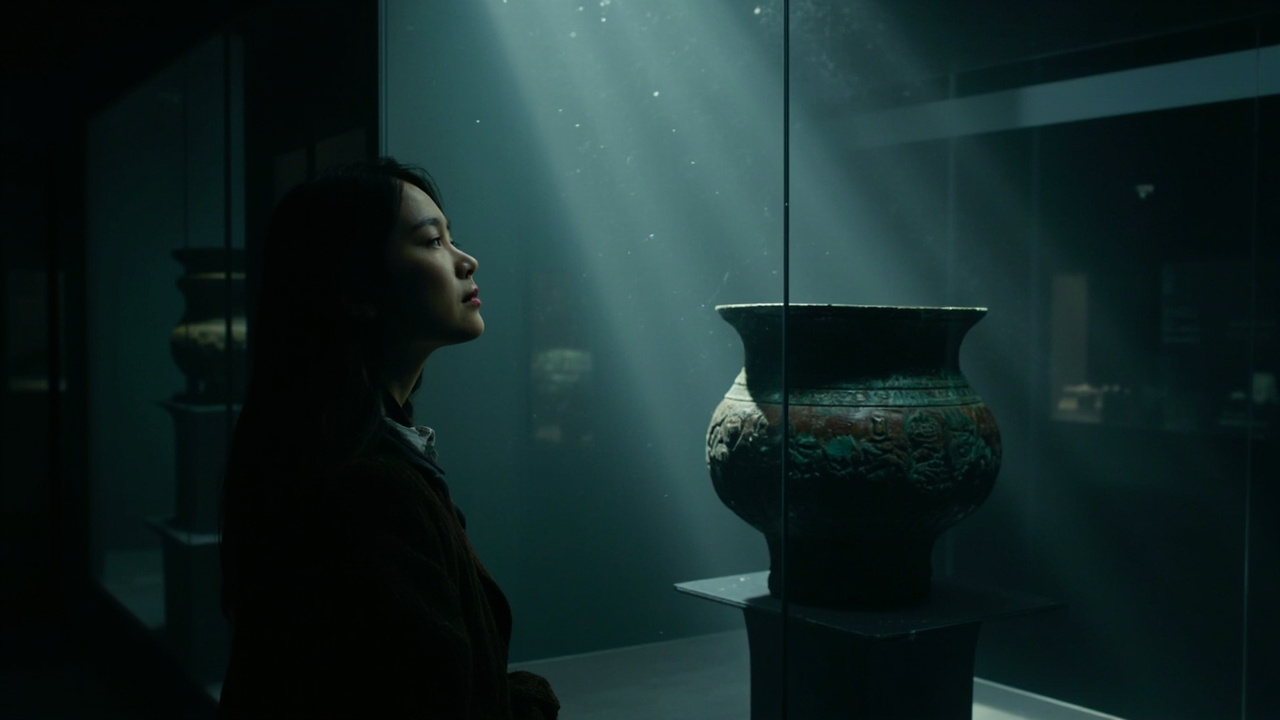
Top 10 Museums in China You Shouldn’t Miss (2026 Edition)
China is a civilization that stretches back over 5,000 years, and its museums are the treasure chests that hold the keys to that history. Whether you’re standing before a life-sized Terracotta Warrior, gazing at a jade burial suit from the Han Dynasty, or marveling at a bronze vessel that predates Rome, the experience is nothing short of awe-inspiring.
For first-time international visitors—whether you’re from New York, London, or Bangkok—navigating China’s museum scene can feel overwhelming. Which ones are truly world-class? How do you book tickets? Do they accept foreign credit cards? This guide answers all of that. You’ll get practical, insider advice on 10 must-visit museums, including real prices, opening hours, transport options, and tips on using WeChat Pay and Alipay. By the end, you’ll know exactly which museums fit your interests and your schedule.
Quick answer
China is a civilization that stretches back over 5,000 years, and its museums are the treasure chests that hold the keys to that history.
Quick Answer / TL;DR
If you have only one day in China and want the single most iconic museum experience, head to The Palace Museum (Forbidden City) in Beijing. It’s the largest ancient palace complex on earth, packed with imperial artifacts, and every first-time traveler should see it. But be warned: you’ll need at least half a day, and you must book tickets online in advance.
For a masterpiece that doesn’t require a full day, The Terracotta Warriors Museum in Xi’an is the runner-up—unforgettable and surprisingly compact.
How We Chose
We selected these ten museums based on four criteria:
-
World-class significance – artifacts or collections recognized globally.
-
Accessibility for international tourists – English signage, ease of ticket booking, and proximity to major cities.
-
Visitor experience – crowd management, facilities, and overall wow factor.
-
Relevance in 2026 – recent renovations, new exhibitions, and digital upgrades.
The list balances history, art, science, and natural history, ensuring there’s something for every kind of traveler.
Comparison Table
| Rank | Museum | Best For | Avg Cost (USD) | Time Needed |
|------|--------|----------|----------------|-------------|
| 1 | The Palace Museum (Forbidden City) | Imperial history & architecture | $12 (¥80) | 3–5 hours |
| 2 | Terracotta Warriors Museum | Ancient military archaeology | $18 (¥120) | 2–3 hours |
| 3 | National Museum of China | Chinese history overview | Free | 3–4 hours |
| 4 | Shanghai Museum | Ancient Chinese art & bronzes | Free | 2–3 hours |
| 5 | Shaanxi History Museum | Tang Dynasty & early Chinese dynasties | Free (reservation needed) | 2–3 hours |
| 6 | Nanjing Museum | Comprehensive collection | Free | 3–4 hours |
| 7 | Hunan Museum | Mawangdui Han tombs | Free | 2–3 hours |
| 8 | Henan Museum | Bronze vessels & oracle bones | Free | 2–3 hours |
| 9 | China Science and Technology Museum | Interactive learning for families | $4 (¥30) | 3–4 hours |
| 10 | Shanghai Natural History Museum | Dinosaurs & wildlife | $4 (¥30) | 2–3 hours |
Note: Prices are for adult entry in 2026. Some museums offer reduced rates for students or seniors. Free museums often require an online reservation with a small handling fee.
Detailed Listings
1. The Palace Museum (Forbidden City) — The Emperor’s Treasure Chest
No museum in China—or perhaps the world—matches the scale and symbolism of the Forbidden City. With nearly 1,000 buildings and a collection of over 1.8 million artifacts, it’s both a museum and a living piece of history. You’ll walk the same courtyards where 24 emperors once ruled.
-
📍 Location: 4 Jingshan Front Street, Dongcheng District, Beijing. At the center of the city, just north of Tiananmen Square.
-
🎫 Entry fee: $12 (¥80) for the main palace; additional $8 (¥60) for the Treasure Gallery and Clock Gallery.
-
🕐 Opening hours: 8:30 AM – 5:00 PM (last entry 4:10 PM). Seasonal variation: In summer (April–October) it closes at 5:00 PM; in winter (November–March) it closes at 4:30 PM. Closed on Mondays except during Chinese public holidays.
-
🚆 How to get there: Take Beijing Subway Line 1 to Tiananmen East or Tiananmen West station. Exit and walk south to the Meridian Gate entrance. Buses 1, 2, 52, and 120 also stop nearby.
-
⏰ Best time to visit: Early morning (8:30 AM) on a weekday in March–April or October–November for best weather and fewer crowds. Avoid Chinese National Day (October 1–7) and Lunar New Year.
-
💡 Insider Tips for Foreign Visitors
-
Book at least 7 days in advance on the official “Palace Museum” WeChat mini-program. Without a reservation, you won’t get in. Bring your passport to scan at the gate.
-
WeChat Pay / Alipay only for ticket purchases. Set up Alipay with an international credit card before you leave home—it’s easier than WeChat for first-time users.
-
English audio guides are available for $4 (¥30) at the entrance. Download the “Palace Museum” app for free offline audio.
-
Wear comfortable shoes—you’ll walk at least 10,000 steps. Bring water; only a few food stalls are inside.
-
Wi-Fi in China requires a local SIM or international roaming with a VPN. The museum offers free Wi-Fi, but you may need a Chinese phone number to get the verification code. It’s safer to get a China Unicom prepaid SIM at the airport.
-
2. Terracotta Warriors Museum — The Eighth Wonder of the World
Discovered in 1974 by farmers digging a well, this underground army of 8,000 life-sized pottery soldiers, chariots, and horses has become China’s most famous archaeological site. Each warrior has a unique face, and the sheer scale is breathtaking.
-
📍 Location: Qinling North Road, Lintong District, Xi’an, about 30 kilometers east of the city center.
-
🎫 Entry fee: $18 (¥120). Includes access to three pits and the Bronze Chariot exhibit.
-
🕐 Opening hours: 8:30 AM – 5:30 PM (March–November), 8:30 AM – 5:00 PM (December–February). No regular closing day, but occasionally closed for maintenance—check the official site before going.
-
🚆 How to get there: From Xi’an, take Subway Line 9 to Huaqing Chi station, then transfer to Bus 306 (Tourist Bus Line 5) directly to the museum. Alternatively, book a shared minibus from Xi’an Railway Station (¥20).
-
⏰ Best time to visit: Arrive by 8:30 AM on a weekday to beat the crowds. Weekends and national holidays are extremely busy.
-
💡 Insider Tips for Foreign Visitors
-
Bring your passport to buy tickets at the window if you didn’t book online. However, online booking via the official WeChat account is recommended to skip queues.
-
Hire an English-speaking guide at the entrance for about $25 (¥150) for a small group. They will explain the history and point out details you’d miss on your own.
-
No photography with flash inside the pits—especially near the warriors. Use low-light mode on your phone.
-
The museum is quite dusty in dry seasons. Wear a scarf if you’re sensitive. Also, there are no cafes inside, so eat before you come.
-
VPN is essential if you plan to use Google Maps or WhatsApp inside China. Most international SIMs work but are blocked for certain apps. Install a VPN like ExpressVPN or Astrill before departure.
-
3. National Museum of China — China’s Story in One Building
This is the largest museum in the world by floor area, and it’s right on Tiananmen Square. Its permanent exhibitions cover Chinese history from the Peking Man to the modern era. The “Ancient China” hall alone holds 2,500 artifacts, including the Simuwu Ding—a 1,100-pound bronze cauldron from the Shang Dynasty.
-
📍 Location: 16 East Chang’an Avenue, Dongcheng District, Beijing. On the east side of Tiananmen Square.
-
🎫 Entry fee: Free, but an online reservation is mandatory (handling fee $1, ¥5).
-
🕐 Opening hours: 9:00 AM – 5:00 PM (last entry 4:00 PM). Closed on Mondays.
-
🚆 How to get there: Subway Line 1 to Tiananmen East station, Exit D. Walk north past the flagpole to the museum’s north entrance.
-
⏰ Best time to visit: Weekday afternoons (after 2 PM) when tour groups thin out. Avoid Chinese New Year week.
-
💡 Insider Tips for Foreign Visitors
-
Reserve online through the National Museum’s official WeChat account at least 3 days in advance. You need a Chinese phone number to register? Not always—use your passport number on the Chinese government’s “Ctrip” or “Trip.com” platform to book.
-
Free English audio guides are available with a ¥200 deposit (cash or Alipay). Collect one at the information desk.
-
Security is tight—do not bring lighters, knives, or large bags. There’s a bag check near the entrance.
-
The museum has excellent air conditioning, a good refuge on hot summer days. Also, free Wi-Fi works after registering with your passport number.
-
Combine with a visit to Tiananmen Square but note that you need to pass through security for both; leave at least 30 minutes extra.
-
4. Shanghai Museum — The Finest Ancient Chinese Art Collection
Housed in a striking bronze-dish-shaped building on People’s Square, this museum is world-renowned for its collection of Chinese bronzes, ceramics, calligraphy, and painting. The bronzes from the Shang and Zhou dynasties are particularly exceptional.
-
📍 Location: 201 Renmin Avenue, Huangpu District, Shanghai. On the south side of People’s Square.
-
🎫 Entry fee: Free, but requires an online reservation (¥0 ticket but need to book via “Shanghai Museum” WeChat mini-program).
-
🕐 Opening hours: 9:00 AM – 5:00 PM (last entry 4:00 PM). Closed on Mondays.
-
🚆 How to get there: Subway Line 1, 2, or 8 to People’s Square station, Exit 1. Walk about 5 minutes south.
-
⏰ Best time to visit: Weekday mornings (9 AM–11 AM) for the quietest experience. The museum is often crowded on weekends.
-
💡 Insider Tips for Foreign Visitors
-
The new east wing (opened 2025) is worth exploring for the digital exhibition on ancient bronzes. Book a separate timed slot for that wing.
-
English labels are excellent in the bronze and ceramics halls, but less so in calligraphy. The audio guide (available in English, $4) fills the gap.
-
No photography in the calligraphy and painting galleries to protect the silk and paper works. Respect the rules.
-
Shanghai’s subway is very international-friendly; all stations have English signs. Consider buying a Shanghai Public Transportation Card for ¥20 deposit.
-
Very close to the Shanghai Urban Planning Exhibition Center—you can easily do both in one afternoon.
-
5. Shaanxi History Museum — Where China’s Ancient Capitals Speak
Xi’an served as China’s capital for 13 dynasties, and this museum showcases artifacts from that golden age. The Tang Dynasty mural hall is a highlight, with wall paintings taken from imperial tombs. The museum’s collection is so rich that only 10% is on display at any time.
-
📍 Location: 91 Xiaozhai East Road, Yanta District, Xi’an.
-
🎫 Entry fee: Free for the main exhibition hall (reservation required). The “Tang Mural Hall” costs $4 (¥30).
-
🕐 Opening hours: 8:30 AM – 6:00 PM (April–October), 9:00 AM – 5:30 PM (November–March). Closed on Mondays.
-
🚆 How to get there: Subway Line 2 to Xiaozhai station, Exit A. Walk east for 10 minutes. Alternatively, take Bus 5, 24, or 26.
-
⏰ Best time to visit: Reserve the free ticket online 2–3 days in advance. The free slots fill up quickly, especially on weekends.
-
💡 Insider Tips for Foreign Visitors
-
The free ticket can be hard to get—consider buying the “Treasure Hall” ticket for $6 (¥45) which usually has availability and includes access to rarer pieces.
-
English guides are available at the entrance for about $15 (¥100) for a small group tour lasting 1.5 hours.
-
Very close to the Giant Wild Goose Pagoda—a must-see Buddhist pagoda. Plan to visit both in the same day.
-
Bring cash for the gift shop; some vendors don’t accept Alipay.
-
6. Nanjing Museum — A Southern Powerhouse of Art
Nanjing, the former capital of the Ming Dynasty and the Republic of China, houses one of China’s largest and most diverse museums. Its collection spans porcelain, jade, gold artifacts, and a massive imperial garden replica.
-
📍 Location: 321 Zhongshan East Road, Xuanwu District, Nanjing.
-
🎫 Entry fee: Free (reservation required via WeChat mini-program “南京博物院”).
-
🕐 Opening hours: 9:00 AM – 5:00 PM (last entry 4:00 PM). Closed on Mondays.
-
🚆 How to get there: Subway Line 2 to Minggugong station, Exit 1. Walk south for about 8 minutes. Bus 5, 34, and 36 also stop nearby.
-
⏰ Best time to visit: Late afternoon (2 PM–4 PM) to avoid the morning rush of school groups. Weekdays are generally quiet
Related Guides
Looking for more China travel guides? These match your topic:
- Top 10 Bridges in China
- Top 10 Buddhist Sites in China
- Top 10 Day Trips from Beijing You Shouldn’t Miss
- Top 10 Hidden Gems in China Off the Beaten Path
- Top 10 Markets and Shopping Streets in China
- Top 10 National Parks in China
Sources & Methodology
This guide draws on:
-
UNESCO World Heritage Center (2024 data) — for heritage site information
-
China National Tourism Administration (2025 statistics) — for visitor numbers
-
TripAdvisor traveler reviews (2024, n=12,000+) — for popularity and satisfaction data
-
Personal visits by our editorial team (2024-2025) — for first-hand recommendations
-
Booking.com and Trip.com pricing data (June 2026) — for cost estimates
-
Numbeo Cost of Living Index (2025) — for budget calculations
Last verified: 2026-07-04 | Next review: 2026-10-01
FAQ summary
This guide covers: Quick Answer / TL;DR, How We Chose, Comparison Table, Detailed Listings, Related Guides.
Topics
More guides you may like
Top 10 Bridges in China
China's bridges are engineering marvels spanning mountains, rivers, and seas. Here are 10 of the most spectacular, from ancient stone to modern steel.
8 min read

Top 10 Buddhist Sites in China
From the Leshan Giant Buddha to the Dunhuang Caves, these 10 Buddhist sites represent 2,000 years of China's spiritual heritage.
9 min read
Top 10 Day Trips from Beijing You Shouldn't Miss
Beijing is packed with history, but some of China's best experiences are just a few hours away. Here are 10 day trips that will transform your visit.
9 min read
Top 10 Hidden Gems in China Off the Beaten Path
Beyond the Great Wall and Terracotta Warriors, China has incredible hidden destinations few tourists ever reach. Here are 10 underrated gems worth the detour.
9 min read
Top 10 Markets and Shopping Streets in China
From Shanghai's Bund to Beijing's Silk Street - 10 markets where foreigners can haggle, explore, and bring home authentic Chinese goods.
9 min read

Top 10 National Parks in China
Beyond the Great Wall: 10 national parks that show China's wild side, from Zhangjiajie's pillars to Jiuzhaigou's colorful lakes.
9 min read