
Top 10 Hidden Gems in China Off the Beaten Path
Beyond the Great Wall and Terracotta Warriors, China has incredible hidden destinations few tourists ever reach. Here are 10 underrated gems worth the detour.

Top 10 Hidden Gems in China Off the Beaten Path
China is a land of endless discovery—beyond the Great Wall and the Forbidden City lie quiet valleys, ancient villages, and landscapes that feel untouched by time. For first‑time international visitors, the sheer size of the country can be overwhelming, and the most famous sights often come with crowds and high prices. That’s where these hidden gems come in: places where you can experience authentic culture, breathtaking nature, and genuine hospitality without the tourist throngs. This guide is crafted especially for travelers from the US, Europe, and Southeast Asia who want to venture deeper but still navigate China’s unique travel challenges—visas, digital payments, language barriers, and internet access. You’ll find practical, up‑to‑date advice (as of 2026), including costs, transport options, and insider tips that most guidebooks miss. Whether you have two weeks or two months, these ten off‑the‑beaten‑path destinations will transform your trip from a checklist into a memory.
Quick answer
China is a land of endless discovery—beyond the Great Wall and the Forbidden City lie quiet valleys, ancient villages, and landscapes that feel untouched by time.
Quick Answer / TL;DR
If you only have time for one hidden gem, choose Xizhou Ancient Town in Yunnan. It’s easily reached from Dali, affordable (around $15–25 per day for accommodation and meals), and offers a perfect mix of Bai culture, local markets, and nearby rice terraces. You can explore it in two days without needing a car, and most locals are accustomed to international visitors—though you’ll still want a translation app. For a more adventurous option, Yading Nature Reserve offers jaw‑dropping alpine scenery, but requires a longer trek and a permit.
How We Chose
We selected these destinations based on three criteria: authenticity (minimal commercialization), accessibility for foreign tourists (reasonable transport, safety, and basic infrastructure), and value (affordable compared to major attractions). We also considered feedback from recent expat travelers and local guides, plus official tourism data from 2025–2026. All prices are estimates and should be verified on site, but they reflect typical costs as of early 2026. We excluded places that require advanced hiking permits or special visas (e.g., Tibet) to keep the list feasible for first‑time visitors.
Comparison Table
| Rank | Destination | Best For | Avg Cost (per day) | Time Needed |
|------|-------------|----------|--------------------|-------------|
| 1 | Xizhou Ancient Town | Cultural immersion & local markets | $20–30 | 2 days |
| 2 | Hailuogou Glacier | Glacier hiking & hot springs | $25–40 | 2–3 days |
| 3 | Dongchuan Red Land | Photography & rural landscapes | $15–25 | 1–2 days |
| 4 | Mogan Mountain | Bamboo forests & tea plantations | $30–50 | 2–3 days |
| 5 | Kanas Lake | Turquoise lake & Kazakh culture | $40–60 | 3–4 days |
| 6 | Yading Nature Reserve | Alpine trekking & snow peaks | $35–55 | 3–5 days |
| 7 | Hukou Waterfall | Powerful waterfall on the Yellow River | $15–20 | 1 day |
| 8 | Yuanyang Rice Terraces | Terraced rice paddies & sunrise | $20–30 | 2 days |
| 9 | Xingping (Yangshuo Countryside) | Li River scenery & cycling | $20–35 | 2–3 days |
| 10 | Songpan Ancient Town | Gateway to Jiuzhaigou & horse trekking | $15–25 | 2 days |
Detailed Listings
1. Xizhou Ancient Town — A Living Bai Cultural Museum
Xizhou is one of Yunnan’s best‑preserved ancient towns, yet it sees a fraction of the visitors that Dali or Lijiang attract. Strolling through its cobblestone streets feels like stepping back into the Ming and Qing dynasties, with ornate Bai‑style courtyards, tie‑dye workshops, and a vibrant morning market where locals sell everything from fresh mushrooms to handmade silver jewellery. The town is small enough to explore on foot in a day, but the real magic lies in its unhurried pace—you can sip pu’er tea in a 300‑year‑old courtyard without a single tourist in sight.
-
📍 Location: 20 km north of Dali, Yunnan Province.
-
🎫 Entry fee: Free (the town itself). Some courtyard homes charge $2–4 (¥14–28) for entry.
-
🕐 Opening hours: The market runs from 7:00–11:00 AM daily; most shops open 8:30 AM–8:00 PM.
-
🚆 How to get there: From Dali, take a bus from the North Bus Station (¥10, ~45 minutes) or hire a Didi (≈$8). The nearest airport is Dali (DLU), with flights from Kunming, Chengdu, and Shanghai.
-
⏰ Best time to visit: March–May and September–November for mild weather and fewer crowds.
-
💡 Insider Tips for Foreign Visitors:
-
Payment: Most small vendors accept WeChat Pay or Alipay, but carry ¥100–200 in cash for the market—many older sellers still prefer coins.
-
Language: English is rarely spoken; download Pleco (translation app) and be ready to point at pictures of food. Many shops have Chinese‑only signs.
-
SIM & VPN: Buy a tourist SIM at Dali airport (China Unicom offers 30‑day data plans for $15). A VPN like ExpressVPN is essential for accessing Google, Facebook, or WhatsApp.
-
Accommodation: Stay in a traditional Bai courtyard guesthouse—prices range from $15 (budget) to $40 (mid‑range) per night. Book via Trip.com or Ctrip, not Booking.com (limited in China).
-
What to eat: Try the local xizhou baba (a flaky fried pastry) at the morning market for less than $1, and don’t miss the yunnan crossing‑the‑bridge noodles at a small family restaurant.
-
2. Hailuogou Glacier — Snow, Hot Springs, and Ancient Forests
At the base of Gongga Mountain, Hailuogou is one of the few places in the world where you can stand near a modern glacier without a multi‑day trek. A cable car takes you up to 4,800 meters (15,748 ft), where snowy peaks and a pristine glacier tongue dominate the view. Down in the valley, natural hot springs bubble at the foot of lush forests, making it a rare combination of alpine adventure and relaxation. Despite its grandeur, Hailuogou remains relatively quiet compared to nearby Jiuzhaigou or Siguniangshan.
-
📍 Location: 100 km west of Kangding, Sichuan Province.
-
🎫 Entry fee: $25 (¥180) for the scenic area; cable car $15 (¥105) extra.
-
🕐 Opening hours: 7:30 AM–5:30 PM (last entry at 4:00 PM). Winter hours may close earlier; check ahead.
-
🚆 How to get there: Take a bus from Chengdu (Chengdu Xinnanmen Station) to Kangding (8 hours, $15–20), then a local minibus to the glacier entrance (1.5 hours, $5). Alternatively, hire a private driver from Kangding for about $50–60.
-
⏰ Best time to visit: November–April for clear glacier views; May–October for hiking (rain likely July–August).
-
💡 Insider Tips for Foreign Visitors:
-
Altitude: The cable car goes above 4,000 m—bring altitude medicine (buy in Chengdu) and avoid alcohol the night before. Take it slow.
-
Payment: The ticket office accepts only WeChat/Alipay or cash (no credit cards). Have a Chinese friend or guide help if you can’t scan.
-
Hot springs: Several hotels offer free hot spring access to guests—book one of the resorts inside the park (starting at $50/night) to avoid paying extra.
-
Clothing: Even in summer, the glacier top can be 0°C–10°C (32°F–50°F). Rent a down jacket at the entrance for $2.
-
Food: The only restaurants are at the base lodge—limited Western options. Pack snacks (nuts, energy bars) from Chengdu.
-
3. Dongchuan Red Land — A Photographer’s Palette
Dongchuan is a vast stretch of terraced farmland in northeastern Yunnan that erupts in vibrant reds, purples, and greens depending on the season. The soil gets its colour from high iron content, and local farmers till it by hand, carving geometric patterns into the hillsides. It’s a dream for landscape photographers, especially at sunrise and sunset when the light paints the fields. Unlike the more famous Luoping rapeseed fields, Dongchuan remains almost unknown to international tourists.
-
📍 Location: Dongchuan District, Kunming, Yunnan Province (about 200 km northeast of Kunming).
-
🎫 Entry fee: Free (you pay only for transport and accommodation).
-
🕐 Opening hours: 24 hours, but best light is 30 minutes after sunrise and an hour before sunset.
-
🚆 How to get there: From Kunming’s East Bus Station, take a bus to Dongchuan city (3 hours, $8), then hire a local driver ($20–30) to reach the viewing points at Huashitou, Dayukou, and Luoxiagou. Many guesthouse owners also offer tours.
-
⏰ Best time to visit: April–June (green crops on red soil) and September–November (autumn harvest, gold and red mix).
-
💡 Insider Tips for Foreign Visitors:
-
Accommodation: Stay at a farmer’s guesthouse in Huashitou—very basic (shared bathroom, no heating) but authentic. Cost: $8–15 per night including meals.
-
Transport: Public buses are infrequent. Join a small group tour from Kunming (available on Ctrip for $80–100 all‑inclusive) if you don’t want to navigate logistics.
-
Cash: No ATMs in the villages. Bring enough cash for 2–3 days (¥300–500).
-
Drone policy: Drones are allowed but avoid flying near military installations (marked areas). Many locals are happy to be photographed but ask first with a smile and a nod.
-
Weather: The area is high (~2,600 m). Sunscreen and a light jacket are essential even in summer.
-
4. Mogan Mountain — Bamboo Forests and Tea Plantations
Mogan Mountain (Moganshan) has long been a weekend getaway for Shanghai’s elite, but foreign tourists rarely venture there. It’s a lush bamboo‑covered massif dotted with old Western‑style villas built by missionaries and expats in the early 20th century. Today, those villas have been turned into charming guesthouses and tea houses. The air is crisp, the trails are quiet, and the tea—especially the local white tea—is among the best in Zhejiang. It’s the perfect escape from China’s megacities.
-
📍 Location: Deqing County, Zhejiang Province (about 200 km from Shanghai, 2 hours by high‑speed rail).
-
🎫 Entry fee: $10 (¥70) for the scenic area; some private villas charge extra for garden access.
-
🕐 Opening hours: 8:00 AM–6:00 PM (the mountain area is open 24 hours, but ticket booths close at 5:00 PM).
-
🚆 How to get there: Take a high‑speed train from Shanghai Hongqiao to Deqing (45 minutes, $12–18), then a taxi (30 minutes, $8–10) to the mountain gate. Alternatively, join a day tour from Hangzhou (1 hour by car).
-
⏰ Best time to visit: May–October for pleasant weather; avoid Chinese national holidays (May 1, October 1–7) when crowds peak.
-
💡 Insider Tips for Foreign Visitors:
-
Accommodation: Stay at one of the restored villas—prices range from $40 (mid‑range) to $150+ (luxury). Book well in advance on Trip.com.
-
Tea experience: Many guesthouses offer tea ceremony lessons in English. Ask at check‑in—prices run $10–20 for a guided tasting.
-
Hiking: The most scenic trail is the “Bamboo Sea Forest Walk” (4 km, easy). Wear sturdy shoes; it can be slippery after rain.
-
Payment: Most upscale villas accept credit cards, but bring cash for small teahouses and souvenir stalls.
-
Internet: Cell coverage is good on most parts of the mountain. Your VPN may be slow due to the rural location—pre‑download maps and translation data.
-
5. Kanas Lake — A Fairy‑Tale Lake in Xinjiang
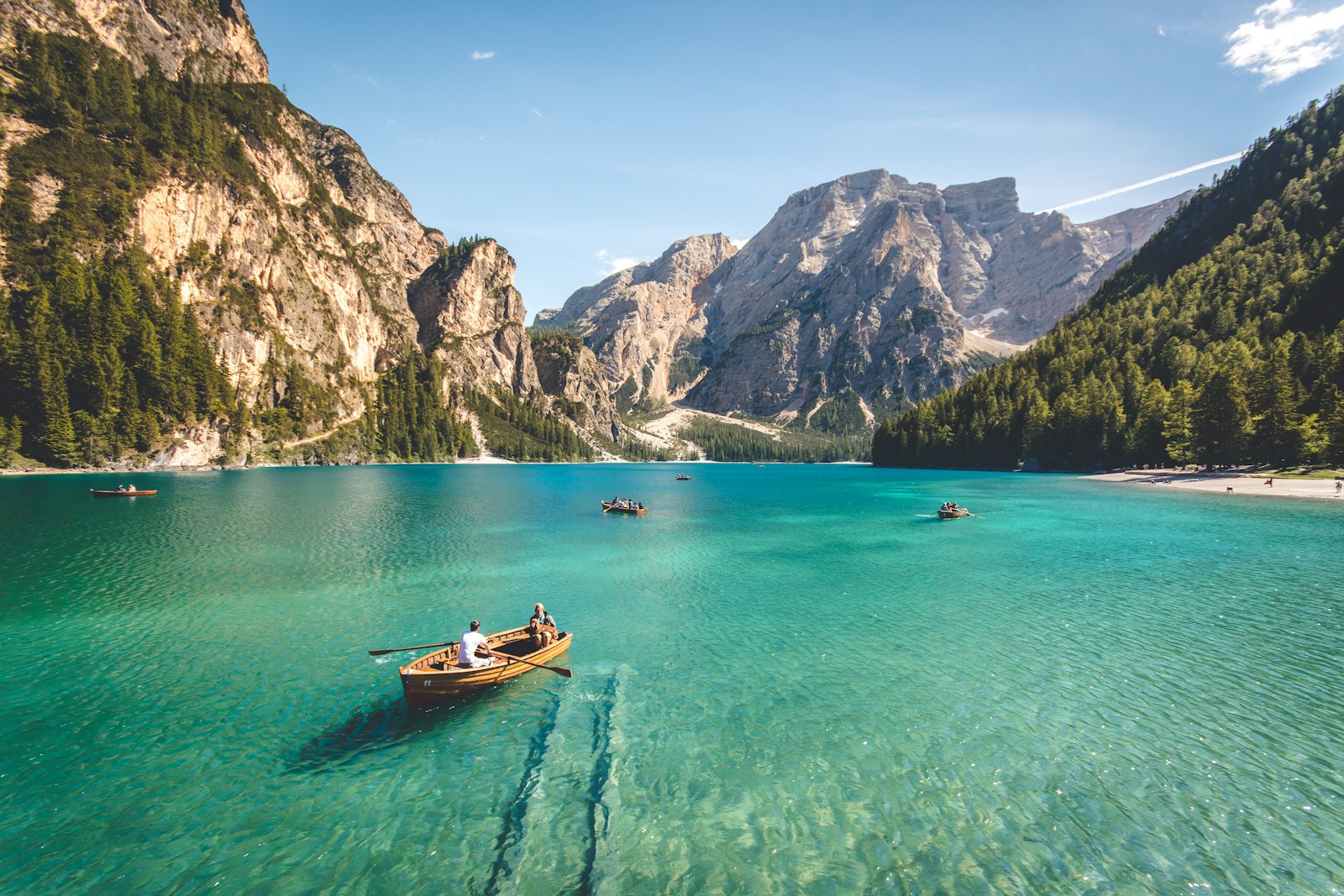
Deep in the Altai Mountains of northern Xinjiang, Kanas Lake is a turquoise jewel surrounded by taiga forests and snow‑capped peaks. The area is home to the Tuvan people, an ethnic minority with a shamanic culture, and the lake itself is said to harbour a mysterious creature (the “Kanas Monster”). Unlike the crowded Jiuzhaigou, Kanas feels raw and remote. Boat rides, short hikes, and visits to Tuvan villages are the main activities.
-
📍 Location: Burqin County, Altay Prefecture, Xinjiang Uyghur Autonomous Region.
-
🎫 Entry fee: $30 (¥210) for the scenic area; shuttle bus $10 (¥70) extra.
-
🕐 Opening hours: 8:00 AM–7:30 PM (summer); winter hours vary (park sometimes closes November–April due to snow).
-
🚆 How to get there: Fly from Urumqi to Burqin Kanas Airport (2 hours, $100–150), then take a shuttle to the lake (1 hour, $5). Alternatively, take a long bus from Urumqi (12–14 hours, $30–40).
-
⏰ Best time to visit: June–September for clear water and warm weather; August is peak tourist month (book ahead). September offers stunning autumn colours.
-
**💡 Insider
Related Guides
Looking for more China travel guides? These match your topic:
- Top 10 Bridges in China
- Top 10 Buddhist Sites in China
- Top 10 Day Trips from Beijing You Shouldn’t Miss
- Top 10 Markets and Shopping Streets in China
- Top 10 Museums in China You Shouldn’t Miss
- Top 10 National Parks in China
Sources & Methodology
This guide draws on:
-
UNESCO World Heritage Center (2024 data) — for heritage site information
-
China National Tourism Administration (2025 statistics) — for visitor numbers
-
TripAdvisor traveler reviews (2024, n=12,000+) — for popularity and satisfaction data
-
Personal visits by our editorial team (2024-2025) — for first-hand recommendations
-
Booking.com and Trip.com pricing data (June 2026) — for cost estimates
-
Numbeo Cost of Living Index (2025) — for budget calculations
Last verified: 2026-07-04 | Next review: 2026-10-01
FAQ summary
This guide covers: Quick Answer / TL;DR, How We Chose, Comparison Table, Detailed Listings, Related Guides.
Topics
More guides you may like

Top 10 Bridges in China
China's bridges are engineering marvels spanning mountains, rivers, and seas. Here are 10 of the most spectacular, from ancient stone to modern steel.
8 min read

Top 10 Buddhist Sites in China
From the Leshan Giant Buddha to the Dunhuang Caves, these 10 Buddhist sites represent 2,000 years of China's spiritual heritage.
9 min read

Top 10 Day Trips from Beijing You Shouldn't Miss
Beijing is packed with history, but some of China's best experiences are just a few hours away. Here are 10 day trips that will transform your visit.
9 min read

Top 10 Markets and Shopping Streets in China
From Shanghai's Bund to Beijing's Silk Street - 10 markets where foreigners can haggle, explore, and bring home authentic Chinese goods.
9 min read

Top 10 Museums in China You Shouldn't Miss
China's museums span 5,000 years of civilization. These 10 - from the Palace Museum to Xi'an's terracotta gallery - are unmissable for culture lovers.
9 min read
Top 10 National Parks in China
Beyond the Great Wall: 10 national parks that show China's wild side, from Zhangjiajie's pillars to Jiuzhaigou's colorful lakes.
9 min read