
China Dragon Boat Festival Travel Tips
The cab driver in Hangzhou laughed at me when I asked if he knew where the dragon boat races were. Not a mean laugh. The kind of laugh that says, you have no id
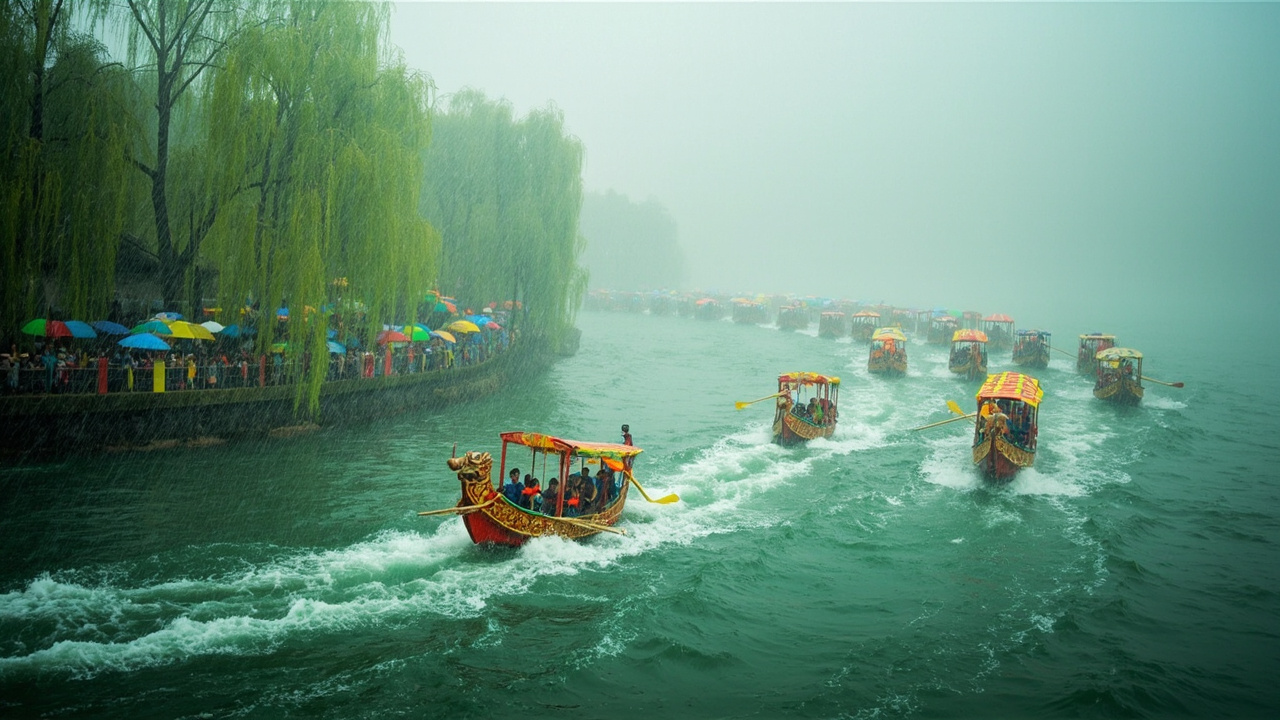
The cab driver in Hangzhou laughed at me when I asked if he knew where the dragon boat races were. Not a mean laugh. The kind of laugh that says, you have no idea what you’re getting into, foreigner. He pointed at the sky, which was the color of wet cement, and said something in rapid Mandarin that my translation app turned into “water festival very wet.” He wasn’t wrong.
I’d spent the previous seven years living in Beijing, traveling through China forty-something times, and I still managed to show up for the Dragon Boat Festival—Duanwu Jie—without an umbrella, without a plan, and without understanding that the entire country basically shuts down for three days of chaos, rice dumplings, and boats shaped like dragons. I stood on the shore of West Lake that morning, rain soaking through my jacket, watching teams of rowers scream in unison as their drummer pounded a rhythm that vibrated through my chest. The smell of zongzi—sticky rice wrapped in bamboo leaves—drifted from a dozen food stalls. A grandmother handed me one, still steaming, and refused to take my money.
That’s the thing about the Dragon Boat Festival in China. It’s messy, it’s loud, it’s wet, and if you don’t know what you’re doing, you’ll spend most of it stuck in a train station or paying triple for a hotel room. This guide is the one I wish I’d had that morning. I’ll tell you exactly where to go, what to skip, how much it costs, and the specific mistakes to avoid so you can actually enjoy the festival instead of just surviving it.
Quick answer
The Dragon Boat Festival (Duanwu Jie) in 2026 falls on June 19, with the official holiday period running June 19–21. Most international tourists can visit China visa-free for up to 144 hours if transiting through major cities like Beijing, Shanghai, or Guangzhou, but you must have a confirmed onward ticket. Expect heavy domestic travel—book trains and hotels at least 4–6 weeks ahead. The best places to experience the festival are Hangzhou (West Lake races), Yueyang (historic origin site), and Hong Kong (international races with English signage).
The Short Version
If you only have 90 seconds: The Dragon Boat Festival is China’s most chaotic public holiday. Don’t try to see five cities. Pick one. Hangzhou is the best all-around choice for first-timers because the races happen right on West Lake, the city is beautiful, and there’s enough English signage to keep you from crying in a convenience store. Book everything early. Bring a rain jacket, not an umbrella—you’ll need both hands free for zongzi. And for the love of god, download WeChat Pay before you arrive. Cash is dying faster than my phone battery did that afternoon.
How I Picked These
I’ve been to the Dragon Boat Festival in six different Chinese cities over the years. Three of those trips were planned. Three were accidental—I showed up somewhere and realized, oh right, it’s Duanwu. I’ve stood in the rain in Hangzhou, sweated through my shirt in Guangzhou, and gotten lost in the back alleys of Yueyang looking for a specific temple that turned out to be closed. I talked to taxi drivers, hostel owners, and a very patient woman at a tourist information desk who drew me a map on a napkin. This list is based on what actually works for a foreign traveler, not what looks good on a brochure.
Comparison Table
| Rank | Place | Best For | Approx Cost (USD) | Time Needed | When to Go |
|------|-------|----------|-------------------|-------------|------------|
| 1 | Hangzhou | First-timers, scenic races | $80–120/day | 2–3 days | June 19 morning |
| 2 | Yueyang | History nerds, fewer crowds | $50–80/day | 1–2 days | June 19–20 |
| 3 | Hong Kong | International vibe, English-friendly | $120–200/day | 3–4 days | June 19–21 |
| 4 | Guangzhou | Food, river races, warm weather | $60–100/day | 2–3 days | June 19 afternoon |
| 5 | Qufu | Confucius connection, quiet | $40–60/day | 1–2 days | June 18–19 |
| 6 | Changsha | Youth culture, nightlife | $50–80/day | 2 days | June 19 evening |
| 7 | Xiamen | Island atmosphere, smaller races | $70–100/day | 2–3 days | June 19 morning |
| 8 | Beijing | Great Wall combo, artificial lakes | $90–150/day | 3–4 days | June 18–20 |
| 9 | Nanjing | History, lake races, student vibe | $60–90/day | 2 days | June 19 |
| 10 | Guilin | Li River scenery, local village races | $50–80/day | 3 days | June 19–20 |
1. Hangzhou — The One You Actually Want to Go To
I was standing on the Broken Bridge—which isn’t actually broken, by the way—when the first drum hit. The sound echoed off the hills around West Lake and a dozen dragon boats shot out from behind an island, their paddles slicing the water in perfect rhythm. A guy next to me was holding his toddler on his shoulders, and the kid was screaming with excitement. I’d been in China long enough to know this was the real thing, not a tourist show.
Hangzhou is special because the races happen right on West Lake, which is already one of the most beautiful places in China. The backdrop is ridiculous—willow trees, pagodas, misty hills. The city government puts on a proper show with multiple heats, food vendors, and even a stage with traditional performances. It’s crowded, but not suffocatingly so, because the lake is huge and people spread out along the shore.
📍 Location: West Lake (Xihu) area, specifically the section near Baidi Causeway and the Broken Bridge. The main viewing area is between the Broken Bridge and the Solitary Hill (Gushan).
🎫 Entry fee: Free. The races are public. If you want a seat on a rented boat to watch from the water, expect to pay about $15–25 (100–180 CNY) for an hour.
🕒 Opening hours: Races typically run 8:00 AM to 12:00 PM on June 19, with smaller heats continuing until 3:00 PM. Get there by 7:30 AM for a good spot.
🚇 How to get there: Take Hangzhou Metro Line 1 to Longxiangqiao Station (Exit C). Walk east for 10 minutes. You’ll hit the lake. Turn left and follow the shore until you see the crowd.
⏰When to visit: June 19 morning, no question. The main races are done by noon. Afternoon is for eating zongzi and wandering the lake.
💡 Insider tips: Bring a portable stool. You’ll be standing for hours. The best zongzi are sold by old women with small carts near the Baidi Causeway entrance—look for the ones with the longest lines. Download Pleco or Google Translate before you go; English menus are rare at food stalls. If it rains (it will), the Starbucks near the Broken Bridge has reliable wifi and dry seats. Don’t bother with the paid “VIP viewing areas”—they’re just roped-off sections with worse views.
I ate a pork-and-egg-yolk zongzi from a woman who’d been selling them at West Lake for 22 years. She told me her secret was soaking the bamboo leaves in tea water overnight. I believed her.
2. Yueyang — Where the Festival Actually Started
The train from Changsha to Yueyang takes about 30 minutes. I spent most of it reading about Qu Yuan, the poet whose suicide supposedly started this whole thing. When I stepped off the train, the air smelled like river mud and fried fish. Yueyang isn’t pretty in the way Hangzhou is pretty. It’s a working city on the edge of Dongting Lake, and it feels real.
This is where the Dragon Boat Festival has its deepest roots. Qu Yuan drowned himself in the Miluo River (a tributary of Dongting Lake) in 278 BCE, and locals raced their boats to try to save him. They threw rice into the water to distract the fish from eating his body. That’s the origin story. Yueyang doesn’t forget it. The races here feel less like a performance and more like a ritual.
📍 Location: Dongting Lake area and the Miluo River section near Quzi Temple. The main race site is at Nanhu Square on the lakefront.
🎫 Entry fee: Free for the races. Quzi Temple costs about $3 (20 CNY).
🕒 Opening hours: Races run 9:00 AM to 2:00 PM on June 19. The temple is open 8:00 AM to 5:30 PM daily.
🚇 How to get there: Take a high-speed train from Changsha South Station to Yueyang East Station (30 minutes, about $12/80 CNY). From Yueyang East, take bus 55 or a taxi (15 minutes, about $5/35 CNY) to Nanhu Square.
⏰When to visit: June 19 is the main day. If you come on June 20, the races are smaller but you’ll have the city to yourself.
💡 Insider tips: Learn to say “Qu Yuan” correctly (chew ywen). Locals will warm to you immediately. The zongzi here are savory, filled with pork and salted duck egg—sweeter than the northern style. Don’t miss the Yueyang Tower (about $5/35 CNY), an ancient pavilion with poetry carved into the walls. English is almost nonexistent here; have your translation app ready. If you get hungry, find a restaurant serving “Dongting Lake fish head” — it’s spicy, sour, and unforgettable.
I got lost looking for Quzi Temple and ended up in a small noodle shop. The owner, a man named Mr. Chen, saw my confused face, closed his shop for 10 minutes, and walked me to the temple gate. He refused my tip but accepted a photo.
3. Hong Kong — The International Version
Hong Kong does the Dragon Boat Festival differently. The races are on a proper course with buoys and announcers speaking English and Cantonese. There are corporate sponsors. There’s a beer garden. It feels like a sporting event, not a folk tradition. And honestly? That’s fine. Sometimes you want to watch dragon boats without wondering if you’re about to get rained on by a typhoon.
The Stanley International Dragon Boat Championships are the main event. Stanley is a coastal neighborhood on the south side of Hong Kong Island, and the races happen right in the bay. The atmosphere is festive—families on the beach, expats drinking Tsingtao, teams from Singapore and Australia competing. It’s the most accessible version of the festival for English-speaking tourists.
📍 Location: Stanley Main Beach, south Hong Kong Island.
🎫 Entry fee: Free to watch. If you want to join a team, some local clubs accept drop-in rowers for about $30–50 (230–390 HKD).
🕒 Opening hours: Races run 8:00 AM to 5:00 PM on June 19, with finals on June 20–21.
🚇 How to get there: From Central, take bus 6, 6A, 6X, or 260 from Exchange Square bus terminus. The ride takes about 45 minutes. Or take the MTR to Admiralty, then bus 260.
⏰When to visit: June 19 for the main races. June 20–21 for the finals, which are more competitive.
💡 Insider tips: Bring sunscreen and a hat—Hong Kong in June is brutally humid. The beer garden near the finish line is a great place to meet other travelers. Octopus Card works everywhere; get one at the airport. English is widely spoken, so you won’t need a translation app much. The best zongzi in Hong Kong are at Kee Wah Bakery—they sell a sweet red-bean version that’s completely different from mainland styles. If you want to see a smaller, more traditional race, take the ferry to Cheung Chau Island on June 20.
I met a guy from Vancouver who’d been coming to the Stanley races for 12 years. He said he liked Hong Kong’s version because “you can actually hear yourself think.” Fair point.
4. Guangzhou — Food First, Races Second
Guangzhou in June is a sauna. I stepped off the metro and my glasses fogged up instantly. But the Pearl River Delta knows how to do a festival, and the food scene during Duanwu is unmatched. The races happen on the Pearl River itself, with teams from all over Guangdong province competing. The real draw, though, is the food.
Guangzhou is the birthplace of Cantonese cuisine, and during the festival, every street corner has a stall selling zongzi, but these are different—smaller, sweeter, often filled with red bean paste or lotus seed. The city also does a “zongzi market” in the Liwan district where you can buy dozens of varieties. The races are good, but I’d come here for the food alone.
📍 Location: Pearl River waterfront near Haizhu Square and the Canton Tower. The main race site is at the Guangzhou International Dragon Boat Race venue on the river.
🎫 Entry fee: Free. The races are public.
🕒 Opening hours: Races run 8:30 AM to 4:00 PM on June 19. The zongzi market in Liwan runs all day June 18–20.
🚇 How to get there: Take Guangzhou Metro Line 3 to Canton Tower Station (Exit B). Walk south toward the river for 5 minutes. Or take Line 2 to Haizhu Square Station (Exit D) and walk east along the river.
⏰When to visit: June 19 afternoon for the races. June 18 evening for the zongzi market, which is less crowded.
💡 Insider tips: The heat is no joke. Bring a portable fan and drink electrolytes. The best zongzi are at Wufu Zongzi in Liwan—look for the shop with the red sign and the line of old ladies. English is limited but better than in Yueyang; most younger people speak some. WeChat Pay is essential here; many stalls don’t take cash. If you have time, take a night cruise on the Pearl River—the city lights are spectacular.
I ate a zongzi filled with pork belly, chestnuts, and a whole salted egg yolk. It was the size of my fist and cost about $1.50 (10 CNY). I bought three more.
5. Qufu — The Quiet One
I almost didn’t include Qufu. It’s small, it’s not on most tourists’ radars, and the dragon boat races here are more of a local affair than a major event. But that’s exactly why I’m including it. If you want to experience the festival without fighting crowds, Qufu is your spot.
Qufu is the hometown of Confucius, and the city’s entire identity revolves around his legacy. The races happen on the Yi River, a small tributary that runs through town. They’re modest—maybe a dozen boats, a few hundred spectators—but the atmosphere is genuine. Families picnic on the riverbank. Kids run around with paper dragons. It feels like a community gathering, not a tourism campaign.
📍 Location: Yi River waterfront, near the Confucius Temple complex.
🎫 Entry fee: Free for the races. The Confucius Temple costs about $8 (60 CNY).
🕒 Opening hours: Races run 9:00 AM to 12:00 PM on June 19. The temple is open 8:00 AM to 5:00 PM.
🚇 How to get there: Take a high-speed train from Beijing South to Qufu East Station (2.5 hours, about $50/350 CNY). From Qufu East, take bus K01 to the city center (30 minutes, about $1/7 CNY), then walk 10 minutes to the river.
⏰When to visit: June 19 morning. The town is quiet by afternoon.
💡 Insider tips: The Confucius Temple is worth a full day—it’s massive and beautiful. The zongzi here are simple, just sticky rice and red dates. Don’t expect fancy. English is almost nonexistent; have your translation app ready. The best place to stay is the Qufu International Youth Hostel—clean, cheap, and the owner speaks some English. If you’re here on June 18, there’s a small ceremony at the temple at dawn.
I sat next to an elderly man who told me he’d been watching the Qufu races since he was a boy. He pointed at the boats and said, “Not big. But real.”
6. Changsha — For the Night Owls
Changsha surprised me. I’d heard it was a party city—Hunan’s nightlife capital—but I didn’t expect the Dragon Boat Festival to turn into a full-blown street festival. By 7 PM on June 19, the streets around the Xiangjiang River were packed with people eating, drinking, and watching fireworks.
The races happen during the day on the Xiangjiang River, but the real action starts after sunset. The city sets up stages with live music, food trucks, and beer tents. It’s loud, it’s chaotic, and it’s a lot of fun. If you’re under 30 and traveling solo, Changsha might be your best bet.
📍 Location: Xiangjiang River waterfront, near the Orange Island (Juzizhou) area.
🎫 Entry fee: Free. The night market area near Pozi Street has food stalls with items ranging from $1–5 (7–35 CNY).
🕒 Opening hours: Races run 8:00 AM to 1:00 PM on June 19. Night festivities run 6:00 PM to midnight.
🚇 How to get there: Take Changsha Metro Line 2 to Juzizhou Station (Exit 1). Walk west toward the river for 5 minutes.
⏰When to visit: June 19 evening for the nightlife. The races are good but not spectacular—come for the vibe, not the competition.
💡 Insider tips: Changsha is famous for stinky tofu (chou doufu). Try it. It smells like a sewer but tastes amazing. The night market on Pozi Street is the best place to eat. English is limited but improving; younger people in the city center speak some. WeChat Pay is essential. If you want to escape the crowds, take the cable car to Yuelu Mountain at sunset—the view of the city is worth the $5 (35 CNY) ticket.
I tried stinky tofu for the first time in Changsha. The vendor laughed at my face when I smelled it. I laughed too. Then I ate three more skewers.
7. Xiamen — Island Time
Xiamen is the kind of city that makes you slow down. It’s an island off the coast of Fujian, with colonial architecture, wide beaches, and a pace of life that feels more Southeast Asian than Chinese. The Dragon Boat Festival here is smaller than in Hangzhou or Hong Kong, but the setting is gorgeous.
The races happen on Yundang Lake, a saltwater lagoon in the city center. The water is calm, the surrounding park is green, and the whole thing feels relaxed. There’s a small festival market with local crafts and food. It’s not a bucket-list event, but it’s a pleasant way to spend a morning.
📍 Location: Yundang Lake (Yundang Dang), near the Xiamen International Conference Center.
🎫 Entry fee: Free.
🕒 Opening hours: Races run 8:30 AM to 12:00 PM on June 19.
🚇 How to get there: Take Xiamen Metro Line 2 to Jianye Road Station (Exit 3). Walk south toward the lake for 8 minutes.
⏰When to visit: June 19 morning. The rest of the day is for exploring Gulangyu Island, which is a 10-minute ferry ride away.
💡 Insider tips: Gulangyu Island is car-free and full of old colonial buildings—spend an afternoon there. The zongzi in Xiamen are sweet, filled with red bean paste or taro. English is decent in tourist areas. Bring an umbrella; June is rainy. The best place to watch the races is from the pedestrian bridge near the conference center—you get a bird’s-eye view.
I bought a zongzi from a woman who’d been making them for 40 years. She wrapped it in a lotus leaf instead of bamboo. It tasted like summer.
8. Beijing — The Convenient Option
Beijing is not the best place to experience the Dragon Boat Festival. The races happen on artificial lakes in parks, and they feel a bit manufactured. But if you’re already in Beijing and don’t want to travel, it’s fine.
The main event is at Shichahai, a group of lakes in the city center. The races are small—maybe eight boats—but the setting is nice, with hutongs and traditional courtyard houses nearby. The city also does a zongzi-making workshop at the Temple of Heaven, which is worth checking out if you’re traveling with kids.
📍 Location: Shichahai Lake (Houhai area), near the Drum Tower.
🎫 Entry fee: Free. The zongzi workshop at the Temple of Heaven costs about $10 (70 CNY).
🕒 Opening hours: Races run 9:00 AM to 12:00 PM on June 19. The workshop runs 10:00 AM to 4:00 PM June 18–20.
🚇 How to get there: Take Beijing Metro Line 8 to Shichahai Station (Exit A). Walk south toward the lake for 3 minutes.
⏰When to visit: June 19 morning. The rest of the day is for exploring the hutongs.
💡 Insider tips: The zongzi in Beijing are sweet, filled with red dates or bean paste—very different from the savory southern style. English is widely spoken in tourist areas. WeChat Pay works everywhere. If you want to avoid crowds, skip Shichahai and go to the Summer Palace instead—they have a smaller race on Kunming Lake that’s less crowded.
I watched a team of expats race at Shichahai. They were terrible. They capsized. The crowd cheered anyway.
9. Nanjing — The Underrated One
Nanjing doesn’t get the attention it deserves. It’s a city of trees, lakes, and history—the Ming Dynasty capital, site of the Sun Yat-sen Mausoleum, and home to some of the best food in China. The Dragon Boat Festival here happens on Xuanwu Lake, a massive lake surrounded by a park and an ancient city wall.
The races are medium-sized—maybe 20 boats—but the setting is beautiful. The lake is ringed by willow trees, and the city wall provides a dramatic backdrop. It’s less crowded than Hangzhou and more organized than Yueyang. A solid middle ground.
📍 Location: Xuanwu Lake, near the Xuanwu Gate of the Nanjing City Wall.
🎫 Entry fee: Free to enter the park. The lake area is public.
🕒 Opening hours: Races run 8:00 AM to 1:00 PM on June 19.
🚇 How to get there: Take Nanjing Metro Line 1 to Xuanwumen Station (Exit 3). Walk east toward the lake for 5 minutes.
⏰When to visit: June 19 morning. The park is lovely in the afternoon for a walk.
💡 Insider tips: The best zongzi in Nanjing are at the Jinling Hotel’s bakery—they do a fancy version with abalone. The city wall is worth walking; the section near Xuanwu Lake has great views. English is decent in the city center. If you have time, visit the Nanjing Massacre Memorial—it’s heavy but important.
I walked the city wall at sunset after the races. The lake was still, and the only sounds were birds and a distant drum. I stood there for 20 minutes.
10. Guilin — The Scenic Wildcard
Guilin is famous for its karst mountains, not its dragon boat races. But the small villages along the Li River do their own celebrations, and they’re the most authentic I’ve seen. No sponsors. No announcers. Just locals in wooden boats, paddling to the rhythm of a single drum.
The main race is in Yangshuo, a town about an hour from Guilin. The Li River is the course, and the mountains rise up on both sides. It’s absurdly beautiful. The downside is that it’s hard to get to and there’s almost no English. But if you want the real thing, this is it.
📍 Location: Li River, Yangshuo section, near the West Street area.
🎫 Entry fee: Free. Boat rentals for spectators cost about $10–15 (70–100 CNY) for an hour.
🕒 Opening hours: Races run 9:00 AM to 2:00 PM on June 19, but times are flexible—ask locals.
🚇 How to get there: Take a high-speed train from Guilin to Yangshuo Station (30 minutes, about $15/100 CNY). From the station, take bus 1 or a taxi to West Street (15 minutes, about $3/20 CNY), then walk to the river.
⏰When to visit: June 19 morning. The afternoon is for bamboo rafting.
💡 Insider tips: This is not for beginners. Bring a translation app, cash, and patience. The zongzi here are filled with pork and chestnuts—ask for “xian zongzi.” The best place to watch is from the bridge near West Street. If you get stuck, the Yangshuo Mountain Retreat hostel has English-speaking staff.
I watched a race from a bamboo raft. The boat passed so close I could see the rowers’ faces. One of them winked at me.
FAQ summary
The Dragon Boat Festival in 2026 runs June 19–21, with the main races on June 19. Most international tourists can enter China visa-free for up to 144 hours through major transit hubs, but you need a confirmed onward ticket. The best cities for first-timers are Hangzhou (scenic, accessible) and Hong Kong (English-friendly, organized). Book trains and hotels 4–6 weeks ahead. Bring a rain jacket, download WeChat Pay, and carry a translation app—English is limited outside major cities.
FAQ
Q: Do I need a visa for the Dragon Boat Festival in 2026?
A: Most nationalities can enter visa-free for up to 144 hours (6 days) if transiting through Beijing, Shanghai, Guangzhou, Chengdu, or 18 other cities. You need a confirmed onward ticket to a third country. If you’re staying longer or entering through a smaller city, apply for a tourist visa (L-visa) at least 4 weeks ahead.
Q: Is it safe to travel during the Dragon Boat Festival?
A: Yes, but expect chaos. Trains sell out. Hotels triple their prices. Roads are jammed. It’s safe, just inconvenient. Book everything early and build in buffer time between connections.
Q: What should I pack for the Dragon Boat Festival?
A: A rain jacket (not an umbrella—you’ll need hands free), a portable fan (it’s humid), sunscreen, a power bank, and a translation app. If you’re going to smaller cities, bring cash. If you’re going to Hong Kong, bring an Octopus Card.
Q: How do I pay for things in China?
A: WeChat Pay and Alipay are dominant. Set them up before you arrive—link a foreign credit card. Cash is accepted in smaller towns but increasingly rare in cities. Credit cards are useless outside hotels and high-end restaurants.
Q: Will I need a VPN in China?
A: Yes. Google, Facebook, Instagram, WhatsApp, and many news sites are blocked. Install a VPN on your phone and laptop before you arrive. ExpressVPN, NordVPN, and Astrill work well. Test it before you leave the airport.
**Q: What is zongzi and where do I get the best one?**Zongzi is sticky rice wrapped in bamboo leaves, steamed, and filled with meat, beans, or egg. The best ones are from street vendors, not tourist shops. Look for long lines of locals. In Hangzhou, try the pork-and-egg-yolk version. In Guangzhou, try the sweet red-bean version.
Can I join a dragon boat team as a tourist?
In Hong Kong, yes. Some local clubs accept drop-in rowers for a fee. In mainland cities, it’s harder—teams are usually local work units or schools. Your best bet is to ask at a hostel or check WeChat groups for expat teams.
The Honest Wrap-up
This list is for people who want to see the real Dragon Boat Festival, not a sanitized version for tourists. If you want convenience, go to Hong Kong. If you want beauty, go to Hangzhou. If you want authenticity and don’t mind a little discomfort, go to Yueyang or Guilin. Don’t try to do more than two cities—you’ll spend the whole holiday on trains.
The best advice I can give you is this: get there early, find a spot by the water, and buy a zongzi from the oldest person selling them. You won’t understand what they’re saying, but you’ll understand what the festival is about. The drums will start, the boats will fly past, and for a few minutes, you’ll forget you’re a foreigner in a strange country. That’s the whole point.
Related Guides
Looking for more China travel guides? These match your topic:
Topics
More guides you may like
Top 10 Bridges in China
China's bridges are engineering marvels spanning mountains, rivers, and seas. Here are 10 of the most spectacular, from ancient stone to modern steel.
8 min read

Top 10 Buddhist Sites in China
From the Leshan Giant Buddha to the Dunhuang Caves, these 10 Buddhist sites represent 2,000 years of China's spiritual heritage.
9 min read
Top 10 Day Trips from Beijing You Shouldn't Miss
Beijing is packed with history, but some of China's best experiences are just a few hours away. Here are 10 day trips that will transform your visit.
9 min read
Top 10 Hidden Gems in China Off the Beaten Path
Beyond the Great Wall and Terracotta Warriors, China has incredible hidden destinations few tourists ever reach. Here are 10 underrated gems worth the detour.
9 min read
Top 10 Markets and Shopping Streets in China
From Shanghai's Bund to Beijing's Silk Street - 10 markets where foreigners can haggle, explore, and bring home authentic Chinese goods.
9 min read
Top 10 Museums in China You Shouldn't Miss
China's museums span 5,000 years of civilization. These 10 - from the Palace Museum to Xi'an's terracotta gallery - are unmissable for culture lovers.
9 min read