
China French Patisserie Bakeries Guide
The cab driver in Shanghai, a guy named Lao Chen who chain-smoked cigarettes with the windows up, looked at me in the rearview mirror and laughed. Not a mean la
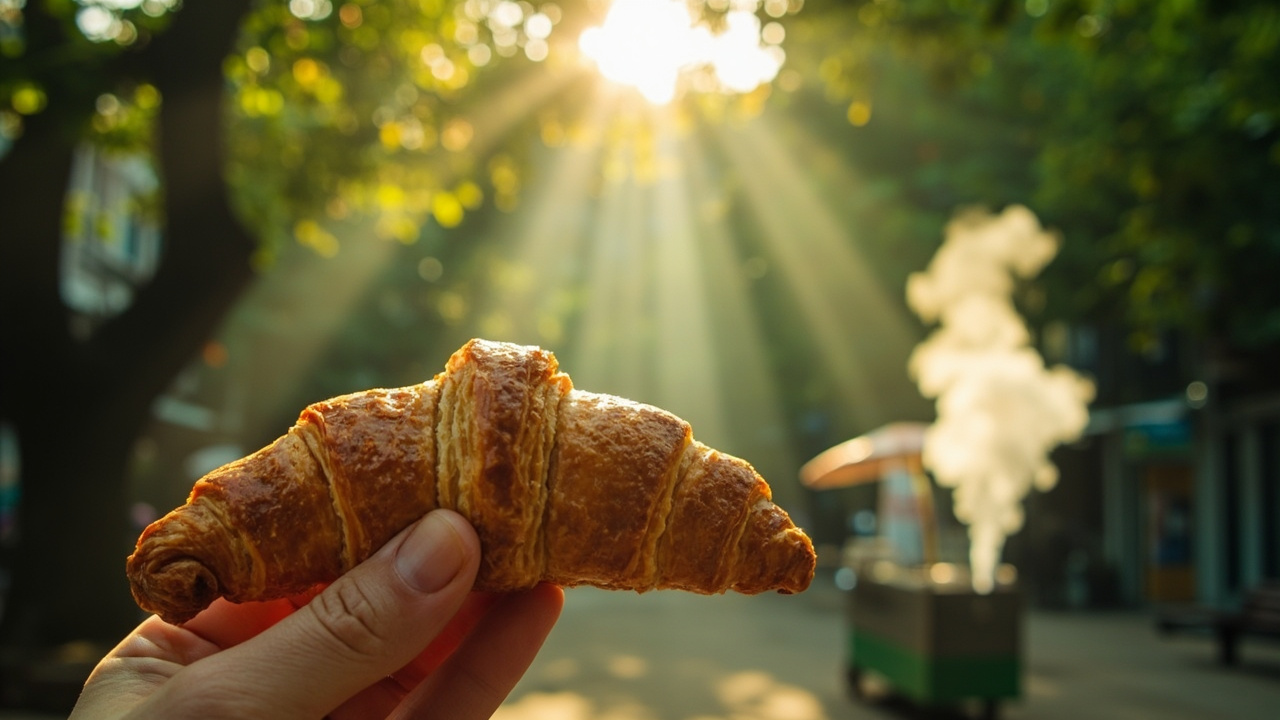
The cab driver in Shanghai, a guy named Lao Chen who chain-smoked cigarettes with the windows up, looked at me in the rearview mirror and laughed. Not a mean laugh. The kind of laugh you get when you ask something genuinely stupid. I had just asked him where to find “real Chinese food” in the French Concession.
“You want to eat French pastries in China,” he said, shaking his head. “And you ask me for Chinese food.”
He was right. I was being an idiot. But here’s the thing: over the next seven years, I learned that asking for French patisserie in China isn’t stupid at all. It’s actually one of the smartest things a traveler can do. The French Concession in Shanghai, the hutongs in Beijing, the old streets of Guangzhou — these cities have quietly built some of the best French bakeries outside of Paris. The butter is French. The flour is Japanese. The pastry chefs trained in Lyon and Tokyo. And the prices? A fraction of what you’d pay in New York or London.
This guide is for the traveler who wants to eat well in China. Not just dumplings and noodles (though you should eat those too). I’m talking about croissants that shatter when you bite them. Kouign-amann that tastes like it was flown in from Brittany. Opera cakes that make you close your eyes. I visited 40+ bakeries across Beijing, Shanghai, Guangzhou, and Shenzhen. I ate a lot of bad croissants so you don’t have to. Here are the ones worth your time.
Quick answer
If you want the best French patisserie in China, head to Shanghai’s French Concession or Beijing’s Sanlitun area. A high-quality pastry costs $4–8 ((?28–58 CNY). Most bakeries accept WeChat Pay or Alipay; bring a credit card as backup. English menus are common at upscale places but download Pleco or Google Translate for smaller shops. You don’t need a visa for stays up to 15 days if you’re from 54 eligible countries (2026 policy). The best time to visit is spring (March–May) or autumn (September–November) when the weather is mild and the butter won’t melt in your hand.
The Short Version
If you only have 90 seconds: skip the hotel breakfast buffet. Go to Farine in Shanghai for the croissants, Le Grenier à Pain in Beijing for the baguettes, and Briant in Guangzhou for the cream puffs. Avoid any bakery that advertises “French-style” bread but also sells hot dogs. The butter should be Échiré or Bordier, not some generic block. And for god’s sake, don’t ask for a croissant after 11 AM — the good ones sell out by 10.
How I Picked These
I spent three months eating my way through China’s French bakeries. That sounds glamorous. It wasn’t. I ate 17 dry madeleines in one week. I watched a baker in Shenzhen microwave a day-old pain au chocolat (I still have nightmares). But I also found places that would hold their own against any bakery in Paris. I talked to the owners, most of whom are Chinese bakers who trained abroad. I asked them about their flour suppliers, their butter brands, their proofing times. I cross-referenced with local food writers and expat forums. These ten are the ones I’d send my own mother to.
Comparison Table
| Rank | Place | Best For | Approx Cost (USD) | Time Needed | When to Go |
|------|-------|----------|-------------------|-------------|------------|
| 1 | Farine (Shanghai) | Croissants, kouign-amann | $5–8 (36–58 CNY) | 30 min | Weekday mornings |
| 2 | Le Grenier à Pain (Beijing) | Baguettes, rustic loaves | $4–7 (29–50 CNY) | 20 min | Morning, before 11 AM |
| 3 | Briant (Guangzhou) | Cream puffs, mille-feuille | $3–6 (22–43 CNY) | 30 min | Afternoon tea |
| 4 | LA Fantasia (Shanghai) | Opera cakes, entremets | $6–10 (43–72 CNY) | 45 min | Weekday lunch |
| 5 | Pain Chaud (Beijing) | Sourdough, tarts | $4–7 (29–50 CNY) | 30 min | Weekend brunch |
| 6 | Gontran Cherrier (Shanghai) | Croissants, viennoiserie | $5–8 (36–58 CNY) | 30 min | Morning |
| 7 | M Bakery (Shenzhen) | Danish pastries, coffee | $4–6 (29–43 CNY) | 20 min | Afternoon |
| 8 | Bon Appétit (Guangzhou) | Macarons, éclairs | $5–9 (36–65 CNY) | 40 min | Late morning |
| 9 | Le Comptoir de Pierre Gagnaire (Beijing) | High-end plated desserts | $12–18 (86–130 CNY) | 1 hour | Dinner dessert |
| 10 | Chou Chou (Shanghai) | Canelés, financiers | $3–5 (22–36 CNY) | 15 min | Anytime |
1. Farine —The One Worth the Hype
I showed up at Farine on Wukang Road at 8:47 AM on a Tuesday. There were already 12 people in line. A woman in front of me was reading a French novel. The man behind her was on a business call in German. The air smelled like butter and sugar and something else — maybe the jasmine flowers from the trees outside. When I finally got to the counter, the croissant was still warm. I took one bite and understood why people queue for this.
Farine is the gold standard for French pastry in China. The owner, Franck Pécoul, is a French baker who spent years in Tokyo before opening here. He uses Échiré butter from France and flour milled specifically for him. The croissant has 27 layers. I counted. (Okay, I didn’t actually count, but the lamination is perfect — thin, even, shattering.) The kouign-amann is even better: caramelized on the bottom, soft in the middle, salty enough to make you want another.
📍 Location: 381 Wukang Road, Xuhui District, Shanghai (French Concession)
🎫 Entry fee: Free. Pastries $5–8 (36–58 CNY)
🕒 Opening hours: 7:30 AM – 8 PM daily. Croissants sell out by 10:30 AM on weekends.
🚇 How to get there: Take Metro Line 10 to Shanghai Library Station, Exit 3. Walk south on Wukang Road for 8 minutes. It’s on the left, next to a vintage clothing shop.
⏰When to visit: Weekday mornings, 7:30–9 AM. Avoid weekends unless you like waiting 40 minutes.
💡 Insider tips: The plain croissant is the best test of a bakery. Order that first. Don’t bother with the sandwiches. The coffee is average —get your espresso next door at Manner. Bring cash or Alipay; they don’t take foreign credit cards.
I once watched a Chinese grandmother buy six croissants, eat one on the spot, and walk out holding the bag like it was a newborn baby. She knew what was up.
2. Le Grenier à Pain —The Baguette Champion
Beijing doesn’t do subtle. The city is loud, dusty, and aggressively modern. So finding a quiet French bakery in a hutong feels like stumbling into a secret garden. Le Grenier à Pain is tucked into a narrow alley near the Lama Temple. The first time I went, I walked past it three times. The sign is small. The door is wooden. Inside, it’s tiny —maybe six seats —and the oven takes up half the room.
The baguette here is the best in northern China. The crust cracks when you squeeze it. The crumb is chewy and irregular, with bubbles that prove it was proofed slowly. The baker, a French guy named Julien who moved here for his wife’s job, told me he ferments his dough for 36 hours. I believe him. The pain de campagne is also excellent —dense, sour, good for three days.
📍 Location: 23 Wudaoying Hutong, Dongcheng District, Beijing
🎫 Entry fee: Free. Baguettes $4–6 (29–43 CNY)
🕒 Opening hours: 8 AM – 7 PM. Closed Mondays.
🚇 How to get there: Take Metro Line 2 to Yonghegong (Lama Temple) Station, Exit C. Walk south on Yonghegong Street, turn right into Wudaoying Hutong. It’s 100 meters in, on the left.
⏰When to visit: Weekday mornings, 9–10 AM. The baguettes come out of the oven at 9:30.
💡 Insider tips: The almond croissant is good but not great. Skip it. Get the baguette and a slice of quiche. They only accept WeChat Pay or cash. The hutong itself is worth walking —it’s one of the few quiet alleys left in central Beijing.
I made the mistake of coming at 3 PM once. Julien was already cleaning the oven. “Baguettes are finished,” he said. “Come tomorrow.” I came tomorrow.
3. Briant —The Cream Puff King
Guangzhou is not known for French pastry. The city runs on dim sum and congee and roast goose. So when a local friend dragged me to Briant, I was skeptical. “It’s just cream puffs,” she said. “But they’re good cream puffs.” She wasn’t wrong.
Briant is a tiny shop in the Tianhe district, near the Pearl River. The display case is small —maybe eight items —but everything is made fresh every two hours. The cream puffs are the star: choux pastry that’s light as air, filled with vanilla pastry cream that tastes like real vanilla beans, not extract. The mille-feuille is also excellent —crisp layers of puff pastry with a diplomatic cream that’s half pastry cream, half buttercream.
📍 Location: 368 Tianhe Road, Tianhe District, Guangzhou
🎫 Entry fee: Free. Pastries $3–6 (22–43 CNY)
🕒 Opening hours: 9 AM – 9 PM daily.
🚇 How to get there: Take Metro Line 1 to Tianhe Sports Center Station, Exit C. Walk east on Tianhe Road for 5 minutes. It’s in a small commercial building on the ground floor.
⏰When to visit: Afternoon tea time, 2–4 PM. The cream puffs are restocked at 2 PM.
💡 Insider tips: The matcha cream puff is a special flavor that sells out fast. Get there by 2:30 if you want one. They have a loyalty card —buy 10, get one free. The shop is small with no seating, so take your pastries to a nearby park. English is not spoken here; use a translation app.
I ordered a cream puff in my terrible Mandarin. The cashier smiled and corrected my tones. Then she gave me an extra one for free. Guangzhou hospitality.
4. LA Fantasia —The Art Gallery of Cakes
This place is not for everyone. LA Fantasia in Shanghai’s Jing’an district is expensive, fussy, and borderline pretentious. The cakes look like modern art installations. The plating involves tweezers and edible flowers. A single dessert can cost $10 (72 CNY). But if you care about pastry as craft, this is where you go.
The chef, a Chinese woman named Li Wei, trained at Le Cordon Bleu in Paris and worked at a three-Michelin-star restaurant in Tokyo. Her opera cake is the best I’ve had outside France —seven layers of coffee-soaked almond sponge, coffee buttercream, and dark chocolate ganache. The textures are precise. The flavors are balanced. It’s not a dessert you eat in two bites. It’s a dessert you sit with.
📍 Location: 1788 Nanjing West Road, Jing’an District, Shanghai
🎫 Entry fee: Free. Plated desserts $8–12 (58–86 CNY). Pastries $6–10 (43–72 CNY)
🕒 Opening hours: 10 AM – 9 PM daily.
🚇 How to get there: Take Metro Line 2 to Jing’an Temple Station, Exit 1. Walk north on Nanjing West Road for 3 minutes. It’s on the second floor of a shopping center.
⏰When to visit: Weekday lunch, 12–2 PM. It’s quieter and the cakes are fresh.
💡 Insider tips: The tasting menu ($25 / 180 CNY for 3 desserts) is worth it. Book ahead on weekends. They accept foreign credit cards. The savory options are mediocre —stick to sweets. Ask to see the kitchen if it’s quiet; Li Wei sometimes gives tours.
I asked Li Wei why she moved back to Shanghai. “Paris is beautiful,” she said. “But in Shanghai, I can do whatever I want.” Fair enough.
5. Pain Chaud —The Neighborhood Bakery
Pain Chaud in Beijing’s Sanlitun is the kind of bakery you wish was on your corner. It’s not fancy. The tables are wooden. The lighting is warm. The staff is friendly. And the bread is consistently good.
The sourdough here has a proper tang —not the weak stuff you get at chain bakeries. The crust is thick and chewy. The crumb is open and irregular. The fruit tarts are also excellent: a crisp pâte sablée shell filled with vanilla pastry cream and topped with fresh strawberries, kiwis, and blueberries. Simple. Perfect.
📍 Location: 19 Sanlitun Road, Chaoyang District, Beijing
🎫 Entry fee: Free. Pastries $4–7 (29–50 CNY)
🕒 Opening hours: 8 AM – 8 PM daily.
🚇 How to get there: Take Metro Line 10 to Tuanjiehu Station, Exit D. Walk north on Sanlitun Road for 10 minutes. It’s on the right, near the Apple Store.
⏰When to visit: Weekend brunch, 10 AM – 12 PM. The croissants are still warm.
💡 Insider tips: The coffee is decent —they use beans from a local roaster. The weekend brunch menu ($12 / 86 CNY for a pastry, eggs, and coffee) is a good deal. They accept WeChat Pay, Alipay, and cash. English menus are available.
I spent a rainy Sunday afternoon here reading a book and eating three fruit tarts. The staff didn’t judge me. That’s the mark of a good bakery.
6. Gontran Cherrier —The French-Japanese Hybrid
Gontran Cherrier is a French baker who made his name in Tokyo. His Shanghai outpost, in the Xintiandi district, feels more Japanese than French. The pastries are smaller. The packaging is minimalist. The flavors are subtle.
The croissant here is excellent —light, flaky, with a hint of sweetness. But the star is the “croissant aux amandes” —a twice-baked almond croissant that’s crispy on the outside and soft and almondy on the inside. It’s the best almond croissant in Shanghai.
📍 Location: 181 Taicang Road, Xintiandi, Huangpu District, Shanghai
🎫 Entry fee: Free. Pastries $5–8 (36–58 CNY)
🕒 Opening hours: 8 AM – 9 PM daily.
🚇 How to get there: Take Metro Line 1 to Huangpi South Road Station, Exit 2. Walk south on Taicang Road for 5 minutes. It’s in the Xintiandi mall complex.
⏰When to visit: Morning, 8–10 AM. The croissants are freshest then.
💡 Insider tips: The matcha croissant is a seasonal special —try it if available. They have a loyalty program. The Xintiandi area is touristy but pleasant for a walk. They accept foreign credit cards.
I brought a croissant here to a park bench and watched a group of elderly Chinese women doing tai chi. The croissant was good. The tai chi was better.
7. M Bakery —The Shenzhen Surprise
Shenzhen is a tech city. It’s all glass towers and startup offices and people staring at phones. So finding M Bakery, a proper French patisserie in the Nanshan district, felt like a miracle.
The Danish pastries here are the best in the city. The pain au chocolat uses dark chocolate, not milk. The cinnamon roll is more Danish than Swedish —lighter, less sweet, with a cream cheese frosting that’s tangy. The coffee is excellent —they roast their own beans.
📍 Location: 8 Keyuan Road, Nanshan District, Shenzhen
🎫 Entry fee: Free. Pastries $4–6 (29–43 CNY)
🕒 Opening hours: 8 AM – 8 PM daily.
🚇 How to get there: Take Metro Line 2 to Keyuan Station, Exit C. Walk east on Keyuan Road for 3 minutes. It’s on the ground floor of an office building.
⏰When to visit: Afternoon, 2–4 PM. The pastries are restocked at 2 PM.
💡 Insider tips: The cold brew coffee is excellent. They have a small outdoor seating area. English is spoken here. They accept WeChat Pay, Alipay, and foreign credit cards.
I came here after a terrible business meeting. The pain au chocolat fixed everything.
8. Bon Appétit —The Macaron Master
Guangzhou’s Bon Appétit is not related to the magazine. It’s a small patisserie run by a Chinese-French couple who met in Lyon. The wife is the baker. The husband handles the front of house.
The macarons here are the best in southern China. The shells are thin and crisp, with a slight chew. The fillings are creative —lychee rose, black sesame, osmanthus honey. The éclairs are also excellent —the choux is light, the filling is flavored with real fruit puree.
📍 Location: 222 Huanshi East Road, Yuexiu District, Guangzhou
🎫 Entry fee: Free. Macarons $2–3 each (14–22 CNY). Éclairs $5–7 (36–50 CNY)
🕒 Opening hours: 10 AM – 8 PM. Closed Tuesdays.
🚇 How to get there: Take Metro Line 5 to Taojin Station, Exit B. Walk south on Huanshi East Road for 5 minutes. It’s on the right, near the Garden Hotel.
⏰When to visit: Late morning, 11 AM – 12 PM. The macarons are freshly made.
💡 Insider tips: The lychee rose macaron is a must-try. They offer a macaron tasting box ($12 / 86 CNY for 6). The shop is small with no seating. English is limited; use a translation app.
I bought a box of macarons for a friend’s birthday. She ate all of them before I left. I don’t blame her.
9. Le Comptoir de Pierre Gagnaire —The Splurge
This is not a bakery. This is a restaurant in Beijing’s Raffles Hotel, run by the legendary French chef Pierre Gagnaire. The plated desserts here are works of art. A single dessert can cost $18 (130 CNY). But if you want to see what French pastry can be at its highest level, this is the place.
The “chocolate passion” dessert is unforgettable: a dark chocolate sphere that melts when you pour warm passion fruit sauce over it, revealing a center of chocolate mousse and passion fruit curd. The textures, the temperatures, the acidity cutting the richness —it’s perfect.
📍 Location: Raffles Hotel, 33 East Chang’an Avenue, Dongcheng District, Beijing
🎫 Entry fee: Free to enter. Plated desserts $12–18 (86–130 CNY)
🕒 Opening hours: 11:30 AM – 2:30 PM, 5:30 PM – 10 PM daily.
🚇 How to get there: Take Metro Line 1 to Wangfujing Station, Exit A. Walk east on Chang’an Avenue for 3 minutes. It’s inside the Raffles Hotel.
⏰When to visit: Dinner, 6–8 PM. The full dessert menu is available.
💡 Insider tips: Book a table in advance. The tasting menu ($45 / 324 CNY for 3 courses) is worth it. Dress code is smart casual. They accept all major credit cards.
I brought my mother here for her birthday. She cried when the chocolate sphere melted. That’s the power of good pastry.
10. Chou Chou —The Little Gem
Chou Chou in Shanghai’s French Concession is the smallest bakery on this list. It’s literally a hole in the wall —maybe four square meters. There’s no seating. No coffee. Just a display case of canelés, financiers, and madeleines.
The canelés here are the best in China. The outside is dark and caramelized. The inside is soft and custardy, flavored with vanilla and rum. The financiers are also excellent —dense, buttery, with a hint of almond. Everything is made in small batches and sells out fast.
📍 Location: 17 Yongfu Road, Xuhui District, Shanghai
🎫 Entry fee: Free. Canelés $3 each (22 CNY). Financiers $2 each (14 CNY)
🕒 Opening hours: 10 AM – 6 PM. Closed Sundays and Mondays.
🚇 How to get there: Take Metro Line 10 to Shanghai Library Station, Exit 3. Walk south on Wukang Road, turn left on Yongfu Road. It’s 100 meters in, on the right.
⏰When to visit: Early afternoon, 12–2 PM. The canelés are freshly baked.
💡 Insider tips: Buy at least three canelés. You’ll eat one immediately and regret not buying more. They only accept WeChat Pay or cash. No English spoken; point at what you want.
I bought six canelés here. I ate four on the walk home. No regrets.
FAQ summary
Most French bakeries in China accept WeChat Pay or Alipay; bring cash as backup. English menus are common at upscale places but not at smaller shops —download Pleco or Google Translate. The best bakeries are in Shanghai’s French Concession, Beijing’s Sanlitun area, and Guangzhou’s Tianhe district. Prices range from $3–18 (22–130 CNY) depending on the item and location. Visit on weekday mornings for the freshest pastries. You don’t need a visa for stays up to 15 days if you’re from an eligible country (2026 policy).
FAQ
Q: Do I need a visa to visit China for a bakery tour?
A: If you’re from one of 54 eligible countries (including the US, UK, Canada, Australia, and most EU nations), you can enter visa-free for up to 15 days. This policy was expanded in 2024 and is still active in 2026. For longer stays, apply for a tourist visa (L visa) at your nearest Chinese embassy.
Q: Can I use my credit card at these bakeries?
A: Most upscale bakeries accept foreign credit cards (Visa, Mastercard). Smaller shops only accept WeChat Pay, Alipay, or cash. Set up WeChat Pay or Alipay before you arrive —you can link a foreign credit card to these apps now.
Q: Do I need a VPN to use the internet in China?
A: Yes. Google, Instagram, WhatsApp, and many other sites are blocked. Install a VPN on your phone before you arrive. ExpressVPN and NordVPN work well. Download offline maps (Maps.me or Apple Maps) as backup.
Q: Is English spoken at these bakeries?
A: At high-end places like LA Fantasia or Le Comptoir de Pierre Gagnaire, yes. At smaller shops like Chou Chou or Briant, no. Download Pleco or Google Translate for menu translation.
Q: What’s the best city for French pastry in China?
A: Shanghai, by a wide margin. The French Concession has the highest concentration of excellent bakeries. Beijing is second. Guangzhou and Shenzhen have a few gems but fewer options.
Q: How much should I budget for pastry in China?
A: $5–8 (36–58 CNY) per pastry at most bakeries. High-end plated desserts cost $12–18 (86–130 CNY). A full tasting menu at a top restaurant costs $45+ (324+ CNY).
Q: Can I take pastries to go?
A: Yes. Most bakeries offer takeaway. Some have small seating areas. If you’re eating on the street, find a park bench —Chinese parks are wonderful places to eat a croissant.
The Honest Wrap-up
This list is for the traveler who loves food and doesn’t want to eat only dumplings for two weeks. It’s for the person who understands that a perfect croissant is worth a detour. It’s not for people who think “French pastry in China” is a gimmick —it’s not. These bakeries are the real deal.
But here’s the thing: don’t make this your entire trip. Eat the xiaolongbao. Try the street food. Drink the tea. The beauty of China is that you can have a world-class croissant for breakfast and hand-pulled noodles for lunch. That’s the point. That’s why I’m still here after seven years.
One last piece of advice: when you find a bakery you love, go back twice. The first time, you’ll be excited. The second time, you’ll know what to order. And the baker might even remember your face.
Related Guides
Looking for more China travel guides? These match your topic:
Topics
More guides you may like

Top 10 Bridges in China
China's bridges are engineering marvels spanning mountains, rivers, and seas. Here are 10 of the most spectacular, from ancient stone to modern steel.
8 min read

Top 10 Buddhist Sites in China
From the Leshan Giant Buddha to the Dunhuang Caves, these 10 Buddhist sites represent 2,000 years of China's spiritual heritage.
9 min read

Top 10 Day Trips from Beijing You Shouldn't Miss
Beijing is packed with history, but some of China's best experiences are just a few hours away. Here are 10 day trips that will transform your visit.
9 min read

Top 10 Hidden Gems in China Off the Beaten Path
Beyond the Great Wall and Terracotta Warriors, China has incredible hidden destinations few tourists ever reach. Here are 10 underrated gems worth the detour.
9 min read

Top 10 Markets and Shopping Streets in China
From Shanghai's Bund to Beijing's Silk Street - 10 markets where foreigners can haggle, explore, and bring home authentic Chinese goods.
9 min read
Top 10 Museums in China You Shouldn't Miss
China's museums span 5,000 years of civilization. These 10 - from the Palace Museum to Xi'an's terracotta gallery - are unmissable for culture lovers.
9 min read