
China High Speed Rail Second Class Tips
The cab driver laughed at me when I asked if we could stop for a bathroom break. We were 20 minutes into a two-hour ride from Beijing South to Tianjin, and I ha
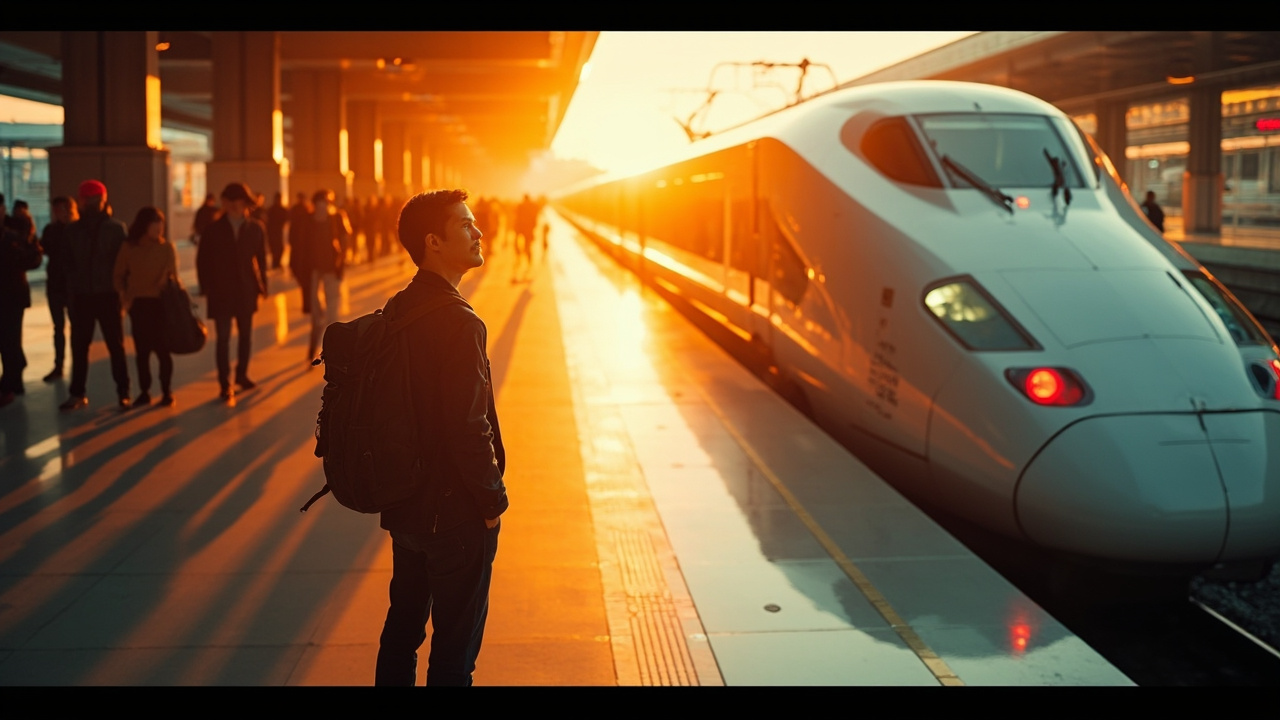
The cab driver laughed at me when I asked if we could stop for a bathroom break. We were 20 minutes into a two-hour ride from Beijing South to Tianjin, and I had already downed a large coffee before boarding. He didn’t laugh meanly—he laughed like I was a child who had just asked if the moon was made of cheese. “The train has a bathroom,” he said, still chuckling. “A very clean one.” That was my first lesson about China’s high-speed rail: everything you think you know about train travel is about to be upgraded.
I’ve been riding these trains for seven years now, and I still get a small thrill watching the countryside blur past at 300 km/h. But second class—the cheapest option—is where most tourists end up, and it comes with its own unwritten rules. This guide covers what you actually need to know: which seat to pick, what to pack, how to navigate the stations, and the small cultural quirks that can turn a smooth ride into a confusing one if nobody warns you.
Quick answer
For most routes (Beijing-Shanghai, Beijing-Xi’an, Shanghai-Hangzhou), second class costs $30–$80 (CNY 200–550) per ticket, requires booking at least 2–7 days in advance via Trip.com or 12306.cn, and offers comfortable reclining seats with power outlets, free WiFi (requires Chinese SIM), and a clean bathroom. You do not need a visa to buy tickets online as a tourist, but you must pick up paper tickets at the station if you book through 12306.cn directly.
The Short Version
Second class is fine. It’s not luxury, but it’s better than economy on any US or European airline. Book through Trip.com to avoid the 12306 headache. Bring snacks, download shows offline, and sit in row 5–8 for the smoothest ride. Skip the dining car food. Charge your phone before you board. And for the love of everything, learn how to use the squat toilet before you absolutely need it.
How I Picked These
I’ve taken roughly 80 high-speed rail trips across China—from the 4.5-hour Beijing-Shanghai run to the 9-hour slog from Chengdu to Kunming. I’ve sat in second class, first class, and business class. I’ve missed trains, boarded the wrong ones, and once spent an entire ride standing because I couldn’t find my seat (the car number was printed in tiny font). This guide is the advice I wish someone had given me before my first ride.
Comparison Table
| Aspect | Second Class | First Class | Business Class |
|--------|--------------|-------------|----------------|
| Seat layout | 3+2 (5 across) | 2+2 (4 across) | 2+1 (3 across) |
| Seat pitch | ~40 inches | ~46 inches | ~60 inches (full recline) |
| Recline | 15 degrees | 25 degrees | 180 degrees (flat bed) |
| Power outlet | Yes (under seat) | Yes (armrest) | Yes (armrest) |
| Free meal | No | Yes (on long routes) | Yes (full meal service) |
| Typical cost (Beijing-Shanghai) | $70 (CNY 480) | $115 (CNY 790) | $200 (CNY 1,380) |
| Best for | Budget travelers, short trips | Comfort on medium trips | Overnight or long-haul luxury |
1. How to Book Tickets Without Losing Your Mind
The first time I tried to book through 12306.cn, the official site, I spent an hour fighting with a captcha system that seemed designed by someone who hates humanity. The English version exists but barely works. My advice: use Trip.com (formerly Ctrip). It adds a small fee—about $3–$5 (CNY 20–35) per ticket—but it handles everything in English, accepts foreign credit cards, and lets you collect tickets at the station with your passport number.
📍 Online only (Trip.com app or website)
🎫 Booking fee: $3–$5 (CNY 20–35) per ticket
🚇 How to collect: At any station’s ticket machine (scan passport) or counter
⏰When to book: 2–7 days ahead for popular routes. Same-day tickets are possible but risky
💡 Insider tips:
-
Download the Trip.com app before you leave home—it works without VPN
-
If you book through 12306.cn, you’ll need a Chinese phone number for verification
-
Your passport is your ticket. Keep it handy
-
Refunds are possible up to 30 minutes before departure, but you lose 20–50% of the fare
I once booked a ticket for the wrong date—Beijing to Shanghai instead of Beijing to Xi’an. The Trip.com app let me cancel and rebook in under five minutes. Worth every penny of the fee.
2. Which Seat to Pick
Row 5 through 8, window seat (A or F). That’s the sweet spot. The train’s restaurant car is usually in the middle, so rows near the center get less foot traffic. The window seats have a small shelf next to the window where you can rest your phone. The aisle seats (C and D) get bumped by passing carts and people walking to the bathroom.
📍 Any carriage, rows 5–8 preferred
🎫 No extra cost for seat selection (choose during booking)
🚇 How to pick: On Trip.com, select your seat preference during checkout
⏰When to book: Weekday mornings (Tue–Thu) are least crowded
💡 Insider tips:
-
Seat A = window left, B = middle, C = aisle (left side)
-
Seat D = aisle, F = window (right side)
-
If you’re tall (6’2” or above), consider first class for legroom
-
The last row in each carriage doesn’t recline fully
I’m 5’10” and my knees just barely touch the seat in front. A friend who’s 6’4” spent the entire Beijing-Shanghai ride with his legs in the aisle. He now pays for first class.
3. What to Pack in Your Day Bag
You will be on that train for 2–9 hours. Pack like you’re going on a long-haul flight, minus the neck pillow. The overhead racks fit standard carry-on luggage. The seat pocket has a small tray table, but it’s not big enough for a laptop and a coffee at the same time.
📍 Your seat area
🎫 Cost: Free (you already paid for the ticket)
🚇 How to pack: Small backpack or tote bag (no larger than 40x30x20 cm)
⏰When to pack: Before you leave your hotel
💡 Insider tips:
-
Bring a portable charger—outlets are under the seat and sometimes loose
-
Download Netflix or podcasts offline before boarding (train WiFi is slow)
-
Pack a reusable water bottle—hot water is free in each carriage
-
Bring snacks from a convenience store (7-Eleven is everywhere in China)
-
Noise-canceling headphones are worth their weight in gold
The train WiFi is free but requires a Chinese SIM card to log in. Without one, you’re offline. I learned this the hard way on a 5-hour ride to Wuhan with no downloaded shows.
4. How to Navigate the Station
Chinese train stations are enormous. Beijing South Station has 24 platforms. Shanghai Hongqiao has 16. You will walk. A lot. Arrive 30–40 minutes early for your first trip, 20 minutes after you get the hang of it. The station layout is consistent: enter, pass security (baggage scan + metal detector), find your waiting area on the big board, then line up 10 minutes before departure.
📍 Major stations: Beijing South, Shanghai Hongqiao, Guangzhou South, Xi’an North
🎫 Entry fee: Free (ticket required to pass security)
🚇 How to navigate: Follow the blue signs with train icons
⏰When to arrive: 30–40 minutes early for first-timers
💡 Insider tips:
-
The waiting area is divided by “check-in gates” (A1–A24, B1–B24, etc.)
-
Your ticket shows your gate number—find it on the big screen
-
Security lines move fast (10–15 minutes max)
-
Don’t lose your ticket—you need it to exit the station at your destination
-
There are free water dispensers and squat toilets in the waiting area
I once arrived 10 minutes before departure and had to sprint through security. The staff waved me through the priority lane. They’re surprisingly helpful if you look panicked.
5. The Bathroom Situation
The bathrooms are cleaner than any US train I’ve ever been on. But they’re squat toilets. If you’ve never used one, practice at your hotel before you board. The toilet paper situation is hit or miss—carry your own small pack of tissues. The bathroom is at the end of each carriage, and there’s usually a sink with soap.
📍 End of each carriage (between carriages)
🎫 Cost: Free
🚇 How to find: Walk toward the doors between carriages
⏰When to go: During stops (train is stationary, less wobble)
💡 Insider tips:
-
Carry a small pack of tissues in your pocket
-
The floor might be wet—wear shoes you don’t mind getting damp
-
Don’t flush anything except toilet paper (signs are in Chinese and English)
-
The door locks by sliding a bolt—check before you squat
-
If you absolutely cannot use a squat toilet, first class and business class have Western toilets
My first squat toilet experience was on a train from Beijing to Nanjing. I was wearing skinny jeans. It took me four tries to get the balance right. The woman in the stall next to me finished in 30 seconds. I have never felt more inadequate.
6. Food and Drink on Board
The dining car serves Chinese staples: rice with braised pork, noodles, dumplings. It’s edible but not memorable. The cart that comes through the aisle sells snacks, instant noodles, and drinks at a markup. My advice: buy your food at a convenience store before boarding. A rice ball, a bottle of water, and some crackers cost about $3 (CNY 20) total.
📍 Dining car (middle of the train) + aisle cart
🎫 Cost: $4–$8 (CNY 28–55) for a meal in the dining car
🚇 How to order: Walk to the dining car or flag down the cart
⏰When to eat: During meal times (11:30–1:00, 5:30–7:00)
💡 Insider tips:
-
The dining car has tables where you can sit and eat
-
Instant noodles are a national obsession—bring your own cup noodles
-
Hot water is free in each carriage (look for the dispenser near the bathroom)
-
Don’t expect Western food options
-
The beer is warm unless you ask for cold (they have a small fridge)
I once watched a man eat a whole roast chicken on a 3-hour ride. He pulled it out of a plastic bag like it was the most normal thing in the world. No one batted an eye.
7. How to Handle Luggage
Overhead racks fit standard carry-on luggage (up to about 24 inches). Larger suitcases go in the designated luggage area at the end of each carriage. There’s no checked baggage service on high-speed trains—everything goes with you. If you’re traveling with a giant suitcase, book a seat near the luggage area so you can keep an eye on it.
📍 Overhead racks + luggage area at carriage ends
🎫 Cost: Free
🚇 How to store: Lift your bag onto the overhead rack or place it in the designated area
⏰When to store: Immediately after finding your seat
💡 Insider tips:
-
The luggage area fills up fast—board early if you have a large bag
-
Don’t leave valuables in the luggage area (keep your day bag with you)
-
If you can’t lift your bag, ask a fellow passenger—Chinese people are surprisingly helpful
-
Some trains have luggage racks between seats (rare but worth checking)
-
The overhead rack is open, not enclosed—your bag might shift during the ride
I watched a woman struggle to lift her suitcase onto the overhead rack. Three men jumped up to help her before she could even ask. It’s a small kindness that happens constantly on Chinese trains.
8. The Announcements and Signs
All major announcements are in Chinese and English. The station names are announced twice: once in Chinese, once in English. The digital signs above the doors show the next station, current speed, and outside temperature. You won’t miss your stop if you pay attention. But the English translations can be creative—I once heard “Please mind the gap between the train and the platform” translated as “Please be careful of the crack.”
📍 Throughout the train
🎫 Cost: Free
🚇 How to understand: Listen for the English announcement after the Chinese one
⏰When to listen: 5 minutes before each stop
💡 Insider tips:
-
The door opens automatically at each stop—don’t try to open it manually
-
Stand up and move toward the door 2–3 minutes before your stop
-
If you’re unsure, show your ticket to a staff member—they’ll point you to the right door
-
The train stops for only 2–3 minutes at most stations
-
Don’t smoke on the train—it’s strictly prohibited and fines are heavy
I once missed my stop because I was wearing headphones and didn’t hear the announcement. The train was already pulling away when I realized. The conductor let me off at the next station, 30 minutes away. I had to buy a new ticket back.
9. How to Charge Your Devices
Every seat in second class has a power outlet under the seat between your legs. It’s a standard two- or three-prong Chinese socket (220V, 50Hz). Most outlets accept US and European plugs directly, but bring a universal adapter just in case. The WiFi is free but requires a Chinese SIM card to log in—without one, you’re offline.
📍 Under the seat (between your feet)
🎫 Cost: Free
🚇 How to use: Plug in your charger (bring a universal adapter)
⏰When to charge: Anytime during the ride
💡 Insider tips:
-
The outlet might be loose—wedge your charger with something
-
Don’t leave your phone charging unattended while you go to the bathroom
-
The WiFi login page is in Chinese—use Google Translate or ask a neighbor
-
Some newer trains have USB ports (rare but increasing)
-
If the outlet doesn’t work, try the one under the seat across the aisle
I once sat next to a Chinese student who was charging three phones at once—his, his friend’s, and a portable battery. He had a power strip. I asked where he bought it. “Taobao,” he said, like it was obvious.
10. The Social Etiquette
Chinese train culture is different from Western train culture. People talk on the phone, eat loudly, and occasionally watch videos without headphones. It’s not rude—it’s normal. You’ll also see people sleeping in creative positions, playing cards with strangers, and sharing snacks with neighbors. The vibe is communal, not private.
📍 Throughout the carriage
🎫 Cost: Free
🚇 How to fit in: Be patient, be friendly, and don’t expect silence
⏰When to engage: During long rides, especially if someone offers you food
💡 Insider tips:
-
If someone offers you snacks, accept—it’s a gesture of friendliness
-
Don’t put your feet on the seat or the tray table
-
Keep your voice low if you’re on the phone (a courtesy that’s often ignored)
-
If you need to pass someone in the aisle, say “duì bu qǐ” (sorry)
-
The seat recline button is on the armrest—push it back gently
An elderly woman once handed me a steamed bun on a ride from Xi’an to Chengdu. I didn’t want it—I was full—but I took it anyway. She smiled and patted my hand. I ate it. It was delicious.
FAQ summary
Second class on China’s high-speed rail costs $30–$80 (CNY 200–550) per ticket, offers comfortable reclining seats with power outlets, and requires booking 2–7 days ahead through Trip.com or 12306.cn. Bring your own snacks and toilet paper, download entertainment offline, and arrive at the station 30–40 minutes early. The trains are punctual, clean, and safe, with English announcements at every stop.
FAQ
Q: Do I need a visa to buy train tickets?
A: No. You can buy tickets online with your passport number. You’ll need to show your physical passport when boarding, but no visa is required for the purchase itself.
Q: How early should I arrive at the station?
A: 30–40 minutes for your first trip, 20 minutes after you’re familiar with the process. Security lines are fast but you need time to find your waiting area.
Q: Can I change or cancel my ticket?
A: Yes, up to 30 minutes before departure. You lose 20–50% of the fare depending on how early you cancel. Trip.com handles this easily in the app.
Q: Is the WiFi good enough for video calls?
A: No. The WiFi is free but slow—fine for messaging and browsing, not for streaming or calls. Download everything you need before boarding.
Q: What if I miss my stop?
A: Get off at the next station and buy a ticket back. The conductor can help you if you explain quickly. Don’t panic—it happens more often than you’d think.
Q: Are there vegetarian food options on board?
A: Limited. The dining car serves mostly meat dishes. Bring your own food if you’re vegetarian or have dietary restrictions.
Q: Can I bring my own alcohol?
A: Technically no, but nobody checks. I’ve seen people drink beer and baijiu (Chinese liquor) openly. Just don’t get drunk and rowdy.
The Honest Wrap-up
This guide is for the first-timer who wants to ride China’s high-speed rail without stress. It’s not for luxury travelers—if you want a flat bed and a meal served with white gloves, book business class. It’s not for backpackers on a shoestring—second class is already the cheapest option. But for everyone else, second class is the sweet spot: comfortable enough for a 5-hour ride, cheap enough to book multiple trips, and full of the small human moments that make travel memorable.
My final advice: book your first ride on a short route—Beijing to Tianjin (30 minutes) or Shanghai to Hangzhou (45 minutes)—just to get the hang of it. Then go long. The train will take you places you didn’t know you wanted to go.
Related Guides
Looking for more China travel guides? These match your topic:
Topics
More guides you may like

Top 10 Bridges in China
China's bridges are engineering marvels spanning mountains, rivers, and seas. Here are 10 of the most spectacular, from ancient stone to modern steel.
8 min read

Top 10 Buddhist Sites in China
From the Leshan Giant Buddha to the Dunhuang Caves, these 10 Buddhist sites represent 2,000 years of China's spiritual heritage.
9 min read

Top 10 Day Trips from Beijing You Shouldn't Miss
Beijing is packed with history, but some of China's best experiences are just a few hours away. Here are 10 day trips that will transform your visit.
9 min read

Top 10 Hidden Gems in China Off the Beaten Path
Beyond the Great Wall and Terracotta Warriors, China has incredible hidden destinations few tourists ever reach. Here are 10 underrated gems worth the detour.
9 min read

Top 10 Markets and Shopping Streets in China
From Shanghai's Bund to Beijing's Silk Street - 10 markets where foreigners can haggle, explore, and bring home authentic Chinese goods.
9 min read

Top 10 Museums in China You Shouldn't Miss
China's museums span 5,000 years of civilization. These 10 - from the Palace Museum to Xi'an's terracotta gallery - are unmissable for culture lovers.
9 min read