
China Martial Arts Shows Shaolin Tickets
The cab driver in Luoyang looked at me in the rearview mirror and laughed. Not a mean laugh—the kind you get when you’ve asked something genuinely ridiculous. I
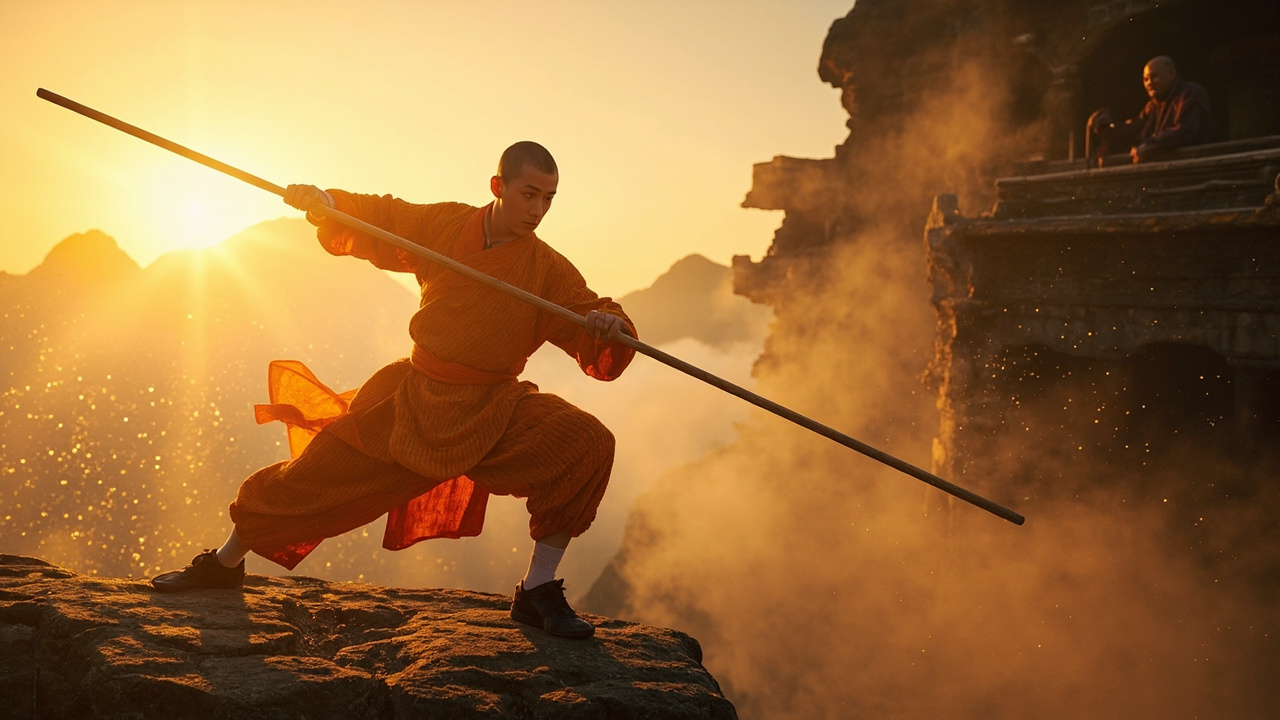
The cab driver in Luoyang looked at me in the rearview mirror and laughed. Not a mean laugh—the kind you get when you’ve asked something genuinely ridiculous. I’d just said, “Can we make it to the 5pm kung fu show at the Shaolin Temple?” He laughed, then tapped his watch. “Show is 3:30. You need morning train from Beijing. You are too late.”
I was too late. And I learned the hard way that China’s martial arts shows—especially the big ones at Shaolin—run on a schedule that doesn’t care about your itinerary. But after seven years in Beijing and more than 40 trips across the country, I’ve figured out which shows are worth the ticket price, which ones are tourist traps, and how to actually get to them without a cab driver laughing at you.
This guide covers the ten best martial arts shows in China—from the legendary Shaolin Temple to smaller, lesser-known performances in Chengdu and Hangzhou. I’ll tell you exactly how much each costs, how to get there without a guide, and which ones I’d skip if I were short on time.
Quick answer
Most first-time visitors want to see the Shaolin Temple Kung Fu Show in Dengfeng, Henan Province. The standard ticket is about $12 ((?80 RMB) for the show alone, or $20 ((?140 RMB) for the temple plus the show. The performance runs daily at 10:30 AM and 3:30 PM (times shift slightly by season). You do not need a tour guide—buy tickets at the gate or on WeChat, take a bus from Luoyang or Zhengzhou, and arrive at least 90 minutes early to get a decent seat. If you’re on a 144-hour visa-free transit, you can visit Shaolin without a full tourist visa as long as you fly in and out of the same city (Beijing, Shanghai, Guangzhou, or Chengdu).
The Short Version
If you only have 90 seconds: Go to the Shaolin Temple in Dengfeng for the real thing. Skip the “Shaolin Show” in Beijing—it’s a watered-down version for cruise ship crowds. The Kung Fu Legend Show in Luoyang is a solid backup if you’re short on time. And if you want something totally different, the Sichuan Opera Face-Changing Show in Chengdu is more theatrical and less touristy. Book tickets at least a week ahead for weekend shows. Bring cash for snacks, but use WeChat Pay for tickets.
How I Picked These
I’ve been to every show on this list at least once. Some I’ve seen three or four times—once alone, once with friends, once with a Chinese colleague who explained what I was missing. I sat in the front row at Shaolin and watched a 12-year-old monk balance a ceramic bowl on his forehead for four minutes. I fell asleep during a show in Xi’an (it was bad). I paid 50 RMB extra for a “VIP seat” in Chengdu that turned out to be a plastic chair closer to the speaker. I talked to ticket sellers, monks, and other travelers. These picks are based on what I actually experienced, not what a brochure says.
Comparison Table
| Rank | Place | Best For | Approx Cost (USD) | Time Needed | When to Go |
|------|-------|----------|-------------------|-------------|------------|
| 1 | Shaolin Temple (Dengfeng) | Authentic monk performances | $12–$20 (80–140 RMB) | 4–5 hours | Weekday mornings, spring/fall |
| 2 | Kung Fu Legend Show (Luoyang) | Convenient, high production value | $15 (100 RMB) | 2 hours | Evening shows, year-round |
| 3 | Red Theater (Beijing) | Touristy but easy | $25–$40 (180–280 RMB) | 1.5 hours | Weekday evenings |
| 4 | Sichuan Opera (Chengdu) | Face-changing, theatrical | $10–$20 (70–140 RMB) | 2 hours | Evening, weekends |
| 5 | Imperial Performances (Hangzhou) | Song Dynasty theme park | $20 (140 RMB) | 3 hours | Spring/fall, avoid rain |
| 6 | Wudang Mountain (Hubei) | Taoist martial arts, scenic | $15 (100 RMB) + cable car | Full day | Morning, clear weather |
| 7 | Foshan Ancestral Temple (Guangdong) | Wing Chun history, Ip Man | $5 (35 RMB) | 2 hours | Weekday afternoons |
| 8 | Chenjiagou (Henan) | Tai Chi birthplace, very quiet | $10 (70 RMB) | 3 hours | Spring, avoid summer heat |
| 9 | Kunming Yunnan Show | Ethnic minority + kung fu fusion | $8 (55 RMB) | 1.5 hours | Evening, weekends |
| 10 | Guangzhou Martial Arts Park | Free, local, authentic | Free | 1 hour | Early morning, 6–8 AM |
1. Shaolin Temple Kung Fu Show – Dengfeng, Henan
I sat on a wooden bench in a hall that smelled like old incense and floor wax. A boy who couldn’t have been older than 13 stood on stage, holding a metal rod. He bent it against his throat until it curved like a question mark. The audience gasped. He didn’t flinch. That’s the Shaolin show.
This is the real deal. The performers are actual monks from the Shaolin Monastery—or at least students from the nearby martial arts school. The show includes staff fighting, qigong (the iron throat thing), and group choreography that’s more athletic than artistic. It’s raw, loud, and occasionally terrifying.
📍 Location: Shaolin Temple, Songshan Mountain, Dengfeng, Henan Province. About 80 km from Luoyang.
🎫 Entry fee: Temple entry is $20 (140 RMB). The show is included. If you skip the temple, the show alone is $12 (80 RMB)—but you’ll still need to walk through the temple grounds to reach the performance hall.
🕒 Opening hours: Temple: 8 AM–5 PM. Shows: 10:30 AM and 3:30 PM daily. Times shift slightly in winter (10 AM and 3 PM). No shows on Chinese New Year’s Eve.
🚇 How to get there: Take a bus from Luoyang Longmen Bus Station to Dengfeng (1.5 hours, $4 or 30 RMB). From Dengfeng, take a local bus or taxi to Shaolin Temple (20 minutes, $3 or 20 RMB). Alternatively, take a high-speed train from Zhengzhou East to Luoyang Longmen (40 minutes), then bus.
⏰When to visit: Weekday mornings in spring (April–May) or fall (September–October). Avoid Chinese national holidays (October 1–7, May 1–3) when the temple is packed.
💡 Insider tips:
-
Arrive 90 minutes early to get a seat in the front rows. The hall fills up fast.
-
Don’t sit in the first three rows unless you want a monk to accidentally kick you in the face during the staff demonstration.
-
Bring earplugs if you’re sensitive to loud gongs. The show is loud.
-
The “VIP ticket” ($5 extra) gets you a cushion and a better view—worth it.
-
After the show, walk to the Pagoda Forest behind the temple. It’s quiet and most tourists skip it.
I once sat next to a retired monk named Master Wang who told me the show used to be free in the 1990s. “Now it’s business,” he said, shrugging. “But the kids are still good.”
2. Kung Fu Legend Show – Luoyang, Henan
The theater was a converted opera house with red velvet seats and a chandelier that flickered. I paid $15 and expected a cheap imitation of Shaolin. What I got was a tightly choreographed show with fire, acrobatics, and a guy who broke a stack of tiles with his forehead. It’s not as authentic as Shaolin, but it’s way more convenient.
This show is perfect if you’re based in Luoyang and don’t have time for the 2-hour bus ride to Dengfeng. It runs nightly, so you can do the Longmen Grottoes during the day and catch the show in the evening. The performers are mostly graduates of the Shaolin martial arts school, so the skill level is high.
📍 Location: Luoyang Theater, 8 Zhongzhou Middle Road, Luoyang. Near the city center.
🎫 Entry fee: $15 (100 RMB) for standard seats. VIP seats (front row, cushion) are $22 (150 RMB).
🕒 Opening hours: Shows at 7:30 PM daily. No shows on Mondays.
🚇 How to get there: Take bus 9 or 59 to Zhongzhou Middle Road. Or take a taxi from Luoyang Longmen Station (20 minutes, $4 or 30 RMB). The theater is a 10-minute walk from the Luoyang Museum.
⏰When to visit: Evening, any season. The show is indoors, so weather doesn’t matter.
💡 Insider tips:
-
Book tickets on WeChat (search “Kung Fu Legend Luoyang”) to avoid the tourist markup at hotel desks.
-
The show is 90 minutes with a 10-minute intermission. Use it to buy tea—it’s better than the coffee.
-
Sit in the middle rows. The front rows get too close to the fire performers.
-
The theater has English subtitles on a screen above the stage. Helpful for the historical narration.
I made the mistake of buying a “VIP” ticket from a guy outside the theater. It was a regular seat with a sticker on it. Don’t fall for that.
3. Red Theater Kung Fu Show – Beijing
The Red Theater is in a touristy part of Beijing near the Drum Tower. The show is called “The Legend of Kung Fu” and it’s a musical—actors, a plot, dramatic lighting. The kung fu is real, but it feels like a Broadway show. I’ve seen it twice. The first time I loved it. The second time I noticed how many tourists were checking their phones.
This is the most accessible show for first-time visitors. It’s in central Beijing, has English narration, and runs twice a night. But it’s also the most expensive and the least authentic. If you want to see monks doing real training, go to Shaolin. If you want a polished evening out with decent acrobatics, this works.
📍 Location: Red Theater, 44 Xingfu Street, Dongcheng District, Beijing. Near the Lama Temple.
🎫 Entry fee: $25–$40 (180–280 RMB) depending on seat. VIP seats (front rows, soft chairs) are $45 (320 RMB).
🕒 Opening hours: Shows at 5:30 PM and 7:30 PM daily. No shows on Chinese New Year.
🚇 How to get there: Take subway Line 2 to Dongzhimen Station, Exit D. Walk south for 10 minutes. Or take Line 5 to Beixinqiao Station, Exit A, walk east for 8 minutes.
⏰When to visit: Weekday evenings. Weekends are packed with tour groups.
💡 Insider tips:
-
Buy tickets online (damai.cn or WeChat) at least 3 days ahead. Weekend shows sell out.
-
Don’t pay for the “photo with the cast” add-on. It’s $10 and you get a blurry photo with 20 people.
-
The theater has a small shop selling kung fu DVDs. Skip them—they’re overpriced.
-
Eat dinner after the show. There’s a good noodle shop 2 blocks west on Xingfu Street.
I once saw a woman in the front row try to film the entire show on her iPad. The usher asked her to stop three times. She didn’t. Don’t be that person.
4. Sichuan Opera Face-Changing Show – Chengdu
The man on stage wore a gold and red costume. He turned his head sharply, and his mask changed from a demon to a monkey to a scholar in less than a second. I couldn’t see his hands move. Neither could anyone else. That’s the face-changing trick (bian lian), and it’s the reason this show is worth your time.
This isn’t a pure martial arts show—it’s a mix of opera, acrobatics, and kung fu. But the face-changing is a martial art in itself. Performers train for years to change masks without being detected. The show also includes fire breathing, puppet theater, and a hilarious bit where a performer balances a table on his chin.
📍 Location: Shu Feng Ya Yun Theater, 23 Guanyuan Street, Qingyang District, Chengdu. Near the Wuhou Shrine.
🎫 Entry fee: $10–$20 (70–140 RMB). Tea and snacks included in the higher-priced tickets.
🕒 Opening hours: Shows at 8:00 PM daily. No shows on Mondays.
🚇 How to get there: Take subway Line 3 to Gaoshengqiao Station, Exit C. Walk north for 5 minutes. The theater is inside the Wuhou Shrine complex.
⏰When to visit: Evening, any season. The theater is air-conditioned in summer and heated in winter.
💡 Insider tips:
-
Buy the $20 (140 RMB) ticket. It includes a seat closer to the stage and a cup of jasmine tea.
-
Arrive 30 minutes early to walk around the Wuhou Shrine garden. It’s beautiful at dusk.
-
Don’t try to film the face-changing. The performers are sensitive about it, and the ushers will ask you to stop.
-
The show is in Mandarin, but the physical comedy is universal.
I sat next to a local couple who told me the face-changing trick is a family secret passed down through generations. “If you figure it out, they have to kill you,” the husband joked. I still don’t know how it works.
5. Imperial Performances – Song Dynasty Theme Park, Hangzhou
The Song Dynasty Theme Park is a bit like a Chinese version of Colonial Williamsburg—actors in period costumes, fake streets, and a big show at the end. The martial arts performance is called “The Legend of the Song Dynasty” and it involves horseback archery, sword fighting, and a massive battle scene with fireworks.
I was skeptical when I walked in. It felt touristy. But the show itself is genuinely impressive. The horseback archers ride at full speed and hit targets the size of dinner plates. The choreography is tight. And the fireworks finale is loud enough to wake up the nearby West Lake.
📍 Location: Song Dynasty Theme Park, 148 Zhijiang Road, Xihu District, Hangzhou.
🎫 Entry fee: $20 (140 RMB) for park entry. The show is included.
🕒 Opening hours: Park: 9 AM–9 PM. Show times vary by season (usually 2 PM and 7 PM). Check the schedule on their WeChat account.
🚇 How to get there: Take bus 4, 308, or 504 to Songcheng Station. Or take a taxi from West Lake (20 minutes, $5 or 35 RMB).
⏰When to visit: Spring (March–May) or fall (September–November). Avoid rainy days—the show is outdoors.
💡 Insider tips:
-
The park is huge. Arrive at 10 AM to see the smaller street performances before the main show.
-
Bring an umbrella. The show goes on in light rain, but you’ll get wet.
-
Don’t eat at the park restaurants. The food is overpriced and bland. Eat before you come.
-
The best seats for the main show are in the middle section, row 10–15. Close enough to see the action, far enough to avoid the fireworks sparks.
I watched a dad try to catch a firework spark with his hand. He did not succeed. His son thought it was hilarious.
6. Wudang Mountain Martial Arts – Hubei Province
Wudang Mountain is where Taoist martial arts were born. The show here is less about flashy kicks and more about slow, controlled movements—tai chi, sword forms, and qigong. I watched a master perform a sword routine for 15 minutes. He barely moved his feet, but the sword made a sound like wind through bamboo.
This is not a show for people who want high-energy acrobatics. It’s for people who want to understand the philosophy behind the movements. The performers are Taoist monks, and they take their practice seriously. The setting helps—the show takes place on a platform overlooking misty mountains.
📍 Location: Wudang Mountain Scenic Area, Shiyan, Hubei Province. The show is at the Purple Cloud Temple (Zixiao Gong).
🎫 Entry fee: $15 (100 RMB) for the scenic area. The show is an additional $10 (70 RMB). Cable car is $8 (55 RMB) one way.
🕒 Opening hours: Scenic area: 7 AM–5 PM. Shows: 10 AM and 2 PM daily. No shows in heavy rain or snow.
🚇 How to get there: Take a high-speed train from Wuhan to Wudangshan Station (2 hours, $20 or 140 RMB). From the station, take bus 202 to the scenic area entrance (40 minutes, $2 or 15 RMB). Then take the cable car to the Purple Cloud Temple.
⏰When to visit: Clear days in spring or fall. The show is outdoors, and the mountain is often foggy. If it’s foggy, you won’t see the performers clearly.
💡 Insider tips:
-
Stay overnight at a hotel near the scenic area. The morning show (10 AM) is the best—fewer tourists, better energy.
-
Bring a jacket. Wudang Mountain is cold even in summer.
-
Don’t try to take photos during the sword routines. The monks find it distracting.
-
If you’re interested in learning tai chi, some monks offer private lessons for $30 (200 RMB) per hour. Ask at the ticket office.
I tried to do a tai chi move after watching the master. I looked like a penguin with a stomachache. The monk smiled politely and turned away.
7. Foshan Ancestral Temple – Guangdong Province
Foshan is the birthplace of Wing Chun—the style made famous by Ip Man and Bruce Lee. The martial arts show at the Ancestral Temple is small and intimate. It takes place in a courtyard with maybe 50 seats. The performers are local students from the Foshan Martial Arts School, and they’re incredibly skilled.
I watched a 16-year-old girl perform a Wing Chun form called “Si-Nim Tao.” Her movements were so precise that you could hear her sleeves cut the air. After the show, she came down to talk to the audience. Her English was basic, but she showed me how to do the first movement. I still can’t do it.
📍 Location: Foshan Ancestral Temple, 21 Zumiao Road, Chancheng District, Foshan.
🎫 Entry fee: $5 (35 RMB) for the temple. The show is included.
🕒 Opening hours: Temple: 8:30 AM–5:30 PM. Shows: 10 AM and 3 PM daily. No shows on Mondays.
🚇 How to get there: Take the Guangzhou-Foshan Metro Line 1 to Zumiao Station, Exit B. Walk 5 minutes east. The temple is hard to miss—it’s the big one with the dragon sculptures.
⏰When to visit: Weekday afternoons. The morning show is popular with school groups.
💡 Insider tips:
-
The show is short (30 minutes). Combine it with a visit to the Foshan Folk Art Museum next door.
-
Don’t expect a big production. This is a local show for locals.
-
After the show, walk to the Huang Feihong Memorial Hall (10 minutes away). It’s dedicated to another famous martial artist.
-
The temple has a small tea house. Try the osmanthus tea—it’s floral and sweet.
I asked the 16-year-old performer if she wanted to be a movie star like Bruce Lee. She laughed. “No. I want to be a doctor.”
8. Chenjiagou – Tai Chi Birthplace, Henan
Chenjiagou is a village in Henan Province where tai chi was invented. The show here is not really a show—it’s a demonstration by the local Chen family practitioners. There’s no stage, no tickets, no lights. Just a group of people in a courtyard doing slow, deliberate movements.
I arrived at 7 AM and found about 20 people practicing in the square. A man in his 60s named Master Chen led the group. He moved so slowly that I thought he was going to fall over. But when he finished, he wasn’t even breathing hard. I tried to follow along. I was sweating after 5 minutes.
📍 Location: Chenjiagou Village, Wen County, Jiaozuo, Henan Province. About 40 km from Zhengzhou.
🎫 Entry fee: $10 (70 RMB) for the village. The demonstration is free.
🕒 Opening hours: The village is open 24/7. Demonstrations happen at 6 AM and 7 PM daily.
🚇 How to get there: Take a bus from Zhengzhou Bus Station to Wen County (2 hours, $5 or 35 RMB). From Wen County, take a local bus to Chenjiagou (30 minutes, $1 or 7 RMB). Or hire a taxi for $15 (100 RMB).
⏰When to visit: Spring or fall. Summer is hot and humid. Winter is cold and quiet.
💡 Insider tips:
-
Stay overnight in the village. There are a few guesthouses run by local families.
-
Bring comfortable shoes. You’ll be walking on uneven stone paths.
-
If you want to learn tai chi, Master Chen offers private lessons for $15 (100 RMB) per hour. Cash only.
-
Don’t expect English. Bring a translation app.
I stayed for 3 days and learned the first 8 movements of Chen-style tai chi. I’ve forgotten most of them, but I remember how calm I felt after each session.
9. Kunming Yunnan Ethnic Show – Yunnan Province
This show is a mix of kung fu and ethnic minority dance. The performers are from the Dai, Yi, and Bai ethnic groups, and they combine martial arts with traditional music and costumes. It’s colorful, loud, and unlike anything else on this list.
I saw a performer balance a stack of 10 bowls on her head while doing a kung fu form. Another performer played a bamboo flute while doing a handstand. It’s not the most technically impressive martial arts show, but it’s the most joyful.
📍 Location: Yunnan Ethnic Village, 1310 Dianchi Road, Xishan District, Kunming.
🎫 Entry fee: $8 (55 RMB) for the village. The show is included.
🕒 Opening hours: Village: 8 AM–6 PM. Shows: 2 PM and 4 PM daily.
🚇 How to get there: Take bus 24, 44, or 73 to Yunnan Ethnic Village Station. Or take a taxi from Kunming city center (30 minutes, $5 or 35 RMB).
⏰When to visit: Evening shows in spring (March–May). The weather is mild, and the crowds are smaller.
💡 Insider tips:
-
The village is big. Arrive at 1 PM to see the smaller performances before the main show.
-
Don’t miss the Dai water-splashing festival reenactment (3 PM). You will get wet.
-
The food stalls inside the village are actually good. Try the Dai-style grilled fish.
-
Bring cash. Some stalls don’t accept WeChat Pay.
I got splashed by a Dai performer during the water festival reenactment. My phone survived. My notebook did not.
10. Guangzhou Martial Arts Park – Free Morning Show
This isn’t a ticketed show. It’s a daily gathering of locals in Guangzhou’s Yuexiu Park who practice kung fu, tai chi, and sword forms every morning. No stage, no tickets, no schedule. Just people who love martial arts.
I stumbled upon it at 6:30 AM on a Sunday. A group of about 30 people—ranging from teenagers to 80-year-olds—were practicing in the shadow of the Five Rams Statue. A woman in her 70s demonstrated a sword form that was more graceful than anything I’d seen in a theater. When she finished, she smiled at me and said, “You try?”
📍 Location: Yuexiu Park, 960 Jiefang North Road, Yuexiu District, Guangzhou.
🎫 Entry fee: Free.
🕒 Opening hours: The park opens at 6 AM. The martial arts practice happens from 6 AM to 8 AM daily.
🚇 How to get there: Take subway Line 2 to Yuexiu Park Station, Exit A. Walk 5 minutes east to the park entrance. Follow the sound of sword blades.
⏰When to visit: Weekday mornings. Weekends are busier but more lively.
💡 Insider tips:
-
Bring a camera, but ask before taking close-up photos. Most people are happy to pose.
-
If you want to join, just stand at the back and follow along. No one will mind.
-
Don’t be late. The group starts at 6 AM sharp and finishes by 8 AM.
-
After the practice, walk to the nearby breakfast stalls for congee and fried dough sticks.
I tried the sword form the 70-year-old woman showed me. I nearly hit myself in the head. She laughed. “More practice,” she said.
FAQ summary
Most first-time visitors should prioritize the Shaolin Temple Kung Fu Show in Dengfeng for authenticity, or the Kung Fu Legend Show in Luoyang for convenience. Tickets range from $5 to $40 (35–280 RMB) depending on the venue. Book at least 3 days ahead for weekend shows, and always bring cash for snacks and small purchases—not all vendors accept WeChat Pay. The best time to visit is spring (April–May) or fall (September–October). If you’re on a 144-hour visa-free transit, you can visit Shaolin from Beijing, Shanghai, Guangzhou, or Chengdu without a full tourist visa.
FAQ
Q: Do I need a visa to see the Shaolin show?
A: If you’re from the US, UK, Canada, Australia, or most European countries, you can use the 144-hour visa-free transit if you fly into Beijing, Shanghai, Guangzhou, or Chengdu and fly out of the same city. For longer stays, you’ll need a tourist visa (L visa). Apply at least 4 weeks before your trip.
Q: Can I buy tickets at the door, or do I need to book online?
A: You can buy at the door for most shows, but weekend shows at Shaolin and the Red Theater often sell out. Book online via WeChat (search the show name) or damai.cn at least 3 days ahead.
Q: Is the show in English?
A: The Shaolin show has no narration—it’s purely physical. The Red Theater and Kung Fu Legend shows have English subtitles. The Sichuan Opera and Wudang shows are in Mandarin, but the action is easy to follow.
Q: How long does the Shaolin show last?
A: About 45 minutes. The full temple visit (including the show) takes 4–5 hours.
Q: What should I wear?
A: Comfortable shoes and layers. The Shaolin Temple involves a lot of walking on uneven stone paths. The Red Theater and Kung Fu Legend shows are indoors, so dress for the weather.
Q: Can I take photos or videos?
A: Photos are allowed at most shows. Video is restricted at the Sichuan Opera (face-changing) and Wudang Mountain shows. Always ask before filming.
Q: Is the show suitable for children?
A: Yes, most shows are family-friendly. The Shaolin show has some intense moments (breaking objects, fire), but no violence. The Red Theater is the most kid-friendly.
The Honest Wrap-up
This list is for people who want to see real martial arts, not a theme park version. If you only have time for one show, go to Shaolin. It’s the original, and nothing else compares. If you’re short on time or based in a big city, the Kung Fu Legend Show in Luoyang or the Red Theater in Beijing are solid backups.
But here’s the thing: the best martial arts experience I’ve had in China wasn’t in a theater. It was at 6 AM in a Guangzhou park, watching a 70-year-old woman practice sword forms. No tickets, no lights, no tourists. Just a woman and her blade.
If you can, find a local park early in the morning. You might not get a show. But you’ll get something better.
Related Guides
Looking for more China travel guides? These match your topic:
Topics
More guides you may like

Top 10 Bridges in China
China's bridges are engineering marvels spanning mountains, rivers, and seas. Here are 10 of the most spectacular, from ancient stone to modern steel.
8 min read

Top 10 Buddhist Sites in China
From the Leshan Giant Buddha to the Dunhuang Caves, these 10 Buddhist sites represent 2,000 years of China's spiritual heritage.
9 min read

Top 10 Day Trips from Beijing You Shouldn't Miss
Beijing is packed with history, but some of China's best experiences are just a few hours away. Here are 10 day trips that will transform your visit.
9 min read

Top 10 Hidden Gems in China Off the Beaten Path
Beyond the Great Wall and Terracotta Warriors, China has incredible hidden destinations few tourists ever reach. Here are 10 underrated gems worth the detour.
9 min read

Top 10 Markets and Shopping Streets in China
From Shanghai's Bund to Beijing's Silk Street - 10 markets where foreigners can haggle, explore, and bring home authentic Chinese goods.
9 min read

Top 10 Museums in China You Shouldn't Miss
China's museums span 5,000 years of civilization. These 10 - from the Palace Museum to Xi'an's terracotta gallery - are unmissable for culture lovers.
9 min read