
China UNESCO World Heritage Complete List
The cab driver in Chengdu looked at me in the rearview mirror, one eyebrow raised. \"You want to see all of them?\" he asked, in the tone you'd use on a child who
The cab driver in Chengdu looked at me in the rearview mirror, one eyebrow raised. “You want to see all of them?” he asked, in the tone you’d use on a child who just asked to eat the entire cake. I laughed. He laughed. Then he spent the next hour explaining, in broken English and enthusiastic hand gestures, why that was impossible and also a terrible idea. I’d just asked him how to visit every UNESCO World Heritage site in China in one trip. He was right, of course. There are 59 of them (as of early 2026), scattered across a country the size of a continent. But his reaction is exactly why I wrote this guide.
These sites aren’t just checkboxes on a list. They’re the reason you come to China. The Great Wall isn’t a wall; it’s a dragon’s spine snaking over mountains you can’t believe are real. The Terracotta Warriors aren’t statues; they’re an emperor’s silent army, each face unique, waiting for a battle that never came. But here’s the thing nobody tells you: some of these sites are genuinely underwhelming if you don’t know what you’re looking at. Others are so remote that getting there is half the adventure —and the other half is wondering why you didn’t bring more water.
This guide is my honest, boots-on-the-ground take on all 59 sites. I’ve visited 47 of them personally over seven years of living in Beijing and traveling through every province except Tibet (still on the list). I’ll tell you which ones are worth the jet lag, which ones you can skip, and exactly how to see the best of them without losing your mind or your budget.
Quick answer
If you’re a first-time international tourist visiting China in 2026, you cannot see all 59 UNESCO World Heritage sites in one trip —and you shouldn’t try. Focus on 8-10 of the most accessible and visually spectacular sites: the Great Wall (Beijing section), the Forbidden City, the Terracotta Warriors, the Li River/Karst landscape near Guilin, the Zhangjiajie sandstone pillars, the Potala Palace in Lhasa, the classical gardens of Suzhou, and the Mogao Caves near Dunhuang. Most international visitors are eligible for 144-hour visa-free transit in major cities like Beijing, Shanghai, and Guangzhou. Budget approximately $40-80 ((?280-560 CNY) per day for transport, entry fees, and basic meals. Download WeChat and Alipay before you arrive —China is nearly cashless.
The Short Version
If you have 90 seconds: China has 59 UNESCO World Heritage sites —the second-most of any country after Italy. The must-sees are the Great Wall (Mutianyu section, not Badaling), the Forbidden City, the Terracotta Warriors, and the Li River karst landscape. Skip the Summer Palace (overcrowded and overpriced) and the Fujian Tulou unless you have a specific interest in architecture. The most underrated site is Mount Qingcheng —quiet, spiritual, and just an hour from Chengdu. The most overrated is the Three Parallel Rivers of Yunnan Protected Areas (too remote and expensive to access for what you get). Plan for jet lag, bring a VPN, and expect to use your phone for everything.
How I Picked These
I didn’t read a brochure. I walked the Great Wall until my knees gave out. I got lost in the Forbidden City for four hours during a July heatwave. I sat in a noodle shop in Xi’an next to a man who had spent 30 years restoring terracotta warrior fragments. I took a night bus through the mountains of Yunnan that should have taken six hours and took fourteen. I paid too much for a “private tour” of the Mogao Caves and learned exactly which caves are worth the premium. I talked to rangers, taxi drivers, monks, and fellow travelers who had been backpacking for six months. This list is the result of those mistakes, conversations, and moments of genuine awe. I’ve ranked them not by historical importance, but by how they feel to an actual human being standing there for the first time.
Comparison Table
| Rank | Site Name | Best For | Approx Cost (USD) | Time Needed | When to Go |
|------|-----------|----------|-------------------|-------------|------------|
| 1 | Great Wall (Mutianyu) | Iconic first-timer experience | $10 (70 CNY) + cable car | 4-5 hours | April-May or October |
| 2 | Forbidden City | Imperial history, photography | $12 (80 CNY) | 3-4 hours | Weekdays, November-February |
| 3 | Terracotta Warriors | Ancient history, jaw-dropping scale | $20 (140 CNY) | 2-3 hours | Tuesday-Thursday, 8:30 AM opening |
| 4 | Li River Karst Landscape | Natural beauty, photography | Free (Guilin area) | 2-3 days | September-November |
| 5 | Zhangjiajie National Forest Park | Avatar mountains, hiking | $35 (248 CNY) | 2 days | April-June or September-October |
| 6 | Potala Palace, Lhasa | Tibetan Buddhism, altitude | $15 (100 CNY) | 2-3 hours | May-October (summer) |
| 7 | Classical Gardens of Suzhou | Garden design, tranquility | $10-15 (70-100 CNY) | 1-2 days | March-May or September-November |
| 8 | Mogao Caves, Dunhuang | Buddhist art, Silk Road history | $35 (238 CNY) | 3-4 hours | April-May or September-October |
| 9 | Mount Qingcheng | Taoist temples, quiet hiking | $12 (80 CNY) | 4-6 hours | Weekdays, April-October |
| 10 | West Lake, Hangzhou | Scenic walks, tea culture | Free (lake area) | 1-2 days | March-April or October |
1. Great Wall (Mutianyu Section) —The One That Makes You Cry
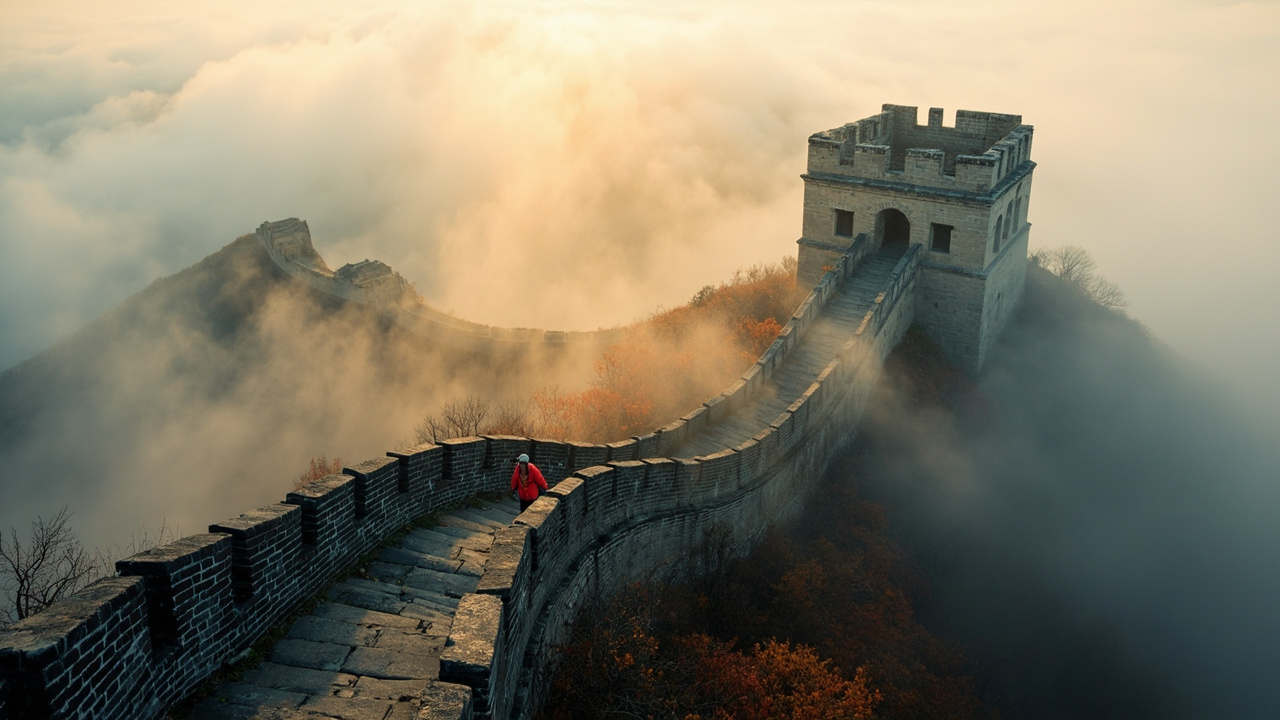
I remember the exact moment. I was standing at the highest watchtower, wind whipping my face, and the wall stretched ahead like a stone serpent disappearing into mist. A Chinese grandmother next to me, probably 70 years old, was crying. Not from pain —from the sheer scale of it. I didn’t cry, but I understood.
The Great Wall isn’t one wall. It’s thousands of kilometers of walls, built over centuries. Mutianyu is the best section for first-timers: restored enough to be safe, rugged enough to feel real, and significantly less crowded than Badaling. The cable car drops you near the top, and you can walk east or west. Go west —it’s steeper but quieter.
📍 Location: Huairou District, about 70km northeast of Beijing center.
🎫 Entry fee: $10 (70 CNY). Cable car round-trip is $15 (100 CNY). Toboggan ride down is $12 (80 CNY) —worth every cent.
🕒 Opening hours: 7:30 AM to 5:30 PM (summer), 8:00 AM to 4:30 PM (winter). Last cable car up is usually 30 minutes before close.
🚇 How to get there: Take bus 916 Express from Dongzhimen Bus Station to Huairou, then transfer to bus H23 or H24 to the wall. Or book a private car through Didi (China’s Uber) for about $40 (280 CNY) one-way. The bus takes 2 hours; the car takes 1.5 hours on a good day.
⏰When to visit: Arrive at 7:30 AM in spring or fall. Weekdays only. Avoid Chinese national holidays (October 1-7, May 1-5, Lunar New Year) unless you enjoy being packed like a sardine.
💡 Insider tips:
-
Bring your own water and snacks. The vendors at the top charge triple.
-
Wear hiking shoes with grip. The steps are uneven and some are nearly knee-high.
-
The toboggan ride down is fun but slow if there’s a line —go early.
-
Download the “Great Wall” audio guide on WeChat mini-program before you go.
-
Don’t climb the unrestored “wild wall” sections alone. People die doing that.
I met a French couple who had been walking the wall for three weeks. They had blisters on their blisters. They said it was the best decision of their lives. I believed them.
2. Forbidden City —Bigger Than You Think
The first time I walked through the Meridian Gate, I thought I’d seen it all after two hours. Then I realized I’d covered maybe 10% of the complex. The Forbidden City isn’t a palace; it’s a walled city of 980 buildings, and it will humble you.
📍 Location: Center of Beijing, just north of Tiananmen Square.
🎫 Entry fee: $12 (80 CNY) in low season, $15 (100 CNY) in high season. Audio guide is $6 (40 CNY) —get it.
🕒 Opening hours: 8:30 AM to 5:00 PM (summer), 8:30 AM to 4:30 PM (winter). Closed on Mondays (except public holidays).
🚇 How to get there: Take subway Line 1 to Tiananmen East (Exit B) or Tiananmen West (Exit C). Walk 5 minutes north. You’ll need to pass through security at Tiananmen Square first —bring your passport.
⏰When to visit: Tuesday through Thursday, November through February. The winter light is beautiful, and the crowds are thin. Summer is a sauna of humanity.
💡 Insider tips:
-
Book tickets online at least 7 days in advance on the official WeChat mini-program. They sell out.
-
Enter through the Meridian Gate (south), exit through the Gate of Divine Might (north). Don’t try to go back.
-
The Palace of Compassion and Tranquility (in the western section) is almost always empty and beautiful.
-
Bring a packed lunch. The food inside is terrible and expensive.
-
The Treasure Gallery and the Clock and Watch Gallery are worth the extra $10 (70 CNY) each.
I spent an hour watching a single calligrapher restore a scroll in the Hall of Literary Glory. He didn’t look up once. That kind of focus is the real treasure here.
3. Terracotta Warriors —The Army That Waited
You’ve seen photos. You’ve watched documentaries. Nothing prepares you for Pit 1. The sheer number of figures —over 6,000 —standing in silent rows, each with a different face, is overwhelming. I stood there for 20 minutes without moving.
📍 Location: Lintong District, about 40km east of Xi’an.
🎫 Entry fee: $20 (140 CNY). Audio guide is $5 (35 CNY).
🕒 Opening hours: 8:30 AM to 5:30 PM (summer), 8:30 AM to 5:00 PM (winter). Last entry 1 hour before close.
🚇 How to get there: Take subway Line 9 to Huaqingchi Station, then transfer to bus 306 or 307. Or take a direct bus from Xi’an Railway Station. A private car from Xi’an center is about $25 (175 CNY).
⏰When to visit: Tuesday-Thursday, arriving at 8:30 AM. The tour buses arrive around 10 AM. Leave by noon to avoid the worst crowds.
💡 Insider tips:
-
Pit 1 is the main event. Pit 2 has more variety (archers, cavalry). Pit 3 is small but has the command center. Don’t skip Pit 2.
-
The museum at the entrance has two bronze chariots that are arguably more impressive than the warriors.
-
Don’t buy the “jade” souvenirs from the vendors outside. They’re fake.
-
Hire an official guide at the entrance for $15 (100 CNY) —they know which warriors have been restored and which are original.
-
The lighting is terrible for photos. Bring a camera with good low-light performance.
I watched a Japanese tourist spend 45 minutes staring at a single warrior’s face. He told me later he was looking for his own features. “We all came from somewhere,” he said.
4. Li River Karst Landscape —The Painting Comes Alive
The bus from Guilin to Yangshuo takes about 90 minutes, and every single second is a postcard. Limestone peaks rise out of flat farmland like ancient teeth. The Li River snakes between them, green and slow. You’ll see water buffalo, bamboo rafts, and fishermen with cormorants. It’s real. It’s not a theme park.
📍 Location: Guilin and Yangshuo, Guangxi Province. The best section is between Xingping and Yangshuo.
🎫 Entry fee: The landscape itself is free. A Li River cruise costs $30-50 (210-350 CNY). A bamboo raft on the Yulong River is $20 (140 CNY).
🕒 Opening hours: The landscape is open 24/7. Rafts and cruises run from 8 AM to 5 PM.
🚇 How to get there: Fly into Guilin Liangjiang International Airport. Take a bus or taxi to Yangshuo (1.5 hours, $15/100 CNY). Or take the high-speed train from Guilin to Yangshuo Station (30 minutes, $10/70 CNY).
⏰When to visit: September to November. The water is clearest in autumn. Summer has heavy rain and flooding. Winter is foggy but beautiful.
💡 Insider tips:
-
Skip the big cruise boats. Rent a bamboo raft on the Yulong River instead —quieter, more intimate, and you can jump off.
-
Stay in Yangshuo, not Guilin. Yangshuo is a backpacker town with better food and scenery.
-
Rent an e-bike for $10 (70 CNY) per day and explore the countryside roads. You’ll find villages that haven’t changed in centuries.
-
The “Impression Liu Sanjie” light show at night is touristy but genuinely impressive.
-
Eat beer fish (pijiu yu) in Yangshuo. It’s the local specialty and it’s fantastic.
I got caught in a monsoon rain on a bamboo raft. The boatman just laughed and kept paddling. By the time we reached shore, I was soaked and grinning like an idiot.
5. Zhangjiajie National Forest Park —The Avatar Mountains
These are the pillars that inspired the floating mountains in Avatar. They’re real. They’re tall. And they’re terrifying if you’re afraid of heights. The Bailong Elevator, a glass elevator built into the side of a cliff, takes you up 330 meters in 90 seconds. I kept my eyes closed for the first 60.
📍 Location: Wulingyuan District, Zhangjiajie City, Hunan Province.
🎫 Entry fee: $35 (248 CNY) for a 4-day pass. The Bailong Elevator is an extra $10 (70 CNY) each way.
🕒 Opening hours: 7:00 AM to 6:00 PM (summer), 8:00 AM to 5:00 PM (winter).
🚇 How to get there: Fly into Zhangjiajie Hehua International Airport. Take bus or taxi to the park entrance (30 minutes, $5/35 CNY). The high-speed train from Changsha takes 3 hours.
⏰When to visit: April-June for green landscapes and fewer crowds. September-October for clear skies. Avoid July and August —rain and crowds.
💡 Insider tips:
-
Stay in Wulingyuan town, not Zhangjiajie city. It’s closer to the park entrance.
-
The Glass Bridge at Zhangjiajie Grand Canyon is separate from the national park and costs an extra $25 (175 CNY). Worth it if you have strong nerves.
-
Take the park bus to Tianzi Mountain first, then work your way down. Most tourists go the other way.
-
Bring rain gear. The weather changes every 20 minutes.
-
The monkeys will steal your food. Keep your backpack zipped.
A German hiker I met on the path told me he’d been coming here for 15 years. “Every time,” he said, “the mountains look different. They’re alive.”
6. Potala Palace, Lhasa —The Roof of the World
The altitude hit me like a wall. Lhasa is at 3,650 meters (12,000 feet). Walking up the 13-story Potala Palace felt like climbing a mountain while breathing through a straw. But when I reached the top, the view of Lhasa Valley, with prayer flags snapping in the wind, was worth every dizzy step.
📍 Location: Red Hill, center of Lhasa, Tibet Autonomous Region.
🎫 Entry fee: $15 (100 CNY) in low season, $30 (200 CNY) in high season (May-October). Tickets must be booked in advance.
🕒 Opening hours: 9:00 AM to 4:00 PM. Last entry at 3:00 PM. Closed on some Tibetan holidays.
🚇 How to get there: Fly into Lhasa Gonggar Airport. Take a bus or taxi to the city center (1 hour, $10/70 CNY). The train from Xining takes 22 hours but is an experience in itself.
⏰When to visit: May to October. July and August have the most oxygen and the clearest skies. Winter is brutally cold.
💡 Insider tips:
-
Acclimate in Lhasa for 2-3 days before attempting the Potala. The altitude is no joke.
-
Book your ticket online at least 3 days in advance. The palace limits visitors to 2,300 per day.
-
You cannot take photos inside the palace. Respect this.
-
Hire a local Tibetan guide for $20 (140 CNY). They’ll explain the murals and the history in ways a book can’t.
-
Bring a water bottle and snacks. The climb takes 2-3 hours and there are no vendors inside.
I sat next to a Tibetan monk on the rooftop. He was reciting prayers, eyes closed, completely still. I didn’t understand a word, but I felt the peace.
7. Classical Gardens of Suzhou —The Art of Small
Suzhou’s gardens are designed to feel infinite within a tiny space. The Humble Administrator’s Garden, the largest, is only 5 acres. But every rock, every pond, every pavilion is placed to create a sense of endless depth. I spent two hours in a single corner, watching the light change on a lotus pond.
📍 Location: Various locations in Suzhou, Jiangsu Province. The best are in the old city center.
🎫 Entry fee: $10-15 (70-100 CNY) per garden, depending on which one. A combo pass for 4 gardens is $35 (248 CNY).
🕒 Opening hours: 7:30 AM to 5:30 PM (summer), 7:30 AM to 5:00 PM (winter).
🚇 How to get there: Take the high-speed train from Shanghai to Suzhou (25 minutes, $15/100 CNY). Then take subway Line 1 to Lindun Road Station or bus to the old city.
⏰When to visit: March-May for spring blossoms. September-November for autumn colors. Weekdays are much quieter.
💡 Insider tips:
-
Visit the Humble Administrator’s Garden first, then the Lingering Garden. Skip the Lion Grove Garden (too crowded with tour groups).
-
Go at 7:30 AM. The gardens are magical in the morning mist.
-
The Suzhou Museum, designed by I.M. Pei, is free and adjacent to the Humble Administrator’s Garden. Book in advance.
-
Eat “squirrel-shaped mandarin fish” (songshu guiyu) at a local restaurant. It’s a Suzhou specialty.
-
Don’t try to see all 10 gardens. Pick 3-4 and take your time.
I watched a Chinese calligrapher practice brush strokes on the stone floor of the Garden of the Master of the Nets. He used water, not ink. The characters evaporated in minutes. That’s the point.
8. Mogao Caves, Dunhuang —The Silk Road’s Soul
The Mogao Caves are a series of 492 Buddhist cave temples carved into a cliff face along the Silk Road. Inside are murals and statues that date back to the 4th century. The colors —vermillion, lapis lazuli, gold leaf —are still vivid after 1,600 years. I saw a mural of a flying celestial being (apsara) that looked like it was painted yesterday.
📍 Location: 25km southeast of Dunhuang, Gansu Province.
🎫 Entry fee: $35 (238 CNY) for a standard tour (8 caves). Premium tours with more caves cost $60-100 (420-700 CNY).
🕒 Opening hours: 8:00 AM to 6:00 PM (summer), 9:00 AM to 5:00 PM (winter). Last entry 1 hour before close.
🚇 How to get there: Fly into Dunhuang Mogao International Airport. Take a taxi or bus to the caves (30 minutes, $5/35 CNY). The high-speed train from Lanzhou takes 6 hours.
⏰When to visit: April-May and September-October. Summer is scorching (40掳C/104掳F). Winter is freezing but nearly empty.
💡 Insider tips:
-
Book your tour at least 2 weeks in advance. The caves limit visitors to 6,000 per day.
-
The standard tour shows 8 caves. If you’re serious about art, pay for the premium tour (12-15 caves).
-
Photography is not allowed inside the caves. The flash damages the pigments.
-
The Dunhuang Museum in town has excellent replicas if you want to take photos.
-
Bring a flashlight. The caves are dimly lit, and the guide’s light doesn’t always hit the best details.
My guide, a woman named Ms. Chen, had been studying the caves for 20 years. She pointed to a single brushstroke in a 1,000-year-old mural and said, “That artist was in a hurry. You can see it in the line.” I couldn’t see it. But I believed her.
9. Mount Qingcheng —The Quiet Taoist Mountain
Most tourists go to Mount Emei. I went to Mount Qingcheng, an hour from Chengdu, and found something better: peace. This is where Taoism was born. The temples are small, the paths are shaded by ancient trees, and the air smells like incense and wet stone. I heard more birds than people.
📍 Location: Dujiangyan City, about 60km northwest of Chengdu, Sichuan Province.
🎫 Entry fee: $12 (80 CNY) for the front mountain. The back mountain is $25 (175 CNY) and less crowded.
🕒 Opening hours: 8:00 AM to 5:30 PM.
🚇 How to get there: Take the high-speed train from Chengdu Xi’pu Station to Qingchengshan Station (30 minutes, $8/55 CNY). Then take bus 101 or a taxi to the mountain entrance (10 minutes).
⏰When to visit: Weekdays, April-October. The mountain is lush in summer and colorful in autumn. Avoid weekends and Chinese holidays.
💡 Insider tips:
-
Hike the front mountain for temples and history. Hike the back mountain for wild scenery and fewer people.
-
Take the cable car up and walk down. The trail is steep but beautiful.
-
Visit the Dujiangyan Irrigation System (another UNESCO site) on the same day. It’s 20 minutes away by taxi.
-
Eat at a temple restaurant. The vegetarian food is simple but delicious.
-
Bring insect repellent. The mosquitoes are aggressive in summer.
I met a Taoist monk sweeping the steps of the Jianfu Temple. He didn’t speak English, but he smiled and offered me a cup of tea. We sat in silence for 20 minutes. It was the most peaceful 20 minutes of my trip.
10. West Lake, Hangzhou —The Postcard That’s Real
West Lake is the most famous scenic spot in China. I was skeptical. “It’s just a lake,” I thought. Then I walked the Su Causeway at sunrise, saw the mist rising off the water, and understood why poets have been writing about this place for a thousand years. It’s not just a lake. It’s a mood.
📍 Location: Center of Hangzhou, Zhejiang Province.
🎫 Entry fee: The lake area is free. Some attractions (Leifeng Pagoda, Lingyin Temple) cost $5-10 (35-70 CNY) each.
🕒 Opening hours: The lake is open 24/7. Attractions are open 8:00 AM to 5:00 PM.
🚇 How to get there: Take the high-speed train from Shanghai to Hangzhou (1 hour, $20/140 CNY). Then take subway Line 1 to Longxiangqiao Station or Ding’an Road Station. Walk 10 minutes to the lake.
⏰When to visit: March-April for cherry blossoms. October for autumn colors and clear skies. Summer is hot and humid.
💡 Insider tips:
-
Rent a bike and cycle the 10km loop around the lake. It takes 1-2 hours with stops.
-
Visit the “Three Pools Mirroring the Moon” at sunset. The light is perfect.
-
Drink Longjing (Dragon Well) tea at a teahouse on the lake. This is the region where it’s grown.
-
Skip the tourist boats. Rent a private rowboat for $15 (100 CNY) per hour.
-
The Impression West Lake show at night is touristy but spectacular. Book in advance.
I sat on a bench near the Broken Bridge and watched an elderly couple practice tai chi in slow motion. The wife corrected the husband’s posture with a gentle tap on his shoulder. They’d probably been doing this for 40 years.
FAQ summary
China has 59 UNESCO World Heritage sites as of 2026, but first-time visitors should focus on 8-10 accessible sites like the Great Wall (Mutianyu section), Forbidden City, Terracotta Warriors, Li River karst landscape, and Zhangjiajie. Most international travelers can enter China visa-free for up to 144 hours through major cities like Beijing, Shanghai, and Guangzhou. Budget approximately $40-80 per day for transport, entry fees, and meals. Download WeChat and Alipay before you arrive, and install a VPN on your phone to access Google, WhatsApp, and Instagram. English is not widely spoken outside major tourist sites, so a translation app like Pleco or Google Translate is essential.
FAQ
Q: Do I need a visa to visit China in 2026?
A: Most travelers from the US, UK, Canada, Australia, and most European countries can enter China visa-free for up to 144 hours (6 days) through Beijing, Shanghai, Guangzhou, and several other cities. For longer stays, you’ll need a tourist visa (L visa), which costs approximately $140 (980 CNY) and takes 4-7 business days to process. Apply at least 3 weeks before your trip.
Q: How many UNESCO sites are there in China?
A: China has 59 UNESCO World Heritage sites as of 2026, including 40 cultural sites, 15 natural sites, and 4 mixed sites. This is the second-highest number in the world after Italy (60).
Q: What’s the best time of year to visit China’s UNESCO sites?
A: Spring (April-May) and autumn (September-October) are ideal for most sites. Summer (June-August) is hot and crowded, especially at the Great Wall and Forbidden City. Winter (November-February) is cold but offers thin crowds and lower prices. Avoid Chinese national holidays (October 1-7, May 1-5, Lunar New Year) when domestic tourism peaks.
Q: How much money do I need for a 2-week trip?
A: Budget approximately $1,500-2,500 (10,500-17,500 CNY) for a 2-week trip, including flights, accommodation, transport, entry fees, and meals. This assumes mid-range hotels ($30-60/night), trains between cities ($20-50 per trip), and eating at local restaurants ($5-10 per meal). High-end travel can easily double this.
Q: Do I need a VPN to use my phone in China?
A: Yes. China blocks Google, Gmail, WhatsApp, Instagram, Facebook, Twitter, and many other websites. Install a reliable VPN (like ExpressVPN, NordVPN, or Astrill) on your phone and laptop before you arrive. Test it before you leave home. Some VPNs don’t work in China.
Q: Is English widely spoken at UNESCO sites?
A: At major sites like the Great Wall, Forbidden City, and Terracotta Warriors, you’ll find English signage and some English-speaking staff. At smaller sites like Mount Qingcheng or the Fujian Tulou, English is rare. Download Pleco (a Chinese-English dictionary app) and Google Translate (with offline packs) before you go.
Q: Can I use my credit card in China?
A: No. China is nearly cashless. You need WeChat Pay or Alipay. Link your international credit card to these apps before you leave home. Some ATMs in major cities accept foreign cards, but it’s unreliable. Carry about $100 (700 CNY) in cash as backup.
The Honest Wrap-up
This list is for the traveler who wants to see China’s soul, not just its postcards. If you’re the type who needs luxury hotels and English menus at every stop, some of these sites will frustrate you. If you’re willing to get lost, eat strange things, and communicate with hand gestures, you’ll have the trip of a lifetime. My final piece of advice: don’t try to see everything. Pick 5-6 sites from this list, give each one a full day, and leave room for serendipity. The best moments in China —the ones you’ll still be talking about years later —are the ones you didn’t plan.
Related Guides
Looking for more China travel guides? These match your topic:
Topics
More guides you may like

Top 10 Bridges in China
China's bridges are engineering marvels spanning mountains, rivers, and seas. Here are 10 of the most spectacular, from ancient stone to modern steel.
8 min read

Top 10 Buddhist Sites in China
From the Leshan Giant Buddha to the Dunhuang Caves, these 10 Buddhist sites represent 2,000 years of China's spiritual heritage.
9 min read
Top 10 Day Trips from Beijing You Shouldn't Miss
Beijing is packed with history, but some of China's best experiences are just a few hours away. Here are 10 day trips that will transform your visit.
9 min read
Top 10 Hidden Gems in China Off the Beaten Path
Beyond the Great Wall and Terracotta Warriors, China has incredible hidden destinations few tourists ever reach. Here are 10 underrated gems worth the detour.
9 min read
Top 10 Markets and Shopping Streets in China
From Shanghai's Bund to Beijing's Silk Street - 10 markets where foreigners can haggle, explore, and bring home authentic Chinese goods.
9 min read
Top 10 Museums in China You Shouldn't Miss
China's museums span 5,000 years of civilization. These 10 - from the Palace Museum to Xi'an's terracotta gallery - are unmissable for culture lovers.
9 min read