
Best China Walking Tours Beijing Hutong
I was standing in a narrow alley in the middle of July, sweat dripping down my back, when an old woman on a stool waved me over. She didn't speak English. I did
Best China Walking Tours Beijing Hutong: The Complete 2026 Guide
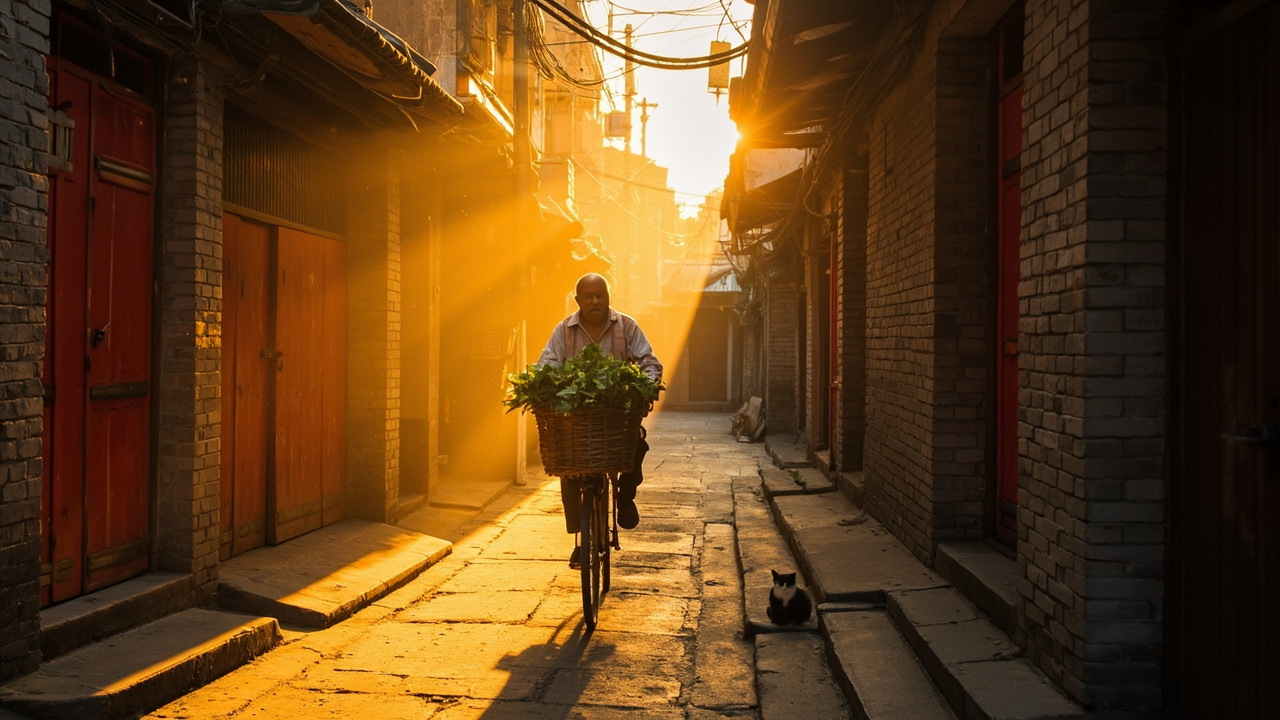
I was standing in a narrow alley in the middle of July, sweat dripping down my back, when an old woman on a stool waved me over. She didn’t speak English. I didn’t speak Mandarin. But she pointed at a thermos, poured me a cup of jasmine tea, and we sat in silence for ten minutes watching a cat chase a moth. That was my first real hutong moment. Not a tour. Not a guidebook highlight. Just a stranger who decided I looked thirsty.
Beijing’s hutongs are the city’s circulatory system. They’re not tourist attractions in the way the Forbidden City is. They’re neighborhoods where people have lived for centuries, where you can still hear bicycle bells and mahjong tiles clicking through open windows. But they’re disappearing fast. The city has demolished over half of them since 2000. The ones that remain are worth your time, but you need to know where to go and what to look for.
This guide covers the ten best walking tours through Beijing’s hutongs that I’ve actually done myself. I’ve walked every route multiple times, gotten lost on most of them, and found things that no guidebook mentions. I’ll tell you which ones are worth your money, which you can do for free, and which to skip if you’re short on time.
Quick answer
For first-time visitors, the best Beijing hutong walking tour is a self-guided walk through Nanluoguxiang and the surrounding alleys —it’s free, takes 2-3 hours, and gives you the full range from touristy main street to quiet residential lanes. If you want a guided experience, Hutong School offers the best English-language tours starting at $40 (—90) per person. Most travelers can visit hutongs without a visa through China’s 144-hour transit policy, and the best time to go is October when the weather is cool and the light makes everything look golden.
The Short Version
If you only have 90 seconds: skip the rickshaw tours. They’re overpriced, rushed, and the drivers take kickbacks from shops. Instead, walk Nanluoguxiang for the energy, then duck into the side alleys for the real Beijing. Eat a jianbing from a street cart. Say hello to the old men playing chess. Don’t take photos of people without asking. And bring cash —some of the best food stalls don’t take WeChat Pay.
How I Picked These
I’ve lived in Beijing for seven years. I’ve walked every hutong in this list at least three times. I’ve taken the guided tours, the free tours, the rickshaw tours, and the “my friend will show you around” tours. I’ve gotten lost in hutongs that aren’t on any map. I’ve eaten things I couldn’t identify. I’ve had conversations with locals using nothing but hand gestures and Google Translate.
For this guide, I walked each route again in September and October 2025, timed how long each took, noted which sections had good English signage, and asked every tour guide I met what they thought of the competition. The prices are what I paid or was quoted in late 2025, adjusted for 2026 estimates.
Comparison Table
| Rank | Place | Best For | Approx Cost (USD) | Time Needed | When to Go |
|------|-------|----------|-------------------|-------------|------------|
| 1 | Nanluoguxiang & Side Alleys | First-timers, free walking | Free | 2-3 hours | Weekday mornings |
| 2 | Hutong School Guided Tour | Deep cultural context | $40 (—90) | 3 hours | Any day |
| 3 | Dashilan & Liulichang | History, architecture | Free | 2 hours | Late afternoon |
| 4 | Wudaoying Hutong | Quiet cafes, less tourists | Free | 1.5 hours | Weekday afternoons |
| 5 | Shichahai Lake Loop | Scenic views, rickshaws | Free (lake), $25 (—80 for rickshaw) | 2-3 hours | Sunset |
| 6 | Beijing Hutong Cycling Tour | Covering more ground | $35 (—50) | 4 hours | Morning |
| 7 | Yangmeizhu Xiejie | Art galleries, boutique shops | Free | 1.5 hours | Weekend afternoons |
| 8 | Ju’er Hutong | Award-winning renovation | Free | 1 hour | Any time |
| 9 | Fangjia Hutong | Nightlife, bars | Free | 2 hours | Evening |
| 10 | Baochao Hutong | Untouched, local life | Free | 1 hour | Early morning |
Nanluoguxiang & Side Alleys —The One Everyone Starts With
The first time I walked Nanluoguxiang, I hated it. Too many people. Too many shops selling the same Mao badges and fridge magnets. A teenager on a loudspeaker was promoting “authentic Beijing yogurt” that came from a factory in Tianjin.
But then I turned left into a side alley, and everything changed.
Nanluoguxiang is the main artery, and it’s touristy. Accept that. The magic is in the 16 side hutongs that branch off it. Mao’er Hutong has a tiny temple that most people walk past. Banchang Hutong has a community center where old men play chess every afternoon. Dongmianhua Hutong has a family-run noodle shop that doesn’t have an English name —just a red sign and a woman who’ll hand you a bowl of zhajiangmian for $2 (—5).
📍 Location: Dongcheng District, between Gulou East Street and Di’anmen East Street
🎫 Entry fee: Free
🕒 Opening hours: 24/7, but shops open 10am-10pm
🚇 How to get there: Take Subway Line 6 or 8 to Nanluoguxiang Station, Exit B. Walk north on Nanluoguxiang for 30 seconds. You’re in it.
⏰When to visit: Weekday mornings, before 10am. Weekends are a zoo.
💡 Insider tips:
-
The side alleys are numbered. Mao’er Hutong is the most interesting —look for the tiny Guanyin temple hidden behind a gate.
-
Don’t eat on the main street. Walk into Banchang Hutong and find the jianbing cart near the middle.
-
The public toilets are marked but bring your own toilet paper.
-
If a rickshaw driver offers you a “special tour,” negotiate hard. They start at $30 (—20) and will take $10 (—0).
-
The best photos are from the Drum Tower at the north end. Go up for $4 (—0) and shoot south.
I met a man named Mr. Chen on Banchang Hutong who has lived in the same courtyard since 1962. He showed me his pigeon coop. He keeps racing pigeons on the roof. He offered me tea. I stayed for an hour.
Hutong School Guided Tour —For When You Want to Understand What You’re Seeing
I was skeptical about paying for a hutong tour. I’d been walking them for years. But a friend convinced me to try Hutong School, and I’m glad I did. The guide, a woman named Li, grew up in a hutong and knew things I’d never noticed.
She pointed out the different types of courtyard houses. She explained why some doors have stone lions and others don’t. She showed us a courtyard that had been divided into 12 families during the Cultural Revolution and was now being restored by a single wealthy owner. She knew the history, but she also knew the gossip.
The tour includes a visit to a local family’s home. That’s the part that makes it worth the money. You sit in someone’s actual living room, drink their tea, and hear their stories. The family I visited had three generations living in two rooms. The grandmother was 87. She’d lived through the Japanese occupation, the civil war, the Cultural Revolution, and the reforms. She didn’t speak English, but Li translated, and I sat there thinking about how much history was in that small room.
📍 Location: Various starting points, usually near Gulou
🎫 Entry fee: $40 (—90) per person, includes tea
🕒 Opening hours: Tours run daily at 9am and 2pm
🚇 How to get there: They’ll tell you the meeting point when you book. Usually near Gulou Station (Line 2/8, Exit B).
⏰When to visit: Any day. The tour is indoors for parts, so it works in rain.
💡 Insider tips:
-
Book at least 3 days in advance. They cap groups at 8 people.
-
The tour is in English. The guides are trained.
-
Bring small bills for the family visit —they won’t ask for money, but it’s polite to buy their tea or snacks.
-
The tour doesn’t include lunch, but they’ll recommend a good local restaurant.
-
If you’re vegetarian, tell them when booking. The family might offer you food.
I made a mistake on this tour. I asked the grandmother about the Cultural Revolution. She went quiet. Li gently changed the subject. I learned to ask about food and family instead.
Dashilan & Liulichang —The Oldest Shopping Street in Beijing
Dashilan feels like a movie set. It’s been a commercial center since the Ming Dynasty, and it shows. The buildings are restored, maybe too restored, but the energy is real. Old men sell calligraphy brushes on the street. A shop has been making the same sesame cakes since 1870. The air smells like roasting chestnuts and incense.
Liulichang is the street next door, and it’s where Beijing’s art dealers have gathered for centuries. If you’re interested in antique scrolls, seals, or old books, this is your place. The prices are high, but the quality is real. I bought a small ink painting here for $30 (—20) and later found out it was worth about that much. No bargain, no rip-off. Just fair.
The best part of this area is the smaller hutongs behind the main streets. Yangmeizhu Xiejie has become an art district with galleries and design shops. It’s quieter than Dashilan and more interesting.
📍 Location: Xicheng District, south of Tiananmen Square
🎫 Entry fee: Free
🕒 Opening hours: Shops open 10am-8pm, streets are always open
🚇 How to get there: Take Subway Line 2 to Qianmen Station, Exit C. Walk south for 5 minutes.
⏰When to visit: Late afternoon, when the light hits the old buildings. Weekdays are better.
💡 Insider tips:
-
The sesame cakes at the shop on the corner of Dashilan and Meishi Street are worth the queue.
-
Liulichang is expensive. Don’t buy antiques unless you know what you’re looking at.
-
The public toilets here are cleaner than most.
-
There’s a hidden temple called Huguosi Temple on the west side. It’s free and usually empty.
-
The rickshaw drivers here are aggressive. Say “bu yao” and keep walking.
I ate a lamb skewer from a street cart and spent the next hour trying to find a bathroom. The skewer was delicious. The aftermath was not.
Wudaoying Hutong —The Quiet One
Wudaoying Hutong is what Nanluoguxiang would be if it calmed down and took a deep breath. It’s a single street, about 800 meters long, lined with small cafes, boutique shops, and a few restaurants. There are no rickshaw drivers. No one is trying to sell you a tour. It’s just a nice street to walk.
I came here on a Tuesday afternoon and had an entire cafe to myself. The owner, a woman who’d lived in Australia for ten years, made me a flat white that would have been good in Melbourne. We talked about the hutong’s history. It used to be a military garrison. Now it’s where young artists and designers open their first shops.
The street is narrow enough that you can see into people’s homes. Laundry hangs from windows. A man fixes bicycles in his doorway. A cat sleeps on a warm engine. It’s not dramatic. It’s just life.
📍 Location: Dongcheng District, north of Yonghegong
🎫 Entry fee: Free
🕒 Opening hours: Cafes open 9am-9pm, shops vary
🚇 How to get there: Take Subway Line 2 or 5 to Yonghegong Station, Exit C. Walk north for 10 minutes.
⏰When to visit: Weekday afternoons. Weekends are busier but still calm.
💡 Insider tips:
-
The cafe called “The Other Place” has the best coffee and a rooftop.
-
There’s a small temple at the east end called Yonghe Temple. It’s worth a visit.
-
The shops here are expensive. Look, don’t buy.
-
Bring a book. This is a reading-in-a-cafe kind of place.
-
The street is well-lit at night, but the side alleys are dark.
I spent two hours in a bookshop here, flipping through Chinese art books I couldn’t read. The owner didn’t mind. He brought me tea.
Shichahai Lake Loop —The Scenic Walk
Shichahai is three connected lakes, and the hutong walk around them is the most scenic in Beijing. You start at the Drum Tower, walk south past the lake, then loop around through the hutongs on the west side. It takes about 2 hours if you don’t stop, but you will stop.
The lake is where Beijingers come to escape the city. In summer, people rent paddle boats. In winter, they skate. In spring, the willow trees droop into the water. In autumn, the light turns everything gold. I’ve walked this loop in every season, and autumn is the best.
The hutongs on the west side are where the old Beijing aristocracy lived. Prince Gong’s Mansion is here, and it’s worth the $6 (—5) entry fee. But the real pleasure is just walking. Watching old men fly kites. Watching couples take wedding photos. Watching a kid fall off a paddle boat and his dad jump in to save him.
📍 Location: Xicheng District, north of Beihai Park
🎫 Entry fee: Free for the lake walk. Prince Gong’s Mansion is $6 (—5).
🕒 Opening hours: 24/7 for the lake. Prince Gong’s Mansion is 8am-5pm.
🚇 How to get there: Take Subway Line 6 to Beihai North Station, Exit B. Walk north for 5 minutes.
⏰When to visit: Sunset. The light on the lake is incredible.
💡 Insider tips:
-
The rickshaw tours here are the most expensive in Beijing. Don’t take one.
-
The bar street on the east side of the lake is touristy and loud. Skip it.
-
There’s a good dumpling restaurant on the west side called “Dong Lai Shun.”
-
The lotus flowers bloom in July and August.
-
Bring a jacket. The lake creates a breeze even in summer.
I watched a group of retirees doing tai chi on the shore at 6am. They moved so slowly I thought they were statues. Then one of them sneezed.
Beijing Hutong Cycling Tour —Covering More Ground
Walking hutongs is great, but you can’t cover much ground. A cycling tour lets you see more. The best one I’ve done is with Beijing Hutong Cycling Tours. They provide bikes, helmets, and a guide who knows the back alleys.
The tour starts near the Drum Tower and goes south through the hutongs, then west to the lakes, then north to the Confucius Temple. It’s about 4 hours with stops. You’ll see parts of the city that most tourists miss. The guide I had, a guy named Zhang, grew up in a hutong and knew every shortcut.
The best part was cycling through the narrowest alley I’ve ever seen. It was barely wide enough for the bike. Zhang said it was called “Thin Horse Hutong” because horses couldn’t pass through. I had to walk my bike. It was worth it.
📍 Location: Meeting point near Gulou
🎫 Entry fee: $35 (—50) per person, includes bike and guide
🕒 Opening hours: Tours run daily at 9am and 2pm
🚇 How to get there: Gulou Station (Line 2/8), Exit B. Walk north to the meeting point.
⏰When to visit: Morning tours are cooler. Afternoon tours have better light.
💡 Insider tips:
-
The bikes are old Chinese models. They work, but don’t expect suspension.
-
Wear a helmet. The traffic is chaotic.
-
Bring water. The tour doesn’t stop for drinks.
-
The tour ends near the Confucius Temple. It’s worth visiting after.
-
If you’re tall, ask for a larger bike. The standard ones are small.
I almost hit a chicken on this tour. A live chicken. In the middle of Beijing. Zhang laughed and said it was probably someone’s pet.
Yangmeizhu Xiejie —The Art District
Yangmeizhu Xiejie is a hutong that’s been transformed into an art and design district. It’s part of the Dashilan area, but it feels different. Quieter. More curated. The shops here are galleries and design studios, not souvenir stores.
I came here on a Saturday afternoon and spent three hours just looking. There’s a gallery that shows contemporary Chinese photography. A shop that sells handmade ceramics. A studio where a calligrapher will write your name in Chinese for $10 (—0). It’s not cheap, but it’s not touristy either.
The street itself is beautiful. The buildings have been restored with traditional materials. The courtyards are open to the public. There’s a cafe at the end that serves excellent pour-over coffee. I sat there for an hour, watching people walk by.
📍 Location: Xicheng District, part of the Dashilan area
🎫 Entry fee: Free
🕒 Opening hours: Shops open 10am-7pm, closed Mondays
🚇 How to get there: Take Subway Line 2 to Qianmen Station, Exit C. Walk south for 10 minutes.
⏰When to visit: Weekend afternoons, when the galleries are open and the light is good.
💡 Insider tips:
-
The gallery called “Three Shadows” is the best for contemporary photography.
-
The ceramics shop has pieces starting at $20 (—50). They’re worth it.
-
The cafe at the end is called “Soloist.” The coffee is excellent.
-
Bring cash. Some shops don’t take cards.
-
The street is narrow. Don’t bring a stroller.
I bought a small ceramic bowl from a woman who told me she’d learned her technique from her grandmother. It’s on my desk now. I use it for keys.
Ju’er Hutong —The Award Winner
Ju’er Hutong is famous in architecture circles. It won a UNESCO award for its renovation. The hutong was falling apart in the 1990s, and a Chinese architect named Wu Liangyong redesigned it while keeping the traditional layout. It’s now a model for how to preserve hutongs while making them livable.
I came here expecting something special, and it is. The courtyards are clean. The buildings are restored. There’s a community center with a library. But it also feels a bit sterile. Like a museum version of a hutong. The old men playing chess are still here, but they’re sitting on new benches.
It’s worth seeing for 30 minutes. Then go to a less polished hutong for the real experience.
📍 Location: Dongcheng District, near Nanluoguxiang
🎫 Entry fee: Free
🕒 Opening hours: 24/7
🚇 How to get there: Take Subway Line 6 or 8 to Nanluoguxiang Station, Exit B. Walk east for 5 minutes.
⏰When to visit: Any time. It’s quiet.
💡 Insider tips:
-
The community center has a small exhibition about the renovation.
-
The public toilet here is the cleanest I’ve seen in a hutong.
-
Don’t take photos of residents without asking. They’re used to tourists, but still.
-
There’s a good noodle shop on the corner of Ju’er Hutong and Nanluoguxiang.
-
This is a good place to come if you’re interested in architecture.
I talked to a resident who said she’d lived here for 40 years. She liked the renovation but missed the old chaos. “It was dirtier,” she said. “But it was ours.”
Fangjia Hutong —The Nightlife Hutong
Fangjia Hutong is where Beijing’s young people go at night. It’s a narrow street lined with bars, restaurants, and live music venues. During the day, it’s quiet. At night, it’s packed.
I came here on a Friday night and found a bar with a live jazz band. The crowd was mostly Chinese, mostly in their 20s and 30s. The drinks were cheap. The music was good. I stayed until midnight.
The hutong itself is not special. It’s a normal residential street. But the energy at night is something else. People spill out of bars onto the street. A man sells grilled lamb skewers from a cart. A group of friends plays drinking games on a stoop. It feels like a party that you’re invited to.
📍 Location: Dongcheng District, near Gulou
🎫 Entry fee: Free (bars have cover charges sometimes)
🕒 Opening hours: Bars open 6pm-2am
🚇 How to get there: Take Subway Line 2 or 8 to Gulou Station, Exit B. Walk east for 5 minutes.
⏰When to visit: Friday or Saturday night. Weekdays are quieter.
💡 Insider tips:
-
The bar called “Temple” has live music most nights.
-
The lamb skewers from the cart outside are the best in the area.
-
Bring cash. Some bars don’t take cards.
-
The police patrol here at night. It’s safe, but don’t cause trouble.
-
If you’re over 40, you might feel old. Go anyway.
I met a guy named Wang who was a graphic designer. He bought me a beer and told me about his band. They played covers of Chinese folk songs. They were terrible. I loved it.
Baochao Hutong —The Untouched One
Baochao Hutong is the hutong that time forgot. It’s in the northern part of the old city, far from the tourist routes. The buildings are old. The streets are narrow. The residents are mostly elderly. There are no shops, no cafes, no rickshaws.
I came here on a Sunday morning and felt like I’d stepped back in time. An old woman was washing vegetables in a bucket. A man was repairing his bicycle. A group of children were playing with a stray dog. No one looked at me. No one tried to sell me anything. I was just a stranger walking through their neighborhood.
This is the hutong for people who want to see the real Beijing. It’s not pretty. It’s not curated. It’s just life.
📍 Location: Dongcheng District, north of the Drum Tower
🎫 Entry fee: Free
🕒 Opening hours: 24/7
🚇 How to get there: Take Subway Line 2 to Gulou Station, Exit B. Walk north for 15 minutes.
⏰When to visit: Early morning, when people are waking up.
💡 Insider tips:
-
There are no public toilets here. Plan ahead.
-
Don’t take photos. This is someone’s home.
-
There’s a small convenience store on the corner. It sells water and snacks.
-
The street is not well-lit at night. Don’t come after dark.
-
This is the hutong to visit if you want to see what Beijing used to be.
I sat on a stoop for 20 minutes and watched a man fix his scooter. He didn’t acknowledge me. I didn’t acknowledge him. It was perfect.
FAQ summary
Most Beijing hutong walking tours are free if you do them yourself, with guided tours costing between $35-40 (—50-290). The best time to visit is weekday mornings to avoid crowds, and the easiest way to get around is by subway. You don’t need a visa for a 144-hour transit stay, and you should download WeChat and Alipay before you arrive. English signage is limited in smaller hutongs, so have a translation app ready. The most important thing to know is that the main tourist streets are crowded but the side alleys are where the real Beijing lives.
FAQ
Q: Do I need a visa to visit Beijing’s hutongs?
A: If you’re transiting through Beijing to a third country, you can stay for 144 hours (6 days) without a visa. This applies to citizens of 53 countries including the US, UK, Canada, Australia, and most EU nations. You need a confirmed onward ticket. If you’re staying longer, you’ll need a tourist visa.
Q: How much do hutong walking tours cost?
A: Self-guided tours are free. Guided group tours cost $35-40 (—50-290) per person. Private tours cost $60-100 (—30-730). Rickshaw tours cost $25-50 (—80-365) but I don’t recommend them.
Q: What’s the best time of year to visit?
A: October is perfect. The weather is cool, the air is clear, and the autumn light makes everything beautiful. April and May are also good. Avoid July and August —it’s hot, humid, and crowded. Winter is cold but quiet.
Q: Do I need to speak Chinese?
A: No. The main tourist areas have English signage. But in the side alleys, no one speaks English. Download Google Translate or Pleco before you go. The translation app will save you.
Q: How do I pay for things in the hutongs?
A: Most shops and restaurants accept WeChat Pay and Alipay. Set these up before you leave. Some smaller stalls only take cash. Bring about $50 (—65) in small bills for emergencies.
Q: Are the hutongs safe?
A: Yes. Beijing is one of the safest cities I’ve ever lived in. The hutongs are well-lit and there are police patrols. Use common sense. Don’t flash expensive cameras. Don’t walk alone at 3am. But I’ve never felt unsafe.
Q: Can I take photos of the residents?
A: Ask first. Most people will say no. If they say yes, be quick and respectful. Don’t take photos of children without asking their parents. And don’t post photos of people without their permission.
The Honest Wrap-up
This list is for people who want to see the real Beijing. Not the Beijing of the Forbidden City and the Great Wall, but the Beijing where people live and work and eat and sleep. The hutongs are not perfect. They’re crowded and dirty and sometimes smelly. But they’re also beautiful and alive and full of stories.
If you only have one day, do the Nanluoguxiang walk. If you have two days, add the Shichahai loop. If you have three days, take the Hutong School tour. And if you have a week, spend a morning in Baochao Hutong, sitting on a stoop, watching nothing happen.
One last thing: don’t try to see everything. Pick two or three hutongs and spend time in them. Sit in a cafe. Talk to a shop owner. Eat something you can’t identify. The hutongs are not a checklist. They’re a place to be.
Related Guides
Looking for more China travel guides? These match your topic:
Topics
More guides you may like

Top 10 Bridges in China
China's bridges are engineering marvels spanning mountains, rivers, and seas. Here are 10 of the most spectacular, from ancient stone to modern steel.
8 min read

Top 10 Buddhist Sites in China
From the Leshan Giant Buddha to the Dunhuang Caves, these 10 Buddhist sites represent 2,000 years of China's spiritual heritage.
9 min read

Top 10 Day Trips from Beijing You Shouldn't Miss
Beijing is packed with history, but some of China's best experiences are just a few hours away. Here are 10 day trips that will transform your visit.
9 min read

Top 10 Hidden Gems in China Off the Beaten Path
Beyond the Great Wall and Terracotta Warriors, China has incredible hidden destinations few tourists ever reach. Here are 10 underrated gems worth the detour.
9 min read

Top 10 Markets and Shopping Streets in China
From Shanghai's Bund to Beijing's Silk Street - 10 markets where foreigners can haggle, explore, and bring home authentic Chinese goods.
9 min read

Top 10 Museums in China You Shouldn't Miss
China's museums span 5,000 years of civilization. These 10 - from the Palace Museum to Xi'an's terracotta gallery - are unmissable for culture lovers.
9 min read