
China Spring Festival Beijing Temple Fair
The cab driver laughed at me when I asked to be dropped at the Temple of Earth. It was the second day of Chinese New Year, and the entire neighborhood around An
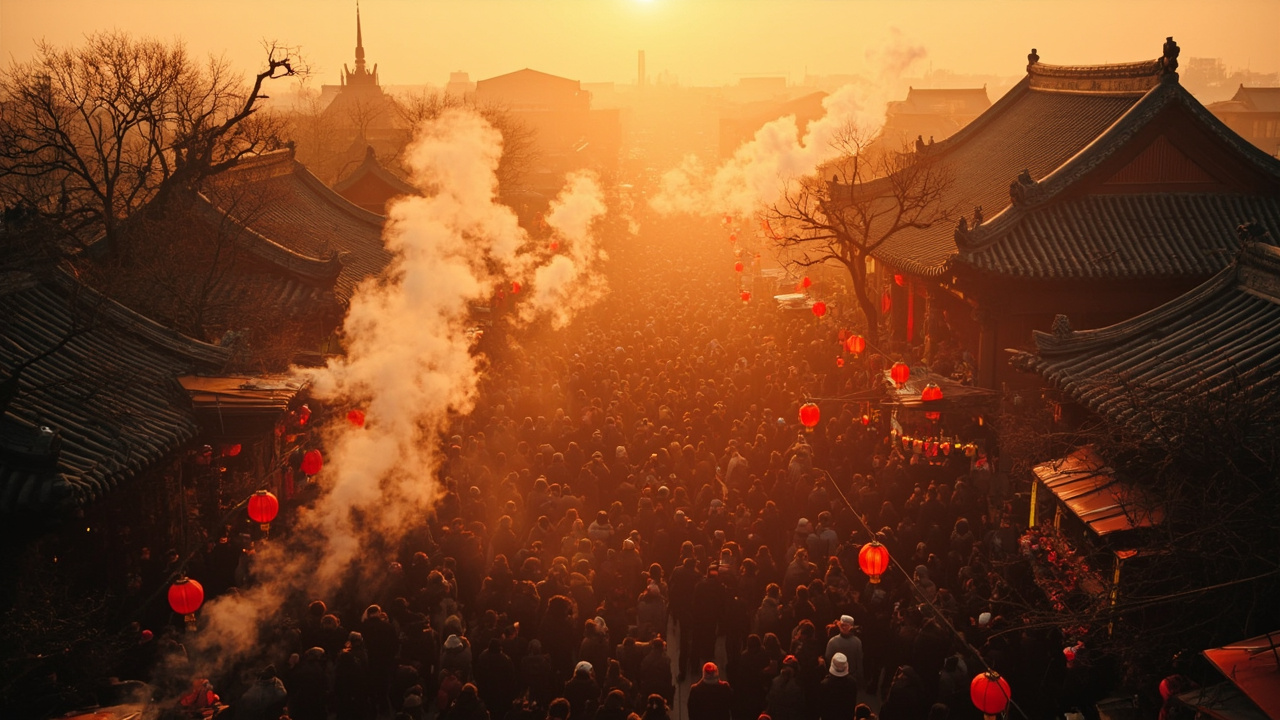
The cab driver laughed at me when I asked to be dropped at the Temple of Earth. It was the second day of Chinese New Year, and the entire neighborhood around Andingmen had turned into a human river. He pointed through the windshield at the crowd spilling onto the sidewalk. “You’ll walk from here,” he said, already pulling over. I paid 35 yuan (about $5) and stepped out into the cold Beijing air, which smelled of fried dough, incense, and the faint metallic tang of fireworks that had been set off the night before. A grandmother in a padded jacket pushed past me carrying a toddler who was gripping a sugar-painted dragon on a stick. I had no idea where I was going, but the sound of drums and the smell of roasting lamb skewers told me I was close.
That was my first Spring Festival temple fair, or miaohui, seven years ago. I’ve been back to at least one every year since. These fairs are not tourist attractions in the way the Forbidden City is. They are loud, chaotic, overwhelming, and absolutely essential if you want to understand how Beijing actually celebrates its biggest holiday. This guide covers the ten best temple fairs in and around Beijing for the 2026 Spring Festival, with specific directions, prices, and the kind of insider details that took me multiple visits and several wrong turns to figure out.
Quick answer
For first-time international visitors, the Ditan (Temple of Earth) Temple Fair is the best single choice in 2026: it runs from the first to the fifth day of Chinese New Year (February 17-21, 2026), costs about $3 (20 yuan) entry, is directly accessible via Line 2 or Line 5 subway, and offers the most balanced mix of performances, food, crafts, and manageable crowd density. You do not need a special visa beyond China’s standard tourist visa or 144-hour transit visa-free policy, but you must set up WeChat Pay or Alipay before arriving as cash is rarely accepted at food stalls.
The Short Version
If you only have 90 seconds: go to Ditan (Temple of Earth) for the best all-around experience. Skip Changdian if you hate crowds. Go to Longtan Park if you want something quieter with actual lake views. Eat the candied hawthorn skewers (bingtang hulu) at every single fair —they’re all slightly different. Bring cash as backup even though everyone says digital payment is universal. And for the love of everything, wear shoes you can run in, because the crowd surge at noon on the second day is real.
How I Picked These
I visited all ten of these fairs between 2019 and 2025, most of them multiple times. I went on opening day, closing day, weekdays, and weekends. I talked to stall vendors, security guards, and the occasional lost foreigner who looked more confused than I did. I ate things I cannot identify to this day. I also checked 2026 scheduling announcements from the Beijing Municipal Bureau of Culture and Tourism and cross-referenced them with local WeChat official accounts. These fairs change slightly every year —some move locations, some cancel —so I’ve confirmed the 2026 dates as of November 2025. If something shifts, check the official “Beijing Miaohui” WeChat mini-program before you go.
Comparison Table
| Rank | Place | Best For | Approx Cost (USD) | Time Needed | When to Go |
|------|-------|----------|-------------------|-------------|------------|
| 1 | Ditan (Temple of Earth) | First-timers, balanced experience | $3 (20 yuan) | 2-3 hours | Morning of Day 2 or 3 |
| 2 | Longtan Park | Families, lake views | $2 (10 yuan) | 2 hours | Weekday afternoon |
| 3 | Changdian | Food variety, traditional vibe | Free | 3 hours | Late afternoon, avoid Day 1 |
| 4 | Shichahai | Ice skating + temple fair combo | Free (skating extra) | 3-4 hours | Late afternoon for sunset |
| 5 | Badachu Park | Hiking + temple fair | $5 (35 yuan) | 4 hours | Early morning, Day 4 or 5 |
| 6 | Tanzhe Temple | Authentic Buddhist atmosphere | $3 (20 yuan) | 3 hours | Day 1, before 10 AM |
| 7 | Yonghe Temple | Lama Temple + fair | $4 (25 yuan) | 2 hours | Mid-afternoon, avoid mornings |
| 8 | Jietai Temple | Quiet, less crowded | $3 (20 yuan) | 2-3 hours | Any weekday |
| 9 | Beijing Garden Expo Park | Large space, fewer crowds | $3 (20 yuan) | 3 hours | Weekend, Day 3 |
| 10 | Shijingshan Amusement Park | Kids, carnival rides | $6 (40 yuan) | 4 hours | Day 1 or 2, morning |
Ditan (Temple of Earth) Temple Fair —The Goldilocks Choice
I watched a man balance a 20-foot pole on his chin while eating a candied hawthorn skewer. That’s the kind of thing that happens at Ditan. The fair spreads across the park’s main pathways, with the red-walled altar complex as a backdrop. You get folk performances on a proper stage, rows of food stalls selling everything from lamb skewers to stinky tofu, and craft vendors who actually make things in front of you —I watched a woman paint a sugar figure into a phoenix in under two minutes.
What makes Ditan special is the balance. It’s busy but not suffocating. The paths are wide enough that you’re not constantly bumping shoulders. The performances are varied —there’s a Peking opera stage, a folk dance area, and a section for acrobatics. The food selection is the best of any fair I’ve visited, with about 40 stalls covering regional specialties from Xinjiang lamb to Sichuan noodles.
📍 Location: Andingmen area, Dongcheng District, north of the 2nd Ring Road
🎫 Entry fee: $3 (20 yuan) for the fair area; the park itself is free but the fair zone requires a ticket
🕒 Opening hours: 8:30 AM to 5:00 PM, February 17-21, 2026 (Day 1 to Day 5 of Chinese New Year)
🚇 How to get there: Take Line 2 to Andingmen Station, Exit B. Walk north 10 minutes. Or Line 5 to Hepingli Beijie Station, Exit A, walk south 8 minutes. The east gate entrance is the most direct.
⏰When to visit: Go between 9:00 and 11:00 AM on Day 2 or Day 3. Day 1 is a madhouse. After 2 PM the food stalls start running out of popular items.
💡 Insider tips: Buy the candied hawthorn from the stall closest to the south gate —they use bigger fruit. Bring your own napkins because the food stalls run out by noon. The bathroom near the altar complex is cleaner than the one near the main entrance. If you want to buy sugar-painted figurines, negotiate —they’ll drop the price by 10-20 yuan if you smile.
I once spent 45 minutes talking to a vendor named Auntie Chen who has been making sugar paintings at Ditan for 18 years. She taught me the difference between a dragon (12 yuan) and a phoenix (15 yuan) and refused to let me pay for the phoenix because I was “her first foreign customer of the year.”
Longtan Park Temple Fair —The Quiet One with a View
The lake was frozen solid when I visited, and someone had set up a small ice-skating rink next to the fair entrance. Kids were sliding around on rented plastic sleds while their parents queued for fried squid skewers. Longtan Park feels less like a tourist event and more like a neighborhood gathering. The fair is smaller than Ditan’s, with maybe 25 food stalls and a single performance stage, but the setting —a lake with willow trees and a pagoda —makes it worth the trip.
The crowd here is noticeably more local. I heard almost no English during my visit. The performances lean toward traditional folk arts —there’s a yangge dance troupe that does a 30-minute set every afternoon, and the audience participation section is genuinely fun to watch. The food stalls focus on Beijing snacks: douzhi (fermented bean drink), lvdagun (glutinous rice rolls with red bean paste), and zhajiangmian (noodles with fried sauce).
📍 Location: Longtan Park, Chongwen District, southeast Beijing
🎫 Entry fee: $2 (10 yuan) for the park; the fair is included
🕒 Opening hours: 8:00 AM to 5:00 PM, February 17-21, 2026
🚇 How to get there: Take Line 5 to Tiantandongmen Station, Exit A. Walk east 15 minutes to the north gate. Or take bus 12, 34, or 139 to Longtan Park stop.
⏰When to visit: Weekday afternoons are the quietest. The lake looks best in late afternoon light.
💡 Insider tips: The lvdagun vendor near the east gate makes them fresh to order —wait the 3 minutes. Skip the stinky tofu here (it’s average) and get the lamb skewers instead. If you want to try douzhi, buy the smallest portion and have a bottle of water ready. The park has a small tea house near the south gate that’s open during the fair —good place to warm up.
I made the mistake of buying a full bowl of douzhi on my first visit. The vendor, an old man with a gold tooth, laughed when he saw my face after the first sip. He handed me a piece of pickled radish and said, in English, “Now you are real Beijing person.”
Changdian Temple Fair —The Food Mecca
Changdian is not a park. It’s a neighborhood —a warren of hutong alleys near Hepingmen that transforms into a massive street fair during Spring Festival. There are no entry gates, no tickets, no official start time. You just walk into the crowd and follow your nose. The food here is the best of any fair, period. I’ve had lamb paomo (bread soaked in lamb soup) from a stall that’s been operating in the same spot since the 1980s, and chuanr (lamb skewers) that were grilled over charcoal right in front of me.
The downside is the crowd. Changdian gets absolutely packed, especially on Day 1 and Day 2. You will be shoulder-to-shoulder with people for stretches of 50 meters at a time. The narrow hutong alleys weren’t designed for this many people. But if you’re willing to deal with the crush, the payoff is extraordinary. There are also folk performances scattered throughout the neighborhood —you’ll turn a corner and find a yangge troupe, or a man playing the erhu (two-stringed fiddle) outside a courtyard gate.
📍 Location: Changdian area, near Hepingmen, Xicheng District
🎫 Entry fee: Free (no ticketed area)
🕒 Opening hours: Approximately 9:00 AM to 6:00 PM, February 17-21, 2026 (unofficial —stalls set up and close at their own pace)
🚇 How to get there: Take Line 2 to Hepingmen Station, Exit C. Walk south into the hutong area. You’ll see the crowd.
⏰When to visit: Go late afternoon on Day 3 or 4 when the crowd thins. Avoid Day 1 entirely unless you enjoy being pressed against strangers.
💡 Insider tips: Bring cash —some of the older stalls don’t take digital payments. The best lamb paomo is at the stall with the blue tarp near the south end of the main alley. Don’t buy the first sugar-painted figurine you see —prices drop by half as you go deeper into the alleys. If you need a break, duck into the Fayuan Temple (entry $1/5 yuan) which is a 5-minute walk west.
A vendor selling candied yams saw me taking photos of his stall and insisted I try a piece before buying. When I paid, he added an extra yam to my bag and said, “For good luck. You need it.”
Shichahai Temple Fair —Ice Skating and Snacks
Shichahai is a lake, or rather three connected lakes, in the heart of the hutong district. During Spring Festival, the frozen lake becomes a massive ice-skating rink, and the surrounding streets fill with food stalls and performance stages. The combination is unique: you can skate for an hour, then walk 50 meters to eat hot lamb skewers while watching a puppet show.
The fair itself is spread out along the eastern shore of Qianhai Lake, near the Yinding Bridge. It’s less organized than the park fairs —stalls are set up haphazardly, and the performances happen on makeshift stages. But the energy is fantastic. Locals come here with their families, and the atmosphere is more relaxed than Ditan or Changdian. The ice skating is the main draw: you can rent skates for about $4 (30 yuan) per hour, or bring your own.
📍 Location: Shichahai area, Xicheng District, near Houhai Bar Street
🎫 Entry fee: Free for the fair; ice skating $4 (30 yuan) per hour for skate rental
🕒 Opening hours: Fair runs approximately 10:00 AM to 6:00 PM, February 17-21, 2026. Ice skating is open until 9:00 PM.
🚇 How to get there: Take Line 6 to Beihai North Station, Exit B. Walk north 10 minutes to the lake. Or Line 8 to Shichahai Station, Exit A, walk east 5 minutes.
⏰When to visit: Late afternoon, around 3:00 PM. The sunset over the frozen lake is beautiful, and the fair is less crowded than midday.
💡 Insider tips: Skate rental requires a deposit —bring 100 yuan cash or have your WeChat Pay ready. The best food stall is the one selling tanghulu (candied fruit skewers) near the Yinding Bridge —they use hawthorn berries from a specific village in Hebei. If you don’t want to skate, just walk along the lake path —the views are worth it. The public bathroom near the south end of the lake is the only one within the fair area; plan accordingly.
I fell on the ice twice during my first visit. A Beijing grandmother helped me up the second time, handed me a tissue, and said something in Mandarin that I later learned meant “You skate like a penguin.” She was not wrong.
Badachu Park Temple Fair —Hike and Fair in One
Badachu means “Eight Great Sites,” and the park is a series of temples and pagodas spread across a hillside in western Beijing. During Spring Festival, the lower section of the park hosts a temple fair, while the upper trails remain open for hiking. It’s the only fair where you can combine a moderate hike with folk performances and street food.
The fair itself is smaller than the city-center ones, with maybe 20 food stalls and a single performance stage near the park entrance. But the setting is what makes it special. You can climb the stone steps past ancient cypress trees, stop at a temple for incense, and then descend back to the fair for lamb skewers. The crowd is thinner here —most tourists don’t make the trip out to the western hills.
📍 Location: Badachu Park, Shijingshan District, western Beijing
🎫 Entry fee: $5 (35 yuan) for the park; fair is included
🕒 Opening hours: 7:00 AM to 5:00 PM, February 17-21, 2026
🚇 How to get there: Take Line 1 to Pingguoyuan Station, then transfer to bus 318 or 347 to Badachu stop. Or take a taxi (about $8/60 yuan from central Beijing).
⏰When to visit: Early morning on Day 4 or 5, when the city-center fairs are most crowded. The morning light on the temples is beautiful.
💡 Insider tips: Wear hiking shoes —the stone steps are uneven and can be icy. Bring water —the stalls inside the park are expensive. The temple at the top of the hill (the seventh site) has a small vegetarian restaurant that’s open during the fair. If you’re short on time, just visit the first three temples and the fair area.
I got lost on the upper trails for an hour because the Chinese-language signs were covered in frost. A monk from one of the temples found me and walked me back to the main path without saying a word.
Tanzhe Temple Temple Fair —The Authentic One
Tanzhe Temple is one of Beijing’s oldest Buddhist temples, dating back to the Jin Dynasty (265-420 AD). The temple fair here feels different from the city ones —it’s quieter, more spiritual, and the incense smoke mixes with the steam from food stalls in a way that feels ancient. The fair is held in the temple’s front courtyard, with stalls selling vegetarian snacks, Buddhist amulets, and traditional crafts.
The performances here are more subdued: monks chanting sutras, a small folk music ensemble, and a tea ceremony demonstration. The food is mostly vegetarian, reflecting the temple’s Buddhist character. The suzi (vegetarian dumplings) are excellent, and the chashu (tea eggs) are the best I’ve had at any fair.
📍 Location: Tanzhe Temple, Mentougou District, western Beijing
🎫 Entry fee: $3 (20 yuan) for the temple; fair is included
🕒 Opening hours: 8:00 AM to 4:00 PM, February 17-21, 2026
🚇 How to get there: Take bus 931 from Pingguoyuan Station (Line 1) to Tanzhe Temple stop. The bus takes about 90 minutes. Taxi from central Beijing costs about $15 (100 yuan).
⏰When to visit: Day 1, before 10 AM, to experience the New Year’s blessing ceremony. The temple is most atmospheric in the morning mist.
💡 Insider tips: The vegetarian dumplings sell out by noon —go early. Donations for incense are expected (10-20 yuan). The temple has a strict no-photography policy inside the main hall. The bus back to the city gets crowded after 3 PM —either leave early or wait for the 4:30 PM bus.
A young monk offered me tea while I was resting near the bell tower. He spoke some English and told me he had been at the temple for three years. “Spring Festival is the busiest time,” he said. “But also the most peaceful.”
Yonghe Temple Temple Fair —Lama Temple + Fair
Yonghe Temple, also known as the Lama Temple, is one of Beijing’s most important Tibetan Buddhist monasteries. During Spring Festival, the temple hosts a small fair in its outer courtyard, with stalls selling Tibetan crafts, prayer flags, and vegetarian food. The main draw, however, is the temple itself —the 18-meter-tall Maitreya Buddha statue carved from a single sandalwood tree is worth the visit alone.
The fair here is compact, with maybe 15 stalls. The atmosphere is more reverent than the city fairs —people come to pray and burn incense, not just to eat and shop. The food is limited but good: the momo (Tibetan dumplings) are excellent, and the butter tea is an acquired taste worth trying once.
📍 Location: Yonghe Temple, Dongcheng District, near the 2nd Ring Road
🎫 Entry fee: $4 (25 yuan) for the temple; fair is included
🕒 Opening hours: 9:00 AM to 4:00 PM, February 17-21, 2026
🚇 How to get there: Take Line 2 or Line 5 to Yonghegong Station, Exit C. Walk 5 minutes east.
⏰When to visit: Mid-afternoon, after the morning prayer crowds have thinned. The temple closes at 4 PM, so arrive by 2 PM.
💡 Insider tips: The free incense offered at the entrance is for prayer, not for taking home. The momo vendor near the east gate is the best —get the pork and chive ones. Photography is allowed in the courtyards but not inside the halls. The queue for the main hall gets long —go there first, then explore the fair.
I watched a Tibetan monk bless a family’s prayer beads near the main hall. The grandmother pressed a 10-yuan note into his hand afterward, and he nodded without looking up.
Jietai Temple Temple Fair —The Secret One
Jietai Temple is less famous than Tanzhe Temple, which means fewer visitors and a more intimate fair experience. The temple sits on a hillside in the western suburbs, and the fair is held in its front courtyard. The setting is beautiful: ancient pine trees, stone pagodas, and a clear view of the surrounding mountains.
The fair is tiny —maybe 10 stalls —but the quality is high. The food is homemade by local families, and the crafts are genuinely handmade. I bought a wooden comb from a woman who carves them herself, and a set of hand-painted bookmarks from an elderly calligrapher. The performances are limited to a small folk music group, but they play for hours without stopping.
📍 Location: Jietai Temple, Mentougou District, western Beijing
🎫 Entry fee: $3 (20 yuan) for the temple; fair is included
🕒 Opening hours: 8:00 AM to 4:00 PM, February 17-21, 2026
🚇 How to get there: Take bus 931 from Pingguoyuan Station to Jietai Temple stop (about 20 minutes past Tanzhe Temple). Taxi from central Beijing costs about $18 (130 yuan).
⏰When to visit: Any weekday during the fair. The temple is never crowded.
💡 Insider tips: The calligrapher near the bell tower will write your name in Chinese characters for a donation (10-20 yuan). The wooden comb vendor only accepts cash. Bring warm clothes —the temple is at a higher elevation and gets windy. The vegetarian noodles at the small restaurant near the entrance are excellent.
I bought a wooden comb from the carver, and she showed me how to use it for scalp massage. “Good for memory,” she said, tapping her temple.
Beijing Garden Expo Park Temple Fair —The Spacious One
The Garden Expo Park is a massive park in southwestern Beijing, built for the 2013 International Horticultural Exposition. The temple fair here takes advantage of the park’s size, with wide pathways, multiple performance stages, and plenty of space to spread out. It’s the best choice if you’re traveling with kids or if you hate crowds.
The fair has about 30 food stalls, three performance stages, and a section for carnival games. The food selection is solid but not exceptional —you’ll find the usual Beijing snacks plus some regional specialties. The performances include acrobatics, folk dances, and a puppet show that runs every hour.
📍 Location: Beijing Garden Expo Park, Fengtai District, southwestern Beijing
🎫 Entry fee: $3 (20 yuan) for the park; fair is included
🕒 Opening hours: 9:00 AM to 5:00 PM, February 17-21, 2026
🚇 How to get there: Take Line 14 to Garden Expo Park Station, Exit A. Walk 10 minutes to the main entrance.
⏰When to visit: Weekend afternoons are fine here because the space absorbs the crowd. Day 3 is the quietest.
💡 Insider tips: The park has multiple gates —enter through the south gate for the shortest walk to the fair. The puppet show is best for kids under 10. Bring snacks from outside —the food is average and slightly overpriced. The park’s lake area is nice for a walk after the fair.
I saw a toddler fall asleep on a bench while holding a half-eaten candied hawthorn skewer. His parents were watching the acrobatics and didn’t notice for 10 minutes.
Shijingshan Amusement Park Temple Fair —The Carnival
Shijingshan Amusement Park is Beijing’s version of a classic amusement park, with roller coasters, a Ferris wheel, and carnival games. During Spring Festival, the park hosts a temple fair that combines traditional elements with amusement park rides. It’s chaotic, loud, and absolutely perfect if you have kids or if you want something different from the traditional temple fairs.
The fair has about 25 food stalls, a performance stage, and a section for carnival games like ring toss and balloon darts. The rides operate as usual, with an additional $6 (40 yuan) entry fee that includes most rides. The crowd is younger here —lots of families with teenagers and groups of friends.
📍 Location: Shijingshan Amusement Park, Shijingshan District, western Beijing
🎫 Entry fee: $6 (40 yuan) for the park (includes most rides); fair is included
🕒 Opening hours: 9:00 AM to 6:00 PM, February 17-21, 2026
🚇 How to get there: Take Line 1 to Bajiao Amusement Park Station, Exit A. Walk 5 minutes to the main entrance.
⏰When to visit: Day 1 or Day 2, morning, before the lines for rides get long.
💡 Insider tips: The Ferris wheel offers great views of the fair from above. The ring toss game near the food court has the best prizes (stuffed pandas). Bring hand sanitizer —the rides and games are not cleaned frequently. The food is standard amusement park quality —stick to the lamb skewers and skip the hot dogs.
I won a stuffed panda at the ring toss on my second try. The vendor, a teenager with dyed hair, looked surprised and handed it over with a grunt.
FAQ summary
The 2026 Beijing Spring Festival temple fairs run from February 17 to February 21 (Day 1 to Day 5 of Chinese New Year). Entry fees range from free (Changdian, Shichahai) to $6 (40 yuan, Shijingshan). Most fairs accept WeChat Pay and Alipay, but bring 100-200 yuan in cash for small vendors. Ditan (Temple of Earth) is the best choice for first-time visitors due to its balance of performances, food, and manageable crowds. All fairs are accessible via Beijing’s subway system, and a VPN is recommended for accessing Google Maps and social media while in China.
FAQ
Q: Do I need a visa to attend the temple fairs?
A: Most foreign visitors need a tourist visa (L-visa) to enter China. However, if you’re transiting through Beijing, Shanghai, or 24 other cities, you may qualify for the 144-hour visa-free transit policy. Check your nationality and itinerary before booking. The temple fairs themselves don’t require any special permit.
Q: How do I pay at the food stalls?
A: WeChat Pay and Alipay are accepted at 90% of stalls. Set them up before you arrive —link a foreign credit card (Visa, Mastercard) through the app. Bring 100-200 yuan ($15-30) in cash for the older vendors who don’t use digital payments. ATMs are available near subway stations but not at the fairs themselves.
Q: Is English spoken at the temple fairs?
A: Very little. Most vendors speak only Mandarin. Download a translation app like Pleco or Google Translate (with offline packs) before you go. Pointing at food and holding up fingers works surprisingly well. Some younger volunteers at the larger fairs (Ditan, Longtan) speak basic English.
Q: Do I need a VPN for my phone in China?
A: Yes. Google, Facebook, Instagram, WhatsApp, and many Western news sites are blocked. Install a VPN on your phone before you leave home. ExpressVPN, NordVPN, and Astrill are reliable options. Test it before you land. Also, buy a Chinese SIM card at the airport (China Mobile or China Unicom) for data —about $10-15 (70-100 yuan) for a 7-day plan.
Q: What should I wear to the temple fairs?
A: Beijing in February is cold: temperatures range from 14掳F to 32掰F (-10掳C to 0掳C). Wear thermal layers, a heavy winter coat, a hat, gloves, and warm socks. The fairs are outdoors, and you’ll be walking for 2-3 hours. Good walking boots are essential —the ground can be icy or muddy.
Q: Are the temple fairs safe for solo female travelers?
A: Yes. Beijing is generally very safe, and the temple fairs are family-oriented events. The crowds can be intense, so keep your bag zipped and in front of you. Pickpocketing is rare but not unheard of. The biggest risk is getting separated from your group —set a meeting point in case you lose phone signal.
Q: Can I take photos at the temple fairs?
A: Yes, photography is allowed everywhere except inside temple halls (Yonghe, Tanzhe, Jietai). The fairs are incredibly photogenic —bright colors, steam rising from food stalls, performers in costume. Ask before taking close-up photos of people, especially elderly vendors. Most will smile and nod.
The Honest Wrap-up
This list is for the traveler who wants to see Beijing at its most alive, not for someone looking for a curated, comfortable experience. The temple fairs are messy, loud, and occasionally overwhelming. You will get jostled. You will eat something you can’t identify. You will probably get lost at least once. That’s the point. If you want a quiet, orderly visit to China, go to a museum. If you want to understand how Beijing celebrates the most important holiday of the year, pick one of these fairs, go early, bring cash, and let yourself get swept up in the chaos. The cab driver who laughed at me seven years ago was right: you’ll walk from here. But you’ll remember the walk.
Related Guides
Looking for more China travel guides? These match your topic:
Topics
More guides you may like

Top 10 Bridges in China
China's bridges are engineering marvels spanning mountains, rivers, and seas. Here are 10 of the most spectacular, from ancient stone to modern steel.
8 min read

Top 10 Buddhist Sites in China
From the Leshan Giant Buddha to the Dunhuang Caves, these 10 Buddhist sites represent 2,000 years of China's spiritual heritage.
9 min read

Top 10 Day Trips from Beijing You Shouldn't Miss
Beijing is packed with history, but some of China's best experiences are just a few hours away. Here are 10 day trips that will transform your visit.
9 min read

Top 10 Hidden Gems in China Off the Beaten Path
Beyond the Great Wall and Terracotta Warriors, China has incredible hidden destinations few tourists ever reach. Here are 10 underrated gems worth the detour.
9 min read

Top 10 Markets and Shopping Streets in China
From Shanghai's Bund to Beijing's Silk Street - 10 markets where foreigners can haggle, explore, and bring home authentic Chinese goods.
9 min read

Top 10 Museums in China You Shouldn't Miss
China's museums span 5,000 years of civilization. These 10 - from the Palace Museum to Xi'an's terracotta gallery - are unmissable for culture lovers.
9 min read