
China Tour Guide Apps Self Guided 2026
The cab driver laughed at me when I asked if I could just scan a QR code to pay for my ride from Beijing Capital Airport. I'd been in China maybe four hours, je
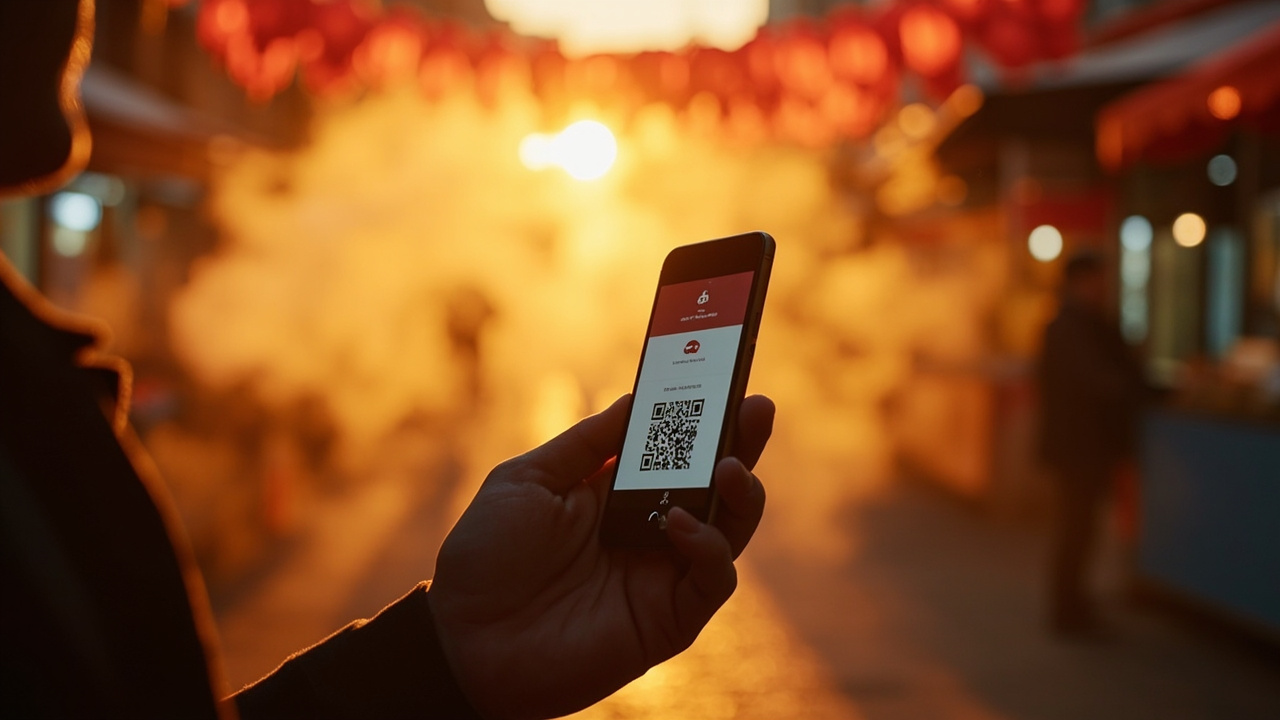
The cab driver laughed at me when I asked if I could just scan a QR code to pay for my ride from Beijing Capital Airport. I’d been in China maybe four hours, jet-lagged and clutching a wad of cash I’d nervously exchanged at the airport. He pointed at his phone, then at mine, and said something in Mandarin that my translation app later rendered as “Your phone is a brick without WeChat.” He was right. I fumbled through the next twenty minutes trying to download the app on airport Wi-Fi, which required a Chinese phone number, which I didn’t have yet. It was a mess. But that moment taught me something every first-time visitor needs to know: getting around China in 2026 isn’t about guidebooks or paper maps anymore. It’s about which apps you have on your phone, and whether you’ve set them up before you land.
I’ve been living in Beijing for seven years now, and I’ve watched the digital infrastructure here evolve from confusing to essential. The apps I use to navigate, translate, pay, and book transport have changed how travel works in this country. For a first-time tourist from the US, Europe, or Southeast Asia, the difference between a smooth trip and a frustrating one often comes down to having the right tools installed and configured before you step off the plane. This guide covers the ten apps I actually use鈥攏ot the ones travel blogs recommend but never test. I’ve tested all of them, sometimes in embarrassing ways, and I’ll tell you which ones matter and which you can skip.
Quick answer
For a self-guided tour of China in 2026, you need four apps installed before you arrive: WeChat (for payments and communication), Alipay (backup payments and transport), Didi (ride-hailing), and Google Translate (offline Chinese packs). China’s 144-hour visa-free transit policy now applies to citizens of 54 countries, including the US, UK, Canada, Australia, and most EU nations, allowing stays of up to six days in select cities without a visa. Expect to spend $15-30 per day on apps and data, including a local SIM card or eSIM.
The Short Version
If you only have ninety seconds, here’s what matters: download WeChat and Alipay before you fly, link a foreign credit card (Visa or Mastercard now works), and buy an eSIM from a provider like Nomad or Airalo before you leave home. Skip the VPN debate鈥攎ost major apps now work without one, but install a reliable VPN like Astrill or ExpressVPN just in case. The one app you’ll use more than any other is WeChat, because it’s not just messaging鈥攊t’s your wallet, your restaurant menu, your museum ticket, and your connection to every taxi driver, hostel owner, and noodle shop vendor you’ll meet. Don’t overthink it. Get those four apps working, and the rest falls into place.
How I Picked These
I didn’t research these apps from a coffee shop in Brooklyn. I tested them while standing in a rainstorm at a bus stop in Guilin, trying to figure out why my Alipay wouldn’t scan. I argued with a Didi driver in Chengdu who couldn’t find my pickup point because my GPS pin was wrong. I watched a hostel receptionist in Xi’an patiently walk me through WeChat’s payment setup for twenty minutes while other guests checked in around us. Every app on this list is one I’ve used in real situations鈥攕ometimes successfully, sometimes not. I also talked to other travelers, taxi drivers, and local friends about what they actually use. The results surprised me. Some popular recommendations from Western travel sites turned out to be useless. Some obscure apps turned out to be lifesavers. This list reflects what works on the ground in 2026, not what looks good in a screenshot.
Comparison Table
| Rank | App | Best For | Approx Cost | Time to Set Up | When to Install |
|------|-----|----------|-------------|----------------|-----------------|
| 1 | WeChat | Payments, messaging, mini-programs | Free (payments linked to card) | 20-30 min | Before departure |
| 2 | Alipay | Backup payments, transport, hotels | Free | 15-20 min | Before departure |
| 3 | Didi | Ride-hailing, taxis | Free (rides cost $3-15) | 10 min | Before departure |
| 4 | Google Translate | Translation, offline packs | Free | 5 min | Before departure |
| 5 | Trip.com | Train tickets, flights, hotels | Free | 10 min | Before departure |
| 6 | Baidu Maps | Navigation (Chinese language) | Free | 5 min | After arrival |
| 7 | Metro China | Subway maps, routes | Free | 5 min | After arrival |
| 8 | Pleco | Chinese dictionary, OCR | Free (premium $15) | 5 min | Before departure |
| 9 | 12306 | Train tickets (official) | Free | 15 min (requires ID) | Before departure |
| 10 | VPN (Astrill/ExpressVPN) | Access blocked sites | $10-15/month | 10 min | Before departure |
WeChat —The One App You Cannot Skip
I watched a French tourist in a Beijing dumpling shop try to pay with a credit card for five minutes before the owner pointed at a QR code on the wall. The tourist scanned it with WeChat, and the payment went through in two seconds. That’s the moment it clicked for him. WeChat isn’t just messaging鈥攊t’s the operating system for daily life in China. You’ll use it to pay for street food, buy museum tickets, order a taxi, split a bill with friends, and message your hostel host. In 2026, WeChat now supports foreign Visa and Mastercard cards directly, so you don’t need a Chinese bank account. The setup process takes about twenty minutes: download the app, register with your phone number, add your credit card under “Wallet,” and verify with a one-time SMS code. Do this before you leave home, because the verification SMS might not arrive on Chinese networks.
📍 Nationwide
🎫 Free to download, no transaction fees for standard payments
🕒 Always available
🚇 Download from your app store before departure
⏰Set up before you arrive —do not wait until you’re at the airport
💡 Insider tips: Enable “Quick Pay” in settings so you can open the scan function with a double-tap. Add your hotel’s WeChat contact for easy communication. Use the mini-program feature for everything from train tickets to restaurant reservations. I once paid for a haircut in a tiny Shanghai alley using WeChat, and the barber didn’t even look up from his phone.
Alipay —Your Backup Wallet
Alipay saved me in a taxi in Chengdu when WeChat’s payment system was down for maintenance. The driver pointed at his Alipay QR code, I scanned it, and we both nodded. Alipay is WeChat’s main competitor, and while WeChat is more versatile for communication, Alipay is often better for travel-specific tasks. It has a “Tour Pass” feature that lets you load money from a foreign card without a Chinese bank account. You can also use it to book Didi rides directly, pay for metro tickets in major cities, and even rent a bike. In 2026, Alipay’s English interface is much better than it used to be, with clear menus and a dedicated “Travel” section that aggregates useful mini-programs.
📍 Nationwide
🎫 Free to download, no transaction fees
🕒 Always available
🚇 Download before departure, set up “Tour Pass” feature
⏰Use as backup if WeChat fails
💡 Insider tips: Link the same credit card to both WeChat and Alipay so you have redundancy. Alipay’s “Hello Pay” feature lets you pay at some merchants by just showing your face. I’ve used Alipay to buy a train ticket from Beijing to Shanghai, and the process took three minutes. The app also shows nearby restaurants with English menus, which is a lifesaver when you’re hungry and tired.
Didi —The Uber You’ll Actually Use
The first time I used Didi, I was standing on a street corner in Beijing at 11 PM, and no taxis would stop. A local friend told me to open Didi, type my destination, and wait. A car arrived in four minutes. Didi is China’s dominant ride-hailing app, and it works better than Uber ever did here. In 2026, the app has a full English interface, and you can pay with WeChat or Alipay. You don’t need a Chinese phone number鈥攜ou can register with a foreign number and link your payment apps. The pricing is transparent: you see the fare before you confirm, and there’s no surge pricing like Uber’s. A typical ride across a major city costs $3-8 (20-55 CNY), depending on distance and traffic.
📍 All major cities, plus many smaller ones
🎫 Free to download, rides cost $3-15 (20-100 CNY)
🕒 24/7
🚇 Download before departure, register with foreign number
⏰Best for late-night travel or when you’re carrying luggage
💡 Insider tips: Use the “Express” option for standard rides, “Taxi” for official taxis (often cheaper), and “Premier” for nicer cars. Always check the license plate before getting in. I once got into the wrong Didi car in Shanghai because I wasn’t paying attention. The driver was confused, I was embarrassed, and we both laughed about it. Also, if your pickup point is confusing, use the “Send to Driver” feature to share your exact GPS location.
Google Translate —Your Language Lifeline
I watched a German tourist in a Xi’an noodle shop point at a menu item, then at his phone, then back at the menu. The translation app had turned “beef noodle soup” into “cow face soup.” He ordered it anyway, and it was delicious. Google Translate isn’t perfect, but it’s the best option for English speakers in China. The camera translation feature is the real hero: point your phone at a menu, a street sign, or a product label, and it translates the text in real time. In 2026, Google Translate works without a VPN in China for basic text translation, but the camera and voice features might need a VPN. Download the offline Chinese language pack before you leave home鈥攊t’s about 300 MB and works without internet.
📍 Everywhere
🎫 Free
🕒 Always available
🚇 Download offline Chinese pack before departure
⏰Use camera mode for menus and signs
💡 Insider tips: Download both simplified and traditional Chinese packs. Use the conversation mode for simple exchanges with locals. I once used Google Translate to ask a street vendor in Guangzhou what was in a mysterious fried ball. The translation said “happy pork.” I still don’t know what that means, but it was good. Also, Pleco is a better dictionary for individual characters, but Google Translate is better for full sentences.
Trip.com —The Travel Booking Powerhouse
Trip.com (formerly Ctrip) is the app I use for almost every train ticket, flight, and hotel booking in China. It’s the Chinese equivalent of Expedia, but more reliable for domestic travel. The English interface is solid, and you can book high-speed train tickets without a Chinese ID鈥攜ou just need your passport number. In 2026, Trip.com also handles visa-free transit bookings and has a “China Travel Guide” section with practical tips. The customer service is responsive, which matters when your train is delayed or your hotel booking goes wrong.
📍 Nationwide, plus international
🎫 Free to download, booking fees included in prices
🕒 24/7 customer service
🚇 Download before departure, create account with email
⏰Best for booking trains and hotels
💡 Insider tips: Use Trip.com for train tickets instead of the official 12306 app, which is Chinese-only and requires a Chinese ID for registration. Trip.com charges a small fee (about $1-2 per ticket), but the convenience is worth it. I once booked a last-minute train from Beijing to Nanjing on Trip.com while standing in line at the station. The QR code ticket worked perfectly. Also, Trip.com’s hotel reviews are more reliable than Booking.com’s for Chinese hotels.
Baidu Maps —The Navigation App That Actually Works
Google Maps is mostly useless in China. It doesn’t update regularly, and the public transport data is often wrong. Baidu Maps is the local alternative, and it works incredibly well for walking, driving, and public transit directions. The catch is that the interface is entirely in Chinese. In 2026, there’s a limited English mode, but it’s not great. I use Baidu Maps with Google Translate’s camera mode: I point my phone at the screen, and it translates the directions. It’s clunky but effective. For subway navigation, Metro China is a better English-friendly option.
📍 All of China
🎫 Free
🕒 Always available
🚇 Download after arrival (requires Chinese app store or APK)
⏰Use for walking and driving directions
💡 Insider tips: If you can’t read Chinese, use Metro China for subway routes and Baidu Maps for walking directions. Pin your hotel and key locations in Baidu Maps before you go out. I once got lost in a Beijing hutong for an hour because I was using Google Maps. Baidu Maps got me back in five minutes. Also, Baidu Maps shows real-time bus locations, which is useful if you’re waiting at a bus stop.
Metro China —The Subway Navigator
Metro China is a simple app that shows subway maps for every major Chinese city. It’s in English, it’s free, and it works offline. You select your city, see the entire metro network, and tap your start and end stations to get the best route, including transfer points and estimated travel time. It’s not as feature-rich as Baidu Maps, but it’s much easier to use if you don’t read Chinese. In 2026, the app also shows which exits have elevators, which is useful if you’re carrying luggage.
📍 Major cities: Beijing, Shanghai, Guangzhou, Shenzhen, Chengdu, Xi’an, Hangzhou, Nanjing, and 20+ more
🎫 Free
🕒 Always available, works offline
🚇 Download before departure, download city maps offline
⏰Best for navigating subway systems
💡 Insider tips: Download the maps for all the cities you’re visiting before you leave home. The app doesn’t need internet to show routes. I used Metro China to navigate the Beijing subway on my first day in China, and I only got on the wrong train once. Also, the app shows the last train time for each line, which is crucial if you’re out late.
Pleco —The Chinese Dictionary You Need
Pleco is the best Chinese-English dictionary app, and it’s essential for anyone who wants to understand what they’re reading. The free version includes a dictionary, flashcards, and a character recognizer. The premium version ($15 one-time) adds OCR (optical character recognition), which lets you point your phone at Chinese text and get instant translations. This is incredibly useful for menus, signs, and product labels. Pleco works offline, so you don’t need internet to look up words.
📍 Everywhere
🎫 Free, premium $15 one-time
🕒 Always available, works offline
🚇 Download before departure, download dictionary packs
⏰Use for reading menus and signs
💡 Insider tips: The OCR feature in the premium version is worth the $15. I used it to read a handwritten menu in a Chengdu restaurant that Google Translate couldn’t handle. Pleco also has a “Clip Reader” that translates text you copy from other apps. I once used it to understand a WeChat message from a hostel owner who wrote in Chinese.
12306 —The Official Train Ticket App
12306 is the official app for China Railway, and it’s the only way to buy train tickets directly without a middleman. The catch is that the app is entirely in Chinese, and registration requires a Chinese ID or a passport number that sometimes doesn’t work with foreign names. In 2026, the app has improved slightly, but it’s still a headache for foreigners. I recommend using Trip.com instead, but if you’re traveling extensively by train and want to save the booking fee, 12306 is worth the hassle.
📍 Nationwide
🎫 Free, no booking fees
🕒 24/7
🚇 Download before departure, register with passport
⏰Use if you want to save booking fees
💡 Insider tips: If you can’t register on 12306, use Trip.com. The booking fee is $1-2 per ticket, and it saves you hours of frustration. I once spent an hour trying to register on 12306 before giving up and using Trip.com. Also, 12306 has a “waiting list” feature for sold-out trains, which Trip.com doesn’t have.
VPN —The Internet Access Tool
China blocks many Western websites and apps, including Google, Facebook, Instagram, WhatsApp, and sometimes YouTube. A VPN (virtual private network) lets you access these services. In 2026, the VPN situation is better than it was a few years ago. Astrill and ExpressVPN are the most reliable options for China. They cost $10-15 per month, and you should install and configure them before you leave home. Some travelers report that certain VPNs work without issues, while others struggle. I use Astrill, and it works about 90% of the time.
📍 Everywhere (where internet is available)
🎫 $10-15/month
🕒 Always available (if it works)
🚇 Install and configure before departure
⏰Use for accessing Google, social media, and streaming
💡 Insider tips: Download multiple VPN apps in case one is blocked. Test your VPN before you leave home. I once arrived in China with a VPN that didn’t work, and I spent my first two days without Google Maps or WhatsApp. Also, some hotels have their own VPN services, but they’re usually slow.
FAQ summary
For a self-guided tour of China in 2026, the most important apps are WeChat and Alipay for payments, Didi for ride-hailing, and Google Translate for language help. Set up all apps before departure, especially payment apps, because verification SMS codes may not arrive on Chinese networks. A VPN is recommended but not essential for basic travel needs, as many major apps now work without one. Expect to spend $15-30 per day on apps and data, including a local SIM card or eSIM.
FAQ
Q: Do I need a visa for China in 2026?
A: Citizens of 54 countries, including the US, UK, Canada, Australia, and most EU nations, are eligible for 144-hour visa-free transit in select cities like Beijing, Shanghai, and Guangzhou. For longer stays, you’ll need a tourist visa (L visa), which costs about $140 (1,000 CNY) and takes 4-7 business days to process.
Q: Can I use my foreign credit card in China?
A: In 2026, most major hotels, high-end restaurants, and tourist attractions accept Visa and Mastercard. But street vendors, small shops, and local restaurants only accept WeChat or Alipay. Link your foreign card to both apps before you arrive.
Q: Do I need a VPN for China?
A: It depends on what you need. Google Translate, Trip.com, and Didi work without a VPN. But Google Maps, Instagram, Facebook, and WhatsApp are blocked. If you need those, install a VPN like Astrill or ExpressVPN before you leave home.
Q: Is English widely spoken in China?
A: In major cities and tourist areas, you’ll find English at hotels, airports, and some restaurants. But in smaller cities, local markets, and street food stalls, English is rare. Use Google Translate or Pleco for communication.
Q: How do I get a Chinese SIM card?
A: You can buy a physical SIM card at the airport or a China Mobile/Unicom/Telecom store. Prices start at $10 (70 CNY) for 10 GB of data. Alternatively, buy an eSIM from providers like Nomad or Airalo before you leave home. eSIMs are easier but slightly more expensive.
Q: Can I use public Wi-Fi in China?
A: Most hotels, cafes, and airports offer free Wi-Fi, but you’ll need to register with your phone number. Some networks require a Chinese number. A local SIM card or eSIM is more reliable for constant connectivity.
Q: What’s the best way to get around cities?
A: The subway is the fastest and cheapest option in major cities. Use Metro China for navigation. Didi is better for late-night travel or when you’re carrying luggage. Buses are cheap but confusing for first-time visitors.
The Honest Wrap-up
This list is for travelers who want to move through China without constantly asking for help. It’s for people who’d rather figure it out themselves than rely on a tour guide. If you’re the type who likes to wander without a plan, these apps will give you the freedom to do that. If you prefer everything arranged for you, you might be better off with a guided tour. My final advice: download WeChat and Alipay before you fly, and don’t panic when something doesn’t work. It will. And when it does, you’ll feel like you’ve cracked a code that most tourists never figure out. That’s the real reward of self-guided travel in China鈥攏ot just seeing the sights, but knowing you got there on your own terms.
Related Guides
Looking for more China travel guides? These match your topic:
Topics
More guides you may like

Top 10 Bridges in China
China's bridges are engineering marvels spanning mountains, rivers, and seas. Here are 10 of the most spectacular, from ancient stone to modern steel.
8 min read

Top 10 Buddhist Sites in China
From the Leshan Giant Buddha to the Dunhuang Caves, these 10 Buddhist sites represent 2,000 years of China's spiritual heritage.
9 min read

Top 10 Day Trips from Beijing You Shouldn't Miss
Beijing is packed with history, but some of China's best experiences are just a few hours away. Here are 10 day trips that will transform your visit.
9 min read

Top 10 Hidden Gems in China Off the Beaten Path
Beyond the Great Wall and Terracotta Warriors, China has incredible hidden destinations few tourists ever reach. Here are 10 underrated gems worth the detour.
9 min read

Top 10 Markets and Shopping Streets in China
From Shanghai's Bund to Beijing's Silk Street - 10 markets where foreigners can haggle, explore, and bring home authentic Chinese goods.
9 min read

Top 10 Museums in China You Shouldn't Miss
China's museums span 5,000 years of civilization. These 10 - from the Palace Museum to Xi'an's terracotta gallery - are unmissable for culture lovers.
9 min read