
China Gluten Free Travel Guide
The cab driver in Beijing laughed at me when I asked if he could find a restaurant without soy sauce. He turned around in his seat, still gripping the steering
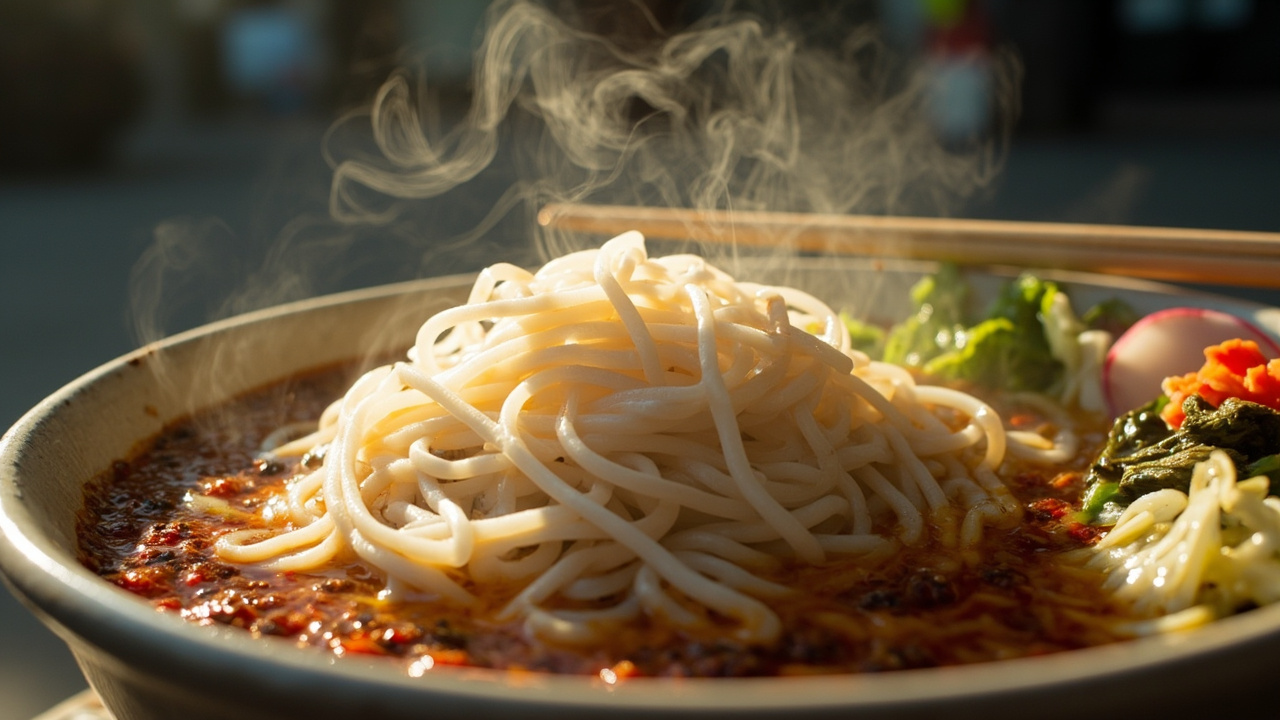
The cab driver in Beijing laughed at me when I asked if he could find a restaurant without soy sauce. He turned around in his seat, still gripping the steering wheel with one hand, and said, “Miss, everything has soy sauce. Even the water probably has soy sauce.” He wasn’t wrong. For someone with celiac disease or a serious gluten sensitivity, China can feel like a culinary minefield where the main ingredient in every dish is wheat, hidden or not. I spent my first three months here accidentally eating gluten at least twice a week, despite showing restaurant staff a carefully translated card that apparently said something closer to “I am allergic to happiness” than “no wheat flour.”
I’ve now lived in Beijing for seven years, traveled through China more than forty times, and learned the hard way which cities actually understand gluten-free needs and which ones will look at you like you’ve requested a unicorn for dinner. This guide covers the ten best destinations for gluten-free travelers in China, based on where I’ve actually eaten safely, where the local food culture works in your favor, and where you won’t spend every meal eating plain rice and crying.
Quick answer
Yes, you can eat gluten-free in China, but you need to plan carefully. The best cities for gluten-free travel are Shanghai, Beijing, Chengdu, and Hong Kong (which has the most dedicated gluten-free restaurants). Avoid relying on restaurant staff understanding your needs —always carry a Chinese-language allergy card printed on paper, use the “GF China” app, and stick to naturally gluten-free dishes like rice noodles, congee, and steamed vegetables. Expect to pay 20-50% more for gluten-free options in major cities. You do not need a visa for stays under 15 days if you’re from 54 eligible countries (2026 policy).
The Short Version
If you have celiac disease, do not wing it. Shanghai and Hong Kong are your safest bets with actual gluten-free restaurants and staff who understand cross-contamination. Beijing is doable but requires effort. Chengdu is surprisingly good because rice-based dishes dominate Sichuan cuisine. Avoid smaller cities and rural areas unless you’re willing to cook for yourself. Download the “GF China” app, print your allergy card on thick paper (phone screens die), and accept that you will eat a lot of steamed rice and stir-fried vegetables. It’s not a foodie paradise for GF travelers, but it’s not impossible either.
How I Picked These
I ate my way through these cities over seven years, sometimes safely, sometimes with consequences I won’t describe in polite company. I talked to local celiac support groups, restaurant owners who actually understood the problem, and expat chefs who’d been through the same struggle. I tested the “GF China” app in every city, tried the popular allergy card services, and made a point of eating at the same restaurant three times before recommending it. If a place served me gluten twice, it’s off the list. This isn’t a theoretical guide —it’s the list I wish I’d had when I first landed in Beijing and ate a “safe” bowl of noodles that turned out to be 100% wheat.
Comparison Table
| Rank | City | Best For | Approx Cost (USD per day) | Time Needed | Best Season |
|------|------|----------|--------------------------|-------------|-------------|
| 1 | Shanghai | Dedicated GF restaurants, English menus | $40-60 ($290-430 CNY) | 4-5 days | Spring/Fall |
| 2 | Hong Kong | Most GF options, labeling laws | $50-80 ($360-580 CNY) | 3-4 days | Winter/Spring |
| 3 | Chengdu | Naturally GF Sichuan dishes | $25-40 ($180-290 CNY) | 3-4 days | Spring/Fall |
| 4 | Beijing | GF bakeries, expat restaurants | $35-55 ($250-400 CNY) | 4-5 days | Spring/Fall |
| 5 | Xi’an | Rice noodles, Muslim Quarter | $20-35 ($145-250 CNY) | 2-3 days | Spring/Fall |
| 6 | Guilin | Rice noodle soup, rural markets | $20-30 ($145-215 CNY) | 3-4 days | Spring/Fall |
| 7 | Kunming | Fresh produce, Yunnan rice dishes | $20-35 ($145-250 CNY) | 3-4 days | Year-round |
| 8 | Hangzhou | Tea-based cuisine, Buddhist vegetarian | $30-45 ($215-325 CNY) | 2-3 days | Spring/Fall |
| 9 | Guangzhou | Dim sum alternatives, congee | $25-40 ($180-290 CNY) | 3-4 days | Winter/Spring |
| 10 | Lhasa | Tibetan butter tea, barley dishes | $30-50 ($215-360 CNY) | 3-4 days | Summer |
1. Shanghai —The Only City Where You Can Order Without Fear
I walked into a restaurant in the French Concession and the waiter handed me a menu with “GF” printed next to six dishes. I almost cried. After months of playing food roulette in Beijing, Shanghai felt like landing on another planet. The waiter even asked if cross-contamination was a problem, which is a sentence I’d never heard a Chinese restaurant worker say before.
Shanghai has the highest concentration of dedicated gluten-free restaurants in mainland China. Places like “Sprout Lifestyle” in the French Concession serve entirely GF meals, and “Liquid Laundry” has a separate GF menu with clearly labeled dishes. The expat community here is large enough that restaurants actually understand the difference between a preference and a medical need. You can find GF pizza, pasta, and even bread, though expect to pay $15-20 (110-145 CNY) for a main course.
📍 French Concession, Jing’an, and Pudong (Lujiazui area)
🎫 Entry fee: Free (restaurant prices vary)
🕒 Opening hours: Most GF-friendly restaurants open 11am-10pm
🚇 Take Metro Line 1 to South Huangpi Road for French Concession, or Line 2 to Lujiazui
⏰Visit in spring (March-May) or fall (October-November) when the weather is mild
💡 Insider tips: Use the “GF China” app to filter Shanghai restaurants; call ahead to confirm GF options because menus change; carry your allergy card even at “GF” restaurants because staff turnover is high; try the steamed rice rolls at “Din Tai Fung” (ask for no soy sauce); the “City Shop” supermarket in Jing’an has imported GF products
I once watched a Shanghai chef throw away an entire wok of vegetables because he’d used the same oil as the wheat noodles. He didn’t even charge me for the replacement.
2. Hong Kong —The Gold Standard for GF Labeling
Hong Kong is the only place in China where food labeling laws actually require allergens to be listed. The first time I bought a package of rice crackers in a Hong Kong supermarket and saw “Gluten Free” printed on the front, I took a photo and sent it to my mother. She didn’t understand why I was crying over crackers.
The city has dozens of dedicated GF restaurants, from “MANA! Fast Slow Food” in Central to “Grassroots Pantry” in Sai Ying Pun. Even chain restaurants like “Pret a Manger” have clearly labeled GF options. The key difference here is awareness —Hong Kongers are more familiar with Western dietary restrictions, and English is widely spoken in restaurants. You can actually explain your needs without resorting to charades.
📍 Central, Sheung Wan, Causeway Bay, Tsim Sha Tsui
🎫 Entry fee: Free (restaurant prices $10-30 / 70-215 CNY)
🕒 Opening hours: Most GF restaurants open 8am-10pm
🚇 Take the MTR to Central Station (Exit D) for MANA!, or Sai Ying Pun Station (Exit B) for Grassroots Pantry
⏰Visit November-March for comfortable weather; avoid summer (June-August) when humidity is brutal
💡 Insider tips: The “Gluten Free Hong Kong” Facebook group is active and reliable; “ThreeSixty” supermarket in Landmark has a huge GF section; dim sum restaurants can make GF versions if you call 24 hours ahead; “The Flying Pan” does GF pancakes; always carry cash because some smaller GF bakeries don’t take cards
I met a woman named Sarah at Grassroots Pantry who’d lived in Hong Kong for 12 years with celiac. She said she’d never been glutened in Hong Kong. I’ve been here six times and neither have I.
3. Chengdu —Where Rice Rules Everything
I sat down at a street stall in Chengdu and watched the cook toss rice noodles into a bubbling broth with Sichuan peppercorns, chili oil, and pickled vegetables. No soy sauce. No wheat. Just pure, fiery deliciousness. I asked him what was in the broth. He shrugged and said, “Just bones and spice.” I’ve never been so happy to hear “just.”
Chengdu is the capital of Sichuan cuisine, which relies heavily on rice-based noodles, rice flour, and fresh vegetables. The famous “dan dan mian” is wheat-based and off limits, but “suān là fěn” (sour and spicy rice noodles) and “má pó dòu fu” (mapo tofu, traditionally made without wheat) are naturally GF. The key is avoiding soy sauce, which contains wheat, but many Sichuan dishes use doubanjiang (fermented bean paste) instead, which is usually GF.
📍 Jinli Ancient Street, Kuanzhai Alley, and the University district
🎫 Entry fee: Free (street food $2-5 / 15-35 CNY per dish)
🕒 Opening hours: Street stalls 11am-10pm; restaurants 11am-9pm
🚇 Take Metro Line 2 to People’s Park Station for the main food areas
⏰Visit March-June or September-November; avoid August when it’s oppressively hot
💡 Insider tips: “Chen Mapo Tofu” on West Yulong Street has a GF mapo tofu if you ask for no soy sauce; the Muslim Quarter has lamb skewers that are naturally GF; carry a card that says “no soy sauce, no wheat flour, no vinegar” in Chinese; the “Tianfu” supermarket chain has GF rice crackers; avoid hot pot unless you control the broth yourself
I once spent an hour in a Chengdu kitchen with a translator app, convincing a chef that “no wheat flour” didn’t mean “extra wheat flour.” He finally understood when I showed him a picture of a wheat field and shook my head violently.
4. Beijing —Survivable, But You Need a Strategy
The first year I lived in Beijing, I ate rice and steamed vegetables for three months straight. I lost weight, but not in a good way. Beijing is the hardest major city for GF eating because the local cuisine relies heavily on wheat: noodles, dumplings, pancakes, and more noodles. But it’s not impossible if you know where to go.
The expat areas in Sanlitun and Liangmaqiao have restaurants that understand GF needs. “The Taco Bar” has GF corn tortillas, “Mosto” has a GF menu, and “Element Fresh” has GF bread options. The real trick is finding Chinese restaurants that work. “Dong Lai Shun” (a famous hot pot chain) allows you to choose your own broth and ingredients, making it safe if you avoid wheat-based sauces.
📍 Sanlitun, Liangmaqiao, and Wudaokou (student area)
🎫 Entry fee: Free (restaurant prices $8-20 / 55-145 CNY)
🕒 Opening hours: Most GF-friendly restaurants 11am-10pm
🚇 Take Metro Line 10 to Liangmaqiao Station (Exit A) for the expat area
⏰Visit April-May or September-October; avoid January-February (cold) and July-August (pollution)
💡 Insider tips: “April Gourmet” supermarket in Sanlitun has imported GF products; “The Daily Bagel” does GF bagels if you order ahead; “Siji Minfu” roast duck restaurant can make GF pancakes on request; the “Beijing Celiac Support Group” on WeChat is active; always carry snacks because you might not find safe food in tourist areas
A waiter at a hutong restaurant once brought me a bowl of plain white rice with a single steamed broccoli floret on top, clearly as a joke. I ate it anyway. It was fine.
5. Xi’an —Rice Noodles and Muslim Street Food
The Muslim Quarter in Xi’an saved my trip. I’d been surviving on packaged rice crackers for two days when I stumbled onto a street stall selling “liang pi” (cold rice noodles) with cucumber, bean sprouts, and a vinegar-chili dressing. No wheat. No soy sauce. I ate three portions.
Xi’an is famous for its Muslim Quarter, where the food is halal and therefore avoids many common Chinese cooking ingredients. Lamb skewers (chuan’r) are naturally GF, as are most rice noodle dishes. The key is avoiding the bread-heavy dishes like “rou jia mo” (Chinese hamburger) and “biang biang” noodles. Stick to the rice noodle stalls and grilled meat vendors.
📍 Muslim Quarter (Huimin Street), near the Drum Tower
🎫 Entry fee: Free (street food $1-4 / 7-30 CNY per dish)
🕒 Opening hours: Street stalls 10am-11pm
🚇 Take Metro Line 2 to Zhonglou Station (Exit C), walk west 5 minutes
⏰Visit March-May or September-October; avoid summer heat
💡 Insider tips: “Liang pi” is your best friend —it’s rice noodles and naturally GF; “Yang Rou Pao Mo” is lamb soup with bread —ask for no bread; the “Muslim Quarter” has a GF-friendly restaurant called “Lao Sun Jia” on Beiyuanmen Street; carry your allergy card in Chinese and Arabic (many vendors speak Uyghur); the “Defachang” restaurant chain has GF options if you ask
A Uyghur vendor named Aisha taught me how to say “no wheat” in her dialect. She laughed at my pronunciation but gave me an extra skewer of lamb as a reward.
6. Guilin —Rice Noodle Heaven
Guilin is famous for one dish: “Guilin mifen” (rice noodles). And that’s basically all I ate for three days. The city’s signature dish is naturally gluten-free, made from rice flour and served in a bone broth with pickled vegetables, peanuts, and chili. No wheat anywhere.
The challenge in Guilin is finding variety. You can eat rice noodles for every meal, but you’ll get bored. The upside is that the local markets are full of fresh fruit, steamed vegetables, and grilled fish. The “Two Rivers and Four Lakes” area has restaurants that cater to tourists and understand basic dietary requests.
📍 Downtown Guilin, near Zhengyang Pedestrian Street
🎫 Entry fee: Free (rice noodle bowl $1-2 / 7-15 CNY)
🕒 Opening hours: Noodle shops 6am-10pm
🚇 Take bus 99 from Guilin Station to Zhengyang Street
⏰Visit April-October for good weather; avoid Chinese holidays when the city is packed
💡 Insider tips: “Chongqing Noodle House” on Zhengyang Street has GF rice noodles; the “Rice Noodle Museum” is touristy but safe; avoid the “snail noodles” (luosifen) unless you’re sure about the broth; the “Li River” cruise has GF options if you book ahead; bring your own GF soy sauce packets
I ate at a noodle shop called “Old Sister’s” for three consecutive mornings. The owner started saving the best cuts of pork for me. I never learned her real name.
7. Kunming —Fresh Produce and Yunnan Rice Dishes
Kunming surprised me. The capital of Yunnan province has a food culture based on rice, mushrooms, and fresh vegetables. “Crossing the Bridge Noodles” (guoqiao mixian) is a famous local dish made with rice noodles, and the broth is usually just chicken or pork bones. No wheat.
The city’s mild climate means year-round fresh produce, and the local markets are full of things you can actually eat: grilled mushrooms, steamed rice cakes, and fresh fruit. The “Yunnan cuisine” emphasis on natural flavors means less reliance on soy sauce and wheat-based sauces.
📍 Green Lake area, Jinma Biji Square
🎫 Entry fee: Free (market food $1-3 / 7-20 CNY)
🕒 Opening hours: Markets 7am-6pm; restaurants 11am-9pm
🚇 Take Metro Line 3 to Wuyi Road Station for the main market area
⏰Visit year-round; spring (March-May) has the best produce
💡 Insider tips: “Yunnan Rice Noodles” at “Qiao Xiang Yuan” on Dongfeng West Road is safe; the “Flower and Bird Market” has fresh fruit and grilled corn; “Guandu Ancient Town” has GF rice cakes; avoid the “steam pot chicken” unless you’re sure about the seasoning; the “Kunming Celiac Support Group” on WeChat is small but helpful
A mushroom vendor at the Green Lake market gave me a free bag of dried porcini when I told her I couldn’t eat wheat. She said, “Mushrooms are better anyway.”
8. Hangzhou —Tea and Buddhist Vegetarian Cuisine
Hangzhou’s Buddhist vegetarian tradition is a gift for GF travelers. Many temple restaurants serve dishes made without wheat, using tofu, vegetables, and rice instead. The famous “Longjing shrimp” (tea-leaf shrimp) is naturally GF, as is “West Lake vinegar fish” (if you ask for no soy sauce).
The challenge is that Hangzhou’s famous “xiaolongbao” (soup dumplings) are wheat-based and off limits. But the city’s tea culture means you can find GF snacks like “longjing tea cookies” made with rice flour at specialty shops.
📍 West Lake area, Lingyin Temple, Longjing Village
🎫 Entry fee: Free (temple restaurants $5-10 / 35-70 CNY)
🕒 Opening hours: Temple restaurants 11am-2pm; tea houses 9am-9pm
🚇 Take bus 7 to Lingyin Temple for the best vegetarian restaurant
⏰Visit March-May for spring tea season; avoid October holiday crowds
💡 Insider tips: “Lingyin Temple’s vegetarian restaurant has GF options if you ask; “Grandma’s Kitchen” on West Lake Road can modify dishes; the “Longjing Village” tea houses serve GF rice crackers with tea; avoid the “Dragon Well” tourist restaurants; carry your allergy card in Chinese and English
I sat in a tea house in Longjing Village for two hours, eating rice crackers and drinking green tea, watching the rain fall on the terraced tea fields. It was the most peaceful meal I’ve had in China.
9. Guangzhou —Congee and Dim Sum Alternatives
Guangzhou is the dim sum capital of China, which is usually bad news for GF travelers because most dim sum is wheat-based. But the city also has the best congee (rice porridge) in the country, served with everything from preserved egg to fish to chicken. Congee is naturally GF, filling, and available everywhere.
The trick in Guangzhou is finding dim sum alternatives. “Rice noodle rolls” (cheong fun) are made from rice flour and safe if you ask for no soy sauce. “Steamed rice cakes” (fa gao) are also GF. The city’s Cantonese cuisine uses less wheat than northern Chinese food, but soy sauce is still everywhere.
📍 Shamian Island, Beijing Road, Liwan District
🎫 Entry fee: Free (congee $2-4 / 15-30 CNY per bowl)
🕒 Opening hours: Congee shops 6am-12pm; dim sum restaurants 8am-3pm
🚇 Take Metro Line 1 to Chen Clan Academy Station for the best food streets
⏰Visit November-March; avoid summer humidity
💡 Insider tips: “Dian Dou De” on Wenchang Road has GF rice noodle rolls; “Yuanji Congee” on Shangxiajiu Street is a local favorite; avoid “siu mai” (pork dumplings) and “har gow” (shrimp dumplings) because they often contain wheat starch; the “Shangxiajiu Pedestrian Street” has fresh fruit stalls; bring your own GF soy sauce
A congee chef in Liwan District saw my allergy card and added extra century egg to my bowl “for strength.” I didn’t have the heart to tell him century eggs are an acquired taste.
10. Lhasa —Tibetan Butter Tea and Barley Bread
Lhasa is the wild card on this list. Tibetan cuisine is completely different from Han Chinese food, which means the usual wheat-based dangers don’t apply. The staple grain is barley (tsampa), not wheat, and the local diet includes yak meat, butter tea, and dried cheese.
The challenge is finding variety. You can eat tsampa porridge, yak stew, and butter tea for every meal, but you’ll miss vegetables. The upside is that Tibetan food is naturally GF, and the local restaurants are used to travelers with dietary restrictions.
📍 Barkhor Street, Jokhang Temple area
🎫 Entry fee: Free (Tibetan meals $3-6 / 20-45 CNY)
🕒 Opening hours: Tibetan restaurants 8am-8pm
🚇 Take a taxi from Lhasa Airport (1 hour) or walk from the city center
⏰Visit June-September for the best weather; avoid winter (November-February) when it’s freezing
💡 Insider tips: “Snowland Restaurant” on Barkhor Street has GF yak stew; “Tibet Kitchen” near Jokhang Temple serves tsampa porridge; avoid “momo” (Tibetan dumplings) because they’re wheat-based; the “Barkhor Market” has dried yak meat and cheese; bring your own snacks because the altitude suppresses appetite anyway
A Tibetan monk at Jokhang Temple shared his tsampa with me when he saw me struggling with the altitude. He mixed it with butter tea and handed it over without a word. It was the most honest meal I’ve ever had.
FAQ summary
For gluten-free travel in China, your safest cities are Shanghai and Hong Kong, which have dedicated GF restaurants and higher awareness. Always carry a printed Chinese-language allergy card, use the “GF China” app, and stick to naturally GF dishes like rice noodles, congee, and steamed vegetables. Expect to pay 20-50% more for GF options, and never assume a dish is safe without confirming. The 2026 visa-free policy allows 54 nationalities to stay up to 15 days without a visa, which is enough time to visit one or two major cities.
FAQ
Q: Do I need a visa for China in 2026?
A: If you’re from one of 54 eligible countries (including the US, UK, Australia, and most EU nations), you can enter visa-free for up to 15 days. For longer stays, you need a visa. Apply at least 4 weeks before your trip.
Q: Can I use my phone in China?
A: You need a VPN before you arrive —Google, Facebook, Instagram, and WhatsApp are blocked. Buy a Chinese SIM card at the airport (China Mobile or China Unicom) or use an eSIM from providers like Airalo. WeChat and Alipay are essential for payments.
Q: Is English widely spoken in restaurants?
A: In Shanghai, Hong Kong, and Beijing, many restaurant staff speak basic English. In smaller cities, you’ll need a translation app. Pleco is the best for Chinese-English translation, and it works offline.
Q: How do I explain gluten-free in Chinese?
A: Print a card that says: “我对麸质过敏,不能吃小麦粉、酱油、醋、面筋。请确保食物中没有这些成分。” (I am allergic to gluten. I cannot eat wheat flour, soy sauce, vinegar, or gluten. Please make sure the food does not contain these ingredients.) Show this to every server.
Q: Can I eat at street stalls?
A: Only if you can see the ingredients and watch them cook. Stick to grilled meat skewers, rice noodles, and fresh fruit. Avoid anything with sauce or broth unless you’re sure.
Q: Is it safe to drink the water?
A: No. Drink bottled water only. Even in restaurants, ask for bottled water. Avoid ice unless you’re in a high-end hotel or restaurant that uses filtered ice.
Q: What snacks should I bring from home?
A: Bring GF protein bars, instant soup packets, and soy sauce packets. These are hard to find in China and expensive when you do. Rice crackers are available everywhere.
The Honest Wrap-up
This guide is for travelers who are willing to put in the work. If you want to show up in China and eat safely without thinking about it, go to Hong Kong or Shanghai. If you want adventure and don’t mind eating the same dish for three days straight, try Chengdu or Guilin. If you’re going to smaller cities or rural areas, accept that you’ll be cooking for yourself or eating plain rice and vegetables.
My final advice: bring more snacks than you think you need, print five copies of your allergy card, and learn to love congee. It’s not the food adventure you dreamed of, but it’s better than spending your vacation in a hospital. And when you find that one safe restaurant, tip them well and become a regular. They’re rare, and they deserve your loyalty.
Related Guides
Looking for more China travel guides? These match your topic:
Topics
More guides you may like
Top 10 Bridges in China
China's bridges are engineering marvels spanning mountains, rivers, and seas. Here are 10 of the most spectacular, from ancient stone to modern steel.
8 min read

Top 10 Buddhist Sites in China
From the Leshan Giant Buddha to the Dunhuang Caves, these 10 Buddhist sites represent 2,000 years of China's spiritual heritage.
9 min read
Top 10 Day Trips from Beijing You Shouldn't Miss
Beijing is packed with history, but some of China's best experiences are just a few hours away. Here are 10 day trips that will transform your visit.
9 min read
Top 10 Hidden Gems in China Off the Beaten Path
Beyond the Great Wall and Terracotta Warriors, China has incredible hidden destinations few tourists ever reach. Here are 10 underrated gems worth the detour.
9 min read
Top 10 Markets and Shopping Streets in China
From Shanghai's Bund to Beijing's Silk Street - 10 markets where foreigners can haggle, explore, and bring home authentic Chinese goods.
9 min read

Top 10 Museums in China You Shouldn't Miss
China's museums span 5,000 years of civilization. These 10 - from the Palace Museum to Xi'an's terracotta gallery - are unmissable for culture lovers.
9 min read