
China Ming Dynasty Great Wall Sites
The cab driver in Beijing laughed at me when I asked if he’d ever been to the Great Wall. “Which one?” he said, not slowing down as he swerved around a scooter.
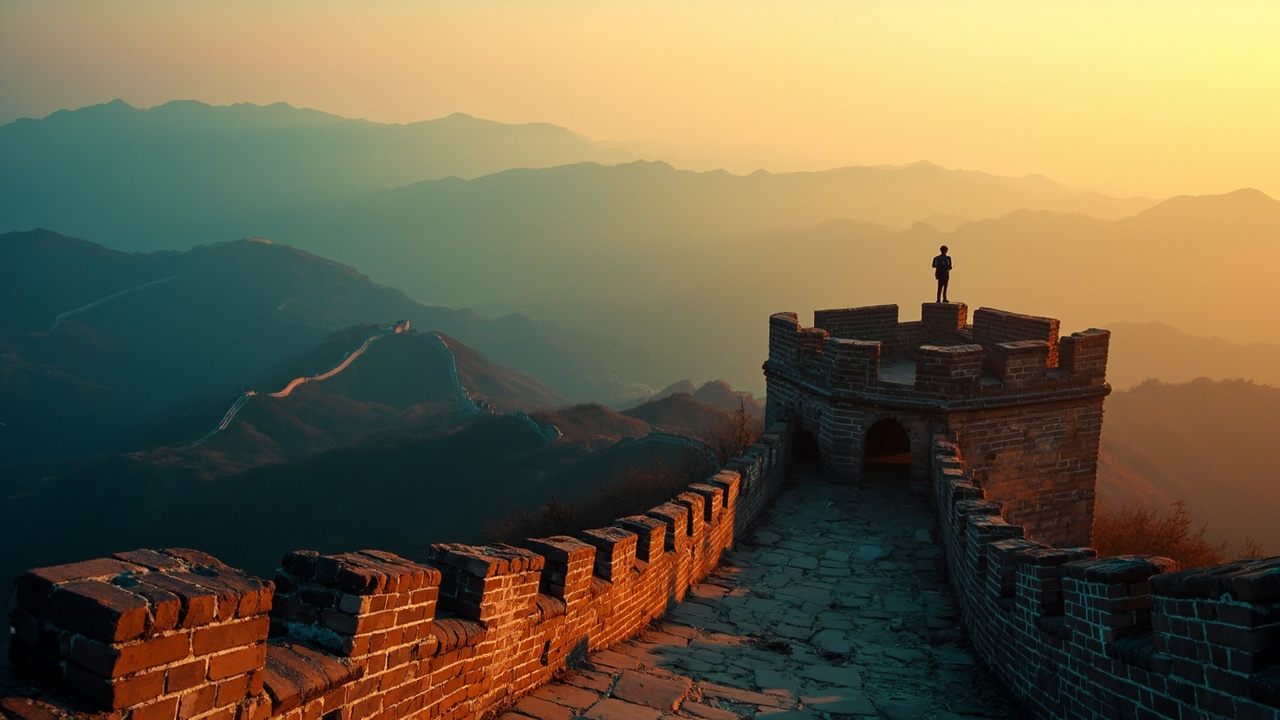
The cab driver in Beijing laughed at me when I asked if he’d ever been to the Great Wall. “Which one?” he said, not slowing down as he swerved around a scooter. I’d been in China for three years at that point, and I still thought there was just the Wall. One wall. One bucket-list photo. One long line of tourists in bad sun hats.
He was right to laugh. The Ming Dynasty Great Wall isn’t a single structure. It’s a 5,500-mile network of stone, brick, and rammed earth that snakes across mountains, deserts, and farmland. Some sections have been rebuilt to look like a theme park. Others are crumbling into the forest, covered in moss, with no one around but the occasional goat herder. I’ve walked maybe 40 miles of it across a dozen different sites over the last seven years, and I still haven’t seen half of what I want to.
This guide covers the ten Ming Dynasty sections that matter most for a first-time international visitor. I’ve been to every one of them at least twice. I’ve gotten lost, overpaid for water, stood in rain that soaked through three layers, and watched sunrise paint the watchtowers gold. I’ll tell you which sections are worth your time, which ones to skip, and exactly how to get there without a tour bus full of strangers.
Quick answer
For first-time international tourists in 2026, the best Ming Dynasty Great Wall section depends on your priorities. Mutianyu is the safest all-around choice: restored, scenic, and accessible by public bus from Beijing within 2 hours. Jinshanling offers the best hiking for serious walkers. Badaling is the most famous but also the most crowded—avoid it unless you have no other option. Most sections cost between $6–$10 USD (40–70 CNY) for entry. China’s current 144-hour visa-free transit policy covers most nationalities for short visits, and the Wall is open year-round, though April–June and September–October are the best months for weather.
The Short Version
If you only have one day, go to Mutianyu. If you want to hike without crowds, go to Jinshanling and stay overnight in a village guesthouse. If you’re on a budget and just want the photo, go to Badaling but arrive before 8 AM. Skip Huanghuacheng unless you’re a photographer obsessed with reflections. Skip Simatai unless you want the night tour gimmick. The Wall is not a single destination—it’s 10 different experiences, and picking the wrong one can ruin your whole day.
How I Picked These
I spent seven years living in Beijing and made it a personal project to visit every accessible Ming Dynasty section within a day’s travel. I took public buses, hitchhiked once (don’t recommend it), hired drivers, and walked with local guides who grew up in villages at the base of the Wall. I talked to ticket sellers, hostel owners, and farmers who still use sections of the Wall as a shortcut between fields. I also asked dozens of other travelers what they wished they’d known. This list is the result of all those conversations and blistered feet.
Comparison Table
| Rank | Place | Best For | Approx Cost (USD) | Time Needed | When to Go |
|------|-------|----------|-------------------|-------------|------------|
| 1 | Mutianyu | First-timers, families, cable car access | $9 (60 CNY) | Half day | Apr–Jun, Sep–Oct |
| 2 | Jinshanling | Hiking, photography, few crowds | $10 (65 CNY) | Full day | May–Oct |
| 3 | Jiankou | Adventurers, ruined sections, no restoration | Free (unofficial) | Full day | May–Sep |
| 4 | Gubeikou | History buffs, quiet walks | $7 (50 CNY) | Half day | Apr–Oct |
| 5 | Simatai | Night tours, restored sections | $12 (80 CNY) + night | Half day | May–Oct |
| 6 | Huanghuacheng | Lakeside views, photography | $9 (60 CNY) | Half day | Apr–Jun, Sep–Oct |
| 7 | Badaling | First-timers who need easy access | $6 (40 CNY) | 2–3 hours | Weekdays only |
| 8 | Shanhaiguan | Eastern start of the Wall, ocean views | $7 (50 CNY) | Half day | May–Sep |
| 9 | Jiayuguan | Western end, desert fortress | $10 (65 CNY) | Half day | Apr–Oct |
| 10 | Dajingmen | Gate history, less touristy | $5 (35 CNY) | 2 hours | May–Sep |
Mutianyu —The One I Send My Mom To
I watched a French family eat a picnic on the watchtower at Mutianyu while their kids played tag on the ramparts. No one was pushing. No one was shouting. It was 10 AM on a Tuesday in May, and the Wall stretched empty in both directions for as far as I could see. That鈥檚 the Mutianyu experience when you time it right.
This is the section I recommend to first-timers, especially if you鈥檙e traveling with kids or older parents. It鈥檚 fully restored, has a toboggan ride down (yes, a wheeled sled on a metal track), and the cable car saves your knees. The views are genuinely spectacular —the Wall follows the ridge of the mountains like a spine, and the watchtowers are spaced close enough that you can see the next one before you get tired.
📍 Huairou District, about 70 km northeast of Beijing
🎫 $9 USD (60 CNY). Cable car one-way $7 (50 CNY), toboggan $10 (70 CNY)
🕒 7:30 AM—5:30 PM (summer), 8 AM—4:30 PM (winter)
🚇 Take bus 916快 from Dongzhimen Bus Station to Huairou, then transfer to bus H23 or H24 to the Wall. Or take the Beijing Subway to Dongzhimen, exit B, and walk 5 minutes to the bus station. Total time: about 2 hours.
⏰Go on a weekday in May or October. Arrive by 8 AM to beat the tour groups.
💡 Insider tips: (1) Buy water at the village below, not at the top (half the price). (2) The toboggan is fun but the line gets long by 11 AM. (3) Bring cash —card machines at the top sometimes don鈥檛 work. (4) The left side of the Wall is steeper but less crowded. (5) There鈥檚 a decent noodle shop at the base, but skip the 鈥淏eijing hot dog—vendors.
I met a retired English teacher named Mr. Chen at the ticket booth who told me he鈥檇 been coming to Mutianyu every spring for 15 years. He pointed at a watchtower and said, 鈥淭hat one was my grandfather鈥檚 favorite. He helped rebuild it in the 1980s.—I didn鈥檛 ask if it was true. I just nodded.
Jinshanling —The Hiker鈥檚 Wall
The first time I walked Jinshanling, I was alone for three hours. Not a single other tourist. Just the wind and the crows and the sound of my own boots on stone that had been laid in 1570. The Wall here is a mix of restored and wild sections, and the contrast is part of the beauty. One watchtower has a new roof. The next one is open to the sky, with grass growing out of the cracks.
This is the best section for serious walking. The hike from Jinshanling to Simatai takes about 4— hours and covers 10 km of continuous Wall. You鈥檒l climb steep stairs, walk along narrow parapets, and pass through watchtowers that still have the original brick arches. The views are wide and dramatic —the Wall stretches across the horizon like a ribbon dropped on the mountains.
📍 Luanping County, Hebei Province, about 130 km northeast of Beijing
🎫 $10 USD (65 CNY). Cable car $8 (55 CNY) one-way
🕒 8 AM—5 PM (summer), 8 AM—4 PM (winter)
🚇 Take bus 980快 from Dongzhimen to Miyun, then transfer to a local bus or hire a driver. A private driver from Beijing costs about $80—00 (550—00 CNY) round trip.
⏰Go in late May or early October. Weekdays only. Start by 9 AM to finish the hike before dark.
💡 Insider tips: (1) The hike from Jinshanling to Simatai is one-way —arrange a driver to pick you up at the other end. (2) Bring at least 2 liters of water per person. There are no shops on the Wall. (3) Wear hiking boots, not sneakers. The stones are uneven and some steps are knee-high. (4) Download the map offline —cell signal is spotty. (5) The village at the base has cheap guesthouses if you want to stay overnight.
I made the mistake of wearing new shoes on this hike. Blisters on both heels by the third hour. A farmer selling water at the Simatai exit saw me limping and gave me a piece of duct tape for my feet. He didn鈥檛 speak English. I didn鈥檛 speak enough Chinese. We just smiled.
Jiankou —The Wild One (Don鈥檛 Bring Your Grandma)
I stood at the base of Jiankou and looked up at a section of Wall that looked like it had been dropped from a great height and left to break. The bricks were scattered. The watchtower on the ridge had no roof. The stairs were gone in places, replaced by loose rocks and dirt paths. A German guy next to me said, 鈥淭his is not a wall. This is a climbing gym.—He wasn鈥檛 wrong.
Jiankou is the most dramatic and dangerous section of the Ming Wall. It鈥檚 unrestored, steep, and genuinely challenging. The famous 鈥淥x Horn—bend is here —a sharp curve that looks like an ox鈥檚 horn in photos. This is for experienced hikers only. I鈥檝e seen people turn back after 20 minutes because they were scared of the drop-offs.
📍 Huairou District, about 80 km north of Beijing
🎫 Free (unofficial entrance —no ticket booth)
🕒 Always open, but don鈥檛 hike in rain or snow
🚇 Hire a driver from Beijing. Tell them to take you to Xizhazi Village. From there, it鈥檚 a 30-minute hike uphill to the Wall.
⏰Go in May, June, September, or October. Never in winter ice —people have died slipping.
💡 Insider tips: (1) This is not a solo hike unless you know the route. Hire a local guide from the village for about $30 (200 CNY). (2) Bring gloves. You鈥檒l be using your hands. (3) No bathrooms, no shops, no cell signal. Prepare accordingly. (4) The best photo spot is the 鈥淥x Horn—bend, about 40 minutes from the village entrance. (5) Don鈥檛 attempt the full traverse to Mutianyu unless you鈥檙e an experienced climber with ropes.
A guide named Lao Wang led me up Jiankou once. He was 62 years old and moved across the broken stones like a mountain goat. At the top, he pulled out a flask of baijiu and offered me a sip. 鈥淔or courage,—he said. I took it. It burned. I needed it.
Gubeikou —The Quiet Historian
The ticket seller at Gubeikou was reading a newspaper when I walked up. She looked at me, looked back at her paper, and said, 鈥淥nly one today?—I was the only foreigner on the entire section that afternoon. The Wall here is unrestored but walkable, with a different kind of beauty. The bricks are worn smooth by centuries of weather, and the watchtowers have trees growing out of them.
Gubeikou was a strategic pass during the Ming Dynasty, and you can feel the history in the stone. The Wall splits into two parallel sections here, with a valley in between. It鈥檚 not as dramatic as Jiankou or as polished as Mutianyu, but it鈥檚 honest. This is what the Wall looks like when no one is trying to sell you anything.
📍 Miyun District, about 120 km northeast of Beijing
🎫 $7 USD (50 CNY)
🕒 8 AM—5 PM
🚇 Take bus 980快 from Dongzhimen to Miyun, then transfer to bus 25路 to Gubeikou. Total time: about 3 hours.
⏰Go in spring or autumn. Weekdays only. Arrive early —the bus schedule is infrequent.
💡 Insider tips: (1) The hike from Gubeikou to Jinshanling is about 6 km and takes 3— hours. (2) Bring snacks —there鈥檚 one small shop at the entrance and nothing on the Wall. (3) The local museum near the entrance has English labels and is worth 20 minutes. (4) You can hire a motorcycle taxi back to the bus stop for about $3 (20 CNY). (5) The village has a few simple restaurants serving noodles and dumplings.
I ate lunch at a tiny restaurant in the village run by a woman named Auntie Zhang. She didn鈥檛 have a menu. She just brought me a bowl of hand-pulled noodles with eggplant and asked if I wanted more. I said yes. She brought a second bowl. I paid $2.50.
Simatai —The Night Wall
I walked up Simatai at 7 PM on a summer evening, and the light was that soft golden color that photographers chase. By 8 PM, the lights came on along the Wall —small amber fixtures that traced the outline of the watchtowers against the darkening sky. It was beautiful. It was also completely artificial. Simatai is the only section that offers night tours, and it feels more like a stage set than a historical site.
That said, it鈥檚 worth doing once. The restored section is clean and well-maintained, and the night view is genuinely striking. The daytime experience is less impressive —the restored parts feel a bit too perfect, like a movie set. But the night tour is unique, and the cable car ride up in the dark is memorable.
📍 Miyun District, about 120 km northeast of Beijing
🎫 $12 USD (80 CNY) daytime, $15 (100 CNY) night tour. Cable car $8 (55 CNY) one-way
🕒 Daytime: 8 AM—5 PM. Night tour: 5:30 PM—9 PM (summer only)
🚇 Take bus 980快 from Dongzhimen to Miyun, then transfer to a shuttle bus or hire a driver. A private driver from Beijing costs about $90 (650 CNY) round trip.
⏰Go for the night tour in summer. Skip the daytime visit unless you鈥檙e combining it with Jinshanling.
💡 Insider tips: (1) The night tour requires a separate ticket —buy it in advance online. (2) Bring a jacket even in summer —it gets cold on the Wall after dark. (3) The light show is on a timer and ends at 9 PM sharp. (4) There are fewer people at night, but the tour groups arrive around 7:30 PM. (5) The cable car stops running at 9 PM, so don鈥檛 miss the last one down.
I met a Korean couple on the night tour who were taking selfies with every watchtower. The woman showed me her phone —she had 47 photos of the same tower from slightly different angles. 鈥淚t鈥檚 for my mother,—she said. 鈥淪he can鈥檛 travel.—I thought that was a nice reason to take 47 photos of one thing.
Huanghuacheng —The Lake Wall
The first time I saw Huanghuacheng, I thought someone had Photoshopped the Wall into a painting. The Wall runs along the edge of a reservoir, with sections actually submerged in the water. In spring, the mountains around it are covered in yellow wildflowers —hence the name (Huanghuacheng means 鈥淵ellow Flower City—.
It鈥檚 a beautiful spot, but it鈥檚 also the most frustrating section I鈥檝e visited. The Wall is heavily restored in some parts and completely collapsed in others. You can鈥檛 walk a continuous section —you have to go up, come down, walk along the lake, and go up again. The views are worth it, but the hiking is disjointed.
📍 Huairou District, about 60 km north of Beijing
🎫 $9 USD (60 CNY). Boat ride on the lake $5 (35 CNY)
🕒 8 AM—5 PM
🚇 Take bus 916快 from Dongzhimen to Huairou, then transfer to bus H21 to the scenic area. Total time: about 2 hours.
⏰Go in late April for the wildflowers or October for autumn colors. Weekdays only.
💡 Insider tips: (1) The boat ride is worth it for the photos of the submerged Wall. (2) Bring mosquito repellent in summer —the lake breeds them. (3) The hiking trail is not well-marked —download a map before you go. (4) There鈥檚 a decent restaurant at the entrance serving fish from the reservoir. (5) The best photo spot is from the opposite shore, accessible by boat.
I sat on a rock by the lake eating a hard-boiled egg I鈥檇 bought from a vendor, watching a Chinese painter try to capture the light on the water. He was using watercolors. The wind kept blowing his paper away. He didn鈥檛 seem to mind.
Badaling —The Famous One (and Why I Avoid It)
I went to Badaling exactly once, on a Tuesday in November. It was still packed. I spent more time waiting for people to move out of my photos than I spent actually walking. The Wall here is wide, flat, and fully restored —it looks like a pedestrian walkway in a city park. The crowds are relentless, and the vendors are aggressive.
I鈥檓 not saying you should never go to Badaling. If you have limited mobility, if you鈥檙e on a tight schedule, or if you just want to say you鈥檝e been to the Great Wall without any effort, it works. The cable car is fast, the path is smooth, and the views are fine. But it鈥檚 the least authentic experience of any section on this list.
📍 Yanqing District, about 80 km northwest of Beijing
🎫 $6 USD (40 CNY). Cable car $8 (55 CNY) one-way
🕒 6:30 AM—6 PM (summer), 7:30 AM—5 PM (winter)
🚇 Take the S2 train from Beijing North Railway Station to Badaling. It鈥檚 a 90-minute ride and costs about $1.50 (10 CNY). Or take bus 877 from Deshengmen.
⏰Go on a weekday in winter or early spring. Arrive before 8 AM. Leave by 11 AM.
💡 Insider tips: (1) The S2 train is the best option —it鈥檚 cheap and scenic. (2) Don鈥檛 buy souvenirs from the vendors at the base —they鈥檙e overpriced. (3) The 鈥淕reat Wall Medal—scam is real —someone will try to sell you a fake coin. (4) The north side is slightly less crowded than the south. (5) Bring your own snacks —the food here is bad and expensive.
I watched a tour guide at Badaling lead a group of 40 people while holding a red flag on a stick. He was shouting into a microphone. The group moved as one organism, like a school of fish. I got out of their way and left.
Shanhaiguan —Where the Wall Meets the Sea
I stood at the eastern end of the Ming Wall at Shanhaiguan, looking out at the Bohai Sea. The Wall literally ends at the water鈥檚 edge, with a watchtower called 鈥淥ld Dragon鈥檚 Head—perched on the rocks. Waves were crashing against the base. It was the most dramatic setting of any section I鈥檝e seen.
Shanhaiguan is a full-day trip from Beijing, but it鈥檚 worth it if you want to see the Wall in a completely different context. The fortress town itself is well-preserved, with Ming-era gates and streets. The Wall here is shorter and less dramatic than the mountain sections, but the ocean backdrop makes it unique.
📍 Shanhaiguan District, Qinhuangdao, Hebei Province, about 300 km east of Beijing
🎫 $7 USD (50 CNY) for the fortress, $5 (35 CNY) for Old Dragon鈥檚 Head
🕒 8 AM—5 PM
🚇 Take a high-speed train from Beijing Railway Station to Shanhaiguan Station (about 2 hours, $25/180 CNY). Then take bus 25 or a taxi to the fortress.
⏰Go in May or September. Avoid July and August —it鈥檚 crowded with domestic tourists.
💡 Insider tips: (1) The high-speed train is worth the extra cost —it saves hours. (2) Walk the Wall from the fortress to Old Dragon鈥檚 Head (about 3 km). (3) The seafood in Qinhuangdao is excellent —try the steamed crabs. (4) Bring a jacket even in summer —the sea wind is cold. (5) The 鈥淔irst Pass Under Heaven—gate is the most photographed spot.
I ate lunch at a seafood restaurant near the fortress where the owner, a woman in her 60s, insisted I try the sea cucumber. I didn鈥檛 want to. She insisted again. I tried it. It was rubbery and strange. She laughed at my face and brought me a plate of fried shrimp instead.
Jiayuguan —The Western Fortress
Jiayuguan is not in Beijing. It鈥檚 not even close. It鈥檚 in Gansu Province, near the edge of the Gobi Desert, and it marks the western end of the Ming Wall. The fortress here is massive and imposing, built to guard the 鈥淛ade Gate Pass—on the Silk Road. The Wall stretches out from the fortress into the desert, slowly crumbling into the sand.
This is a destination for serious history travelers, not casual sightseers. The fortress is incredibly well-preserved, and the desert setting is haunting. But it鈥檚 a long way from anywhere —the nearest city is Jiayuguan itself, which is a 4-hour train ride from Lanzhou.
📍 Jiayuguan City, Gansu Province, about 2,000 km west of Beijing
🎫 $10 USD (65 CNY) for the fortress and Wall section
🕒 8 AM—6 PM (summer), 8:30 AM—5:30 PM (winter)
🚇 Fly to Jiayuguan Airport from Beijing (about 3 hours, $150/1,000 CNY) or take a high-speed train from Lanzhou (about 4 hours, $40/280 CNY).
⏰Go in May, June, September, or October. Summer is brutally hot.
💡 Insider tips: (1) The 鈥渟uspension bridge—outside the fortress is a modern addition —skip it. (2) Hire a guide at the fortress entrance for about $15 (100 CNY) —the history is complex. (3) The desert sunset from the Wall is unforgettable. (4) Bring a scarf or mask —the wind blows sand. (5) The local specialty is 鈥淟anzhou beef noodles——find a shop near the train station.
I walked along the desert Wall at Jiayuguan at sunset, and the only sound was the wind moving sand across the stones. A Chinese man was playing a bamboo flute on one of the watchtowers. The notes carried across the desert, thin and lonely. I stood there until it was too dark to see.
Dajingmen —The Forgotten Gate
Dajingmen is the section nobody talks about. It鈥檚 in Zhangjiakou, about 3 hours northwest of Beijing, and it was one of the most important passes on the Ming Wall. The gate itself is massive —a stone arch that once controlled trade between China and Mongolia. Today, it鈥檚 quiet, with a small park around it and very few visitors.
I went here because I wanted to see a section that wasn鈥檛 on any tourist itinerary. The Wall here is short and mostly restored, but the gate is genuinely impressive. The surrounding city of Zhangjiakou is unremarkable, but the site itself has a quiet dignity.
📍 Qiaoxi District, Zhangjiakou, Hebei Province, about 200 km northwest of Beijing
🎫 $5 USD (35 CNY)
🕒 8 AM—5 PM
🚇 Take a high-speed train from Beijing North Railway Station to Zhangjiakou (about 1 hour, $20/140 CNY), then take bus 2 or a taxi to Dajingmen.
⏰Go in spring or autumn. The site is small —you only need 1— hours.
💡 Insider tips: (1) The museum inside the gate has English labels and is surprisingly good. (2) The park around the gate is popular with local retirees playing chess —it鈥檚 a nice scene. (3) Zhangjiakou is a winter sports hub —combine this trip with a visit to Chongli ski resort if you ski. (4) The local food is Mongolian-influenced —try the lamb skewers. (5) This is a good option if you want to see the Wall without crowds but don鈥檛 have time for a full day trip.
I watched two old men play Chinese chess on a stone table near the gate while their wives sat on a bench eating sunflower seeds. One of the men lost and slapped the table, laughing. His friend offered him a cigarette. They lit up and started another game. The Wall stood behind them, silent.
FAQ summary
The Ming Dynasty Great Wall has multiple sections, each with different access, difficulty, and atmosphere. Mutianyu is the best choice for most first-time visitors due to its combination of restoration, accessibility, and scenery. Jinshanling is better for experienced hikers. Badaling is the easiest but most crowded. Entry fees range from $5—12 USD (35—0 CNY), and most sections are open from 8 AM to 5 PM. The best travel months are April, May, September, and October. China鈥檚 144-hour visa-free transit policy covers many nationalities for short visits to Beijing and surrounding areas.
FAQ
Q: Which section of the Great Wall is best for first-time visitors?
A: Mutianyu. It鈥檚 restored, has a cable car, and is less crowded than Badaling. The toboggan ride down is a bonus.
Q: How do I get to the Great Wall from Beijing without a tour?
A: Take public buses or trains. For Mutianyu, take bus 916快 from Dongzhimen to Huairou, then transfer to H23 or H24. For Badaling, take the S2 train from Beijing North Railway Station. Total cost is under $5 USD (35 CNY) each way.
Q: Do I need a tour guide to visit the Great Wall?
A: No. All major sections have clear paths and English signage. The only exception is Jiankou, where a local guide is recommended for safety.
Q: What should I bring to the Great Wall?
A: Water (at least 1 liter per person), snacks, comfortable walking shoes, sunscreen, a hat, and cash. Some sections have no shops or ATMs on the Wall itself.
Q: Is the Great Wall crowded?
A: It depends on the section and time. Badaling is always crowded. Mutianyu is busy on weekends but quiet on weekdays. Jinshanling and Gubeikou are usually empty.
Q: Can I visit the Great Wall in winter?
A: Yes, but it鈥檚 cold and windy. Some sections have reduced hours or cable car closures. Jiankou is dangerous in ice. Mutianyu and Badaling are open year-round.
Q: Do I need a visa to visit the Great Wall?
A: Most nationalities need a visa for China. However, the 144-hour visa-free transit policy covers citizens of 54 countries for short stays in Beijing and surrounding areas. Check the latest policy before booking.
The Honest Wrap-up
This list is for people who want to see the Great Wall with their own eyes, not through a bus window. It鈥檚 for the traveler who is willing to wake up early, take a crowded bus, walk until their legs ache, and come back with stories instead of souvenirs.
It鈥檚 not for people who want a curated, comfortable, air-conditioned experience. If that鈥檚 you, book a tour to Badaling, take the cable car, buy the T-shirt, and go home. You鈥檒l have seen the Wall. You won鈥檛 have felt it.
My final advice: pick one section and spend the whole day there. Don鈥檛 try to see three sections in one trip. The Wall rewards patience. Sit on a watchtower for an hour. Watch the clouds move. Listen to the wind. That鈥檚 the real experience.
Related Guides
Looking for more China travel guides? These match your topic:
Topics
More guides you may like

Top 10 Bridges in China
China's bridges are engineering marvels spanning mountains, rivers, and seas. Here are 10 of the most spectacular, from ancient stone to modern steel.
8 min read

Top 10 Buddhist Sites in China
From the Leshan Giant Buddha to the Dunhuang Caves, these 10 Buddhist sites represent 2,000 years of China's spiritual heritage.
9 min read
Top 10 Day Trips from Beijing You Shouldn't Miss
Beijing is packed with history, but some of China's best experiences are just a few hours away. Here are 10 day trips that will transform your visit.
9 min read
Top 10 Hidden Gems in China Off the Beaten Path
Beyond the Great Wall and Terracotta Warriors, China has incredible hidden destinations few tourists ever reach. Here are 10 underrated gems worth the detour.
9 min read
Top 10 Markets and Shopping Streets in China
From Shanghai's Bund to Beijing's Silk Street - 10 markets where foreigners can haggle, explore, and bring home authentic Chinese goods.
9 min read
Top 10 Museums in China You Shouldn't Miss
China's museums span 5,000 years of civilization. These 10 - from the Palace Museum to Xi'an's terracotta gallery - are unmissable for culture lovers.
9 min read