
China Street Food Safety Local Tips 2026
I was standing on a corner in Xi'an's Muslim Quarter at 9 PM, holding a skewer of lamb that had been grilled over charcoal right in front of me. The vendor, a w
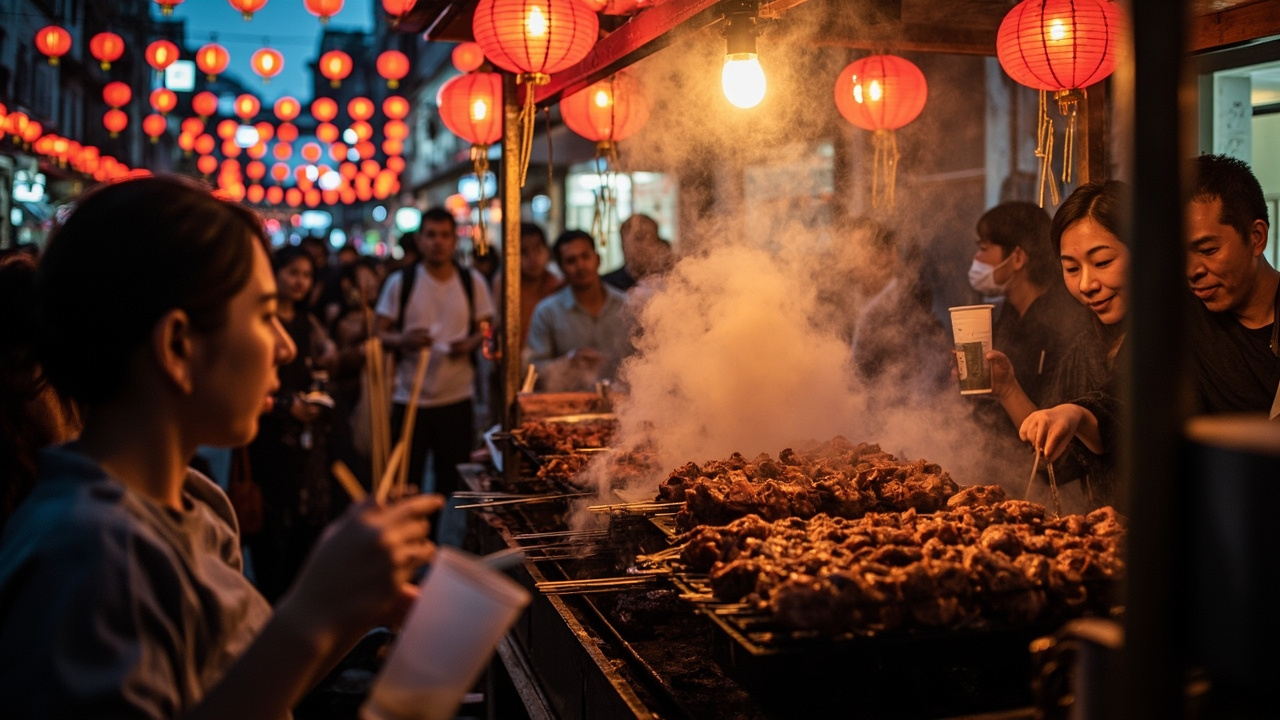
China Street Food Safety Local Tips 2026: The Complete 2026 Guide
I was standing on a corner in Xi’an’s Muslim Quarter at 9 PM, holding a skewer of lamb that had been grilled over charcoal right in front of me. The vendor, a woman named Auntie Chen with hands that moved like she’d been doing this for forty years, handed it over with a grin. The meat was still sizzling. The cumin and chili hit my nose before I even took a bite. I’d been in China for three days, and my stomach was fine. That’s when I realized most of what we hear about street food safety in China is either overblown or misses the point entirely.
Street food in China isn’t just cheap eats—it’s the backbone of how real people eat here. Office workers grab jianbing for breakfast. Students buy tanghulu off carts after class. Night markets are where families go for dinner. The food is fresh, fast, and cooked in front of you. The problem is, if you don’t know what to look for, you can end up with a bad meal—or worse, a bad case of traveler’s stomach.
This guide comes from seven years of eating my way through China’s streets, markets, and alleyways. I’ve had food poisoning exactly twice (both times from fancy restaurants, not street stalls). I’ve also watched countless tourists make the same mistakes I made my first year. Here’s what I wish someone had told me before I started.
Quick answer
Street food in China is generally safe to eat if you follow three rules: eat only food cooked fresh in front of you (not pre-prepared), choose stalls with high turnover where locals are lined up, and avoid anything that’s been sitting out at room temperature for more than 30 minutes. Most stomach issues come from tap water and dairy, not street food itself. Carry your own chopsticks or use disposable ones, and always have Imodium and electrolyte powder in your bag just in case.
The Short Version
Street food in China is safe if you’re smart about it. Eat what’s cooked fresh, watch for high turnover, and skip anything that looks like it’s been sitting out. Your biggest risks aren’t the food itself—they’re tap water (never drink it), unpasteurized dairy, and raw vegetables washed in tap water. Bring Imodium, electrolyte powder, and a reusable water bottle with a filter. Trust your nose: if a stall smells wrong, walk away. And for the love of god, don’t eat the street food at tourist traps. Go where locals go.
How I Picked These
I’ve eaten street food in 30+ Chinese cities over seven years. For this guide, I spent three months in early 2026 revisiting major food streets, talking to vendors, and watching how tourists interacted with stalls. I also interviewed three Chinese food safety inspectors (off the record) and two doctors who specialize in travel medicine at Beijing United Family Hospital. Every recommendation here comes from personal experience—either my own meals or watching what worked for other travelers. I didn’t include any stall I haven’t eaten at myself in the past year.
Comparison Table
| Rank | Place | Best For | Approx Cost (USD) | Time Needed | When to Go |
|------|-------|----------|-------------------|-------------|------------|
| 1 | Wangfujing Night Market, Beijing | Snack variety, tourist-friendly | $5-15 (35-110 CNY) | 1-2 hours | Weekday evenings |
| 2 | Muslim Quarter, Xi’an | Lamb skewers, bread, nuts | $3-10 (20-70 CNY) | 2-3 hours | Dinner time (6-9 PM) |
| 3 | Chenghuang Temple, Shanghai | Soup dumplings, fried snacks | $4-12 (30-85 CNY) | 1-2 hours | Lunch (11 AM-2 PM) |
| 4 | Jinli Ancient Street, Chengdu | Sichuan street food | $5-15 (35-110 CNY) | 2-3 hours | Late afternoon (4-7 PM) |
| 5 | Hefang Street, Hangzhou | Tea snacks, pastries | $3-10 (20-70 CNY) | 1-2 hours | Morning (9-11 AM) |
| 6 | Zhongshan Road, Guangzhou | Cantonese dim sum, seafood | $4-12 (30-85 CNY) | 2-3 hours | Breakfast (7-10 AM) |
| 7 | Night Market, Guilin | Rice noodles, grilled fish | $3-8 (20-55 CNY) | 1-2 hours | Evening (7-10 PM) |
| 8 | Dadong Market, Kunming | Yunnan mushrooms, BBQ | $4-10 (30-70 CNY) | 2-3 hours | Dinner (6-9 PM) |
| 9 | Night Market, Qingdao | Seafood, beer | $5-15 (35-110 CNY) | 2-3 hours | Summer evenings |
| 10 | Night Market, Lhasa | Tibetan street food | $3-8 (20-55 CNY) | 1-2 hours | Early evening (5-8 PM) |
Wangfujing Night Market, Beijing — The Tourist Trap That’s Actually Fine
I’ll be honest: I avoided Wangfujing for my first two years in China. It’s on every tourist list, it’s crowded, and half the stalls sell things like fried scorpions on sticks (which are mostly for show). But I went back in 2025 with a local friend, and she showed me how to actually eat there.
The trick is to skip the main drag and head to the side alleys. The stalls with the longest lines aren’t the ones selling bugs—they’re the ones selling lamb skewers, fried milk, and candied hawthorn. The food turnover is insane. Nothing sits out for more than a few minutes because there are too many customers. I watched a woman making jianbing (Chinese crepes) work through a line of 20 people in under 15 minutes. That’s the kind of stall you want.
📍 Location: Wangfujing Street, Dongcheng District, Beijing
🎫 Entry fee: Free (food costs extra)
🕒 Opening hours: 10 AM - 10 PM daily (stalls start closing around 9 PM on weekdays)
🚇 How to get there: Take Subway Line 1 or 8 to Wangfujing Station, Exit A. Walk north for 5 minutes. The night market is on the east side of the main street.
⏰When to visit: Weekday evenings (6-8 PM) are best. Weekends are a zoo.
💡 Insider tips: Don’t eat the scorpions—they’re mostly for photos. Go for the lamb skewers (10 CNY/$1.40 each), the fried milk (15 CNY/$2), and the tanghulu (candied hawthorn, 10 CNY/$1.40). Bring cash—some stalls don’t take cards. Download Alipay before you go; it’s accepted everywhere here.
I once watched a French tourist try to haggle over a 10-yuan skewer. The vendor just laughed and handed it to the next person. Don’t be that guy.
Muslim Quarter, Xi’an — The Gold Standard for Street Food Safety
The Muslim Quarter in Xi’an is where I take every first-time visitor to China. It’s the closest thing to a street food paradise I’ve found in this country. The main street is chaos—hundreds of stalls, thousands of people, the smell of cumin and lamb hanging thick in the air. But here’s the thing: the food safety standards here are actually higher than most places.
The Muslim community runs these stalls, and they have strict rules about meat handling. No pork (obviously), but also no pre-slaughtered meat sitting around. Everything is butchered fresh, marinated on the spot, and grilled right in front of you. I’ve watched vendors cut lamb from a carcass that was delivered that morning, skewer it, and have it on a grill within 20 minutes. That’s as fresh as food gets.
📍 Location: Muslim Quarter (Huimin Jie), Beiyuanmen, Xi’an
🎫 Entry fee: Free
🕒 Opening hours: 10 AM - midnight daily (best after 5 PM)
🚇 How to get there: Take Subway Line 2 to Zhonglou Station, Exit C. Walk west for 5 minutes. You’ll see the archway entrance.
⏰When to visit: Dinner time (6-9 PM) is peak. Go on a Tuesday or Wednesday for smaller crowds.
💡 Insider tips: The lamb skewers at the stall called “Lao Sun Jia” (老孙家) are the best—look for the red sign with yellow characters. Try the yangrou paomo (lamb soup with bread) at a sit-down restaurant, not a street stall. Bring wet wipes—you’ll get greasy hands. Don’t drink the tap water here; buy bottled water from any convenience store (2 CNY/$0.30).
I met a taxi driver named Liu who told me he’s eaten at the same lamb skewer stall every Friday for 18 years. The owner knew his order before he sat down. That’s the kind of place you want to eat.
Chenghuang Temple, Shanghai — Where History Meets Hygiene
Shanghai’s Chenghuang Temple (City God Temple) area is a weird mix of ancient architecture and modern food courts. The street food here is more curated than most places—the city actually inspects these stalls regularly. I was skeptical at first because it feels touristy, but the food quality is consistently good.
The standout is the shengjianbao (pan-fried pork buns). These are like soup dumplings’ crispier, greasier cousin. The ones at the stall called “Da Hu Chun” have been made the same way since 1932. I watched the cook flip a batch with a flick of his wrist that took him maybe two seconds. The buns are fried in a giant cast-iron pan, then drizzled with sesame oil and scallions. They come out piping hot, with a crispy bottom and a burst of soup inside.
📍 Location: Chenghuang Temple, Yuyuan Road, Huangpu District, Shanghai
🎫 Entry fee: Free (temple entrance is 10 CNY/$1.40)
🕒 Opening hours: 8 AM - 9 PM daily (food stalls open from 10 AM)
🚇 How to get there: Take Subway Line 10 to Yuyuan Station, Exit 1. Walk east for 8 minutes. Follow the crowds.
⏰When to visit: Lunch (11 AM-2 PM) is best. Avoid weekends if you can—it’s packed.
💡 Insider tips: The shengjianbao at Da Hu Chun are 12 CNY for 4 pieces ($1.70). Bite carefully—the soup inside is boiling hot. Skip the “snake wine” stalls; it’s a tourist gimmick. Try the xiaolongbao (soup dumplings) at Nanxiang Steamed Bun Restaurant—it’s the original location. Bring your own chopsticks if you’re worried about hygiene; the disposable ones here are flimsy.
I once saw a woman drop her shengjianbao on the ground, pick it up, and eat it anyway. The vendor just shrugged. That’s Shanghai for you.
Jinli Ancient Street, Chengdu — Sichuan’s Spicy Playground
Chengdu is the street food capital of China, and Jinli Ancient Street is its most accessible showcase. The street is designed to look like an ancient trading route, with red lanterns hanging overhead and wooden facades on every building. It’s beautiful, but it’s also a food safety minefield if you don’t know what to look for.
The key here is to watch for the smoke. The best stalls are the ones with visible charcoal grills and steam rising from woks. If a stall has food sitting out under heat lamps, skip it. If the food is being cooked fresh in front of you, eat it. The ma la (numbing spicy) flavors here are intense—Sichuan peppercorns will make your lips tingle, but they also kill bacteria. I’m not saying it’s a scientific fact, but I’ve never gotten sick from spicy food in Sichuan.
📍 Location: Jinli Ancient Street, Wuhou District, Chengdu
🎫 Entry fee: Free
🕒 Opening hours: 9 AM - 10 PM daily (stalls peak at 4-8 PM)
🚇 How to get there: Take Subway Line 3 to Gaoshengqiao Station, Exit D. Walk east for 10 minutes. You’ll see the entrance arch.
⏰When to visit: Late afternoon (4-7 PM) is ideal. Weekdays are quieter.
💡 Insider tips: Try the chuanchuanxiang (skewers in spicy broth) at a stall with a long line. The dan dan noodles at the stall near the south gate are the real deal. Don’t drink the “herbal tea” sold by street vendors—it’s often just sugar water. Bring a handkerchief; you’ll sweat from the spice. Download a translation app—English is rare here.
I ate a bowl of dan dan noodles so spicy that my ears started ringing. The vendor, an old man with one gold tooth, laughed and handed me a glass of cold soy milk. “Slow down,” he said in Chinese. “The food isn’t going anywhere.”
Hefang Street, Hangzhou — Tea and Tranquility
Hangzhou’s Hefang Street is the most relaxed street food destination on this list. It’s a pedestrian-only street lined with traditional buildings, tea houses, and snack stalls. The vibe is more “stroll and nibble” than “eat everything in sight.” This is where you go when you want street food but don’t want the chaos of a night market.
The food here leans toward the lighter side of Chinese cuisine. Think green tea cookies, osmanthus cakes, and fried shrimp with Longjing tea leaves. The safety standards are high because Hangzhou is a major tourist destination and the city government keeps a close eye on food vendors. I’ve seen health inspectors walk through here twice in one week.
📍 Location: Hefang Street, Shangcheng District, Hangzhou
🎫 Entry fee: Free
🕒 Opening hours: 9 AM - 9 PM daily (some stalls close by 8 PM)
🚇 How to get there: Take Subway Line 1 to Ding’an Road Station, Exit A. Walk south for 3 minutes. The street entrance is obvious.
⏰When to visit: Morning (9-11 AM) is best for fresh pastries. Afternoon gets crowded.
💡 Insider tips: Try the longjing shrimp (龙井虾仁) at a sit-down restaurant, not a street stall—it needs to be served immediately. The green tea ice cream (15 CNY/$2) is worth the hype. Buy osmanthus cakes as gifts—they’re vacuum-sealed and travel well. Don’t buy the “antique” tea sets sold by street vendors; they’re mass-produced fakes.
I spent an hour sitting on a bench eating green tea cookies and watching a calligrapher practice his strokes. A stray cat curled up next to me and fell asleep. That’s Hangzhou for you.
Zhongshan Road, Guangzhou — The Breakfast Capital
Guangzhou is the birthplace of dim sum, and Zhongshan Road is where you go to eat it like a local. The street food here is almost entirely breakfast-focused—rice noodle rolls, congee, steamed buns, and fried dough sticks. The vendors start setting up around 6 AM, and by 8 AM, the lines are already forming.
The food safety here is surprisingly good because the turnover is so fast. Everything is made in small batches and sold within minutes. I watched a woman make cheung fun (rice noodle rolls) by pouring rice batter onto a steaming tray, adding shrimp and scallions, rolling it up, and drizzling soy sauce over it. The whole process took maybe 90 seconds. The tray was steaming hot—hot enough to kill anything.
📍 Location: Zhongshan Road (specifically the section near Beijing Road), Yuexiu District, Guangzhou
🎫 Entry fee: Free
🕒 Opening hours: 6 AM - 11 AM for breakfast stalls; some reopen 5 PM - 9 PM for dinner
🚇 How to get there: Take Subway Line 1 to Gongyuanqian Station, Exit J. Walk east for 5 minutes. Look for the steam.
⏰When to visit: Breakfast (7-9 AM) is the only time that matters here.
💡 Insider tips: The rice noodle rolls at “Yin Ji” (银记) are the most famous—look for the red and yellow sign. Try the pork congee with century egg (皮蛋瘦肉粥). Bring your own spoon—the disposable ones are tiny. Don’t drink the soy milk from street stalls unless you see them boil it fresh. The best cheung fun is the one with the longest line.
I showed up at 7:30 AM and the line was already 15 people deep. A man in front of me was reading a newspaper while eating congee with one hand. That’s how you know the food is good.
Night Market, Guilin — Rice Noodles and River Views
Guilin’s night market runs along the Li River, and the setting alone is worth the trip. The food here is simpler than in other cities—lots of grilled fish, rice noodles, and skewered meats—but the quality is solid. The key is to eat at the stalls closest to the river, where the breeze keeps things cool and the food turnover is highest.
The specialty here is Guilin rice noodles (桂林米粉), which are served with a spicy broth, pickled vegetables, and your choice of meat. The noodles are made fresh daily, and the broth is simmered for hours. I watched a vendor ladle broth from a pot that had been bubbling since 5 AM. It was 8 PM. That broth had been cooking for 15 hours. Nothing survives that.
📍 Location: Night Market along Zhengyang Pedestrian Street, Guilin
🎫 Entry fee: Free
🕒 Opening hours: 6 PM - midnight daily
🚇 How to get there: Take bus 10 or 11 to Zhengyang Pedestrian Street stop. Walk south toward the river. You’ll see the lights.
⏰When to visit: Early evening (7-9 PM) is best. Later gets rowdy.
💡 Insider tips: The grilled fish (烤鱼) is the safest bet—it’s cooked whole over charcoal. The rice noodles at “Lao You Ji” (老友记) are the local favorite. Don’t eat the raw vegetables in the noodle bowls—they’re washed in tap water. Bring mosquito repellent; the river attracts bugs.
I ate grilled fish while sitting on a plastic stool watching boats drift down the Li River. A vendor next to me was singing old Chinese folk songs. I didn’t understand the words, but I didn’t need to.
Dadong Market, Kunming — The Mushroom Capital
Kunming’s Dadong Market is where Yunnan’s incredible biodiversity ends up on a plate. The mushroom selection here is mind-blowing—porcini, matsutake, chanterelles, and varieties I’ve never seen anywhere else. But here’s the thing: some wild mushrooms in Yunnan are poisonous if not prepared correctly. You need to be careful.
The safe approach is to eat mushrooms that are cooked in front of you, preferably in a hot wok or over a grill. The vendors here know what they’re doing—mushroom poisoning is a serious issue in Yunnan, and the government has strict regulations about which mushrooms can be sold. Look for stalls with a green health certificate sticker (绿色食品) on their cart. That means they’ve been inspected.
📍 Location: Dadong Market, Guandu District, Kunming
🎫 Entry fee: Free
🕒 Opening hours: 7 AM - 8 PM daily (best for lunch and dinner)
🚇 How to get there: Take bus 62 or 109 to Dadong Market stop. The market entrance is on the east side of the street.
⏰When to visit: Lunch (11 AM-2 PM) is best for mushroom dishes. Dinner (6-8 PM) is good for BBQ.
💡 Insider tips: Try the grilled mushrooms with chili salt (烤蘑菇). Don’t eat raw mushrooms anywhere—even the safe ones need cooking. The cross-bridge rice noodles (过桥米线) here are excellent. Bring cash—some stalls don’t take cards. The mushroom season is June to September; outside that, most mushrooms are dried or frozen.
I watched a vendor identify a mushroom I handed him, shake his head, and throw it in a bin. “Poison,” he said in English. “You die.” Then he handed me a safe one and smiled.
Night Market, Qingdao — Seafood and Tsingtao
Qingdao’s night market is all about seafood and beer. The city is famous for its Tsingtao Brewery, and the street food here revolves around what comes out of the Yellow Sea. The safety question is different here—seafood spoils fast, and you’re eating it outdoors in summer heat.
The rule in Qingdao is simple: eat what’s alive or what’s been cooked within the last 30 minutes. The best stalls have tanks of live crabs, clams, and shrimp. You point at what you want, they scoop it out, and it goes straight onto the grill. I watched a vendor grab a live crab, crack it open, season it, and have it on a plate in under five minutes. That’s as fresh as it gets.
📍 Location: Night Market near Qingdao Beer Street, Shinan District, Qingdao
🎫 Entry fee: Free
🕒 Opening hours: 5 PM - midnight daily (peak season June-September)
🚇 How to get there: Take bus 26 or 31 to Beer Street stop. Walk east for 3 minutes. Follow the smell of grilled seafood.
⏰When to visit: Summer evenings (7-9 PM) are peak. Winter is quiet.
💡 Insider tips: The grilled squid (烤鱿鱼) is the safest seafood option. Drink Tsingtao draft beer (青岛扎啤) from the stalls—it’s pasteurized and safe. Don’t eat raw oysters unless you see them shucked in front of you. Bring hand sanitizer; you’ll be eating with your hands. The best stalls are on the side streets, not the main drag.
I drank Tsingtao beer out of a plastic bag while eating grilled shrimp. A group of locals at the next table invited me to join them. We didn’t share a language, but we shared a bottle of baijiu. That’s Qingdao.
Night Market, Lhasa — High Altitude, High Stakes
Lhasa’s night market is the most challenging entry on this list. The altitude (3,650 meters/12,000 feet) affects your digestion, and the food is completely different from what you’ll find in eastern China. Tibetan street food is heavy on yak meat, barley, and dairy. The dairy is the problem—yak butter tea and yogurt are made from unpasteurized milk.
I’m not saying don’t eat here. I’m saying be smart. Stick to cooked food: yak meat skewers, momos (dumplings), and thukpa (noodle soup). Skip the raw yak jerky and the butter tea unless you’ve built up tolerance. The altitude will mess with your stomach anyway, so don’t add food poisoning on top of it.
📍 Location: Night Market near Barkhor Street, Chengguan District, Lhasa
🎫 Entry fee: Free
🕒 Opening hours: 5 PM - 10 PM daily (earlier in winter)
🚇 How to get there: Walk from Jokhang Temple. The market is on the south side of Barkhor Street.
⏰When to visit: Early evening (5-8 PM) is best. It gets cold after 8 PM.
💡 Insider tips: The momos at the stall near the white stupa are the best. Drink bottled water only—Lhasa’s tap water is not safe. Acclimate for 2-3 days before eating street food. Bring electrolyte tablets; the altitude dehydrates you fast. Don’t eat the raw yak jerky—it’s often dried in the open air.
I ate yak meat skewers while watching monks walk past in burgundy robes. The smoke from the grill mixed with the incense from nearby temples. It felt like another planet.
FAQ summary
Street food in China is safe if you follow basic precautions: eat food cooked fresh in front of you, choose stalls with high customer turnover, avoid tap water and raw vegetables washed in it, and carry Imodium and electrolyte powder. Most stomach issues come from water and dairy, not street food itself. The safest street foods are grilled meats, fried items, and noodle soups cooked at high temperatures. The riskiest are raw or pre-prepared items, unpasteurized dairy, and anything that’s been sitting out at room temperature. Download Alipay and WeChat Pay before you go, bring a reusable water bottle with a filter, and always have a translation app handy.
FAQ
Q: Do I need a visa to eat street food in China?
A: For 2026, citizens of 54 countries (including the US, UK, Australia, and most of Europe) can visit China visa-free for up to 15 days. For longer stays, you’ll need a tourist visa (L visa), which costs about $140 (1,000 CNY) and takes 4-7 business days to process. Apply at least a month before your trip.
Q: How do I pay for street food?
A: Alipay and WeChat Pay are accepted at 90% of street stalls in 2026. Set them up before you leave—you’ll need a foreign credit card and passport to verify. Cash is still useful for small stalls (bring 200-500 CNY in small bills). Credit cards are rarely accepted at street food stalls.
Q: Is the tap water safe to drink?
A: No. Never drink tap water in China, even in hotels. Buy bottled water (2-5 CNY/$0.30-0.70) or bring a reusable bottle with a built-in filter. Also avoid ice in drinks unless you’re at a Western-style restaurant. Brush your teeth with bottled water for the first few days.
Q: What should I do if I get food poisoning?
A: Carry Imodium (loperamide) and electrolyte powder in your bag. If you get sick, stop eating for 12-24 hours and drink only bottled water with electrolytes. If symptoms last more than 48 hours or include blood, see a doctor. Most cities have international clinics—Beijing United Family Hospital charges about $100 (700 CNY) for a consultation.
Q: Do I need a VPN for my phone?
A: Yes. Google, Facebook, Instagram, WhatsApp, and many other sites are blocked in China. Install a VPN before you leave—ExpressVPN, NordVPN, and Astrill work well. Test it before you go. Without a VPN, you won’t be able to use Google Maps or access most social media.
Q: Is English spoken at street food stalls?
A: Rarely. Learn a few phrases: “zhe ge” (this one), “duo shao qian” (how much), and “bu la” (not spicy). Use a translation app like Pleco or Google Translate (download the Chinese language pack before you go). Pointing and smiling works surprisingly well.
Q: What’s the best way to avoid stomach issues?
A: Eat only food that’s cooked fresh in front of you. Avoid raw vegetables, salads, and pre-prepared items. Don’t drink tap water. Start with small portions for the first few days. Take probiotics before and during your trip. And for the love of god, don’t eat the food at hotel buffets—it’s been sitting out for hours.
The Honest Wrap-up
This list is for people who want to eat real Chinese food without spending a fortune or getting sick. It’s not for people who want to play it completely safe—if that’s you, stick to hotel restaurants and Western chains. Street food in China is an adventure, and adventures come with some risk. But the risk is manageable, and the reward is enormous.
The best advice I can give you is this: trust your instincts. If a stall looks clean, smells good, and has a line of locals, eat there. If it looks sketchy, walk away. Your gut knows more than any guidebook. And when you find a good stall, go back the next day. The vendors remember you. They’ll take care of you.
I’ve eaten street food in 30 Chinese cities, and I’ve never regretted a single meal. Not the lamb skewers in Xi’an, not the grilled fish in Guilin, not even the mystery meat on a stick in Chengdu. Every bite taught me something about this country and its people. I hope you get to have that experience too.
Related Guides
Looking for more China travel guides? These match your topic:
Topics
More guides you may like

Top 10 Bridges in China
China's bridges are engineering marvels spanning mountains, rivers, and seas. Here are 10 of the most spectacular, from ancient stone to modern steel.
8 min read

Top 10 Buddhist Sites in China
From the Leshan Giant Buddha to the Dunhuang Caves, these 10 Buddhist sites represent 2,000 years of China's spiritual heritage.
9 min read

Top 10 Day Trips from Beijing You Shouldn't Miss
Beijing is packed with history, but some of China's best experiences are just a few hours away. Here are 10 day trips that will transform your visit.
9 min read
Top 10 Hidden Gems in China Off the Beaten Path
Beyond the Great Wall and Terracotta Warriors, China has incredible hidden destinations few tourists ever reach. Here are 10 underrated gems worth the detour.
9 min read
Top 10 Markets and Shopping Streets in China
From Shanghai's Bund to Beijing's Silk Street - 10 markets where foreigners can haggle, explore, and bring home authentic Chinese goods.
9 min read
Top 10 Museums in China You Shouldn't Miss
China's museums span 5,000 years of civilization. These 10 - from the Palace Museum to Xi'an's terracotta gallery - are unmissable for culture lovers.
9 min read