
China Visa Extension Inside China Process
I was sitting in a Beijing police station at 8:45 AM, clutching a folder of photocopies I'd made three times because the first two batches weren't on the right
China Visa Extension Inside China Process: The Complete 2026 Guide
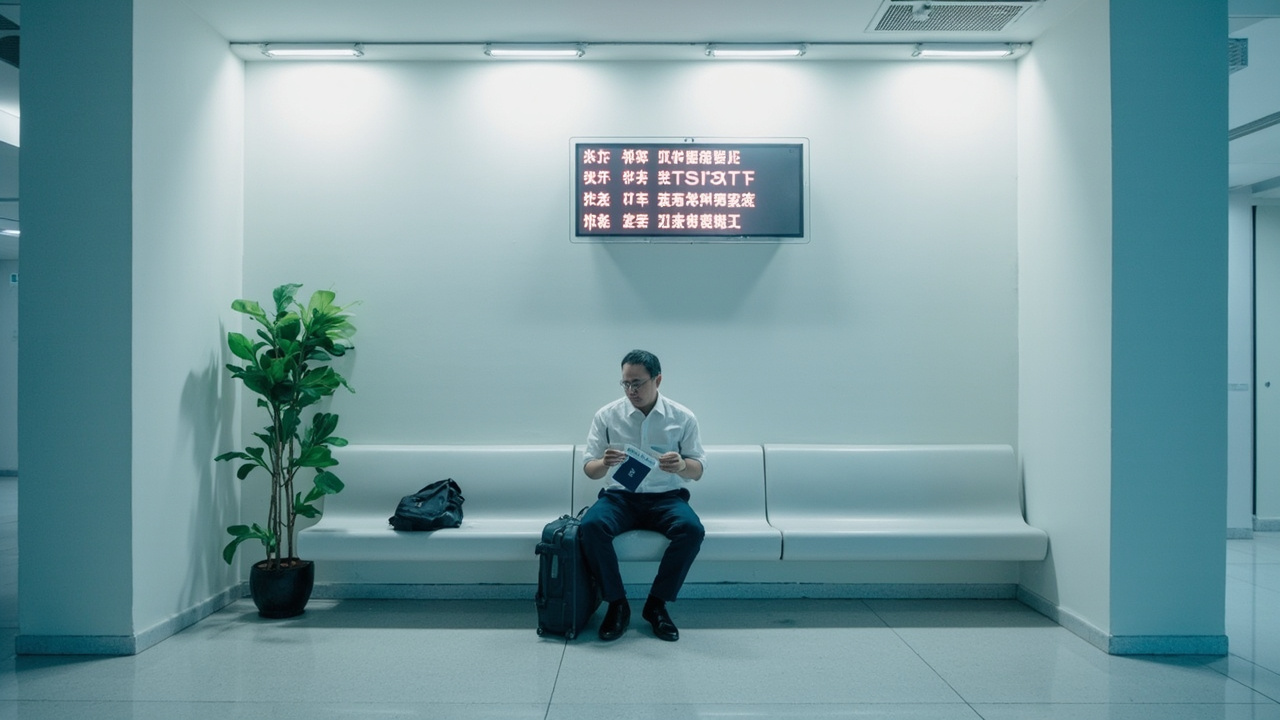
I was sitting in a Beijing police station at 8:45 AM, clutching a folder of photocopies I’d made three times because the first two batches weren’t on the right paper size. The officer behind the counter looked at my passport, looked at me, then slid a form across the counter without a word. No smile, no explanation. Just the form. I’d overstayed my tourist visa by two days because I’d misread the “duration of stay” stamp—a mistake that cost me 500 RMB and three hours of my life in a waiting room that smelled like floor cleaner and anxiety.
If you’re reading this, you’re probably in a similar spot. Maybe your plans changed. Maybe you fell in love with a city and want another week. Maybe you just miscalculated like I did. Whatever the reason, extending your visa inside China is absolutely possible. It’s bureaucratic, yes. It’s mildly stressful, yes. But it’s also straightforward if you know the steps.
This guide walks you through exactly what to do, where to go, what to bring, and what mistakes to avoid. I’ve done this process three times across two different cities, and I’ve helped half a dozen friends navigate it too. Here’s everything I wish someone had told me before that first morning in the police station.
Quick answer
You can extend your tourist visa (L-visa) inside China by visiting the local Exit and Entry Administration Bureau in any major city. The process takes 3-5 working days, costs approximately $30-60 (200-400 RMB), and requires your passport, a completed application form, one passport photo, and proof of accommodation. You can apply up to 7 days before your current visa expires, but not after it expires. The extension typically grants an additional 15-30 days. Do not overstay—the fines start at 500 RMB per day.
The Short Version
If you only have 90 seconds: Go to the Exit and Entry Administration Bureau (not a police station—that’s for emergencies only). Bring your passport, one 33x48mm photo (get it taken at the bureau for 20 RMB if you’re unsure), a photocopy of your visa page and entry stamp, and your hotel registration form. Fill out Form 144. Pay 160 RMB for the application plus 200 RMB for the extension. Come back in 3-5 days. That’s it. Don’t overstay. Don’t lose your receipt. Don’t show up without photocopies.
How I Picked These
I’ve lived in Beijing for seven years and traveled through China 40+ times. I’ve extended visas in Beijing, Shanghai, and Kunming. I’ve also watched friends go through the process in Guangzhou, Chengdu, and Xi’an. Every city runs the same national system, but local offices have different quirks—Beijing’s is efficient but crowded, Shanghai’s is sleek but strict about photo requirements, Kunming’s is relaxed but slow. I’m drawing on all of those experiences, plus conversations with visa officers (yes, they do talk if you’re polite) and a few painful mistakes I made so you don’t have to.
Comparison Table
| Office | Best For | Approx Cost (USD) | Processing Time | Photo Service On-Site |
|--------|----------|-------------------|-----------------|----------------------|
| Beijing Exit-Entry Bureau | Efficiency, English support | $50 (350 RMB) | 3-5 days | Yes |
| Shanghai Exit-Entry Bureau | Speed, digital system | $55 (380 RMB) | 3-4 days | Yes |
| Guangzhou Exit-Entry Bureau | Less crowded, helpful staff | $45 (320 RMB) | 4-5 days | Yes |
| Kunming Exit-Entry Bureau | Relaxed atmosphere, fewer tourists | $40 (280 RMB) | 5-7 days | Yes |
| Chengdu Exit-Entry Bureau | Good for overland travelers | $45 (320 RMB) | 4-6 days | Yes |
1. Beijing Exit and Entry Administration Bureau —The Gold Standard
The first time I walked into the Beijing bureau, I expected chaos. Instead, I found a system that works. The main office is at 2 Andingmen East Street, a 15-minute walk from Yonghegong Lama Temple subway station (Line 2, Exit B). You enter through a metal detector (they’re serious about security), take a number from the machine, and wait for your number to appear on the screen.
The waiting area is clean, air-conditioned, and has digital boards in Chinese and English. You’ll wait anywhere from 20 minutes to 2 hours depending on the season. Summer is brutal —everyone’s extending before peak travel. Winter is quiet.
📍 2 Andingmen East Street, Dongcheng District, Beijing
🎫 Application fee: 160 RMB ($23) + Extension fee: 200 RMB ($28) = 360 RMB total (~$51)
🕒 Monday to Friday, 9:00 AM - 5:00 PM (closed weekends and Chinese public holidays)
🚇 Take Line 2 to Yonghegong Station, Exit B. Walk east on Andingmen East Street for 10 minutes. The building is a gray concrete block on your left.
⏰Visit on a Tuesday or Wednesday morning. Mondays are packed with people who couldn’t make it Friday. Fridays are packed with people rushing before the weekend.
💡 Insider tips: Bring your own photocopies —the on-site shop charges 2 RMB per page versus 0.5 RMB outside. If you don’t have a photo, use the machine on the second floor (20 RMB, takes 2 minutes). The officers speak basic English but bring Pleco on your phone for backup. Don’t wear sunglasses or a hat in your photo. I saw a guy rejected three times for his hair covering his ear.
I met a German backpacker named Lukas in the waiting room. He’d been in China for three months on two extensions and was trying for a third. The officer denied him. “You’ve been here long enough,” she said in English. He wasn’t angry. He just nodded, packed his bag, and booked a flight to Bangkok.
2. Shanghai Exit and Entry Administration Bureau —The Digital Pioneer
Shanghai’s system is the most modern in China. They’ve digitized most of the process, which means less paper, fewer photocopies, and faster processing. The main office is at 1500 Minsheng Road in Pudong, a 5-minute walk from Yangsi Station (Line 6, Exit 1).
The first thing you’ll notice is the self-service kiosks. You can fill out the application form on a touchscreen, pay with WeChat or Alipay, and even take your own photo. The whole process took me 45 minutes from walking in to walking out. Compare that to Beijing where I spent 2.5 hours.
📍 1500 Minsheng Road, Pudong New Area, Shanghai
🎫 Application fee: 160 RMB ($23) + Extension fee: 220 RMB ($31) = 380 RMB total (~$54)
🕒 Monday to Saturday, 9:00 AM - 5:00 PM (closed Sundays and public holidays)
🚇 Take Line 6 to Yangsi Station, Exit 1. Walk south on Minsheng Road for 5 minutes. The building is a glass tower on your right.
⏰Go on a Saturday if you’re on a tight schedule. It’s the only major city bureau open on weekends. But arrive by 8:30 AM —the line forms early.
💡 Insider tips: The self-service kiosks only accept Chinese ID cards for payment. Foreigners must use the counter. Bring cash as backup —some counters don’t accept foreign credit cards. The photo booth on the first floor is reliable but expensive (30 RMB). There’s a cheaper one across the street at a photo shop (15 RMB). The English-speaking staff are stationed at windows 8-10.
A Shanghai local named Chen helped me at the counter. She spoke perfect English and explained that the system had just been updated the previous week. “They’re trying to make it easier for tourists,” she said. “But the rules haven’t changed.” She stamped my form and told me to come back Thursday.
3. Guangzhou Exit and Entry Administration Bureau —The Relaxed Option
Guangzhou’s bureau is less crowded than Beijing or Shanghai, which means shorter wait times and more patient staff. The office is at 155 Jiefang South Road, a 10-minute walk from Haizhu Square Station (Line 6, Exit D).
The building is older, with fluorescent lights and linoleum floors that squeak when you walk. But the staff are noticeably friendlier. Maybe it’s the southern hospitality. Maybe it’s just that they see fewer stressed-out tourists. Either way, I felt less like I was entering a government building and more like I was visiting a DMV in a small town.
📍 155 Jiefang South Road, Yuexiu District, Guangzhou
🎫 Application fee: 160 RMB ($23) + Extension fee: 160 RMB ($23) = 320 RMB total (~$45)
🕒 Monday to Friday, 8:30 AM - 12:00 PM, 2:00 PM - 5:30 PM (closed weekends)
🚇 Take Line 6 to Haizhu Square Station, Exit D. Walk south on Jiefang South Road for 10 minutes. The building is a white tower with blue glass.
⏰Visit in the afternoon session (2:00 PM). The morning rush is over and the staff are more relaxed.
💡 Insider tips: Bring exact change for the photo booth (20 RMB, coins only). The photocopy shop across the street is cheaper than the one inside. If you’re staying at a hostel, ask them to print your hotel registration form —the bureau’s printer was broken when I visited. The staff speak limited English but are patient with translation apps. Don’t try to extend if you’ve already overstayed —they’ll send you to the immigration office instead.
I watched a French couple get their extension approved in 15 minutes. The officer didn’t even look at their photos. He just stamped, signed, and said “next.” The couple looked at each other in disbelief. “That’s it?” the woman asked. The officer nodded.
4. Kunming Exit and Entry Administration Bureau —The Laid-Back Choice
Kunming’s bureau operates on Yunnan time, which means things move slowly but without stress. The office is at 78 Baoshan Street, a 20-minute walk from Dongfeng Square Station (Line 2, Exit B).
The waiting area has potted plants and windows that open to let in the spring-like air. Kunming is called the “Spring City” for a reason, and the bureau feels like it. People chat quietly. No one’s rushing. The officer who helped me took her time reading my form, asked about my travel plans, and even recommended a restaurant in Dali.
📍 78 Baoshan Street, Wuhua District, Kunming
🎫 Application fee: 160 RMB ($23) + Extension fee: 120 RMB ($17) = 280 RMB total (~$40)
🕒 Monday to Friday, 9:00 AM - 12:00 PM, 1:30 PM - 5:00 PM (closed weekends)
🚇 Take Line 2 to Dongfeng Square Station, Exit B. Walk north on Baoshan Street for 20 minutes. The building is a low-rise beige structure on your right.
⏰Visit in the morning (9:00 AM) to avoid the afternoon heat. The office closes for lunch at 12:00 PM sharp.
💡 Insider tips: Bring a book. Processing takes 5-7 days here, longer than other cities. The photo booth is unreliable —get your photo taken at a shop near the train station before coming. The staff speak very little English, so have your hotel write down your address in Chinese. If you’re traveling overland to Laos or Vietnam, this is the easiest place to extend before crossing the border.
A British backpacker named Sarah was in line ahead of me. She’d been traveling for six months and had extended her visa twice already. “Third time’s the charm?” I asked. She laughed. “They told me this is the last one. After this, I have to leave for at least three months.”
5. Chengdu Exit and Entry Administration Bureau —The Overland Traveler’s Friend
Chengdu’s bureau is popular with travelers heading to Tibet or overland to Nepal. The office is at 2 Shuhan Road, a 15-minute walk from Tonghuimen Station (Line 2, Exit A).
The building is modern but the system is old-school. You fill out a paper form, hand it to a counter, and wait for your number to be called. No digital kiosks here. But the staff are efficient, and the wait times are reasonable —usually under an hour.
📍 2 Shuhan Road, Qingyang District, Chengdu
🎫 Application fee: 160 RMB ($23) + Extension fee: 160 RMB ($23) = 320 RMB total (~$45)
🕒 Monday to Friday, 9:00 AM - 12:00 PM, 1:00 PM - 5:00 PM (closed weekends)
🚇 Take Line 2 to Tonghuimen Station, Exit A. Walk west on Shuhan Road for 15 minutes. The building is a glass-and-steel structure on your left.
⏰Go on a Thursday or Friday. The early-week rush is over and the office is quieter.
💡 Insider tips: If you’re planning to go to Tibet, get your extension before applying for the Tibet Travel Permit. The permit office requires at least 30 days of validity on your visa. The photocopy shop inside charges 1 RMB per page but the quality is poor. There’s a better shop two blocks east. The staff speak basic English but appreciate it if you try Chinese. Say “w奴 y膩o y膩nch谩ng qi膩nzh猫ng” (I need to extend my visa).
A Canadian cyclist named Mark was in the waiting room. He’d biked from Xi’an to Chengdu and needed an extra week to rest before continuing to Yunnan. The officer approved his extension without asking any questions. “They’re used to cyclists here,” Mark said. “The road to Tibet starts in Chengdu.”
6. The Application Form (Form 144) —Don’t Overthink It
Form 144 is the official visa extension application. It’s available in English and Chinese, but the English version sometimes has awkward translations. Fill it out in black ink. Use capital letters. Write your hotel address exactly as it appears on your registration form.
The form asks for:
-
Your personal details (name, passport number, date of birth)
-
Your current visa details (type, number, issue date, expiry date)
-
Your reason for extension (write “tourism” or “sightseeing”)
-
Your intended duration of stay (be realistic —15 days is standard, 30 days is possible but requires justification)
-
Your accommodation in China (hotel name and address)
Don’t write “I want to stay longer because I like China.” That’s too vague. Write “I need additional time to visit [city/attraction].” Be specific. I wrote “I need to visit the Zhangjiajie National Forest Park” and got approved for 20 days.
7. The Photo Requirements —Strict Rules, No Exceptions
The photo must be 33mm wide by 48mm tall. White background. No glasses. No hat. No hair covering your face. The photo must be printed on glossy paper, not matte. The photo must be taken within the last 6 months.
I learned this the hard way. My first photo was on matte paper. The officer rejected it. My second photo had my hair slightly over my ear. Rejected again. My third photo was perfect, but it was 8 months old. The officer didn’t notice, but I was sweating.
Save yourself the trouble: get your photo taken at the bureau. It costs 20-30 RMB and takes 2 minutes. The machine knows the exact specifications. Just sit, smile (or don’t —neutral expression is fine), and wait for the prints.
8. The Waiting Period —What to Do for 3-7 Days
Once you submit your application, you’ll get a receipt with a pickup date. Don’t lose it. You need it to collect your passport. The waiting period is usually 3-5 working days in major cities, 5-7 in smaller ones.
During this time, you can’t leave the city where you applied. Your passport is with the bureau, so you can’t travel by plane or train (both require ID). You can travel by bus or taxi within the province, but I wouldn’t risk it.
What I do: find a cheap hostel or hotel near the bureau, explore the city on foot, eat street food, visit local parks. It’s actually a nice way to slow down and see a place you might otherwise rush through.
9. Common Mistakes —What Not to Do
I’ve made most of these mistakes so you don’t have to:
-
Overstaying before applying. If your visa expires before you submit, you’re in trouble. Fines start at 500 RMB per day, and you might get a black mark on your record. Apply at least 3 days before expiry.
-
Going to the wrong office. The Exit and Entry Administration Bureau handles extensions. Police stations handle overstays and emergencies. Don’t confuse them.
-
Forgetting photocopies. You need copies of your passport photo page, visa page, and entry stamp. Make three copies of each. The bureau’s photocopy shop is expensive.
-
Lying on the form. Don’t say you’re visiting family if you’re just extending for tourism. The officers check. A friend of mine got denied and had to leave within 48 hours.
-
Not checking public holidays. Chinese holidays (Spring Festival, National Day, Labor Day) shut down the bureaus for a week. Plan around them.
10. What If You Get Denied? —Don’t Panic
Denials are rare for first-time extensions, but they happen. Common reasons: you’ve already extended twice, your passport is close to expiry (less than 6 months), or the officer suspects you’re working illegally.
If you’re denied, you have two options:
-
Leave China immediately and re-enter on a new visa (visa runs to Hong Kong, Macau, or nearby countries work)
-
Appeal the decision (rarely successful, but possible if you have a valid reason)
Don’t argue with the officer. Don’t raise your voice. Just ask politely for the reason, thank them, and leave. Then figure out your next move.
I saw an American man get denied in Beijing. He’d been in China for 90 days on two extensions. The officer said, “You must leave now.” He didn’t argue. He just booked a flight to Hong Kong, spent the weekend there, and came back on a new 30-day visa.
FAQ summary
The China visa extension process is straightforward but requires preparation. You must apply at the local Exit and Entry Administration Bureau before your current visa expires. Bring your passport, one 33x48mm photo, photocopies of your visa and entry stamp, and your hotel registration form. The cost is approximately $40-60 (280-400 RMB) and processing takes 3-7 working days. Extensions typically grant 15-30 additional days. Do not overstay —fines are 500 RMB per day. The process is easiest in major cities like Beijing, Shanghai, and Guangzhou.
FAQ
Q: Can I extend my visa after it expires?
A: No. You must apply before your visa expires. If you overstay, you’ll face fines of 500 RMB per day and possible detention. Go to the immigration office immediately if you overstay.
Q: How many times can I extend my tourist visa?
A: Most cities allow one or two extensions. After that, you must leave China and re-enter on a new visa. Some travelers do “visa runs” to Hong Kong, Macau, or nearby countries.
Q: Do I need a hotel reservation to extend my visa?
A: Yes. You need proof of accommodation —either a hotel registration form or a rental contract. Hostel bookings work too. The address on the form must match where you’re actually staying.
Q: Can I extend my visa in a different city than where I entered?
A: Yes. You can apply at any Exit and Entry Administration Bureau in China. But you must stay in that city while your application is processed (3-7 days).
Q: What if I lose my passport during the extension process?
A: Contact your embassy immediately. They’ll issue an emergency travel document. Then go to the bureau to cancel your application. This is rare but stressful.
Q: Is the process different for business visas (M-visa)?
A: Yes. Business visa extensions require an invitation letter from a Chinese company. The process is more complex and takes longer. Tourist visa extensions are simpler.
Q: Can I work remotely while on a visa extension?
A: Technically, no. Your visa is for tourism only. But if you’re just checking emails and takingZoom calls, no one’s checking. Don’t tell the officer you’re working.
The Honest Wrap-up
This guide is for people who want to stay a little longer in China without breaking the rules. It’s not for people who want to stay indefinitely —the system is designed to prevent that. It’s not for people who overstayed and are looking for a loophole —there isn’t one.
If you’re a first-time traveler, nervous about bureaucracy, and just want an extra week to explore, this process is for you. It’s annoying, yes. It’s bureaucratic, yes. But it’s also simple, cheap, and reliable. Follow the steps, bring the right documents, and you’ll be fine.
One last thing: be polite to the officers. They deal with hundreds of foreigners a day, many of them stressed and demanding. A smile, a “thank you” in Chinese (xi猫xie), and a little patience go a long way. I’ve seen officers bend rules for people who were kind. I’ve seen them enforce every letter of the law for people who were rude.
China is an incredible country. It deserves more than a rushed 15-day visit. If you need an extra week, take it. Just do it the right way.
Related Guides
Looking for more China travel guides? These match your topic:
Topics
More guides you may like
Top 10 Bridges in China
China's bridges are engineering marvels spanning mountains, rivers, and seas. Here are 10 of the most spectacular, from ancient stone to modern steel.
8 min read

Top 10 Buddhist Sites in China
From the Leshan Giant Buddha to the Dunhuang Caves, these 10 Buddhist sites represent 2,000 years of China's spiritual heritage.
9 min read

Top 10 Day Trips from Beijing You Shouldn't Miss
Beijing is packed with history, but some of China's best experiences are just a few hours away. Here are 10 day trips that will transform your visit.
9 min read

Top 10 Hidden Gems in China Off the Beaten Path
Beyond the Great Wall and Terracotta Warriors, China has incredible hidden destinations few tourists ever reach. Here are 10 underrated gems worth the detour.
9 min read

Top 10 Markets and Shopping Streets in China
From Shanghai's Bund to Beijing's Silk Street - 10 markets where foreigners can haggle, explore, and bring home authentic Chinese goods.
9 min read

Top 10 Museums in China You Shouldn't Miss
China's museums span 5,000 years of civilization. These 10 - from the Palace Museum to Xi'an's terracotta gallery - are unmissable for culture lovers.
9 min read