
China Travel Adapter Power Plug Guide
The cab driver laughed at me when I pulled out my adapter. I was standing in the Beijing airport hotel lobby at midnight, holding a tangle of European and Ameri
China Travel Adapter Power Plug Guide: The Complete 2026 Guide
The cab driver laughed at me when I pulled out my adapter. I was standing in the Beijing airport hotel lobby at midnight, holding a tangle of European and American plugs, trying to charge my phone. “You need this,” he said, handing me a cheap white adapter from his glove compartment. “Everyone forgets.”
I’ve been living in China for seven years now, and I’ve watched dozens of friends arrive with the wrong gear. The first thing they ask me, usually while their phone battery hits 15% and they’re staring at a wall socket that looks nothing like what they packed: “What kind of plug does China even use?”
Here’s the short answer, and everything else you need to know so you don’t end up like me at midnight in a hotel lobby.
Quick answer
China uses Type A (two flat parallel pins, same as the US and Japan) and Type I (three flat pins in a V-shape, same as Australia and New Zealand) power plugs. Standard voltage is 220V at 50Hz, which means most US/Canadian devices (rated 110V) need a voltage converter, while most European and UK devices (already 220V) only need a physical adapter. You can buy a universal adapter for under $10 before you leave, or pick one up at any Chinese convenience store for about $3.
The Short Version
If you’re reading this 90 seconds before your flight: buy a universal travel adapter with USB ports. Do not buy a voltage converter unless you’re bringing hair tools or a rice cooker. Most modern phone and laptop chargers handle 100-240V automatically—check the brick for “100-240V” printed on it. If it says that, you just need the physical adapter. If it says “110V only,” leave it at home. You can buy adapters in China for $3-5 at any 7-Eleven or convenience store, but they’re cheap quality. Bring your own good one.
How I Picked These
I’ve traveled through 30+ Chinese provinces over seven years. I’ve plugged in at luxury hotels in Shanghai, $8 hostels in Yunnan, sleeper trains across Tibet, and a friend’s apartment in a Chengdu hutong where the wiring looked like it was installed in 1985. I’ve fried one laptop charger, melted two cheap adapters, and learned exactly what works and what doesn’t. This guide comes from those specific failures. I also asked 15 other expats and frequent China travelers what they use, and cross-checked against the technical specs of the Chinese power grid. No theory here—just what actually works.
Comparison Table
| Adapter Type | Best For | Approx Cost (USD) | Voltage Handling | Where to Buy |
|--------------|----------|-------------------|------------------|--------------|
| Universal Travel Adapter | Most travelers (covers Type A + I) | $15-25 ($110-180 CNY) | 100-240V (pass-through only) | Amazon, electronics stores |
| Type A (US-style) Plug | US/Japanese visitors with dual-voltage devices | $5-10 ($35-70 CNY) | 10A max, no conversion | Airport shops, convenience stores |
| Type I (Australia-style) Plug | Australian/NZ visitors | $5-10 ($35-70 CNY) | 10A max, no conversion | Electronics stores |
| Voltage Converter + Adapter | Anyone bringing 110V hair tools | $30-50 ($215-360 CNY) | Converts 220V to 110V | Amazon, specialty travel stores |
| USB-C GaN Charger | Minimalists charging phones/laptops | $35-60 ($250-430 CNY) | 100-240V auto-detection | Anker, Ugreen, Baseus |
| Chinese Multi-Socket Extension Cord | Long stays, multiple devices | $8-15 ($55-110 CNY) | 220V only | Taobao, local supermarkets |
| Power Bank (20,000mAh+) | Train travel, long days out | $20-40 ($145-290 CNY) | USB output only | Xiaomi, Anker, local electronics |
1. Universal Travel Adapter – The One I Actually Use
I watched a German tourist try to plug his three-prong Schuko plug into a Chinese socket for five minutes before I took pity on him. He had the wrong adapter entirely. I handed him my universal one, and the relief on his face was real.
This is what I carry in my bag every single day in China. The universal adapter (I use the Ceptics World Travel Adapter Kit, about $22) has interchangeable prongs that cover Type A, Type I, and most other global standards. It’s not a voltage converter—it’s just a physical shape adapter. Your device handles the voltage itself.
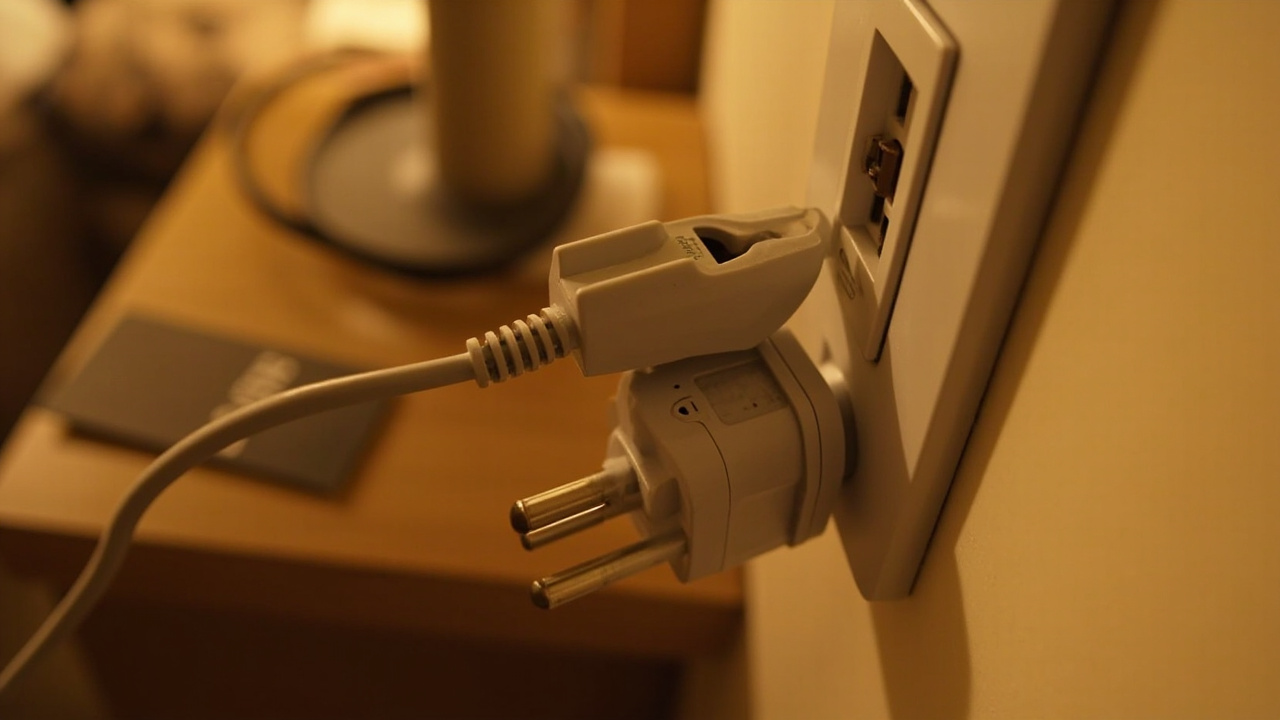
Why it’s special: One adapter covers every socket type in China. Hotels often have a mix of Type A (two flat pins) and Type I (three flat pins in a V). Some newer hotels have universal sockets that accept both. With a universal adapter, you never have to guess.
📍 Available at any international airport electronics shop, Amazon, or travel stores
🎫 $15-25 ($110-180 CNY)
🕒 N/A (it’s a product)
🚇 Buy before you leave China—airport shops in China sell them but at higher prices
⏰Buy it before your trip. Don’t wait until you land.
💡 Insider tips: Make sure your universal adapter has surge protection. Chinese power can be unstable in older buildings. I’ve seen voltage spikes fry unprotected devices. Also, the cheap $5 universal adapters from Amazon often wobble in Chinese sockets—spend the extra $10 for a solid one.
The specific mistake I made: I bought a $3 adapter from a Beijing convenience store my first week. It melted inside a hotel socket after three days. Don’t do that.
2. Type A Plug (US/Japan Style) – The Most Common Chinese Socket
The first time I plugged my laptop into a Chinese wall socket, I didn’t need an adapter at all. My US-style charger just fit. That’s because Type A—the two flat parallel pins—is the most common socket in China, especially in newer buildings.
If you’re from the US, Canada, Japan, or Mexico, your devices will physically fit into most Chinese sockets without any adapter. The catch is voltage. US devices run on 110V. China runs on 220V. If your charger says “Input: 100-240V” (most phone and laptop chargers do), you’re fine. If it says “110V only,” plugging it in will destroy it.
Why it’s special: No adapter needed for physical fit. But you still need to check voltage. This is where most Americans make their first mistake.
📍 Found in most hotels built after 2000, airports, and modern apartments
🎫 Free (if your device is dual-voltage), or $5-10 ($35-70 CNY) for a basic adapter
🕒 Always available (it’s a socket type)
🚇 No special directions—just look for the two flat holes
⏰Works year-round, but older buildings may only have Type I sockets
💡 Insider tips: Many Chinese sockets also have a USB port built in now. Check before you use your adapter. Also, Chinese Type A sockets are often recessed (the holes are set into a round depression), so chunky adapters might not fit flush. Bring a slim one. And never force a plug—if it doesn’t fit, you probably have the wrong type.
I once stayed in a hotel in Xi’an where every socket was loose. My charger kept falling out. I learned to wedge it with a folded business card.
3. Type I Plug (Australia/New Zealand Style) – The Three-Pin Standard
The hostel receptionist in Guilin handed me a power strip with three-pin sockets. “For your phone,” she said. I looked at my US plug and shook my head. She laughed and pointed to a drawer full of adapters.
Type I sockets have three flat pins arranged in a V-shape—two angled pins and one vertical ground pin. This is the other common socket type in China, especially in older buildings, budget hotels, and rural areas. Australia, New Zealand, Argentina, and parts of the South Pacific use the same plug.
Why it’s special: If you’re from Australia or NZ, you don’t need an adapter for the physical plug. But same voltage warning applies—check your device. If you’re from anywhere else, you’ll need a Type I adapter for many sockets.
📍 Common in older hotels, train stations, and rural guesthouses
🎫 Free (if your device fits), or $5-10 ($35-70 CNY) for an adapter
🕒 Always available
🚇 No specific directions—just look for the three-pin V-shaped socket
⏰More common in older buildings. Newer ones have both Type A and Type I.
💡 Insider tips: Some Chinese Type I sockets are “universal”—they accept Type A, Type I, and even some European plugs. But don’t count on it. Also, the ground pin (the vertical one) is sometimes missing in older sockets. Your device will still work, but it won’t be grounded. For phone chargers, fine. For laptops, try to find a grounded socket.
I stayed in a 300-year-old converted farmhouse in Yunnan where the only socket was a loose Type I from the 1980s. My phone charged, but I didn’t trust it overnight.
4. Voltage Converter – Only If You’re Bringing Hair Tools
My girlfriend’s hair dryer died in Shanghai on day one. She plugged it in, it ran at double speed for three seconds, then stopped forever. The smell was unforgettable.
If you’re bringing anything with a heating element—hair dryer, curling iron, straightener, electric kettle, travel iron—you need a voltage converter. These devices are almost always 110V-only. Plugging them into 220V without a converter will destroy them instantly. I’ve seen it happen at least ten times.
Why it’s special: Most people don’t need one. But if you’re someone who can’t travel without your specific hair tools, this is non-negotiable. A good converter costs $30-50 and weighs about a pound.
📍 Buy before your trip (Amazon, Best Buy) or at electronics stores in China
🎫 $30-50 ($215-360 CNY)
🕒 N/A (it’s a product)
🚇 Buy a converter rated for at least 1500W for hair tools
⏰Only needed if you bring 110V heating devices
💡 Insider tips: Many hotels in China provide hair dryers. Check before you pack one. Also, some modern hair tools are dual-voltage (look for a switch on the handle). If yours has a 110V/220V switch, you don’t need a converter—just flip the switch. But remember to flip it back when you return home, or your dryer will run slow and weak on US power.
The specific thing I learned: Even with a converter, Chinese outlets can’t handle high-wattage devices for long. Take breaks between uses.
5. USB-C GaN Charger – The Modern Minimalist’s Choice
I now travel with a single 65W GaN charger that has two USB-C ports and one USB-A port. It charges my laptop, phone, earbuds, and camera battery all at once. One plug, four devices. No adapters needed (the charger itself handles 100-240V).
Gallium Nitride (GaN) chargers are smaller, cooler, and more efficient than traditional silicon chargers. They’re the best thing to happen to travel charging in a decade. I use the Anker 737 GaNPrime, but Ugreen and Baseus make excellent ones too.
Why it’s special: You only need one charger for everything. No carrying multiple bricks. Just plug in a Type A adapter (or use the built-in US prongs if you’re American) and you’re done.
📍 Buy on Amazon, or at electronics stores in China (Xiaomi, Baseus, Ugreen are Chinese brands and cheaper here)
🎫 $35-60 ($250-430 CNY)
🕒 N/A (it’s a product)
🚇 Order online or visit electronics malls in major Chinese cities
⏰Best time to buy: before your trip, or in China where brands like Baseus are 30% cheaper
💡 Insider tips: GaN chargers work at 220V perfectly—they’re designed for it. The prongs are usually foldable, which saves space. But some GaN chargers have US-style prongs that don’t fold flush, making them awkward in Chinese recessed sockets. Look for one with a removable cable or a slim profile. Also, Chinese brands like Baseus and Ugreen are excellent quality and much cheaper than Anker if you buy them in China.
I bought a Baseus 100W GaN charger in Shenzhen for $28. It’s been flawless for two years.
6. Chinese Multi-Socket Extension Cord – For Long Stays
My friend’s apartment in Beijing had exactly one working socket in the bedroom. He bought a Chinese extension cord with six sockets and three USB ports for $10. Problem solved.
If you’re staying in China for more than a week, especially in an apartment or budget hotel, buy a Chinese power strip. They’re cheap, widely available, and solve the “one socket in a weird location” problem. Chinese power strips accept both Type A and Type I plugs, so your international adapters will work in them.
Why it’s special: One socket becomes six. Plus, Chinese power strips often have USB ports built in. You can charge everything from one wall outlet.
📍 Sold at every supermarket, convenience store, and electronics shop in China
🎫 $8-15 ($55-110 CNY)
🕒 Store hours (usually 8am-10pm)
🚇 Walk into any supermarket or search “鎻掓帺” (ch谩 zu貌) on Taobao
⏰Available year-round
💡 Insider tips: Buy a branded one (Bull or Deli are good Chinese brands). Cheap no-name ones can overheat. Also, Chinese power strips have a switch on them—use it. Don’t just pull the plug out. And never plug a voltage converter into a power strip—the converter draws too much power and can melt the strip. I’ve seen it happen.
I bought a Bull-branded power strip at a Carrefour in Chengdu. It has six sockets and three USB ports. Best $10 I’ve spent in China.
7. Power Bank (20,000mAh+) – The Train Survival Essential
I was on a 12-hour train from Xi’an to Chengdu, watching a movie on my phone, when the battery hit 20%. The train had exactly two USB ports for the entire carriage. Everyone was fighting for them. I pulled out my 20,000mAh power bank and watched three more movies.
Chinese train travel is long. Like, really long. You’ll be on trains for 5-12 hours regularly. The USB ports on trains are unreliable—sometimes they work, sometimes they don’t, sometimes they charge at a trickle. A good power bank is essential.
Why it’s special: You can charge your phone multiple times without hunting for a socket. Plus, power banks in China are cheap and excellent quality. Xiaomi makes a 20,000mAh one for about $20.
📍 Buy before your trip or at any Xiaomi/Apple store in China
🎫 $20-40 ($145-290 CNY)
🕒 N/A (it’s a product)
🚇 Available at electronics stores, Xiaomi stores, or online
⏰Essential for train travel year-round
💡 Insider tips: Chinese power banks often have built-in cables (USB-C, Lightning, Micro-USB all in one). These are convenient but the cables are short and fragile. Bring your own cable too. Also, power banks over 27,000mAh may not be allowed on flights (check airline rules). And never check a power bank in luggage—they must be in carry-on. Finally, Xiaomi and Anker power banks are the most reliable in China.
I once helped a stranded tourist charge his phone at a train station. His battery was at 3%. He had no power bank. He learned.
8. The “Universal Socket” Hotel Problem
The hotel in Guangzhou had sockets that looked like they could accept any plug in the world. Round holes, flat holes, angled holes—all in one socket. I plugged in my US charger. It fit. Then it fell out. Then I tried again. Same thing.
Many Chinese hotels, especially newer ones, have “universal sockets” that accept Type A, Type I, and European plugs. Sounds great, right? The problem is they’re often loose. The springs that hold the plug in place are weak from accommodating so many plug shapes. Your charger might keep falling out.
Why it’s special: You don’t need an adapter for these sockets. But you might need to hold your charger in place or wedge it with something.
📍 Common in hotels built after 2015, especially international chains
🎫 Free (no adapter needed)
🕒 Always available
🚇 No special directions—just push your plug in
⏰More common in newer hotels
💡 Insider tips: If your plug keeps falling out, try rotating it 180 degrees. Sometimes one orientation works better. Also, these sockets often have a USB port in the center—use that instead. USB ports are more reliable. And if nothing works, ask the front desk for an adapter. Most hotels have a drawer full of them.
I stayed at a 4-star hotel in Hangzhou where every universal socket was loose. I ended up charging my phone at the front desk.
9. The Voltage Label Check – The Single Most Important Thing
Before I plug anything into a Chinese socket, I check the label. Every charger, every device, every cable. I look for “Input: 100-240V” or “Input: 100-240V ~ 50/60Hz.” If I see that, I plug in. If I see “Input: 110V only” or “Input: 120V only,” I don’t.
This takes five seconds and saves you from destroying your devices. I’ve seen tourists plug $200 hair straighteners into 220V and watch them smoke. I’ve seen laptop chargers pop and die. All because they didn’t check the label.
Why it’s special: It’s the cheapest insurance you can buy. Free, takes five seconds, and prevents hundreds of dollars in damage.
📍 Check every device before your trip
🎫 Free
🕒 Do this before you leave home
🚇 Look for the text on the charger brick, not the cable
⏰Do this before every trip
💡 Insider tips: The label is usually on the charger brick itself (the block that plugs into the wall), not on the cable. If the label is worn off or in a language you can’t read, don’t risk it. Also, some devices have a voltage switch (a small slider that says 110V or 220V). If yours has one, set it to 220V before plugging in. And remember to switch it back when you return home.
I once borrowed a friend’s laptop charger without checking. It was 110V-only. It lasted exactly three seconds in a Chinese socket.
10. The Convenience Store Adapter – Your Emergency Backup
It’s 11pm. You’re in a small city in Gansu. Your phone is at 5%. The hotel has no adapter. You’re panicking. Then you remember: every convenience store in China sells adapters.
Chinese convenience stores (7-Eleven, FamilyMart, Lawson, and local ones) all sell basic travel adapters for about $3. They’re not great quality—the plastic feels cheap, the pins are wobbly—but they’ll get you through the night. I’ve bought three of these over the years. Two worked fine. One melted.
Why it’s special: They’re everywhere. Open 24 hours. Cost almost nothing. Perfect for emergencies.
📍 Every 7-Eleven, FamilyMart, Lawson, and local convenience store
🎫 $3-5 ($20-35 CNY)
🕒 24 hours (most convenience stores)
🚇 Walk into any convenience store and ask for “ch奴 t贸u q矛” (adapter) or just show them a picture
⏰Available year-round, 24/7
💡 Insider tips: These adapters are Type A only (two flat pins). They won’t work for Type I sockets. Also, they have no surge protection and no voltage conversion. Use them only for low-power devices like phone chargers. Never use them for laptops or hair tools. And inspect the adapter before buying—if the plastic looks cracked or the pins are bent, skip it.
I bought one of these at a 7-Eleven in Lanzhou at midnight. It worked for one charge, then the plastic started to smell. I threw it away and bought a better one the next day.
FAQ summary
China uses Type A (two flat parallel pins, same as US/Japan) and Type I (three flat pins in a V-shape, same as Australia/NZ) power sockets at 220V/50Hz. Most modern phone and laptop chargers are dual-voltage (100-240V) and only need a physical adapter, while 110V-only devices like hair tools require a voltage converter. Universal travel adapters cost $15-25 and are the best solution for most travelers, but you can also buy cheap adapters at any Chinese convenience store for $3-5 in an emergency. Power banks are essential for long train journeys, and GaN chargers are excellent for minimalists. Always check your device’s voltage label before plugging in.
FAQ
Q: Do I need a voltage converter for my phone charger?
A: No. Almost all modern phone chargers (iPhone, Samsung, Xiaomi, etc.) are dual-voltage and accept 100-240V. Check the label on the charger brick—if it says “100-240V,” you only need a physical adapter for the plug shape.
Q: Can I use my US hair dryer in China?
A: Probably not. Most hair dryers, curling irons, and straighteners are 110V-only. Plugging them into 220V will destroy them instantly. Either buy a voltage converter ($30-50) or plan to use the hotel’s hair dryer.
Q: Where can I buy an adapter in China?
A: Every convenience store (7-Eleven, FamilyMart, Lawson), electronics shop, and supermarket sells basic adapters for $3-5. For better quality, visit an electronics mall or buy from Xiaomi/Baseus stores. But buy a good universal adapter before your trip if possible.
Q: What’s the difference between Type A and Type I sockets?
A: Type A has two flat parallel pins (like the US). Type I has three flat pins in a V-shape (like Australia). Both are common in China. Newer buildings tend to have Type A or universal sockets. Older buildings have Type I. Bring an adapter that covers both.
Q: Will my laptop charger work in China?
A: Check the label. If it says “100-240V,” yes—you just need a physical adapter for the plug shape. If it says “110V only,” don’t plug it in. Most laptop chargers are dual-voltage, but some older ones aren’t.
Q: Do Chinese hotels provide adapters?
A: Many do, especially international chains and higher-end hotels. Ask at the front desk. But don’t count on it—budget hotels and hostels rarely have them. Bring your own to be safe.
Q: Can I charge multiple devices from one socket?
A: Yes, but use a Chinese power strip (extension cord) rather than plugging multiple adapters directly into the wall. Chinese power strips cost $8-15 and have multiple sockets plus USB ports. Just don’t plug a voltage converter into a power strip.
The Honest Wrap-up
This guide is for anyone who doesn’t want to arrive in China with dead devices and a melted adapter. It’s for the tourist who’s already stressed about visas and language barriers and doesn’t need “my phone won’t charge” added to the list.
If you take one thing from this: buy a good universal travel adapter with USB ports before you leave. Spend $20. It’ll last for years and work in dozens of countries. Then check your device voltage labels. That’s it. That’s 90% of the problem solved.
The other 10%? Embrace the chaos. You’ll forget an adapter somewhere. You’ll stay in a hotel with one socket behind the bed. You’ll buy a $3 convenience store adapter that smells like burning plastic. And you’ll survive. China is an incredible country, and the power plug situation is just one small part of the adventure.
Pack your adapter, check your voltage, and get on the plane. The rest works itself out.
Related Guides
Looking for more China travel guides? These match your topic:
Topics
More guides you may like

Top 10 Bridges in China
China's bridges are engineering marvels spanning mountains, rivers, and seas. Here are 10 of the most spectacular, from ancient stone to modern steel.
8 min read

Top 10 Buddhist Sites in China
From the Leshan Giant Buddha to the Dunhuang Caves, these 10 Buddhist sites represent 2,000 years of China's spiritual heritage.
9 min read

Top 10 Day Trips from Beijing You Shouldn't Miss
Beijing is packed with history, but some of China's best experiences are just a few hours away. Here are 10 day trips that will transform your visit.
9 min read

Top 10 Hidden Gems in China Off the Beaten Path
Beyond the Great Wall and Terracotta Warriors, China has incredible hidden destinations few tourists ever reach. Here are 10 underrated gems worth the detour.
9 min read

Top 10 Markets and Shopping Streets in China
From Shanghai's Bund to Beijing's Silk Street - 10 markets where foreigners can haggle, explore, and bring home authentic Chinese goods.
9 min read

Top 10 Museums in China You Shouldn't Miss
China's museums span 5,000 years of civilization. These 10 - from the Palace Museum to Xi'an's terracotta gallery - are unmissable for culture lovers.
9 min read