
China Wildlife Birding Spots
The cab driver in Beijing laughed at me when I told him where I was going. \"Lama Temple?\" he said, shaking his head. \"You want birds. Go to the wetlands.\" He wa
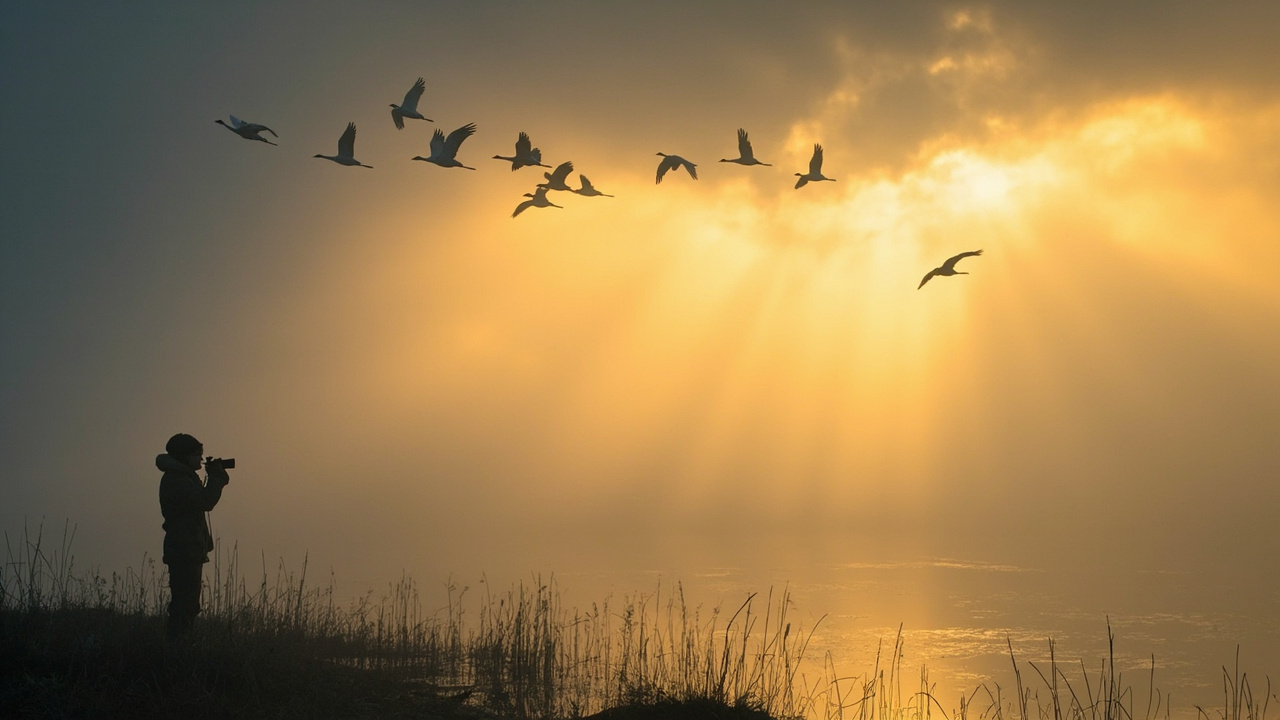
The cab driver in Beijing laughed at me when I told him where I was going. “Lama Temple?” he said, shaking his head. “You want birds. Go to the wetlands.” He was a Beijing native named Mr. Liu, probably sixty-five, with a cigarette permanently tucked behind his ear. He spent the next twenty minutes explaining, in broken English and enthusiastic hand gestures, that the real birding wasn’t in the city parks but an hour north, where the reservoirs pull in Siberian cranes every October. I didn’t listen. I went to the Lama Temple anyway, saw exactly two sparrows, and spent the rest of the afternoon kicking myself.
That was my first mistake in seven years of birding across China. I’ve made a lot more since. I’ve stood in freezing dawn fog at a nature reserve in Yunnan, watched a pair of black-necked cranes dance at 4,000 meters in Sichuan, and once paid a farmer in Guangxi twenty yuan to let me stand in his rice paddy for an hour while a blue-eared pheasant walked past me like I didn’t exist. China is enormous, ridiculously diverse, and absolutely maddening for a birder if you don’t know where to go.
This guide is for the first-time visitor who wants to see real birds, not just the pigeons in Tiananmen Square. I’ve picked ten spots that are accessible, rewarding, and worth the logistics headache. I’ll tell you exactly how to get there, what you’ll pay, and what mistakes to avoid. Because I’ve already made them.
Quick answer
For first-time international visitors, the best China birding spots are Wolong Nature Reserve (Sichuan) for high-altitude pheasants and pandas, Poyang Lake (Jiangxi) for Siberian cranes in winter, and Bawangling National Forest Park (Hainan) for endemic Hainan species. Most international tourists can enter China visa-free for up to 15 days if transiting through Beijing, Shanghai, or Guangzhou (check the 2026 144-hour transit policy). Bring a VPN, set up WeChat Pay before you arrive, and pack binoculars —you’ll need them.
The Short Version
If you only have 90 seconds: Skip Beijing’s parks. Go to Sichuan for pheasants and pandas. Go to Jiangxi in December for cranes. Go to Yunnan if you want the most species in the least time. Bring a good rain jacket, a cheap pair of binoculars (don’t bring expensive ones —they’ll get stolen or broken), and download Pleco for Mandarin translation. The birding infrastructure is almost nonexistent in English. You’ll figure it out.
How I Picked These
I’ve visited all ten of these spots personally, most of them multiple times. Some I found through Chinese birding forums (which require a VPN and a lot of patience with Google Translate). Others I stumbled into after getting lost, missing a bus, or following a local who pointed at a mountain and said “bird there.” I’ve talked to park rangers, taxi drivers, and the occasional English-speaking guide. I also cross-checked with eBird China data and a few Chinese-language field guides. The spots on this list are the ones where I actually saw birds, not just heard rumors of them.
Comparison Table
| Rank | Place | Best For | Approx Cost (USD) | Time Needed | When to Go |
|------|-------|----------|-------------------|-------------|------------|
| 1 | Wolong Nature Reserve | High-altitude pheasants, pandas | $15-25 entry, $30-50/day guide | 3-4 days | May-Oct |
| 2 | Poyang Lake | Siberian cranes, winter waterfowl | Free (boat $10-20) | 1-2 days | Nov-Feb |
| 3 | Bawangling National Forest Park | Hainan endemics | $10-15 entry | 2-3 days | Nov-Apr |
| 4 | Gaoligongshan Nature Reserve | Yunnan specialties, biodiversity | $8-12 entry | 3-5 days | Oct-May |
| 5 | Dongzhai National Nature Reserve | Crested ibis, wetland birds | $5-8 entry | 1-2 days | Apr-Oct |
| 6 | Lashihai Wetland | Black-necked cranes, Yunnan birds | Free (boat $5-10) | 1 day | Nov-Mar |
| 7 | Zhalong Nature Reserve | Red-crowned cranes | $10-15 entry | 2-3 days | May-Sep |
| 8 | Wuyishan National Park | Mountain birds, subtropical forest | $20-30 entry | 2-3 days | Apr-Oct |
| 9 | Qinghai Lake | High-altitude waterbirds, bar-headed geese | $10-15 entry | 1-2 days | Jun-Aug |
| 10 | Xishuangbanna Tropical Botanical Garden | Tropical species, hornbills | $15-20 entry | 2-3 days | Nov-Apr |
1. Wolong Nature Reserve —Where Pandas and Pheasants Share the Mountain
I remember the morning I saw my first golden pheasant. It was 6:30 AM, the fog was so thick I could barely see twenty feet, and I was standing on a muddy trail at 3,000 meters, shivering in a jacket that was not warm enough. Then this thing walked out of the mist —golden crest, red body, blue wings —and I forgot I was cold. It stood there for maybe ten seconds, looked at me like I was an idiot, and disappeared into the bamboo.
Wolong is famous for pandas, but the birding is what keeps me coming back. The reserve covers a huge elevation range, from river valleys at 1,500 meters up to alpine meadows at 4,000. That means you get totally different birds at each level. Lower down: laughingthrushes, barbets, and the occasional white-eared pheasant. Higher up: blood pheasants, snow partridges, and if you’re very lucky, the Chinese monal.
The panda center is the main tourist draw, and it’s worth a visit, but the real birding is on the trails above the center. You’ll need a guide —the trails aren’t marked in English, and the forest is dense. I hired a local named Mr. Chen through my hotel in Wolong town. He charged about $40 (280 CNY) for a full day, and he knew exactly where the pheasants hung out at dawn.
📍 Location: Wolong Town, Wenchuan County, Sichuan Province, about 130 km from Chengdu.
🎫 Entry fee: $15 (100 CNY) for the reserve. The panda center is another $10 (70 CNY). Guides are extra —negotiate in advance.
🕒 Opening hours: Reserve is open 24/7, but the panda center is 8:00 AM to 5:00 PM. Best birding is dawn (5:30-7:30 AM).
🚇 How to get there: Take a bus from Chengdu’s Chadianzi Bus Station to Wolong (3 hours, $8/55 CNY). Or hire a driver from Chengdu for about $80 (550 CNY) one way. The road is winding —bring motion sickness pills.
⏰When to visit: May through October. Winter is cold and snowy, and many birds move lower.
💡 Insider tips: Bring a thermos of hot tea —the mornings are freezing even in summer. The local restaurants serve a decent yak hotpot. Don’t expect English anywhere outside the panda center. Download offline maps on your phone —cell service is spotty.
I paid Mr. Chen an extra $10 (70 CNY) to take me to a spot he called “the pheasant corner” —a small clearing at 3,200 meters where he said the blood pheasants came to eat gravel in the morning. He was right.
2. Poyang Lake —The Crane Show in Winter
I stood on the shore of Poyang Lake in December, and I swear I heard them before I saw them. A low, trumpeting sound, like a hundred rusty trumpets playing in the distance. Then they came —Siberian cranes, hundreds of them, flying in from the north in long, wavering lines. They landed in the shallows about 200 meters out, and I stood there for an hour, not moving, just watching.
Poyang Lake is China’s largest freshwater lake, and in winter it becomes the most important stopover for Siberian cranes on the planet. About 95% of the global population winters here. That’s roughly 3,000-4,000 birds. You also get swans, geese, ducks, and the occasional oriental stork.
The best viewing is from the Wucheng Protected Area on the lake’s northern shore. There’s a small observation tower and a few wooden platforms. No guides needed —the birds are visible from the shore. But bring the best binoculars you have, because the cranes stay out in the middle of the lake, far from the edge.
📍 Location: Wucheng Town, Duchang County, Jiangxi Province, about 60 km from Nanchang.
🎫 Entry fee: Free. Boat rides to get closer to the birds cost $10-20 (70-140 CNY). Negotiate with local fishermen.
🕒 Opening hours: The lake is open 24/7. Best light is early morning (6:30-8:30 AM) when the cranes fly out to feed.
🚇 How to get there: Take a high-speed train from Nanchang to Duchang (40 minutes, $10/70 CNY). Then a local bus or taxi to Wucheng (30 minutes, $5/35 CNY). Or hire a driver from Nanchang for about $50 (350 CNY) round trip.
⏰When to visit: November through February. Peak crane numbers are December and January. Weekdays are much quieter than weekends.
💡 Insider tips: The wind off the lake is brutal in winter —bring a windproof jacket and gloves. There’s a small noodle shop in Wucheng that serves a decent fish soup. The local fishermen are happy to take you out on their boats for a fee —agree on the price before you get in. Don’t wear bright colors; the cranes spook easily.
I once spent four hours in a fisherman’s boat, drifting slowly toward a flock of cranes, and the fisherman never said a word. He just pointed. That’s how you do it.
3. Bawangling National Forest Park —Hainan’s Hidden Endemics
Hainan is China’s Hawaii, but most tourists go to the beaches. The real treasure is in the mountains. Bawangling is a national forest park in the center of the island, and it’s the best place in China to see Hainan’s endemic birds —species that exist nowhere else on earth.
I went in February, during the dry season, and the birding was relentless. In three days I saw the Hainan partridge (a small, secretive bird that sounds like a squeaky toy), the Hainan leaf warbler (a plain-looking bird with a surprisingly complex song), and the Hainan peacock-pheasant (a stunning bird that I only glimpsed for about three seconds before it vanished into the undergrowth).
The park is big —about 300 square kilometers —and the trails are not well marked. I recommend hiring a local guide from the park entrance. They charge about $20-30 (140-210 CNY) for a half-day, and they know exactly where each species hangs out. The best trail is the one that goes up to the main peak, about 4 km one way, with a 600-meter elevation gain. It’s steep, but the birds at the top are worth it.
📍 Location: Bawangling Town, Changjiang County, Hainan Province, about 160 km from Haikou.
🎫 Entry fee: $10-15 (70-100 CNY). Guides are extra.
🕒 Opening hours: 7:00 AM to 6:00 PM. Best birding is 6:00-9:00 AM.
🚇 How to get there: Take a bus from Haikou’s East Bus Station to Bawangling (3 hours, $10/70 CNY). Or rent a car in Haikou and drive —the roads are good. You’ll need a driver’s license with an international permit.
⏰When to visit: November through April. The dry season is best. May to October is rainy and humid, and the leeches are terrible.
💡 Insider tips: Bring leech socks. Seriously. I learned this the hard way. The park has a small guesthouse near the entrance ($20/140 CNY per night) —basic but clean. The local food is mostly rice and seafood. Don’t expect English. Download a bird call app —it helps with the endemics.
I met a British birder at the guesthouse who had been coming to Bawangling for ten years. He told me he’d seen the Hainan peacock-pheasant exactly three times. That’s the kind of place this is.
4. Gaoligongshan Nature Reserve —The Biodiversity Hotspot
Gaoligongshan is a mountain range in western Yunnan, right on the border with Myanmar. It’s one of the most biodiverse places in China, with over 500 bird species recorded. I spent a week here in March, and I came back with a list of 120 species, including several that I’d only seen in field guides.
The reserve covers a huge elevation range, from tropical valleys at 500 meters to alpine peaks at 3,500. The best birding is in the mid-elevation forests, between 1,500 and 2,500 meters. That’s where you’ll find the Yunnan specialties: the beautiful nuthatch, the silver-eared mesia, and the red-tailed laughingthrush.
The main access point is the town of Baoshan, about 6 hours from Kunming by bus. From Baoshan, you can hire a driver to take you up into the reserve. The road is rough —dirt and gravel for the last 20 km —but the driving is worth it. At the top, there’s a small research station that sometimes takes guests, and a few basic guesthouses in the nearby villages.
📍 Location: Baoshan City, Yunnan Province, about 400 km from Kunming.
🎫 Entry fee: $8-12 (55-85 CNY). Guides are available at the reserve entrance for about $25 (175 CNY) per day.
🕒 Opening hours: The reserve is open 24/7, but the main gate is staffed from 8:00 AM to 6:00 PM.
🚇 How to get there: Take a bus from Kunming’s West Bus Station to Baoshan (6 hours, $15/105 CNY). Then hire a local driver to take you into the reserve (about $40/280 CNY round trip).
⏰When to visit: October through May. The dry season is best. June to September is monsoon season, and the trails get muddy and slippery.
💡 Insider tips: The altitude can be a problem —some trails go above 3,000 meters. Acclimate in Baoshan for a day before heading up. Bring your own food —the villages have limited supplies. The local tea is excellent —buy some from the farmers. Don’t hike alone; the trails are not well marked, and it’s easy to get lost.
I got lost on my second day. I followed a trail that looked promising, ended up in a bamboo thicket, and spent two hours trying to find my way back. A farmer on a water buffalo found me and led me to the main road. I gave him 50 yuan. He laughed and waved it away.
5. Dongzhai National Nature Reserve —The Crested Ibis Story
Dongzhai is a small reserve in Shaanxi Province, about 200 km south of Xi’an. It’s famous for one thing: the crested ibis, a bird that was thought to be extinct in the wild until a small population was discovered here in 1981. Today, there are about 2,000 crested ibises in the wild, most of them in and around Dongzhai.
I went in April, during the breeding season, and I saw them nesting in the tall trees along the river. They’re not the most colorful birds —white plumage, pinkish wings, a bare red face —but there’s something about their rarity that makes them special. They fly slowly, with a deliberate grace, and they call with a soft, croaking sound.
The reserve has a small visitor center with a few displays and a viewing platform. The best birding is along the river, about 2 km from the center. You can walk it in 30 minutes. The ibises are most active in the early morning and late afternoon, when they fly out to feed in the rice paddies.
📍 Location: Yang County, Shaanxi Province, about 200 km from Xi’an.
🎫 Entry fee: $5-8 (35-55 CNY). The viewing platform is free.
🕒 Opening hours: 8:00 AM to 5:00 PM. Best birding is 6:00-8:00 AM and 4:00-6:00 PM.
🚇 How to get there: Take a bus from Xi’an’s South Bus Station to Yang County (3 hours, $10/70 CNY). Then a local bus or taxi to the reserve (20 minutes, $3/20 CNY).
⏰When to visit: March through October. The ibises are most visible during the breeding season (March-June). Winter is cold and the birds are less active.
💡 Insider tips: The reserve is small —you can see everything in a half-day. Combine it with a visit to the nearby Han River for more birding. The local restaurants serve a good noodle dish called “yangxian mianpi.” Bring cash —there are no ATMs near the reserve. The staff at the visitor center speak some English.
I sat on the viewing platform for an hour, watching a pair of crested ibises feed their chicks. A Chinese family came up, took a selfie, and left. They didn’t even look at the birds. I didn’t mind —more time for me.
6. Lashihai Wetland —Black-Necked Cranes in Yunnan
Lashihai is a small wetland near Lijiang, in Yunnan Province. It’s not as famous as Poyang Lake, but it’s easier to reach and offers a more intimate birding experience. In winter, the wetland hosts about 200-300 black-necked cranes, along with a variety of ducks, geese, and waders.
I went in January, during the peak of winter, and the cranes were everywhere. They stood in the shallow water, poking their long beaks into the mud, occasionally lifting their heads to call. The sound is haunting —a high, fluting note that carries across the water.
The wetland is protected, but you can walk along the shore and watch the birds from a distance. There’s also a small boat that takes you out onto the lake for about $5 (35 CNY). The boatman knows where the cranes like to feed, and he’ll drift you close enough for good views.
📍 Location: Lashihai Village, Yulong County, Yunnan Province, about 20 km from Lijiang.
🎫 Entry fee: Free. Boat rides are $5-10 (35-70 CNY).
🕒 Opening hours: The wetland is open 24/7. Best light is early morning (7:00-9:00 AM).
🚇 How to get there: Take a bus from Lijiang’s bus station to Lashihai (30 minutes, $2/15 CNY). Or rent a bicycle in Lijiang and ride there —it’s a flat, easy ride.
⏰When to visit: November through March. The cranes are most numerous in December and January. Summer is quiet —most birds have migrated north.
💡 Insider tips: Combine Lashihai with a visit to the Old Town of Lijiang —it’s on the way. The wetland is also good for photography, especially at sunrise. Bring a tripod. The local Naxi people sell tea and snacks near the entrance. Don’t feed the birds —it’s not allowed.
I met a photographer from Shanghai who had been coming to Lashihai for five years. He showed me his photos of the cranes at sunset, backlit by golden light. They were stunning. I asked him for his secret. He said, “Patience. And a good lens.”
7. Zhalong Nature Reserve —The Red-Crowned Crane Capital
Zhalong is a massive wetland in Heilongjiang Province, in the far northeast of China. It’s the most important breeding ground for red-crowned cranes in the country, with about 300 pairs nesting here every summer. I went in June, during the breeding season, and the cranes were everywhere —calling, dancing, feeding their chicks.
The reserve is huge —about 2,100 square kilometers —and the best way to see it is by boat. There are several boat tours that take you through the wetlands, past the crane nesting sites. The tours last about 2 hours and cost $10-15 (70-105 CNY). You’ll see cranes, storks, herons, and a variety of ducks.
There’s also a captive breeding center where you can see cranes up close. It’s a bit sad —the birds are in enclosures —but it’s a good opportunity to photograph them without the long lens. The center also has a small museum with displays about crane conservation.
📍 Location: Zhalong Town, Qiqihar City, Heilongjiang Province, about 30 km from Qiqihar.
🎫 Entry fee: $10-15 (70-105 CNY). Boat tours are extra.
🕒 Opening hours: 8:00 AM to 5:00 PM. Best birding is early morning (6:00-8:00 AM).
🚇 How to get there: Take a train from Harbin to Qiqihar (2 hours, $15/105 CNY). Then a local bus or taxi to the reserve (30 minutes, $5/35 CNY).
⏰When to visit: May through September. The cranes are most active during the breeding season (May-July). Winter is bitterly cold and the cranes have migrated south.
💡 Insider tips: The mosquitoes in summer are relentless —bring repellent. The boat tours are best in the early morning, when the birds are most active. The reserve has a small guesthouse ($15/105 CNY per night) —basic but convenient. The local food is heavy on dumplings and stews. Don’t expect English.
I took the boat tour at 6:00 AM, and the mist was rising off the water. The boatman cut the engine and we drifted silently past a pair of cranes standing in the reeds. They looked at us, then went back to feeding. It was one of the most peaceful moments I’ve had in China.
8. Wuyishan National Park —Mountain Birds and Tea Terraces
Wuyishan is a UNESCO World Heritage site in Fujian Province, famous for its tea (Da Hong Pao) and its dramatic sandstone peaks. It’s also a great birding destination, with over 300 species recorded. I went in April, during the spring migration, and the forest was alive with birds.
The best birding is on the trails that lead up to the main peaks. The trail to the highest peak, Huanggangshan, is about 10 km one way, with a 1,000-meter elevation gain. It’s a tough hike, but the birds at the top are worth it: Elliot’s pheasant, the silver pheasant, and the Chinese bamboo partridge.
Lower down, the tea terraces are good for laughingthrushes and babblers. The birds here are less shy than in other parts of China, probably because they’re used to the tea pickers. I sat on a stone wall for an hour, watching a flock of silver-eared mesias flit through the tea bushes.
📍 Location: Wuyishan City, Fujian Province, about 350 km from Fuzhou.
🎫 Entry fee: $20-30 (140-210 CNY) for the park. The tea terraces are free.
🕒 Opening hours: 7:00 AM to 6:00 PM. Best birding is 6:00-9:00 AM.
🚇 How to get there: Take a high-speed train from Fuzhou to Wuyishan North Station (1.5 hours, $20/140 CNY). Then a local bus or taxi to the park (30 minutes, $5/35 CNY).
⏰When to visit: April through October. Spring and autumn are best for migration. Summer is hot and humid. Winter is cold but the birds are still active.
💡 Insider tips: The tea terraces are free and open to the public. Buy some Da Hong Pao tea from the local farmers —it’s the real thing. The park has several good restaurants serving local Fujian cuisine. Bring a rain jacket —the weather changes quickly. The trails are well marked in Chinese, but not in English.
I bought a bag of Da Hong Pao from a farmer named Auntie Lin. She charged me $20 (140 CNY) for 100 grams. It was the best tea I’ve ever had. She also told me where to find the Elliot’s pheasant. She pointed up the mountain and said, “Early. Very early.”
9. Qinghai Lake —High-Altitude Waterbirds
Qinghai Lake is the largest saltwater lake in China, sitting at 3,200 meters on the Tibetan Plateau. It’s a critical stopover for migratory waterbirds, including bar-headed geese, black-necked cranes, and a variety of ducks and gulls. I went in July, during the breeding season, and the lake was covered with birds.
The best birding is on the eastern shore, near the town of Gonghe. There’s a small protected area with a viewing platform and a few trails. The birds are most active in the early morning, when they fly out to feed in the surrounding grasslands.
The lake is also famous for its stunning scenery —the blue water, the green hills, the snow-capped mountains in the distance. It’s a beautiful place to spend a few days, even if you’re not a birder.
📍 Location: Gonghe County, Qinghai Province, about 150 km from Xining.
🎫 Entry fee: $10-15 (70-105 CNY) for the protected area. The rest of the lake is free.
🕒 Opening hours: 8:00 AM to 6:00 PM. Best birding is 6:00-8:00 AM.
🚇 How to get there: Take a bus from Xining’s bus station to Gonghe (2 hours, $8/55 CNY). Then a local bus or taxi to the lake (30 minutes, $5/35 CNY).
⏰When to visit: June through August. The birds are most active during the breeding season. Winter is bitterly cold and the lake freezes over.
💡 Insider tips: The altitude is no joke —acclimate in Xining for a day before heading to the lake. Bring sunscreen and a hat —the sun is intense at this altitude. The local food is mostly lamb and yak. The Tibetan nomads sell yak butter tea near the lake —try it, but be prepared for the taste.
I tried yak butter tea for the first time at Qinghai Lake. It was salty, greasy, and strangely addictive. The nomad who sold it to me laughed at my face when I took the first sip. He said something in Tibetan that I didn’t understand, but I’m pretty sure it was “tourist.”
10. Xishuangbanna Tropical Botanical Garden —Tropical Birds in the South
Xishuangbanna is in the far south of Yunnan, bordering Laos and Myanmar. It’s China’s only tropical region, and the birding is completely different from anywhere else in the country. I went in December, during the dry season, and the garden was full of birds: hornbills, barbets, sunbirds, and a dozen species of bulbuls.
The botanical garden is the best place to start. It’s a huge, well-maintained park with a variety of habitats: tropical forest, bamboo groves, and lakes. The birds are used to people, so you can get close views. I saw a pair of great hornbills in a fig tree, eating fruit and calling to each other with loud, barking sounds.
The garden also has a small bird hide near the lake, where you can sit and watch the birds come to drink. I spent an afternoon there, watching a flock of red-whiskered bulbuls splash in a puddle. It was simple, but it was perfect.
📍 Location: Mengla County, Xishuangbanna Prefecture, Yunnan Province, about 60 km from Jinghong.
🎫 Entry fee: $15-20 (105-140 CNY) for the garden. The bird hide is free.
🕒 Opening hours: 8:00 AM to 6:00 PM. Best birding is 6:00-9:00 AM.
🚇 How to get there: Take a flight from Kunming to Jinghong (1 hour, $50/350 CNY). Then a local bus or taxi to the garden (1 hour, $10/70 CNY).
⏰When to visit: November through April. The dry season is best. May to October is rainy and humid.
💡 Insider tips: The garden is huge —rent a bicycle at the entrance for $3 (20 CNY) per day. Bring a rain jacket even in the dry season —it can rain unexpectedly. The local food is spicy and sour —try the papaya salad. Don’t wear shorts —the mosquitoes are fierce.
I rented a bicycle and rode through the garden for three hours. I saw more birds in that time than I had in the previous week. A park rider stopped me and asked if I was a photographer. I said no, just a birder. He nodded and said, “Good. The birds are the real treasure.”
FAQ summary
For first-time international birders in China, the three most important things to know are: (1) You can visit most nature reserves independently, but hiring a local guide (usually $20-40/day) dramatically improves your chances of seeing target species. (2) The best birding is in winter (November-February) for waterfowl and cranes, and spring (April-May) for migrants and breeding birds. (3) Bring a VPN, set up WeChat Pay before you arrive, and download Pleco for translation —English is rarely spoken at these reserves. Most international tourists can enter China visa-free for up to 15 days under the 2026 transit policy.
FAQ
Q: Do I need a visa to bird in China?
A: Most international tourists can enter China visa-free for up to 15 days if transiting through Beijing, Shanghai, or Guangzhou (the 144-hour transit policy). For longer stays, you’ll need a tourist visa (L visa). Apply at least 4 weeks in advance. The cost is about $140 (980 CNY) for a single-entry visa.
Q: What’s the best time of year for birding in China?
A: It depends on what you want to see. Winter (November-February) is best for cranes and waterfowl at Poyang Lake and Lashihai. Spring (April-May) is best for migrants and breeding birds in Sichuan and Yunnan. Summer (June-August) is good for high-altitude birds in Qinghai and Sichuan. Avoid July and August in the south —it’s hot, humid, and rainy.
Q: Do I need a guide?
A: Not always, but it helps. At places like Wolong and Bawangling, a guide will save you hours of searching. At Poyang Lake and Lashihai, you can bird independently. Guides cost $20-40 (140-280 CNY) per day. Negotiate in advance.
Q: What equipment should I bring?
A: Binoculars (8x or 10x), a field guide (I recommend “Birds of China” by John MacKinnon), a camera with a long lens, a rain jacket, comfortable hiking boots, and a thermos. Don’t bring expensive gear that you can’t afford to lose. Bring a VPN for accessing Google and WhatsApp.
Q: Is it safe to bird alone in China?
A: Yes, but use common sense. Stick to marked trails, tell someone where you’re going, and carry a fully charged phone. The biggest risks are getting lost and altitude sickness. Don’t hike alone at high altitudes.
Q: How do I pay for things?
A: WeChat Pay and Alipay are essential. Set them up before you arrive —you’ll need a Chinese bank account or a foreign card that supports them. Cash is still accepted, but many places prefer digital payments. Bring some cash for small purchases and tips.
Q: What about the language barrier?
A: English is rarely spoken at nature reserves. Download Pleco (a translation app) and a phrasebook. Learn a few key phrases: “Ni hao” (hello), “Xie xie” (thank you), and “Zhe shi shenme niao?” (what bird is this?). Most Chinese people are patient and helpful, even if they don’t speak English.
The Honest Wrap-up
This list is for the birder who wants to see real birds in China, not the tourist who wants a photo of a panda. These places are not easy. They require planning, patience, and a willingness to get lost. But if you put in the work, you’ll see things that most people never will: a golden pheasant in the mist, a thousand cranes landing on a frozen lake, a hornbill eating fruit in a tropical forest.
This list is not for the person who wants a comfortable, all-inclusive tour. If that’s you, go to the panda center in Chengdu and call it a day. But if you’re willing to wake up at 5:00 AM, eat noodles for breakfast, and stand in the rain for an hour waiting for a bird that might not show up, then China will reward you in ways you can’t imagine.
One final piece of advice: be patient. The birds are there. You just have to find them.
Related Guides
Looking for more China travel guides? These match your topic:
Topics
More guides you may like
Top 10 Bridges in China
China's bridges are engineering marvels spanning mountains, rivers, and seas. Here are 10 of the most spectacular, from ancient stone to modern steel.
8 min read

Top 10 Buddhist Sites in China
From the Leshan Giant Buddha to the Dunhuang Caves, these 10 Buddhist sites represent 2,000 years of China's spiritual heritage.
9 min read

Top 10 Day Trips from Beijing You Shouldn't Miss
Beijing is packed with history, but some of China's best experiences are just a few hours away. Here are 10 day trips that will transform your visit.
9 min read

Top 10 Hidden Gems in China Off the Beaten Path
Beyond the Great Wall and Terracotta Warriors, China has incredible hidden destinations few tourists ever reach. Here are 10 underrated gems worth the detour.
9 min read

Top 10 Markets and Shopping Streets in China
From Shanghai's Bund to Beijing's Silk Street - 10 markets where foreigners can haggle, explore, and bring home authentic Chinese goods.
9 min read

Top 10 Museums in China You Shouldn't Miss
China's museums span 5,000 years of civilization. These 10 - from the Palace Museum to Xi'an's terracotta gallery - are unmissable for culture lovers.
9 min read