
Best Night Markets in Taipei Complete Guide: The Complete 2026 Guide
It was Shilin, and I stood there in the crowd, full of beef noodles, watching a vendor flip a giant omelet stuffed with oysters and chives on a smoking griddle.
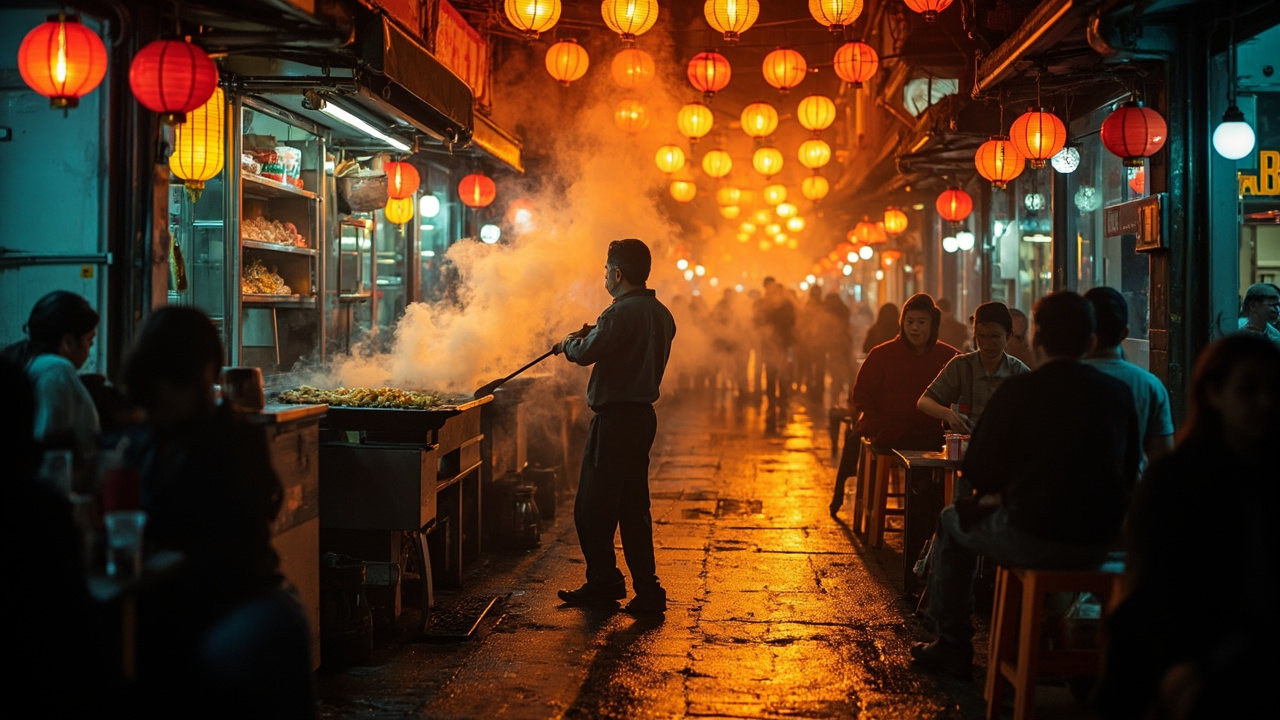
The first time I went to a Taipei night market, I made a rookie mistake. I ate dinner beforehand.
It was Shilin, and I stood there in the crowd, full of beef noodles, watching a vendor flip a giant omelet stuffed with oysters and chives on a smoking griddle. The smell hit me, that mix of garlic, chili oil, and something sweet and charred, and I felt actual regret. I had a plate of cold noodles sitting in my stomach and the best food in the city was right in front of me, and I couldn’t eat any of it.
I’ve been back to Taipei a dozen times since. I’ve walked the alleys of Ningxia with a local friend who argued with a stall owner about the correct amount of pepper in his pepper buns. I’ve eaten stinky tofu at Raohe that made my eyes water from ten meters away. I’ve watched a grandmother at Huaxi Street methodically prepare a bowl of soup that her family has been making for three generations.
Night markets aren’t just where Taipei eats. They’re where the city’s whole personality shows up, the noise, the heat, the chaos, the generosity. For a first-time visitor to Taiwan, they’re the fastest way to understand how this place actually works.
This guide covers the ten night markets I think are worth your time, how to get to each one, what to eat, what to skip, and the practical stuff that most guides forget to mention.
Quick answer
Taipei’s night markets are open daily from roughly 5:00 PM to midnight, with most stalls operating on cash or mobile payment (Line Pay, Apple Pay, or cash; WeChat Pay and Alipay are less common in Taiwan than in mainland China). Most dishes cost between $1.50 and $6 USD (NT$50–NT$200). The three best for first-timers are Shilin for variety, Ningxia for food quality, and Raohe for atmosphere. No entry fees anywhere, and the MRT gets you within walking distance of almost every market on this list.
The Short Version
If you have one night in Taipei, go to Ningxia. It’s smaller than Shilin, less touristy than Raohe, and every single stall is good. If you have two nights, add Raohe for the atmosphere and the pepper buns. Skip Snake Alley unless you genuinely want to see the spectacle. Don’t eat before you go. Bring cash. Wear shoes you don’t care about, the ground gets sticky. And whatever you do, don’t point at something and say “that looks interesting” unless you’re prepared to eat it, because the vendors will absolutely insist.
How I Picked These
I’ve been to Taipei seven times over the last six years, including three trips specifically for this guide. I walked every market on this list at least twice, once on a weekday and once on a weekend. I talked to vendors, cab drivers, hostel receptionists, and a retired English teacher who adopted me for an evening at Huaxi and made me try things I would never have ordered myself.
I also made mistakes so you don’t have to. I ate at the first stall I saw at Shilin and regretted it. I went to Raohe on a rainy Tuesday and found half the stalls closed. I paid tourist prices at a snake restaurant before learning the actual going rate. This guide is the result of all of that.
Comparison Table
| Rank | Place | Best For | Approx Cost (USD) | Time Needed | When to Go |
|---|---|---|---|---|---|
| 1 | Ningxia | Food quality | $5–10 per person | 1–2 hours | Weekday evenings |
| 2 | Shilin | Variety | $5–12 per person | 2–3 hours | After 7 PM |
| 3 | Raohe | Atmosphere | $4–10 per person | 1–2 hours | Sunset |
| 4 | Huaxi (Snake Alley) | Spectacle | $3–8 per person | 1 hour | After 8 PM |
| 5 | Tonghua | Local vibe | $4–8 per person | 1–2 hours | Weekday nights |
| 6 | Nanjichang | Less touristy | $3–7 per person | 1 hour | Early evening |
| 7 | Gongguan | Student energy | $3–6 per person | 1 hour | Lunch to late night |
| 8 | Liaoning | Hidden gem | $4–8 per person | 1 hour | Weekday nights |
| 9 | Shida | Trendy finds | $3–7 per person | 1–2 hours | Evening |
| 10 | Guangzhou Street | Late night | $3–6 per person | 45 min | After 10 PM |
Ningxia Night Market — The one I’d choose if I could only pick one
I ate at Ningxia on a Tuesday night in November. The crowd was mostly locals, office workers in rumpled shirts, grandmothers with shopping bags, a few students. Nobody was taking photos of their food. They were just eating.
This is the market for people who care about the food itself. It’s compact, maybe 300 meters of stalls, but the density of quality is absurd. The pepper buns here are better than the famous ones at Raohe. The oyster omelet is better than anything I had at Shilin. The taro balls are the best dessert in Taipei, and I will fight anyone who disagrees.
The trick is to go hungry and share everything. Two people can eat six different things here for under $15 USD (NT$450) and be completely satisfied.
📍 Location: Dihua Street and Ningxia Road, Datong District 🎫 Entry fee: Free 🕒 Opening hours: Daily, 5:00 PM – 1:00 AM (stalls start closing around midnight) 🚕 Getting there: Take the MRT to Shuanglian Station (Red Line, Exit 1). Walk west on Minsheng West Road for about 8 minutes. You’ll see the market entrance on your left. 📅 When to visit: Weekday evenings are best. Saturday night is shoulder-to-shoulder. 💡 Insider tips:
- The pepper bun stall (Hu Die Xiang) is the one with the long line. It’s worth it. Get there before 7 PM.
- Try the “rice sausage” (mifen chang) from the stall near the middle of the market. It’s a local favorite that tourists usually miss.
- Bring cash. Most stalls here don’t take cards.
- The taro ball dessert stall is at the far end of the market. Order the cold version with ice cream.
- If you see a line forming at any stall, get in it. The locals know.
I met a cab driver named Mr. Chen here who told me he’s been coming to Ningxia for 30 years. He pointed at the pepper bun stall and said, “Same family. Same recipe. My father brought me here when I was your age.” He was probably 60. I believed him.
Shilin Night Market — The big one, for better and worse
Shilin is the night market you’ve heard about. It’s the one that shows up in every guidebook and every Instagram post. It’s also the most overwhelming place I’ve ever eaten, and I’ve eaten in some chaotic places.
The market is actually two parts: the covered food court (which is mostly a tourist trap) and the surrounding streets (which have the real food). The mistake most visitors make is eating in the covered area. The hot star fried chicken there is fine, but it’s not the best version of itself. Walk past the covered section, turn right, and follow the smell of garlic.
The best thing at Shilin is the huge fried chicken cutlet. It’s bigger than your face, crispy, juicy, and costs about $2.50 USD (NT$80). The second best thing is the “big sausage wrapped in small sausage” (da chang bao xiao chang), a hot dog wrapped in sticky rice sausage, which sounds ridiculous and tastes incredible.
📍 Location: Wenlin Road, Shilin District 🎫 Entry fee: Free 🕒 Opening hours: Daily, 4:00 PM – 12:00 AM (some stalls until 1 AM) 🚕 Getting there: Take the MRT to Jiantan Station (Red Line, Exit 1). The market is directly across the street. You can’t miss it. 📅 When to visit: After 7 PM on weekdays. Weekends are packed with tourists and it’s not as fun. 💡 Insider tips:
- Skip the covered food court. The food is overpriced and mediocre.
- The best fried chicken is at the stall called “Hot Star” but go to the original location, not the one in the covered section.
- Try the oyster omelet from the stall near the MRT exit. It’s the one with the oldest sign.
- The “sheng jian bao” (pan-fried pork buns) at the corner of Wenlin Road and Jihe Road are excellent.
- Watch your wallet. Pickpockets work the crowds here, especially on weekends.
I watched a group of American tourists order “one of everything” at a stall and then look horrified when the bill came to about $20 USD (NT$600). The vendor laughed and threw in a free order of fried tofu. “For the experience,” he said in English. They ate it. They loved it.
Raohe Night Market — The one with the famous pepper buns
Raohe is the market I recommend to people who want the classic night market experience without the overwhelming chaos of Shilin. It’s a single long street, maybe 600 meters, with an ornate archway at the entrance and a temple at the other end.
The famous pepper bun stall is right at the entrance. The line looks terrifying, but it moves fast. The buns are baked in a cylindrical clay oven, stuffed with pork and green onions, and they’re worth the wait. The crust is flaky, the filling is juicy, and the pepper gives it a warmth that lingers.
But Raohe is more than just the pepper buns. The braised pork rice at the stall near the temple is the best I’ve had in Taipei. The grilled squid is fresh and smoky. And the “flounder soup” at the stall near the middle of the market is a local secret that almost no tourist knows about.
📍 Location: Raohe Street, Songshan District 🎫 Entry fee: Free 🕒 Opening hours: Daily, 5:00 PM – 12:00 AM 🚕 Getting there: Take the MRT to Songshan Station (Green Line, Exit 5). Walk east on Bade Road for about 5 minutes. The archway is unmissable. 📅 When to visit: Arrive at sunset. The street looks incredible as the lights come on. 💡 Insider tips:
- The pepper bun stall at the entrance is the famous one, but there’s a second stall near the temple that’s just as good with a shorter line.
- The braised pork rice (lu rou fan) is at the stall called “Raohe Street Braised Pork Rice.” It’s about halfway down the street on the left.
- The grilled squid vendors will try to upsell you on the biggest squid. Get the medium size. It’s the right amount.
- There’s a dessert stall near the temple that does amazing peanut ice cream rolls. Get one before you leave.
- The temple at the end of the street is worth a quick look, especially at night when it’s lit up.
I bought a pepper bun here and ate it standing next to a group of Japanese tourists who were taking photos of everything. One of them pointed at my bun and asked, in broken English, where I got it. I pointed at the line. She nodded, took a photo of the line, and got in it.
Huaxi Street Night Market — Snake Alley, the spectacle
Huaxi Street is the market that makes first-time visitors nervous. It’s the one with the snake stalls, the live snakes, the snake blood cocktails, the whole thing. And honestly, it’s worth seeing once, even if you don’t eat anything.
The snake vendors are performers as much as they are butchers. They’ll pull a snake out of a cage, hold it up for the crowd, and then dispatch it with a speed that’s both impressive and slightly unsettling. The snake soup is an acquired taste, and the snake blood mixed with alcohol is… an experience.
But here’s the thing: Huaxi is also home to some genuinely excellent food that has nothing to do with snakes. The braised dishes at the stall near the entrance are fantastic. The “herbal chicken soup” at the stall in the middle of the market is the kind of thing you’d want on a cold night. And the prices are lower than the bigger markets because fewer tourists make it here.
📍 Location: Huaxi Street, Wanhua District 🎫 Entry fee: Free 🕒 Opening hours: Daily, 4:00 PM – 12:00 AM (snake stalls close earlier, around 10 PM) 🚕 Getting there: Take the MRT to Longshan Temple Station (Blue Line, Exit 1). Walk south on Kangding Road for about 5 minutes. 📅 When to visit: After 8 PM, when the snake stalls are still active and the crowd is lively. 💡 Insider tips:
- The snake blood cocktail is about $5 USD (NT$150). It tastes like… well, it tastes like snake blood with alcohol. Try it once.
- The braised dishes (lu wei) near the entrance are the real deal. Point at what you want and they’ll chop it up for you.
- The herbal chicken soup is at the stall with the big metal pots. It’s about $3 USD (NT$100) and it’s excellent.
- Don’t take photos of the snakes without asking first. The vendors will charge you.
- The market empties out after 10 PM. Go early if you want the full experience.
I watched a French tourist negotiate with a snake vendor for a photo. The vendor wanted $2 USD (NT$60). The tourist wanted to pay $1. They went back and forth for five minutes before settling on $1.50. The vendor draped the snake around the tourist’s neck, took the photo, and then charged him another $1 to take the snake off. The tourist laughed. So did the vendor.
Tonghua Night Market — The local’s choice
Tonghua is the market I go to when I want to eat without the tourist circus. It’s smaller than Shilin, less famous than Raohe, and the crowd is almost entirely local. The food is excellent, the prices are fair, and nobody is trying to sell you a selfie stick.
The standout here is the grilled steak. There’s a stall that serves up thin slices of beef on a hot plate with garlic and onions, and it’s about $4 USD (NT$120) for a portion that’s big enough to share. The “braised pork rice” is also excellent, and the “oyster omelet” here is better than the one at Shilin.
The market is also known for its fruit stalls. The mangoes are incredible, the guavas are fresh, and the vendors will cut everything up for you so you can eat it on the go.
📍 Location: Tonghua Street, Da’an District 🎫 Entry fee: Free 🕒 Opening hours: Daily, 5:00 PM – 1:00 AM (some stalls open earlier) 🚕 Getting there: Take the MRT to Liuzhangli Station (Brown Line, Exit 2). Walk south on Heping East Road for about 5 minutes. 📅 When to visit: Weekday nights. Avoid weekends if you can, it gets crowded with locals. 💡 Insider tips:
- The grilled steak stall is near the middle of the market. Look for the one with the longest line.
- The fruit stalls are at the entrance. Buy a bag of cut mango for about $2 USD (NT$60).
- The “braised pork rice” here is served with a pickled radish that cuts through the richness. Don’t skip it.
- There’s a stall that does “sweet potato balls” that are crispy on the outside and soft inside. Get a bag for the walk back.
- The market is less crowded than Shilin, so you can actually take your time.
I sat at a plastic table here next to a group of office workers who were having a late dinner. One of them, a woman named Mei, noticed I was struggling with my chopsticks and showed me how to hold them properly. She then ordered me a bowl of the braised pork rice and refused to let me pay. “You’re a guest,” she said. “Guests don’t pay.”
Nanjichang Night Market — The quiet one
Nanjichang is the market for people who want the experience without the crowds. It’s smaller, quieter, and less polished than the big names, but that’s exactly why I like it. The food is honest, the prices are low, and the vendors are friendlier because they’re not dealing with a constant stream of tourists.
The specialty here is the “stinky tofu” (chou doufu). I know it sounds intimidating, but the version at Nanjichang is milder than most, crispy on the outside, soft on the inside, and served with a pickled cabbage that balances the funk. It’s the best I’ve had in Taipei.
The market also has a good selection of “braised dishes” (lu wei) and “noodle soups” (mian xian). The “oyster vermicelli” at the stall near the entrance is a local favorite.
📍 Location: Nanjichang Street, Wenshan District 🎫 Entry fee: Free 🕒 Opening hours: Daily, 4:00 PM – 11:00 PM (some stalls close earlier) 🚕 Getting there: Take the MRT to Jingmei Station (Green Line, Exit 1). Walk north on Jingmei Street for about 5 minutes. 📅 When to visit: Early evening, before 7 PM. It gets quiet after 9 PM. 💡 Insider tips:
- The stinky tofu stall is near the middle of the market. Look for the one with the big sign that says “Deep Fried Stinky Tofu.”
- The oyster vermicelli is at the stall near the entrance. It’s about $2.50 USD (NT$80) for a bowl.
- This is a good market to practice your Mandarin. Most vendors don’t speak English, but they’re patient with foreigners who try.
- The “braised dishes” are priced by weight. Point at what you want and they’ll weigh it and chop it.
- There’s a dessert stall that does “ai yu” (a jelly-like drink made from seeds). It’s refreshing and cheap.
I tried to order stinky tofu here with my terrible Mandarin and ended up asking for “stinky bean” instead. The vendor laughed, corrected me, and then gave me an extra piece “for the effort.”
Gongguan Night Market — The student market
Gongguan is the market that feeds the students of National Taiwan University, which means it’s cheap, fast, and packed with energy. It’s not the most atmospheric market in Taipei, but it’s the most alive.
The food here is more casual, more snack-oriented. There are stalls selling “fried chicken cutlets” (the best in Taipei, in my opinion), “sausage on a stick,” “shaved ice,” and “bubble tea” (the original, from the nearby Chun Shui Tang). The prices are the lowest on this list, and the portions are generous.
The market is spread out over a few streets, so it feels less like a single market and more like a food neighborhood. That’s part of its charm.
📍 Location: Gongguan, Zhongzheng District 🎫 Entry fee: Free 🕒 Opening hours: Daily, 11:00 AM – 11:00 PM (some stalls open earlier) 🚕 Getting there: Take the MRT to Gongguan Station (Green Line, Exit 1). The market is all around you. 📅 When to visit: Lunch or dinner time. The energy is best when the students are out. 💡 Insider tips:
- The fried chicken cutlet at “Tai Yang” is the best in Taipei. It’s about $2.50 USD (NT$80) and it’s huge.
- The “shaved ice” at “Yongkang” is a classic. Get the mango version.
- The “sausage on a stick” vendors are everywhere. The one with the longest line is the best.
- This is a good place to try “stinky tofu” if you’re nervous about it. The version here is milder.
- The “bubble tea” at the original Chun Shui Tang is worth the pilgrimage.
I ate a fried chicken cutlet here while sitting on a bench next to a group of students who were debating something loudly in Mandarin. One of them caught me looking and offered me a piece of his sausage. I declined, but he insisted. “You’re in our country now,” he said. “You eat.”
Liaoning Night Market — The hidden gem
Liaoning is the market that most tourists never hear about. It’s tucked away in a residential area, and it’s the kind of place where the vendors know their regulars by name. It’s not the biggest or the most exciting market on this list, but it’s the most authentic.
The food here is traditional, the kind of stuff that’s been made the same way for decades. The “braised pork rice” is excellent, the “oyster omelet” is solid, and the “sweet potato congee” is the kind of comfort food that makes you want to move to Taipei.
The market is also known for its “hot pot” stalls, where you pick your ingredients and they cook them in a bubbling broth. It’s a fun, interactive way to eat, and it’s cheap.
📍 Location: Liaoning Street, Zhongshan District 🎫 Entry fee: Free 🕒 Opening hours: Daily, 5:00 PM – 11:00 PM (some stalls close earlier) 🚕 Getting there: Take the MRT to Nanjing Fuxing Station (Brown Line, Exit 6). Walk north on Fuxing North Road for about 8 minutes. 📅 When to visit: Weekday nights. It’s quiet on weekends. 💡 Insider tips:
- The “hot pot” stalls are near the middle of the market. Pick your ingredients, pay, and they’ll cook it for you.
- The “sweet potato congee” is at the stall near the entrance. It’s about $1.50 USD (NT$50) for a bowl.
- This is a good market to visit if you’re tired of the crowds at the bigger markets.
- The vendors here are the friendliest in Taipei. They’ll chat with you if you make an effort.
- There’s a “peanut soup” stall that’s been there for decades. It’s worth trying.
I sat at a “hot pot” stall here and ended up sharing a table with a retired couple who were regulars. They ordered for me, paid for my meal, and then spent 20 minutes trying to teach me how to say “delicious” in Mandarin. I still can’t pronounce it right.
Shida Night Market — The trendy one
Shida is the market that’s actually more of a neighborhood. It’s spread out over several streets near National Taiwan Normal University, and it’s the place where Taipei’s young people come to eat, shop, and hang out.
The food here is more experimental, more fusion. You’ll find “sushi burritos,” “Korean fried chicken,” “Thai milk tea,” and “Japanese crepes” alongside the traditional Taiwanese fare. It’s not the most authentic market in Taipei, but it’s the most fun.
The market is also known for its clothing stalls. You can buy a cheap t-shirt, a pair of sneakers, and a bowl of noodles all within 50 meters of each other.
📍 Location: Shida Road, Da’an District 🎫 Entry fee: Free 🕒 Opening hours: Daily, 12:00 PM – 11:00 PM (some stalls open later) 🚕 Getting there: Take the MRT to Taipower Building Station (Green Line, Exit 3). Walk south on Shida Road for about 5 minutes. 📅 When to visit: Evening, after 6 PM. The crowd is younger and livelier. 💡 Insider tips:
- The “sushi burrito” stall is near the entrance. It’s a fun, Instagram-worthy snack.
- The “Korean fried chicken” is at the stall with the big red sign. It’s about $4 USD (NT$120) for a portion.
- The clothing stalls are cheap. You can get a t-shirt for about $5 USD (NT$150).
- This is a good market to visit if you’re traveling with teenagers or young adults.
- The “Thai milk tea” at the stall near the end of the street is excellent.
I watched a group of Taiwanese students take photos of their food for a solid 10 minutes before eating. The vendor, an older woman, shook her head and said something in Mandarin that made the students laugh. I asked what she said. “She said our food is for eating, not for looking at,” one of them told me.
Guangzhou Street Night Market — The late-night option
Guangzhou Street is the market for people who can’t sleep. It opens late and stays open until the early hours, and it’s the place where Taipei’s night owls come to eat after the other markets have closed.
The food here is simple and hearty. The “braised pork rice” is good, the “noodle soup” is warming, and the “fried rice” is the kind of thing you want at 2 AM. The prices are low, and the crowd is a mix of locals, cab drivers, and people who’ve just finished their shifts.
It’s not the most exciting market on this list, but it’s the most practical. If you’re jet-lagged and hungry at 1 AM, this is where you go.
📍 Location: Guangzhou Street, Wanhua District 🎫 Entry fee: Free 🕒 Opening hours: Daily, 6:00 PM – 4:00 AM (some stalls open later) 🚕 Getting there: Take the MRT to Longshan Temple Station (Blue Line, Exit 3). Walk south on Guangzhou Street for about 3 minutes. 📅 When to visit: After 10 PM, when the other markets are closing. 💡 Insider tips:
- The “braised pork rice” at the stall near the entrance is the best late-night food in Taipei.
- The “noodle soup” at the stall in the middle of the market is excellent. Get the beef version.
- This is a good market to visit if you’re on a budget. You can eat well for under $5 USD (NT$150).
- The vendors here are used to serving cab drivers, so they’re fast and efficient.
- There’s a “fruit stand” near the end of the street that’s open all night.
I ate a bowl of beef noodle soup here at 1:30 AM, sitting next to a cab driver who was on his break. He asked me where I was from, and when I said “America,” he nodded and said, “Ah, Trump.” I didn’t know how to respond, so I just ate my noodles. He laughed and paid for my soup.
FAQ summary
Taipei’s night markets are free to enter, open daily from late afternoon to midnight, and most dishes cost between $1.50 and $6 USD (NT$50–NT$200). Cash is the most reliable payment method, though some stalls accept Line Pay or Apple Pay; WeChat Pay and Alipay are less common in Taiwan than in mainland China. The MRT provides access to all major markets, with Shilin, Ningxia, and Raohe being the best choices for first-time visitors. English is not widely spoken at most stalls, so a translation app like Google Translate or Pleco is helpful.
FAQ
Q: Do I need to bring cash to Taipei night markets? A: Yes. Most night market stalls only accept cash, though some larger vendors accept Line Pay or Apple Pay. ATMs are widely available at convenience stores (7-Eleven, FamilyMart) throughout the city. WeChat Pay and Alipay are less commonly accepted in Taiwan than in mainland China.
Q: What is the best time to visit a night market in Taipei? A: Go between 6:00 PM and 8:00 PM on weekdays. This is when the markets are most active but not yet overcrowded. Weekends are significantly busier, especially at Shilin and Raohe. Some markets, like Guangzhou Street, are best visited after 10 PM.
Q: How much money should I budget for a night market meal? A: Plan for $5–$10 USD (NT$150–NT$300) per person to try several dishes. Most items cost between $1.50 and $6 USD (NT$50–NT$200). Sharing dishes with a friend or partner allows you to try more things for the same budget.
Q: Is it safe to eat street food in Taipei? A: Yes. Taipei has strict food safety regulations, and night market vendors are regularly inspected. Stick to stalls with high turnover (where food is being cooked fresh and frequently) and you’ll be fine. The food is generally safe, delicious, and one of the highlights of visiting Taiwan.
Q: Do I need a VPN or special SIM card for Taiwan? A: No. Unlike mainland China, Taiwan does not restrict internet access, so you can use Google, WhatsApp, Instagram, and any other apps without a VPN. You can buy a local SIM card at the airport (about $15 USD / NT$450 for a 7-day data plan) or use an eSIM from providers like Airalo.
Q: Is English widely spoken at night markets? A: Not really. Most vendors speak limited English, but menus often have photos, and pointing works well. Download Google Translate or Pleco before you go. Some of the more touristy markets (Shilin, Raohe) have vendors who speak basic English.
Q: What should I do if I have dietary restrictions? A: Vegetarian options exist but are limited. Look for stalls serving “vegetable fried rice,” “cold noodles,” or “tofu dishes.” For allergies, write a note in Chinese (use Google Translate) and show it to vendors. Halal options are rare; look for stalls serving “beef” or “lamb” specifically. Most dishes contain pork, shrimp, or fish sauce, so ask before ordering.
The Honest Wrap-up
This list is for people who want to eat well in Taipei, not just check off a bucket list. If you want the classic experience, go to Shilin and Raohe. If you want to eat like a local, go to Ningxia and Tonghua. If you want to see something you’ll never forget, go to Huaxi.
But the real advice is this: don’t overthink it. Taipei’s night markets are forgiving. You’ll make mistakes, you’ll order something you don’t like, you’ll pay too much for something once. That’s fine. That’s part of the experience.
Go hungry. Bring cash. Wear comfortable shoes. And when a vendor insists you try something, just try it. You’re in good hands.
Topics
More guides you may like

Top 10 Bridges in China
China's bridges are engineering marvels spanning mountains, rivers, and seas. Here are 10 of the most spectacular, from ancient stone to modern steel.
8 min read

Top 10 Buddhist Sites in China
From the Leshan Giant Buddha to the Dunhuang Caves, these 10 Buddhist sites represent 2,000 years of China's spiritual heritage.
9 min read

Top 10 Day Trips from Beijing You Shouldn't Miss
Beijing is packed with history, but some of China's best experiences are just a few hours away. Here are 10 day trips that will transform your visit.
9 min read

Top 10 Hidden Gems in China Off the Beaten Path
Beyond the Great Wall and Terracotta Warriors, China has incredible hidden destinations few tourists ever reach. Here are 10 underrated gems worth the detour.
9 min read

Top 10 Markets and Shopping Streets in China
From Shanghai's Bund to Beijing's Silk Street - 10 markets where foreigners can haggle, explore, and bring home authentic Chinese goods.
9 min read

Top 10 Museums in China You Shouldn't Miss
China's museums span 5,000 years of civilization. These 10 - from the Palace Museum to Xi'an's terracotta gallery - are unmissable for culture lovers.
9 min read