
China SIM Card Airport Pickup Guide: The Complete 2026 Guide
The first time I landed in Beijing, I made every mistake a traveler can make with a phone. I walked past the China Unicom counter in Terminal 3 because I was to.
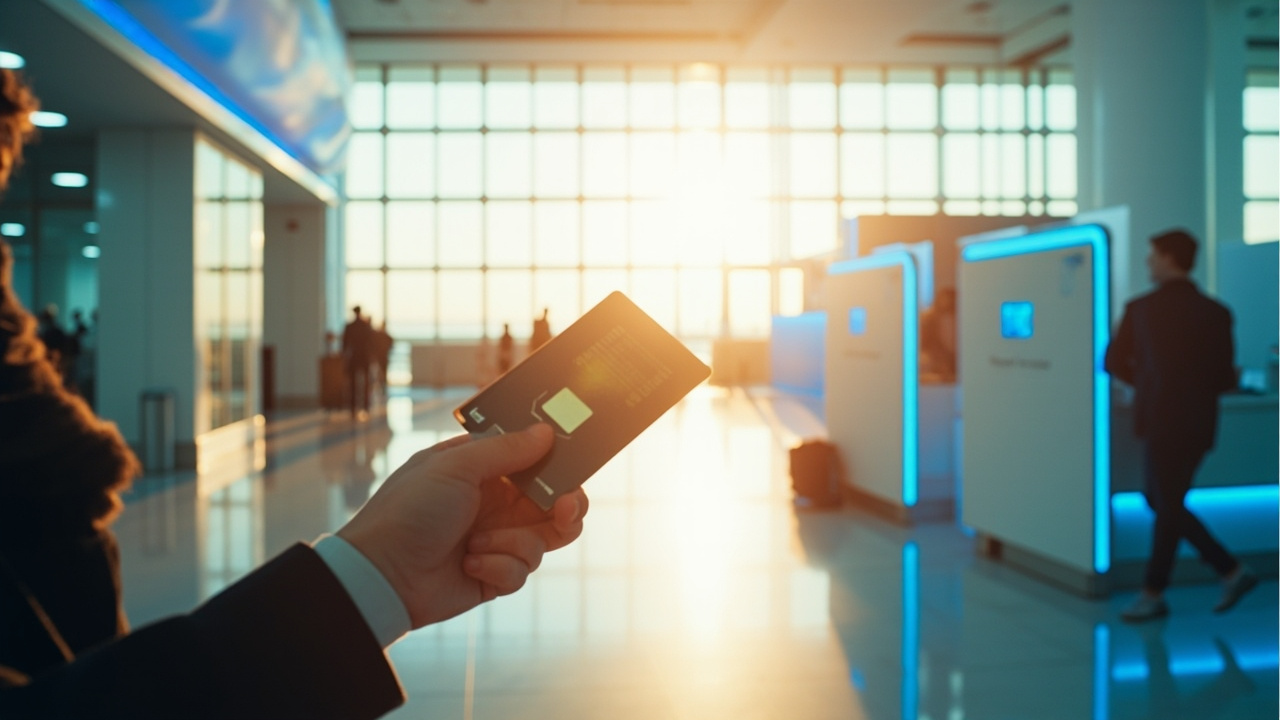
The first time I landed in Beijing, I made every mistake a traveler can make with a phone. I walked past the China Unicom counter in Terminal 3 because I was too jet-lagged to parse the queue system, bought a SIM from a random kiosk in the city that charged me triple the normal rate, and spent my first 48 hours in China navigating with screenshots of maps I’d taken before I left home. It was stupid, and it cost me time I’ll never get back.
I’ve lived in Beijing for seven years now and flown in and out of nearly every major airport in the country. I’ve bought SIM cards at 2 AM in Guangzhou, argued with a shop clerk in Chengdu about data packages, and watched a family of four from Texas struggle through the exact same confusion I had on day one. This guide is everything I wish someone had told me before that first landing.
You’ll learn exactly where to buy a SIM card at every major Chinese airport, what it should cost, what documents you need, and the one thing almost every foreign tourist gets wrong. By the time you land, you’ll know precisely which counter to walk to and what to say.
Quick answer
Most international tourists can buy a China SIM card at the airport arrivals hall from China Unicom, China Mobile, or China Telecom counters. A 30-day tourist SIM with 20-30GB of data costs about $25-35 (¥180-250). You’ll need your passport, and the whole process takes 10-15 minutes. Since 2024, China’s visa-free transit policy covers citizens of 54 countries for up to 240 hours (10 days), making the airport SIM purchase the fastest way to get connected.
The Short Version
Buy your SIM at the airport arrivals hall, not in the city. The airport counters are government-regulated, speak English, and won’t rip you off. China Unicom is your best bet for international compatibility. Budget $30 (¥215) for a 30-day package with enough data to survive. Bring your passport. Don’t bother with an eSIM unless you have a phone that supports it and you’ve tested it before you fly. And for the love of god, download WeChat and Alipay before you land, because you’ll need them for everything from paying for dumplings to hailing a taxi.
How I Picked These
I’ve bought SIM cards at Chinese airports at least 20 times over the past seven years. I’ve done it as a confused first-timer, as a returning resident, and as someone who once had to help a stranded German tourist who couldn’t get his phone working at 11 PM in Xi’an. I’ve compared prices across all three carriers at multiple airports, talked to the staff about their international packages, and tested the actual data speeds in cities and rural areas. This guide reflects what I’ve learned from those experiences, plus conversations with other expats and frequent travelers who’ve done the same circuit.
Comparison Table
| Rank | Airport | Best For | Approx Cost (USD) | Time Needed | When to Go |
|---|---|---|---|---|---|
| 1 | Beijing Capital (PEK) | Most international arrivals | $25-35 (¥180-250) | 10-15 min | Any time, counters open 24/7 |
| 2 | Shanghai Pudong (PVG) | Business travelers, cruise passengers | $25-35 (¥180-250) | 10-15 min | Morning, less crowded |
| 3 | Guangzhou Baiyun (CAN) | Southern China entry, budget travelers | $20-30 (¥145-215) | 10-15 min | Afternoon, shorter lines |
| 4 | Beijing Daxing (PKX) | Newer airport, smoother experience | $25-35 (¥180-250) | 10-15 min | Any time, modern facilities |
| 5 | Shenzhen Bao’an (SZX) | Hong Kong side trips, tech visitors | $20-30 (¥145-215) | 10-15 min | Evening, fewer crowds |
| 6 | Chengdu Tianfu (TFU) | Western China exploration | $20-30 (¥145-215) | 10-15 min | Morning, avoid peak arrival waves |
| 7 | Xi’an Xianyang (XIY) | History-focused travelers | $20-30 (¥145-215) | 10-15 min | Midday, shortest lines |
| 8 | Hangzhou Xiaoshan (HGH) | Yangtze Delta tourism | $20-30 (¥145-215) | 10-15 min | Any time |
| 9 | Kunming Changshui (KMG) | Yunnan province adventures | $20-30 (¥145-215) | 10-15 min | Afternoon |
| 10 | Chongqing Jiangbei (CKG) | Sichuan Basin travel | $20-30 (¥145-215) | 10-15 min | Evening |
1. Beijing Capital International Airport (PEK) — The Granddaddy of Chinese Airports
I remember standing in the arrivals hall at PEK Terminal 3 for the first time, exhausted after a 13-hour flight from London, staring at a wall of counters and feeling completely overwhelmed. The China Unicom counter was on the left, China Mobile in the middle, and China Telecom on the right. A young woman in a blue uniform smiled at me and said “Passport, please” in perfect English, and I was done in eight minutes.
PEK Terminal 3 is the main international terminal, and the SIM card counters are impossible to miss. They’re right in the arrivals area, before you exit into the main lobby. The staff here deal with hundreds of foreign tourists daily, so they’re efficient and speak enough English to get you sorted. Terminal 2, which handles some international flights including many budget carriers, also has counters but they’re smaller and sometimes have longer waits.
The China Unicom counter at PEK is my recommendation. Their tourist packages are straightforward, the data speeds are solid in Beijing, and their customer service line has English support. You’ll pay around $30 (¥215) for 30 days with 30GB of data, which is plenty for maps, translation apps, and the occasional video call home.
📍 Location: Arrivals hall, Terminal 3, before exiting to ground transportation 🎫 Entry fee: Free (SIM packages $25-35 / ¥180-250) 🕒 Opening hours: 24/7, but staff shift changes around 6-7 AM and 6-7 PM can mean slightly longer waits 🚕 How to get there: After baggage claim, follow signs for “SIM Card” or “Mobile Phone” — you can’t miss the counters 📅 When to visit: Any time, but early morning arrivals (5-8 AM) have the shortest lines 💡 Insider tips: The counters accept WeChat Pay and Alipay but also take international credit cards. Bring your passport, not a photocopy. If you’re connecting to a domestic flight, buy the SIM here anyway — domestic airports have fewer international SIM options.
I once watched a British couple argue with a China Mobile clerk for 20 minutes because they wanted a SIM “just like the one we have at home.” It doesn’t work that way here. Just take the tourist package and move on.
2. Shanghai Pudong International Airport (PVG) — The Efficient One
Shanghai Pudong feels like a different country compared to Beijing’s chaos. The airport is newer, the signage is clearer, and the SIM card counters are organized in a neat row near the exit. I’ve landed here at least ten times, and the process has never taken more than ten minutes.
The main international terminal is T1, and the SIM counters are in the arrivals corridor. China Unicom and China Mobile both have prominent booths, and they’re staffed by people who’ve clearly been trained to handle confused tourists. One clerk helped me set up my APN settings manually when my phone wasn’t auto-configuring, which I appreciated.
Shanghai’s airport counters are slightly more expensive than other cities, probably because they know they have a captive audience of business travelers. Expect to pay $30-35 (¥215-250) for a similar package to what you’d get in Beijing. The China Unicom store in the city center is cheaper, but honestly, the extra $5 isn’t worth the hassle of navigating Shanghai’s subway with no data.
📍 Location: Arrivals hall, T1, near Exit 5 🎫 Entry fee: Free (SIM packages $30-35 / ¥215-250) 🕒 Opening hours: 24/7 🚕 How to get there: Follow signs for “Arrivals” and look for the telecom booths near the main exit doors 📅 When to visit: Mornings are quieter; afternoon international arrivals (2-6 PM) create the longest queues 💡 Insider tips: If you’re flying into PVG and out of Hongqiao (SHA), buy your SIM here anyway. Hongqiao’s international terminal is small and the SIM options are limited. Also, Shanghai’s metro requires a separate app for tickets, so having data to download it before you leave the airport is essential.
I once saw a woman nearly miss her connecting flight because she was still arguing with a clerk about whether she needed a “data-only” or “voice + data” plan. Just get the standard tourist package. You don’t need voice minutes.
3. Guangzhou Baiyun International Airport (CAN) — The Budget-Friendly Option
Guangzhou’s airport is where I learned that SIM card prices aren’t uniform across China. The China Unicom counter here quoted me $20 (¥145) for a 30-day package that would’ve cost $30 (¥215) in Beijing. Same carrier, same data allowance, significantly cheaper.
The counters at Baiyun are in the arrivals hall of T1 and T2, and they’re usually less crowded than Beijing or Shanghai. The staff speak decent English, though you might encounter someone who needs to call a colleague for help with a tricky question. The airport is also where I’ve seen the most eSIM advertising — China Mobile has a dedicated eSIM counter that’s worth checking out if your phone supports it.
If you’re flying into Guangzhou as a gateway to southern China or Hong Kong, this is a solid place to get connected. The prices are better, the lines are shorter, and the staff are genuinely helpful. Just don’t expect the same level of English proficiency you’d find in Beijing or Shanghai.
📍 Location: Arrivals hall, T2 (main international terminal), near Gate 53 🎫 Entry fee: Free (SIM packages $20-30 / ¥145-215) 🕒 Opening hours: 24/7 🚕 How to get there: After customs, walk toward the main exit and look for the telecom booths on your left 📅 When to visit: Afternoon arrivals (1-5 PM) have the shortest waits 💡 Insider tips: Guangzhou’s airport has free Wi-Fi that requires SMS verification, which you can’t do without a Chinese number. Buy the SIM first, then connect. Also, if you’re heading to Hong Kong afterward, check if your package includes Hong Kong roaming — most don’t, and you’ll need a separate plan or a local HK SIM.
I paid for my SIM here with a crumpled $100 bill I’d exchanged at the airport bank, and the clerk patiently waited while I fumbled with my wallet. She didn’t rush me, which I appreciated after the chaos of international arrivals.
4. Beijing Daxing International Airport (PKX) — The New Kid That Got It Right
Daxing opened in 2019 and it shows. The airport is massive, futuristic, and designed with the kind of logic that makes you wonder why other airports don’t work this way. The SIM card counters are in a dedicated “Telecom Services” area that’s clearly signposted in English and Chinese.
I flew into Daxing for the first time in 2023, and the experience was almost pleasant. The China Unicom counter had a digital queue system, the clerk scanned my passport, and I was holding a working SIM in under seven minutes. The prices are the same as PEK, but the experience is smoother.
One thing to note: Daxing is far from central Beijing, about 46 kilometers south of the city. If you’re flying in here, you’ll want to get your SIM sorted before you tackle the Daxing Airport Express train, which costs about $4 (¥30) and takes 20 minutes to reach Caoqiao station.
📍 Location: Arrivals hall, Level 2, Telecom Services area 🎫 Entry fee: Free (SIM packages $25-35 / ¥180-250) 🕒 Opening hours: 24/7 🚕 How to get there: Follow signs for “Telecom Services” after baggage claim; the counters are near the airport express train entrance 📅 When to visit: Any time; the digital queue system keeps things moving 💡 Insider tips: Daxing’s counters accept international credit cards, which is rare in China. Also, the airport express train ticket machines accept WeChat Pay and Alipay, so set those up before you leave the airport. If you’re flying out of Daxing, the SIM counters are also in the departures area if you need a top-up.
The digital queue at Daxing is a small thing, but it made me realize how much easier travel is when the infrastructure actually works.
5. Shenzhen Bao’an International Airport (SZX) — The Hong Kong Gateway
Shenzhen’s airport is where I learned the value of asking for the “tourist package” specifically. The clerk at the China Mobile counter tried to sell me a more expensive business plan until I asked for the cheaper option. She shrugged, switched to the tourist package, and I saved $10 (¥70).
Bao’an is the main airport for Shenzhen, and it’s a popular entry point for travelers combining Hong Kong with mainland China. The SIM counters are in the arrivals hall of T3, and they’re efficient without being rushed. The staff speak basic English, enough to handle the standard transaction.
The key advantage of buying your SIM here is price. Shenzhen’s telecom market is competitive, and the tourist packages are among the cheapest in China. A 30-day package with 30GB of data will run you about $20-25 (¥145-180).
📍 Location: Arrivals hall, T3, near the metro entrance 🎫 Entry fee: Free (SIM packages $20-25 / ¥145-180) 🕒 Opening hours: 24/7 🚕 How to get there: After baggage claim, follow signs for “Metro” and you’ll pass the telecom counters on your way 📅 When to visit: Evening arrivals (6-10 PM) have the shortest lines 💡 Insider tips: If you’re heading to Hong Kong, buy a separate Hong Kong SIM or check if your package includes HK roaming. Also, Shenzhen’s metro requires a separate app, so make sure your data is working before you leave the airport.
I once helped a confused American couple at this counter who thought they needed to buy a SIM for their Hong Kong trip. They didn’t. I pointed them to the 7-Eleven in the arrivals hall instead.
6. Chengdu Tianfu International Airport (TFU) — The Gateway to the West
Chengdu’s new airport, Tianfu, opened in 2021 and replaced the older Shuangliu as the main international hub. It’s a beautiful airport, all swooping curves and natural light, but the SIM card counters are less prominent than at other airports. I wandered around for ten minutes before I found them.
The counters are tucked away near the metro entrance on Level B1, which is actually convenient if you’re taking the metro into the city. The staff are friendly and speak enough English to handle the basics. Prices are on par with Guangzhou, around $20-30 (¥145-215) for a 30-day package.
Chengdu is the launching point for western China adventures — Tibet, Sichuan, Yunnan — so make sure your SIM package covers the areas you’re visiting. Some remote areas have spotty coverage, but the major carriers all have decent networks in the tourist destinations.
📍 Location: Level B1, near the metro entrance 🎫 Entry fee: Free (SIM packages $20-30 / ¥145-215) 🕒 Opening hours: 24/7 🚕 How to get there: After baggage claim, take the escalator down to Level B1 and look for the telecom booths near the metro gates 📅 When to visit: Morning arrivals (8-11 AM) have the shortest waits 💡 Insider tips: The metro from Tianfu to downtown Chengdu takes about an hour, so make sure your SIM is working before you board. Also, Chengdu’s food scene is incredible, and you’ll want data to use Dianping (China’s Yelp) to find the best hotpot spots.
I bought my SIM here on a rainy Tuesday morning and ended up chatting with the clerk about her favorite hotpot place in the city. She wrote the name down on a receipt and I still have it somewhere.
7. Xi’an Xianyang International Airport (XIY) — The Historical Entry Point
Xi’an’s airport is smaller than the mega-hubs, which means the SIM card process is simpler and faster. The counters are in the arrivals hall, and there’s usually only one or two staff members on duty. If there’s a line, it moves quickly.
I’ve flown into Xi’an three times, and each time the SIM purchase has taken under five minutes. The staff are patient and used to dealing with tourists heading to see the Terracotta Warriors. They’ll even help you set up your phone if you’re having trouble.
The prices here are reasonable, around $20-30 (¥145-215) for a 30-day package. China Unicom and China Mobile both have counters, but China Mobile tends to have better coverage in the surrounding Shaanxi province countryside.
📍 Location: Arrivals hall, Terminal 3, near the exit 🎫 Entry fee: Free (SIM packages $20-30 / ¥145-215) 🕒 Opening hours: 24/7 🚕 How to get there: After baggage claim, walk toward the main exit and you’ll see the counters on your right 📅 When to visit: Midday (11 AM-2 PM) has the shortest lines 💡 Insider tips: If you’re planning to visit the Terracotta Warriors, download the official ticketing app before you leave the airport. It requires a Chinese phone number for registration, so buy your SIM first. Also, Xi’an’s metro system is excellent and cheap, but you’ll need data to use the ride-hailing app for the Terracotta Warriors trip.
I once watched a man at this counter try to negotiate the price of a SIM card like he was at a street market. The clerk just smiled and said, “Fixed price, sir.” It was a small moment of cultural education.
8. Hangzhou Xiaoshan International Airport (HGH) — The Scenic Route
Hangzhou’s airport is smaller than you’d expect for a city of its importance, but the SIM card counters are well-organized and efficient. The China Unicom counter is the most prominent, and the staff speak good English.
I flew into Hangzhou for a weekend trip to see West Lake, and the SIM purchase was the easiest part of my journey. The clerk processed my passport, handed me a SIM card, and I was connected before I even reached the taxi stand.
Prices are standard for eastern China, around $25-30 (¥180-215) for a 30-day package. The airport is about 30 kilometers from downtown Hangzhou, so you’ll want your data working before you tackle the metro or a taxi.
📍 Location: Arrivals hall, Terminal 3, near the taxi stand 🎫 Entry fee: Free (SIM packages $25-30 / ¥180-215) 🕒 Opening hours: 24/7 🚕 How to get there: After baggage claim, follow signs for “Taxi” and you’ll pass the telecom counters 📅 When to visit: Any time; the airport is rarely crowded 💡 Insider tips: Hangzhou is a popular weekend destination for Chinese tourists, so the airport gets busy on Friday evenings and Sunday afternoons. Avoid those times if you can. Also, the West Lake area has excellent public Wi-Fi, but you’ll still need data for ride-hailing and food delivery apps.
I met a retired couple from Australia at this counter who were on their third trip to China. They told me they always buy their SIM at the airport because “it’s the only place where the staff speak English.” They weren’t wrong.
9. Kunming Changshui International Airport (KMG) — The Yunnan Gateway
Kunming’s airport is one of the largest in China, which surprised me the first time I landed there. The SIM card counters are in the arrivals hall, and they’re staffed by people who are used to dealing with international tourists heading to Yunnan’s various attractions.
The prices here are slightly lower than the eastern cities, around $20-25 (¥145-180) for a 30-day package. The staff speak basic English, enough to handle the standard transaction, but you might need to be patient if you have questions.
Kunming is the gateway to Yunnan province, which includes popular destinations like Dali, Lijiang, and Shangri-La. Make sure your SIM package covers these areas, as some remote regions have spotty coverage.
📍 Location: Arrivals hall, near the exit to the metro 🎫 Entry fee: Free (SIM packages $20-25 / ¥145-180) 🕒 Opening hours: 24/7 🚕 How to get there: After baggage claim, follow signs for “Metro” and you’ll see the telecom counters on your way 📅 When to visit: Afternoon arrivals (1-5 PM) have the shortest lines 💡 Insider tips: Kunming’s altitude (about 1,900 meters) can affect some people, so take it easy on your first day. Also, the airport is about 25 kilometers from downtown, and the metro takes about 40 minutes. Make sure your SIM is working before you board.
I once helped a Korean tourist at this counter who was trying to explain that he needed a SIM card with more data for his photography trip. The clerk eventually understood and upgraded his package for a small fee.
10. Chongqing Jiangbei International Airport (CKG) — The Mountain City Connection
Chongqing’s airport is chaotic in a way that’s uniquely Chinese. The arrivals hall is always busy, and the SIM card counters are squeezed between a convenience store and a currency exchange booth. But the staff are efficient, and the process is straightforward.
I flew into Chongqing for a food tour and bought my SIM at the China Unicom counter. The clerk was young, spoke decent English, and had me sorted in under five minutes. The price was $20 (¥145) for a 30-day package, which was the cheapest I’ve found at any major Chinese airport.
Chongqing is a fascinating city, all steep hills and spicy food, and you’ll want data to navigate its confusing streets. The airport is about 20 kilometers from downtown, and the metro is the best way to get there.
📍 Location: Arrivals hall, Terminal 3, near the convenience store 🎫 Entry fee: Free (SIM packages $20-30 / ¥145-215) 🕒 Opening hours: 24/7 🚕 How to get there: After baggage claim, walk toward the metro entrance and you’ll see the counters on your left 📅 When to visit: Evening arrivals (6-10 PM) have the shortest lines 💡 Insider tips: Chongqing’s food is famously spicy, so have a plan for finding milder options if you’re not used to it. Also, the city’s topography means GPS can be unreliable, so download offline maps as a backup. The metro system is excellent and cheap, but you’ll need data to use the ride-hailing apps.
I once ate at a hotpot place in Chongqing recommended by the SIM card clerk, and it was the best meal I had in China that year. Sometimes the best tips come from unexpected places.
FAQ summary
For most international tourists, buying a SIM card at the airport arrivals hall is the fastest and most reliable option. Expect to pay $20-35 (¥145-250) for a 30-day package with 20-30GB of data from China Unicom, China Mobile, or China Telecom. You’ll need your passport, and the process takes 10-15 minutes. All three major carriers have counters at every major international airport, and they accept international credit cards, WeChat Pay, and Alipay. Since 2024, citizens of 54 countries can enter China visa-free for up to 240 hours (10 days), making the airport SIM purchase the first step in a seamless trip.
Q: Can I buy a SIM card at the airport in China? A: Yes, all major Chinese airports have SIM card counters in the arrivals hall from China Unicom, China Mobile, and China Telecom. The process takes 10-15 minutes, and you’ll need your passport.
Q: How much does a tourist SIM card cost in China? A: A 30-day tourist SIM with 20-30GB of data costs approximately $20-35 (¥145-250) depending on the airport and carrier. Prices are slightly higher in Beijing and Shanghai, lower in Guangzhou and Chongqing.
Q: What documents do I need to buy a SIM card in China? A: You need your passport. Some airports may also ask for your visa or entry stamp, but the passport is the primary requirement. Photocopies are not accepted.
Q: Can I use my own phone with a Chinese SIM card? A: Yes, as long as your phone is unlocked and supports the frequencies used in China. Most modern phones from the US, Europe, and Southeast Asia will work. The staff will help you set up the APN settings if needed.
Q: Do I need a VPN to use the internet in China? A: Yes, many Western websites and apps (Google, Facebook, Instagram, WhatsApp) are blocked in China. You’ll need a VPN installed before you arrive, as you can’t easily download one after landing.
Q: Can I use WeChat Pay and Alipay with a Chinese SIM card? A: Yes, you can set up WeChat Pay and Alipay with your passport and a Chinese phone number. This is essential for paying for almost everything in China, from restaurants to taxis.
Q: Is it better to buy a SIM card at the airport or in the city? A: The airport is better for most tourists. The counters are regulated, the staff speak English, and you’ll have data immediately for navigation and translation. City stores are cheaper but harder to find and may not have English-speaking staff.
The Honest Wrap-up
This guide is for the first-time visitor who wants to land in China and immediately have a working phone. It’s not for the budget traveler who’s willing to spend an hour navigating a city-center telecom store to save $5. It’s not for the tech-savvy traveler who’s already tested an eSIM and knows it works. For everyone else, the airport SIM purchase is the right move.
The one piece of advice I’d give a friend about to book their flight: download WeChat and Alipay before you leave home, and set up a VPN. The SIM card will give you data, but those three things will make your trip infinitely smoother. And when you land, walk straight to the China Unicom counter, hand over your passport, and ask for the tourist package. You’ll be connected before you’ve even collected your luggage.
Topics
More guides you may like

Top 10 Bridges in China
China's bridges are engineering marvels spanning mountains, rivers, and seas. Here are 10 of the most spectacular, from ancient stone to modern steel.
8 min read

Top 10 Buddhist Sites in China
From the Leshan Giant Buddha to the Dunhuang Caves, these 10 Buddhist sites represent 2,000 years of China's spiritual heritage.
9 min read

Top 10 Day Trips from Beijing You Shouldn't Miss
Beijing is packed with history, but some of China's best experiences are just a few hours away. Here are 10 day trips that will transform your visit.
9 min read

Top 10 Hidden Gems in China Off the Beaten Path
Beyond the Great Wall and Terracotta Warriors, China has incredible hidden destinations few tourists ever reach. Here are 10 underrated gems worth the detour.
9 min read

Top 10 Markets and Shopping Streets in China
From Shanghai's Bund to Beijing's Silk Street - 10 markets where foreigners can haggle, explore, and bring home authentic Chinese goods.
9 min read

Top 10 Museums in China You Shouldn't Miss
China's museums span 5,000 years of civilization. These 10 - from the Palace Museum to Xi'an's terracotta gallery - are unmissable for culture lovers.
9 min read