
China Tea Plantation Hangzhou Day Trip: The Complete 2026 Guide
The rain came in off the mountains sideways that morning. I was standing under the tin roof of a tea-drying shed in Longjing village.
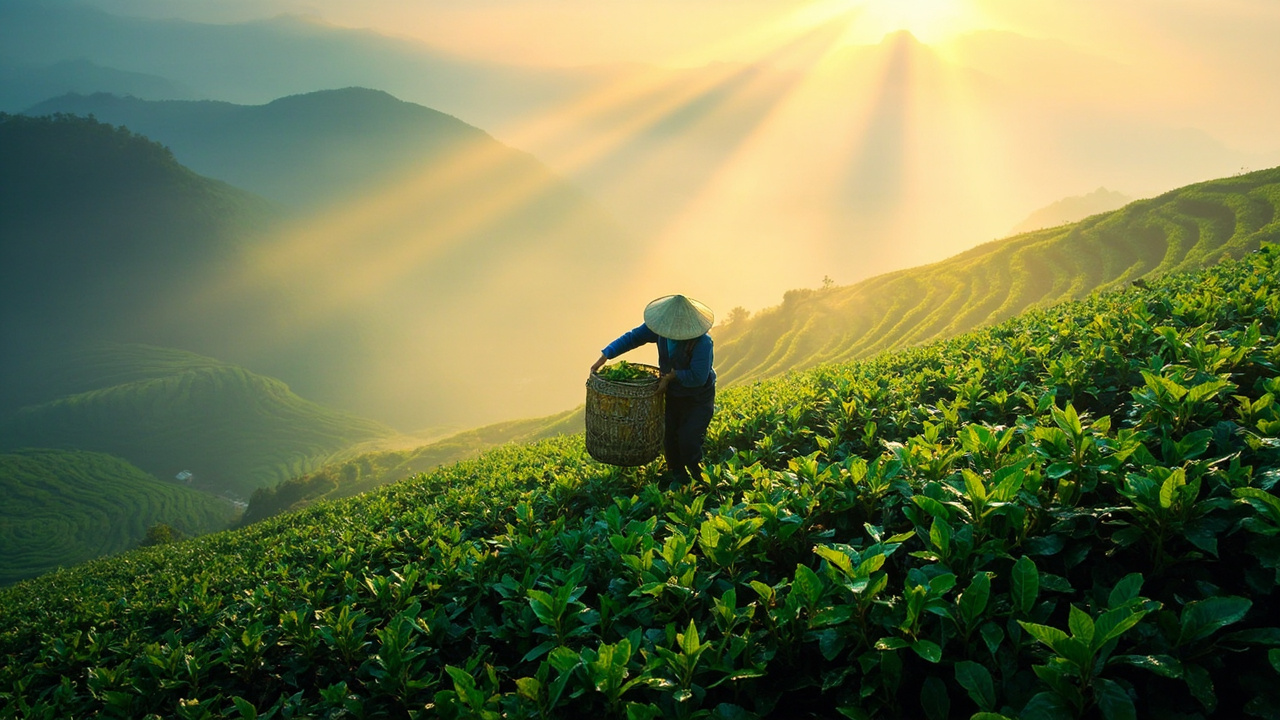
The rain came in off the mountains sideways that morning. I was standing under the tin roof of a tea-drying shed in Longjing village, watching a woman named Chen flip leaves in a wok with her bare hands. The heat from the iron pan hit my face while the damp air from the hills rolled in behind me. She didn’t look up. She just said, “Forty minutes in this pan. That’s what makes it taste like Longjing.” I’d been coming to Hangzhou for years, but that moment, with the steam and the tea smell and the rain, is the one I keep coming back to.
Hangzhou’s tea country is not a single place. It’s a patchwork of villages, hills, and temple paths that happen to grow the most famous green tea in China. Most tourists see West Lake, take a selfie, and leave. That’s a mistake. The real Hangzhou is up in the hills, where the tea terraces curve with the landscape and the only sounds are birds and the occasional scooter.
This guide covers ten places worth your time on a day trip from Hangzhou proper. I’ve walked every one of these routes, gotten lost on at least three of them, and paid too much for tea at two of them so you don’t have to. You’ll get exact directions, honest opinions, and the stuff that’s actually worth your money.
Quick answer
A day trip from Hangzhou to the tea plantations is completely doable without a tour guide. Budget around $30-50 (CNY 220-360) for transport, food, and tea purchases. The best time is late March to early April for the spring harvest, but May and October are excellent too. You don’t need a car; public buses and taxis get you everywhere, and most villages are walkable once you’re there.
The Short Version
If you only have one day, do this: take the bus to Longjing Village in the morning, walk the tea terraces, eat lunch at a farmhouse restaurant, then walk down to the China National Tea Museum. Skip the crowded West Lake boat rides. Buy tea directly from a farmer, not a shop near the lake. Wear shoes you don’t mind getting muddy. Bring cash for the small vendors who don’t take cards. And for God’s sake, don’t buy the tea that comes in the fancy gift boxes; the good stuff is in plain bags.
How I Picked These
I’ve been living in Beijing since 2019 and have made the trip to Hangzhou more times than I can count. For this guide, I spent four days in the tea region in April 2025, walking every trail, talking to farmers, and drinking more Longjing than my nervous system appreciated. I also went back in October to check the autumn conditions. I don’t trust blog posts written by people who visited for six hours. Every place here, I’ve visited at least twice, in different seasons, and I’ve made the mistakes so you don’t have to.
Comparison Table
| Rank | Place | Best For | Approx Cost (USD) | Time Needed | When to Go |
|---|---|---|---|---|---|
| 1 | Longjing Village | Classic tea terraces | Free (tea extra) | 2-3 hours | March-April |
| 2 | China National Tea Museum | Understanding tea history | Free | 1-2 hours | Year-round |
| 3 | Meijiawu Village | Quieter alternative to Longjing | Free | 1-2 hours | April-May |
| 4 | Yunqi Bamboo Forest | Walking path through tea and bamboo | $2 (CNY 15) | 1-2 hours | Any season |
| 5 | Lingyin Temple | Buddhist temple + tea fields | $34 (CNY 250) | 2-3 hours | Weekday mornings |
| 6 | Shuangfeng Village | Small-scale tea production | Free | 1 hour | March-April |
| 7 | Hangzhou Botanical Garden | Tea science + casual stroll | $4 (CNY 30) | 1-2 hours | April-June |
| 8 | Jiuxi Yanshu Trail | Hiking through tea valleys | Free | 2-3 hours | Spring/autumn |
| 9 | Longjing Tea Cultural Museum | Interactive exhibits | Free | 1 hour | Year-round |
| 10 | West Lake Tea Houses | Tea with a view | $10-20 | 1 hour | Sunset |
Longjing Village ?The One Everyone Talks About
I remember my first visit to Longjing village. I was expecting something polished, a tourist trap dressed up as authenticity. Instead, I found old stone houses with tea-drying racks in the courtyards and grandmothers sitting on stools, picking through leaves with the patience of people who’ve done it for fifty years. The village sits in a bowl of green terraces that rise on all sides, and the air smells like chestnuts, which is apparently what fresh Longjing is supposed to smell like. I didn’t know that then.
This is the heart of Dragon Well tea country. The name Longjing literally means “Dragon Well,” and the tea grown here is considered the best in China. The terraces are steep and the paths between them are narrow, but that’s part of the charm. You can walk right through the middle of the working fields. Farmers will wave at you. Some will offer you tea. A few will try to sell you their harvest, and honestly, if they’re drinking it themselves, it’s probably good.
📍 Location: Longjing Village, Xihu District, about 8 km southwest of West Lake 🎫 Entry fee: Free to walk the village and terraces 🕒 Opening hours: Always open; tea shops typically 8am-6pm 🚕 Getting there: Take bus 27 from the West Lake area to Longjing Village stop, or taxi from downtown Hangzhou for about $8 (CNY 60). The bus takes 40 minutes. 📅 When to visit: Late March to early April for the first harvest. Weekday mornings are quiet. Avoid weekends in April; it gets crowded. 💡 Insider tips:
- Buy tea from farmers who are actively drying leaves, not from shops with fancy packaging
- The “first flush” tea (pre-Qingming) costs $200+ per 500g; the second flush is half the price and 90% as good
- Walk up the hill behind the village for the best photo spots
- Don’t touch the tea leaves drying on bamboo trays; it’s considered bad luck
- Bring small bills; farmers rarely have change for large notes
I bought 500 grams from a farmer named Uncle Wang who insisted on brewing me three cups before he’d let me pay. He charged me $40 (CNY 290), which was fair for the quality, and he threw in a bag of the cheaper autumn tea as a gift.
China National Tea Museum ?Tea History Without the Fluff
The first time I went to the China National Tea Museum, I expected a dusty collection of old teapots. Instead, I spent three hours wandering through exhibits on tea processing, the Silk Road trade, and the cultural rituals that grew up around the drink. The building itself is modern, with clean lines and lots of natural light, and it sits right at the edge of the tea fields, so you can look out the windows at the actual plants while learning about them.
The museum does something most Chinese museums don’t: it explains things clearly, with good English signage throughout. You’ll learn about the six types of Chinese tea, how to tell good Longjing from mediocre, and why the water matters as much as the leaves. There’s also a tea-tasting room where you can sample different varieties for a small fee.
📍 Location: 88 Longjing Road, Xihu District, next to the tea fields 🎫 Entry fee: Free (tasting sessions $3-5 / CNY 20-35) 🕒 Opening hours: 9am-5pm, closed Mondays 🚕 Getting there: Take bus 27 or 87 to the museum stop, or walk 20 minutes from Longjing Village 📅 When to visit: Any time of year; the museum is climate-controlled and the exhibits don’t depend on season 💡 Insider tips:
- The tasting room is worth the extra money; you’ll learn more in 20 minutes than in an hour of reading
- Go in the morning, then walk the tea fields behind the museum afterward
- The gift shop sells decent tea at fair prices, but the selection is limited
- Ask about the “water quality” exhibit; it’s more interesting than it sounds
- The museum has free lockers for your bags, which is rare in China
I met a retired professor there who was visiting from Shanghai. He spent twenty minutes explaining why the mineral content of the local spring water changes the flavor of the tea. I didn’t understand half of it, but I nodded a lot and bought the book he recommended.
Meijiawu Village ?The Quiet Alternative
Meijiawu is what Longjing Village was twenty years ago, before the tour buses found it. It’s a smaller village, less polished, with tea fields that roll right up to the back doors of the farmhouses. The first time I went, I was the only foreigner there. An old woman waved me into her courtyard and poured me a cup of tea without asking if I wanted it. That’s the kind of place this is.
The tea here is good, though not quite at Longjing’s level. But the experience is better, in my opinion. You can sit in a farmer’s courtyard, drink tea that was picked that morning, and watch the light change on the hills. There are a few small restaurants that serve simple farm food, and the prices are half what you’d pay in the tourist areas.
📍 Location: Meijiawu Village, Xihu District, about 10 km from West Lake 🎫 Entry fee: Free 🕒 Opening hours: Always open; farmhouse tea houses typically 8am-7pm 🚕 Getting there: Take bus 324 from the city center to Meijiawu stop, or taxi for about $10 (CNY 75). The bus takes 50 minutes. 📅 When to visit: April-May for the best tea; October for the autumn harvest. Weekdays are blissfully quiet. 💡 Insider tips:
- The farmhouse restaurants serve excellent local dishes; try the bamboo shoots and the river fish
- Ask for “tea from this year” (今年的茶); if they hesitate, it’s last year’s
- Some farmers will let you try your hand at picking leaves; it’s harder than it looks
- The village has a small temple at the top of the hill worth the climb
- Bring a water bottle; the tea houses will refill it with hot water for free
I spent an afternoon at a farmhouse where the owner, a woman named Auntie Zhang, taught me to distinguish first-flush from second-flush tea by the shape of the leaves. I still can’t do it reliably, but she was patient.
Yunqi Bamboo Forest ?Tea and Bamboo, Together
The path through Yunqi Bamboo Forest starts with a stone archway and immediately drops you into a green tunnel. The bamboo towers overhead, and the tea fields are tucked between the groves, so you get this strange and beautiful mix of tall green stalks and low green bushes. I walked it on a misty morning once, and I genuinely felt like I was in a wuxia movie.
The trail is about 3 kilometers long, mostly flat, and takes you from the bamboo forest down through tea terraces to the road below. It’s not a hard walk, but it’s long enough to work up an appetite. There are a few pavilions along the way where you can sit and listen to the wind in the bamboo, which sounds like rain even when it’s dry.
📍 Location: Yunqi Bamboo Forest, Xihu District, near the intersection of Meiling South Road and Yunqi Road 🎫 Entry fee: $2 (CNY 15) for the bamboo section; the tea fields are free 🕒 Opening hours: 8am-5pm 🚕 Getting there: Take bus 324 or 103 to Yunqi Zhujing stop, or taxi from Longjing Village for about $5 (CNY 35) 📅 When to visit: Any season; the bamboo stays green year-round. Early morning is best for light and fewer people. 💡 Insider tips:
- Enter from the top (near Meiling South Road) and walk downhill; it’s easier
- The tea fields at the bottom are less visited than Longjing’s, so you’ll have them mostly to yourself
- There’s a small temple at the halfway point with a tea house
- The path connects to the Jiuxi Yanshu Trail if you want a longer hike
- Bring mosquito repellent in summer; the bamboo groves hold water and bugs
I got lost on this trail once, took a wrong turn, and ended up in a farmer’s yard where a dog barked at me until the farmer came out and pointed me back to the path. He didn’t speak English, and I don’t speak much Chinese, but we both laughed about it.
Lingyin Temple ?Big Temple, Big Crowds, Big Views
Lingyin Temple is one of the most famous Buddhist temples in China, and it shows. The crowds are relentless, the entrance fee is steep, and the whole experience can feel like a theme park. But here’s the thing: the temple grounds include a hillside covered in tea terraces that most visitors never see. I only discovered them on my third visit, when I took a wrong turn looking for a bathroom.
The temple itself is impressive, with massive halls and gold-leafed statues. The surrounding hills are covered in carvings and smaller shrines. But the tea terraces, which sit behind the main temple complex, are the real prize. They’re quiet, peaceful, and offer views over the temple roofs and the valley beyond.
📍 Location: Lingyin Road, Xihu District, about 6 km from West Lake 🎫 Entry fee: $34 (CNY 250) for the temple and the Flying Peak carvings 🕒 Opening hours: 7am-6pm (shorter hours in winter) 🚕 Getting there: Take bus 7, 407, or 8074 to Lingyin stop, or taxi from downtown for about $7 (CNY 50) 📅 When to visit: Weekday mornings before 9am. Avoid Buddhist holidays and weekends entirely. 💡 Insider tips:
- The tea terraces are behind the main hall; look for the path near the vegetarian restaurant
- The vegetarian restaurant inside the temple is excellent and cheap
- The entrance fee includes the Flying Peak carvings, which are worth seeing
- Don’t buy tea from the vendors at the temple gate; it’s overpriced and mediocre
- The temple sells its own tea in the gift shop, grown on the terraces, and it’s actually good
I watched a monk in gray robes walk through the tea terraces at sunset, carrying a plastic watering can. It was such a mundane image, so different from the grand temple halls, and it’s the one I remember most clearly.
Shuangfeng Village ?Small-Scale Production
Shuangfeng is a working village, not a tourist destination. There are no tea houses with English menus, no gift shops, no signs pointing to viewpoints. What you get instead is a look at how tea is actually made, from picking to processing to packaging. I wandered in on a Saturday in April and found a family drying tea in their front yard, the whole operation spread out on bamboo trays.
The village is small, maybe fifty houses, and most of them are involved in tea production. In the spring, you’ll see people picking leaves in the fields, carrying them back in baskets, and firing them in woks. It’s honest work, and watching it gives you an appreciation for why good Longjing costs what it costs.
📍 Location: Shuangfeng Village, Xihu District, near the intersection of Longjing Road and Meiling South Road 🎫 Entry fee: Free 🕒 Opening hours: Always open; best in the morning when picking is happening 🚕 Getting there: Take bus 27 to Shuangfeng stop, or walk 20 minutes from Longjing Village 📅 When to visit: Late March to mid-April for the main harvest. Morning is best. 💡 Insider tips:
- This is the place to buy tea if you want to skip the tourist markup
- The farmers here are used to selling to wholesalers, so they’ll give you a fair price if you ask directly
- Bring a translation app; almost no one speaks English here
- The village has a small temple at its center worth a quick look
- If you see a family firing tea in a wok, ask to watch; they’ll usually let you
I bought tea here from a man who communicated with me through a translation app. He kept apologizing for the app’s bad English, but we managed to agree on a price for 250 grams of excellent first-flush tea. It was the best purchase of my trip.
Hangzhou Botanical Garden ?Tea Science for the Curious
The botanical garden is not primarily a tea destination, but it has a section dedicated to tea that’s worth a visit if you’re curious about the plant itself. There’s a small tea plantation with labeled varieties, a greenhouse with camellia plants, and a few informational panels about tea cultivation. It’s more academic than the other places on this list, and that’s exactly why I like it.
The garden is also a lovely place for a walk, with ponds, bridges, and paths that wind through different ecosystems. In April, the azaleas are in bloom, and the whole place smells like spring. It’s a good option if the weather is bad and you want something that doesn’t depend on being outdoors.
📍 Location: 1 Taoyuanling, Xihu District, near the northwest corner of West Lake 🎫 Entry fee: $4 (CNY 30) 🕒 Opening hours: 7am-5:30pm 🚕 Getting there: Take bus 28 or 82 to Botanical Garden stop, or taxi from downtown for about $5 (CNY 35) 📅 When to visit: April-June for the flowers; any time for the tea section 💡 Insider tips:
- The tea section is at the back of the garden; follow the signs or ask at the entrance
- The garden has a nice cafe with decent coffee, which is rare in this part of China
- Combine this with a visit to the nearby Baoshi Mountain for views over West Lake
- The garden is popular with locals on weekends; go on a weekday if you can
- The labeled tea varieties are worth reading even if you don’t understand Chinese; the Latin names help
I spent an hour in the tea section reading every panel, and a garden worker came over to ask if I needed help. When I said no, she nodded and went back to pruning. That’s the kind of low-key place this is.
Jiuxi Yanshu Trail ?The Hiker’s Choice
The Jiuxi Yanshu Trail, which translates roughly to “Nine Creeks and Eighteen Gullies,” is a walking path that follows a stream through a valley of tea terraces and forest. It’s about 5 kilometers from top to bottom, and it’s one of my favorite walks in all of China. The path is paved with stones, crosses the stream multiple times, and passes through several small tea-growing areas.
The trail starts near the top of the valley, close to Longjing Village, and descends to the Qiantang River. It’s downhill most of the way, which is nice, but the uneven stones will test your ankles. I’ve done it in both directions, and downhill is definitely better.
📍 Location: Starts near Longjing Village, ends near the Qiantang River, Xihu District 🎫 Entry fee: Free 🕒 Opening hours: Always open 🚕 Getting there: Take bus 27 to Longjing Village and walk to the trailhead, or take bus 4 to the bottom and walk up 📅 When to visit: Spring and autumn are ideal. Avoid summer afternoons; it gets hot and humid. 💡 Insider tips:
- Start early and you’ll have the trail mostly to yourself
- There are small tea houses along the way, but they’re few and far between; bring water
- The trail crosses the stream many times; wear shoes that can get wet
- At the bottom, you can catch a bus back to the city easily
- The best photo spots are about a third of the way down, where the terraces open up
I did this trail with a friend from Shanghai who insisted on stopping at every tea house. By the end, we’d had four cups of tea and were both bouncing off the walls. The walk down was very fast.
Longjing Tea Cultural Museum ?Small But Specific
This is a smaller museum dedicated specifically to Longjing tea, located in a restored traditional house in the middle of the tea fields. It’s not as comprehensive as the national museum, but it’s more focused, and the setting is better. You can look out the windows at the actual tea terraces while learning about the history of this specific tea.
The museum has exhibits on the history of Longjing, the imperial connection (Emperor Qianlong supposedly visited the area), and the production process. There’s also a small tea room where you can taste different grades of Longjing and learn to distinguish them. It’s a good stop if you’re already in the area and want to deepen your understanding.
📍 Location: Longjing Road, Xihu District, near the Longjing Village bus stop 🎫 Entry fee: Free 🕒 Opening hours: 9am-5pm, closed Mondays 🚕 Getting there: Take bus 27 to Longjing Village stop; the museum is a 5-minute walk 📅 When to visit: Any time; combine with a walk through the surrounding fields 💡 Insider tips:
- The tasting room is the highlight; the staff are knowledgeable and happy to answer questions
- The museum is small; you can see everything in under an hour
- The gift shop sells tea at reasonable prices, but the selection is limited
- Ask about the “imperial tea” exhibit; the story is interesting
- The museum has clean bathrooms, which is more useful than it sounds
I sat in the tasting room for forty minutes, trying to identify the differences between three grades of Longjing. I got two out of three right, which the staff member said was better than most visitors.
West Lake Tea Houses ?Tea With a View
Yes, West Lake is touristy. Yes, it’s crowded. But sitting at a tea house on the lake’s edge, watching the boats drift by and the willows sway, is still one of the most pleasant ways to spend an hour in Hangzhou. The tea houses range from simple outdoor stalls to fancy establishments, and the quality of the tea varies accordingly.
The best ones, in my opinion, are the simple ones near the southern end of the lake, where the crowds thin out a bit. You can get a pot of Longjing for $5-10 (CNY 35-70) and sit for as long as you want. The view is the same as from the expensive places, but the price is a fraction.
📍 Location: Various spots along the shores of West Lake, Xihu District 🎫 Entry fee: Free to sit in most places; tea costs extra 🕒 Opening hours: Most open 8am-10pm 🚕 Getting there: Take the metro to Longxiangqiao Station (Line 1), Exit A, and walk to the lake 📅 When to visit: Sunset is the best time; the light on the lake is beautiful 💡 Insider tips:
- The tea houses near the Broken Bridge are the most expensive; walk south for better prices
- Bring your own tea if you want to save money; some places charge a “seat fee” only
- The lake is best in the early morning or late afternoon, when the tour groups are elsewhere
- Watch out for “tea sellers” who approach you near the lake; they’re usually selling overpriced, low-quality tea
- If you’re there in spring, the peach blossoms near the Su Causeway are stunning
I sat at a tea house near the southern shore one evening, watching the sun set behind the mountains. A group of elderly locals at the next table were playing cards and arguing loudly. The tea was mediocre, but the moment was perfect.
FAQ summary
For a Hangzhou tea plantation day trip, budget $30-50 (CNY 220-360) total, go in late March or early April for the best tea, and use public buses or taxis to reach the villages. Longjing Village is the most famous but Meijiawu is quieter and more authentic. Most tea is bought directly from farmers, and you should expect to pay $40-80 (CNY 290-580) per 500 grams for good quality. The China National Tea Museum is free and worth visiting. You don’t need a tour guide; the area is well-connected by public transport and walkable once you arrive.
FAQ
Q: Do I need a visa to visit Hangzhou from the US, UK, or Europe in 2026? A: China’s visa-free transit policy allows stays up to 240 hours (10 days) for citizens of 54 countries, including the US, UK, and most of Europe, when transiting to a third country. If you’re entering China directly and staying longer, you’ll need a visa. Check the latest rules before you book.
Q: How do I get from downtown Hangzhou to the tea plantations? A: Take bus 27 from the West Lake area to Longjing Village, which takes about 40 minutes and costs less than $1 (CNY 5). Taxis from downtown cost $8-10 (CNY 60-75). The metro doesn’t reach the tea villages directly, but Line 1 gets you close to West Lake, where you can transfer to buses.
Q: What’s the best time of year to visit the tea plantations? A: Late March to early April is the spring harvest, when the freshest tea is available. The weather is mild and the hills are green. October is the autumn harvest, which is also good. Summer is hot and humid, and winter is cold and gray, though the tea fields still look nice.
Q: How much does good Longjing tea cost? A: First-flush Longjing (picked before Qingming, early April) costs $100-300 (CNY 700-2100) per 500 grams. Second-flush tea (picked later in April) is $40-80 (CNY 290-580) per 500 grams and is 90% as good. Autumn tea is cheaper still, around $20-40 (CNY 140-290). Don’t pay more than $300 for anything; it’s not worth it.
Q: Do I need to speak Chinese to visit the tea villages? A: No, but it helps. In Longjing Village and the museums, some English is spoken. In smaller villages like Meijiawu and Shuangfeng, almost no one speaks English, so download a translation app like Pleco or Google Translate before you go. Most tea farmers are used to communicating with non-Chinese speakers through apps.
Q: Can I pay with a credit card at the tea plantations? A: No. Most small vendors and tea farmers only accept cash or Chinese mobile payment apps like WeChat Pay and Alipay. Set up Alipay before you arrive; it works with international cards and is accepted almost everywhere. Bring some cash as backup, especially for the smallest vendors.
Q: Do I need a VPN for my phone in China? A: Yes. Google, Facebook, Instagram, and WhatsApp are blocked in China. Download a VPN before you arrive and test it before you land. A local SIM card from China Mobile or China Unicom gives you data, but you’ll still need the VPN to access blocked sites.
The Honest Wrap-up
This list is for travelers who want to see the real Hangzhou, not just the postcard version. If you’re happy with a quick look at West Lake and a selfie at the pagoda, you don’t need this guide. But if you want to understand why Chinese people have been obsessed with this tea for a thousand years, get off the main path and into the hills.
The best advice I can give you is to slow down. Don’t try to see all ten places in one day. Pick two or three, sit down, drink the tea, and watch the farmers work. The tea will taste better, and you’ll remember the trip longer.
One more thing: when you buy tea, don’t be afraid to negotiate. The farmers expect it, and they’ll respect you more for it. Just be polite about it.
Now go. The hills are waiting.
Topics
More guides you may like
Top 10 Bridges in China
China's bridges are engineering marvels spanning mountains, rivers, and seas. Here are 10 of the most spectacular, from ancient stone to modern steel.
8 min read

Top 10 Buddhist Sites in China
From the Leshan Giant Buddha to the Dunhuang Caves, these 10 Buddhist sites represent 2,000 years of China's spiritual heritage.
9 min read
Top 10 Day Trips from Beijing You Shouldn't Miss
Beijing is packed with history, but some of China's best experiences are just a few hours away. Here are 10 day trips that will transform your visit.
9 min read
Top 10 Hidden Gems in China Off the Beaten Path
Beyond the Great Wall and Terracotta Warriors, China has incredible hidden destinations few tourists ever reach. Here are 10 underrated gems worth the detour.
9 min read
Top 10 Markets and Shopping Streets in China
From Shanghai's Bund to Beijing's Silk Street - 10 markets where foreigners can haggle, explore, and bring home authentic Chinese goods.
9 min read
Top 10 Museums in China You Shouldn't Miss
China's museums span 5,000 years of civilization. These 10 - from the Palace Museum to Xi'an's terracotta gallery - are unmissable for culture lovers.
9 min read