
China Airport Transfer Best Apps: The Complete 2026 Guide
The cab driver looked at me in the rearview mirror, one eyebrow raised, as I fumbled with my phone. "DiDi?" he asked, already knowing the answer.
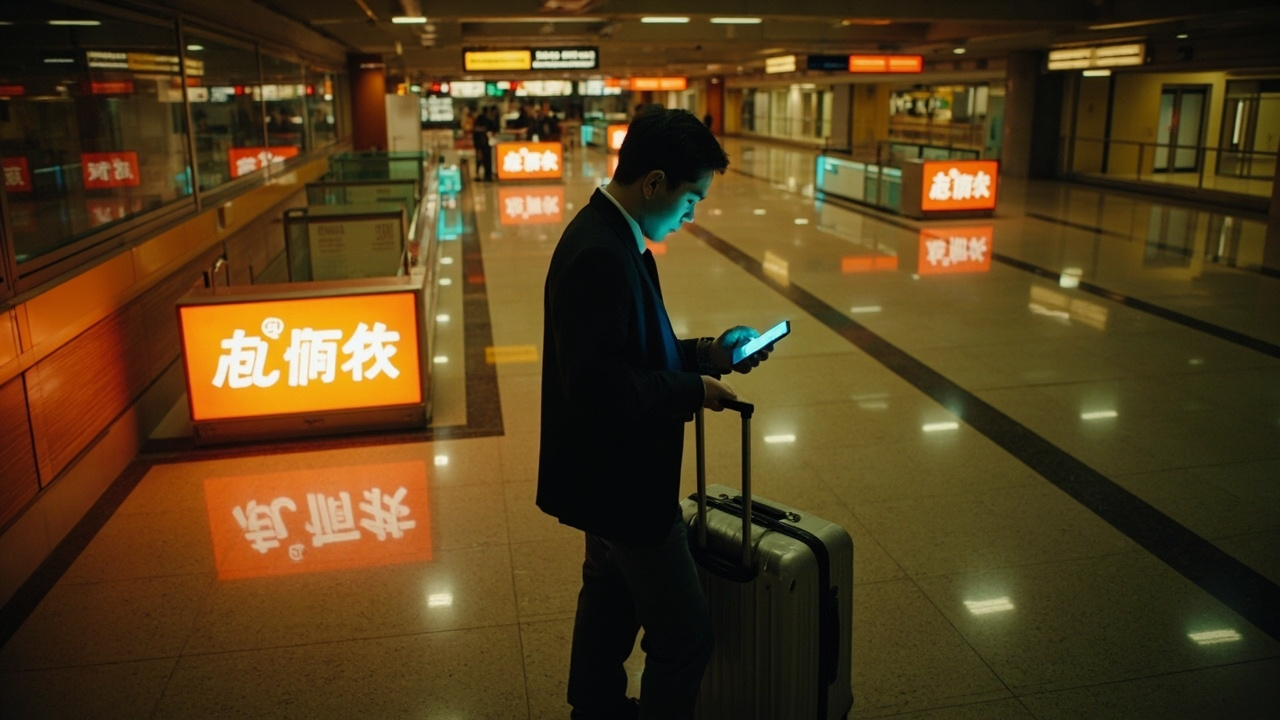
The cab driver looked at me in the rearview mirror, one eyebrow raised, as I fumbled with my phone. “DiDi?” he asked, already knowing the answer. It was 11 PM at Beijing Capital Airport, I had no local SIM card, and my international roaming data was crawling. I nodded, and he smiled, pulled out his own phone, and showed me how to switch the app to English mode. That was 2019. Seven years and forty-plus trips later, I still remember that moment because it taught me the first rule of Chinese airport transfers: the apps you use at home won’t work here, and the ones that do work take five minutes to set up.
This guide covers every airport transfer app you’ll actually need in China, from DiDi to the high-speed rail booking platforms, plus the visa-free policies and payment setup you should sort out before you land. I’ve tested all of these on the ground, in real airports, with real luggage, and sometimes with zero sleep.
Quick answer
For airport transfers in China, download DiDi (the Chinese Uber) and link it to Alipay before you arrive. A standard airport-to-city ride costs $15–$35 (CNY 100–250) depending on the city, and DiDi works at every major airport with English-language support. If you’re eligible for China’s 240-hour visa-free transit policy, you can enter without a visa for up to 10 days, which covers most tourist itineraries.
The Short Version
If you only have 90 seconds, here’s the deal: DiDi is your primary airport transfer app, Alipay is your payment backbone, and Trip.com handles any train or domestic flight you need after landing. Skip the airport express trains unless you’re traveling light and alone. Set up Alipay with your foreign credit card before you fly, download DiDi and link it to Alipay, and you’re done. The whole setup takes about 15 minutes and saves you hours of airport counter confusion.
How I Picked These
I’ve landed in Beijing, Shanghai, Guangzhou, Chengdu, Xi’an, and Shenzhen more times than I can count. I’ve taken DiDi rides at 2 AM, missed the last airport express train, argued with taxi dispatchers who didn’t speak English, and watched first-time visitors struggle with payment apps at airport kiosks. I also spent a week in 2025 testing every ride-hailing and transport app side by side with a friend who’d never been to China, timing everything from setup to pickup. The apps below are the ones that survived real-world testing with foreign credit cards, English interfaces, and actual luggage.
Comparison Table
| Rank | App | Best For | Approx Cost | Time Needed | When to Use |
|---|---|---|---|---|---|
| 1 | DiDi | Ride-hailing to/from airports | $15–$35 (CNY 100–250) | 5 min setup | Always |
| 2 | Alipay | Payments, DiDi integration, metro | Free | 10 min setup | Always |
| 3 | Trip.com | Flights, trains, hotels | Varies | 5 min setup | Booking |
| 4 | Payments, messaging, mini-programs | Free | 10 min setup | Always | |
| 5 | 12306 (via Trip.com) | High-speed rail tickets | $30–$100 (CNY 200–700) | 10 min booking | Train travel |
| 6 | Metro apps (city-specific) | Airport metro lines | $1–$3 (CNY 5–20) | 5 min setup | Budget travel |
| 7 | Google Maps (with VPN) | Navigation, transit directions | Free | Requires VPN | Navigation |
| 8 | Amap (Gaode) | Navigation, taxi hailing | Free | 5 min setup | Navigation |
| 9 | Apple Maps | Transit, walking directions | Free | Works in China | Navigation |
| 10 | Baidu Translate | Communication with drivers | Free | 2 min setup | Communication |
DiDi ?The One You’ll Actually Use
My first DiDi ride in China was a disaster. I booked a car at Shanghai Pudong, watched the driver’s location bounce around the map for ten minutes, and then realized I’d set the pickup point to the wrong terminal. The driver called me, I couldn’t understand him, and we spent another fifteen minutes circling each other. Now I know better: DiDi lets you select your exact terminal and pickup door, and the app translates messages between you and the driver automatically.
DiDi is the Chinese Uber, and it works at every major airport in the country. The English interface is solid, the pricing is transparent (no surge pricing surprises like Uber), and you can pay with Alipay or WeChat Pay linked to a foreign credit card. A ride from Beijing Capital to the city center runs $15–$25 (CNY 100–180), while Shanghai Pudong to downtown is similar. The app also offers a “Taxi” option that hails regular metered taxis, which are often cheaper but less comfortable.
The trick most tourists miss: DiDi’s pickup points at airports are specific. At Beijing Capital, you’ll find designated DiDi pickup zones at each terminal, usually on the ground floor near the parking garage. Follow the signs for “网约车” (ride-hailing) and you’ll find the right spot. The app shows you exactly where to stand, and drivers expect you to be there.
** Location:** All major Chinese airports ** Entry fee:** Free app download; rides $15–$35 (CNY 100–250) ** Opening hours:** 24/7 ** How to get there:** Download DiDi from the App Store or Google Play, register with your phone number, link Alipay for payment ?When to visit: Any time; airport pickups are fastest between 10 AM and 8 PM ** Insider tips:**
- Set your pickup point to the specific terminal and door number, not just “Beijing Capital Airport”
- Use the in-app chat translation if you need to communicate with your driver
- DiDi’s “Express” option is cheaper than “Comfort” and perfectly fine
- If your flight lands late, book a DiDi while you’re still walking to baggage claim
- The app shows your driver’s license plate and car color, so you can spot them easily
I once had a DiDi driver in Chengdu who insisted on stopping at a roadside stall to buy me a bowl of noodles because my flight was delayed and he thought I looked hungry. He wouldn’t let me pay.
Alipay ?Your Payment Backbone
The first thing I tell every friend visiting China: set up Alipay before you fly. Not after. Before. The app accepts foreign Visa, Mastercard, and Amex cards, and once linked, you can pay for everything from airport transfers to street food. I watched a tourist at Guangzhou Airport spend twenty minutes trying to buy a metro ticket with cash because she hadn’t set up Alipay. The machine didn’t take cash. She missed her train.
Alipay is more than a payment app in China. It’s the connective tissue for your entire trip. DiDi integrates directly with Alipay for payments, metro stations accept Alipay QR codes at the turnstiles, and even small noodle shops have Alipay QR codes on their counters. You’ll also find Alipay’s “Transport” section useful for airport express train tickets and metro passes.
Setup takes about ten minutes: download the app, register with your phone number, add your foreign credit card, and verify your identity with your passport. The app has a full English interface, and the customer service team responds quickly if you have issues. One warning: some smaller merchants only accept Alipay, not WeChat Pay, so Alipay is the safer bet for your primary payment method.
** Location:** Everywhere in China ** Entry fee:** Free; foreign card fees apply (typically 3% for international transactions) ** Opening hours:** 24/7 ** How to get there:** Download from App Store or Google Play, register, link card, verify passport ?When to visit: Set up before you fly; use for everything once you land ** Insider tips:**
- Link your card before you arrive in China, as some banks require SMS verification
- Alipay’s “Tour Pass” feature lets you load CNY onto a virtual card if your bank blocks international transactions
- Use Alipay’s QR code for metro entry in Beijing, Shanghai, and most major cities
- The app shows your transaction history in both CNY and USD
- You can withdraw cash from Alipay-linked ATMs if you need physical money
I set up Alipay in a Beijing hotel lobby at 1 AM because the front desk clerk insisted I’d need it for the airport shuttle the next morning. She was right.
Trip.com ?For Everything After You Land
Trip.com is the English-language version of China’s largest travel platform, and it’s the app I use for domestic flights, high-speed rail tickets, and hotel bookings. The interface is fully in English, accepts foreign credit cards directly, and handles the complicated parts of Chinese travel booking for you, like entering your passport details for train tickets.
For airport transfers specifically, Trip.com is useful in two ways. First, it books domestic flights between cities, which you’ll need if you’re connecting from Beijing to Xi’an or Shanghai to Chengdu. Second, it sells high-speed rail tickets, and the app handles the passport verification and ticket collection process automatically. You’ll still need your passport to pick up physical tickets at the station, but Trip.com sends you a QR code that works at most station gates.
The app also offers airport transfer services in some cities, though I find DiDi cheaper and more reliable. Trip.com’s real value is the one-stop-shop aspect: you can book your entire itinerary, from international flight to domestic connections to hotels, all in one place with one payment method.
** Location:** Nationwide ** Entry fee:** Free; booking fees vary (typically 5–10% on train tickets) ** Opening hours:** 24/7 customer service ** How to get there:** Download from App Store or Google Play, register, add passport details ?When to visit: Book domestic flights and trains 2–4 weeks ahead for best prices ** Insider tips:**
- Trip.com’s train booking includes a small markup over the official 12306 price, but it’s worth it for the English interface
- Use Trip.com’s “Flight + Train” search to find the fastest connections between cities
- The app’s customer service chat responds in English within minutes
- You can collect train tickets at any station ticket office with your passport and booking number
- Trip.com shows real-time flight delays and gate changes
I once booked a high-speed rail ticket from Beijing to Xi’an through Trip.com at 11 PM the night before, and the QR code worked perfectly at the station gate the next morning. No printing, no counter, no hassle.
WeChat ?The App You Can’t Avoid
WeChat is China’s everything app: messaging, payments, social media, and a gateway to thousands of mini-programs. You’ll need it for communication, since most Chinese people use WeChat instead of SMS or WhatsApp, and many businesses expect you to have it. The payment function works similarly to Alipay, though I find Alipay more reliable for foreign cards.
For airport transfers, WeChat matters because DiDi has a mini-program inside WeChat that works without downloading the full DiDi app. If you’re short on phone storage, this is a viable alternative. WeChat also has a “Transport” mini-program that shows metro maps and transit directions in English.
The setup process is similar to Alipay: download, register, link a card, verify your passport. WeChat’s English interface is solid, though some mini-programs are Chinese-only. You’ll also use WeChat to message your DiDi driver if you need to communicate, since the ride-hailing app’s chat function routes through WeChat.
** Location:** Everywhere in China ** Entry fee:** Free ** Opening hours:** 24/7 ** How to get there:** Download from App Store or Google Play, register, link card ?When to visit: Set up before you fly; use for messaging and payments ** Insider tips:**
- WeChat’s “Translate” feature can translate Chinese messages in chat
- The “Scan” function reads QR codes for payments, menus, and Wi-Fi access
- WeChat Pay works at most merchants, but some only accept Alipay
- Use WeChat’s “Top Up” feature to load money onto your account if your card is declined
- WeChat mini-programs for metro and bus are city-specific, so search for your city’s transit app
I watched a shopkeeper in a tiny Xi’an noodle shop refuse to accept my cash because she only took WeChat Pay. The customer behind me paid for my lunch with her phone, and I transferred her the money through WeChat.
12306 (via Trip.com) ?High-Speed Rail Made Easy
The official Chinese railway booking platform, 12306, has an English app, but it’s clunky and often rejects foreign credit cards. I don’t recommend it. Instead, book your high-speed rail tickets through Trip.com, which handles the 12306 integration behind the scenes and gives you a much better experience.
Why does this matter for airport transfers? Because many Chinese airports have high-speed rail stations attached, and you might fly into Beijing Daxing, take the train to Beijing West, and then connect to Xi’an without ever leaving the rail network. The high-speed rail system is genuinely impressive: trains run on time, stations are modern, and the seats are more comfortable than most economy flights.
A Beijing-to-Xi’an high-speed rail ticket costs $60–$80 (CNY 430–580) for second class, and the journey takes about 4.5 hours. It’s faster than flying once you factor in airport security and baggage claim. The trains have free Wi-Fi, power outlets, and a dining car with surprisingly decent food.
** Location:** All major Chinese cities ** Entry fee:** $30–$100 (CNY 200–700) for second class between major cities ** Opening hours:** Trains run 6 AM to 11 PM daily ** How to get there:** Book through Trip.com, collect tickets at station with passport ?When to visit: Book 2–4 weeks ahead; trains are busiest during Chinese holidays ** Insider tips:**
- Second class is perfectly comfortable; no need to pay for first class
- Station gates open 5 minutes before departure, so don’t wander too far
- The dining car sells instant noodles, snacks, and surprisingly good boxed meals
- You can bring your own food and drinks onboard
- Use the QR code from Trip.com at station gates instead of collecting a physical ticket
I once took a high-speed train from Beijing to Shanghai and spent the entire 4.5 hours watching the countryside roll past, eating a boxed meal from the dining car that cost $4 (CNY 28) and was better than most airport food I’ve had.
City Metro Apps ?The Budget Option
Every major Chinese city has its own metro app, and most of them now support Alipay or WeChat Pay for fare payment. The airport metro lines are efficient, cheap, and surprisingly easy to navigate, even with luggage. A ride from Beijing Capital Airport to the city center costs about $1.50 (CNY 10) on the airport express line, compared to $20+ (CNY 140+) for a DiDi.
The catch is that these apps are mostly in Chinese, though the metro stations themselves have English signage. I recommend using Alipay’s “Transport” section instead of downloading city-specific apps, since Alipay handles the QR code generation and payment automatically. You’ll see the same QR code scanners at metro turnstiles across the country.
The airport express lines are worth considering if you’re traveling light and staying near a major station. Beijing’s Airport Express connects to Dongzhimen and Sanyuanqiao, Shanghai’s Maglev takes you from Pudong to Longyang Road in 8 minutes, and Guangzhou’s Line 3 runs directly to the city center. Just make sure you know which terminal you’re at, since some airport metro stations have separate entrances for different terminals.
** Location:** All major Chinese cities with metro systems ** Entry fee:** $1–$3 (CNY 5–20) per ride ** Opening hours:** 6 AM to 11 PM, varies by city ** How to get there:** Use Alipay’s “Transport” section for QR code entry ?When to visit: Weekdays are less crowded than weekends; avoid rush hour (8–9 AM, 5–7 PM) ** Insider tips:**
- Airport express lines are usually separate from the regular metro and cost more
- Keep your QR code ready before you reach the turnstile to avoid holding up the line
- Metro stations have English signs and announcements in major cities
- Elevators and escalators are available at most stations, but not all
- You can’t use cash at metro turnstiles, so set up Alipay first
I took the Shanghai Maglev on my first trip to China and was genuinely shocked when the train hit 300 km/h (186 mph). The 8-minute ride from Pudong Airport to Longyang Road felt like a theme park attraction.
Google Maps (with VPN) ?The Navigation Workaround
Google Maps doesn’t work in China without a VPN, and even with one, the mapping data is outdated and unreliable. I know this from personal experience: I once followed Google Maps to a restaurant that had closed three years earlier. The app showed it as open, and I walked in circles for twenty minutes before giving up.
That said, Google Maps is still useful for planning your route before you arrive, and it works fine for international flights and transfers. If you’re willing to pay for a VPN (I use Astrill, about $15/month), Google Maps will work, but the data will be less accurate than local alternatives. I recommend using it for reference, not for real-time navigation.
The better option is Apple Maps, which actually works in China without a VPN and has decent transit directions. Apple Maps uses local mapping data, so it’s more accurate than Google Maps for Chinese addresses. The transit directions are solid, and the walking directions are reliable, which matters when you’re trying to find the right DiDi pickup point.
** Location:** Works with VPN; Apple Maps works without ** Entry fee:** Free; VPN costs $10–$20/month ** Opening hours:** 24/7 ** How to get there:** Download before you fly; set up VPN before landing ?When to visit: Use for planning before arrival; switch to local apps once in China ** Insider tips:**
- Apple Maps works in China without a VPN and uses local data
- Google Maps is useful for checking distances and routes before you land
- Download offline maps for your destination city before you fly
- VPNs can be unreliable in China, so have a backup plan
- Screenshot important routes and addresses before you lose connectivity
I learned the hard way that Google Maps doesn’t work in China when I landed in Beijing with no VPN and couldn’t figure out how to get to my hotel. The airport Wi-Fi blocked Google, and I ended up asking a taxi driver to take me to a hotel I couldn’t pronounce.
Amap (Gaode) ?The Local Navigation App
Amap, also known as Gaode Maps, is China’s answer to Google Maps, and it’s the app I use for all my in-country navigation. The interface is in Chinese, but the app has an English mode that you can switch to in the settings. Amap provides accurate walking directions, transit routes, and even taxi-hailing through a DiDi integration.
The transit directions in Amap are excellent, showing you exact bus stops, metro exits, and walking routes. The app also shows real-time traffic conditions, which helps you estimate how long a DiDi ride will take. I’ve found Amap’s walking directions more accurate than Google Maps, especially in older neighborhoods where streets are narrow and confusing.
The main challenge is the Chinese interface. Even in English mode, some features remain in Chinese, and the address search can be finicky with English input. I recommend using Amap for navigation once you’re on the ground, but relying on DiDi for actual ride-hailing, since DiDi’s interface is more foreigner-friendly.
** Location:** Nationwide ** Entry fee:** Free ** Opening hours:** 24/7 ** How to get there:** Download from App Store or Google Play, switch to English mode ?When to visit: Use for real-time navigation and transit directions ** Insider tips:**
- Amap’s English mode is under Settings > Language
- The app shows metro exit numbers, which is crucial for finding the right street exit
- Use Amap to check traffic before booking a DiDi to avoid rush hour delays
- The app’s “Nearby” feature shows restaurants, ATMs, and convenience stores
- Amap’s taxi-hailing feature is cheaper than DiDi but requires Chinese language skills
I used Amap to navigate the hutongs in Beijing and found a tiny courtyard restaurant that wasn’t on any English-language map. The owner didn’t speak English, but the food was the best I had in the city.
Apple Maps ?The Surprisingly Reliable Option
Apple Maps is the most underrated navigation app for China. It works without a VPN, uses local mapping data, and provides accurate transit and walking directions. I switched to Apple Maps after my Google Maps disaster and haven’t looked back.
The transit directions in Apple Maps are particularly good, showing you exact metro lines, transfer stations, and exit numbers. The walking directions are accurate, and the app handles Chinese addresses well, especially if you paste the Chinese characters from DiDi or Trip.com.
One limitation: Apple Maps doesn’t have the same depth of local business data as Amap, so you might not find every small restaurant or shop. For airport transfers specifically, Apple Maps is useful for finding your DiDi pickup point and navigating the airport terminals.
** Location:** Nationwide ** Entry fee:** Free ** Opening hours:** 24/7 ** How to get there:** Built into iOS; works without VPN ?When to visit: Use for transit and walking directions ** Insider tips:**
- Paste Chinese characters from other apps into Apple Maps for accurate results
- Apple Maps shows transit schedules and real-time delays
- The app works offline if you download maps in advance
- Use Apple Maps to find the nearest metro station from your hotel
- Apple Maps integrates with Siri, so you can ask for directions hands-free
I was skeptical about Apple Maps in China, but it got me from Beijing Capital Airport to a hotel in the hutongs without a single wrong turn. That’s more than I can say for Google Maps.
Baidu Translate ?The Communication Lifesaver
Baidu Translate is the app that saves you when your DiDi driver calls and you can’t understand a word. The app has a conversation mode that translates between English and Chinese in real time, and the camera mode translates text from menus, signs, and documents.
The voice translation is surprisingly accurate, though it struggles with accents and fast speech. I’ve used it to communicate with taxi drivers, restaurant staff, and hotel receptionists, and it’s gotten me out of more jams than I can count. The app also works offline if you download the language pack in advance.
For airport transfers specifically, Baidu Translate is useful for confirming your pickup point, asking for directions, and communicating any flight delays to your driver. The app’s camera mode is also handy for reading airport signage that’s only in Chinese.
** Location:** Nationwide ** Entry fee:** Free ** Opening hours:** 24/7 ** How to get there:** Download from App Store or Google Play, download offline language pack ?When to visit: Use for any communication with locals ** Insider tips:**
- Download the offline English-Chinese pack before you fly
- The conversation mode works best with a good internet connection
- Use the camera mode to translate menus and signs
- The app’s pronunciation guide helps you say key phrases correctly
- Baidu Translate is more accurate than Google Translate for Chinese
I used Baidu Translate to tell a DiDi driver in Guangzhou that I needed to stop at a pharmacy for cold medicine. He drove me to three pharmacies until we found one that was open, and then waited while I bought the medicine.
FAQ summary
For airport transfers in China, DiDi is the essential app, with rides costing $15–$35 (CNY 100–250) from major airports to city centers. Set up Alipay with a foreign credit card before you fly, as it’s required for DiDi payments and metro entry. China’s 240-hour visa-free transit policy allows eligible travelers to stay up to 10 days without a visa, and Trip.com handles high-speed rail bookings in English if you’re connecting between cities.
FAQ
Q: Do I need a VPN for airport transfer apps in China? A: No, DiDi, Alipay, and Trip.com all work without a VPN. Google Maps and Google Translate don’t work without a VPN, so use Apple Maps and Baidu Translate instead.
Q: Can I use Uber in China? A: No, Uber doesn’t operate in China. DiDi is the dominant ride-hailing app, and it works with English-language support and foreign credit cards through Alipay.
Q: How much does a DiDi from the airport cost? A: Expect to pay $15–$35 (CNY 100–250) from major airports to city centers, depending on distance and time of day. Airport express trains cost $1–$3 (CNY 5–20) but require navigating with luggage.
Q: Do I need a Chinese SIM card for airport transfers? A: No, you can use your international roaming or airport Wi-Fi for the initial setup. However, a local SIM card or eSIM is recommended for reliable connectivity during your trip.
Q: Can I pay for DiDi with cash? A: No, DiDi requires digital payment through Alipay or WeChat Pay. Set up Alipay with your foreign credit card before you arrive.
Q: Is English widely spoken at Chinese airports? A: Airport staff in major international airports speak basic English, and signage is bilingual. Outside the airports, you’ll need translation apps like Baidu Translate for most interactions.
Q: What’s the 240-hour visa-free transit policy? A: China’s 240-hour visa-free transit allows eligible travelers from 54 countries to stay up to 10 days without a visa when transiting through China to a third country. Check your eligibility before booking.
The Honest Wrap-up
This list is for first-time visitors who want to land in China without the panic of figuring out transport at 1 AM with no local SIM card. It’s not for people who enjoy the chaos of figuring things out on the ground, or for those who prefer the adventure of flagging down a taxi and hoping for the best. If you’re the type who books a private car through your hotel, you can skip most of this guide and just use Trip.com.
The one piece of advice I’d give a friend about to book the flight: set up Alipay and DiDi before you leave home. Fifteen minutes of setup saves you two hours of airport confusion, and it’s the difference between arriving at your hotel relaxed or arriving frazzled and ready to give up. China’s transport system is genuinely impressive once you have the right tools, and these apps turn a potentially stressful experience into a smooth one. The first time you tap your phone at a metro turnstile and the gate opens, you’ll feel like a local.
Topics
More guides you may like

Top 10 Bridges in China
China's bridges are engineering marvels spanning mountains, rivers, and seas. Here are 10 of the most spectacular, from ancient stone to modern steel.
8 min read

Top 10 Buddhist Sites in China
From the Leshan Giant Buddha to the Dunhuang Caves, these 10 Buddhist sites represent 2,000 years of China's spiritual heritage.
9 min read

Top 10 Day Trips from Beijing You Shouldn't Miss
Beijing is packed with history, but some of China's best experiences are just a few hours away. Here are 10 day trips that will transform your visit.
9 min read

Top 10 Hidden Gems in China Off the Beaten Path
Beyond the Great Wall and Terracotta Warriors, China has incredible hidden destinations few tourists ever reach. Here are 10 underrated gems worth the detour.
9 min read

Top 10 Markets and Shopping Streets in China
From Shanghai's Bund to Beijing's Silk Street - 10 markets where foreigners can haggle, explore, and bring home authentic Chinese goods.
9 min read

Top 10 Museums in China You Shouldn't Miss
China's museums span 5,000 years of civilization. These 10 - from the Palace Museum to Xi'an's terracotta gallery - are unmissable for culture lovers.
9 min read