
China Coffee Culture Cafes Independent 2026: The Complete 2026 Guide
The rain was coming down sideways off the rooftops in Shanghai’s Former French Concession, and I’d ducked into a doorway to check my phone.
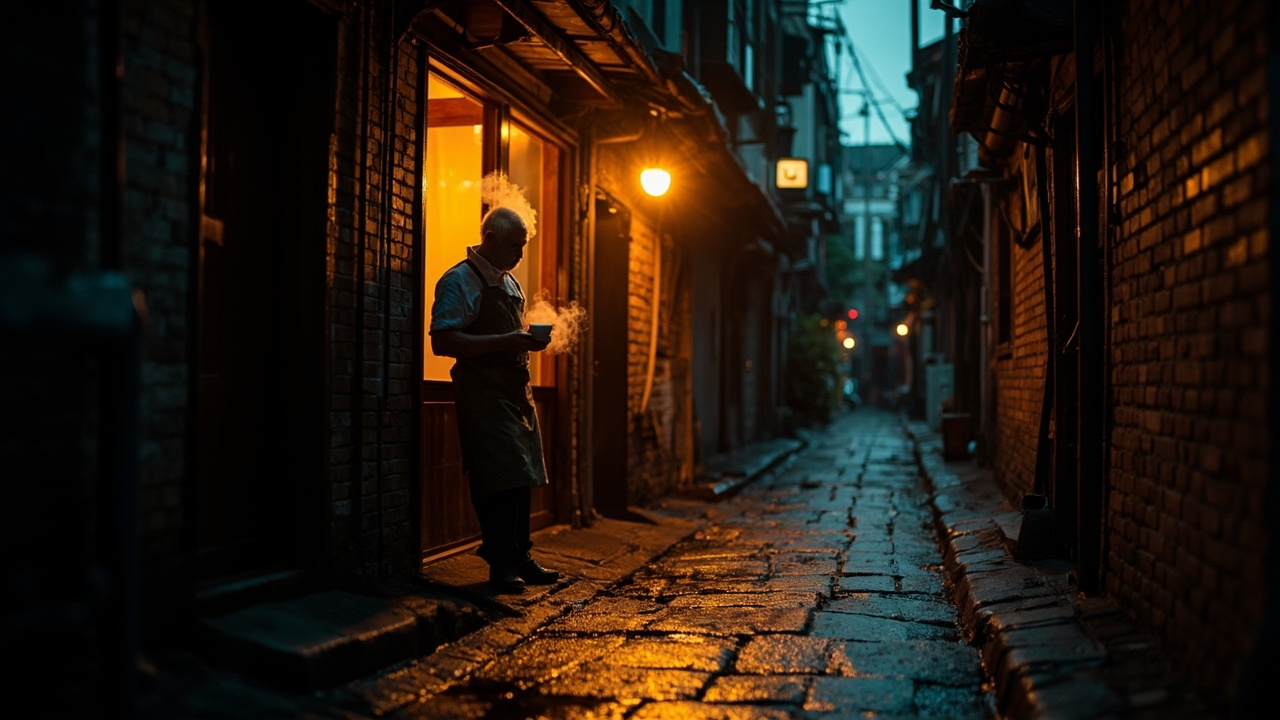
The rain was coming down sideways off the rooftops in Shanghai’s Former French Concession, and I’d ducked into a doorway to check my phone. The doorway turned out to be the entrance to a café called Café del Volcán, and the smell that hit me was not the usual burnt-bean stench of chain coffee, but something brighter, fruitier, like a bag of freshly roasted beans had just been ripped open. I ordered a flat white, sat by the window, and watched the street turn silver. That was 2019, my first hint that China’s coffee scene was not what the guidebooks said.
Seven years and forty-odd trips later, I can tell you this: the independent coffee culture in China is not a trend, it’s a full-blown movement. It’s also shockingly accessible for a first-time tourist, provided you know where to look. This guide is the one I wish I’d had on that first trip. It’s not a list of every café in the country, but a curated collection of the places I keep going back to, the ones that taught me something about how China drinks coffee now.
Quick answer
Independent coffee in China is thriving, with specialty cafés in every major city charging between $4 and $8 (CNY 28–58) for a pour-over or flat white, and most accept Alipay or WeChat Pay (set these up before you arrive). The best cities for café-hopping are Shanghai, Beijing, Chengdu, and Hangzhou, and with China’s current 240-hour visa-free transit policy for citizens of 54 countries, you can easily spend 10 days exploring without a visa. Skip Starbucks, find the local roasters, and you’ll drink some of the best coffee in Asia for less than you’d pay in London or New York.
The Short Version
If you have 90 seconds: China’s independent coffee scene is young, fast-moving, and genuinely excellent, but you have to know where to look. Shanghai is the clear winner, with more specialty cafés per square kilometer than anywhere else in the country. Beijing is more spread out but has deeper roots. Chengdu is the wildcard, where coffee meets teahouse culture in ways that make no sense until you’re sitting in one. Prices are reasonable, the baristas are obsessive, and the biggest challenge is finding the places at all, since many are tucked into alleys or upstairs rooms with no English signage. Don’t skip it, but don’t expect a carbon copy of Melbourne or Portland.
How I Picked These
I visited every café on this list in person, most of them multiple times, between 2019 and late 2025. I drank a lot of mediocre pour-overs so you don’t have to. I also talked to baristas, roasters, and a few expat coffee nerds who’ve been here since the early days, when a “specialty” café meant one guy with a secondhand machine and a dream. I looked for places that do something distinctive, either with the coffee itself, the space, or the way they connect to their neighborhood. I skipped the famous chains, even the Chinese ones, because you can find those anywhere. These are the places I’d take a friend on their first trip.
Comparison Table
| Rank | Place | Best For | Approx Cost (USD) | Time Needed | When to Go |
|---|---|---|---|---|---|
| 1 | Café del Volcán (Shanghai) | First-timers, classic specialty | $5–8 (CNY 35–58) | 1 hour | Weekday mornings |
| 2 | Manner Coffee (Shanghai) | Cheap daily fix, locals | $3–5 (CNY 20–35) | 30 min | Any time |
| 3 | Metal Hands (Beijing) | Serious pour-overs | $6–9 (CNY 42–65) | 1.5 hours | Late afternoon |
| 4 | % Arabica (multiple cities) | Instagram-worthy, consistency | $5–7 (CNY 35–50) | 45 min | Early morning |
| 5 | Berry Beans (Beijing) | Rooftop views, unique space | $5–8 (CNY 35–58) | 1 hour | Golden hour |
| 6 | Let’s Grind (Shanghai) | Espresso enthusiasts | $4–6 (CNY 28–42) | 45 min | Weekday afternoons |
| 7 | M Stand (multiple cities) | Creative drinks, design | $4–7 (CNY 28–50) | 1 hour | Any time |
| 8 | UID Café (Chengdu) | Coffee + teahouse hybrid | $4–6 (CNY 28–42) | 1.5 hours | Afternoon |
| 9 | Random (Hangzhou) | Quiet, scenic, slow | $5–8 (CNY 35–58) | 2 hours | Morning |
| 10 | A. Lu Labs (Shanghai) | Experimental, geeky | $6–10 (CNY 42–72) | 1 hour | Weekdays |
Café del Volcán — The One That Started It All
I’ve already told you about the rain. What I didn’t say is that I went back the next day, and the day after that, and I’ve been back on every Shanghai trip since. Café del Volcán sits on Yongkang Road, a street that’s changed a lot since 2019, but this place has stayed the same. The beans come from their own farm in Yunnan, which sounds like a marketing line until you taste the difference. The baristas remember regulars, and they’re patient with foreigners who fumble through ordering in Mandarin.
Why it’s special: it’s the closest thing Shanghai has to a neighborhood café in the Western sense, a place where the staff know your name and your order. The Yunnan beans are roasted on-site, and the flat white here ruined me for most other coffees in China.
📍 Location: 291 Yongkang Road, Xuhui District, Shanghai 🎫 Entry fee: Free, coffee $5–8 (CNY 35–58) 🕒 Opening hours: 8:00 AM – 8:00 PM daily 🚕 How to get there: Take Metro Line 1 to South Shaanxi Road Station, Exit 2. Walk east on Changle Road for 10 minutes, then turn right on Yongkang Road. It’s on the left, look for the green awning. 📅 When to visit: Weekday mornings before 10 AM, when the street is still quiet and you can get a seat by the window. 💡 Insider tips: The Yunnan beans change seasonally, ask what’s in the hopper before ordering. The outdoor seats are prime real estate, grab one if you can. Bring cash as a backup, the card machine occasionally goes down. Don’t bother with the food, it’s average. If you like the beans, they sell bags to take home.
I once sat next to a retired Shanghai opera singer who told me she’d been coming here since it opened, and that the coffee was “the only Western thing in Shanghai that made sense to her.”
Manner Coffee — The People’s Champion
Manner is the anti-chain chain, and I mean that as a compliment. It started as a two-square-meter window shop in Shanghai in 2015, and now it’s everywhere, but it hasn’t lost its soul. The prices are absurdly low for the quality, a flat white for about $3 (CNY 20), and the baristas are properly trained. The catch is that most locations have no seating, it’s grab-and-go, which is why I’ve listed it separately from the sit-down places.
Why it’s special: it’s proof that good coffee doesn’t have to be expensive, and it’s where actual Shanghainese people get their daily fix. If you want to see how locals actually drink coffee, not how they pose with it, come here.
📍 Location: Multiple locations across Shanghai, the original is at 3 Nanyang Road, Jing’an District 🎫 Entry fee: Free, coffee $3–5 (CNY 20–35) 🕒 Opening hours: 7:30 AM – 7:00 PM, varies by location 🚕 How to get there: The original location is a 5-minute walk from Jing’an Temple Station (Lines 2, 7), Exit 1. Head north on Nanjing West Road, turn left on Nanyang Road. 📅 When to visit: Any time, but expect a queue during morning rush hour. It moves fast. 💡 Insider tips: Bring your own cup and get a discount. The oat milk latte is better than the regular one. Download the Manner app for loyalty points, but the WeChat mini-program works too. If you see a location with seating, grab it, they’re rare. The cold brew is strong, order it if you need a serious caffeine hit.
I watched a woman in business attire order a flat white, drink it in three gulps, and sprint back toward the metro. That’s Manner, it’s fuel, not a lifestyle.
Metal Hands — Beijing’s Serious Side
Beijing is not Shanghai. It’s bigger, dustier, more spread out, and the coffee culture has a different vibe. Metal Hands is the city’s most respected specialty roaster, and their café in the Wudaoying Hutong area is worth the trek. The space is a converted courtyard house, all exposed brick and wooden beams, and the pour-over menu is extensive. This is where Beijing’s coffee nerds come to argue about extraction times.
Why it’s special: it’s the most serious coffee you’ll find in Beijing, and the hutong setting gives you a glimpse of old Beijing that most tourists never see. The baristas are obsessive, in the best way.
📍 Location: 61 Wudaoying Hutong, Dongcheng District, Beijing 🎫 Entry fee: Free, pour-overs $6–9 (CNY 42–65) 🕒 Opening hours: 10:00 AM – 8:00 PM, closed Mondays 🚕 How to get there: Take Metro Line 2 to Andingmen Station, Exit B. Walk south on Andingmen Inner Street, turn left on Wudaoying Hutong, it’s about 500 meters down on the right. 📅 When to visit: Late afternoon on a weekday, when the hutong is quiet and the light comes through the windows at an angle. 💡 Insider tips: Ask for the Yunnan beans, they’re the house specialty. The cheesecake is surprisingly good, order it with a pour-over. The courtyard is lovely in autumn, less so in July. If you don’t read Chinese, the menu has English, but the staff’s English is limited, use your translation app. Don’t sit near the door in winter, it gets drafty.
I made the mistake of ordering a “light roast” without specifying which one, and the barista gave me a gentle but thorough lecture on the difference between Ethiopian and Yunnan light roasts. I deserved it.
% Arabica — The Pretty One
I have complicated feelings about % Arabica. It’s a chain, technically, but it’s a chain that does things right, and their China locations are consistently excellent. The Shanghai outpost on the Bund has one of the best views of any café in the city, floor-to-ceiling windows overlooking the Huangpu River and the Pudong skyline. The coffee is simple, mostly espresso-based, and the signature Spanish latte is sweet and creamy, a crowd-pleaser.
Why it’s special: the view, plain and simple. If you want to sit with a coffee and watch the skyline light up, this is the place. It’s touristy, but it’s touristy for a reason.
📍 Location: 1F, 18 Zhongshan East 1st Road, Waitanyuan, Huangpu District, Shanghai (also in Beijing, Chengdu, and other cities) 🎫 Entry fee: Free, coffee $5–7 (CNY 35–50) 🕒 Opening hours: 9:00 AM – 10:00 PM daily 🚕 How to get there: Take Metro Line 2 to East Nanjing Road Station, Exit 6. Walk east toward the Bund for 15 minutes, the café is in the Waitanyuan complex on the right. 📅 When to visit: Early morning for the view without the crowds, or just before sunset for the golden hour light. 💡 Insider tips: The Spanish latte is the signature, it’s sweeter than a standard latte. The outdoor terrace is small, go early to get a spot. The queue moves fast, don’t be intimidated. If you’re in Beijing, the Sanlitun location has a different vibe, more street-level. The merch is overpriced, skip it.
I sat next to a couple from Brazil who were on their honeymoon, and we spent ten minutes comparing the coffee here to what they get back home. They were impressed, which says something.
Berry Beans — The Rooftop Experience
Beijing again, and this one is a story. Berry Beans is tucked into a hutong near Qianmen, and the main attraction is the rooftop seating, which gives you a view over the gray tiled roofs of old Beijing. The coffee is solid, but the space is the real draw. The signature drink is the “black sugar latte,” which is served in a glass with a caramelized sugar cube at the bottom, and it’s as good as it sounds.
Why it’s special: it’s the most atmospheric café in Beijing, a place where you can sit on a rooftop, watch the sun set over the hutongs, and feel like you’ve stepped back in time. The contrast between the old buildings and the modern coffee is exactly what makes Beijing interesting.
📍 Location: 2 Zhubao Shi Hutong, Qianmen, Dongcheng District, Beijing 🎫 Entry fee: Free, coffee $5–8 (CNY 35–58) 🕒 Opening hours: 10:00 AM – 9:00 PM daily 🚕 How to get there: Take Metro Line 2 to Qianmen Station, Exit C. Walk north on Qianmen Street, turn right on Zhubao Shi Hutong, it’s about 300 meters in. 📅 When to visit: Golden hour, about an hour before sunset, when the light hits the rooftops. Weekdays are quieter. 💡 Insider tips: The rooftop is small, maybe 10 seats, go early or be prepared to wait. The black sugar latte is sweet, order it if you have a sweet tooth. The hutong around the café is worth exploring, it’s one of the few remaining old neighborhoods in central Beijing. Bring a jacket, the rooftop is exposed. The staff’s English is decent, but a translation app helps for the menu details.
I watched a group of Chinese tourists take photos on the rooftop for a solid 20 minutes, and I was annoyed until I realized I’d done the exact same thing on my first visit.
Let’s Grind — The Espresso Purist
Back to Shanghai, and this one is for the espresso nerds. Let’s Grind is a tiny shop in the Jing’an district that takes its coffee very seriously. The menu is short, mostly espresso-based drinks, and the baristas are happy to talk your ear off about bean origins and roast profiles. It’s not a place to linger, the seating is minimal, but it’s a place to drink excellent coffee.
Why it’s special: it’s the most focused café on this list, a place that does one thing and does it perfectly. If you care about espresso, this is the spot.
📍 Location: 2/F, 85 Wuding Road, Jing’an District, Shanghai 🎫 Entry fee: Free, espresso drinks $4–6 (CNY 28–42) 🕒 Opening hours: 8:00 AM – 6:00 PM, closed Sundays 🚕 How to get there: Take Metro Line 7 to Changping Road Station, Exit 2. Walk east on Changping Road, turn right on Wuding Road, it’s in a small building on the left, look for the sign on the second floor. 📅 When to visit: Weekday afternoons, when the baristas have time to chat. 💡 Insider tips: Order the single-origin espresso, it changes weekly. The baristas are happy to explain the beans, even with limited English, use your translation app. The seating is limited, plan to stand or take it to go. Don’t ask for a caramel macchiato, they’ll politely but firmly redirect you. If you buy beans, they’ll grind them for your setup at home.
I ordered a double espresso and the barista asked me what I tasted. I said “berries,” and he nodded approvingly. I have no idea if I was right, but I felt like a pro.
M Stand — The Design Darling
M Stand is another Chinese chain, but it’s a different beast from Manner. Where Manner is about cheap, good coffee, M Stand is about the experience, the design, and the creative drinks. Their signature is the “cement latte,” a gray-colored drink that looks like a construction material and tastes like a sweet, creamy latte. It’s gimmicky, but it’s fun, and the spaces are genuinely beautiful.
Why it’s special: it’s the most Instagrammable café in China, and while that often means the coffee suffers, here it doesn’t. The drinks are creative, the spaces are photogenic, and it’s a good introduction to the more playful side of Chinese coffee culture.
📍 Location: Multiple locations, the flagship is at 1000 Huaihai Middle Road, Xuhui District, Shanghai 🎫 Entry fee: Free, drinks $4–7 (CNY 28–50) 🕒 Opening hours: 9:00 AM – 9:00 PM, varies by location 🚕 How to get there: Take Metro Line 1 to Changshu Road Station, Exit 4. Walk east on Huaihai Middle Road for 5 minutes, it’s on the left. 📅 When to visit: Any time, but weekends are packed with people taking photos. Go on a weekday if you want to actually sit. 💡 Insider tips: The cement latte is the signature, but the “dirty” is also good. The food menu is better than most cafés, try the pastries. The design varies by location, the Huaihai one is the most striking. If you’re in Chengdu, the Taikoo Li location is worth a visit. Don’t be afraid to ask for recommendations, the staff is used to tourists.
I watched a young woman spend 15 minutes arranging her cement latte on a marble table before taking a photo. The coffee was still good when she finally drank it.
UID Café — Chengdu’s Coffee-Teahouse Hybrid
Chengdu is famous for its teahouses, and UID Café is where that tradition meets modern coffee culture. The space is a converted warehouse in the trendy Kuixinglou neighborhood, all concrete and exposed pipes, but the vibe is pure Chengdu, relaxed, social, and unhurried. The menu has both coffee and tea, and the signature drink is a cold brew that’s served in a traditional Chinese tea bowl.
Why it’s special: it’s the best example I’ve found of how Chengdu is remixing its own culture with global trends. You can sit here for hours, drink a cold brew, and watch the city’s creative class do their thing.
📍 Location: 11 Kuixinglou Street, Qingyang District, Chengdu 🎫 Entry fee: Free, drinks $4–6 (CNY 28–42) 🕒 Opening hours: 10:00 AM – 10:00 PM daily 🚕 How to get there: Take Metro Line 4 to Kuanzhai Alley Station, Exit B. Walk north on Changshun Street, turn left on Kuixinglou Street, it’s about 400 meters in. 📅 When to visit: Afternoon, when the light comes through the big windows and the place fills up with locals. 💡 Insider tips: Try the cold brew in the tea bowl, it’s the signature. The staff speaks some English, but a translation app helps. The neighborhood is full of other cool shops and cafés, spend an afternoon exploring. Don’t expect fast service, this is a place to slow down. The seats by the window are the best, grab them early.
I sat next to a graphic designer who was sketching in a notebook, and we ended up talking about how Chengdu’s creative scene has exploded in the last five years. He offered me a cigarette, which I declined, but it felt like a genuine moment.
Random — Hangzhou’s Quiet Corner
Hangzhou is famous for West Lake, but the coffee scene is smaller and more laid-back than Shanghai or Beijing. Random is my pick, a small café tucked into a residential neighborhood near the lake, with a minimalist interior and a focus on single-origin pour-overs. It’s the kind of place where you can sit for two hours, read a book, and not be bothered.
Why it’s special: it’s the most peaceful café on this list, a place to escape the crowds and just be. The coffee is excellent, and the staff is genuinely friendly, not in a performative way.
📍 Location: 3 Si Ji Qing Road, Xihu District, Hangzhou 🎫 Entry fee: Free, pour-overs $5–8 (CNY 35–58) 🕒 Opening hours: 9:00 AM – 7:00 PM, closed Tuesdays 🚕 How to get there: Take Metro Line 1 to Longxiangqiao Station, Exit C. Walk east on Fengqi Road, turn right on Si Ji Qing Road, it’s about 500 meters down. 📅 When to visit: Morning, when the light is soft and the neighborhood is waking up. 💡 Insider tips: The pour-over menu changes weekly, ask what’s fresh. The matcha cake is excellent, order it with a pour-over. The neighborhood is quiet and residential, take a walk after your coffee. The staff’s English is limited, but they’re patient with translation apps. If you’re visiting West Lake, this is a good stop on the way.
I spent two hours here reading a book about Chinese history, and the barista refilled my water twice without me asking. That kind of quiet attention is rare.
A. Lu Labs — The Experimental Lab
Last one, and it’s the weirdest. A. Lu Labs in Shanghai is a coffee lab, not a café, and it feels like it. The space is clinical, all white tiles and stainless steel, and the menu is a list of experiments, like “nitro cold brew with yuzu” and “espresso tonic with Sichuan pepper.” Some of it works, some of it doesn’t, but it’s never boring.
Why it’s special: it’s the most creative coffee in China, a place where the baristas are pushing the boundaries of what coffee can be. It’s not for everyone, but if you’re curious, it’s unforgettable.
📍 Location: 1/F, 195 Changshu Road, Xuhui District, Shanghai 🎫 Entry fee: Free, experimental drinks $6–10 (CNY 42–72) 🕒 Opening hours: 10:00 AM – 8:00 PM, closed Mondays 🚕 How to get there: Take Metro Line 1 to Changshu Road Station, Exit 3. Walk south on Changshu Road for 5 minutes, it’s on the right. 📅 When to visit: Weekdays, when the baristas have time to explain their experiments. 💡 Insider tips: Order the tasting flight, it’s a set of three small experimental drinks. The baristas love to talk, ask them about their process. Don’t expect a traditional latte, this is not that place. The food menu is minimal, eat before you come. If you’re not adventurous, this might not be for you, but if you are, it’s a highlight.
I ordered a “coffee cocktail” with osmanthus and tonic, and it tasted like a flower garden in a glass. I still think about it.
FAQ summary
China’s independent coffee scene is concentrated in Shanghai, Beijing, Chengdu, and Hangzhou, with Shanghai offering the highest density of specialty cafés. Most independent cafés charge between $4 and $8 (CNY 28–58) per drink, and nearly all accept Alipay or WeChat Pay, which you should set up before arriving. The current 240-hour visa-free transit policy applies to citizens of 54 countries, making it easy to visit for up to 10 days. English is not widely spoken at independent cafés, so a translation app is essential. The best time to visit for café-hopping is spring (April–May) or autumn (September–October), when the weather is mild and the crowds are thinner.
FAQ
Do I need a visa to visit China for coffee tourism in 2026? Citizens of 54 countries, including the US, UK, Australia, and most of Europe, can enter China visa-free for up to 240 hours (10 days) under the transit policy. You must arrive and depart from one of the designated ports, and you need a confirmed onward ticket.
How do I pay at independent cafés in China? Alipay and WeChat Pay are the standard, and they work with international credit cards. Set them up before you arrive by linking your card to the app. Some cafés accept cash, but it’s increasingly rare, and card payments are often not accepted.
Will I need a VPN to use my phone in China? Yes, Google, Instagram, WhatsApp, and many other Western services are blocked. Download a reliable VPN before you arrive and test it before you land. Some cafés have Wi-Fi, but it may also be restricted.
Is English spoken at independent cafés in China? Rarely, especially outside Shanghai’s expat areas. Baristas are usually friendly and patient, but a translation app like Google Translate (with the Chinese language pack downloaded) or Pleco is essential.
What’s the best city for coffee in China? Shanghai, without question. It has the highest density of specialty cafés and the most diverse scene. Beijing is second, with a more serious, nerdy vibe. Chengdu and Hangzhou are worth visiting for their unique takes on coffee culture.
How much should I budget for coffee in China? A typical flat white or pour-over costs $4–8 (CNY 28–58) at an independent café. Chain coffee like Manner is cheaper, around $3 (CNY 20). Budget $10–15 (CNY 70–105) per day if you’re planning two to three café stops.
Can I buy beans to take home from these cafés? Yes, most specialty cafés sell their beans, and many of them roast in-house. Prices range from $15–30 (CNY 105–210) per bag. Ask the barista for recommendations, and make sure you declare them at customs when you return home.
The Honest Wrap-up
This list is for travelers who want to see a side of China that’s not in the guidebooks, the side where young people are building something new out of a global tradition. It’s not for everyone, if you’re happy with Starbucks and just want a caffeine fix, save your money. But if you’re curious, if you want to sit in a hutong courtyard with a pour-over and watch Beijing’s rooftops turn gold, or if you want to argue with a Shanghai barista about extraction times, this is your list. One final piece of advice: learn to say “冰美式” (bīng měishì, iced Americano). It’s the most common order in China, and it’ll get you a long way. And bring a reusable cup, some places give you a discount, and it’s better for the planet anyway.
Topics
More guides you may like
Top 10 Bridges in China
China's bridges are engineering marvels spanning mountains, rivers, and seas. Here are 10 of the most spectacular, from ancient stone to modern steel.
8 min read

Top 10 Buddhist Sites in China
From the Leshan Giant Buddha to the Dunhuang Caves, these 10 Buddhist sites represent 2,000 years of China's spiritual heritage.
9 min read
Top 10 Day Trips from Beijing You Shouldn't Miss
Beijing is packed with history, but some of China's best experiences are just a few hours away. Here are 10 day trips that will transform your visit.
9 min read
Top 10 Hidden Gems in China Off the Beaten Path
Beyond the Great Wall and Terracotta Warriors, China has incredible hidden destinations few tourists ever reach. Here are 10 underrated gems worth the detour.
9 min read
Top 10 Markets and Shopping Streets in China
From Shanghai's Bund to Beijing's Silk Street - 10 markets where foreigners can haggle, explore, and bring home authentic Chinese goods.
9 min read
Top 10 Museums in China You Shouldn't Miss
China's museums span 5,000 years of civilization. These 10 - from the Palace Museum to Xi'an's terracotta gallery - are unmissable for culture lovers.
9 min read