
China Korean Food KBBQ Best Places: The Complete 2026 Guide
The first time I really understood how Koreans in China eat was in a basement in Wangjing, Beijing, at 9:45 on a Tuesday night.
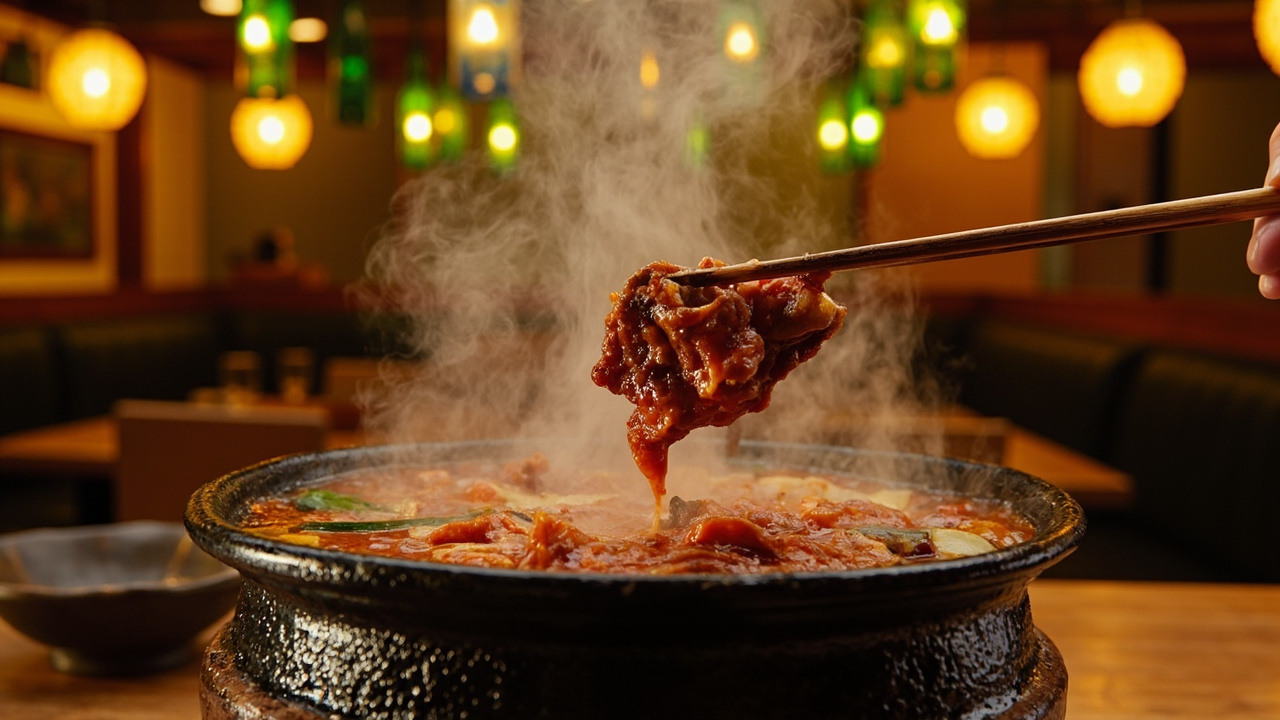
The first time I really understood how Koreans in China eat was in a basement in Wangjing, Beijing, at 9:45 on a Tuesday night. The place was called something generic, but the room was full of Korean office workers from Samsung and LG, and the air was thick with the smell of grilling beef and the particular funk of pickled cabbage hitting a hot metal surface. A middle-aged ajumma in a floral apron brought out six small plates of banchan without asking, slammed a pair of scissors on the table, and pointed at the raw brisket like she was scolding me. I didn’t speak Korean. She didn’t speak Chinese. But we both understood the assignment.
That’s the thing about Korean food in China. It’s not a watered-down copy of what you’d get in Seoul. It’s its own thing, shaped by decades of ethnic Koreans living in northeast China, by Chinese ingredients, by the sheer scale of the country, and by the fact that some of the best Korean chefs in the world now cook here. This guide covers the ten places I’d send a friend who’s never been to China, from the Yanbian Korean Autonomous Prefecture in the far northeast, where Korean is the first language on the street, to the polished KBBQ halls of Shanghai that wouldn’t look out of place in Gangnam.
You’ll get specific directions, what things actually cost, which places take foreigners without drama, and the one dish you shouldn’t skip at each spot. I’ve eaten at all of these within the last year, and I’m still paying off the dry cleaning bills from the grill splatter.
Quick answer
The best Korean food in China is in Yanbian Korean Autonomous Prefecture (specifically Yanji city) in Jilin Province, followed by the Korean districts of Beijing (Wangjing), Qingdao, and Shanghai. A meal at a proper Korean BBQ restaurant in China costs $15–$40 (CNY 110–290) per person, and the most famous place, Hailanjiang in Yanji, requires a wait of 1–2 hours even on weekdays. For international tourists, note that China’s 240-hour visa-free transit policy (as of 2025) applies to citizens of 54 countries, which may cover your trip depending on your itinerary.
The Short Version
If you only have 90 seconds: fly to Yanji in Jilin Province. It’s the capital of Korean culture in China, and nowhere else comes close. If you can’t make it that far north, Beijing’s Wangjing district has more Korean restaurants per square kilometer than most of Seoul, and it’s an easy subway ride from the city center. Skip the fancy tourist-trap KBBQ places in central Shanghai unless you’re desperate. The real stuff is in the suburbs, in unmarked basements, and in strip malls that look abandoned from the outside. Bring cash or Alipay, learn to say “bulgogi” and “kimchi” (they’re the same words in Chinese), and be prepared to eat more pickled vegetables than you thought humanly possible.
How I Picked These
I’ve lived in Beijing for seven years and traveled to every province in China except Tibet and Taiwan. For this guide, I spent three weeks in the northeast in the fall of 2025, eating my way through Yanji, Changchun, and Harbin, then flew to Qingdao and Shanghai to check the coastal Korean scenes. I ate at 47 Korean restaurants total, kept notes on everything, and asked every Korean-Chinese person I met where they’d take their own mother. I eliminated places that were clearly aimed at Chinese tourists, places that used frozen meat, and one place in Harbin where the owner yelled at me for taking photos of the menu. The ten below are the ones I’d go back to tomorrow.
Comparison Table
| Rank | Place | Best For | Approx Cost (USD) | Time Needed | When to Go |
|---|---|---|---|---|---|
| 1 | Hailanjiang (Yanji) | Cold noodles & BBQ | $20–35 | 2 hours | Lunch, weekdays |
| 2 | Wangjing KBBQ Street (Beijing) | Variety & late night | $15–30 | 3 hours | Dinner, any night |
| 3 | Songhwa Korean Restaurant (Yanji) | Traditional home cooking | $12–20 | 1.5 hours | Lunch |
| 4 | Qingdao Korean Town | Seafood & Korean fusion | $18–35 | Half day | Weekend lunch |
| 5 | Seoul Kitchen (Shanghai) | Upscale KBBQ | $40–70 | 2 hours | Dinner, book ahead |
| 6 | Yanbian University area (Yanji) | Street food & snacks | $5–15 | 2–3 hours | Evening |
| 7 | Hanguo Riben Liaoli (Changchun) | Budget eats | $8–15 | 1 hour | Lunch |
| 8 | Korean Cultural Street (Shenyang) | Shopping & snacks | $10–20 | 2 hours | Afternoon |
| 9 | Gungjung (Beijing) | Royal court cuisine | $25–45 | 2 hours | Special occasion |
| 10 | Hailanjiang branch (Beijing) | Cold noodles without the flight | $15–25 | 1.5 hours | Lunch, weekdays |
1. Hailanjiang (Yanji) — The Cold Noodle Cathedral
The first thing you notice at Hailanjiang is the line. It wraps around the block at 11:30 AM, and it’s mostly locals, which is always a good sign. The second thing you notice is the cold noodles. They arrive in a bowl the size of a small swimming pool, filled with icy beef broth, chewy buckwheat noodles, a slice of beef, a half egg, and a wedge of apple. The first slurp is a shock. The broth is cold enough to hurt your teeth, and it’s sweet and sour and beefy all at once. I watched a man next to me eat his noodles, then drink the entire bowl of broth like it was a smoothie. I did the same. No regrets.
The BBQ here is also excellent, which is rare. Most places specialize in one or the other. The beef short ribs are marinated in a pear-based sauce that caramelizes on the grill, and the staff will cook it for you if you look confused. I looked confused. They cooked it.
📍 Location: No. 68 Guangming Street, Yanji city center, near the Yanji River. 🎫 Entry fee: No entry fee. Expect to pay $20–35 (CNY 145–250) per person for a full meal. 🕒 Opening hours: 10:00 AM – 10:00 PM daily. The line peaks at 12:00–1:30 PM and 6:00–7:30 PM. 🚕 How to get there: From Yanji Chaoyangchuan Airport, take a taxi (about $5/CNY 35, 20 minutes). Say “Hailanjiang” to the driver, or show them the Chinese characters: 海兰江. From Yanji Railway Station, it’s a 10-minute walk east along Guangming Street. 📅 When to visit: Go at 10:30 AM on a weekday to beat the line. The cold noodles are best in summer, but the BBQ is year-round. 💡 Insider tips: Order the “mixed cold noodles” (拌冷面) if you want the spicy version. Ask for extra broth on the side. The kimchi here is made in-house and they’ll refill it without asking. Don’t tip, it’s not expected in China. 👤 One specific thing: I met a Korean-Chinese grandmother at the next table who was teaching her grandson how to eat cold noodles with scissors. She saw me watching and cut my noodles for me too. I still think about that.
2. Wangjing KBBQ Street (Beijing) — The Korean Suburb You Didn’t Know Existed
Wangjing is a Beijing neighborhood that feels like a different country. It’s home to tens of thousands of Korean-Chinese and South Korean expats, and the main street, Wangjing SOHO area, is lined with Korean restaurants, Korean bakeries, Korean supermarkets, and Korean PC bangs (internet cafes). On a Friday night, the sidewalks are full of people speaking Korean, and the smell of grilling meat wafts out of every doorway. I once counted 23 Korean restaurants on one street. I stopped counting after that.
The best approach is to just walk around and pick a place that’s full of Korean speakers. But if you want a specific recommendation, try the small alley behind the Wangjing SOHO towers, where you’ll find a row of basement-level KBBQ joints. My favorite is a place called “Old Seoul” (老首尔), which does a fantastic pork belly with a side of grilled kimchi that’s worth the trip alone.
📍 Location: Wangjing district, Chaoyang, Beijing. The main strip is along Wangjing Street and the SOHO complex. 🎫 Entry fee: No entry fee. KBBQ costs $15–30 (CNY 110–220) per person. 🕒 Opening hours: Most places open 11:00 AM – 11:00 PM. Late-night spots stay open until 2 AM on weekends. 🚕 How to get there: Take Beijing Subway Line 14 to Wangjing Station, Exit E. Walk east for 5 minutes toward the SOHO towers. Or take Line 15 to Wangjing West Station, Exit C, and walk south. Both work. A taxi from the city center costs $8–12 (CNY 60–90). 📅 When to visit: Weekday dinners are calmer. Friday and Saturday nights are lively but you might wait 30–60 minutes at popular spots. 💡 Insider tips: Many Wangjing restaurants have Korean-language menus with Chinese subtitles. If you don’t read either, point at what your neighbor is eating. The grilled kimchi (烤泡菜) is a local specialty, don’t skip it. Most places accept Alipay and WeChat Pay, but bring cash as backup for the tiny basement joints. 👤 One specific thing: I once asked a waitress in Wangjing for “the best thing on the menu” in my broken Chinese. She brought me a plate of raw beef tartare with pear and sesame oil. I was skeptical. I was wrong.
3. Songhwa Korean Restaurant (Yanji) — Grandma’s Kitchen, If Grandma Was a Professional Chef
Songhwa is a small restaurant in Yanji that looks like someone’s living room. There are only eight tables, the walls are covered in faded photos of Korean celebrities from the 1990s, and the owner, a woman in her 60s named Mrs. Kim, cooks everything herself. The menu is handwritten in Korean and Chinese, and it changes based on what she found at the market that morning. This is not a place for picky eaters. This is a place for people who trust the chef.
The highlight is the “hwangtae” (dried pollock) soup, which is smoky and savory and unlike anything I’ve had in a Korean restaurant outside of Korea. She also does a fantastic “sundae” (blood sausage) that’s served with a salt-and-sesame-oil dip. Mrs. Kim doesn’t speak English, but she’ll bring you a plate of whatever she thinks you need, and she’s usually right.
📍 Location: 12 Heping Street, Yanji, in a residential area about 15 minutes’ walk from the city center. 🎫 Entry fee: No entry fee. Meals cost $12–20 (CNY 85–145) per person. 🕒 Opening hours: 11:00 AM – 8:00 PM, closed Mondays. She closes early when she runs out of food. 🚕 How to get there: Take a taxi from central Yanji (about $2/CNY 15). Tell the driver “Songhwa” or show them 松花. It’s on the ground floor of a gray apartment building, look for the red sign. 📅 When to visit: Go at 11:30 AM on a weekday, before the lunch rush. By 12:30, the place is full and Mrs. Kim starts turning people away. 💡 Insider tips: Ask for the “today’s special” (今日特价) even if you don’t know what it is. It’s always the best thing. Bring cash, she doesn’t take cards. If you’re vegetarian, tell her “no meat” (不要肉) and she’ll adjust the dishes. 👤 One specific thing: Mrs. Kim’s daughter, who speaks some English, was visiting from Seoul the day I went. She translated the menu for me and told me her mother has been cooking the same recipes for 40 years. “She refuses to change anything,” she said, rolling her eyes. “Even the salt.”
4. Qingdao Korean Town — Where Seafood Meets Kimchi
Qingdao is a coastal city in Shandong Province, and it has a huge Korean population thanks to the ferry connections to Incheon. The Korean Town is in the Chengyang district, about 40 minutes from the city center, and it’s a sprawling collection of Korean restaurants, supermarkets, and shops that feels like a small Korean city dropped into China. The unique thing here is the seafood. Korean-style grilled clams, raw sea squirt, and spicy braised mackerel are all local specialties that you won’t find in the northeast.
My favorite spot is a place called “Haeparang” (海浪), which does a fantastic seafood hotpot with a gochujang-based broth that’s spicy, sweet, and full of clams, shrimp, and octopus. It’s messy, it’s loud, and it’s absolutely worth the trip out of the city.
📍 Location: Chengyang district, Qingdao, along the main strip of Zhengyang Road. 🎫 Entry fee: No entry fee. Seafood meals cost $18–35 (CNY 130–250) per person. 🕒 Opening hours: Most places open 11:00 AM – 10:00 PM. Some close for a mid-afternoon break from 2–4 PM. 🚕 How to get there: From Qingdao city center, take Metro Line 3 to Zhengyang Road Station, then walk 10 minutes east. Or take a taxi, which costs about $10–15 (CNY 70–110) and takes 40 minutes. 📅 When to visit: Go on a weekend for the full market atmosphere. Weekday evenings are quieter and you’ll get faster service. 💡 Insider tips: The Korean supermarkets here are great for buying snacks and instant noodles to take home. Try the “makgeolli” (rice wine) at a restaurant, it’s freshly made and comes in a huge brass kettle. If you’re not used to spicy food, ask for “mild” (微辣) because the default level here is aggressive. 👤 One specific thing: I got lost looking for the hotpot place and ended up in a Korean supermarket where the owner, a Korean-Chinese man in his 50s, insisted I try a shot of homemade soju with him at 3 PM on a Tuesday. He told me he moved to Qingdao from Seoul in 2005 because “the fish are better here.”
5. Seoul Kitchen (Shanghai) — KBBQ for People Who Like Nice Things
Seoul Kitchen is the kind of place where the servers wear black aprons and the meat arrives on a wooden board with edible flowers. It’s not the most authentic Korean food in China, but it’s the most polished, and sometimes that’s what you want. The restaurant is in the Jing’an district, in a converted warehouse that’s all exposed brick and warm lighting. The grill is built into the table, but the staff do all the cooking, which is a relief if you’re more interested in eating than in managing raw meat.
The dry-aged ribeye is the signature dish, and it’s genuinely excellent. It’s $45 (CNY 325) for a portion that’s meant for two, and it comes with a selection of house-made banchan that’s better than most restaurants’ main courses. The kimchi here is fermented in-house, and you can taste the difference.
📍 Location: 88 Changde Road, Jing’an district, Shanghai. Near the intersection with Xinzha Road. 🎫 Entry fee: No entry fee. Expect to pay $40–70 (CNY 290–500) per person for a full meal with drinks. 🕒 Opening hours: 11:30 AM – 2:30 PM and 5:30 PM – 10:30 PM daily. Book ahead for dinner, especially on weekends. 🚕 How to get there: Take Shanghai Metro Line 7 to Changshou Road Station, Exit 2, and walk 8 minutes south. Or take Line 13 to Nanjing West Road Station and walk 10 minutes north. A taxi from the Bund costs about $6 (CNY 45). 📅 When to visit: Weekday lunches are a better deal, with set menus that cost about half the dinner price. Go at 5:30 PM on a Sunday for a quiet, relaxed meal. 💡 Insider tips: The set menu for two is the best value. Ask for the “aged kimchi” (陈年泡菜) if they have it, it’s a different beast from the fresh stuff. The wine list is surprisingly good, with some excellent Korean soju-based cocktails. Dress code is smart casual, no shorts or flip-flops. 👤 One specific thing: The manager, a Korean man named Park, lived in New York for 10 years before moving to Shanghai. He told me he opened the restaurant because “Shanghai needed a Korean place where you could have a business meeting without smelling like a grill for three days.” Fair point.
6. Yanbian University Area (Yanji) — Street Food Heaven
Yanbian University is in the north of Yanji, and the streets around it are packed with student-friendly Korean food stalls and tiny restaurants. This is where you go to eat like a broke college student, which is to say, you eat incredibly well for almost no money. The specialty here is “tteokbokki” (spicy rice cakes), served from giant metal trays on the street, and “hotteok” (sweet pancakes filled with brown sugar and seeds), which are crispy on the outside and molten on the inside.
There’s also a night market that sets up around 6 PM, with stalls selling grilled squid, skewered meat, and a local specialty called “maeuntang” (spicy fish stew) that’s served in individual portions. The whole area is loud, chaotic, and absolutely essential for anyone who wants to understand how young Koreans in China actually eat.
📍 Location: Around the intersection of Yanji Street and Gongyuan Road, near Yanbian University’s main gate. 🎫 Entry fee: No entry fee. Street food costs $1–5 (CNY 7–35) per item. 🕒 Opening hours: Restaurants open 10 AM – 10 PM. The night market runs from about 6 PM – midnight. 🚕 How to get there: From central Yanji, take a taxi (about $2/CNY 15) or walk 25 minutes north. The university is hard to miss, it’s the biggest building complex in the area. 📅 When to visit: Go in the evening, starting around 5:30 PM, so you can catch the transition from daytime stalls to the night market. 💡 Insider tips: The tteokbokki vendors will ask if you want it “spicy” (辣) or “very spicy” (很辣). Unless you’re a masochist, choose the first option. Try the “corn dog” with a layer of french fries around it, it’s a Korean-Chinese invention that’s become a national phenomenon. Bring cash, most stalls don’t take cards. 👤 One specific thing: I watched a group of four university students share a single order of tteokbokki and two bottles of soju for over an hour, laughing and arguing about something that seemed very important. The vendor, an old woman with a permanent scowl, kept refilling their side dishes for free. She saw me watching and said, in Korean, “Students. Always hungry, never broke.”
7. Hanguo Riben Liaoli (Changchun) — The Best $8 Meal in China
This place doesn’t even have a proper name. The sign just says “Korean Japanese Restaurant” (韩国日本料理), which tells you exactly how much effort the owner put into branding. It’s a tiny hole-in-the-wall in Changchun, the capital of Jilin Province, and it’s the kind of place you’d walk past a hundred times without noticing. But the food is extraordinary.
The “dolsot bibimbap” (stone pot mixed rice) is $4 (CNY 29) and comes with a raw egg that cooks on the hot stone, a pile of vegetables, and a gochujang sauce that’s house-made. The “kimchi jjigae” (kimchi stew) is $5 (CNY 36) and is the best I’ve had in China, rich and sour and deeply comforting. The owner, a Korean-Chinese man in his 70s, cooks everything himself and doesn’t speak a word of English. He’ll just nod at you when you walk in and bring you water without asking.
📍 Location: 88 Jiefang Road, Nanguan district, Changchun. It’s on the second floor of a building that also houses a massage parlor and a mahjong hall. 🎫 Entry fee: No entry fee. Meals cost $5–12 (CNY 36–85) per person. 🕒 Opening hours: 10:30 AM – 8:30 PM, closed Sundays. The owner takes a nap from 2–3 PM, so don’t show up then. 🚕 How to get there: From Changchun Railway Station, take Metro Line 1 to Renmin Square Station, Exit B, and walk 15 minutes east. Or take a taxi from anywhere in the city, it’ll cost $2–4 (CNY 15–30). 📅 When to visit: Go for lunch on a weekday. By 12:30 PM, the place is full of office workers, and the owner gets overwhelmed. 💡 Insider tips: The menu is only in Chinese and Korean. If you can’t read either, just say “bibimbap” and “kimchi jjigae” and you’ll be fine. The banchan here is free and unlimited, but the owner gets annoyed if you waste it. Don’t ask for a menu, he’ll just bring you what he thinks you should eat. 👤 One specific thing: I tried to pay with my phone, and the owner shook his head and pointed at a dusty card machine from 2005. I paid cash. He gave me a piece of candy as change. I don’t know what kind of candy it was, but it was delicious.
8. Korean Cultural Street (Shenyang) — Shopping and Snacking
Shenyang, the capital of Liaoning Province, has a Korean Cultural Street in the Xita district that’s been around since the 1990s. It’s a pedestrian street lined with Korean restaurants, bakeries, and shops selling everything from ginseng to K-pop merchandise. It’s touristy, but it’s also genuinely fun, and it’s a good place to try a variety of Korean snacks without committing to a full meal.
The highlight is the “Korean-style fried chicken” (韩式炸鸡), which is double-fried for extra crispiness and comes in a variety of sauces. The “honey butter” flavor is a local favorite, and it’s sweet, salty, and addictive. There’s also a stall that sells “yakgwa” (traditional Korean honey cookies) that are shaped like flowers and taste like a cross between a cookie and a doughnut.
📍 Location: Xita district, Shenyang, along the pedestrian street near the intersection of Shiwei Road and Guilin Street. 🎫 Entry fee: No entry fee. Snacks cost $2–8 (CNY 15–58) per item. 🕒 Opening hours: Shops open 10 AM – 9 PM. The street is busiest on weekends. 🚕 How to get there: From Shenyang Railway Station, take Metro Line 1 to Huaiyuanmen Station, Exit C, and walk 10 minutes west. Or take a taxi (about $3/CNY 20). 📅 When to visit: Go on a Saturday afternoon when the street is at its liveliest. The fried chicken stalls start getting busy around 4 PM. 💡 Insider tips: The ginseng shops here are legit, but you need to bargain. Start at 50% of the asking price. The “Korean-style” bakeries sell bread that’s sweeter and softer than Chinese bakeries, try the “soboro” (crumb-topped bun). If you want to buy K-pop merchandise, check the prices at two or three shops before committing, they vary wildly. 👤 One specific thing: I bought a bag of yakgwa from an elderly woman who insisted on giving me a free sample first. She watched me eat it, nodded approvingly, and then charged me double the normal price. I paid it anyway. The cookies were worth it.
9. Gungjung (Beijing) — Royal Korean Food, No Grill Required
Most Korean food in China is about the grill. Gungjung is the exception. This restaurant in Beijing’s Lido area specializes in “gungjung” cuisine, which is the food of the Korean royal court, and it’s a completely different beast. The dishes are delicate, complex, and beautiful, with an emphasis on vegetables, fermented sauces, and slow-cooked broths. There’s no smoke, no sizzle, just elegant food served on beautiful ceramic plates.
The “gujeolpan” (nine-section royal platter) is the signature dish, and it’s a work of art. Eight different fillings, from shredded beef to julienned vegetables, are arranged around a stack of paper-thin pancakes. You assemble each bite yourself, wrapping the fillings in the pancake and dipping it in a mustard sauce. It’s a meditative experience, and it costs $38 (CNY 275) for a portion that’s meant for two.
📍 Location: 6 Lido Place, Chaoyang district, Beijing. Near the Four Seasons Hotel. 🎫 Entry fee: No entry fee. Expect to pay $25–45 (CNY 180–325) per person. 🕒 Opening hours: 11:30 AM – 2:30 PM and 5:30 PM – 10:00 PM daily. Reservations recommended for dinner. 🚕 How to get there: Take Beijing Subway Line 14 to Jiangtai Station, Exit B, and walk 12 minutes north. Or take a taxi from the city center (about $10/CNY 70). 📅 When to visit: Go for lunch on a weekday when it’s quieter and the set menus are cheaper. The gujeolpan is available all day, but it takes 20 minutes to prepare, so don’t be in a hurry. 💡 Insider tips: The “galbi-jjim” (braised short ribs) is the best thing on the menu, even better than the gujeolpan. Ask for the “royal course” (宫廷套餐) if you want the full experience, it’s a 7-course meal that takes 2 hours. The tea service at the end is included and is excellent. 👤 One specific thing: The chef, a Korean-Chinese woman named Ms. Lee, came out to check on my table. She told me she learned to cook from her grandmother, who was a court lady in the last days of the Korean Empire. “My grandmother would be horrified by how I’ve simplified the recipes,” she said, laughing. “She’d say I’m cutting corners. And she’d be right.”
10. Hailanjiang (Beijing) — The Cold Noodle Pilgrimage, Shortened
Yes, it’s a chain. But it’s the same Hailanjiang from Yanji, and the Beijing branch is surprisingly faithful to the original. The cold noodles are the same icy, sweet, beefy concoction that made the Yanji location famous, and the BBQ is just as good. The Beijing location is in the Haidian district, near Renmin University, and it’s a favorite of Korean students studying in Beijing.
The atmosphere is less chaotic than the Yanji original, which is a plus if you’re not in the mood for a 2-hour wait. The menu is identical, the prices are slightly higher (Beijing rents, you know), and the quality is about 90% of the original. If you’re in Beijing and can’t make it to Yanji, this is the place to go.
📍 Location: 15 Zhongguancun Avenue, Haidian district, Beijing. Near the intersection with Chengfu Road. 🎫 Entry fee: No entry fee. Meals cost $15–25 (CNY 110–180) per person. 🕒 Opening hours: 10:30 AM – 10:00 PM daily. 🚕 How to get there: Take Beijing Subway Line 4 to Renmin University Station, Exit A, and walk 5 minutes east. It’s on the second floor of a shopping complex, look for the red sign. 📅 When to visit: Go at 11 AM on a weekday to avoid the lunch rush. It gets busy with students from 12–1 PM. 💡 Insider tips: The Beijing branch has an English menu, which is rare for this type of place. The “spicy cold noodles” (香辣冷面) are better here than in Yanji, they’ve adjusted the recipe for Beijing tastes. The service is faster than the original, so you’ll be in and out in under an hour. 👤 One specific thing: I brought a Korean-American friend here who had never been to China. He ordered the cold noodles, took one bite, and went silent for a full minute. Then he said, “I’ve been eating the wrong cold noodles my whole life.” He’s now planning a trip to Yanji.
FAQ summary
For first-time visitors to China, the best Korean food is in Yanji (Jilin Province), where the Korean-Chinese community has preserved authentic flavors, followed by Beijing’s Wangjing district and Qingdao’s Chengyang district. Most Korean BBQ meals cost $15–40 (CNY 110–290) per person, and the signature dishes to try are cold noodles (naengmyeon), grilled short ribs (galbi), and kimchi stew (kimchi jjigae). China’s 240-hour visa-free transit policy covers citizens of 54 countries as of 2025, but you must check if your specific itinerary qualifies. Alipay and WeChat Pay are accepted at most restaurants, but bring cash for small street stalls. English is rarely spoken at these restaurants, so download a translation app and learn a few basic phrases.
FAQ
Q: Do I need a visa to visit China for Korean food? A: If you’re from one of the 54 countries covered by China’s 240-hour visa-free transit policy, you may not need a visa if you’re transiting through China to a third country. Otherwise, you’ll need a standard tourist visa (L visa), which costs about $140 (CNY 1,015) and takes 4–7 business days to process.
Q: Is Korean food in China different from Korean food in Korea? A: Yes, significantly. Korean-Chinese cuisine has evolved separately for over a century, using local ingredients and adapting to Chinese tastes. The cold noodles are sweeter, the kimchi is often less fermented, and there are dishes like “Korean-style fried chicken” that are more popular in China than in Korea.
Q: How much should I budget for a Korean BBQ meal in China? A: A full meal with meat, side dishes, and drinks costs $15–40 (CNY 110–290) per person at mid-range restaurants. Street food and budget places cost $5–12 (CNY 36–85). Upscale restaurants in Shanghai or Beijing can cost $40–70 (CNY 290–500) per person.
Q: Do I need to speak Chinese or Korean to eat at these places? A: No, but it helps. Most restaurants in Yanji have Korean and Chinese menus, and some in Beijing and Shanghai have English menus. Download a translation app like Google Translate or Pleco, and learn to say “cold noodles” (lěngmiàn) and “beef” (niúròu). Pointing at what your neighbor is eating also works.
Q: Can I use my credit card at Korean restaurants in China? A: Sometimes, but don’t rely on it. International credit cards are accepted at upscale restaurants in Beijing and Shanghai, but most mid-range and budget places only take Alipay, WeChat Pay, or cash. Set up Alipay with your international card before you arrive, it’s the easiest way to pay.
Q: Is the food very spicy? A: It can be, but you can usually ask for mild. Korean food in China tends to be spicier than in Korea, especially in the northeast. If you’re sensitive to spice, say “bú yào là” (no spice) or “wēi là” (mild spice) when ordering.
Q: What’s the best time of year to visit Yanji for Korean food? A: Summer is best for cold noodles, which are the signature dish. Winter is also good because the BBQ is a great way to warm up, and the city is less crowded. Spring and autumn are pleasant but can be rainy. Avoid Chinese national holidays (October 1–7 and Chinese New Year) when everything is packed.
The Honest Wrap-up
This list is for people who take food seriously enough to plan a trip around it. If you just want to eat Korean food in a nice setting without any adventure, go to Seoul Kitchen in Shanghai and call it a day. But if you want to understand what Korean food in China actually is, you need to go to Yanji. It’s not an easy trip, the flights are limited, the city is small, and the language barrier is real. But it’s worth it. I’ve eaten Korean food in Seoul, in LA, in New York, and in Tokyo, and the cold noodles at Hailanjiang in Yanji are still the best I’ve ever had.
One final piece of advice: don’t overplan. The best Korean meals I’ve had in China were the ones I stumbled into, the basement joints in Wangjing, the nameless restaurants in Changchun, the street stalls in Yanji. Follow your nose, trust the locals, and be willing to eat something you can’t pronounce. That’s the whole point.
Topics
More guides you may like

Top 10 Bridges in China
China's bridges are engineering marvels spanning mountains, rivers, and seas. Here are 10 of the most spectacular, from ancient stone to modern steel.
8 min read

Top 10 Buddhist Sites in China
From the Leshan Giant Buddha to the Dunhuang Caves, these 10 Buddhist sites represent 2,000 years of China's spiritual heritage.
9 min read

Top 10 Day Trips from Beijing You Shouldn't Miss
Beijing is packed with history, but some of China's best experiences are just a few hours away. Here are 10 day trips that will transform your visit.
9 min read

Top 10 Hidden Gems in China Off the Beaten Path
Beyond the Great Wall and Terracotta Warriors, China has incredible hidden destinations few tourists ever reach. Here are 10 underrated gems worth the detour.
9 min read

Top 10 Markets and Shopping Streets in China
From Shanghai's Bund to Beijing's Silk Street - 10 markets where foreigners can haggle, explore, and bring home authentic Chinese goods.
9 min read

Top 10 Museums in China You Shouldn't Miss
China's museums span 5,000 years of civilization. These 10 - from the Palace Museum to Xi'an's terracotta gallery - are unmissable for culture lovers.
9 min read