
China Qing Dynasty Forbidden City Guide: The Complete 2026 Guide
The ticket seller didn’t even look up when I asked for an English audio guide. She just pointed to a QR code and waved me through the turnstile.
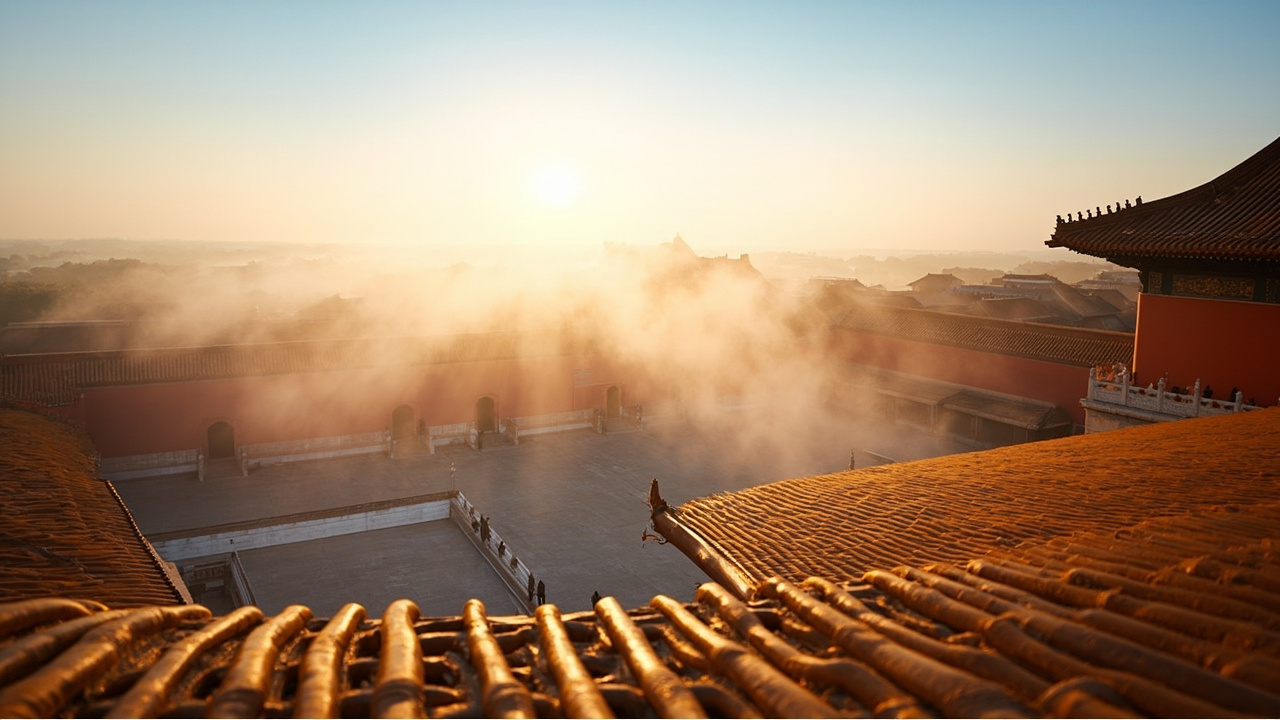
The ticket seller didn’t even look up when I asked for an English audio guide. She just pointed to a QR code and waved me through the turnstile. I stood there in the shadow of the Meridian Gate, phone in hand, and realized the Forbidden City had changed more in the last five years than in the previous five hundred.
That first visit was a blur of shuffling crowds and selfie sticks. But I’ve been back a dozen times since, always in the off-season, always with a specific purpose. I’ve watched the snow pile up on the golden roofs in January. I’ve traced the drainage system after a summer downpour. I’ve sat on a marble balustrade at closing time and listened to the swallows echo off the Hall of Supreme Harmony.
Here’s what I’ve learned: this place rewards preparation. The tourists who hate it are the ones who arrive at 10am on a Saturday in October with no plan. The ones who love it are the ones who know exactly which gate to enter, which halls to skip, and which courtyard to save for the last hour of the day. This guide is for the second group.
Quick answer
The Forbidden City (故宫, Gùgōng) is open Tuesday to Sunday from 8:30am to 5:00pm (November to March) or 5:30pm (April to October), and tickets cost $8.50 (¥60) for the main palace complex, with the Treasure Gallery and Clock Gallery each adding $1.40 (¥10). You must book online through the official WeChat mini-program or website at least 24 hours in advance, and you’ll need your passport number to purchase. Entry is from the south (Meridian Gate) only, and you exit from the north (Gate of Divine Might) or east (Donghuamen Gate).
The Short Version
The Forbidden City is the single most impressive historical site in China, and it’s also the most exhausting if you do it wrong. Book your ticket a week ahead. Enter at 8:30am. Walk the central axis first, then double back to the quieter side halls. Skip the audio guide and hire a human guide instead, or download a self-guided walking tour before you arrive. Bring snacks, because the food inside is overpriced and mediocre. And for the love of everything, do not visit on a Monday. It’s closed.
How I Picked These
I’ve walked through the Forbidden City more times than I can count, in every season, at every hour it’s open. I’ve been there with Chinese friends who grew up visiting on school trips, with historians who could name every emperor, and with first-time tourists who had no idea what they were looking at. I’ve also made every mistake in the book: wrong gate, wrong day, wrong ticket, wrong shoes. This guide is the result of those visits, plus conversations with palace staff, tour guides, and the old men who play chess in the park across the moat. I’m not a historian. I’m a traveler who’s done the homework so you don’t have to.
Comparison Table
| Rank | Place | Best For | Approx Cost (USD) | Time Needed | When to Go |
|---|---|---|---|---|---|
| 1 | Hall of Supreme Harmony | First-timers, iconic views | Included in ticket | 45 mins | 8:30am opening |
| 2 | Treasure Gallery | Gold, jewels, imperial bling | $10.00 (¥70) total | 1.5 hours | Weekday mornings |
| 3 | Imperial Garden | Quick stroll, photo ops | Included in ticket | 30 mins | Late afternoon |
| 4 | Palace of Prolonging Happiness | Quiet courtyards, fewer crowds | Included in ticket | 1 hour | Midday |
| 5 | Hall of Clocks | Mechanical curiosities | $10.00 (¥70) total | 45 mins | Any time |
| 6 | Western Six Palaces | Concubine history, drama | Included in ticket | 1 hour | Early afternoon |
| 7 | Belvedere of Embraced Fragrance | Best view of the golden roofs | Included in ticket | 30 mins | Late afternoon |
| 8 | Eastern Six Palaces | Empress Cixi’s residence | Included in ticket | 45 mins | Morning |
| 9 | Gate of Divine Might | Exit point, moat views | Free (exit) | 15 mins | Sunset |
| 10 | Corner Towers | Photography, moat reflections | Free (outside) | 20 mins | Golden hour |
Hall of Supreme Harmony — The One You’ve Seen in Every Photo
I remember the first time I walked through the Gate of Supreme Harmony and saw the hall itself. The scale is disorienting. The marble terrace alone is taller than most buildings, and the hall sits on top of it like a golden crown. I stood there for a solid five minutes, mouth slightly open, before I remembered to take a photo.
This is the ceremonial heart of the Forbidden City. The emperor used it for coronations, weddings, and the winter solstice. The throne inside is raised on a platform that puts the emperor physically above everyone else in the room, which was the entire point. The hall was rebuilt several times after fires, but the current structure dates to 1695, during the Qing Dynasty.
📍 Location: Central axis, south section of the palace complex 🎫 Entry fee: Included in the standard ticket ($8.50 / ¥60) 🕒 Opening hours: Same as palace hours (8:30am–5pm or 5:30pm, closed Mondays) 🚇 How to get there: Enter through Meridian Gate (Wumen), walk north across the Golden Water Bridges, through the Gate of Supreme Harmony, and you’re there. It’s impossible to miss. 📅 When to visit: Be in line at the Meridian Gate by 8:15am. The courtyard in front of the hall is nearly empty for about 20 minutes after opening. 💡 Insider tips: The bronze cauldrons near the hall have axe marks on them from the Eight-Power Allied Forces in 1900. Look closely. Also, the drainage system uses 1,142 stone lion heads to channel rainwater, and you can see them spitting water during a heavy storm.
I once watched a Chinese tour guide tell a group of schoolchildren that the emperor’s throne was so cold in winter that servants had to warm it with charcoal braziers before he sat down. The kids were horrified. I was delighted.
Treasure Gallery — Where the Qing Emperors Kept the Good Stuff
The first time I went to the Treasure Gallery, I expected a few dusty display cases. I was wrong. This is where the Qing emperors kept their actual treasures, and it shows. Gold filigree, jade carvings, pearl-encrusted headdresses, enameled vases, and a solid gold pagoda that’s taller than me. It’s the closest you’ll get to seeing the wealth of the Qing Dynasty without a time machine.
The gallery is housed in the Hall of Mental Cultivation and the surrounding buildings in the northeast corner of the palace. It’s a separate ticket, which means fewer people bother to buy it. That’s your advantage. The crowds thin out dramatically once you pay the extra fee.
📍 Location: Northeast corner of the Forbidden City, near the Hall of Mental Cultivation 🎫 Entry fee: $1.40 (¥10) additional, or buy the combo ticket for $10.00 (¥70) 🕒 Opening hours: Same as palace hours, but the gallery often closes earlier. Check when you arrive. 🚇 How to get there: From the Hall of Supreme Harmony, walk north along the east side of the central axis. Follow the signs for 珍宝馆 (Treasure Gallery). 📅 When to visit: Go in the first hour after opening, before the tour groups reach this corner. 💡 Insider tips: The gallery includes the Nine Dragon Screen, a 29-meter-long glazed tile wall from 1772. It’s around the back of the gallery, and most people miss it. Also, the Hall of Mental Cultivation was where Qing emperors actually lived and worked after 1723, not the grand halls on the central axis. This is the real imperial residence.
I bought the combo ticket on a whim and spent two hours in this section alone. The clock gallery next door is worth the extra $1.40, but only if you like mechanical things.
Imperial Garden — A Quick Stroll, Not a Destination
The Imperial Garden is the most crowded spot in the Forbidden City, and I honestly don’t understand why. It’s a nice garden, sure, but it’s small, and the crowds make it feel like a subway platform. I’ve been through it maybe eight times, and I’ve never once felt the peace that the emperors supposedly enjoyed here.
That said, you have to walk through it to get to the north exit, so you might as well know what you’re looking at. The garden was laid out in the Ming Dynasty and kept by the Qing emperors. The rockeries are made of Taihu limestone, the cypress trees are centuries old, and the Pavilion of Imperial Prospect in the center is a classic example of Ming garden architecture.
📍 Location: North end of the central axis, just before the Gate of Divine Might 🎫 Entry fee: Included in the standard ticket 🕒 Opening hours: Same as palace hours 🚇 How to get there: Walk north from the Palace of Earthly Tranquility. You can’t miss it. 📅 When to visit: Late afternoon, when most tour groups have already left. Or skip it entirely and spend that time in the quieter side courtyards. 💡 Insider tips: The garden’s two small hills are man-made, built from excavation soil from the moat. Also, the bronze elephants near the garden’s north gate are said to be guardians, but their poses are actually meant to represent the emperor’s power over the four directions. The tree with the gnarled trunk near the Pavilion of Imperial Prospect is over 400 years old.
I once saw a woman try to climb one of the rockeries for a photo. A guard blew his whistle so loudly that three pigeons took off. She got the photo anyway. The guard was not pleased.
Palace of Prolonging Happiness — The Quiet Corner Most Tourists Miss
This is my favorite spot in the entire Forbidden City, and it’s almost always empty. The Palace of Prolonging Happiness (延禧宫, Yánxǐ Gōng) is in the eastern section, and it’s famous for two things: it was the residence of several Qing empresses, and it has a bizarre unfinished Western-style building in its courtyard.
The building is a two-story wooden structure with a bronze frame, built in 1909 at the order of Empress Dowager Longyu. She wanted a “water palace” with an aquarium inside, but the project was abandoned when the Qing Dynasty fell in 1911. The skeleton has sat there ever since, a strange ghost of a building that never was.
📍 Location: Eastern Six Palaces, east of the central axis 🎫 Entry fee: Included in the standard ticket 🕒 Opening hours: Same as palace hours 🚇 How to get there: From the Hall of Supreme Harmony, head east toward the Eastern Six Palaces. Follow signs for 延禧宫. 📅 When to visit: Midday, when the central axis is packed and this courtyard is nearly empty. 💡 Insider tips: This palace is also where the 2018 hit drama “Story of Yanxi Palace” was set. If you’ve watched it, you’ll recognize the layout. Also, the bronze frame of the unfinished building is a great photo spot because nobody else is there. Bring a wide-angle lens.
I sat on a stone bench here for twenty minutes once, just watching the light move across the bronze skeleton. Nobody bothered me. It was the most peaceful hour I’ve spent in Beijing.
Hall of Clocks — Mechanical Marvels and Qing Dynasty Flexing
The Hall of Clocks (钟表馆, Zhōngbiǎo Guǎn) is the most underrated attraction in the Forbidden City. It’s a separate ticket, which keeps the crowds down, and it houses a collection of mechanical clocks and automata that the Qing emperors collected from Europe and China. Some of them are genuinely mind-boggling.
The collection includes clocks that play music, clocks with moving figures, clocks that tell time in multiple systems, and one clock that has a tiny mechanical elephant that waves its trunk. The Qing emperors loved these things, and they used them as diplomatic gifts and status symbols. The collection is housed in the Hall of Ancestral Worship, which is itself a beautiful building.
📍 Location: Northeast section, near the Treasure Gallery 🎫 Entry fee: $1.40 (¥10) additional, or combo ticket for $10.00 (¥70) 🕒 Opening hours: Same as palace hours, but check closing times 🚇 How to get there: From the Treasure Gallery, follow the signs for 钟表馆. 📅 When to visit: Any time, but weekday mornings are best. 💡 Insider tips: The clocks are displayed in chronological order, so you can see how the technology evolved. Also, the building itself was used for ancestral worship ceremonies during the Qing Dynasty, so you’re getting two attractions for the price of one. The automata demonstrations happen at set times, usually on the hour. Ask a guard for the schedule.
I watched a French tourist spend ten minutes staring at a clock with a mechanical bird that sang. When it finally stopped, he said, “C’est incroyable,” and I couldn’t have agreed more.
Western Six Palaces — Where the Concubines Lived (and Fought)
The Western Six Palaces are where the Qing Dynasty’s most dramatic stories played out. This is where the concubines lived, where Empress Dowager Cixi spent her early years, and where the political intrigues that defined the late Qing Dynasty unfolded. The buildings are smaller and more intimate than the grand halls on the central axis, which makes them feel more human.
The most famous palace here is the Palace of Eternal Spring (长春宫, Chángchūn Gōng), which was Cixi’s residence before she moved to the Hall of Mental Cultivation. It’s been restored and gives you a sense of what a high-ranking concubine’s life was like. The murals inside are worth a close look, though they’re faded.
📍 Location: Western section, west of the central axis 🎫 Entry fee: Included in the standard ticket 🕒 Opening hours: Same as palace hours 🚇 How to get there: From the Hall of Supreme Harmony, head west toward the Western Six Palaces. Follow signs for 西六宫. 📅 When to visit: Early afternoon, after the morning tour groups have moved through. 💡 Insider tips: The Palace of Eternal Spring has a stage in its courtyard where Cixi watched operas. It’s easy to miss because it’s tucked behind the main hall. Also, the Western Six Palaces are connected by a network of narrow alleys that are almost always empty. Use them to escape the crowds.
I once overheard a Chinese grandmother telling her granddaughter about the “cruel concubine battles” that happened here. The granddaughter asked if it was like the TV drama. The grandmother said, “Worse.”
Belvedere of Embraced Fragrance — The Best View in the Palace
The Belvedere of Embraced Fragrance (延辉阁, Yánhuī Gé) is a small pavilion in the Imperial Garden that most people walk right past. That’s a mistake, because it has the best view of the Forbidden City’s golden roofs that you can get without leaving the palace grounds.
The pavilion is a two-story structure with a balcony that looks out over the entire complex. From here, you can see the golden glazed tiles of the central axis, the cypress trees of the garden, and the distant silhouette of Jingshan Park. It’s especially beautiful in the late afternoon, when the low sun turns the roofs a deep amber.
📍 Location: Northwest corner of the Imperial Garden 🎫 Entry fee: Included in the standard ticket 🕒 Opening hours: Same as palace hours, but the upper level may close during bad weather 🚇 How to get there: From the Imperial Garden, walk to the northwest corner. The pavilion is the two-story building with the balcony. 📅 When to visit: Late afternoon, about an hour before closing. The light is perfect and the crowds have thinned. 💡 Insider tips: The pavilion’s name comes from the fragrance of the osmanthus trees planted nearby. In autumn, the scent is incredible. Also, the balcony is small, so you’ll have it to yourself if you time it right. Bring a telephoto lens for the best shots of the roofs.
I sat on the balcony for twenty minutes one October afternoon, watching the light change. A Chinese couple came up, took one photo, and left. Their loss.
Eastern Six Palaces — Empress Cixi’s Home Turf
The Eastern Six Palaces are the mirror image of the Western Six Palaces, and they’re where Empress Dowager Cixi lived during the late Qing Dynasty. She moved here after the death of Emperor Xianfeng in 1861, and she used these palaces as her base for the next forty years. The most famous is the Palace of Accumulated Purity (储秀宫, Chǔxiù Gōng), where Cixi lived during her rise to power.
The palace has been restored to its late Qing appearance, with the original furniture and decorations. You can see Cixi’s bedroom, her receiving room, and the courtyard where she held audiences. It’s a fascinating glimpse into the life of the most powerful woman in Chinese history.
📍 Location: Eastern section, east of the central axis 🎫 Entry fee: Included in the standard ticket 🕒 Opening hours: Same as palace hours 🚇 How to get there: From the Hall of Supreme Harmony, head east. Follow signs for 东六宫. 📅 When to visit: Morning, before the crowds build. 💡 Insider tips: The Palace of Accumulated Purity has a small exhibition about Cixi’s life, including photographs and personal items. It’s easy to miss because it’s in a side room. Also, the courtyard has a well that was supposedly used to dispose of a rival concubine’s body. The story is probably apocryphal, but it’s fun to tell.
I told that well story to a group of American tourists once. One of them looked genuinely disturbed. Another one asked if they could see the well. They could.
Gate of Divine Might — The Exit You Didn’t Know You Needed
The Gate of Divine Might (神武门, Shénwǔ Mén) is the north gate of the Forbidden City, and it’s where you’ll exit after your visit. It’s also worth a moment of your time before you leave, because the view from the gate itself is spectacular.
From the gate, you can look back down the central axis and see the entire palace complex laid out before you. You can also see Jingshan Park directly ahead, which is the best place to get an aerial view of the Forbidden City. The gate is topped by a pavilion that was used to display the imperial bell during the Qing Dynasty.
📍 Location: North end of the central axis 🎫 Entry fee: Free (exit only) 🕒 Opening hours: Same as palace hours 🚇 How to get there: Walk north through the Imperial Garden and you’ll hit it. 📅 When to visit: Save this for the end of your visit, ideally about 30 minutes before closing. 💡 Insider tips: After you exit, cross the street and climb Jingshan Park’s hill for the classic postcard view of the Forbidden City. It’s a 10-minute walk to the top and costs $2.80 (¥20). Also, the moat around the north wall is a great place for photos at sunset, and it’s free.
I’ve watched the sun set from the top of Jingshan Park more times than I can count. It never gets old.
Corner Towers — The Photographer’s Secret
The Corner Towers (角楼, Jiǎolóu) are the four watchtowers at the corners of the Forbidden City’s walls. They’re not accessible to visitors, but you don’t need to go inside. The best views are from outside the moat, and the towers are a favorite subject for photographers.
Each tower is a complex structure with multiple roofs, 72 ridges, and intricate brackets. They were built to be both functional and beautiful, and they’re considered masterpieces of Chinese architecture. The best time to photograph them is at sunrise or sunset, when the light hits the golden roofs.
📍 Location: Four corners of the Forbidden City walls, outside the moat 🎫 Entry fee: Free 🕒 Opening hours: Always accessible 🚇 How to get there: The easiest corner to reach is the northwest one, near the Gate of Divine Might. Walk along the moat from the north gate. 📅 When to visit: Golden hour, either sunrise or sunset. Winter is best because the low sun creates long shadows. 💡 Insider tips: The northeast corner, near the intersection of Jingshan East Street and Di’anmen East Street, is the most popular photo spot. Get there early. Also, the towers are illuminated at night, which makes for dramatic photos if you have a tripod.
I once spent an hour at the northwest corner with a group of Chinese photographers, all of us waiting for the perfect light. When it finally came, nobody spoke. We just clicked.
FAQ summary
The Forbidden City requires advance online booking with your passport number, costs $8.50 (¥60) for the standard ticket, and is closed on Mondays. Enter only through the Meridian Gate (south), exit through the Gate of Divine Might (north) or Donghuamen Gate (east), and plan for 3-4 hours minimum. The Treasure Gallery and Hall of Clocks require a separate $1.40 (¥10) ticket each, and the best time to visit is a weekday morning in spring or autumn, arriving by 8:30am.
FAQ
Q: Do I need to book Forbidden City tickets in advance? A: Yes, absolutely. You must book online through the official WeChat mini-program or website at least 24 hours ahead, and you’ll need your passport number. Walk-up tickets are not sold, and same-day tickets are almost never available.
Q: What is the Forbidden City entry fee in 2026? A: The standard ticket is $8.50 (¥60) from April to October and $5.70 (¥40) from November to March. The Treasure Gallery and Hall of Clocks each cost an additional $1.40 (¥10). A combo ticket for all three is $10.00 (¥70).
Q: Is the Forbidden City open on Mondays? A: No. The Forbidden City is closed every Monday, except during Chinese national holidays and summer vacation (July and August), when it opens daily. Check the official website for the current schedule.
Q: How long do I need to visit the Forbidden City? A: Plan for at least 3-4 hours to see the main halls and the Treasure Gallery. If you want to see everything, including the side palaces and the Hall of Clocks, budget 5-6 hours. Wear comfortable shoes because you’ll walk a lot.
Q: Which entrance should I use for the Forbidden City? A: You must enter through the Meridian Gate (Wumen) in the south. The nearest subway stop is Tiananmen East (Line 1), Exit B, or Tiananmen West (Line 1), Exit B. You’ll need to pass through security checks, so arrive early.
Q: Is English signage available in the Forbidden City? A: Yes, most major buildings have English signs, and the audio guide is available in English for about $5.70 (¥40). However, the English audio guide is dry, so I recommend hiring a human guide or downloading a self-guided tour app before you arrive.
Q: Can I use WeChat Pay or Alipay at the Forbidden City? A: Yes, but you’ll need to set up WeChat Pay or Alipay before your trip, as most places in China don’t accept credit cards. You can link a foreign credit card to these apps, but it’s easier to use a prepaid travel card or cash for small purchases.
The Honest Wrap-up
This guide is for first-time visitors who want to see the Forbidden City properly without turning it into a marathon. It’s not for people who want to check a box and move on. If that’s you, just walk the central axis, take a few photos, and leave. You’ll have a fine time.
But if you want to understand why this place matters, take the extra time. Sit in a quiet courtyard. Watch the light move across the marble. Think about the emperors who walked these same stones. The Forbidden City is not a museum of dead things. It’s a living place, and it rewards the people who slow down.
One final piece of advice: book your ticket for the earliest possible entry time, and be at the Meridian Gate by 8:15am. The first hour is the best hour. The crowds will come, but you’ll already have had your moment.
Topics
More guides you may like

Top 10 Bridges in China
China's bridges are engineering marvels spanning mountains, rivers, and seas. Here are 10 of the most spectacular, from ancient stone to modern steel.
8 min read

Top 10 Buddhist Sites in China
From the Leshan Giant Buddha to the Dunhuang Caves, these 10 Buddhist sites represent 2,000 years of China's spiritual heritage.
9 min read

Top 10 Day Trips from Beijing You Shouldn't Miss
Beijing is packed with history, but some of China's best experiences are just a few hours away. Here are 10 day trips that will transform your visit.
9 min read

Top 10 Hidden Gems in China Off the Beaten Path
Beyond the Great Wall and Terracotta Warriors, China has incredible hidden destinations few tourists ever reach. Here are 10 underrated gems worth the detour.
9 min read

Top 10 Markets and Shopping Streets in China
From Shanghai's Bund to Beijing's Silk Street - 10 markets where foreigners can haggle, explore, and bring home authentic Chinese goods.
9 min read

Top 10 Museums in China You Shouldn't Miss
China's museums span 5,000 years of civilization. These 10 - from the Palace Museum to Xi'an's terracotta gallery - are unmissable for culture lovers.
9 min read