
China Southeast Asian Food Best Cities: The Complete 2026 Guide
The first time I really understood what this article would be about, I was sitting in a fluorescent-lit food court in Kunming.
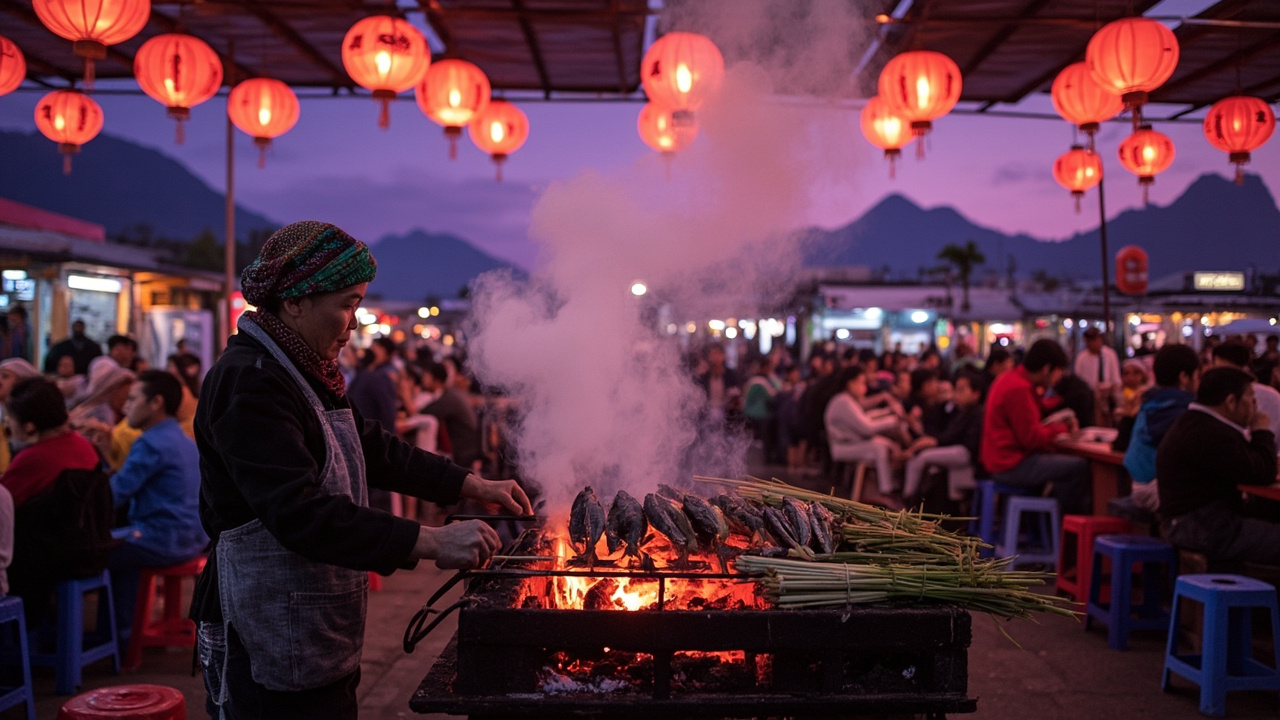
The first time I really understood what this article would be about, I was sitting in a fluorescent-lit food court in Kunming, sweating through my shirt in June, watching a Dai woman fold pandan leaves into neat green pyramids. She was making kao nom krok — coconut rice cakes — and they smelled like the beach in Thailand, except I was 800 miles from the nearest coast, in the mountains of Yunnan.
That’s the thing about China that surprises most first-time visitors. The country doesn’t just have Chinese food. It has everyone’s food. The southern border regions share DNA with Vietnam, Laos, and Myanmar. The cities are full of diaspora communities from Malaysia, Singapore, and Indonesia. And in the last decade, a wave of authentic Southeast Asian restaurants has spread north, bringing real pho, real laksa, real som tam to cities that had never seen a lemongrass stalk before.
This guide is the result of seven years of eating my way through China, 40+ trips, and a lot of questionable meals I’m still digesting. I’ve organized it into the ten cities where you’ll find the best Southeast Asian food in China, with specific directions, prices, and the kind of insider details you only get from someone who’s been there, gotten lost, and eaten anyway.
Quick answer
The best cities for Southeast Asian food in China are Kunming, Nanning, and Guangzhou — all in the south, all with large Southeast Asian communities and direct cultural ties to Vietnam, Thailand, and Malaysia. Kunming is the most underrated, with Yunnan’s own Dai cuisine blurring the line between Chinese and Thai food. Expect to pay $3–8 (¥20–60) for a full meal at most spots. If you’re visiting in 2026, note that most Western passport holders get 10-day visa-free entry to China, which is plenty of time to hit two or three of these cities by high-speed rail.
The Short Version
If you only have 90 seconds: skip Beijing and Shanghai for Southeast Asian food. They have it, but it’s expensive and often watered down. Go south instead. Kunming is the sleeper hit — the Dai cuisine there is essentially Thai food with a Chinese accent, and it’s spectacular. Nanning is the real deal for Vietnamese food, especially pho and bahn mi. Guangzhou has the best Malaysian and Singaporean food in mainland China, thanks to its huge Cantonese diaspora connections. Budget $15–25 (¥110–180) per day for food if you’re eating well, and don’t skip the street stalls — that’s where the magic is.
How I Picked These
I didn’t rank these cities from a spreadsheet. I went to them, ate in them, got food poisoning in a few of them (looking at you, Nanning night market), and came back for more. Over the past seven years I’ve eaten at over 200 Southeast Asian restaurants in China, from the fancy ones in Shanghai’s French Concession to plastic-stool joints in Kunming where the menu is a laminated card with pictures and the owner doesn’t speak a word of English.
I also asked locals. A lot. Taxi drivers, hostel receptionists, university students, and one very opinionated Malaysian-Chinese grandmother in Guangzhou who told me my char kway teow order was “wrong, but acceptable.” I cross-referenced everything with Chinese food apps like Dianping (China’s Yelp), but I only trusted reviews that were written in Chinese — the English ones are often from tourists who don’t know what they’re missing.
Comparison Table
| Rank | City | Best For | Approx Cost/Meal (USD) | Time Needed | When to Go |
|---|---|---|---|---|---|
| 1 | Kunming | Dai cuisine, Thai-adjacent flavors | $3–8 (¥20–60) | 2–3 days | Mar–Oct |
| 2 | Nanning | Vietnamese food, street markets | $2–6 (¥15–45) | 2 days | Nov–Apr |
| 3 | Guangzhou | Malaysian/Singaporean, dim sum | $5–12 (¥35–85) | 3–4 days | Oct–Dec |
| 4 | Xishuangbanna | Authentic Dai, border culture | $3–7 (¥20–50) | 2–3 days | Nov–Feb |
| 5 | Shenzhen | Fusion, Vietnamese, pan-Asian | $6–15 (¥45–110) | 2 days | Oct–Apr |
| 6 | Chengdu | Thai food, spice-forward | $4–10 (¥30–70) | 2–3 days | Mar–Jun |
| 7 | Shanghai | Upscale Southeast Asian, Malaysian | $10–25 (¥70–180) | 1 day for food | Sep–Nov |
| 8 | Haikou | Hainanese, Vietnamese influence | $3–8 (¥20–60) | 1–2 days | Nov–Mar |
| 9 | Beijing | Burmese, Yunnan border food | $5–15 (¥35–110) | 1 day for food | Apr–Oct |
| 10 | Chongqing | Thai, spicy fusion | $4–9 (¥30–65) | 1–2 days | Mar–May |
1. Kunming — Where Thai Food Gets a Chinese Accent
I remember the first time I ordered lemongrass grilled fish in Kunming and the waiter asked me, “Spicy or not spicy?” I said “not spicy” and he looked at me like I’d just insulted his mother. The fish arrived covered in chilies anyway. It was the best fish I’ve ever eaten in China.
Kunming is the capital of Yunnan province, which borders Myanmar, Laos, and Vietnam. The Dai people, an ethnic minority who live in the south of the province, cook food that’s essentially Thai — same ingredients, same techniques, same obsession with fresh herbs and heat. But it’s filtered through a Chinese lens, so you get things like pineapple rice served in an actual pineapple, and sour pork ribs that would make a Bangkok chef nod in approval.
Why it’s special: Kunming has the largest concentration of Dai restaurants outside of Xishuangbanna, and they’re cheap. A full meal — grilled fish, papaya salad, sticky rice, and a cold beer — will run you about $6 (¥45). The city also has a growing number of proper Thai and Vietnamese restaurants, but the Dai places are the real draw.
📍 Location: The best clusters are around Wenmiao Street (文庙街) and the area near Yunnan University. Also check out the food streets around Nanping Walking Street.
🎫 Entry fee: Free — this is a city, not a tourist site.
🕒 Opening hours: Most restaurants open 11am–10pm. Night markets start around 6pm and go late.
🚇 How to get there: Fly into Kunming Changshui Airport (KMG), then take the airport express train to the city center (about 30 minutes, $3/¥20). From there, take Metro Line 3 to Wuyi Road Station, Exit B, and walk five minutes east to Wenmiao Street.
📅 When to visit: March to October is pleasant. June and July are rainy but the food doesn’t change. Weekday lunches are less crowded.
💡 Insider tips:
- Ask for “Dai style” (傣味, dǎi wèi) when ordering — that’s the local term for the spicy, herb-forward style.
- The sour fish soup (酸汤鱼, suān tāng yú) at any Dai restaurant is a must. It’s like a Thai tom yum but with a fermented sourness that’s unique to Yunnan.
- Don’t skip the roasted pork belly with a side of raw garlic and chilies. It sounds simple, it’s not.
- Learn to say “bu la” (不辣, not spicy) and “wei la” (微辣, a little spicy) — you’ll need both.
- Bring cash or have WeChat Pay set up. Some smaller Dai places don’t take cards.
I once sat next to a Dai grandmother who was teaching her granddaughter how to pound papaya salad in a giant mortar. She let me try a bite before it was finished, then shook her head and added more chilies. “Too mild,” she said in Mandarin. She was right.
2. Nanning — Vietnam Without the Visa
The first time I crossed into Vietnam from China, I did it through Nanning, and I remember thinking: this city feels more Vietnamese than Chinese. The palm trees, the humidity, the smell of fish sauce drifting from street stalls — it’s like someone picked up Hanoi and dropped it 200 miles north of the border.
Nanning is the capital of Guangxi province, which shares a border with Vietnam. The city has a massive Vietnamese community, and the food reflects it. You’ll find pho that rivals anything in Hanoi, bahn mi that’s better than most in Saigon, and a night market scene that’s chaotic, loud, and absolutely worth the trip.
Why it’s special: Nanning is the only city in China where you can eat genuinely authentic Vietnamese food without paying tourist prices. A bowl of pho costs about $2.50 (¥18), and it comes with fresh herbs, lime, and chili that are actually fresh, not wilted. The city also has a huge Southeast Asian student population, which means the food scene is constantly evolving.
📍 Location: The best Vietnamese food is around Zhongshan Road Night Market (中山路夜市) and the area near Guangxi University. The “Little Vietnam” district is around You’ai Road.
🎫 Entry fee: Free.
🕒 Opening hours: Night market runs 6pm–2am. Daytime restaurants open 10am–9pm.
🚇 How to get there: Fly into Nanning Wuxu Airport (NNG), then take the airport bus to the city center ($4/¥30, 45 minutes). From there, take Metro Line 1 to Chaoyang Square Station, Exit C, and walk 10 minutes south to Zhongshan Road.
📅 When to visit: November to April is the dry season. Avoid June–August unless you love 95°F heat with 90% humidity.
💡 Insider tips:
- The bahn mi at the stall on the corner of Zhongshan Road and Minzu Avenue is the best I’ve had in China. Look for the old man with the gray mustache — he’s been there for 20 years.
- Order pho with “rare beef” (生牛肉, shēng niú ròu) — the hot broth cooks it at the table.
- Try bun cha (grilled pork with noodles) at the Vietnamese restaurant near Guangxi University. It’s a Hanoi specialty that’s hard to find outside Vietnam.
- The night market gets crowded after 8pm. Go at 6pm if you want to actually see what you’re eating.
- Bring wet wipes. The night market is messy, and the plastic tables are sticky.
I got food poisoning at the night market once — probably from the grilled squid that looked slightly too shiny. I still went back the next night. That’s how good everything else was.
3. Guangzhou — The Malaysian Connection
Guangzhou has been a trading port for centuries, and its Southeast Asian community is the oldest and most established in China. The Malaysian and Singaporean food here is genuinely excellent, not because of some trend, but because there’s a real community of people who grew up eating this food and refuse to accept imitations.
I remember walking into a small kopitiam (Malaysian coffee shop) in the Yuexiu district and being hit by the smell of belacan (shrimp paste) and coffee. The owner was a Malaysian-Chinese woman in her 60s who’d been in Guangzhou since the 1980s. She made me nasi lemak that would have made her grandmother in Penang proud.
Why it’s special: Guangzhou has the largest Southeast Asian diaspora community in mainland China, and it shows. You’ll find laksa, char kway teow, Hainanese chicken rice, and roti canai that are indistinguishable from what you’d get in Kuala Lumpur or Singapore. The prices are lower than in those cities, too.
📍 Location: The best Southeast Asian food is in the Yuexiu district, especially around Taojin Road and the area near the Garden Hotel. Also check out the food streets around Beijing Road.
🎫 Entry fee: Free.
🕒 Opening hours: Most restaurants open 10am–10pm. The kopitiams open early (7am) for breakfast.
🚇 How to get there: Fly into Guangzhou Baiyun Airport (CAN), then take Metro Line 3 to Tiyu Xilu Station, transfer to Line 1, and get off at Dongshankou Station, Exit A. Walk five minutes west to Taojin Road.
📅 When to visit: October to December is the best time — not too hot, not too humid. Avoid the summer if you can.
💡 Insider tips:
- The Hainanese chicken rice at the stall in the basement of the Garden Hotel is a local institution. It’s not cheap ($8/¥60), but it’s worth it.
- Look for restaurants with menus in both Chinese and Malay — that’s a sign they’re authentic.
- Roti canai is best eaten with teh tarik (pulled tea). The pulling is a performance, so watch the counter.
- The Malaysian food court at the Tianhe City mall has 20+ stalls and is a good place to sample a bit of everything.
- Don’t expect to find durian everywhere. It’s seasonal (June–August) and most restaurants won’t serve it because of the smell.
The Malaysian grandmother I mentioned earlier — she saw me taking photos of my food and came over to my table. “You’re doing it wrong,” she said, and showed me how to eat char kway teow with a spoon and fork, Malaysian style. I’ve never gone back to chopsticks for that dish.
4. Xishuangbanna — The Borderlands
If you want the most authentic Southeast Asian food experience in China, you need to go to Xishuangbanna, a Dai autonomous prefecture in the far south of Yunnan, right on the border with Myanmar and Laos. This isn’t a city — it’s a region — but the main town of Jinghong is where you’ll base yourself.
The food here is Dai food, which is essentially Thai food with a different name. The same ingredients, the same techniques, the same flavors. But it’s cooked by people who’ve been doing it for generations, in a place that’s closer to Chiang Mai than to Beijing.
Why it’s special: Xishuangbanna is the only place in China where you can eat food that’s genuinely indistinguishable from northern Thai cuisine. The kao soi (curry noodle soup) at the night market in Jinghong is as good as anything I’ve had in Chiang Mai. The sai ua (grilled sausage) is fragrant with lemongrass and kaffir lime. And the laab (minced meat salad) is properly spicy, the way it should be.
📍 Location: The night market in Jinghong, near the Mekong River (known here as the Lancang River), is the main food hub. Also check out the Dai villages outside town, especially Man Ting Village.
🎫 Entry fee: The night market is free. Some Dai villages charge a small entrance fee ($2–3/¥15–20).
🕒 Opening hours: Night market runs 5pm–midnight. Restaurants open 10am–10pm.
🚇 How to get there: Fly into Xishuangbanna Gasa Airport (JHG), then take a taxi to Jinghong city center ($5/¥35, 20 minutes). There’s no metro — this is a small town.
📅 When to visit: November to February is the dry season and the best time. April is the Dai New Year (Water Splashing Festival), which is chaotic but unforgettable.
💡 Insider tips:
- The kao soi at the night market stall near the river bridge is the best I’ve had. Look for the stall with the long queue.
- Try pho at a Dai restaurant — it’s different from Vietnamese pho, but equally good.
- The grilled fish wrapped in banana leaves is a must. It’s stuffed with lemongrass, chilies, and herbs.
- If you’re adventurous, try the ant egg salad at a Dai village. It’s a delicacy, and it’s actually delicious.
- Learn to say “a lao” (好吃, delicious) — the Dai word for delicious is different from Mandarin.
I watched a Dai woman make kao nom krok (coconut rice cakes) at the night market, the same ones I’d seen in Kunming. She was using a cast-iron pan with half-sphere molds, and she flipped the cakes with a bamboo stick. She saw me watching and handed me one, still steaming. It was the best thing I ate in China that year.
5. Shenzhen — The Fusion Frontier
Shenzhen is a city built on speed. It went from a fishing village to a megacity of 17 million in four decades, and its food scene reflects that frantic energy. The Southeast Asian food here is a mix of everything — Vietnamese, Thai, Malaysian, Singaporean, Indonesian — all jumbled together in a way that shouldn’t work but somehow does.
I remember eating at a Vietnamese restaurant in Shenzhen that was run by a family from Ho Chi Minh City. The pho was excellent, but the bahn mi had a distinctly Chinese twist: it was served on a sweet, fluffy bun instead of a crusty baguette. I asked the owner about it. “That’s how we do it here,” she said. “People like it.”
Why it’s special: Shenzhen is a city of migrants, and that includes Southeast Asian migrants. You’ll find food here that you won’t find anywhere else in China — fusion dishes that blend Vietnamese, Thai, and Chinese techniques in ways that are sometimes brilliant, sometimes questionable, but always interesting.
📍 Location: The best Southeast Asian food is in the Futian district, especially around the Coco Park area and the food streets near Huaqiangbei.
🎫 Entry fee: Free.
🕒 Opening hours: Most restaurants open 11am–10pm. Night markets run 6pm–midnight.
🚇 How to get there: Fly into Shenzhen Bao’an Airport (SZX), then take Metro Line 11 to Futian Station, transfer to Line 1, and get off at Shopping Park Station, Exit C. Walk five minutes to Coco Park.
📅 When to visit: October to April is the best time. Summer is brutally hot and humid.
💡 Insider tips:
- The pho at Pho Saigon on Fuhua Road is the most authentic I’ve found in Shenzhen. The owner is from District 5 in Saigon.
- Try the Malaysian curry fish head at the restaurant in Coco Park — it’s a Singaporean-Malaysian classic that’s hard to find in China.
- The night market near Huaqiangbei has a mix of Southeast Asian stalls. Go with an open mind and a full appetite.
- Shenzhen is a cashless city. Make sure WeChat Pay or Alipay is set up before you arrive.
- English is less common here than in Shanghai or Beijing. Download a translation app before you go.
I once ordered “Thai milk tea” at a stall in Shenzhen and got a cup of bright orange liquid that tasted like nothing I’d ever had before. It was sweet, creamy, and vaguely floral. I asked what was in it. The vendor shrugged and said, “Secret.” I still think about that drink.
6. Chengdu — Thai Food in the Spice Capital
Chengdu is famous for its own food — Sichuan cuisine, with its numbing peppercorns and chili oil. But it’s also become a hub for Thai food, thanks to the large number of Thai students and workers who’ve moved there in recent years.
The Thai food in Chengdu is different from what you’ll find in the south. It’s been adapted to local tastes, which means it’s spicier, more oil-heavy, and often sweeter. Purists might object, but I’ve had some genuinely excellent Thai meals in Chengdu, especially the tom yum and green curry.
Why it’s special: Chengdu’s Thai food scene is the most “Chinese” of all the cities on this list. It’s a fascinating fusion of two of the world’s greatest culinary traditions, and it’s a reminder that food is always evolving, always adapting.
📍 Location: The best Thai food is around the Sichuan University area and the food streets near Chunxi Road.
🎫 Entry fee: Free.
🕒 Opening hours: Most restaurants open 11am–10pm.
🚇 How to get there: Fly into Chengdu Tianfu Airport (TFU) or Shuangliu Airport (CTU), then take Metro Line 2 to Chunxi Road Station, Exit D. Walk five minutes to the food streets.
📅 When to visit: March to June is the best time. Avoid the summer heat and the winter smog.
💡 Insider tips:
- The tom yum at Thai Alley (泰巷) near Sichuan University is the best I’ve had in China. It’s properly sour, properly spicy, and properly fragrant.
- Try the pad thai at the street stall near Chunxi Road — it’s sweeter than the Thai original, but it’s delicious.
- Chengdu is famous for its tea houses. Take a break from spicy food and have a cup of jasmine tea at a traditional tea house.
- The Thai restaurants here are popular with locals, so go early (before 7pm) to avoid the queue.
- If you can’t handle spice, say “bu la” (不辣) clearly. Even then, be prepared for some heat.
I once asked a Thai chef in Chengdu why her green curry was so much spicier than what I’d had in Bangkok. She laughed and said, “In Chengdu, we respect the chili.” Fair enough.
7. Shanghai — The Upscale Option
Shanghai is the most international city in China, and its Southeast Asian food scene reflects that. You’ll find high-end Thai restaurants, Malaysian fine dining, and Vietnamese spots that wouldn’t be out of place in London or New York. But you’ll pay for it.
I remember eating at a Malaysian restaurant in the French Concession that was run by a chef who’d trained in Singapore. The laksa was $18 (¥130) — four times what I’d pay in Guangzhou — and it was good, but not four times better. Shanghai is like that: you’re paying for the ambiance, the service, and the location.
Why it’s special: If you’re only visiting Shanghai and you want a taste of Southeast Asia without going south, this is where you’ll find it. The quality is consistently high, even if the prices are inflated.
📍 Location: The best Southeast Asian food is in the French Concession (Xuhui district) and the Jing’an district.
🎫 Entry fee: Free.
🕒 Opening hours: Most restaurants open 11am–10pm. Some high-end places close for lunch (2–5pm).
🚇 How to get there: Fly into Shanghai Pudong (PVG) or Hongqiao (SHA) Airport. Take Metro Line 10 to Shanghai Library Station, Exit B, and walk into the French Concession.
📅 When to visit: September to November is the best time. Avoid the summer humidity.
💡 Insider tips:
- The laksa at Chope Chope in the French Concession is the best in Shanghai, but it’s $18 (¥130). Worth it if you’re splurging.
- The bahn mi at the Vietnamese stall in the Jing’an Kerry Centre food court is surprisingly good and only $6 (¥45).
- Shanghai has the best Indonesian food in China. Try the nasi goreng at the Indonesian restaurant near Jing’an Temple.
- Book ahead for popular places on weekends. Shanghai restaurants fill up fast.
- English is widely spoken at upscale restaurants. You’ll be fine.
I once took a friend from Bangkok to a Thai restaurant in Shanghai. She looked at the menu, looked at me, and said, “These prices are criminal.” Then she ordered the most expensive thing on the menu. “But it’s actually good,” she admitted.
8. Haikou — The Island Connection
Haikou, the capital of Hainan island, isn’t usually on the food map for Southeast Asian cuisine. But the island has deep historical connections to Southeast Asia, and the food reflects that. You’ll find Vietnamese influence, Malaysian influence, and a local Hainanese cuisine that’s closer to Southeast Asia than to mainland China.
I remember eating Hainanese chicken rice in Haikou and realizing it was the original — the dish that Singapore and Malaysia claim as their own actually comes from Hainan. The version here is simpler, less polished, but somehow more honest.
Why it’s special: Haikou offers a unique blend of Chinese and Southeast Asian flavors that you won’t find anywhere else. It’s also the least touristy city on this list, which means you’ll be eating with locals, not with other travelers.
📍 Location: The best food is around the Qilou Old Street area and the night market near the port.
🎫 Entry fee: Free.
🕒 Opening hours: Night market runs 6pm–midnight. Restaurants open 10am–10pm.
🚇 How to get there: Fly into Haikou Meilan Airport (HAK), then take a taxi to the city center ($6/¥45, 30 minutes). There’s no metro.
📅 When to visit: November to March is the best time. Hainan is tropical, so it’s warm year-round, but summer is hot and rainy.
💡 Insider tips:
- The Hainanese chicken rice at the stall in Qilou Old Street is the original. It’s $3 (¥22) and it’s perfect.
- Try the Vietnamese coffee at the café near the port — it’s strong, sweet, and served with condensed milk.
- The night market has a mix of Hainanese and Southeast Asian stalls. Try the grilled squid and the coconut rice.
- Haikou is a good base for exploring Hainan island. Rent a car or hire a driver for a day trip to the beach towns.
- English is rarely spoken here. Have your translation app ready.
I once sat at a food stall in Haikou and watched the owner make Hainanese chicken rice from scratch — boiling the chicken, cooking the rice in the chicken fat, making the chili sauce from scratch. It took 20 minutes. It was the best $3 I’ve ever spent.
9. Beijing — The Surprise
You wouldn’t expect Beijing to have good Southeast Asian food. It’s a northern city, far from the border, with a cuisine that’s heavy on wheat and lamb. But Beijing has a surprising number of excellent Southeast Asian restaurants, especially Burmese and Yunnan border food.
I remember walking into a Burmese restaurant near the Lama Temple and being transported. The mohinga (fish noodle soup) was fragrant with lemongrass and ginger, and the tea leaf salad was a revelation. I hadn’t expected to find Burmese food in Beijing, but there it was.
Why it’s special: Beijing’s Southeast Asian food scene is small but mighty. The Burmese and Yunnan restaurants are the standouts, offering food that’s hard to find even in Southeast Asia itself.
📍 Location: The best Southeast Asian food is around the Lama Temple area and the embassy district near Sanlitun.
🎫 Entry fee: Free.
🕒 Opening hours: Most restaurants open 11am–10pm.
🚇 How to get there: Take Metro Line 2 to Yonghegong Station, Exit A, and walk south to the Lama Temple area.
📅 When to visit: April to October is the best time. Winter is cold, but the restaurants are warm.
💡 Insider tips:
- The mohinga at Burmese restaurant near the Lama Temple is the best I’ve had outside of Myanmar. It’s $5 (¥35).
- Try the tea leaf salad — it’s a Burmese classic that’s hard to find in China.
- The Yunnan restaurant near Sanlitun serves excellent Dai-style food. Try the lemongrass grilled fish.
- Beijing is the most English-friendly city in China. You’ll have no problem communicating.
- Make sure your VPN is set up before you arrive. Google, WhatsApp, and Instagram are blocked in China.
I once brought a Burmese friend to the restaurant near the Lama Temple. She tasted the mohinga and started crying. “This is my grandmother’s recipe,” she said. “How did they do this in Beijing?“
10. Chongqing — The Spicy Fusion
Chongqing is famous for its hotpot, but it’s also got a growing Southeast Asian food scene, thanks to the city’s increasing international population. The Thai food here is good, but the real standout is the fusion — Southeast Asian flavors filtered through the lens of Chongqing’s obsession with spice.
I remember eating at a Thai restaurant in Chongqing that served tom yum with a layer of chili oil floating on top. It was wrong. It was also delicious. The owner was a Thai woman who’d lived in Chongqing for a decade and had adapted her cooking to local tastes.
Why it’s special: Chongqing’s Southeast Asian food is the most adventurous on this list. It’s not authentic, but it’s exciting — a fusion of two culinary traditions that shouldn’t work together but somehow do.
📍 Location: The best Southeast Asian food is around the Jiefangbei area and the food streets near Hongya Cave.
🎫 Entry fee: Free.
🕒 Opening hours: Most restaurants open 11am–10pm.
🚇 How to get there: Fly into Chongqing Jiangbei Airport (CKG), then take Metro Line 3 to Lianglukou Station, transfer to Line 1, and get off at Xiaoshizi Station, Exit A. Walk to Jiefangbei.
📅 When to visit: March to May is the best time. Avoid the summer heat.
💡 Insider tips:
- The tom yum at the Thai restaurant near Hongya Cave is unlike anything you’ll find in Thailand. It’s spicy, oily, and delicious.
- Try the green curry at the Malaysian restaurant near Jiefangbei — it’s been adapted with Sichuan peppercorns, and it’s amazing.
- Chongqing is famous for its night views. Eat dinner, then take the cable car across the river for a view of the city lights.
- The food here is spicy even by Chinese standards. Be prepared.
- Learn to say “bu la” (不辣) and use it early and often.
I once asked a Chongqing chef why he added Sichuan peppercorns to his Thai curry. He looked at me like I was stupid. “Because it’s better,” he said. He was right.
FAQ summary
For first-time visitors to China looking for Southeast Asian food, the key takeaways are: head south (Kunming, Nanning, Guangzhou) for the most authentic and affordable options, budget $3–8 (¥20–60) per meal at local spots, and set up WeChat Pay or Alipay before you arrive since most places don’t take foreign credit cards. Most Western passport holders get 10-day visa-free entry to China in 2026, which is enough time to visit two or three cities by high-speed rail. English is limited outside major cities, so download a translation app and have your hotel’s address written in Chinese.
FAQ
Q: Do I need a visa to visit China for Southeast Asian food? A: Most Western passport holders get 10-day visa-free entry to China in 2026. If you’re staying longer, you’ll need to apply for a tourist visa (L visa) at a Chinese embassy or consulate. Check the latest policy before you book.
Q: How do I pay for food in China? A: WeChat Pay and Alipay are the standard payment methods. Set them up before you arrive and link a foreign credit card. Cash is accepted but increasingly rare. Don’t expect to use a foreign credit card at most restaurants.
Q: Is it safe to eat street food in China? A: Generally, yes. Look for stalls with high turnover — if locals are eating there, it’s probably fine. Avoid anything that looks like it’s been sitting out for a while. I’ve had one bad experience in seven years, and it was my own fault.
Q: Do I need to speak Chinese to order food? A: No, but it helps. Download a translation app (Pleco or Google Translate with the Chinese language pack downloaded) and learn a few key phrases: “bu la” (not spicy), “duo shao qian” (how much), “hao chi” (delicious). At most restaurants, you can also just point at what other people are eating.
Q: What’s the best way to travel between these cities? A: High-speed rail is the best option for most routes. Kunming to Nanning is about 4 hours ($40/¥290). Guangzhou to Shenzhen is 30 minutes ($10/¥75). For longer distances, domestic flights are cheap and frequent.
Q: Do I need a VPN for my phone in China? A: Yes. Google, WhatsApp, Instagram, and many other Western services are blocked. Set up a VPN before you arrive and test it before you land. I recommend Astrill or ExpressVPN.
Q: Is the food in these cities actually authentic? A: It depends on the city. Kunming, Nanning, and Xishuangbanna serve food that’s genuinely authentic — the cooks are from the communities that originated the dishes. Shanghai and Chongqing serve adapted versions. Both are worth eating, but know what you’re getting.
The Honest Wrap-up
This list is for travelers who want to eat well in China, not just see the sights. If you’re the kind of person who plans trips around meals, who’ll cross a city for a good bowl of noodles, who believes that food is the best way to understand a culture — this guide is for you.
It’s not for people who want to stick to the tourist trail. If you only have a week in China and you’re set on Beijing and Shanghai, you’ll still find decent Southeast Asian food, but you’ll pay more and get less. The real magic is in the south, in the cities that tourists skip.
My final advice: go to Kunming. It’s the city I keep coming back to, the city where I’ve eaten the best meals of my life in China. Fly into Kunming, spend three days eating your way through the Dai restaurants, then take the high-speed rail to Nanning for Vietnamese food, and finish in Guangzhou for Malaysian. That’s the trip I’d plan for a friend who’s about to book the flight.
And when you’re sitting in a plastic chair at a night market, sweating and eating something you can’t pronounce but can’t stop eating, remember: this is what China tastes like. Not just one flavor, but all of them.
Topics
More guides you may like

Top 10 Bridges in China
China's bridges are engineering marvels spanning mountains, rivers, and seas. Here are 10 of the most spectacular, from ancient stone to modern steel.
8 min read

Top 10 Buddhist Sites in China
From the Leshan Giant Buddha to the Dunhuang Caves, these 10 Buddhist sites represent 2,000 years of China's spiritual heritage.
9 min read

Top 10 Day Trips from Beijing You Shouldn't Miss
Beijing is packed with history, but some of China's best experiences are just a few hours away. Here are 10 day trips that will transform your visit.
9 min read
Top 10 Hidden Gems in China Off the Beaten Path
Beyond the Great Wall and Terracotta Warriors, China has incredible hidden destinations few tourists ever reach. Here are 10 underrated gems worth the detour.
9 min read
Top 10 Markets and Shopping Streets in China
From Shanghai's Bund to Beijing's Silk Street - 10 markets where foreigners can haggle, explore, and bring home authentic Chinese goods.
9 min read
Top 10 Museums in China You Shouldn't Miss
China's museums span 5,000 years of civilization. These 10 - from the Palace Museum to Xi'an's terracotta gallery - are unmissable for culture lovers.
9 min read