
Shanghai Maglev Train Complete Guide: The Complete 2026 Guide
The first time I rode the Shanghai Maglev, I was still fumbling with my passport at the ticket machine while the train doors were already closing.
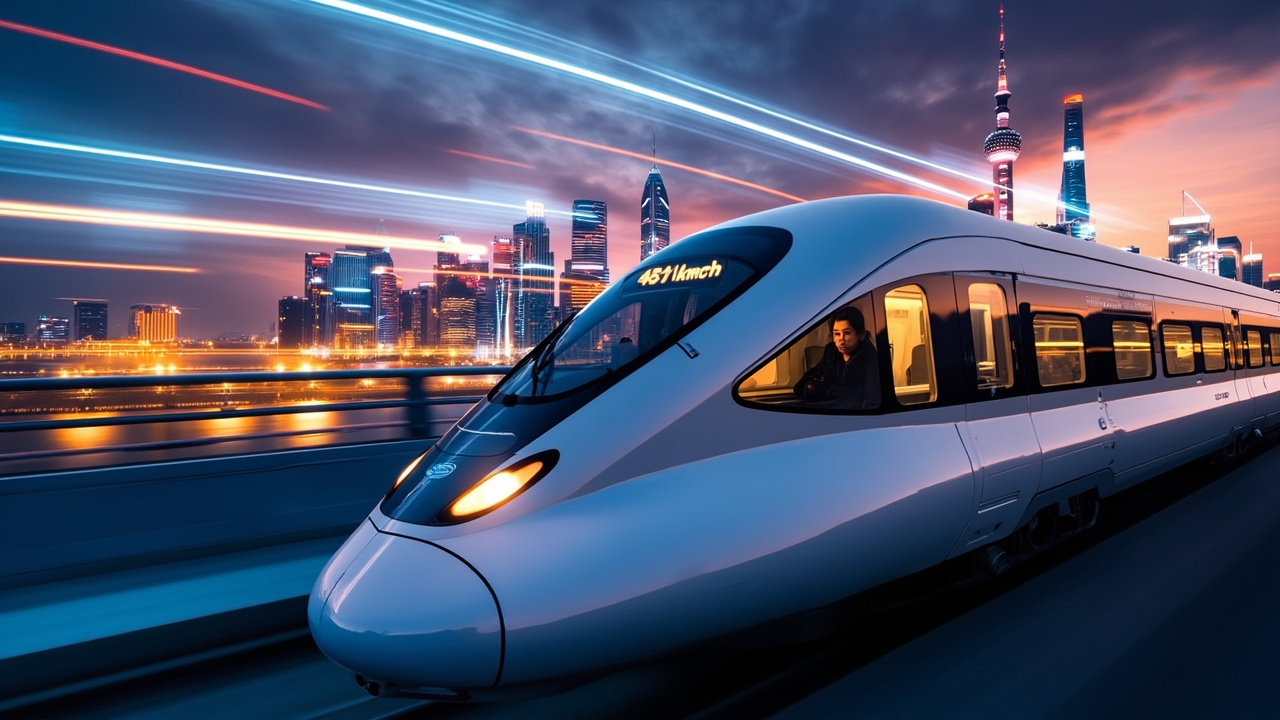
The first time I rode the Shanghai Maglev, I was still fumbling with my passport at the ticket machine while the train doors were already closing. A station attendant named Chen grabbed my arm, swiped my card, and shoved me through the doors just as they sealed shut. I stood there catching my breath as the train pulled away from Longyang Road station, and then I looked at the speed display above the door. It ticked past 300 km/h. Then 350. Then 400. The buildings outside blurred into a smear of glass and steel, and I remember thinking: this is the fastest thing I’ve ever been on, and it’s just the airport shuttle.
That was seven years ago. I’ve taken the Maglev over forty times since, and I still press my face against the window like a kid every single time. This guide covers everything a first-time visitor needs to know about the Shanghai Maglev: how to ride it, what it costs, which seat to pick, how to avoid the tourist traps at the terminal, and why it’s still worth doing even when the taxi is cheaper.
Quick answer
The Shanghai Maglev connects Pudong International Airport (PVG) to Longyang Road station in about 8 minutes, reaching a top speed of 431 km/h. It costs 50 RMB (about $7) one-way with a valid flight ticket, or 40 RMB (about $5.50) without one. It runs from 6:45 AM to 9:42 PM daily, and you should take it at least once for the experience even if a taxi is more convenient for your final destination.
The Short Version
Take the Maglev if you’re landing at PVG and heading anywhere near the eastern side of Shanghai, or if you just want to say you’ve been on the world’s fastest commercial train. Skip it if you’re staying in the western parts of the city (like Hongqiao area) or if you have tons of luggage and no patience for a transfer. The ride itself is 8 minutes of pure novelty, but you’ll still need to switch to the metro to get anywhere central. It costs about the same as a taxi for one person, so it’s not a money-saving move. It’s a “because I can” move.
How I Picked These
I’ve lived in Shanghai for seven years and have taken the Maglev more times than I can count. I’ve ridden it with visiting parents, with confused business colleagues, and once at 6 AM with a hangover so bad I genuinely considered just sleeping at the airport. I’ve also tested every possible alternative: taxis, the Metro Line 2, airport buses, and even a friend’s car once. I’ve timed the transfers, compared the costs, and argued with station staff about whether the 40 RMB discount actually requires a paper ticket (it doesn’t, but they’ll make you show your boarding pass anyway). Everything in this guide is based on actual trips, actual receipts, and actual mistakes I’ve made so you don’t have to.
Comparison Table
| Rank | Option | Best For | Approx Cost (USD) | Time Needed | When to Use |
|---|---|---|---|---|---|
| 1 | Maglev + Metro Line 2 | First-timers, novelty seekers | $7 (50 RMB) | 8 min + 20-40 min metro | 6:45 AM - 9:42 PM |
| 2 | Taxi / Didi | Groups of 2+, heavy luggage | $15-25 (110-180 RMB) | 40-60 min | Any time, esp. late night |
| 3 | Metro Line 2 direct | Budget travelers | $1 (7-8 RMB) | 60-80 min | Any time |
| 4 | Airport bus | Budget travelers, no metro nearby | $3-5 (20-35 RMB) | 60-90 min | Daytime only |
| 5 | Private car service | Business travelers | $40-60 (280-420 RMB) | 40-60 min | Pre-booked |
Shanghai Maglev Train ?The Complete 2026 Guide
1. The Ride Itself ?431 km/h Feels Faster Than It Sounds
The first time you feel the Maglev accelerate, you’ll understand why people film it on their phones. It’s not like a plane taking off. There’s no rumble, no vibration, just a silent push that presses you gently into your seat. The train floats on a magnetic field, so there are no wheels touching the track. The only sound is the wind rushing past the windows.
The speed display above the doors is the real show. It climbs in increments: 100, 200, 300, and then it hits 400 and stays there for about two minutes. The buildings outside start to look like they’re moving in fast-forward, and the highway below becomes a ribbon of cars that seem to be standing still. The whole thing takes exactly 7 minutes and 20 seconds from Longyang Road to Pudong Airport. Set a timer on your phone. It’s genuinely surreal.
The seats are comfortable enough, but don’t expect luxury. It’s a shuttle, not a bullet train experience. The windows are large, which is the main thing. Sit on the left side going toward the airport if you want the best view of the city skyline receding. Going the other direction, the right side gives you the approach to the city.
** Location:** Between Longyang Road station and Pudong International Airport (PVG), Pudong district ** Entry fee:** 50 RMB ($7) one-way with flight ticket, 40 RMB ($5.50) without. Round trip is 80 RMB ($11). Children under 1.3m ride free. ** Opening hours:** 6:45 AM to 9:42 PM, trains every 15-20 minutes. First train from Longyang is 6:45, last is 9:42. From the airport, first is 7:02, last is 9:42. ** How to get there:** From Pudong Airport, follow signs to “Maglev” after baggage claim. From Longyang Road, it’s directly connected to Metro Line 2 (Exit 3) and Line 7 (Exit 2). You can’t miss it. ?When to visit: Weekday mornings are quietest. Weekend afternoons are packed with Chinese tourists taking selfies. Avoid the 5-7 PM rush if you can. ** Insider tips:**
- The 40 RMB price requires showing your flight ticket or boarding pass at the ticket window. The machines charge 50 RMB. Yes, it’s annoying.
- Buy round-trip tickets if you’re flying out of PVG later. It’s 80 RMB and saves you the queue.
- The train doesn’t stop at every platform. Check the display board for your train’s departure time.
- If you’re connecting to a domestic flight, the Maglev drops you at Terminal 2. International flights are Terminal 1. There’s a free shuttle between them.
- The last train at 9:42 PM is the only one that doesn’t run at full speed. It takes 11 minutes instead of 8. Nobody tells you this.
I once sat next to a retired German engineer who had flown to Shanghai specifically to ride this train. He had a spreadsheet of every high-speed rail system in the world. He told me the Maglev’s acceleration curve was “mathematically beautiful.” I didn’t know what to say, so I just nodded and watched the speed display hit 431.
2. Longyang Road Station ?The Gateway You’ll Transfer Through Anyway
Longyang Road is not a destination. It’s a passage. You’ll arrive here on the Maglev, then immediately descend into the metro system to get anywhere else in the city. The station itself is clean, modern, and surprisingly calm compared to the chaos of the airport terminal. There are a few shops and a convenience store, but don’t plan to spend time here.
The transfer to Metro Line 2 is the part that confuses first-timers. You exit the Maglev platform, follow the signs, and walk about 200 meters through a covered walkway to the metro entrance. The walk takes five minutes with luggage. There’s no escalator for the last stretch, so be prepared to carry your bags up a short flight of stairs. I’ve watched grown men struggle with suitcases here. Don’t be one of them.
Line 2 is the main east-west line through Shanghai. From Longyang Road, it’s about 25 minutes to People’s Square (the city center), 35 minutes to the Bund area, and 45 minutes to Hongqiao. The trains run every 3-5 minutes, so you never wait long. The station is also on Line 7, which goes north toward the Shanghai Science and Technology Museum area.
** Location:** Pudong, at the intersection of Metro Lines 2 and 7 ** Entry fee:** Free to enter the station. Metro fare from here is 3-6 RMB ($0.50-1) depending on destination. ** Opening hours:** Metro runs 5:30 AM to 11:30 PM. Maglev ticket office opens at 6:30 AM. ** How to get there:** Take the Maglev from PVG, or Metro Line 2/7 to Longyang Road station. ?When to visit: Anytime. It’s a transit hub, not a sightseeing spot. ** Insider tips:**
- If you’re taking the metro onward, buy a Shanghai Public Transportation Card at the machine. It works on all metro lines and buses.
- The ticket machines accept WeChat Pay, Alipay, and cash. They don’t take foreign credit cards.
- There’s a luggage storage service near Exit 3 if you want to drop bags and explore before checking in.
- The station has free public toilets. They’re cleaner than most in the city.
I once missed my metro connection here because I was trying to explain to a confused Italian tourist that she needed to buy a separate ticket for the metro. The Maglev ticket doesn’t cover the metro. She kept showing me her Maglev ticket and pointing at the metro gates. I finally just bought her a ticket and pushed her through. She waved from the escalator.
3. Pudong International Airport (PVG) ?Where the Ride Begins or Ends
PVG is a massive airport, and the Maglev terminal is tucked away in a corner of the arrivals level. If you’re arriving internationally, you’ll clear immigration, grab your bags, and then follow the signs for “Maglev” or “磁悬浮” (c铆 xu谩n f煤). It’s about a 10-minute walk from the international arrivals hall, past the taxi stands and the airport bus counters. You’ll know you’re in the right place when you see the sleek, futuristic-looking train sitting on the platform.
The departure hall for the Maglev has a ticket office, some vending machines, and a small convenience store. There’s also a viewing platform where you can watch the train arrive and depart if you have time to kill. The whole area is noticeably quieter than the rest of the airport, which is a nice reprieve after a long flight.
If you’re arriving at PVG, I’d recommend taking the Maglev even if your final destination is on the other side of the city. The novelty of the ride is worth the extra transfer. You can always take a taxi if you’re exhausted or have too much luggage to deal with the metro connection.
** Location:** Pudong International Airport, Terminal 1 and 2 ** Entry fee:** Same as above: 50 RMB ($7) with flight ticket, 40 RMB ($5.50) without. ** Opening hours:** Maglev runs 7:02 AM to 9:42 PM from the airport. ** How to get there:** Follow signs after baggage claim. The Maglev station is connected to both terminals via covered walkways. ?When to visit: Arrive at the Maglev platform at least 15 minutes before departure to buy tickets and find your seat. ** Insider tips:**
- If you’re flying out of PVG, the Maglev is the most reliable way to get to the airport. Traffic on the expressway can be brutal, especially on Friday evenings.
- Check in for your flight before taking the Maglev if possible. The airport is huge and security lines can be long.
- There’s a duty-free shop near the Maglev platform if you need last-minute snacks or gifts.
- The airport has free Wi-Fi, but you’ll need a Chinese phone number to receive the verification code. Get a SIM card before you leave the airport.
I once met a woman at the PVG Maglev platform who was flying to Shanghai for the first time to meet her online boyfriend. She asked me if the train was safe. I told her it had never crashed in 20 years of operation. She seemed relieved. I hope it worked out for her.
4. The Speed Display ?The Real Reason You’re Here
Let’s be honest: the speed display is the main attraction. It’s a digital readout above the doors that shows the current speed in real time. When the train accelerates, the numbers climb so fast you can barely read them. 200. 250. 300. 350. 400. 431. It hits the top speed about three minutes into the ride and holds it for about two minutes before slowing down for the approach to the airport.
The display is in kilometers per hour, which confused my American friends who are used to miles. 431 km/h is about 268 mph. That’s roughly the speed of a Formula 1 car at full throttle. On a train. With you sitting in it, drinking a bottle of water that isn’t even shaking.
I’ve taken this ride dozens of times, and I still find myself staring at the display like it’s a countdown to something. There’s something deeply satisfying about watching a machine do exactly what it was designed to do, at maximum efficiency, without any drama. The train doesn’t wobble. It doesn’t make noise. It just goes.
** Location:** Inside the train, above the doors ** Entry fee:** Included in your ticket ** Opening hours:** Every ride, every day ** How to get there:** Sit anywhere. The display is visible from every seat. ?When to visit: Any ride. The speed display is always on. ** Insider tips:**
- Film the display with your phone. It’s the only proof you’ll have that you actually went this fast.
- The display reaches 431 km/h only on the nonstop runs. Some trains stop at intermediate stations and don’t reach top speed.
- The acceleration is strongest in the first minute. Hold your phone steady or you’ll get a blurry video.
- If you’re traveling with kids, they’ll love watching the numbers climb. It’s like a real-life video game.
My nephew visited me from the US and refused to believe the train could go 431 km/h. He kept saying “that’s not possible” until I pointed at the display. He was quiet for the rest of the ride. I think he was processing it.
5. Ticket Buying ?Don’t Overthink It, But Know the Tricks
Buying a Maglev ticket is straightforward, but there are a few things that trip up first-timers. The ticket office at both ends of the line accepts cash, WeChat Pay, and Alipay. They do not accept foreign credit cards. If you don’t have a Chinese payment method set up, bring cash. The machines also accept cash and Chinese mobile payments, but they’re finicky with foreign cards.
The 40 RMB ($5.50) discount for showing a flight ticket is real, but it requires you to go to the staffed ticket window, not the machine. You’ll need to show your boarding pass or e-ticket confirmation. The staff speak basic English and have dealt with confused tourists for years. They’ll sort you out.
Round-trip tickets are 80 RMB ($11) and are valid for 7 days. If you’re flying into PVG and out of PVG, this is the way to go. You skip the ticket line on the return trip and just scan your QR code at the gate.
** Location:** Ticket office and machines at both Longyang Road and PVG stations ** Entry fee:** 50 RMB ($7) standard, 40 RMB ($5.50) with flight ticket, 80 RMB ($11) round trip ** Opening hours:** Ticket office opens 6:30 AM, closes 9:30 PM ** How to get there:** Follow signs to the Maglev platform ?When to visit: Buy tickets at least 10 minutes before departure. The queue at the staffed window can be slow. ** Insider tips:**
- Set up Alipay before you arrive in China. It’s the easiest way to pay for everything, including Maglev tickets.
- The ticket machines have an English language option. Look for the flag icon in the corner of the screen.
- Keep your ticket until you exit the station. You’ll need it to scan through the gates.
- If you lose your ticket, you’ll have to buy a new one. There’s no way to prove you paid.
I once watched a French couple argue with the ticket machine for ten minutes because they were trying to use a credit card. The machine only takes cash or Chinese mobile payments. I finally walked over and helped them pay with cash. The husband looked relieved. The wife looked annoyed at him. Classic.
6. Luggage ?Yes, You Can Bring It, But Be Smart
The Maglev has luggage racks at the ends of each car, plus overhead bins. There’s no size limit, but you’ll be expected to manage your own bags. If you’re traveling with a massive suitcase, grab a spot near the luggage rack so you can keep an eye on it. The ride is only 8 minutes, so nobody’s going to steal your stuff, but it’s good practice.
The bigger issue is the transfer at Longyang Road. You’ll need to carry your bags down to the metro platform, which involves stairs and escalators. There’s no elevator from the Maglev platform to the metro level. If you have heavy luggage, this is the moment you’ll regret not taking a taxi.
My advice: if you have more than one large suitcase per person, take a taxi. The Maglev is great for the experience, but the metro transfer with luggage is a pain. If you’re traveling light, go for it.
** Location:** Luggage racks at the ends of each car ** Entry fee:** Free ** Opening hours:** Always available ** How to get there:** Board the train and look for the racks ?When to visit: N/A ** Insider tips:**
- Put your suitcase on the rack perpendicular to the train’s direction of travel. It won’t slide around.
- The overhead bins are small. Don’t try to stuff a carry-on in there.
- If you’re traveling with a stroller, fold it before boarding. The aisles are narrow.
- The train doesn’t have a food car. Bring snacks if you’re hungry.
I once saw a woman try to bring a full-sized bicycle onto the Maglev. The staff stopped her at the gate. She argued for five minutes in Chinese before giving up. I don’t know what she was thinking.
7. The View ?What You’ll Actually See Out the Window
The Maglev’s route is mostly through the eastern suburbs of Pudong, so don’t expect stunning scenery. You’ll see highways, residential towers, and the occasional glimpse of the Shanghai skyline in the distance. The real show is the speed itself, not the landscape.
Going toward the airport, you’ll pass over the S1 expressway and see the Shanghai Science and Technology Museum off to the left. There’s also a brief stretch where you can see the Huangpu River in the distance, but it’s not a dramatic view. The most interesting part is the approach to the airport, where you’ll see planes taking off and landing on the runways below.
Going toward the city, the skyline appears gradually. The Shanghai Tower and the Oriental Pearl Tower become visible about five minutes into the ride. If you’re lucky with the weather, you’ll get a clear view of the whole Lujiazui financial district.
** Location:** Along the S1 expressway corridor, eastern Pudong ** Entry fee:** Included in your ticket ** Opening hours:** N/A ** How to get there:** Sit by the window. Any window. ?When to visit: Clear days offer the best views. Smog can obscure everything. ** Insider tips:**
- Sit on the left side going toward the airport for the best views of the city.
- The windows are tinted, so your photos might come out slightly blue. Adjust your white balance.
- If you want a video, prop your phone against the window. The train is smooth enough that it won’t shake.
- The view is better at night when the city lights are on. The Maglev runs until 9:42 PM, so you can catch the sunset if you time it right.
I once rode the Maglev during a thunderstorm. The rain was coming down sideways, and the train was cutting through it at 400 km/h. The windows were streaming with water, and the lightning was flashing in the distance. It was the most cinematic train ride I’ve ever been on.
8. Alternatives ?When to Skip the Maglev
The Maglev is fun, but it’s not always the best option. If you’re staying in the western part of Shanghai (near Hongqiao, Jing’an, or Xuhui), a taxi might be faster door-to-door. The Maglev drops you at Longyang Road, and then you still need to take the metro or another taxi to your hotel. That adds 30-45 minutes to your journey.
The Metro Line 2 is the budget option. It runs directly from PVG to the city center, but it takes about 70 minutes and stops at every station. It costs 7-8 RMB ($1-1.15). If you’re on a tight budget and not in a hurry, this is the way to go.
Taxis from PVG to the city center cost 150-200 RMB ($21-28) depending on traffic. If you’re traveling with two or more people, a taxi is often cheaper than the Maglev plus metro. Didi (the Chinese Uber) is also an option, and the prices are similar to taxis.
** Location:** Various ** Entry fee:** Varies by option ** Opening hours:** Taxis run 24/7. Metro runs 5:30 AM to 11:30 PM. ** How to get there:** Taxi stands are outside the arrivals level. Didi pickup is at designated areas. ?When to visit: N/A ** Insider tips:**
- If you’re taking a taxi, make sure the driver uses the meter. Some try to negotiate a flat rate.
- Didi is easier if you don’t speak Chinese. The app has an English interface.
- The airport bus is the cheapest option at 20-35 RMB ($3-5), but it’s slow and the routes are limited.
- If you’re flying out of PVG, leave at least 3 hours before your flight. The airport is huge and security is slow.
I once took a taxi from PVG to the city center during rush hour. It took 90 minutes and cost 220 RMB ($31). I could have taken the Maglev and been at my hotel in 40 minutes. I’ve never made that mistake again.
9. WeChat Pay and Alipay ?Set These Up Before You Land
This isn’t strictly about the Maglev, but it’s the most important thing you’ll do in Shanghai. WeChat Pay and Alipay are how everyone pays for everything in China. Cash is accepted, but it’s increasingly rare. Many small shops and even some restaurants don’t take cash at all.
You can set up both apps with a foreign credit card, but there are some caveats. WeChat Pay requires you to link a card and verify your identity. Alipay has a “Tour Pass” feature that lets you load money onto a virtual card. Both work with international credit cards, but the setup can be finicky.
For the Maglev specifically, both apps work at the ticket machines and the staffed window. You’ll scan a QR code and the payment goes through instantly. It’s much faster than fumbling with cash.
** Location:** Your phone ** Entry fee:** Free to set up. You’ll pay transaction fees on some transactions. ** Opening hours:** 24/7 ** How to get there:** Download the apps from the App Store or Google Play before you arrive. ?When to visit: Set up before you land. It takes 10-15 minutes and you’ll need your passport. ** Insider tips:**
- Alipay’s Tour Pass is the easiest option for short-term visitors. You load money onto it and use it like a prepaid card.
- WeChat Pay is more widely accepted in smaller shops, but Alipay is fine for most things.
- Both apps work at the Maglev ticket machines. Scan the QR code and you’re done.
- If you have a foreign credit card, link it to Alipay. WeChat Pay is more likely to reject foreign cards.
I once watched a British tourist try to pay for a Maglev ticket with cash. The machine wouldn’t accept his 100 RMB note because it was too worn. He looked at me helplessly. I paid with Alipay and he transferred me the money via PayPal. It was the most awkward financial transaction I’ve ever been part of.
10. The Experience ?Why You Should Do It Anyway
Here’s the thing: the Shanghai Maglev is not the most efficient way to get from the airport to the city. It’s not the cheapest. It’s not even the most comfortable. But it is the most memorable.
I’ve taken this train dozens of times, and I still get a little thrill when the speed display climbs past 400. I’ve brought visiting friends and family, and they all have the same reaction: a mix of disbelief and excitement. It’s a genuine engineering marvel, and it’s something you can’t do anywhere else in the world.
If you’re the kind of traveler who likes to check off unique experiences, the Maglev belongs on your list. It’s a 20-minute detour that you’ll remember for years. And honestly, when else are you going to go 431 km/h on the ground?
** Location:** Between Longyang Road and PVG ** Entry fee:** 40-50 RMB ($5.50-7) ** Opening hours:** 6:45 AM to 9:42 PM ** How to get there:** Follow the signs at either end ?When to visit: Any time. The experience is the same regardless of season. ** Insider tips:**
- Bring your camera. You’ll want to document this.
- The train is quieter than you expect. The lack of wheel noise is disorienting at first.
- If you’re nervous about the speed, don’t be. The train is incredibly smooth and stable.
- The whole ride feels like it’s over in seconds. Savor it.
I’ve taken the Maglev at sunrise, at sunset, and in the middle of the night. It’s always the same: a quiet, smooth, impossibly fast ride through the edges of one of the world’s greatest cities. I never get tired of it.
FAQ summary
The Shanghai Maglev runs between Pudong International Airport and Longyang Road station in about 8 minutes, reaching 431 km/h. Tickets cost 50 RMB ($7) one-way, or 40 RMB ($5.50) with a flight ticket. It operates from 6:45 AM to 9:42 PM daily. The Maglev is best for travelers who want a unique experience, but taxis are more convenient for those with heavy luggage or destinations in western Shanghai. WeChat Pay and Alipay are the easiest payment methods, and foreign credit cards are not accepted at ticket machines.
FAQ
Q: How much does the Shanghai Maglev cost? A: A one-way ticket is 50 RMB (about $7), or 40 RMB (about $5.50) if you show a valid flight ticket. Round-trip tickets cost 80 RMB (about $11) and are valid for 7 days.
Q: How fast does the Shanghai Maglev go? A: The Maglev reaches a top speed of 431 km/h (268 mph) on nonstop runs. The ride from Pudong Airport to Longyang Road takes about 8 minutes.
Q: How do I get from the Maglev station to the city center? A: From Longyang Road station, transfer to Metro Line 2. It’s about 25 minutes to People’s Square, 35 minutes to the Bund, and 45 minutes to Hongqiao. The metro costs 3-6 RMB ($0.50-1).
Q: Can I use a credit card to buy Maglev tickets? A: No. The ticket machines and staffed windows accept cash, WeChat Pay, and Alipay only. Foreign credit cards are not accepted. Set up Alipay before you arrive.
Q: What are the operating hours of the Shanghai Maglev? A: The Maglev runs from 6:45 AM to 9:42 PM daily. Trains depart every 15-20 minutes. The last train from the airport is at 9:42 PM.
Q: Is the Shanghai Maglev worth it? A: Yes, for the experience. It’s the world’s fastest commercial train and costs about the same as a taxi for one person. But if you have heavy luggage or are staying in western Shanghai, a taxi might be more convenient.
Q: Do I need a VPN for my phone in Shanghai? A: Yes. Google, Facebook, Instagram, and WhatsApp are blocked in China. Download a VPN before you arrive and set it up before you land. You’ll also need a Chinese SIM card or an international roaming plan.
The Honest Wrap-up
The Shanghai Maglev is a 20-minute detour that you’ll remember for years. It’s not the most practical way to get from the airport to your hotel, but it’s the most memorable. If you’re the kind of traveler who likes to check off unique experiences, this belongs on your list.
If you’re exhausted from a long flight, have three suitcases, or just want to get to your hotel as fast as possible, take a taxi. Nobody will judge you. The Maglev will still be there on your next trip.
But if you’re curious, if you want to feel what 431 km/h feels like on the ground, if you want to press your face against the window and watch the world blur past, take the Maglev. You won’t regret it.
Topics
More guides you may like
Top 10 Bridges in China
China's bridges are engineering marvels spanning mountains, rivers, and seas. Here are 10 of the most spectacular, from ancient stone to modern steel.
8 min read

Top 10 Buddhist Sites in China
From the Leshan Giant Buddha to the Dunhuang Caves, these 10 Buddhist sites represent 2,000 years of China's spiritual heritage.
9 min read

Top 10 Day Trips from Beijing You Shouldn't Miss
Beijing is packed with history, but some of China's best experiences are just a few hours away. Here are 10 day trips that will transform your visit.
9 min read

Top 10 Hidden Gems in China Off the Beaten Path
Beyond the Great Wall and Terracotta Warriors, China has incredible hidden destinations few tourists ever reach. Here are 10 underrated gems worth the detour.
9 min read

Top 10 Markets and Shopping Streets in China
From Shanghai's Bund to Beijing's Silk Street - 10 markets where foreigners can haggle, explore, and bring home authentic Chinese goods.
9 min read

Top 10 Museums in China You Shouldn't Miss
China's museums span 5,000 years of civilization. These 10 - from the Palace Museum to Xi'an's terracotta gallery - are unmissable for culture lovers.
9 min read