
Beijing Forbidden City Hidden Photography Spots: The Complete 2026 Guide
The first time I walked into the Forbidden City, I made every mistake a tourist can make. I went at 10 a.m. on a Saturday in October.
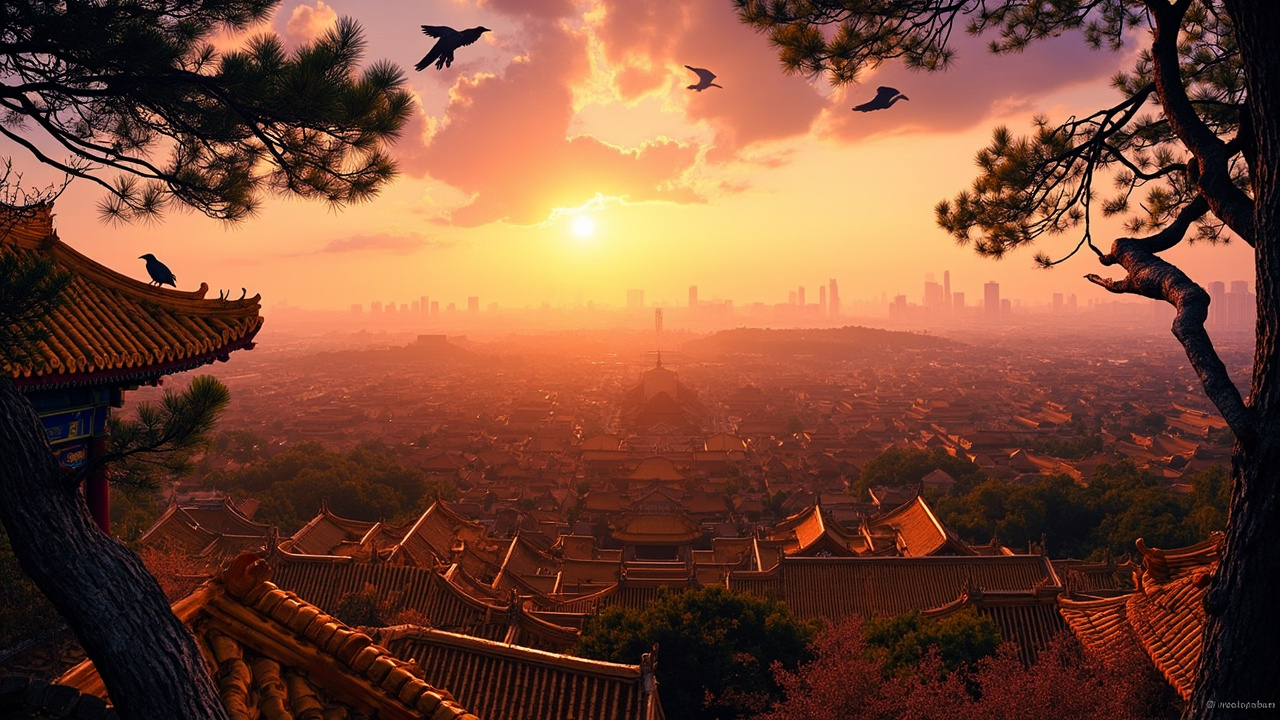
The first time I walked into the Forbidden City, I made every mistake a tourist can make. I went at 10 a.m. on a Saturday in October. I followed the crowd through the Meridian Gate and got swept along the central axis like a leaf in a drainpipe. I saw the backs of thousands of heads, took photos of other people’s selfie sticks, and left feeling like I’d checked a box rather than visited a place.
The second time, I went at 3:30 p.m. on a Tuesday in November. I turned right instead of going straight. And I finally understood what everyone misses.
Here’s the truth: the Forbidden City is one of the most visited museums on Earth, with around 16 million visitors a year. But 95% of them walk the same central path, see the same five halls, and leave through the same gate. The other 5% find the corners, the courtyards, the rooflines, and the quiet spots where you can actually hear the wind moving through 600-year-old pine trees.
This guide is for that 5%. It’s the result of seven years of living in Beijing, dozens of visits to the Palace Museum, and a lot of conversations with the guards who’ve watched me show up at odd hours with a camera. I’ll give you specific locations, exact routes, and the kind of practical details (tickets, timing, transport) that make the difference between a frustrating day and a magical one.
Quick answer
The Forbidden City’s best hidden photography spots are the eastern and western side courtyards, the corner towers, the Imperial Garden’s edges, and the museum’s less-visited galleries. To see them without crowds, book a ticket for the first entry slot (8:30 a.m.), head immediately to the eastern side (turn right after entering), and visit on a weekday between November and March. Entry costs approximately $8.50 (60 CNY) in peak season and $5.70 (40 CNY) in low season, and since December 2023, citizens of most Western countries can enter China visa-free for up to 30 days.
The Short Version
If you only remember three things: book your ticket a week in advance on the official Palace Museum website or WeChat mini-program, enter through the Meridian Gate at 8:30 a.m. and turn right immediately, and don’t bother with the central axis at all until after 2 p.m. The eastern side (the old “Outer East” area) has the quietest courtyards. The corner towers are best photographed from outside the moat, not from inside. And the single most underrated spot in the entire complex is the narrow corridor behind the Hall of Clocks and Watches, which almost nobody visits.
How I Picked These
I’ve been to the Forbidden City more than forty times since moving to Beijing in 2019. I’ve been there in snow, in smog, in the brutal July heat, and in the perfect October light. I’ve walked every open section of the complex, which is roughly 70% of the original 180 acres. I’ve sat on benches and watched where the guards go when they’re off duty (they know the quiet spots). I’ve talked to the elderly Beijingers who come every morning to photograph the corner towers with their professional gear, and to the young museum staff who rotate through the galleries. This list is the result of all that time, plus the specific failures I’ve made so you don’t have to repeat them.
Comparison Table
| Rank | Place | Best For | Approx Cost (USD) | Time Needed | When to Go |
|---|---|---|---|---|---|
| 1 | Eastern Side Courtyards | Quiet architecture shots | Included in entry | 1-2 hours | Morning, weekday |
| 2 | Corner Towers from Outside | Iconic reflections | Free | 30 min | Sunrise or sunset |
| 3 | Hall of Clocks and Watches | Details, interiors | $1.40 (10 CNY) extra | 45 min | Any time |
| 4 | Imperial Garden Edges | Trees, shadows, textures | Included in entry | 30 min | Midday, winter |
| 5 | The Narrow Corridor Behind the Clocks | Empty corridors | Included in entry | 20 min | Afternoon |
| 6 | The Bridge of Golden Water | Reflections, minimal crowds | Included in entry | 15 min | Early morning |
| 7 | The Western Six Palaces | Residential courtyards | Included in entry | 1 hour | Late afternoon |
| 8 | The Roof of the Meridian Gate | Wide angles, geometric patterns | Included in entry | 15 min | Any time |
| 9 | The Stone Carving Behind the Hall of Preserving Harmony | Largest single stone carving in China | Included in entry | 10 min | Midday |
| 10 | The North Gate Exit Ramp | Final view, descending light | Included in entry | 10 min | Just before closing |
1. Eastern Side Courtyards — Where the Crowds Forget to Go
The first time I turned right after entering through the Meridian Gate, I nearly laughed out loud. The central axis was a river of people. This side courtyard had maybe twelve people in it. Twelve. In peak season.
The eastern side of the Forbidden City contains the old Crown Prince’s residence area and a series of connected courtyards that most tour groups skip entirely. The architecture here is smaller in scale than the great halls, which makes it feel more human. The roofs curve with a gentler grace. The doorways frame views of courtyards within courtyards, and if you wait a few minutes, you’ll get shots with no people at all.
What makes this area special is the quality of light in the morning. The sun comes up over the eastern walls and rakes across the red pillars at a low angle, casting long shadows that make the simplest wall look like a study in geometry. By 10 a.m., the light flattens out, so go early.
📍 Location: Eastern section of the Forbidden City, immediately right after entering through the Meridian Gate 🎫 Entry fee: Included in the main ticket ($8.50 / 60 CNY peak, $5.70 / 40 CNY low season) 🕒 Opening hours: 8:30 a.m. – 5:00 p.m. (April–October), 8:30 a.m. – 4:30 p.m. (November–March), closed Mondays 🚇 How to get there: Take Line 1 to Tian’anmen East Station, Exit B, walk north through the security checkpoint (have your passport ready), enter through the Meridian Gate, then turn right 📸 When to visit: Weekday mornings, 8:30–10:00 a.m., November–March for the best light and fewest people 💡 Insider tips: The restrooms in this area are less crowded than the ones near the central halls. The benches in the small courtyards are rarely occupied, so you can sit and wait for the perfect moment. Guards in this section are more relaxed about photography than those near the main halls. Bring a wide-angle lens if you have one, the courtyards are intimate and tight. Don’t rush; the best shots come after you’ve been sitting still for ten minutes.
I once spent an hour here with a retired teacher from Harbin who was photographing the same doorway from six different angles. He told me he’d been coming back to this exact spot for eleven years. I understood why.
2. Corner Towers from Outside the Moat — The Shot Everyone Misses
Here’s something that surprises most visitors: the most photographed elements of the Forbidden City aren’t inside it at all. The four corner towers, with their multi-tiered roofs and impossible geometry, are best seen from outside the walls, across the moat.
The northwest corner tower is my favorite. From the public park across the moat, you get the full reflection in the water, and if you come at sunrise, you’ll have the place almost to yourself. The southeast corner tower, near the east gate, is more accessible but busier.
The towers themselves are a marvel of ancient engineering. Each one is built from interlocking wooden brackets called dougong, with no nails holding the structure together. They look like they shouldn’t stand up, and yet they’ve been standing for over 600 years.
📍 Location: Outside the Forbidden City, across the moat. Northwest corner (near Beihai Park) is best 🎫 Entry fee: Free, this is public space 🕒 Opening hours: Always accessible, but the park gates near the northwest corner close around 10 p.m. 🚇 How to get there: Take Line 6 to Beihai North Station, Exit A, walk south along the moat for 5 minutes 📸 When to visit: Sunrise in spring and autumn, or just before sunset when the towers catch the last warm light 💡 Insider tips: The water is stillest in the early morning, giving you a clean reflection. Bring a tripod, the best shots need a slow shutter speed. In winter, the moat partially freezes, which creates a completely different look. The local photographers who gather here are friendly and will often share their favorite angles if you ask. If you’re here in December, the combination of snow and the red walls is extraordinary.
I learned about this spot from a taxi driver who saw my camera and told me to “go where the locals photograph, not where the tourists photograph.” He was right.
3. Hall of Clocks and Watches — Details You Can Actually See
Most of the Forbidden City’s treasures are behind glass or roped off. The Hall of Clocks and Watches (Fengxian Dian) is different. It’s a dedicated gallery in the eastern section that houses an extraordinary collection of mechanical clocks and automata, many of them gifts from European monarchs to Chinese emperors in the 18th and 19th centuries.
The photography here is about details, not wide shots. The clocks are intricate, gilded, and utterly bonkers. There’s one shaped like a pagoda with moving figures. There’s another that’s essentially a mechanical theater. The lighting in the gallery is dim, which is challenging, but the results are worth it.
The building itself is also worth photographing. It was originally built as a memorial hall for the Yongzheng Emperor, and its interior retains the original painted ceiling beams.
📍 Location: Eastern section of the Forbidden City, near the Hall of Ancestral Worship 🎫 Entry fee: $1.40 (10 CNY) additional ticket, plus the main entry fee 🕒 Opening hours: 8:30 a.m. – 5:00 p.m. (April–October), 8:30 a.m. – 4:30 p.m. (November–March), closed Mondays 🚇 How to get there: Enter through the Meridian Gate, turn right, walk past the Eastern Six Palaces, the hall is on your left 📸 When to visit: Any time, but the galleries are quietest in the early afternoon 💡 Insider tips: The clocks have a demonstration schedule, ask a guard for the next one, the moving figures are incredible to photograph. Bring a fast lens (f/1.8 or faster) for the low light. The ticket office for this hall is separate, pay attention to the signs. You can’t use flash, so bump up your ISO. The gift shop here has some of the best souvenirs in the complex, including miniature clock replicas.
I once spent two hours in this hall and emerged to find the sun had shifted completely. I’d forgotten to eat lunch. Worth it.
4. Imperial Garden Edges — Shadows and Ancient Trees
The Imperial Garden (Yuhua Yuan) at the north end of the complex is the most visited garden in China, and on a busy day it’s a wall-to-wall shuffle of tour groups. But here’s the thing: everyone walks the central path. The edges, the corners, the areas behind the rockeries, these are almost empty.
The garden is home to cypress trees that are over 500 years old, and their gnarled trunks are magnificent subjects. The shadows they cast on the red walls in winter are some of the best abstract shots you’ll find anywhere in the complex.
The garden also has a series of small pavilions and rock formations that most people walk past without noticing. The rockeries, made from Taihu limestone, are full of holes and crevices that create interesting frames for photos.
📍 Location: Northern end of the Forbidden City, before the Gate of Divine Might 🎫 Entry fee: Included in the main ticket 🕒 Opening hours: Same as the main complex 🚇 How to get there: Walk north through the central axis from the Meridian Gate, the garden is at the end 📸 When to visit: Winter afternoons, when the low sun creates long shadows through the trees 💡 Insider tips: The rockery in the center of the garden has a small cave you can walk through, most people don’t realize it’s accessible. The paths along the eastern and western edges of the garden are the quietest. In November, the ginkgo trees turn gold and the contrast with the red walls is stunning. The well in the northeast corner (the “Well of the Concubine Zhen”) has a dark history, but the area around it is usually empty.
I watched a group of French tourists walk right past a 500-year-old cypress tree without looking up. Their loss.
5. The Narrow Corridor Behind the Hall of Clocks — Empty and Perfect
This is the spot I almost didn’t include because I’m selfish and want to keep it to myself. But here it is.
Behind the Hall of Clocks and Watches, there’s a narrow corridor that connects the eastern section to the central axis. It’s not marked on most maps. It has no major halls, no famous artifacts, nothing that would draw a tour group. It’s just a long, straight corridor with red walls, a grey tiled roof, and perfect symmetry.
In the afternoon, the sun hits the western wall and creates a diagonal band of light across the corridor. If you stand at one end and shoot down the length of it, you get a shot that looks like it could be from any century in the last 600 years.
I’ve been here six times and never seen more than two other people.
📍 Location: Behind the Hall of Clocks and Watches, eastern section 🎫 Entry fee: Included in the main ticket 🕒 Opening hours: Same as the main complex 🚇 How to get there: From the Hall of Clocks and Watches, walk to the back of the building and you’ll find the corridor 📸 When to visit: 2–4 p.m. in any season, when the light creates the diagonal band 💡 Insider tips: This corridor is technically a service route, so be respectful and don’t block the path. The guards here are used to photographers and will generally leave you alone. If you shoot from the south end looking north, you get the best symmetry. Don’t linger too long, the corridor is narrow and staff need to pass through. Bring a prime lens, the corridor is tight and a 35mm or 50mm works best.
I sat at the end of this corridor for twenty minutes once, waiting for the light to hit exactly right. A guard walked past, looked at my camera, nodded, and kept walking. That’s the highest compliment I’ve received in Beijing.
6. The Bridge of Golden Water — Reflections Without the Crowds
The Bridge of Golden Water (Jinshui Qiao) is the five-arched bridge you cross right after entering through the Meridian Gate. It’s also one of the most crowded spots in the entire complex, because everyone stops to photograph it.
But here’s the trick: the bridge is at its best in the first fifteen minutes after the gates open, before the tour groups arrive. The water in the canal is still, and you get perfect reflections of the bridge and the Meridian Gate behind it.
The bridge is also worth photographing from the sides, not just from the front. The side angles give you the arches in perspective, and you can frame the central hall of the complex in the background.
📍 Location: Immediately inside the Meridian Gate 🎫 Entry fee: Included in the main ticket 🕒 Opening hours: Same as the main complex 🚇 How to get there: Enter through the Meridian Gate, the bridge is directly in front of you 📸 When to visit: 8:30–8:45 a.m., before the crowds arrive 💡 Insider tips: The water level in the canal is lowest in winter, which changes the reflection quality. The bridge is one-way, you can’t cross back after you’ve passed. The best reflection shots require you to crouch low, almost at water level. If you’re here in the first 15 minutes, you’ll have the bridge to yourself for about 60 seconds, use them wisely. The guards will start moving you along once the crowds build, so don’t linger.
I got my best shot of this bridge on a freezing January morning, when my fingers were too numb to feel the shutter button. The photo is still one of my favorites.
7. The Western Six Palaces — Where Concubines Lived
The Western Six Palaces (Xiliu Gong) are a series of residential courtyards where imperial concubines lived. They’re less visited than the eastern side, and they have a completely different feel.
These are smaller, more intimate spaces. The courtyards have trees that are centuries old, and the buildings have a domestic scale that makes them feel more like a home than a palace. The most famous of these is the Palace of Eternal Spring (Changchun Gong), which was the residence of the Qianlong Emperor’s beloved Empress Xiaoxianchun.
The photography here is about atmosphere. The light filters through the trees, the shadows play across the walls, and if you’re lucky, you’ll catch a moment when the courtyard is completely empty.
📍 Location: Western section of the Forbidden City, west of the central axis 🎫 Entry fee: Included in the main ticket 🕒 Opening hours: Same as the main complex 🚇 How to get there: Enter through the Meridian Gate, walk west past the Hall of Military Eminence, the palaces are in the northwest section 📸 When to visit: Late afternoon, when the western light creates warm tones on the walls 💡 Insider tips: The Palace of Eternal Spring has a small exhibition about the Qianlong Emperor’s love story, which adds context to the space. The courtyards have excellent acoustic properties, so you can hear conversations from across the space, which is fun to observe. The restrooms here are less crowded than the central ones. The trees in these courtyards are older than the buildings, some are over 600 years old. In spring, the crabapple trees bloom and the courtyards smell incredible.
I once sat in one of these courtyards for an hour, watching a cat patrol the rooftops. The cat knew the space better than any tour guide.
8. The Roof of the Meridian Gate — Geometry From Above
The Meridian Gate (Wumen) is the main entrance to the Forbidden City, and most people just walk through it. But the gate has a U-shaped enclosure with a viewing platform that most visitors don’t realize is accessible.
From the top of the gate, you get a view down the central axis that’s completely different from ground level. The roofs of the halls stretch out in front of you, their golden tiles creating a geometric pattern that’s mesmerizing.
The platform also gives you a view of the surrounding city, including the modern buildings that ring the ancient complex. The contrast between the old and new Beijing is stark from this vantage point.
📍 Location: The Meridian Gate, southern entrance to the Forbidden City 🎫 Entry fee: Included in the main ticket 🕒 Opening hours: Same as the main complex 🚇 How to get there: The entrance to the platform is on the eastern side of the gate, look for the stairs 📸 When to visit: Morning, when the sun is behind you and the roofs are lit evenly 💡 Insider tips: The platform is less crowded in the morning, before the tour groups arrive. The view of the roofs is best with a telephoto lens, you can compress the perspective and create a stunning layering effect. The platform is also a good place to photograph the crowds below, if you’re into street photography. Don’t miss the view of the corner towers from this angle, they look completely different from above. The stairs to the platform are steep, wear comfortable shoes.
I watched a wedding photoshoot happening on this platform once, the couple in traditional Chinese dress against the golden roofs. The photographer was clearly a professional, and I stole a few of their angles.
9. The Stone Carving Behind the Hall of Preserving Harmony — The Largest in China
Behind the Hall of Preserving Harmony (Baohe Dian), the last of the three great halls on the central axis, there’s a massive stone carving that most people walk right past.
It’s a single piece of marble, about 16 meters long and 3 meters wide, carved with clouds and dragons. It’s the largest stone carving in China, and it was brought to Beijing from a quarry over 60 kilometers away, mostly by sliding it over ice in winter.
The carving is protected by a glass barrier now, which makes photography tricky. But the details are extraordinary, and if you use a polarizing filter, you can cut through the glass reflections and capture the intricate carving.
📍 Location: Behind the Hall of Preserving Harmony, central axis 🎫 Entry fee: Included in the main ticket 🕒 Opening hours: Same as the main complex 🚇 How to get there: Walk north through the central axis, the carving is behind the last of the three great halls 📸 When to visit: Midday, when the light is directly overhead and the carving is fully lit 💡 Insider tips: The glass barrier is cleaner in the morning, before too many people have touched it. Use a polarizing filter to reduce reflections. The carving is best photographed in sections, the whole thing is too large for a single shot. The dragons at the bottom are the most detailed, get low and shoot up. The area around the carving is a natural gathering point, so time your shots between tour groups.
I spent twenty minutes here once, trying to get a clean shot through the glass. A security guard watched me the whole time, probably wondering why I was so obsessed with a rock.
10. The North Gate Exit Ramp — The Final View
The Gate of Divine Might (Shenwu Men) is the north exit of the Forbidden City, and most people rush through it to get to Jingshan Park. But the ramp leading up to the gate is worth a pause.
The ramp is a long, gentle slope that was originally designed for the emperor’s sedan chair. It’s wide enough that you can get shots of the central axis behind you, with the Hall of Preserving Harmony framed by the gate’s architecture.
The light here in the late afternoon is beautiful, warm and golden, and the crowds are thinner because most people are heading out rather than lingering.
📍 Location: North end of the Forbidden City, Gate of Divine Might 🎫 Entry fee: Included in the main ticket 🕒 Opening hours: Same as the main complex 🚇 How to get there: Walk north through the central axis, the gate is at the end 📸 When to visit: 3:30–4:30 p.m., when the light is warm and the crowds are thinning 💡 Insider tips: The ramp is one-way, you can only walk it northbound. The view back toward the Hall of Preserving Harmony is best from the top of the ramp. If you exit here, Jingshan Park is directly across the street, and the view of the Forbidden City from the top of Jingshan’s hill is the classic shot. The moat on the north side of the gate is also worth photographing, the reflections are excellent in the late afternoon. Don’t rush out, the last hour before closing is often the most peaceful time in the entire complex.
I’ve ended every visit to the Forbidden City at this ramp, and I’ve never regretted the extra ten minutes it takes to walk it slowly.
FAQ summary
The Forbidden City requires advance booking through the official Palace Museum website or WeChat mini-program, with tickets costing approximately $8.50 (60 CNY) in peak season and $5.70 (40 CNY) in low season. It’s closed on Mondays, and the best strategy for avoiding crowds is to enter at 8:30 a.m. and head immediately to the eastern or western side courtyards rather than following the central axis. Most Western passport holders can enter China visa-free for up to 30 days as of December 2023, and WeChat Pay or Alipay are essential for any purchases inside the complex.
FAQ
Q: Do I need to book tickets in advance for the Forbidden City? A: Yes, absolutely. The Palace Museum limits daily visitors to approximately 80,000, and tickets regularly sell out, especially during holidays and weekends. Book at least a week in advance through the official website (en.dpm.org.cn) or the WeChat mini-program “Palace Museum.”
Q: What’s the best time of day to visit for photography? A: The first entry slot at 8:30 a.m. is the best, because you’ll have roughly 30 minutes before the tour groups arrive. The last hour before closing (4:00–5:00 p.m. in summer, 3:30–4:30 p.m. in winter) is also excellent, as the crowds thin out and the light turns golden.
Q: Is the Forbidden City closed on certain days? A: Yes, the Palace Museum is closed every Monday, except during Chinese public holidays and summer vacation (July and August). Check the official website for the current schedule, as some special exhibitions may have different hours.
Q: Can I use my credit card to buy tickets or pay inside? A: No. China is essentially cashless, and most international credit cards don’t work. You’ll need WeChat Pay or Alipay, both of which can be set up with a foreign passport and a linked international credit card. Set this up before you arrive, it takes about 15 minutes.
Q: Do I need a VPN for my phone in China? A: Yes, if you want to access Google, Instagram, Facebook, WhatsApp, or any Western social media. Google Maps won’t work without a VPN, which is a problem because you’ll need it for navigation. Download a VPN before you arrive, and also download an offline map app like Maps.me as a backup.
Q: Is the Forbidden City accessible for people with mobility issues? A: Partially. The central axis is mostly flat and accessible, but the side courtyards have many steps and thresholds. The museum offers wheelchair rentals at the entrance, but the historic surfaces can be challenging. Allow extra time and consider focusing on the central axis and the main halls.
Q: Can I bring a tripod or drone into the Forbidden City? A: Tripods are allowed but must be checked at the entrance if they’re large. Drones are strictly prohibited anywhere in Beijing’s city center. For tripod photography, the best spots are the corner towers (outside the complex) and the quiet side courtyards.
The Honest Wrap-up
This list is for photographers, but it’s also for anyone who wants to feel the Forbidden City rather than just see it. If you’re the kind of traveler who needs to check off every hall and read every plaque, this guide will frustrate you. If you’re the kind who wants to find a quiet corner, sit down, and let the place work on you, this is your list.
The Forbidden City is not a museum in the Western sense. It’s a place that rewards patience and punishes rushing. The best advice I can give you is to go slow, go early, and go alone if you can manage it. Bring a book, sit on a bench, and watch the light move across the walls. That’s what the locals do, and they’ve had six centuries to figure it out.
One last thing: after you exit through the north gate, walk across the street to Jingshan Park and climb the hill. The view of the Forbidden City from above, with the golden roofs stretching to the horizon, is the perfect ending to the day. You’ll see why the emperors chose this spot, and why the rest of us keep coming back.
Topics
More guides you may like
Top 10 Bridges in China
China's bridges are engineering marvels spanning mountains, rivers, and seas. Here are 10 of the most spectacular, from ancient stone to modern steel.
8 min read

Top 10 Buddhist Sites in China
From the Leshan Giant Buddha to the Dunhuang Caves, these 10 Buddhist sites represent 2,000 years of China's spiritual heritage.
9 min read
Top 10 Day Trips from Beijing You Shouldn't Miss
Beijing is packed with history, but some of China's best experiences are just a few hours away. Here are 10 day trips that will transform your visit.
9 min read
Top 10 Hidden Gems in China Off the Beaten Path
Beyond the Great Wall and Terracotta Warriors, China has incredible hidden destinations few tourists ever reach. Here are 10 underrated gems worth the detour.
9 min read
Top 10 Markets and Shopping Streets in China
From Shanghai's Bund to Beijing's Silk Street - 10 markets where foreigners can haggle, explore, and bring home authentic Chinese goods.
9 min read
Top 10 Museums in China You Shouldn't Miss
China's museums span 5,000 years of civilization. These 10 - from the Palace Museum to Xi'an's terracotta gallery - are unmissable for culture lovers.
9 min read