
China Family Activities With Teenagers: The Complete 2026 Guide
The first time I brought my teenage nephew to China, he spent the entire taxi ride from the airport with his face pressed against the window.
The first time I brought my teenage nephew to China, he spent the entire taxi ride from the airport with his face pressed against the window. We were stuck in traffic on the airport expressway into Beijing, and he was counting the number of scooters weaving between the cars. He got to 47 before we hit the city limits. That was the moment I realized this trip wasn’t going to be about temples and museums. It was going to be about the chaos, the scale, and the sheer weirdness of a country that feels like it’s from the future and the 18th century at the same time.
Teenagers are a tough crowd. They’re too old for the “look at this ancient thing” tour and too young to appreciate a $200 tasting menu. But China is one of the few places on earth that can actually impress them. The high-speed trains feel like something out of a sci-fi movie. The food is loud and weird and delicious. The cities are so massive they make New York feel like a small town. And the history is so old it makes Europe look like a recent development.
I’ve lived in Beijing for seven years and traveled through China more than forty times. This guide is the list I wish someone had given me before my first trip with a teenager. It’s not a comprehensive China guide. It’s a list of the ten things that actually worked with the most skeptical audience I know: my own family.
Quick answer
China is an exceptional destination for families with teenagers in 2026, offering a mix of futuristic cities, ancient history, and outdoor adventure at a fraction of Western costs. Most visitors from the US, UK, Canada, Australia, and dozens of other countries can enter visa-free for up to 30 days through the 2024-2025 visa waiver program, which has been extended through 2026. A 10-14 day trip for a family of four costs roughly $4,000-6,000 including flights, hotels, and food, with high-speed rail tickets between major cities averaging $50-100 per person.
The Short Version
If you only have 90 seconds, here’s what matters: skip the classic “Beijing-Shanghai-Xi’an” triangle if you can. It’s fine, but it’s the tourist version of China. Instead, spend time in one mega-city (Beijing or Shanghai), ride the high-speed rail somewhere unexpected (Chengdu, Guilin, or Zhangjiajie), and let your teenager eat everything they want. The food is the gateway drug. Also, download Alipay and set up a VPN before you land. You’ll thank me later.
How I Picked These
I’ve traveled through China with my own family, with friends’ kids, and with my nephew twice. I’ve also spent years living here, which means I know which attractions are genuinely impressive and which ones are just photo ops for tour groups. For this guide, I focused on places that offer something teenagers actually care about: speed, scale, food, animals, and the kind of “I can’t believe this is real” moments that make them put down their phones. I also asked my nephew and his friends what they actually remembered from their trips. The answers surprised me. It wasn’t the Great Wall. It was the night market in Xi’an and the monkeys on the mountain in Zhangjiajie.
Comparison Table
| Rank | Place | Best For | Approx Cost (USD) | Time Needed | When to Go |
|---|---|---|---|---|---|
| 1 | Zhangjiajie National Forest Park | Avatar landscapes, glass bridges | $20-30 entry | 2 days | Apr-Oct |
| 2 | Chengdu Panda Base | Giant pandas up close | $10 entry | Half day | Morning |
| 3 | Xi’an City Wall + Muslim Quarter | Cycling, street food | $8-15 | 1 day | Evening |
| 4 | Shanghai Disneyland | Theme park thrills | $80-100 | 1-2 days | Weekdays |
| 5 | Beijing Mutianyu Great Wall | Toboggan ride, hiking | $10-15 | Half day | Early morning |
| 6 | Guilin + Yangshuo | Karst mountains, biking | $5-20 | 2-3 days | Spring/Fall |
| 7 | Hong Kong (if you’re nearby) | Urban energy, hiking | Free-$30 | 2-3 days | Oct-Apr |
| 8 | Leshan Giant Buddha | Massive scale, river views | $12-15 | Half day | Weekdays |
| 9 | Harbin Ice Festival | Ice sculptures, cold | $20-30 | 1-2 days | Dec-Feb |
| 10 | Terracotta Army Xi’an | Ancient history | $25-30 | Half day | Early morning |
Zhangjiajie National Forest Park — The Place That Made My Nephew Forget His Phone
I remember standing on the glass bridge at Zhangjiajie, looking down at a drop that seemed to go on forever. My nephew, who had been glued to his phone for the entire train ride from Changsha, had put it away without being asked. He was just staring. That’s when I knew this place was special.
Zhangjiajie is where the floating mountains from Avatar were inspired by. The sandstone pillars rise hundreds of meters out of the mist, and the park is so vast you could spend a week here and still not see everything. The Bailong Elevator, which is the tallest outdoor elevator in the world, takes you up the side of a cliff in under two minutes. It’s terrifying and amazing and your teenager will love it.
📍 Location: Zhangjiajie National Forest Park, Hunan Province (about 3 hours by train from Changsha) 🎫 Entry fee: Approximately $20-30 (CNY 150-220) for the main park, plus extra for the glass bridge ($15-20) and Bailong Elevator ($10-15) 🕒 Opening hours: 7:00 AM to 6:00 PM daily, with seasonal variations 🚇 How to get there: Take the high-speed train from Changsha South Station to Zhangjiajie West Station (about 2.5 hours, $30-40). From the station, take a taxi or shuttle bus to the park entrance (about 30 minutes, $5-10) 📅 When to visit: April to October is best. Go on a weekday to avoid the crowds. The park is most atmospheric in the morning when the mist is still low 💡 Insider tips: Bring rain gear even if it looks clear. The weather changes fast in the mountains. Take the cable car up and the elevator down to avoid the worst queues. Pack snacks because the food inside the park is overpriced and mediocre. If your teenager is into hiking, skip the main tourist route and take the Yuanjiajie trail instead — it’s quieter and the views are just as good.
I once got stuck on the glass bridge during a sudden thunderstorm. The wind was so strong the bridge swayed. My nephew thought it was the best thing that happened all trip. I was less convinced.
Chengdu Panda Base — The One Place That Works for Every Age
There’s a moment at the Chengdu Panda Base when a panda cub falls out of a tree. It happens more often than you’d think, and every time it does, the entire crowd gasps and then bursts into laughter. I’ve seen it three times now, and it never gets old.
The Chengdu Research Base of Giant Panda Breeding is the best place in the world to see pandas up close. Unlike zoos, the pandas here are in large, naturalistic enclosures, and the base is set up like a park with bamboo-lined paths. The best time to go is early morning, right when the base opens, because that’s when the pandas are most active. By mid-morning, most of them are asleep, and you’ll be staring at furry lumps.
📍 Location: Chengdu Research Base of Giant Panda Breeding, Chenghua District, Chengdu, Sichuan Province 🎫 Entry fee: Approximately $10 (CNY 55) for adults, free for children under 6 🕒 Opening hours: 7:30 AM to 6:00 PM daily, but go before 9:00 AM for active pandas 🚇 How to get there: Take Metro Line 3 to Panda Avenue Station (熊猫大道站), Exit B, then walk about 10 minutes or take a shared bike. Alternatively, take a taxi from central Chengdu (about 20 minutes, $5-8) 📅 When to visit: Spring and autumn are best. Avoid summer weekends when the crowds are brutal. Go on a weekday if you can 💡 Insider tips: The base is bigger than it looks. Wear comfortable shoes and plan to walk 2-3 hours. The red pandas are often overlooked but they’re just as cute. There’s a gift shop near the exit where you can buy panda plushies — they’re surprisingly good quality. If you want to volunteer or do a behind-the-scenes tour, book at least a month in advance through the official website.
I met a panda keeper named Wang who told me that the pandas have individual personalities. One of them, she said, refuses to eat bamboo unless it’s been washed. I think about that every time I see a picky eater.
Xi’an City Wall and Muslim Quarter — Where History and Street Food Collide
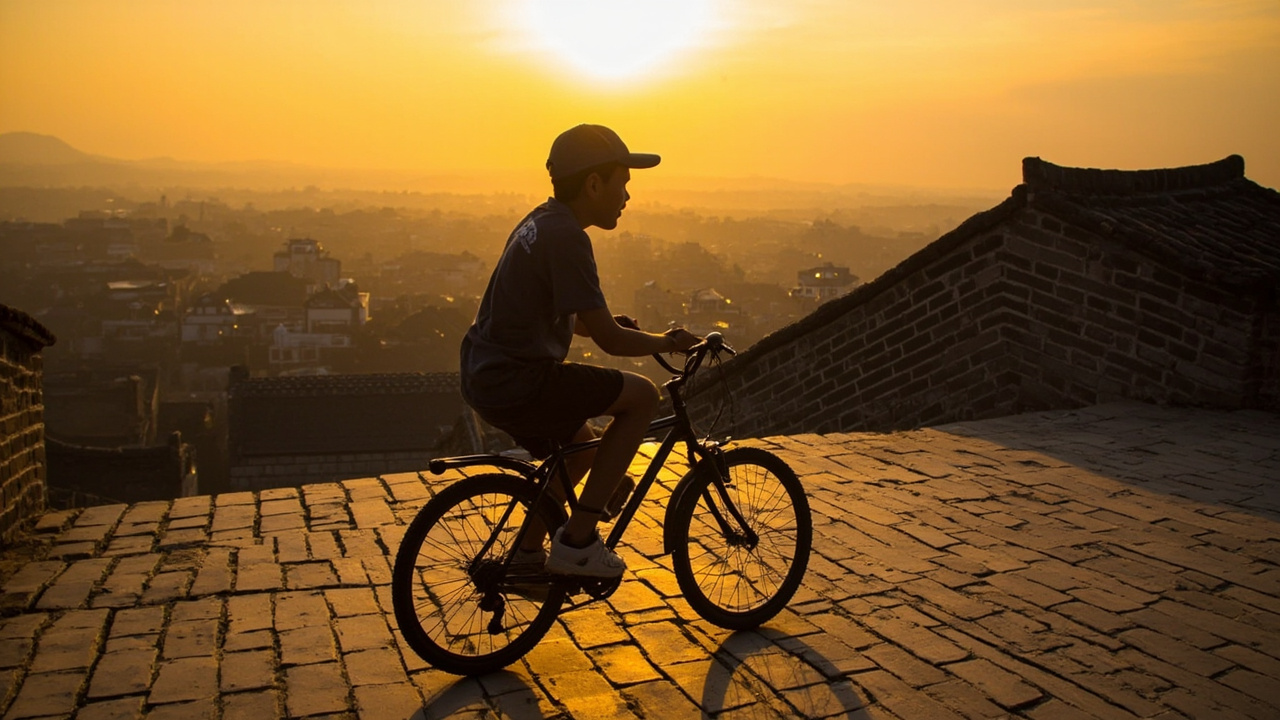
The first time I cycled the full 14 kilometers around the Xi’an City Wall, my legs were sore for two days. But I was also grinning the whole way. There’s something about riding a bicycle on top of a 600-year-old wall, looking down at the city below, that makes you feel like you’re in a movie.
Xi’an is one of China’s oldest cities, and the City Wall is the best-preserved city wall in the country. You can walk it, cycle it, or take a golf cart. The views are spectacular, especially at sunset when the old city glows golden. After you’re done, head to the Muslim Quarter, which is right next to the wall’s South Gate. This is where the real magic happens — a maze of narrow streets packed with food stalls selling everything from lamb skewers to persimmon cakes.
📍 Location: Xi’an City Wall, Beilin District, Xi’an, Shaanxi Province 🎫 Entry fee: Approximately $8 (CNY 54) for the wall, bike rental $5-8 extra 🕒 Opening hours: 8:00 AM to 10:00 PM daily (the wall is lit up at night) 🚇 How to get there: Take Metro Line 2 to Yongningmen Station (永宁门站), Exit D, and you’ll be right at the South Gate entrance 📅 When to visit: Spring and autumn are ideal. Go in the late afternoon so you can catch the sunset and then walk to the Muslim Quarter for dinner 💡 Insider tips: Rent a bike early in the day — they sell out by afternoon. The Muslim Quarter gets incredibly crowded in the evening, so go with a plan and don’t try to eat at the first stall you see. Walk deeper into the alleys for better food and lower prices. Try the roujiamo (Chinese hamburger) and the biangbiang noodles. If your teenager is picky, the lamb skewers are a safe bet.
I once spent an hour in the Muslim Quarter trying to find a specific stall that a friend had recommended. I never found it, but I ate three different versions of the same dish and all of them were excellent. Sometimes getting lost is the point.
Shanghai Disneyland — The Most Efficient Theme Park on Earth
I’ll be honest: I’m not a theme park person. The crowds, the prices, the endless walking. But Shanghai Disneyland is different. It’s the most efficient theme park I’ve ever been to, and it’s genuinely impressive in a way that surprised me.
The park is smaller than the one in Orlando, but that’s a good thing. You can actually see most of it in a day if you plan well. The TRON Lightcycle Power Run coaster is the standout attraction — it’s a high-speed motorcycle-themed roller coaster that feels like you’re in a video game. The Pirates of the Caribbean ride is also better than the version in the US, with a massive projection dome that’s genuinely immersive.
📍 Location: Shanghai Disneyland, Pudong New District, Shanghai 🎫 Entry fee: Approximately $80-100 (CNY 580-720) for a one-day ticket, depending on the season 🕒 Opening hours: 8:30 AM to 8:30 PM daily, with seasonal variations 🚇 How to get there: Take Metro Line 11 to Disneyland Resort Station (迪士尼站), which is directly at the park entrance 📅 When to visit: Weekdays are significantly less crowded than weekends. Avoid Chinese national holidays (early October, May Day, Chinese New Year) at all costs 💡 Insider tips: Download the official Shanghai Disneyland app and use it to check wait times and book fast passes. The TRON ride has a single-rider line that’s usually much shorter. Bring your own food — the park allows outside snacks, and the food inside is expensive and mediocre. If you can afford it, the VIP tour package is worth every dollar for a family with teenagers.
I once watched a group of Chinese teenagers film themselves doing the “Tron pose” in front of the ride entrance for a full 20 minutes. They were having the time of their lives. My nephew rolled his eyes, but I caught him doing it later.
Mutianyu Great Wall — The Toboggan Run That Makes History Fun
The Great Wall is the one thing every visitor to China feels obligated to see. But the most popular section, Badaling, is a crowded tourist trap that feels more like a shopping mall than a historical site. Skip it. Go to Mutianyu instead.
Mutianyu is about 90 minutes from central Beijing, and it’s the section that has everything: restored watchtowers, forest-covered hills, and a toboggan ride down the wall that my nephew still talks about years later. You hike up the wall, take in the views, and then slide down a metal track on a sled you control with a hand lever. It’s ridiculous and wonderful and it’s the only way to get a teenager to appreciate a UNESCO World Heritage site.
📍 Location: Mutianyu Great Wall, Huairou District, Beijing (about 90 minutes from central Beijing) 🎫 Entry fee: Approximately $10-15 (CNY 70-100) including the shuttle bus, plus $10 for the toboggan 🕒 Opening hours: 7:30 AM to 6:00 PM daily (winter hours are shorter) 🚇 How to get there: Take a taxi or Didi from central Beijing (about $40-50 each way). Alternatively, take the Dongzhimen bus station shuttle, but it’s less convenient. There’s no metro access 📅 When to visit: Go early — before 9:00 AM if possible. The wall gets crowded by mid-morning. Autumn is the best season when the leaves change color 💡 Insider tips: The cable car up and the toboggan down is the classic combo. If you’re fit, hike from the west side to the east side — it’s about 2 hours and much quieter. Bring water and snacks because the food options at the base are limited. The toboggan is the highlight for most kids, so don’t skip it even if it seems cheesy.
I once saw a grandmother in her 70s ride the toboggan down the wall, screaming with laughter the whole way. Her grandchildren were filming her on their phones. That’s the kind of memory that lasts.
Guilin and Yangshuo — Biking Through Karst Mountains
The first time I saw the karst mountains of Guilin, I thought I was looking at a painting. The limestone peaks rise out of the rice paddies like green islands in a sea of mist. It’s the landscape that’s been featured on Chinese banknotes and in countless paintings, and it’s even more impressive in person.
The best way to experience it is to base yourself in Yangshuo, a small town about an hour from Guilin, and rent bikes. The countryside around Yangshuo is crisscrossed with bike paths that wind through rice paddies, past bamboo groves, and along the Yulong River. It’s the kind of place where you can ride for hours and never see another tourist. The town itself is a bit touristy, but the countryside is pure magic.
📍 Location: Yangshuo County, Guilin, Guangxi Province 🎫 Entry fee: Free for the countryside; bike rental $5-10 per day 🕒 Opening hours: N/A — this is open-air 🚇 How to get there: Take the high-speed train from Guilin North Station to Yangshuo Station (about 30 minutes, $10-15). From the station, take a taxi or bus to Yangshuo town (about 30 minutes, $5-8) 📅 When to visit: Spring (April-May) and autumn (September-October) are ideal. Summer is hot and humid. Avoid Chinese holidays 💡 Insider tips: Rent e-bikes instead of regular bikes if you’re not used to cycling — the hills can be brutal. The Yulong River bamboo raft ride is a must-do, but book it in advance or go early. The “Impression Liu Sanjie” light show at night is cheesy but spectacular — your teenager will either love it or hate it. Try the beer fish, a local specialty that’s cooked with beer and tomatoes.
I once got caught in a sudden rainstorm while biking through the countryside near Yangshuo. I took shelter under a farmer’s awning, and he invited me in for tea. We couldn’t understand each other, but we sat there in comfortable silence until the rain stopped.
Hong Kong — The Urban Jungle That Feels Like Another Planet
If you’re already in China, Hong Kong is worth a detour. It’s not technically part of mainland China in terms of how it feels, and that’s exactly why it’s so interesting. The city is a vertical maze of skyscrapers, neon signs, and street markets, and it’s the most walkable city in Asia.
For teenagers, the highlights are the Victoria Peak tram, the street food in Mong Kok, and the hiking trails that offer views over the city. The Dragon’s Back trail is a 2-hour hike that ends with a panoramic view of the South China Sea. It’s the kind of place where you can go from a chaotic street market to a quiet mountain trail in 30 minutes.
📍 Location: Hong Kong Special Administrative Region 🎫 Entry fee: Free for most attractions; Victoria Peak tram $10-15 round trip 🕒 Opening hours: Varies by attraction 🚇 How to get there: Fly into Hong Kong International Airport or take the high-speed train from Shenzhen or Guangzhou 📅 When to visit: October to April is the best time — the summer is hot and humid 💡 Insider tips: Get an Octopus card for public transport — it works on the metro, buses, and ferries. The MTR is the best metro system in the world, and your teenager will enjoy figuring it out. The street food in Mong Kok is incredible — try the egg waffles and the curry fish balls. If you’re on a budget, the night markets are a great place to shop for souvenirs.
I once took a ferry from Central to Tsim Sha Tsui at sunset, and the skyline lit up in a way that made me forget I was in a city of 7 million people. It’s a moment I still think about.
Leshan Giant Buddha — The Biggest Buddha You’ll Ever See
The Leshan Giant Buddha is a 71-meter-tall stone statue carved into a cliff face at the confluence of three rivers. It was built in the 8th century, and it’s the largest stone Buddha in the world. It’s also one of those places that’s so big it’s hard to process. You see photos, but nothing prepares you for the scale.
The best way to see it is to take a boat ride on the river, which gives you the full view. Then you can climb down the stairs to the base and look up. The stairs are steep and crowded, but the view from the bottom is worth it. Your teenager will be impressed by the sheer absurdity of carving a 71-meter statue out of a cliff by hand.
📍 Location: Leshan Giant Buddha, Leshan, Sichuan Province (about 2 hours from Chengdu) 🎫 Entry fee: Approximately $12-15 (CNY 80-100) for the park, plus $10-15 for the boat ride 🕒 Opening hours: 8:00 AM to 6:00 PM daily 🚇 How to get there: Take the high-speed train from Chengdu East Station to Leshan Station (about 1 hour, $15-20). From the station, take a taxi or bus to the park (about 30 minutes, $5-8) 📅 When to visit: Weekdays are much less crowded. Go early in the morning to beat the tour groups 💡 Insider tips: Take the boat first, then the stairs. The boat gives you the best view, and the stairs let you appreciate the scale up close. The stairs down to the base are steep and can be slippery — wear good shoes. Bring water and snacks because the food options inside the park are limited.
I once saw a group of teenagers take a selfie in front of the Buddha’s toe. The toe is the size of a small car. They were laughing so hard they could barely hold the phone steady.
Harbin Ice Festival — The Coldest, Most Surreal Experience in China
The Harbin International Ice and Snow Festival is the kind of thing that sounds like a gimmick until you actually see it. Every winter, the city of Harbin in northeast China builds an entire city out of ice. There are ice castles, ice slides, ice mazes, and ice sculptures that are lit up with colored lights at night. It’s surreal and beautiful and your teenager will never forget it.
The festival is held from December to February, and the temperatures can drop to -30°C. That’s part of the experience. You’ll be freezing, but you’ll also be laughing at how absurd it is to be walking through a frozen city in the middle of nowhere.
📍 Location: Harbin Ice and Snow World, Harbin, Heilongjiang Province 🎫 Entry fee: Approximately $20-30 (CNY 150-200) for the main ice festival park 🕒 Opening hours: 11:00 AM to 10:00 PM daily during the festival season 🚇 How to get there: Fly into Harbin Taiping International Airport, then take a taxi to the festival site (about 30 minutes, $10-15). There’s no metro access 📅 When to visit: January is the best month — the ice sculptures are fully built and the weather is at its coldest. Go at night when the lights are on 💡 Insider tips: Dress in layers — thermal underwear, a down jacket, and waterproof boots are essential. Hand warmers are a lifesaver. The ice slides are the best part — go on them early before the lines get long. Bring a thermos of hot tea or coffee. The festival is also a great place to try Russian food, a legacy of Harbin’s history as a Russian settlement.
I once watched a group of teenagers slide down an ice slide and then immediately run to the hot chocolate stand, shivering and laughing. It was -25°C and they were having the time of their lives.
Terracotta Army — The Ancient History That’s Actually Worth It
The Terracotta Army is one of those places that’s so famous you expect to be underwhelmed. You’re not. The first time I walked into Pit 1 and saw thousands of life-sized clay soldiers standing in formation, I actually gasped. It’s one of the most impressive things I’ve ever seen, and I’ve been to a lot of places.
The army was built to accompany the first Emperor of China into the afterlife, and it was discovered by accident in 1974 by farmers digging a well. The site is massive, and you can spend hours walking through the pits. The detail on the soldiers is incredible — each one has a unique face, and they were originally painted in bright colors.
📍 Location: Terracotta Army, Lintong District, Xi’an, Shaanxi Province (about 1 hour from central Xi’an) 🎫 Entry fee: Approximately $25-30 (CNY 180-220) for adults, free for children under 6 🕒 Opening hours: 8:30 AM to 5:30 PM daily (winter hours are shorter) 🚇 How to get there: Take Metro Line 9 to Terracotta Army Station (兵马俑站), Exit C, then walk about 10 minutes. Alternatively, take a taxi from central Xi’an (about $20-25 each way) 📅 When to visit: Go early — before 9:00 AM if possible. The crowds get intense by mid-morning. Weekdays are much better than weekends 💡 Insider tips: The site is bigger than it looks. Plan for 2-3 hours. The museum at the entrance has a good overview of the history before you go into the pits. The souvenir shop sells miniature terracotta warriors that are actually decent quality. If your teenager is into history, hire a guide at the entrance — they’re worth the money.
I once spent an hour in Pit 1 just watching the soldiers. The sheer scale of it is overwhelming. My nephew, who had been skeptical about “another museum,” was quiet for the first time all trip.
FAQ summary
China in 2026 is highly accessible for international tourists, with visa-free entry for up to 30 days for citizens of most Western countries. The key practical considerations are setting up Alipay or WeChat Pay before arrival (both accept international cards), downloading a VPN if you want to access Google, Instagram, or WhatsApp, and using Didi (China’s Uber) for taxis. High-speed rail is the best way to travel between cities, with tickets averaging $50-100 per person for 2-4 hour journeys. The best season for family travel is spring (April-May) or autumn (September-October), when temperatures are mild and crowds are manageable.
FAQ
Q: Do I need a visa to visit China in 2026? A: Citizens of the US, UK, Canada, Australia, and dozens of other countries can enter China visa-free for up to 30 days for tourism. The policy has been extended through 2026. Check the Chinese embassy website for your country to confirm eligibility.
Q: How much does a family trip to China cost? A: A 10-14 day trip for a family of four costs roughly $4,000-6,000 including international flights, hotels, food, and activities. Domestic transport is cheap, and food is significantly less expensive than in Western countries.
Q: Do I need to set up Alipay or WeChat Pay before I arrive? A: Yes. China is a cashless society, and most places don’t accept credit cards. Download Alipay and WeChat Pay before you arrive, and link your international credit card. Both apps now support international cards.
Q: Do I need a VPN for China? A: Yes, if you want to use Google, Instagram, WhatsApp, or Facebook. Download a reliable VPN before you arrive, because many VPN services are blocked in China. ExpressVPN and NordVPN are the most reliable options.
Q: Is English widely spoken in China? A: Not widely, especially outside major cities. Download a translation app like Google Translate or Pleco before you arrive. Most hotels and major attractions have English signage, but you’ll need a translation app for restaurants and taxis.
Q: How do I get around China? A: High-speed rail is the best way to travel between cities. Use the Trip.com app or the official China Railway app to book tickets. Within cities, use Didi (China’s Uber) for taxis and the metro for getting around. The metro systems in Beijing, Shanghai, and Xi’an are excellent and have English signage.
Q: What’s the best time of year to visit China with teenagers? A: Spring (April-May) and autumn (September-October) are the best times. Summers are hot and humid, and winters are cold in the north. Avoid Chinese national holidays (early October, May Day, Chinese New Year) when everything is packed.
The Honest Wrap-up
This list isn’t for everyone. If your teenager is happiest sitting in a hotel room with a book, China might not be their thing. But if they’re curious about the world, if they like food, if they’re impressed by scale and speed and things that feel impossible, this is the trip for them. My nephew still talks about the toboggan at Mutianyu and the monkeys at Zhangjiajie more than any museum we visited. The best advice I can give you is to let go of the idea that you need to see everything. Pick three or four places, spend enough time in each one to actually feel them, and let the trip unfold. China is too big to conquer. It’s better to let it surprise you.
Topics
More guides you may like

Top 10 Bridges in China
China's bridges are engineering marvels spanning mountains, rivers, and seas. Here are 10 of the most spectacular, from ancient stone to modern steel.
8 min read

Top 10 Buddhist Sites in China
From the Leshan Giant Buddha to the Dunhuang Caves, these 10 Buddhist sites represent 2,000 years of China's spiritual heritage.
9 min read

Top 10 Day Trips from Beijing You Shouldn't Miss
Beijing is packed with history, but some of China's best experiences are just a few hours away. Here are 10 day trips that will transform your visit.
9 min read

Top 10 Hidden Gems in China Off the Beaten Path
Beyond the Great Wall and Terracotta Warriors, China has incredible hidden destinations few tourists ever reach. Here are 10 underrated gems worth the detour.
9 min read

Top 10 Markets and Shopping Streets in China
From Shanghai's Bund to Beijing's Silk Street - 10 markets where foreigners can haggle, explore, and bring home authentic Chinese goods.
9 min read

Top 10 Museums in China You Shouldn't Miss
China's museums span 5,000 years of civilization. These 10 - from the Palace Museum to Xi'an's terracotta gallery - are unmissable for culture lovers.
9 min read